
Reviewed · HISTORICAL TOURS
Charité Hospital Walking Tour: Exploring Berlin’s Medical History
Charité Hospital is the kind of place where Berlin’s medical story has real consequences. This walking tour focuses on monuments and campus spaces tied to major breakthroughs, plus the uncomfortable ethical turns medicine took in the 20th century. You’ll also hear how scientific progress and public health ideas shaped lives in Berlin, not just textbooks.
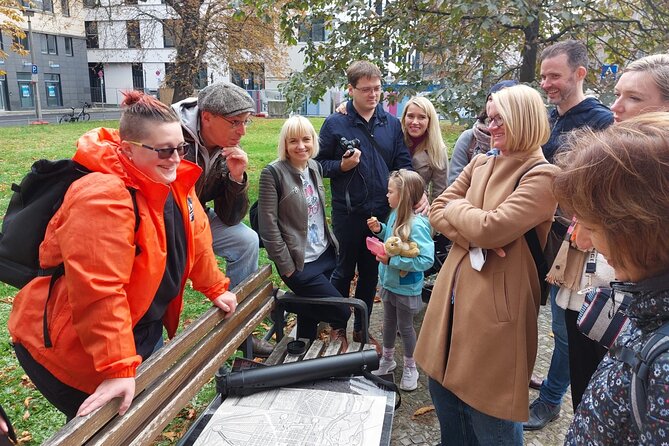
I like the small-group feel on a 2-hour route capped at 15 people. I also like how the guide ties each site to a human story, from Robert Koch’s work to Rudolf Virchow’s social medicine ideas, instead of treating it like a list of names.
One drawback to consider: this is best if you enjoy stories more than hands-on museum time. The tour does not include visiting buildings where clinical or university operations take place, so you’re mostly seeing key places from outside or in areas open to viewing.
Key highlights you will actually feel on the walk
- A fast 2-hour route with a clear focus on medical history and public health ideas
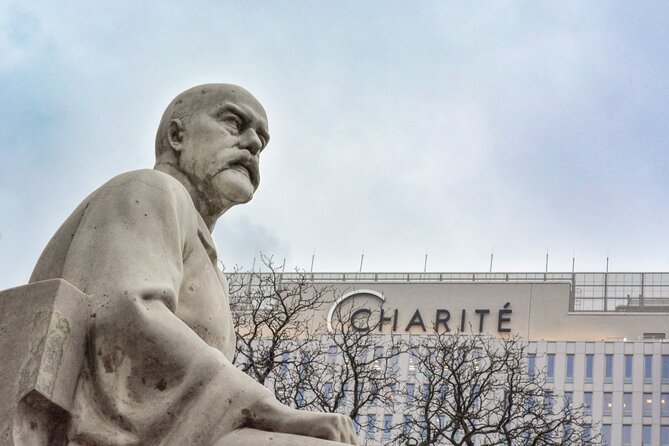
- Open-air, no-cost stops like the Robert-Koch Denkmal and the scientist monuments
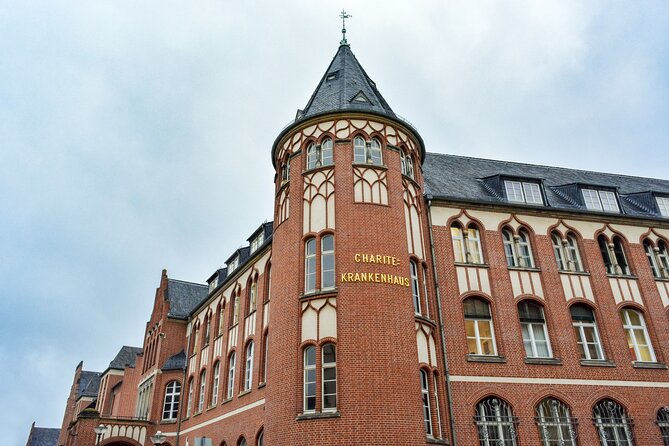
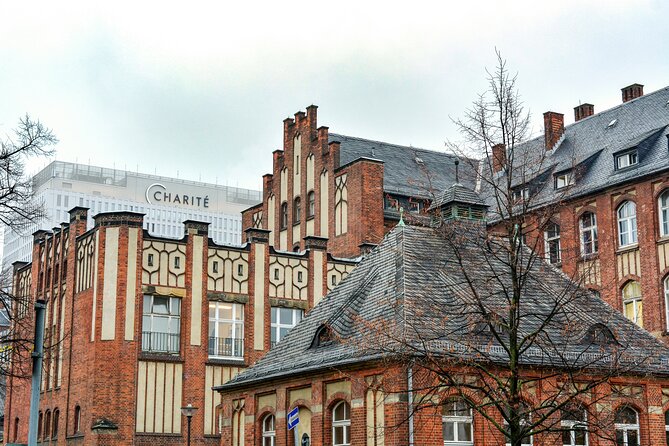
- Charité Campus Mitte red-brick neogothic campus, with lessons about medicine under Nazi rule and beyond
- Tieranatomisches Theater for an early look at how animal disease was studied before modern science
- Virchow and Graefe monuments connecting pathology and ophthalmology to wider social impact
- A small group size that helps the guide keep the pace personal
Why Charité’s medical monuments are more than sightseeing
Berlin has plenty of grand statues, but Charité’s landmarks hit different. The names you see here connect to tuberculosis, anthrax, cholera, pathology, and ophthalmology, which means the tour is about medicine as a force that changes society. And when medicine goes wrong, Berlin also shows that story, right on the campus grounds.
I also like that the tour keeps switching scales. You start with big-science breakthroughs, then you move to how diseases were studied in early academic spaces, and later you end up with the human stakes of life in and around the hospital during major political shifts. That mix helps the walk feel like one connected story instead of separate stops.
More Historical Tours in Berlin
- Berlin: Natural History Museum Entrance Ticket
★ 4.6 · 3,382 reviews - Berlin: 3-Hour World Heritage Cruise to Potsdam
★ 4.5 · 1,569 reviews - Berlin: History of the Third Reich Guided Walking Tour
★ 4.7 · 791 reviews
Quick practical info (so you can plan without stress)
This is a 2-hour walking tour in Berlin, priced at $30.12 per person. It’s offered in English, and it uses a mobile ticket, so you can keep everything on your phone. It’s booked fairly often, with an average booking window of about 19 days in advance, so if you want a specific day, don’t wait until the last minute.
The route runs from Robert-Koch-Platz (10115 Berlin) to Alexanderufer (10117 Berlin). The meeting point is right by Robert-Koch-Platz, and the end is near the Humboldthafen canal area. If you’re coming from Berlin Central Station, it’s about a 10-minute walk from the Humboldthafen canal, which is a handy fallback plan if you miss the exact start landmark.
Group size matters here: the tour has a maximum of 15 travelers, so you can ask questions and hear the guide without competing with a crowd. Also, service animals are allowed, and most travelers can participate.
Robert-Koch-Platz and the first layer of Berlin’s medical power
You begin at Robert-Koch-Platz, and the first stop is the Robert-Koch Denkmal. This is where the tour frames Charité as Berlin’s oldest hospital, established in the 18th century, and then points you toward why Robert Koch became such a key figure. The monument connects science and public health in a very direct way, because Koch is tied to discovering the cause of tuberculosis, anthrax, and cholera.
What I like about opening here is that it gives you a baseline. If you know why Koch mattered, you can look at the rest of the walk and understand that the campus was not just treating patients, it was also shaping how diseases are explained. The stop also notes Koch’s link to what’s described as the first pharmaceutical scandal in medical history, which is a strong reminder that medical progress can carry ethics and politics from day one.
This stop is about 20 minutes, and the good news for time management is that admission is free. You’re outdoors and on the move, which works well for a tour that runs roughly two hours total.
Tieranatomisches Theater, when disease was studied before modern science
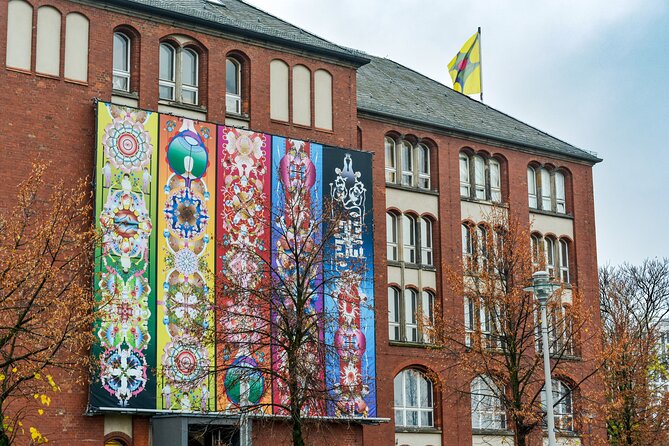
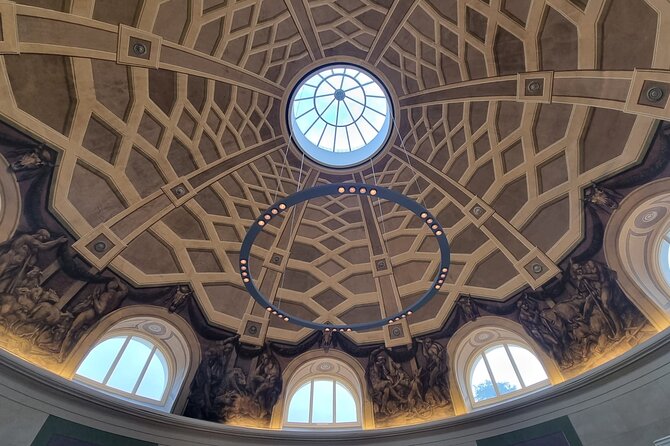
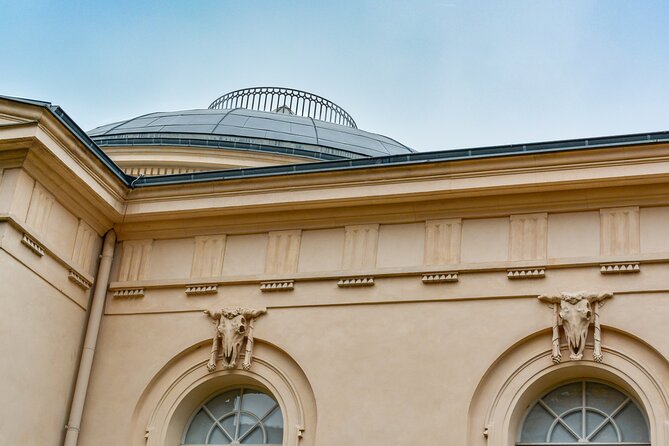
Next up is Tieranatomisches Theater, described as the oldest surviving academic building in Berlin. It’s an 18th-century neoclassical space, and the tour focuses on how veterinarians studied animal diseases there. Even if you’re not into veterinary history, this stop gives you an important lens: diseases didn’t start as neat categories. People learned through observation, training, and trial and error long before modern lab methods.
The practical value here is that it explains the limits of early treatment. You’ll hear stories about how diseases were treated before the advent of science, which helps you understand why later breakthroughs were such a big deal. It’s easier to respect the modern era of medical research when you see what came before.
Like the first stop, the time here is about 20 minutes, and admission is free. The drawback is that this is not a hands-on workshop, so if you want interactive medical exhibits, you might find the theater stop more like a story-based viewing.
More Walking Tours in Berlin
- Discover Berlin Half-Day Walking Tour
★ 5.0 · 9,624 reviews - Berlin: Third Reich and Cold War 2 Hour Walking Tour
★ 4.9 · 6,830 reviews - Berlin: Discover Berlin Walking Tour
★ 4.9 · 5,998 reviews - Berlin’s Best: 2 Hour Walking Tour Third Reich and the Cold War
★ 5.0 · 5,486 reviews
Rudolf Virchow’s monument and the idea of social medicine
At Denkmal Rudolf Virchow, the walk shifts from specific diseases to broader medical thinking. Virchow is described as the father of modern pathology and the founder of social medicine. That pairing matters because it connects two sides of health: what’s happening inside the body, and what’s happening outside it, like living conditions.
This is one of those stops where the tour’s storytelling style becomes useful. When a guide ties pathology to social medicine, you start to see why public health policies and medical research often travel together. You also get a more human view of why some medical ideas spread and others didn’t, because social medicine depends on politics, not just microscopes.
Again, the stop runs about 20 minutes, and admission is free. The main consideration is pacing. If you’re someone who likes to linger, you may want to take a quick photo and then use the guide’s narrative to decide if you should circle back later.
Albrecht von Graefe, ophthalmology and the “first scientist monument” idea
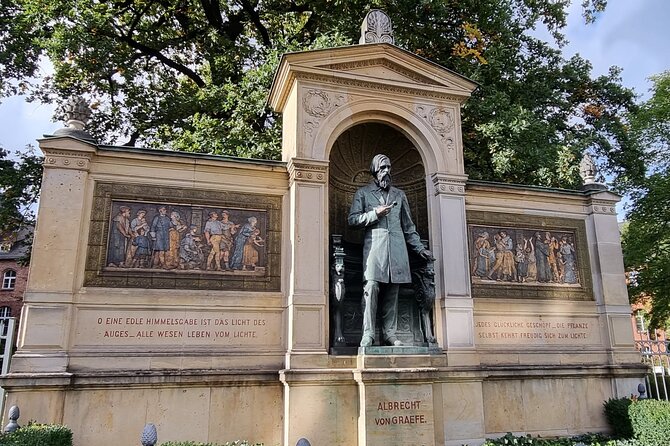
The tour then reaches Denkmal Albrecht von Graefe. This is another short stop, about 20 minutes, and it’s free to view. Von Graefe is described as a groundbreaking ophthalmologist, and the tour adds an interesting detail: it’s noted as the first monument in Berlin dedicated to a scientist.
That matters more than it sounds. A monument like this is a public choice. Berlin is essentially saying scientists belong in civic memory, not just in private journals. When you pair the dedication with von Graefe’s focus on eyes, you get a sense of how certain medical specialties shaped public life, because sight affects work, education, family roles, and independence.
If you’re the type who enjoys when a tour gives you both the science and the civic context, this stop will likely land well. If you prefer only the biggest names, it’s still worth a look, because the monument’s “first of its kind” angle adds meaning beyond recognition.
Charité Campus Mitte: medical ethics under the Third Reich and the push for care
Now you move to Charité Campus Mitte, with its red-brick neogothic look. This is a major shift from individual monument stories into the scale of how medicine functions inside a large institution. The guide’s narrative focuses on what happened here in the 20th century, including how some doctors abused medicine during the Third Reich.
This is also where the tour tries to keep the story balanced. It doesn’t only cover wrongdoing. You’ll also hear about doctors who helped everyone indiscriminately up until the last days of WWII. That contrast is important because it shows you that institutions are made of people. The same setting can be used for harm or for care, depending on choices and systems.
The time at this stop is about 20 minutes, and admission is free. The tour does not include entering places where clinical or university operations take place, so you’re not walking through active hospital wards. Still, the campus setting gives you enough atmosphere to understand why Charité became such a focal point for medical influence.
One thing to keep in mind: because the story includes abuse and ethical failure, it can feel heavy. If you prefer lighter content, you might want to pace yourself mentally and take a moment between stops.
Humboldthafen escape attempts and the hospital in socialist and post-Wall life
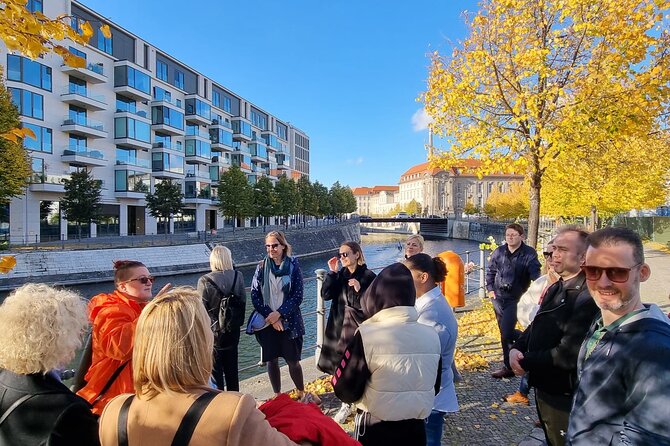
The final storytelling piece lands at Design Offices Berlin Humboldthafen. This is tied to a specific, high-stakes narrative: it’s the place where several East Berliners attempted escape to the West by swimming across the city canal just outside the Charité campus. Hearing that here makes the geography feel personal, because you’re connecting political danger to physical space next to a hospital.
After that, the guide connects hospital life with the socialist era and then the period after the fall of the Berlin Wall. You’ll get a sense of how the mission of a major medical institution can shift under different political systems, not just how patients are treated but how the institution is organized and seen.
It’s still a short stop at about 20 minutes, with free viewing noted for the stop. If you’re short on time, this ending works well, because it closes with a strong story and then you finish at Alexanderufer.
How much value you get for $30.12 (and why the time limit helps)
For $30.12, you’re paying for a guided walk that runs about 2 hours, includes all fees and taxes, and caps at 15 travelers. In practical terms, you’re not spending your time hunting for ticket windows or figuring out how to connect the sites yourself. The guide does the linking for you, and that is where the value lives.
The other reason this price works is that most stops are free to view. The paid portion is mostly the interpretation and the order of the route, not separate paid attractions at each stop. That means your money supports the story and context, not just access.
The shorter duration also helps. In Berlin, it’s easy to stack too many activities. A compact 2-hour medical history walk is easier to fit into a day than a half-day museum plan, especially if you’re also seeing Brandenburg Gate, Museum Island, or a few neighborhoods.
Who this tour suits best (and who might want to skip it)
This tour is a good match if you like medical history, public health ideas, and stories that connect science to society. If you’re the kind of traveler who enjoys monuments but also wants meaning behind them, you’ll probably enjoy how the route builds from Koch to Virchow to Graefe and then into ethics and political-era change.
It’s also a smart choice if you want a small-group experience without a long commitment. With a maximum of 15 people, you get a better chance of hearing the guide clearly and asking questions when something clicks.
You might consider skipping if you want hands-on clinical or university spaces, because the tour specifically does not include visiting buildings used for clinical or university operations. Also, if you dislike heavier ethical topics, the Campus Mitte section may feel intense.
A few tips so you get more out of the walk
- Wear shoes you’re comfortable walking in, since the whole experience is a walking route with multiple short stops.
- Bring a phone with enough battery. You’ll have a mobile ticket, and you’ll probably want to look up names later while things are fresh.
- Expect story-driven pacing. Each stop is about 20 minutes, so the guide covers a lot in a short time.
- Plan around weather. The tour requires good weather, and if it’s canceled due to poor conditions, you’ll be offered another date or a full refund.
Should you book the Charité Hospital walking tour?
I think you should book it if your idea of a great Berlin day is learning something real while still seeing places you can point to on a map. The best part is the way the guide keeps the medicine human, connecting famous breakthroughs to the ethics and politics around them. The overall experience gets an excellent score and a strong recommendation rate, which lines up with the tour’s style: short stops, tight storytelling, and no wasted time.
Book it even if you are not a medical history expert. You do not need background knowledge to follow the names and ideas, because the guide frames what each figure changed and why it mattered. Just be ready for a bit of darkness in the Campus Mitte segment.
If that sounds like your kind of walk, this one is a strong use of two hours in Berlin.
FAQ
How much does the Charité Hospital walking tour cost?
It costs $30.12 per person.
How long is the tour?
The tour lasts about 2 hours.
What language is the tour offered in?
It’s offered in English.
Is this a small-group tour?
Yes. It has a maximum of 15 travelers.
What kind of ticket do I need?
You get a mobile ticket.
Does the tour include visiting hospital or university operating areas?
No. The tour does not include visiting buildings where clinical or university operations take place.
Where do I meet, and where does the tour end?
You start at Robert-Koch-Platz, 10115 Berlin and end at Alexanderufer, 10117 Berlin.
Is the tour easy to reach from Berlin Central Station?
It’s near public transportation, and the tour notes a 10-minute walk from the Humboldthafen canal area, which is handy if you’re coming from Berlin Central Station.
What if the weather is bad?
This experience requires good weather. If it’s canceled due to poor weather, you’ll be offered a different date or a full refund.
Is free cancellation available?
Yes. You can cancel up to 24 hours in advance for a full refund.
Fresh reviews out of Berlin
- Gastro Tour with Klaus though the Wrangelkiez, Kreuzberg★ 5.0 · 9 reviews
- Wall Tour Berlin – Fates, Heroes & Love Stories★ 4.0 · 9 reviews
- Berlin City Tour with Hotel pick up and Drop off★ 4.0 · 9 reviews
- Berlin Private Street Art Tour – Off The Grid★ 5.0 · 9 reviews
- Romantic Berlin Rickshaw City and Photo Tour – incl. pick-up★ 4.0 · 9 reviews
- Quatsch Comedy Club Berlin: Quatsch Comedy Hot Shot★ 4.8 · 9 reviews
- Berlin Urbex Adventure and History Tour★ 5.0 · 9 reviews
- Stag Party Berlin: Celebration for Your Bachelor Party★ 3.4 · 9 reviews
Historical Tours, compared.
City History Canal Sightseeing Tour on a Motorboat
Read our review →



Night Watchman Historic Adventure Tour
Read our review →
Browse the lists this tour appears in