Reviewed · WALKING TOURS
Schwerin: Private Guided Walking Tour
Schwerin is the kind of Northern Germany city that rewards a slow walk. You get Lake Schwerin views, a fairy-tale palace, and a surprisingly complete story arc from early medieval roots to Napoleonic and unification-era changes. A private guide makes it click, fast, because you are not just seeing landmarks, you are understanding why they mattered.
Two things I really like about this tour are the focus on the big visual anchor, Schwerin Palace, and the way the route connects major eras to places you can actually point to on foot. It is also pleasantly flexible. The main drawback to plan around is that it is short, 90 minutes, and entrance fees are not included, so you will want to prioritize what you most want to go inside versus what you only want to see from the outside.
Key highlights to look forward to
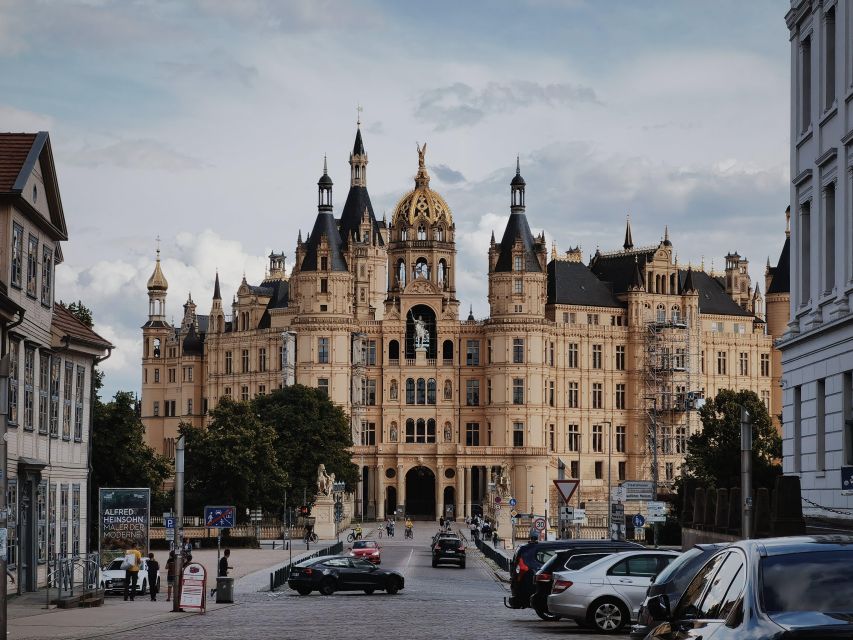
- Neuschwanstein of the North views of Schwerin Palace, famous for its island setting on Lake Schwerin
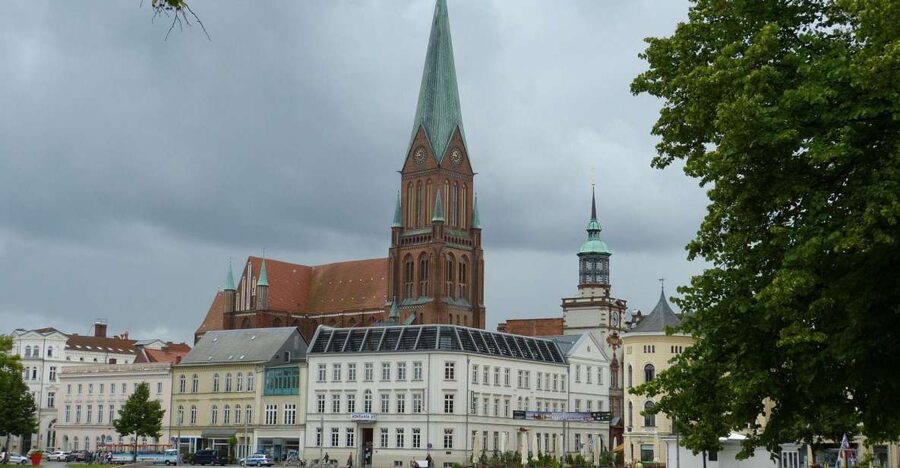
- Medieval Schwerin Cathedral with a standout pilgrimage legend connected to Christ’s blood
- A walk through an old town that is largely intact, with only minor damage during World War II
- Real historical timeline cues, from early origins to Protestant revolution and the Thirty Years’ War
- A compact route that brings Napoleonic-era and German unification context into one easy stroll
Starting in front of Schwerin Castle, Lennéstraße 1
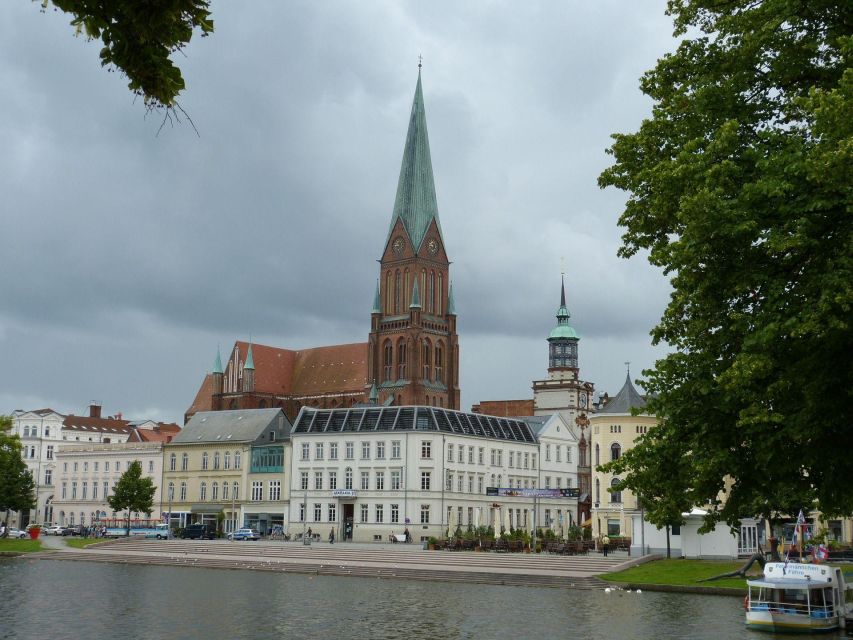
This tour begins right where Schwerin wants you to look first, in front of Schwerin Castle on Lennéstraße 1 (19053 Schwerin). Starting here is smart. The castle area gives you an immediate visual map. You can orient yourself quickly, then the guide can start building the story from the very place people associate with the city.
Because this is a private group, you will walk at a pace that suits you. If you like to ask questions, your guide can slow down. If you want the highlights only, you can keep moving. Duration is 90 minutes, so you will cover a lot, but it is still a walking tour where you should expect some steady steps.
One practical tip based on real-world experience: castle entrances can be confusing. Sometimes the most obvious doors are linked to different parts of the complex. If you show up early, take 30 seconds to confirm whether you are waiting at the main front area or at a specific entry that matches your meeting instructions. It can save you a few minutes of back-and-forth while signs do their best to be helpful.
More Walking Tours in Schwerin:
- Discover Berlin Half-Day Walking Tour
★ 5.0 · 9,624 reviews - Berlin: Third Reich and Cold War 2 Hour Walking Tour
★ 4.9 · 6,830 reviews - Munich: Third Reich & WWII Walking Tour
★ 4.6 · 6,181 reviews
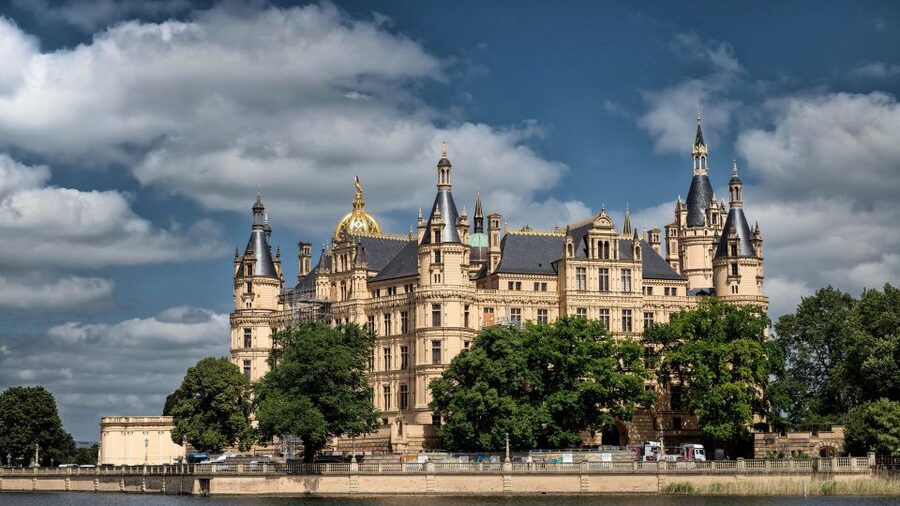
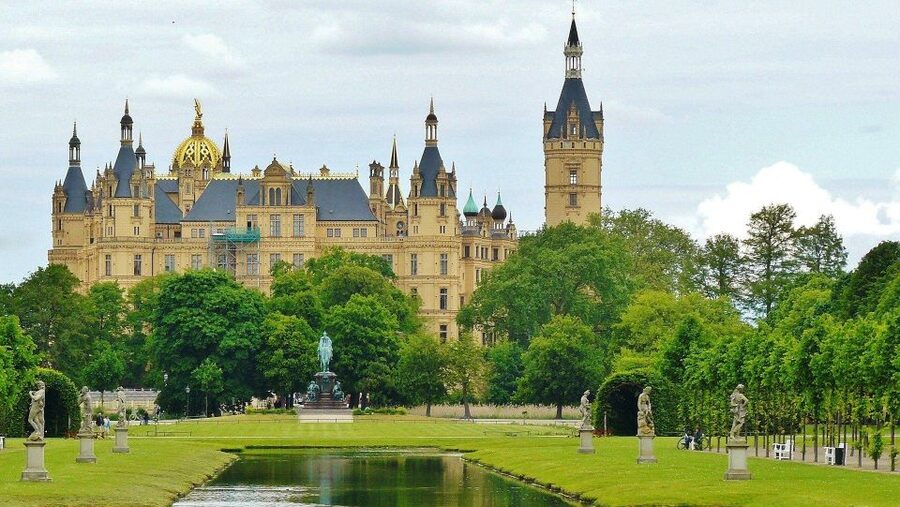
Seeing Schwerin Palace from the “Neuschwanstein of the North” angle
Schwerin Palace is the headline, the romantic centerpiece perched on an island in Lake Schwerin. The nickname “Neuschwanstein of the North” is not just marketing fluff. When you stand in the right spots and get your bearings, you understand why people compare it to Bavaria’s famous fantasy castle. It looks like it belongs in a storybook, but it is also deeply tied to Schwerin’s power and identity.
In the tour experience, expect your guide to point out what to notice: the way the palace sits in relation to the water, the architectural mood that feels theatrical, and how this kind of landmark becomes a symbol for the city. If you are the type who walks past buildings without thinking about them, this is where the guide turns that around. You start seeing the palace as a statement, not just a photo.
Entrance fees are not included, so if you plan to go inside, you may need to decide on the fly depending on what is open and what time remains. For many people, seeing the complex from key exterior angles is the main value in a 90-minute route. You can still appreciate the scale, the setting, and the overall design without turning the tour into a ticketed museum day.
The old town feel, and why Schwerin is “small but complete”
A major part of the charm here is that Schwerin feels like a true city, not a theme park. You get a lot of the sense of an older center. The old town is largely intact, with only minor damage during World War II. That means you can walk and still feel the continuity between medieval ideas and later city life.
Historically, Schwerin stretches back further than most visitors expect. The roots trace to the 10th century, and the city is known to have existed since at least 1018. It was recognized as a city in 1160, which helps explain why the medieval center became so important early on. Your guide’s job in a short walk is to translate that timeline into something visible.
As you move through streets around the historic core, look for the subtle clues your guide will highlight, such as how certain landmarks relate to one another. Schwerin is surrounded by seven lakes, so water is always in the background of the story. Even when you are not looking at a shoreline, you are in a city shaped by geography that influenced where power, travel, and communication made sense.
Schwerin Cathedral and the pilgrimage legend
If you want one moment that turns a walking tour into a real “wait, what?” experience, it is the stop connected to Schwerin Cathedral. In the Middle Ages, the cathedral was a key center for pilgrimage, famous across Europe. The legend that people love to repeat is that it held a reputed drop of Christ’s blood.
Even if you are not chasing religious relic stories, this is still valuable. Pilgrimage mattered because it brought visitors, money, and attention. It also shaped how cities behaved. A cathedral that drew outsiders became a place where routes converged and where the city’s status grew over time.
On your walk, your guide can connect the cathedral’s importance to the wider medieval timeline in a way that makes sense on foot. You will start thinking about who came to Schwerin and why, and how religious meaning translated into real urban power. In a 90-minute experience, this is one of the best “big story, clear location” stops you can ask for.
Protestant revolution and the Thirty Years’ War, explained where you stand
Schwerin’s story does not stay in the medieval lane. The tour also takes on major turning points, including the Protestant revolution and the Thirty Years’ War. Those events sound abstract until someone helps you attach them to places and consequences.
What I like about this part of the tour is that it is not presented like a lecture from a book. A good guide keeps it grounded. You might be shown how Protestant shifts affected authority and public life, or how long conflict changed the rhythm of city development. Even if you do not memorize dates, you come away with a sense that Schwerin was not a quiet lakeside town floating outside European upheavals.
This is also where a private guide can pay off. If you have a specific interest, you can steer the conversation. Want more on religion? Ask. Prefer the politics? Ask. The route is compact, so your guide will likely focus on the most relevant links between events and what is still visible in the city center.
From Napoleonic era to German unification, and why it matters
By the time the tour reaches the Napoleonic and German unification eras, it is doing something smart: it keeps the timeline moving toward the modern shape of Germany. Schwerin did not exist in isolation. Like many German cities, it was pulled into broader European changes, and those shifts influenced what the city became.
Again, the value here is interpretation. A walk like this helps you see that history is not just what happened long ago. It is also why towns look the way they do, how institutions evolved, and why certain civic identities formed. Even if some buildings are not dramatically altered by a specific event, the overall direction of change usually is.
If you love “why is that here” questions, this is where you will get answers. If you only want the palace and pretty streets, you can still enjoy it because the guide is not forcing a heavy lesson. The goal is to give you context that makes your photos and your street walk feel more meaningful.
What makes the private guiding style worth it
This is built as a private group experience, with a local professional guide who is with your group only. That means you avoid the classic group-tour problem where the guide spends half the time herding people and the other half rushing to fit the same script for everyone.
You also have a chance for on-the-spot customization. The listing says it is possible, and that flexibility shows up in how some guides tailor the tour. For example, you could be paired with guides such as Theresa or Jürgen, and the standout pattern is adapting to what you care about. One guide experience I can point to involved adjusting the tour based on evening plans, including a plan for a night watchman style outing. The guide then focused attention on details that would make that later walk more rewarding.
Another practical advantage: your guide can help you spot the small “how to read this city” details. Even when you do not go inside buildings, the route gives you a framework. You can walk afterward and feel like you are still following a story, not just returning to sightseeing.
Timing and walking pace for a 90-minute route
This tour lasts 90 minutes, so treat it as a focused orientation. You are not trying to do everything in Schwerin during this slot. Instead, you use it to get your bearings and decide what to add next.
A common question is how much you will actually cover on foot. In practice, the route concentrates on the historic core and the major landmarks around the castle area. You will likely spend time stopping for context, not just marching forward. Bring comfy shoes. Schwerin can look flat and easy until you realize you are on European street surfaces that encourage uneven footing, especially near older areas.
If you arrive late, you will feel it. With a tight time window, lateness steals the best parts. I recommend arriving a few minutes early and using that time to confirm exactly where your guide is expecting you to meet in front of Schwerin Castle.
Price, group size, and what value looks like here
The price is $280 per group, up to 15 people. That pricing structure can be a bargain if you are traveling with family or a small group of friends who want the same guided storyline. Even if you are two people, you are buying the experience of a guide who can adjust to your pace, and that level of attention usually beats squeezing into a larger public tour.
Entrance fees are not included, so you should think of the base cost as paying for storytelling, route planning, and interpretation. The “value math” is simple: if you are the type who likes history in context, and you want to go beyond a quick exterior glance at Schwerin Palace and the cathedral area, this price can feel fair.
If you are a solo traveler on a budget and you only want a quick highlights walk with zero questions, you might decide you can DIY the landmarks. But if you care about making sense of the timeline from the 10th century to later conflicts and reforms, a private guide is exactly what turns Schwerin from pretty into memorable.
Who should book this tour, and who should skip it
This is a great fit if:
- You like history you can see, not just read
- You want a clear explanation of why Schwerin Cathedral and Schwerin Palace matter
- You prefer a private guide who can shape the conversation
- Your schedule is tight and you want a high-signal route in 90 minutes
You might skip it if you:
- Only want scenic photos and do not care about context
- Plan to spend your time mostly inside museums and buildings, since entrance fees are not included
- Want a self-guided trip where you can wander at any pace without stopping
If you are somewhere in the middle, book it as your first Schwerin anchor. Then use what you learn to choose your next stops wisely.
Should you book Schwerin’s Private Guided Walking Tour?
If you want Schwerin to make sense, yes, book it. This tour gives you the big symbols, Schwerin Palace and Schwerin Cathedral, while also threading in the timeline of major eras that shaped the city. The private format and the ability to customize on the spot are where the value really shows, especially if you have extra plans for later in the day.
If you mainly want to wander without questions, you could do it on your own. But for most people, paying for a guide for 90 minutes is a fast, practical way to get more from Schwerin than just photos.
FAQ
How long is the Schwerin private guided walking tour?
It lasts 90 minutes.
Where does the tour meet?
The meeting point is in front of Schwerin Castle, Lennéstraße 1, 19053 Schwerin.
Is this tour private?
Yes. It is a private group, with a local professional guide who will be with your group only.
What languages are offered?
The live tour guide is available in English and German.
Does the tour price include entrance fees?
No. Entrance fees are not included.
How much does it cost?
The price is $280 per group, up to 15 people.
What is the cancellation policy?
You can cancel up to 24 hours in advance for a full refund. There is also a reserve now and pay later option to keep plans flexible.
Fresh reviews out of Schwerin
- Schwerin: Tour with the Night Watchman★ 4.5 · 366 reviews
- Schwerin: City Highlights Guided Tour★ 4.7 · 541 reviews
- 1-day ticket for Schwerin Zoo★ 3.8 · 11 reviews
Walking Tours, compared.


Berlin’s Best: 2 Hour Walking Tour Third Reich and the Cold War
Read our review →