
Reviewed · WALKING TOURS
Regensburg: Private Walking Tour With Professional Guide
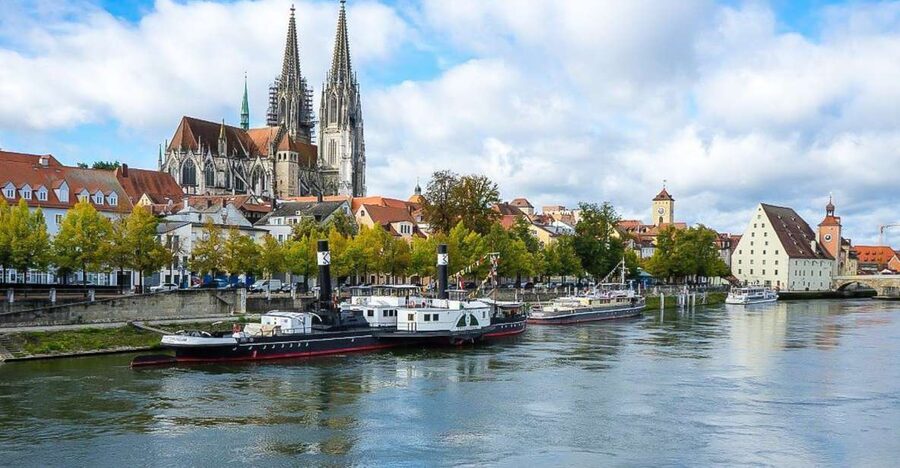
What makes this Regensburg tour interesting is how quickly it turns street corners into clear history. I like the way you get up close to the Stone Bridge and understand why it still matters. I also love how the route threads through the UNESCO Old Town with its huge collection of historic buildings.
You get major sights in just 2 hours, and it stays focused because it’s private. One consideration: it’s a walking tour and it’s not suitable for wheelchair users, and entrance fees aren’t included if you want to go inside anywhere.
You’ll meet your guide under the clock at the main train station square, then head straight into the oldest parts of town built around the river Regen.
Key highlights you should care about
- Stone Bridge, one of Germany’s oldest and best-preserved medieval bridges
- Regensburger Dom and its link to the Domspatzen boys’ choir
- Schloss Thurn und Taxis, a palace still used by the same noble family
- The UNESCO Old Town feel, with 1,500-plus historic buildings
- A private guide who keeps the pace lively and the facts easy to place
How the 2-hour Regensburg walk stays focused
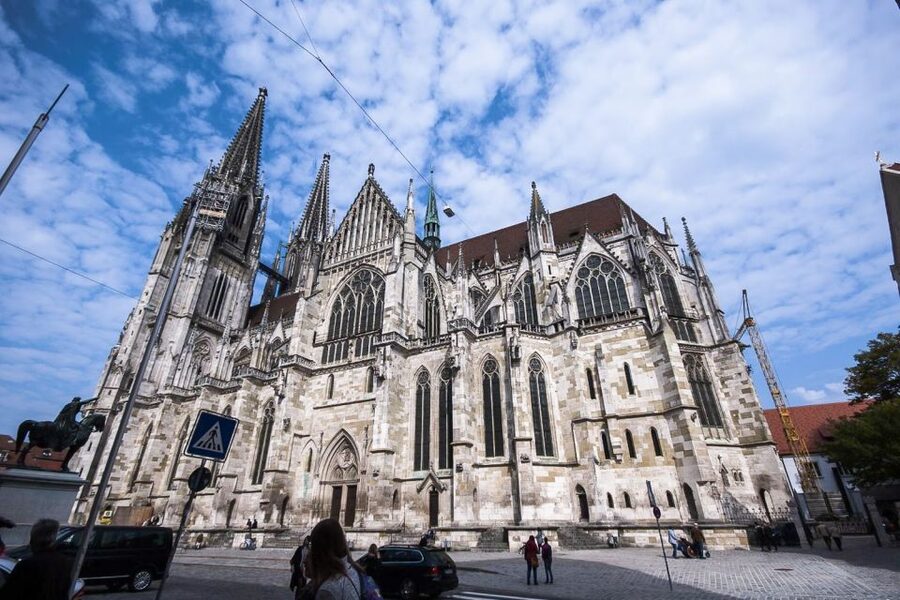
Regensburg is one of those Bavarian cities where the streets feel organized for walking. This private tour works because it’s short enough to stay energetic, but it hits the places that explain the city’s logic. You start with the river setting, then move into the power spots, and finally stroll through the Old Town streets that connect everything.
If you like architecture that you can actually understand, this tour is a good fit. You’re not just seeing landmarks. You’re learning how the town’s different eras show up in stone, layout, and even where people gathered.
Because it’s private, you can ask questions as you go, in English or German. That matters in Regensburg because small details, like how buildings relate to a square or why one church dominates an area, make the whole place click faster.
More Walking Tours in Regensburg:
- Regensburg: Guided City Walking Tour of the Old Town
★ 4.7 · 1,395 reviews - Regensburg Private Walking Tour With A Professional Guide
★ 5.0 · 16 reviews - Regensburg: Express Walk with a Local in 60 minutes
★ 5.0 · 12 reviews
Meet under the station clock, then start with the Stone Bridge
Your tour begins at the main train station square, under the clock, which makes it easy to find even if you arrive by train. From there, you move toward Regensburg’s historic core, and the first big wow is the Stone Bridge.
The Stone Bridge is one of the oldest and most well-preserved medieval bridges in Germany. That’s not just a brag line. When you walk this kind of bridge, you can feel why it became a long-term piece of infrastructure, not a temporary project. It ties the city together across the river Regen and helps explain why Regensburg grew the way it did.
Here’s what to watch as you cross or pause nearby:
- How the bridge connects into the street network on each side
- How the river setting shapes views toward major buildings
- How the city’s “front door” is water, routes, and control points
A well-run guide will also help you connect the bridge to Regensburg’s early identity, including its origins as a fortress by the river Regen. That single idea makes the rest of the walk easier to follow, because you stop thinking of history as dates and start thinking of it as geography.
Regensburger Dom: Bavarian Gothic you can actually read
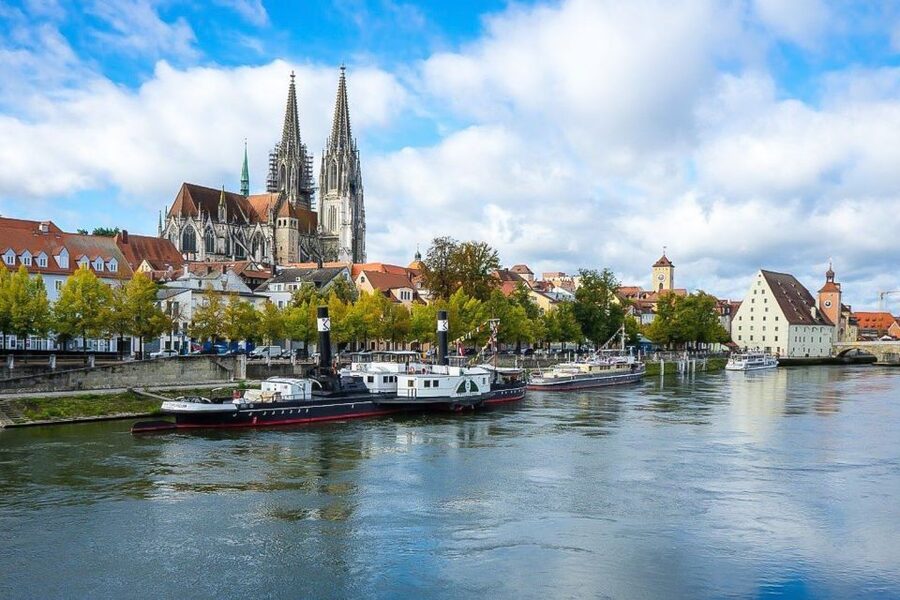
Next, you head to the Regensburger Dom, the main cathedral in town. It’s a classic example of Bavarian Gothic architecture, and the best part is that you see it in context, not as an isolated photo spot.
What makes this stop more than a quick look is the choir connection. The Regensburger Dom is home to the Regensburger Domspatzen, a famous boys’ choir. Even if you’re not catching a performance, knowing the cathedral has a living musical tradition changes how you see the space. It’s not only a monument. It’s a working center.
As you look around, focus on features that a guide can help you interpret, like:
- the way the building’s vertical lines pull your eyes upward
- how the cathedral anchors the surrounding town area
- what makes the Gothic style feel distinct in Bavaria
If you’re traveling with someone who thinks cathedrals all look the same, this is where the private angle helps. A good guide can give you the “why this matters” version, including small historical details that turn your walk into a story you can keep straight.
Town hall and the feel of medieval civic life
You’ll also see the town hall area during the walk. That’s important, because it balances the spiritual center (the cathedral) with the civic center (city leadership, courts, and public business).
Regensburg has a reputation for preserving its Old Town, and that preservation is visible in how the public spaces hold together. The streets feel made for pedestrians and for passing by important buildings. In a city like this, the town hall isn’t a side attraction. It’s part of the same system as the cathedral, the bridge, and the palace grounds.
What you should do here is slow down for a moment and look at how everything lines up:
- Which buildings dominate certain squares or street turns
- How the bridge and cathedral influence where people likely traveled first
- How the Old Town street pattern keeps older power centers within reach
This is the kind of stop where a guide’s energy can matter. One of the strongest themes from past visitors is that the best guides keep things lively, not lecture-heavy. You get historical facts, but they’re framed so you understand how people might have lived day to day.
Weigh these Regensburg picks against each other
- Regensburg: City Tour with the Bimmelbahn Train
★ 4.3 · 1,010 reviews - Regensburg: Klinger’s Sightseeing Boat Tour to Walhalla
★ 4.6 · 735 reviews - Regensburg: Sightseeing Boat Tour to Walhalla
★ 4.5 · 657 reviews - Regensburg: City Highlights Historical Boat Tour
★ 4.0 · 259 reviews
Schloss Thurn und Taxis: a palace still in use
One of the most memorable stops is Schloss Thurn und Taxis. You’re not just looking at an abandoned grand residence. This is a palace still in the hands of the Thurn und Taxis family, with continued use by the German nobility.
That adds a practical layer to your visit. You’re seeing how power and continuity work in real life. Many European cities have grand palaces that are now museums. Here, the palace remains connected to an active lineage, which makes the building feel less like a stage set and more like an ongoing part of the city.
When you see it, pay attention to how a palace sits within its surroundings. Even without entering, you can tell it’s designed to command attention and to control movement in the area. A guide can help you place it in the same big story as the bridge and cathedral, so it doesn’t feel like a separate “palace stop.”
For photos, try to capture:
- the palace’s exterior presence from nearby angles
- how it relates to the street and the Old Town fabric
- how it changes the mood of the walk from civic and religious to aristocratic power
The UNESCO Old Town walk with 1,500-plus historic buildings
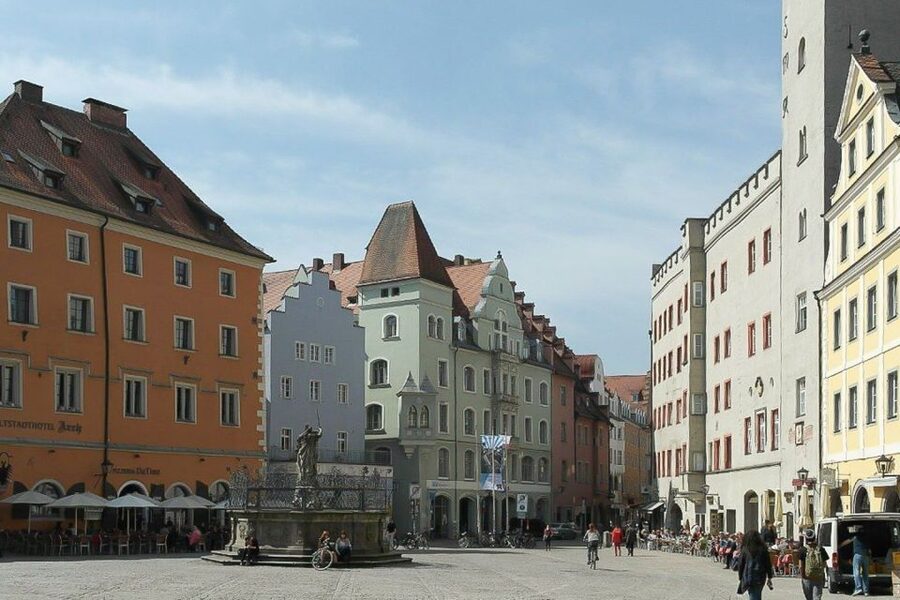
The heart of the experience is the stroll through Regensburg’s medieval Old Town, recognized as a UNESCO World Heritage Site. The headline number is over 1,500 historic buildings, and what that means on the ground is variety.
Instead of a single monumental complex, you get a whole town that retains its medieval scale and layout. As you walk, you start spotting patterns: building forms, street widths, and how different eras have left their marks in the same area.
Here’s the honest value of this part of the tour: it helps you learn how to look. When you know what to notice, the city stops being a set of sights and becomes a place with a readable timeline.
You’ll also get the bigger context that ties the city together, including Regensburg’s long-standing identity built around the river. That helps you understand why a bridge, a cathedral, civic buildings, and a palace would all cluster in ways that make sense for power and daily life.
Why a private professional guide changes everything
With a private walking tour, you’re not stuck with a one-size-fits-all script. The guide can adjust to your pace, your interests, and the questions you want answered. That sounds obvious, but in practice it’s huge in a compact historic center.
It also keeps the visit from turning into a checklist. In the kind of guiding people have praised, the historical facts are explained in a way that feels relevant, not dusty. One guide example named Kate is specifically noted for making historical details more interesting and understandable, especially for life in the Middle Ages and later centuries.
If you care about:
- architecture details
- how power shaped city planning
- what everyday life might have looked like in different periods
…then this style of guiding is worth paying for. You can ask, What does this building suggest about society? or Why does the bridge matter beyond traffic? Then you get answers while you’re still standing in the right spot to visualize them.
Language support is also a real advantage. You can choose English or German, which means the explanations stay clear instead of relying on partial understanding.
Price and who gets the best value from this private group
The price is $340 per group, for a private tour up to 15 people, and it lasts 2 hours. That setup matters. You’re not paying a per-person rate, so your value depends on how you split the group.
Think of it this way:
- If you’re a couple, the cost per person is higher than if you bring a larger group.
- If you’re traveling with friends or family, the per-person cost drops quickly.
- If you’re traveling alone, it can still be worthwhile if you really want a personal guide rather than joining a larger tour.
Is it “cheap”? No. But it’s not overpriced for what you’re getting if you want expert guidance in a dense historic area where asking questions improves the experience. Two hours also helps: you’re paying for time with a guide, not for a half day of sitting around.
Also remember: entrance fees are not included. If you plan to go inside any buildings, you’ll need to budget extra for that. If you’re mainly there to walk, see exteriors, and understand what you’re looking at, it’s easier to keep the spending controlled.
Practical tips for a smooth Regensburg walking experience
A walking tour in Regensburg is very doable for most visitors, but it helps to plan smart.
Wear comfortable shoes. Historic centers can mean uneven stone, cobblestones, and lots of stop-and-look moments. Bring a light layer, because river-adjacent areas can feel cooler depending on weather.
Since the tour is not suitable for wheelchair users, it’s worth thinking ahead if anyone in your group has limited mobility. The route is designed for foot traffic through older streets.
If you care about photos, plan to slow down at the Stone Bridge and around the cathedral area. Those are the spots where you’ll likely want to step aside, look, and get angles that show both the buildings and their setting.
And if you like flexibility, there’s an option to reserve now and pay later, plus cancellation up to 24 hours in advance for a full refund. That’s helpful if your train times or day plans are still shifting.
Should you book this Regensburg private walking tour?
Book it if you want a guided, high-signal walk through Regensburg’s most important landmarks without the guesswork. This is especially worth it if you enjoy understanding what you see, not just photographing it.
Skip it or look for an alternative if:
- you need wheelchair accessibility
- you want a tour focused heavily on indoor entrances, since entrance fees are not included
- you only want a casual self-guided stroll and you don’t care much about architectural or historical explanations
If you’re the type who likes to know why a bridge is still there centuries later, why a cathedral dominates the view, and why a palace still functions as a noble residence, this private 2-hour format is a strong match. It’s not long, it stays focused, and it gives you the kind of perspective that turns Regensburg from pretty to understandable.
FAQ
How long is the Regensburg private walking tour?
It lasts 2 hours.
Where do we meet the guide?
Meet your guide under the clock at the square of the main train station.
What is the price for this tour?
The price is $340 per group, for a private group size up to 15.
Is the tour private?
Yes. It is a private group tour.
What languages are available?
The tour guide speaks German and English.
Are entrance fees included?
No. Entrance fees are not included.
Is the tour suitable for wheelchair users?
No, it is not suitable for wheelchair users.
Can I reserve without paying right away, and can I cancel?
You can reserve now and pay later. You can also cancel up to 24 hours in advance for a full refund.
Fresh reviews out of Regensburg
- Regensburg: Half-day trip to the Danube Gorge in Weltenburg★ 4.9 · 11 reviews
- Regensburg: Express Walk with a Local in 60 minutes★ 5.0 · 12 reviews
- Regensburg Private Walking Tour With A Professional Guide★ 5.0 · 16 reviews
- City tour through Regensburg with the little train★ 4.0 · 67 reviews
- Regensburg: Original Strudelrundfahrt★ 4.4 · 173 reviews
- Regensburg: City Highlights Historical Boat Tour★ 4.0 · 259 reviews
- Regensburg: Klinger’s Sightseeing Boat Tour to Walhalla★ 4.6 · 735 reviews
- Regensburg: Sightseeing Boat Tour to Walhalla★ 4.5 · 657 reviews
Walking Tours, compared.


Berlin’s Best: 2 Hour Walking Tour Third Reich and the Cold War
Read our review →
Third Reich Berlin: Hitler and WWII Walking Tour
Read our review →Browse the lists this tour appears in