
Reviewed · WALKING TOURS
Münster Private Guided Walking Tour
Münster has a way of stacking centuries on top of each other, which makes this Peace of Westphalia focused walk so much fun. I love how the tour ties big events to real streets, and I especially like that it points you toward the area around the Picasso Museum instead of keeping everything locked in the medieval past. The main drawback to plan for is simple: it is a walking tour, so wear comfortable shoes and expect steady steps for the full 2 hours.
This is a private setup for up to 15 people, led by a local guide who stays with your group only. The walk is built around major landmarks like St. Paulus Dom, the Old Town, and the Historic Town Hall area, with some room for on-the-spot customizing.
Key things I’d focus on before you go
- Peace of Westphalia, 1648, with you actually standing where that turning point is tied to Münster
- Münster Rebellion, explained as drama, power, and belief, not just names and dates
- St. Paulus Dom (13th century) with medieval details that help the architecture make sense
- Astronomical clock at St. Paulus Dom, a late Middle Ages attraction worth taking your time with
- Münster’s bicycle culture, a practical lens for understanding modern life in a very old city
- Private guide attention, including the ability to tailor the walk during the tour
Münster Private Guided Walking Tour: what you’re really signing up for
If you want history that feels close, Münster is a strong choice. This walk is built for people who like to connect events to place. Instead of treating the city like a postcard, you’ll get stories tied to streets, squares, and major buildings that still shape how the town looks and feels today.
You’ll also get two different types of Münster in one loop. One part is the big Europe stuff, Peace of Westphalia and the aftermath of the Thirty Years’ War, plus the tense episodes around the Münster Rebellion. The other part is how the city functions now, university life, serious bicycle culture, and the Picasso connection that brings in modern attention.
It is not a museum day. Expect a guided walking experience where the guide helps you read the city like a book, page by page.
More Walking Tours in Münster:
- Münster: Old Town Historical Walking Tour by “Geo Epoche”
★ 4.7 · 51 reviews - Discover Berlin Half-Day Walking Tour
★ 5.0 · 9,624 reviews - Berlin: Third Reich and Cold War 2 Hour Walking Tour
★ 4.9 · 6,830 reviews
Price and group size, and how to judge the value
The price is $294 per group, up to 15 people, for a 2-hour private tour. That sounds like a lot until you do the math for your group size.
- If you have a small group of 2 or 3, it can feel pricey per person.
- If you have 6 to 10 people, the cost per person drops fast.
- If you’re traveling with family or friends, this is the kind of tour that can work out well because private guiding scales better than most per-person tours.
Also, you’re not paying for entrance tickets. Entrance fees are not included, so the value here is the guidance and the on-street context. If your group plans to step into museums, budget extra for those tickets separately.
For me, the best value angle is the guide staying with your group only, not sharing your time with strangers. That matters most when you have kids, mixed ages, or people who want their questions answered right away.
Starting at the Town Hall area: your 2-hour timeline begins fast
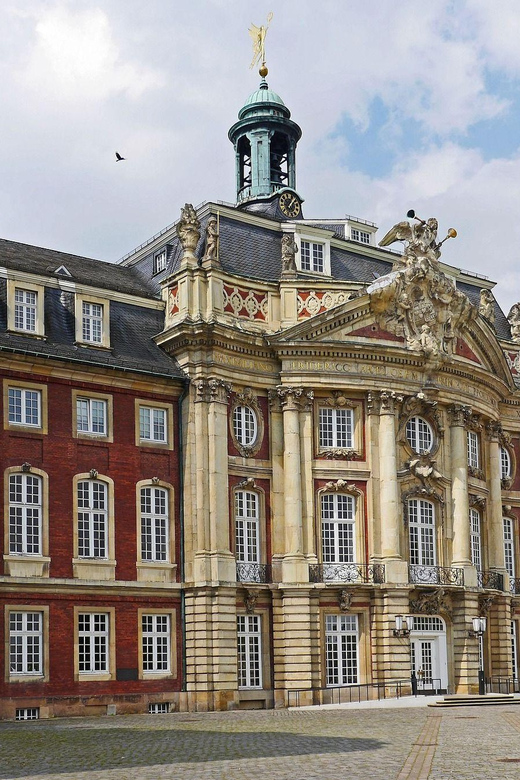
Your meeting point is in front of the Town Hall, Stadthaus 1, Klemensstraße 10, 48143 Münster. Showing up a bit early helps, because the first minutes set the tone: you get oriented, you learn what to look for, and your guide frames the big story you’re about to walk through.
This tour is short enough that you’ll feel where the time goes. You’ll start in the Historic Town Hall orbit, then move through the Old Town on foot toward other anchors like St. Paulus Dom and the surrounding area of Prinzipal Market.
The benefit of starting here is that Münster’s modern identity still sits on top of its political and cultural weight. The buildings and street layout do not feel random once you know what the guide is pointing at.
Peace of Westphalia, 1648: why that stop is more than a photo spot
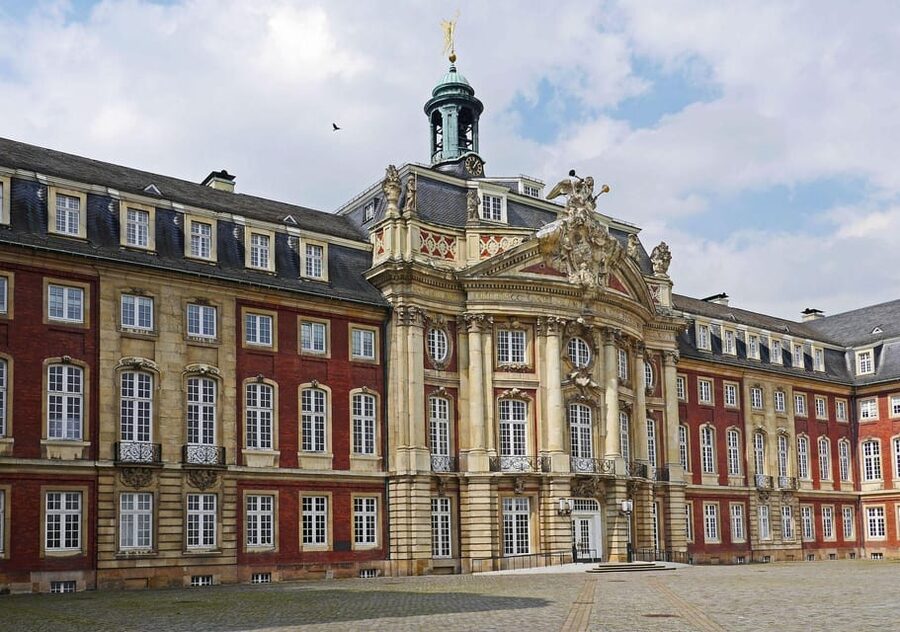
One of the headline moments is standing where the Peace of Westphalia was signed in 1648. That single detail is the reason many people choose Münster in the first place, because this was a major shift in European history.
On a guided walk, the value is not just learning that it happened. It is learning why Münster was in the room, why the city mattered to the wider region, and what you can still “read” from the location.
As you stand in the historic center, the guide can connect your viewpoint to the city’s role as a bishop’s seat and a university town, and also to Münster’s reputation in the Hanseatic League world. In other words, the tour gives you a way to understand why a treaty signing could be tied to a place like this, not just treated as a random date.
Practical note: if you care about documents, politics, or diplomacy history, tell your guide. The tour is private, and you can often steer the focus during the walk.
Weigh these Münster picks against each other
- Münster: Old Town Highlights Guided Tour
★ 4.7 · 286 reviews - Münster-Highlights-Tour with Rickshaw-Guide
★ 4.8 · 244 reviews - Münster: Nachtwächter-Führung (Erlebnistour)
★ 4.4 · 213 reviews - Crime show city tour by rickshaw including guide
★ 4.8 · 105 reviews
Münster’s Old Town streets: where architecture does the explaining
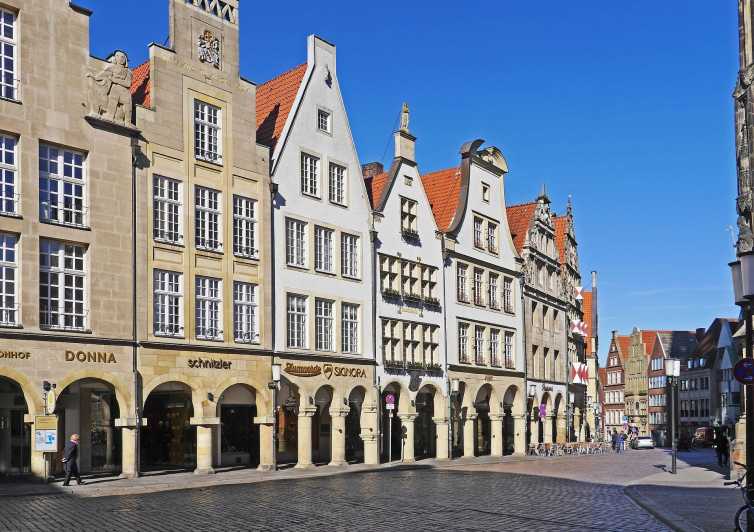
The route includes strolling through the Old Town and exploring highlights around the Historic Town Hall exterior. This is a classic “eyes open” part of the day. You’ll notice how the city layout funnels you from one historical layer to the next.
Münster’s architecture is one of the tour’s silent teachers. Once you understand the city’s long timeline, details that seem decorative start to make sense as signals of wealth, trade, and local power. Even if you do not remember every date, the walk trains your eye.
This is also where the city’s present blends into the past. Münster has a strong university presence, and that shows up in the street vibe and how people use public space. The guide helps you connect those dots instead of treating the Old Town as a closed museum set.
If you like photo stops, this section gives you plenty, but the real win is that you know what you’re photographing.
Münster Rebellion: drama turned into a clear city story
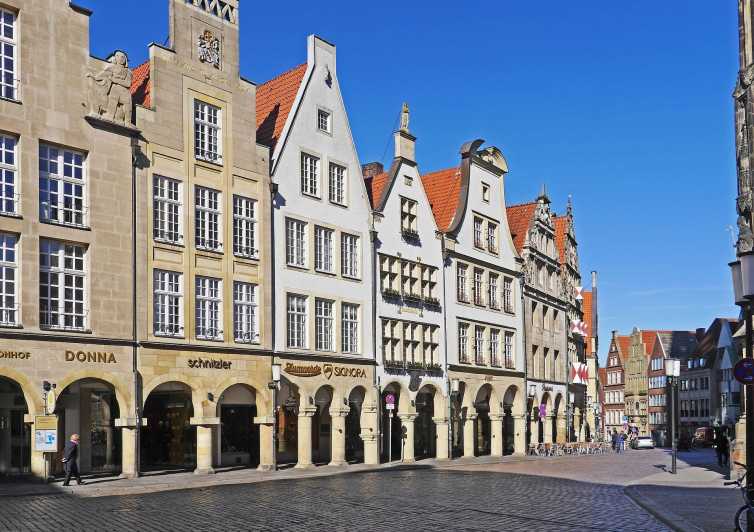
Another standout topic is the Münster Rebellion, including what happened and what it left behind. This is the kind of event that can get reduced to a headline if you’re reading it alone. With a guide, it becomes easier to understand the stakes: who held power, what beliefs were at play, and how the conflict affected how the city moved forward.
You’ll get the story in a way that fits the walking format. The guide is basically translating the city’s memory into plain language. Instead of only discussing the rebellion as remote history, you’ll hear how Münster’s later identity reflects those shocks.
This stop works especially well if you like human-scale history. You do not need a deep background, because the guide sets the scene and then anchors key points to places you can physically stand near.
The Thirty Years’ War aftermath: how to feel the late consequences
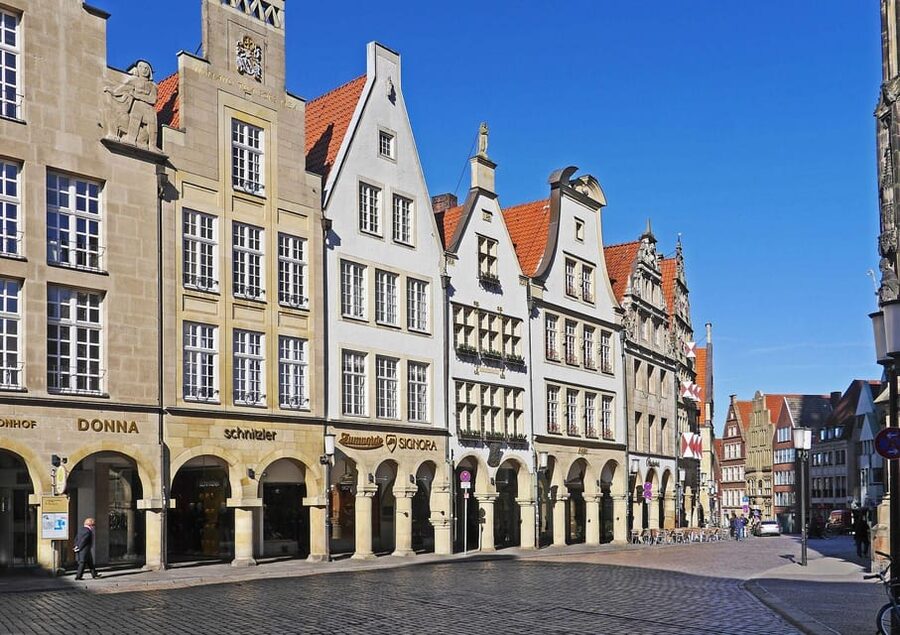
The tour also covers the aftermath of the Thirty Years’ War. That matters because long conflicts do not end when the fighting stops. Cities like Münster have to rebuild, reorganize, and redefine themselves afterward.
On foot, the benefit is that you can connect “aftermath” to real spatial cues. The guide points out architectural echoes and urban patterns that help you imagine the long recovery period.
Even if your interest is more casual than academic, this section gives you a helpful framework. You start to see why Münster’s historical layers feel different from places that only have one or two major periods to highlight.
In short, you leave with a sense that the city’s story is not just made of peak moments. It is also made of consequences.
St. Paulus Dom and Prinzipal Market: medieval focus with a living street around it
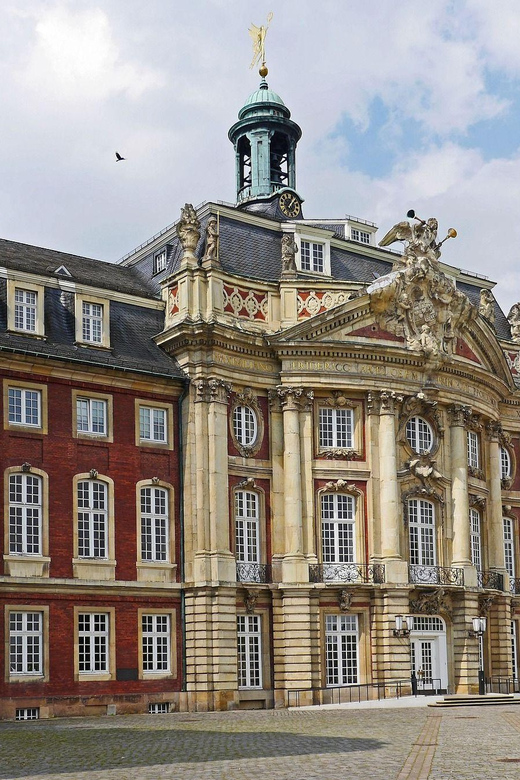
No visit to Münster is complete without St. Paulus Dom, a 13th-century cathedral in the center of town. This is a key stop on your walking tour, because it offers a concentrated medieval anchor while still being surrounded by the everyday flow of the city.
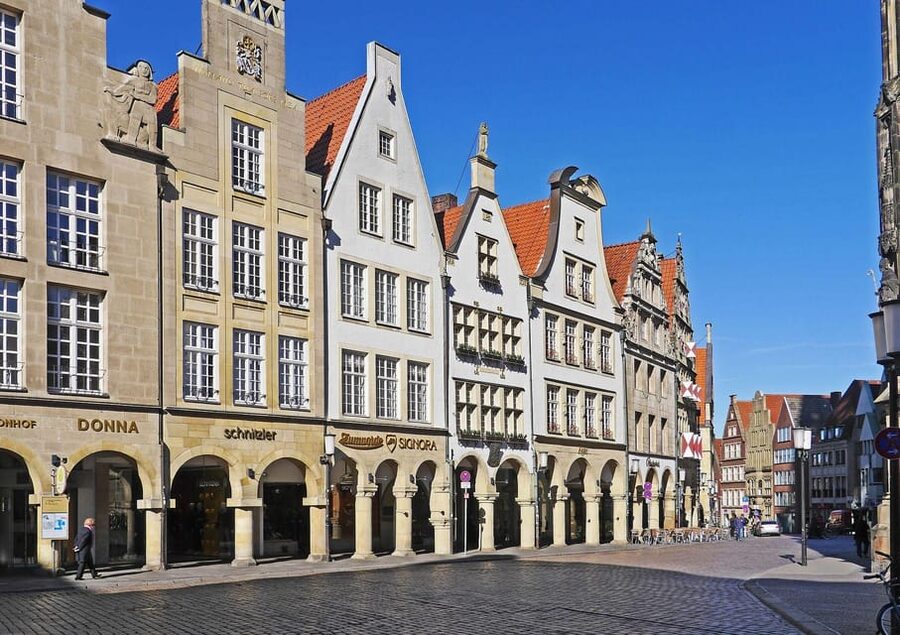
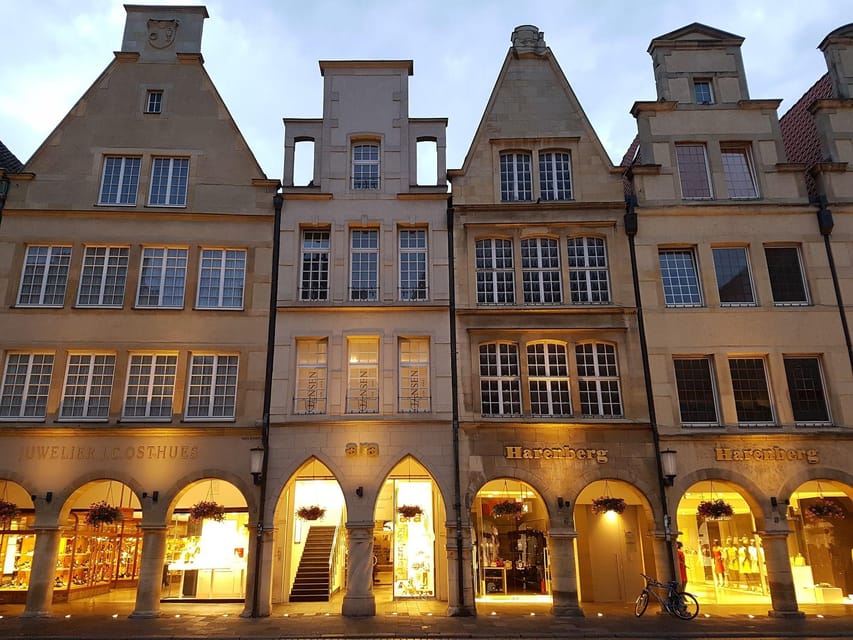
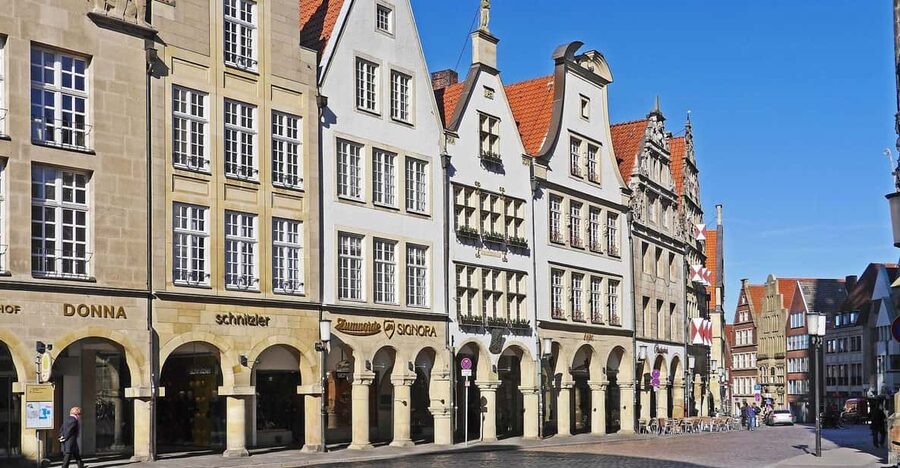
St. Paulus Dom sits near the streets of Prinzipal Market, and that combination is part of what makes the visit work. You get the cathedral’s weight, but you also see how the merchant tradition connected to the Hanseatic League period still shows up in modern commerce. The guide will point out how ancient merchant families continued to run businesses there, so the area does not feel frozen in time.
If you like architecture that you can understand on the spot, this stop is strong. The guide’s job here is to translate the building’s age and features into a story you can follow without needing a guidebook glossary.
The astronomical clock: slow down and let it land
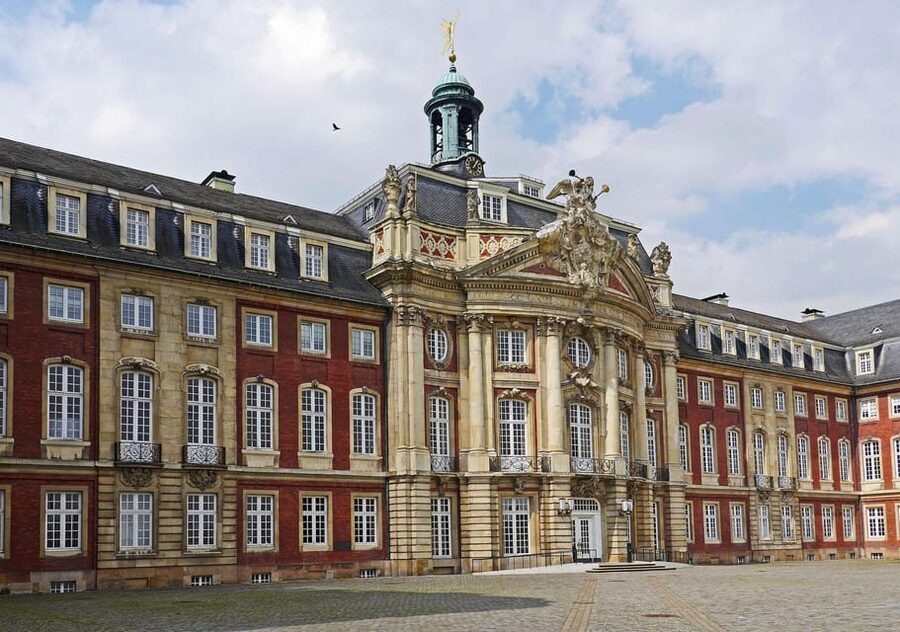
St. Paulus Dom also brings the astronomical clock into the conversation, described as a gem of the late Middle Ages. Even if you only get a quick look during your walk, having a guide explain what you’re seeing helps you avoid the common problem of treating clocks like decorative objects.
Take a moment here. Let your eyes adjust. The best way to enjoy this part is to ask the guide what to notice. When you’re standing in front of it, the explanation becomes much easier to remember.
And since entrance fees are not included, you should be prepared that any optional interior access or museum-style components could cost extra depending on what you choose to do during the tour window.
Picasso Museum area: modern Münster without losing the plot
Münster is also known for the Picasso Museum, described as the only one in Germany dedicated to the artist. Even if you are not going inside on this specific walking loop, having the Picasso theme in your route gives you a useful perspective.
It prevents the day from becoming a single-track medieval history walk. Instead, you see that Münster is not only preserving the past. It is also shaping cultural identity right now, and that cultural energy links back to the university feel.
This is where I like the tour for families and mixed-age groups. People who might not care about diplomacy history still often enjoy the Picasso angle, especially if the guide keeps the explanation lively and grounded in the city around you.
Bicycle capital details: why 500,000 bikes matters to your visit
Münster has a reputation for bicycles, with about 500,000 bikes circling in a place of roughly 300,000 inhabitants. That stat does not exist just for trivia. It changes how the city functions, and it affects what you notice as you walk.
You’ll probably see the practical results quickly: how streets are used, where people wait, and how the rhythm of daily life feels different than in many other German cities. Your guide can use that to explain Münster’s present identity, including why it’s considered a standard-bearer for the green cities of the future.
This part is especially helpful if you’re traveling beyond “tour mode.” You get to see how a city with 1200 years of story is still actively designing its future.
What customization really looks like on a private walk
A nice feature here is that you can customize on the spot with your local guide. In practice, that means you can usually shift focus slightly, based on what your group cares about.
If you have history buffs, you can ask for more context on the Peace of Westphalia or the Münster Rebellion. If you have kids or teens, you can steer toward stories that are easier to picture and less abstract.
One of the best strengths of private guiding is pacing. For example, if someone is older or the group needs more time at stops, the guide can often adjust the flow so the walk stays enjoyable instead of rushed.
A word about expectations: it is a walking tour, not a bus day
A couple of people flagged confusion about how the experience is presented. The key takeaway for you is to treat it as what it is: a guided walking tour.
That sounds obvious, but it matters for two reasons. First, walking pace and shoe choice matter because the tour is only 2 hours, which is not enough time to “wander slowly” through everything without feeling the squeeze. Second, some visitors want very specific accuracy on meeting location and how the group size is handled.
My advice: double-check you know the exact meeting spot at the Town Hall in front of Stadthaus 1, and assume the plan is foot travel from stop to stop.
Tips to get the most out of your 2 hours in Münster
Here’s how I’d set yourself up for a smooth, satisfying walk.
- Wear comfortable shoes. This tour is built for walking, and you will likely spend time standing at key points like the historic center and St. Paulus Dom area.
- Bring questions. If you care about one topic more than others, the guide is the tool that turns facts into meaning.
- For families, keep expectations realistic. Two hours passes fast, but a good guide can make the stories land for a wide age range.
- If anyone in your group has slower pacing needs, say so early so the guide can adjust the rhythm.
- If you plan to enter any museum spaces, remember entrance fees are not included, so factor that into your day.
Who this tour is best for
This works best for people who want guided context and a clear narrative arc. You’ll enjoy it if you like:
- Historic Europe turning points, especially the Peace of Westphalia
- City walks where architecture and street layout help you understand the past
- Mixed groups, where some people want major events and others prefer more human, visual storytelling
It can also be a smart choice for families, because a strong guide can keep teenagers and adults engaged at the same time. If you have older adults, this private format can help because the guide can respond to the group’s needs in real time.
If you want a fully hands-on day with lots of indoor time, you might pair this with additional time on your own for museums and optional entry sites.
Should you book the Münster private guided walking tour?
Book it if you want a guided walk that links Münster’s present to its long Europe story, and you especially care about the Peace of Westphalia, the Münster Rebellion, or the way St. Paulus Dom connects medieval details to city life.
Skip it or reconsider if:
- Your group is hoping for a bus-style tour with minimal walking
- You want guaranteed entrance ticket coverage, because entrance fees are not included
- You are the type who needs absolute precision on every operational detail, since a small number of past participants reported confusion about meeting point information or how the walk is labeled
If you do book, do it with one mindset: you are coming for a story you can walk through. With the right pace and a good set of shoes, Münster becomes much more than a place you pass through.
Fresh reviews out of Münster
- Münster: Private pub crawl with insider guide & free shots★ 4.6 · 11 reviews
- Münster: Private Guided Sculptures Tour on a Rickshaw★ 5.0 · 12 reviews
- Münster Old Town: Outdoor Escape Game★ 4.1 · 14 reviews
- Münster Unpacked Tour : Rickshaw City Tour with Guide★ 5.0 · 28 reviews
- Münster: Old Town Crime Mystery Tour★ 4.0 · 35 reviews
- Münster: Old Town Historical Walking Tour by “Geo Epoche”★ 4.7 · 51 reviews
- Münster: Beer Tasting Rickshaw Tour★ 4.7 · 56 reviews
- Münster: Night watchman tour through the picturesque old town by lantern light★ 4.8 · 65 reviews
Walking Tours, compared.
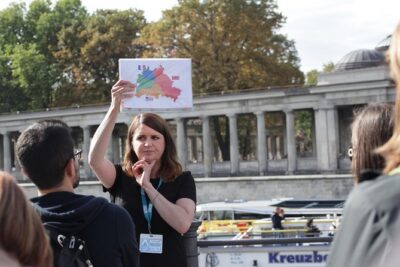

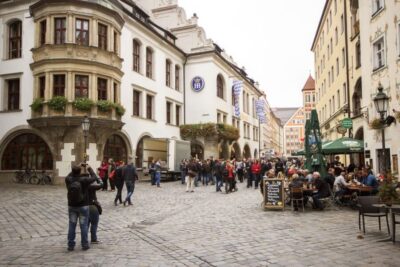

Berlin’s Best: 2 Hour Walking Tour Third Reich and the Cold War
Read our review →
Third Reich Berlin: Hitler and WWII Walking Tour
Read our review →Browse the lists this tour appears in