
Reviewed · THIRD REICH & WWII TOURS
Munich: Third Reich and World War II Private Guided Tour
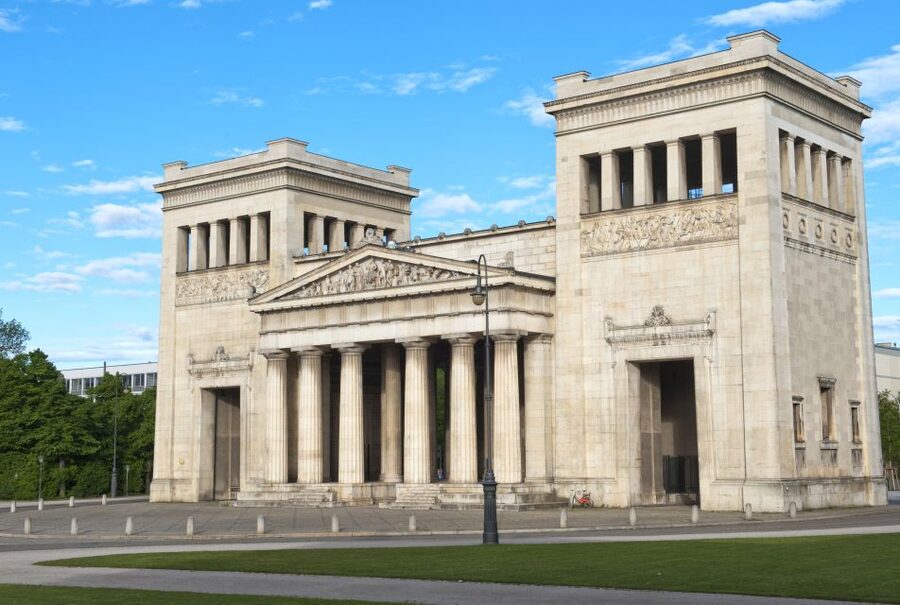
Munich’s streets can feel like any good Bavarian weekend spot, until you walk the same sidewalks that carried Nazi crowds, speeches, and propaganda. This private guided walk traces Third Reich history through the city’s most meaningful Nazi-era locations, ending with the mass-rally ground at Königsplatz.
What I like most is the focus on cause and consequence, not just dates. You also get an optional visit to the NS Documentation Center, which adds context beyond what you see outside in the squares and buildings.
One thing to consider: the subject matter is heavy. You will talk about victims, Nazi responsibility, and even organized resistance, so come prepared for a serious tour tone.
Quick hits you will care about
- Marienplatz to Königsplatz: you walk the central Old Town route where Nazi power became public theater
- Hofbräuhaus and the Beer Hall Putsch sites: you connect a failed coup to Hitler’s later rise
- Führerbau and the Munich Agreement: you see how political deals played out in real Nazi office space
- Königsplatz and book burnings: you reach the grounds tied to mass rallies and censorship
- White Rose resistance is part of the story: the tour includes organized opposition, not only Nazi propaganda
- Optional NS Documentation Center (4.5 hours): indoor exhibits with photos, documents, and media stations
Getting your bearings at Marienplatz, right in the political spotlight
The tour starts where Munich always starts for visitors: Marienplatz. Your meeting point is in front of the hotel BEYOND by Geisel, Marienplatz 22, 80331 Munich, opposite St Peter. You do not need to go into the hotel, it’s just a handoff spot for your guide.
From there, you move through the Old Town streets that became stages for public ideology. This is the smart way to understand the Nazi years: you do not learn this era from a museum placard first. You learn it by standing in the same civic spaces where crowds gathered and messages were delivered.
You will also notice how the city reads like a postwar palimpsest. One of the key visual reminders is the rebuilt Neues Rathaus. Because the downtown was heavily damaged during the 1945 bombing, the reconstruction becomes a silent marker of the break between prewar Munich and the city that came after.
More Third Reich history tours:
- Munich: Third Reich & WWII Walking Tour
★ 4.6 · 6,181 reviews - Third Reich Walking Tour Munich
★ 4.5 · 4,291 reviews - Munich: Birthplace of the Third Reich Guided Walking Tour
★ 4.6 · 771 reviews
Hofbräuhaus am Platzl and the Nazi speech that helped shape the party
A major stop is Hofbräuhaus am Platzl, a famous beer hall that served as more than a place to drink. You will hear the story tied to Adolf Hitler’s speech there in 1920, when the National Socialist German Workers’ Party was effectively launched into the public eye.
This is where the tour gets practical for your understanding. It’s not only about Nazis doing Nazi things. It’s about how they turned a political movement into mass culture. Bier halls, public squares, and big back rooms were communication tools. Your guide’s job is to connect the location to the goal.
If you care about context, this is also a moment where the guide can clarify how the party’s origin story mattered. You will learn about the emergence of the Nazi movement and the role of supporters, which helps explain how a fringe idea could become a governing reality.
Walking the Beer Hall Putsch route to Feldherrnhalle and Odeonsplatz
After Hofbräuhaus, you follow the famous Beer Hall Putsch route, moving toward Feldherrnhalle and Odeonsplatz. This matters because it shows you the physical path of a political gamble.
You will learn about the Nazi attempt to storm the Bavarian Defense Ministry, an event that is tied to the writing of Mein Kampf. The tour presents this as part of a larger arc: even when an attempt fails, it can still feed a political narrative, attract attention, and strengthen the leader’s myth.
Standing in these squares and near these monuments, you can see why this attempt became so symbolic. Even if you already know the headline of the Beer Hall Putsch, walking the route makes it feel like an actual sequence, not a textbook paragraph. Your guide also helps you put it into Munich’s specific role at that time.
When power moves into buildings: Führerbau and the Munich Agreement
One of the most striking stops is the former office buildings connected to the Nazi Party, including Führerbau, the Führer’s building. The guide points out how these structures were tied to governance and ceremony, not just speeches and rallies.
A key detail you will cover here is the Munich Agreement signed in 1938, where Chamberlain and Hitler met. This is one of the tour’s big “pay attention” moments because it links local settings to international politics.
What I appreciate about this part of the walk is the restraint. You do not only hear accusations. You learn how a system functions when buildings, bureaucracy, and public events all share the same ideology. That is the real lesson hidden in the architecture.
Also, since this is a walking tour, you are not rushed past it. You get time for your own questions, especially if you want to understand how ordinary city life and official Nazi power could coexist in the same streets.
Weigh these Munich picks against each other
- From Munich: Neuschwanstein & Linderhof Castle Full-Day Trip
★ 4.6 · 14,646 reviews - Neuschwanstein & Linderhof Castle-Fairytale Day Tour from Munich
★ 4.5 · 7,275 reviews - Dachau Concentration Camp Memorial Site Tour from Munich by Train
★ 4.5 · 5,637 reviews - Neuschwanstein Castle Tour from Munich
★ 4.5 · 5,117 reviews
Resistance in Munich is not an afterthought: White Rose and refusal to comply
A tour like this can easily turn one-note. This one avoids that trap by including resistance groups, including the White Rose Group led by five university students.
That inclusion changes the tone in a helpful way. It keeps you from leaving with only a story of propaganda and control. You also come away with the idea that opposition existed, even under extreme pressure.
In practical terms, this part is also where you will likely ask the most personal questions. Who could resist? What did courage look like when the state was watching? Your guide encourages difficult questions about the role of Munich and its citizens in the rise and fall of National Socialism.
And yes, this is emotionally heavy material. But it’s also how you keep the tour honest.
Königsplatz, mass rallies, and book burnings you cannot unsee
The final outdoor stop is Königsplatz. This area is tied to Nazi party mass rallies and book burnings. Your guide explains how the Nazi movement used public spectacle and controlled culture as tools of power.
If you have ever wondered why authoritarian regimes fight ideas as much as they fight armies, this stop makes the logic visible. When crowds are gathered and texts are destroyed, it’s not random. It’s intimidation, but it’s also a bid to control what people are allowed to think.
Königsplatz is also a fitting place to close the walk because it pulls together what you saw earlier. Marienplatz taught you about public theater. The beer hall explained the party’s origin story in a public setting. Führerbau and the office sites show power formalized in buildings. Königsplatz shows the end of that path in a more overt, coercive form.
You will also see the Monument to the Victims of National Socialism along the way. That reminder is important. It keeps the tour from becoming a sightseeing route through dark sites. The point is to connect the streets to human outcomes.
The 4.5-hour option at the NS Documentation Center: what it adds
If you choose the 4.5-hour option, you add a visit to the Munich Documentation Center for the History of National Socialism. This is the part that turns your street walk into a clearer story.
Outside, you are reading locations. Inside, you are reading evidence. The center includes photographs, documents, and texts, plus film projections and media stations. You will see material that illustrates the origin and rise of the Nazi movement, the war period, and the postwar phase.
Why is this valuable? Because many people can look at buildings and squares and still miss the machinery behind them. The center helps fill gaps in cause and effect. It also helps you understand not just what happened, but how it was explained, recorded, and remembered.
Your guide is there to connect the exhibits back to what you saw outdoors, and to help answer your questions about the causes and consequences of National Socialism and WWII. That Q and A time is often where the tour earns its money.
Price and value for a private 3-hour (or 4.5-hour) walk
The price is $311 per person, and it’s a private walking tour with a live guide. The value depends on what you want from Munich.
If you want quick highlights, you could cobble together the sites yourself. But if you want the story stitched together, this is where paying makes sense. You are not just paying for access to sites. You are paying for interpretation, route planning, and the ability to ask hard questions in real time.
You also get a real-world pacing advantage. A private group means you are not stuck listening while you all struggle to hear over other people. The guide can tailor explanations to your interests, whether that’s the Beer Hall Putsch, the Munich Agreement context, or resistance like the White Rose.
One small note on expectations: this is a walking tour in central Munich. Plan comfortable shoes and a calm pace. The content is intense, so the physical comfort matters more than usual.
Language options and the guide experience
The tour offers live guides in English, German, French, Italian, and Spanish. That matters in a subject like this, where phrasing and nuance can change your understanding.
The overall guest feedback is strong, and one guide name that stands out in the details provided is Mireya. That’s a good sign because the quality of the guide is the difference between a tour that feels like facts and one that feels like a guided understanding of why things happened.
Who this tour fits, and who might prefer something else
This tour is a strong match if you:
- want a structured walking route through Munich’s Nazi-era sites
- prefer to learn through place-based context rather than only reading
- appreciate resistance and victims being part of the narrative, not treated as an add-on
- like asking questions and getting straight answers from a live guide
It might not be ideal if you:
- want a light, casual sightseeing style
- get overwhelmed by topics that directly address Nazi crimes and Munich’s role
- need a very flexible itinerary, because the value comes from sticking to the planned route
Should you book this Munich WWII private guided tour?
I think this is worth booking if you care about understanding how ideology became public life in Munich, not just memorizing dates. The route from Marienplatz through the Beer Hall Putsch sites, toward Führerbau and Königsplatz gives you a clear sense of movement from early propaganda to mass spectacle. Add the NS Documentation Center if you want more evidence, photos, documents, and media support to anchor what you saw outdoors.
If you book, come with curiosity and respect. Bring comfortable shoes, and give yourself time to sit with what you learn. This tour does not pretend that the past is tidy. That honesty is exactly why it’s powerful.
FAQ
Where does the tour meet?
Meet your guide in front of hotel BEYOND by Geisel at Marienplatz 22, 80331 Munich, Germany, opposite St Peter. Please do not enter the hotel, it is only a meeting point.
How long is the tour?
The walking tour is 3 hours (270 minutes). There is also a 4.5-hour option that includes an extra stop at the NS Documentation Center.
Is the NS Documentation Center included?
The NS Documentation Center visit is included only with the 4.5-hour option.
What language options are available?
The live guide is available in English, German, French, Italian, and Spanish.
Is this tour wheelchair accessible?
Yes, the tour is wheelchair accessible.
What are the cancellation and pay-later options?
You can cancel up to 24 hours in advance for a full refund, and you can reserve now & pay later (you pay nothing today).
Fresh reviews out of Munich
- Munich: Bulli Tour★ 5.0 · 9 reviews
- Neuschwanstein Castle Small-Group Guided Day Trip from Munich★ 5.0 · 9 reviews
- Private Day Trip from Munich to Eagle’s Nest and Hallstatt★ 4.5 · 9 reviews
- Munich: Highlights Walking Tour with a Guide★ 4.4 · 9 reviews
- From Munich: Private Guided Tour to Rothenburg ob der Tauber★ 5.0 · 9 reviews
- Private and full rickshaw tour in the English Garden★ 4.5 · 10 reviews
- Exploring Munich by Pedicab: Premium Two Hour Tour★ 5.0 · 10 reviews
- Segway Tour Munich Old Town 3 hours★ 4.5 · 10 reviews
Third Reich & WWII Tours, compared.
Berlin’s Best: 2 Hour Walking Tour Third Reich and the Cold War
Read our review →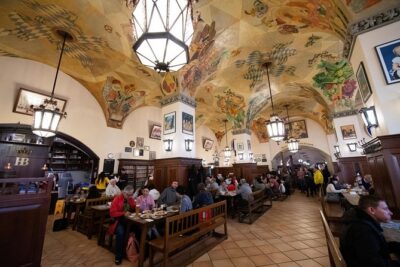
Third Reich Berlin: Hitler and WWII Walking Tour
Read our review →
Walking Tour of Former Nazi Party Rally Grounds
Read our review →
Browse the lists this tour appears in