
Reviewed · THIRD REICH & WWII TOURS
Munich 3-Hour Segway Tour: Nazi Munich & Royal Architecture
Munich has a talent for mixing grandeur with the parts of history you really should face. This 3-hour Segway tour pairs Nazi Munich and World War 2 context with some of the city’s grandest buildings, so you get both the wow and the weight, rolling past places like Königsplatz and the Maximilianeum. Guides like Canaan, Bob, Tom, Steve, and Mat show up in the guide chatter, and the common thread is friendly training plus strong storytelling.
Two things I really like about the way this tour is built: the small group size (8 max) keeps it interactive, and the early coaching makes the Segway feel manageable fast, even if you have never ridden one before. The main drawback to consider is that this is not a museum-paced outing, it is a ride-and-photo-stop format. Also, the tour has clear physical limits, so if you have mobility, back, or recent-surgery concerns, you will want to skip it.
Key Things I’d Prioritize On This Munich Segway Ride
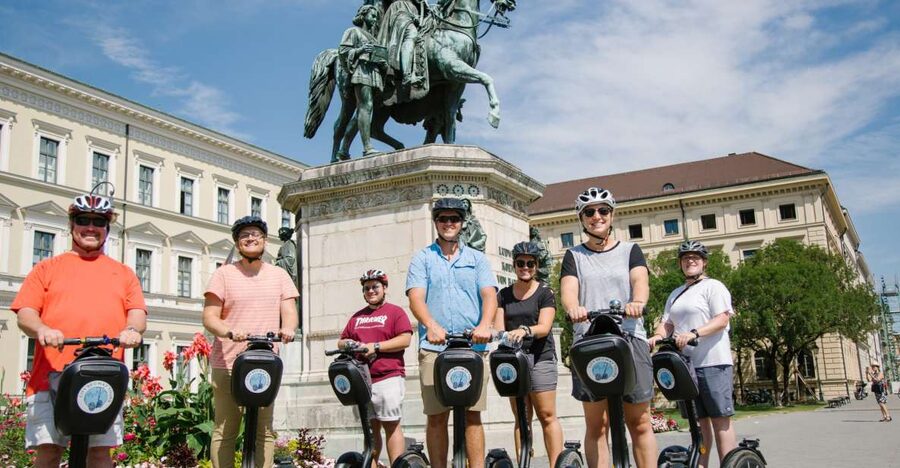
- Real training first, including a safety briefing time before you start rolling
- A tight route that hits both “royal” highlights and hard WWII context
- Lots of exterior architecture stops, so you see more in less time
- Eisbachwelle (river surfers), a Munich must-see even if you only get a quick look
- English-speaking guides with a group format that actually lets you ask questions
Riding Munich Like a Local, With a Guide Who Keeps It Moving
A Segway is a funny thing. It feels like a shortcut until you realize it is also a training session and an etiquette lesson. The payoff is you cover big distances quickly while still stopping often enough to look, take photos, and absorb what you are actually seeing.
This tour is set up around a 3-hour flow with a safety-and-confidence start, then a ride through the historic core and beyond to key architecture around the Isar River area. Because the group is limited to 8 participants, the guide can slow down when someone needs a reset, and that matters when you are riding in real city traffic.
The tour also has a clear thematic split: you start in the center of Munich’s visual power, then move into the story side, including how Munich’s role in World War 2 shaped what you can still see today. The goal is not to be dark for the sake of dark, it is to help you understand why certain buildings and spaces feel the way they do.
More Segway Tours in Munich
- Munich: City Highlights Guided Segway Tour
★ 4.6 · 266 reviews - Munich Segway Tour
★ 5.0 · 181 reviews - Munich: City Highlights Guided Segway Tour
★ 4.5 · 161 reviews
Meeting at Fat Tire Tours, Karlsplatz 4, and Finding Your Way Fast
You meet at Fat Tire Tours, Karlsplatz 4. The directions are simple: from the Karlsplatz (Stachus) McDonalds, stand with your back to the city gate, turn right along Sonnenstrasse, and after about 50 meters you should see the shop on the right in the courtyard of Karlsplatz 4.
This matters because the tour is only 3 hours, so you do not want to waste time hunting for a meeting spot. If you get there a few minutes early, you will have time to settle, fill out any paperwork if needed, and get ready to ride.
The ride ends back at the same meeting point, which is helpful because you are not forced into a complicated “start here, finish somewhere else” day.
Safety Briefings and Segway Skills: You Will Learn the Basics Before You Hit the Streets
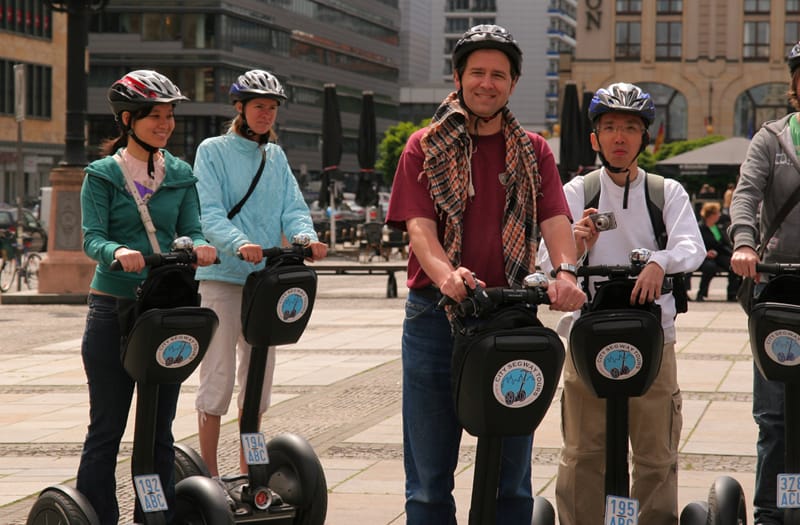
Before you see the big highlights, you get orientation and safety instruction, plus a proper safety briefing block at the visitor area (and a second safety briefing segment during the early part of the route). That is not just paperwork. It is the moment when you learn how to balance, how to steer, and how to stay smooth instead of jerky.
Comfort is a big deal here. You should wear comfortable shoes and clothes, and open-toed shoes are not allowed. The tour also has clear weight limits, from 45 kg (100 lb) to 115 kg (250 lb), because the Segway fit and balance need to stay within a safe operating range.
From the guide stories, the standout pattern is how quickly people feel confident after hands-on coaching. Several guides are specifically praised for giving one-on-one training so you are not left flailing when you should be enjoying the view.
Karolinenplatz to Königsplatz: Classical Munich Comes Into Focus
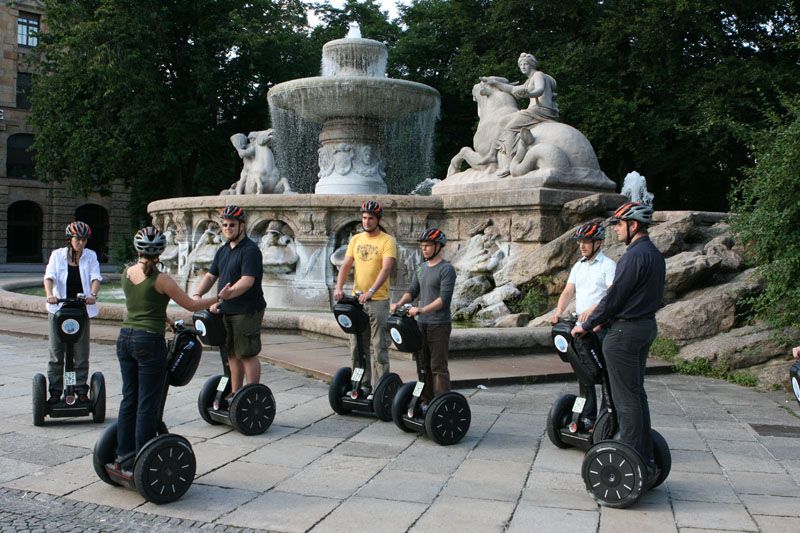
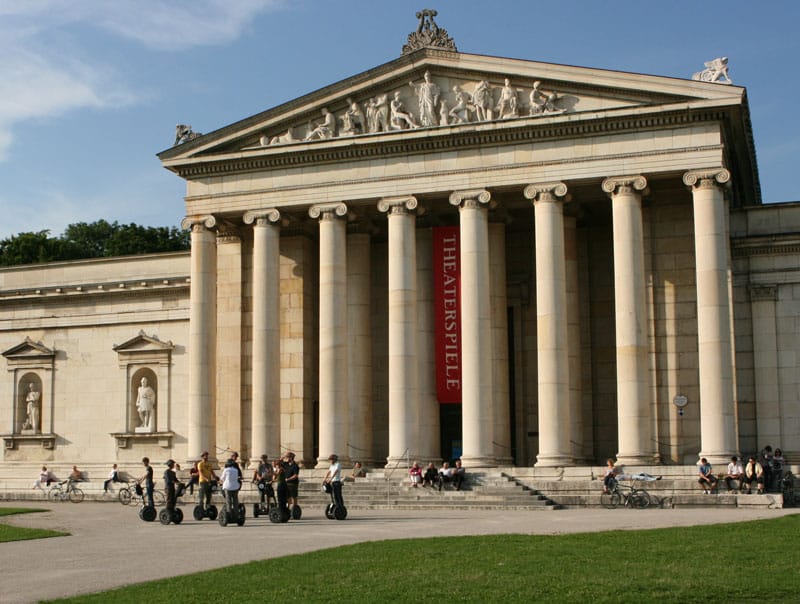
Once you start riding, you begin with photo stops and short sightseeing segments that keep things moving. One early stop is Karolinenplatz, followed by Königsplatz, where the architecture is the star.
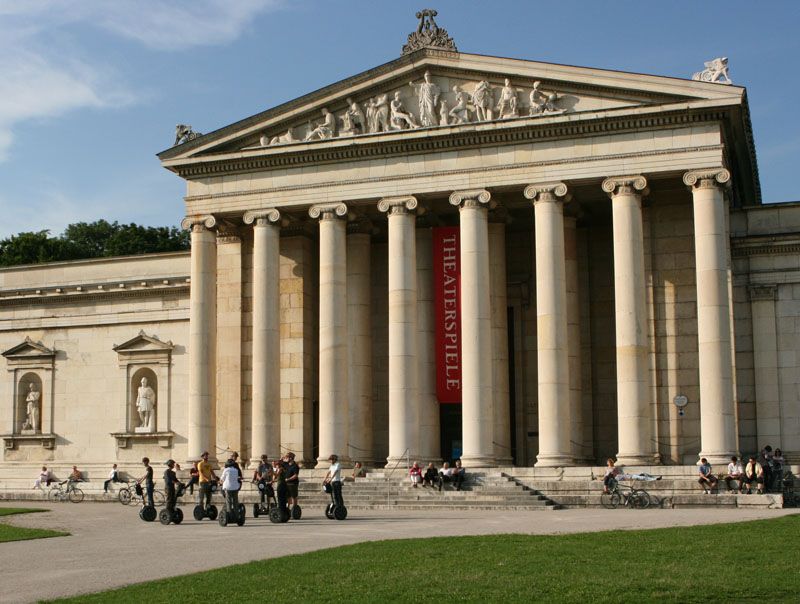
At Königsplatz, you are looking at a space modeled on the Acropolis in Athens. That connection is valuable because it helps you read Munich’s grand look as part of a bigger European tradition. This is where you shift your brain from modern-day Munich back into “how power wanted to look” mode.
The brief photo-stop format here has a tradeoff. It is fast, but it keeps the tour from turning into a long museum-like shuffle. If you prefer slow and detailed, you might later come back on your own, but for first-time context, this pacing works.
More Third Reich history tours:
- Munich: Third Reich & WWII Walking Tour
★ 4.6 · 6,181 reviews - Third Reich Walking Tour Munich
★ 4.5 · 4,291 reviews - Munich: Birthplace of the Third Reich Guided Walking Tour
★ 4.6 · 771 reviews - Munich World War II Sites Including Dachau Concentration Camp
★ 4.5 · 570 reviews
Alte Pinakothek and Pinakothek der Moderne: Art Buildings You Can Spot Even From a Ride
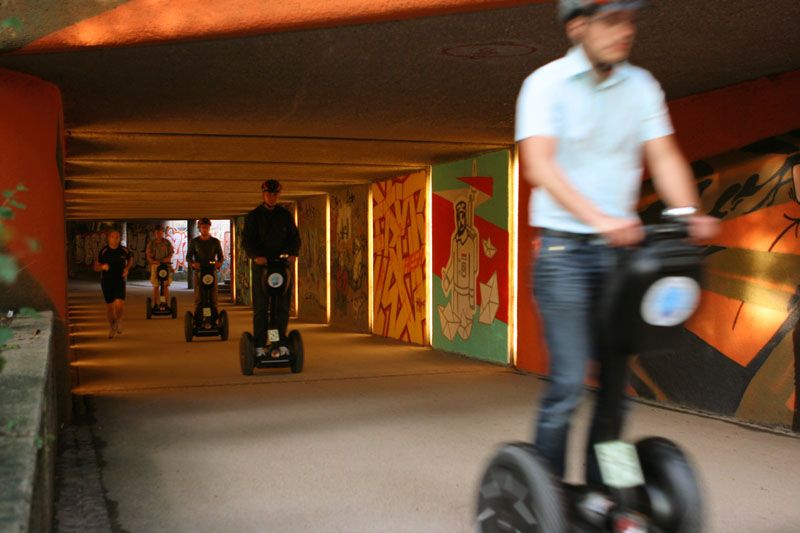
Next up are two major art institutions: Alte Pinakothek and Pinakothek der Moderne. Even if you are not going inside, these stops are still useful because they train your eye. You start noticing how Munich’s cultural identity is built into stone and sightlines, not just into museum labels.
The Alte Pinakothek stop gives you an anchor for classic art prestige, while Pinakothek der Moderne signals a more contemporary, forward-moving cultural identity. Standing outside, even briefly, helps you connect what you see later in a museum or walk-through with the building’s vibe.
A practical note: those are short stops. This tour is built for seeing, not for entering. If you want to go inside, you should plan that for a separate day.
Siegestor to Odeonsplatz: Monumental Streets and Big-City Atmosphere
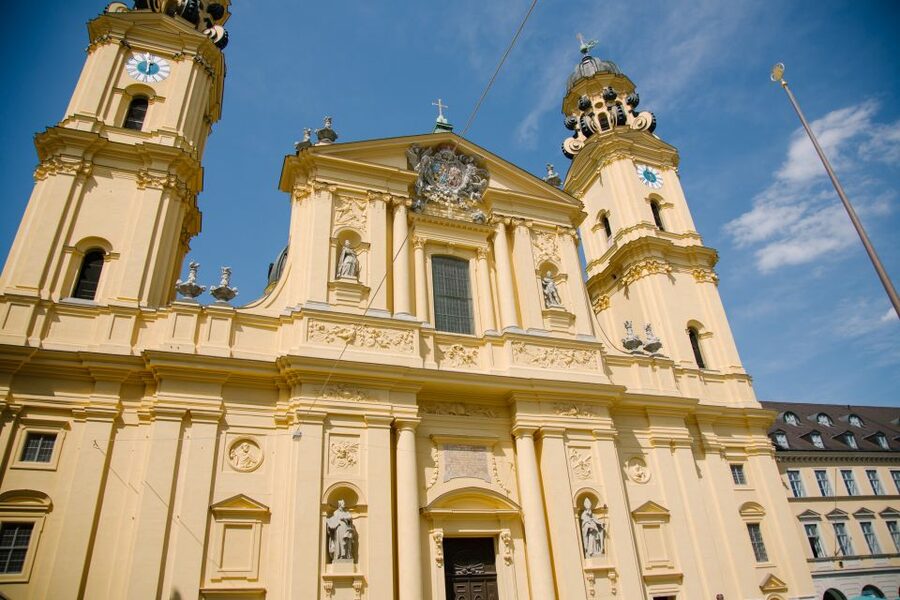
From there, you roll past Siegestor and on to Odeonsplatz. These are the kinds of places where Munich feels like it has a central stage. You do not need a guide to admire the scale, but you do benefit from having someone connect it to how the city grew, what it valued, and why certain axes and plazas matter.
The tour also includes time for quick photos and short explanations. That is perfect if you want to get your bearings. It also sets you up to navigate the city later without feeling lost.
One detail that is worth knowing: the ride can involve busy Munich roads. The guide gives etiquette guidance, and the training earlier in the day is designed to help you stay steady and predictable. That combination is what makes the experience feel smooth rather than stressful.
Munich Residenz and Haus der Kunst: Royal Grandeur Without the Museum Lines
You stop at Munich Residenz and Haus der Kunst as part of the grand-architecture focus. The Residenz is one of those names that tells you to expect status and scale, and you get a quick photo and sight read from the outside viewpoint.
Haus der Kunst adds a different angle. Even though this tour does not promise a long interior visit, it is still worth it because you get the relationship between art, authority, and public-facing culture. Munich tends to show its priorities in the way it builds, and these stops are where that becomes visible.
Eisbachwelle and the Isar River: The Mood Lightens for a Reason
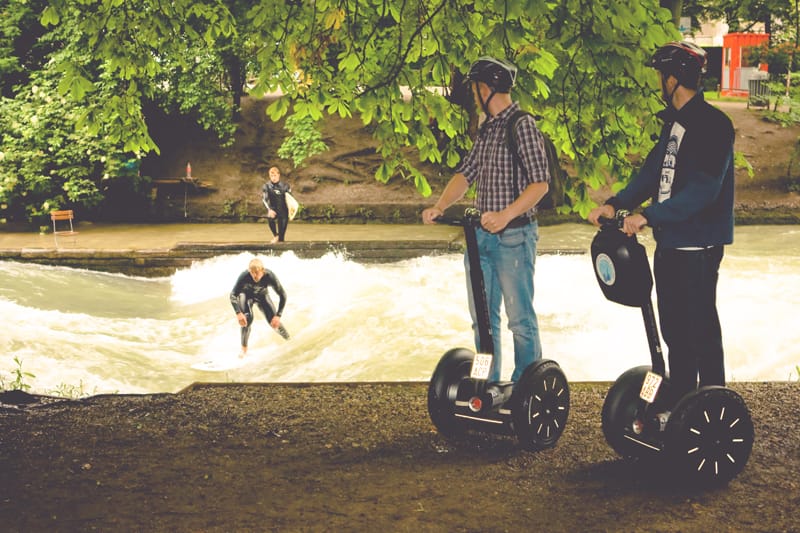
At some point, you get to one of the most “only in Munich” sights: Eisbachwelle, the world famous river surfing spot. The tour frames it as the first in the world, and while you do not need to become a surfing expert to enjoy it, you do need to respect that Munich’s urban nature can be surprisingly playful.
You also get time at the Isar River with photo and sightseeing moments. The Isar break in the route is not accidental. After heavier topics, the day needs a reset. Watching surfers or simply seeing the river activity helps you remember you are in a living city, not a history exhibit.
The tour’s structure is good at balancing tone: the architecture and power story continues, but the pace and the change of scenery prevents the whole day from feeling like one long lecture.
Angel of Peace and Maximilianeum: Where Symbol Meets Politics
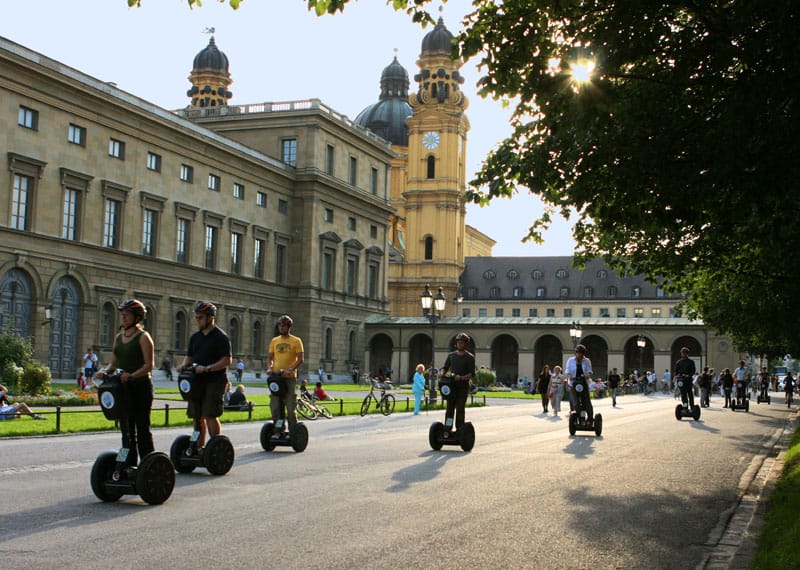
The Angel of Peace, Munich stop is a reflective moment in the route. Even if you only get a photo, it signals that Munich does not only remember power and conflict, it also marks values and aftermath.
Then you roll to the Maximilianeum, and this is one of the key “story with facts” moments on the ride. It is home to the Bavarian state parliament since 1949. That specific date matters because it ties the building to post-war governance, not just earlier grandeur.
The tour positions Maximilianeum and the surrounding story as part of Bavaria’s royal architecture and the city’s evolution. When you connect that to the earlier WWII context, the tour becomes more than sightseeing. It becomes a timeline you can see.
Maximilianstraße and the Bavarian State Opera: Culture on a Grand Boulevard
You continue with stops along Maximilianstraße, then toward Bavarian State Opera. Even without entering, these places help you understand what Munich invests in when it wants culture to be central.
Maximilianstraße is especially useful for first-time visitors because it gives you a linear sense of the city. You can later use that mental map when you plan walk routes, transit, and museum visits.
The opera stop lands in the “royal architecture” mood zone, and that is where you get the emotional whiplash that makes Munich so interesting. You leave the river and peace symbolism, then return to the grandeur language the city speaks.
How This Tour Handles Nazi Munich and WWII Context
This is the part of the day that deserves your full attention. The tour explicitly covers Munich’s role during World War 2 and includes remnants of the rise of Nazism. The aim is to connect the story to physical places you pass, so you understand why certain city areas can feel heavy even when they look beautiful.
I like this approach because it avoids turning history into a pure lecture. You are not just hearing about events, you are seeing the urban footprint those events left behind, then moving forward through the city’s changing identity.
That said, do not book this if you are looking for a purely light, funny day. The tour can still feel upbeat thanks to the guides’ humor, but it has real weight. If that makes you tense, you can balance it by pairing the tour with a calm evening after you ride.
Weather, Raincoats, and What to Expect When It Is Cold
The tour runs rain or shine, except for extremely inclement weather. That means you should plan for wet pavement and wind chill.
Raincoats are included, and you should bring cash if you want to buy a snack or drink separately (food and drinks are not included). On cold days, the experience has included extra warmth like jackets and gloves, based on guide-provided gear experiences shared by participants.
If you get cold easily, dress like you are going to spend time outdoors moving at speed. The faster you ride, the more the wind can bite.
Price and Value: Is $91 Worth It for a 3-Hour Segway Loop?
At $91 per person, you are paying for a few things that add up in practical value:
- A guided ride that connects architecture with story, including WWII context
- Hands-on Segway training and safety instruction, not just a quick “hop on”
- A small group cap of 8, which helps you get real answers
- English-speaking guide support
- Raincoats included, plus the general setup that saves you guesswork
Is it cheap? No. But for many first-timers, this is one of the most efficient ways to cover Munich’s central sights in a single morning or afternoon slot without spending half the day inside transit and lines.
Think of it like this: you are paying for time saved and confidence earned. Once you learn the Segway basics, you can also explore streets more freely for the rest of your trip with a better mental map.
Who Should Book This Segway Tour, and Who Should Skip It
This tour is a great fit if you want:
- A first look at Munich’s major sights with guidance
- A fun transport option that still gets you outside and seeing real places
- Architecture and story in the same session, including the city’s darker chapters
- A small-group feel where questions are welcome
It is not a good fit if you:
- Are pregnant, have back problems, recent surgery, or mobility impairments
- Have low fitness or feel uncomfortable with balance-focused movement
- Are under 14, or if minors under 18 require an adult to accompany or complete insurance paperwork
- Fall outside the weight limit range
Also, open-toed shoes are not allowed and alcohol or drugs are prohibited. Keep it clean, keep it safe.
Should You Book This Nazi Munich and Royal Architecture Segway Tour?
If you want a day that mixes royal architecture with WWII context, and you like the idea of learning a new way to move through a city, I would book it. The Segway training and small group size are the biggest reasons. You are not just paying to ride, you are paying to ride with confidence and get answers as you go.
I would skip it if you cannot handle balance-based activity or if you prefer museum time over exterior stops. And if heavy historical content is hard for you, plan your emotional pacing accordingly.
If you are ready for a smart, fast introduction to Munich that does not dodge the difficult parts, this is a strong start.
FAQ
How long is the Munich Segway tour?
It lasts about 3 hours.
Where do I meet the tour?
Meet at Fat Tire Tours at Karlsplatz 4.
Is the tour guided, and what languages are offered?
Yes. You’ll have a live guide in English or German.
What should I wear or bring?
Wear comfortable shoes and comfortable clothes. The tour also says to bring cash. Raincoats are provided.
Is the tour available in bad weather?
The tour runs rain or shine, except for extremely inclement weather.
Who can join (age and weight limits)?
Participants must be at least 14 years old. You must weigh between 100 pounds (45 kg) and 250 pounds (115 kg).
What is included, and is food or drinks provided?
Included: the Segway, orientation and safety instruction, an English-speaking guide, and raincoats. Drinks and food are not included. Alcohol and drugs are not allowed.
Fresh reviews out of Munich
- Munich: Christmas Markets Food & Drink Tour★ 4.6 · 50 reviews
- Munich: Walking tour of the old town with all your senses★ 4.5 · 51 reviews
- Munich: Scavenger Hunt Self-Guided Tour★ 4.1 · 51 reviews
- Hidden Architectural Gems of Munich (Max. 16 guests)★ 4.9 · 52 reviews
- Shared Departure Transfer: Munich Central Station to Munich Airport★ 3.5 · 54 reviews
- Hard Rock Cafe Munich with Set Lunch or Dinner★ 3.5 · 54 reviews
- Quatsch Comedy Club München: Die Live Show★ 4.6 · 56 reviews
- From Munich: Royal Fairytale Tour★ 4.9 · 56 reviews
Third Reich & WWII Tours, compared.
Berlin’s Best: 2 Hour Walking Tour Third Reich and the Cold War
Read our review →
Third Reich Berlin: Hitler and WWII Walking Tour
Read our review →
Walking Tour of Former Nazi Party Rally Grounds
Read our review →
Browse the lists this tour appears in