Reviewed · PRIVATE
Private Tour: Berlin by Trabant Stretch-Limousine
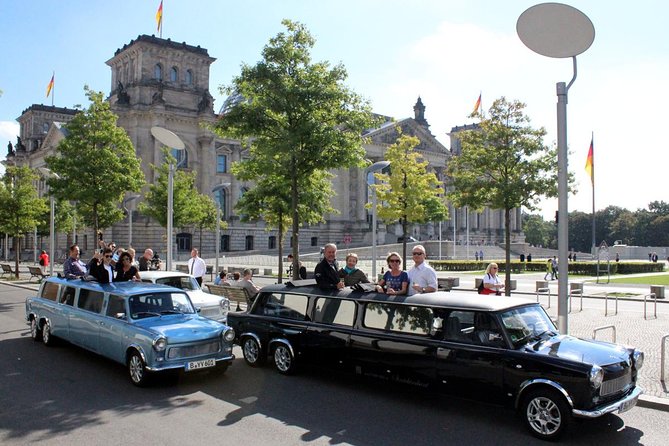
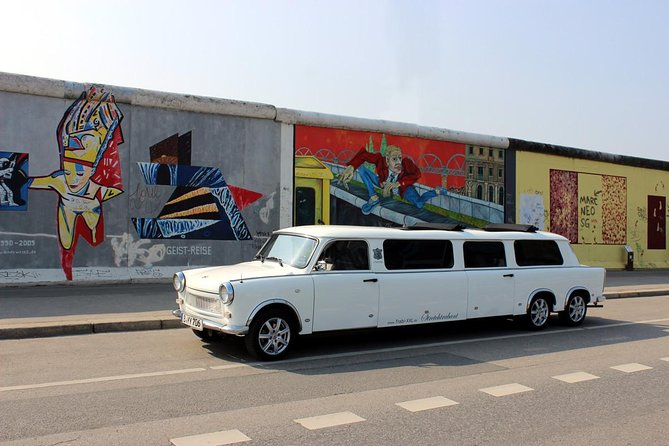
Berlin by Trabant Stretch-Limousine is interesting because you are not just sightseeing, you are rolling through the city in an instantly recognizable piece of East Germany. It turns big history sites into something you can point at, photograph, and actually feel part of the story.
I especially like the private, custom-feeling tour setup. You choose the pickup time, your guide shapes the drive around what you want to see, and the route hits major landmarks without making you walk yourself tired.
The main drawback is comfort. The car is built in a classic style, so you may need to stoop a bit getting in and out. If you have mobility limits, tell the provider in advance so you can plan a better option.
Key things that make this tour work
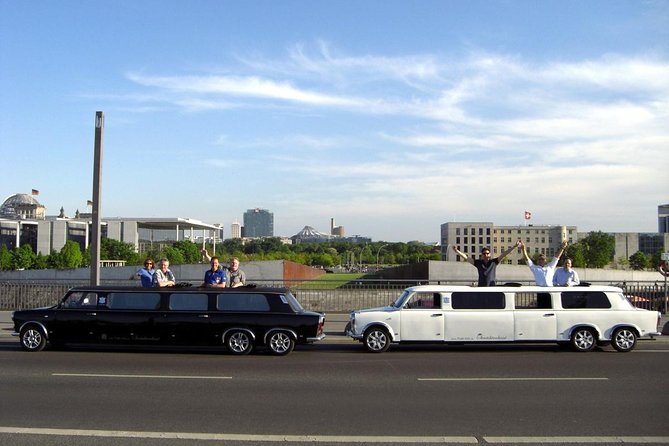
- A Trabi-XXL stretch limo gives you nonstop photo energy, even at the curb.
- Hotel pickup and drop-off keeps the route stress-free, especially if you want a first-day orientation.
- Cold War landmarks are handled with short, practical stops like Checkpoint Charlie and the Berlin Wall memorial.
- A private guide means you can ask questions and steer the pacing toward your interests.
- Legroom and light refreshments help on a 2.5-hour highlights loop.
- Mobility note matters, because getting in and out requires a forward stoop for most people.
Why riding a Trabant limo changes how you see Berlin
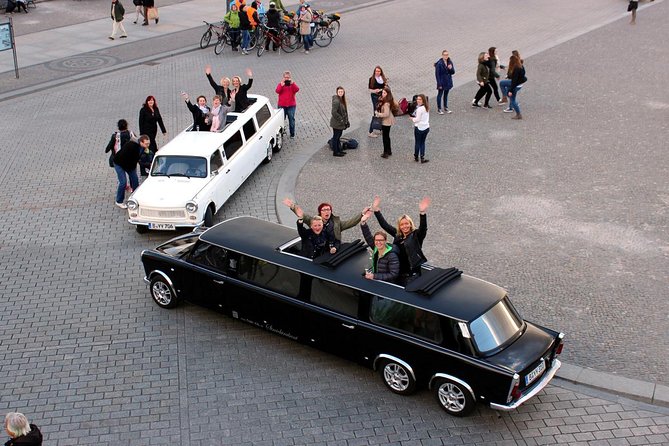
Berlin has a way of swallowing you in details. This tour helps you get oriented fast, because your guide is talking while you are moving, and the car itself forces attention. When you arrive at major sights, you are not blending in. People stop for pictures. That attention is fun, but it also makes the experience feel like an event, not just another check-the-box city tour.
The vehicle is a customized version of the former East German car, the Trabant, and that matters more than it sounds. It sets a theme from the start, so your guide can explain why certain sites matter in the days of the GDR, then connect that to what you see now. In other words, you get context while the city is unfolding out the window.
There is also a useful side effect: because you spend most of the time seated inside the limo, you can keep your energy for later days. Berlin is a walking city, but 2.5 hours of guided sightseeing by car can be a smart trade, especially if you are traveling with kids, celebrating something, or just want to see a lot without committing to miles on cobblestones.
Weigh these Berlin picks against each other
- Berlin: Reichstag, Dome and Government District Guided Tour
★ 4.7 · 18,288 reviews - Berlin: 1-Hour City Tour by Boat with Guaranteed Seating
★ 4.3 · 16,993 reviews - Berlin: TV Tower Standard Entrance Ticket
★ 4.4 · 15,883 reviews
Price and value for a private 2.5 hour highlights route
This tour costs $299.12 per group for up to 5 people, and it runs about 2 hours 30 minutes. If you fill the group, that comes to about $60 per person, which is the kind of pricing that starts to feel fair compared to two separate private guides, or a mix of taxis plus paid entry tours.
What you get for the money is the big stuff:
- a private guide
- hotel pickup and drop-off
- light refreshments
- a drive-and-stop route built around famous landmarks
The pacing is designed for “highlights,” not museum deep-dive. Many stops are short, often focused on photos and quick orientation. That is not a flaw. It is how you fit Brandenburg Gate, the Holocaust Memorial, Checkpoint Charlie, Museum Island, and the rest into one smooth loop without turning the day into a marathon.
Also worth noting: the tour is commonly booked about 33 days in advance on average. That is a hint that good time slots can disappear, particularly for first-day Berlin plans. If you have a specific schedule, it is worth booking earlier rather than waiting.
Getting in and out of the Trabi-XXL: comfort tips that save headaches
This is where you should pay attention before you fall in love with the idea.
The provider specifically warns that, because it is a Trabant-style vehicle, you typically need to stoop a little when getting in and out. For most guests, that works fine. Still, you should treat this as a real consideration, not a casual note. If you have reduced mobility, coordination issues, or knee or back limitations, ask in advance so they can help find a workable solution.
Inside, people report plenty of legroom, and the ride is positioned as a comfortable way to see sights. But comfort here is about practical seating and space, not a modern limousine that swallows you with zero effort. Think of it as a fun, retro vehicle with charm, plus the convenience of being driven.
One more practical point: the guide’s narration uses an audio system, and the sound can be affected by the vehicle acoustics. In practice, it is still usually easy to hear above road noise, but if you are hard of hearing, it is smart to mention that when you book.
The Berlin route: from major checkpoints to photo stops that matter
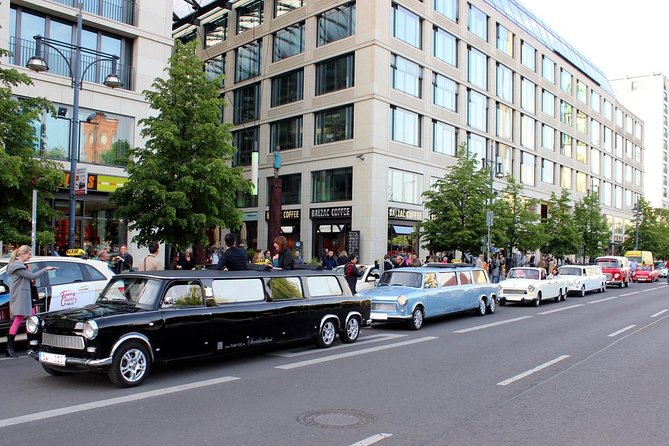
Your tour starts with pickup from your chosen location in Berlin at a time you select. Then you ride through key areas and stop at the highlights your guide thinks will fit your interests. Even when the itinerary is structured, you should expect some flexibility, because the whole point is a private route.
A typical flow includes these big moments:
- government-center streets and central squares
- the Berlin Wall memorial area
- Cold War crossings like Checkpoint Charlie
- UNESCO-listed Museum Island viewpoints
- the Holocaust Memorial
- the Reichstag area
- Alexanderplatz and Brandenburg Gate
- East Side Gallery for the mural stretch
Let me break down what each stop gives you, and where you might want to manage expectations.
Another way to spend a Berlin afternoon:
- Berlin: Boat Tour Along the River Spree
★ 4.4 · 11,252 reviews - Discover Berlin Half-Day Walking Tour
★ 5.0 · 9,624 reviews - Berlin: Government District around the Reichstag Guided Tour
★ 4.7 · 8,447 reviews - Berlin: Reichstag, Plenary Chamber, Cupola & Government Tour
★ 4.6 · 8,422 reviews
Potsdamer Platz and Gendarmenmarkt: classic city center on a tight timeline
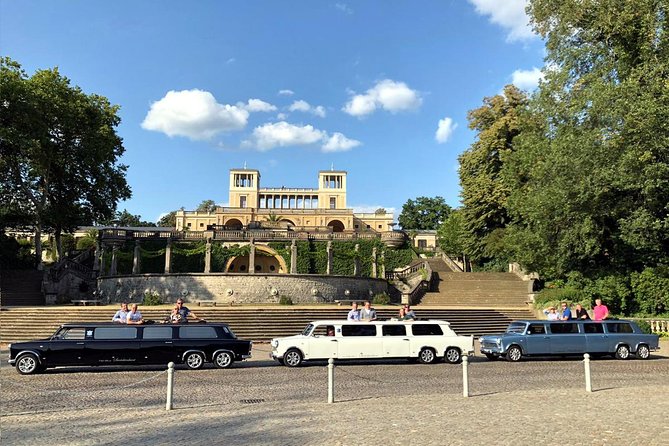
A drive through central Berlin sets the stage, especially around Potsdamer Platz. This area matters because it is one of the clearest places to see how Berlin rebuilt itself after division. Even if you are not getting out for long, your guide can point out what changed and why it looks the way it does now.
Then the tour typically moves toward Gendarmenmarkt, often described as one of Berlin’s most striking classicist squares. This is the kind of place where getting out for a quick look is worthwhile, even if your stop is only a few minutes. If you are a fan of architecture, pay attention to symmetry and the way the square frames the buildings.
In short: these are the “get your bearings” stops. They are not where Berlin’s trauma history hits hardest, but they help you understand the city’s shape before the tour turns toward the Wall and Cold War sites.
The Berlin Wall memorial and the sober reality of separation
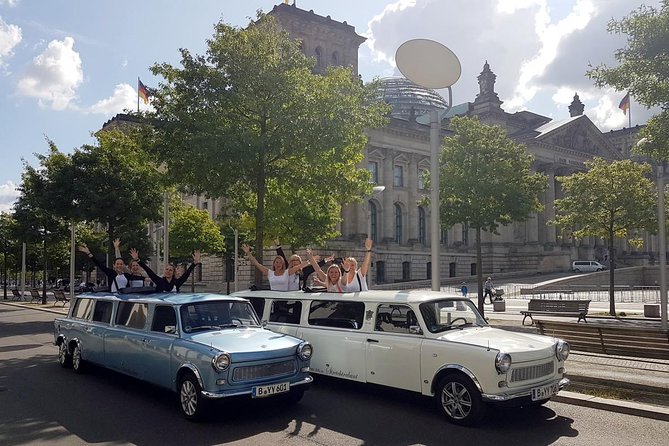
The Berlin Wall memorial stop is one of the most important parts of the tour. This is not a casual photo moment. The Wall is a heavy subject, and the memorial area is meant to be reflective.
I like that the tour time here is long enough to matter. A longer stop compared to some other photo stops gives you a chance to read what is there and absorb the idea of separation, barriers, and borders that were once daily life.
What to watch for:
- take a moment to look at details around the memorial area, not just wide views
- keep your phone mode ready for a quick shot, but don’t rush past the feel of the place
After this, the tour heads into Cold War territory where the story gets more specific.
Checkpoint Charlie: the Cold War crossing you can still recognize
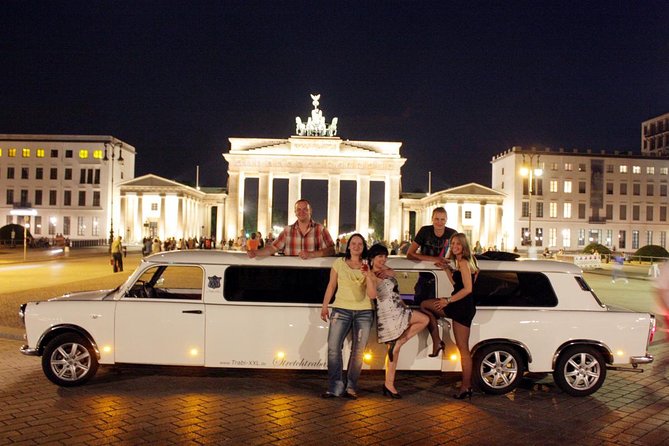
Checkpoint Charlie is a famous name for a reason. Even if you have seen photos before, seeing it in place helps your brain connect the map to real streets.
On this tour, your stop is short but purposeful. You get a visual anchor plus a guide who explains what the crossing meant during the Cold War. If you are the kind of traveler who likes facts you can connect to geography, this is one of the best stops for you.
If you want extra value here, ask your guide one focused question, like what the area looked like in everyday terms, or what made this particular crossing so important. Because it is private, you are not stuck with a group pace.
Museum Island and the UNESCO core: where Berlin puts culture front and center
The tour typically includes a stop near Museum Island, a UNESCO-listed area. Even if you do not enter museums, this is a great “view and orientation” zone.
What I like about Museum Island in a short stop is that it helps you see the contrast Berlin offers. You have moments of separation and memory just a few stops earlier, and now you are looking at a part of the city associated with learning, culture, and public institutions.
Your guide can connect this to how Berlin became a city where different identities and eras stack in the same neighborhoods. That connection makes the architecture feel like a clue, not just scenery.
The Holocaust Memorial: time for reflection, not a quick drive-by
The Holocaust Memorial is the kind of stop where the right approach is calm and respectful. The experience is sober, and it is not meant to be rushed.
On this tour, the stop is brief compared with other parts of the day, but it still gives you enough time to walk through and get your first emotional sense of the place. If you want more time, this is the one stop where I would plan extra attention if your schedule allows later on your own.
This is also a good moment to slow down your curiosity and let the memorial do its job. You can still ask your guide questions, but try not to treat it like a “must photograph” challenge.
Brandenburg Gate and the government area: symbols at street level
The tour wraps into big Berlin symbols, starting with Brandenburg Gate and continuing past major government districts. This area is powerful because it sits at the intersection of Berlin’s modern identity and its past.
Your guide can explain how the gate became a symbol, and why it is tied to political shifts over time. When you see it from the street, you understand why it is so often photographed. It is not just pretty. It is central to how Berlin tells its story.
You may also pass or stop near the Reichstag Building area. The Reichstag district connects the tour theme with present-day Germany’s political life. Even a short stop helps you orient where the government sits in the city grid.
Alexanderplatz and the modern city pulse
The route often includes Alexanderplatz, which is one of Berlin’s best-known squares for everyday city life. This is where the tour theme shifts from division and memory toward how Berlin functions now.
If you are doing this as a first-day highlights tour, Alexanderplatz is a helpful final “anchor point.” After the Wall story and the memorials, it gives you a sense of current energy and where people actually move around the city.
It also sets you up for practical planning. From this zone, you can often connect to other neighborhoods depending on what you want next.
East Side Gallery: the mural version of the Wall story
A classic highlight for many visitors is the East Side Gallery. On this tour, you stop for a short photo session and a quick look at the famous mural wall stretch.
This is history told through art and public expression. It does not replace memorial spaces. It complements them, showing how Berlin’s narrative can evolve from division to statement.
If you care about photography, bring a phone camera strap or a small crossbody bag so you can move without fumbling. The crowd can also change quickly in this area, so having a quick plan helps.
Who this tour suits best (and who should choose something else)
I think this is a great fit for:
- couples and small groups who want private attention
- travelers who want a first-day orientation with major landmarks
- families with kids who like the novelty of a celebrity-feeling vehicle
- anyone who wants a guided explanation that connects landmarks to Cold War and GDR context
You might want a different style of tour if:
- you need a very high level of mobility assistance, because getting into and out of the car can require a stoop
- you want long museum stays or deep interior access, because this is a highlights and photo-focused route
- you dislike short stops and prefer slower, longer walks in fewer neighborhoods
Also, keep your expectations aligned with the fact that this is a drive-and-stop format. You will see a lot in 2.5 hours, but you will not linger for hours at every site.
Should you book this Berlin Trabant limo tour?
Book it if you want a fun, photo-friendly way to connect Berlin’s major sights with the story of division and reunification, and if the private pickup makes your day easier. I also like it as a planning tool. After this loop, you usually know where you want to return on foot.
Skip it or ask extra questions if mobility is a concern. The vehicle is part of the experience, but the stoop note is real, so plan for it. And if you want quiet, museum-only time, look for a walking or longer-stop option instead.
If you do book, one smart move is to tell your guide what kind of history you care about most, like the Wall, everyday life in the GDR, or how Berlin reinvented its city center. That kind of direction helps your guide make the route feel tailored, not templated.
FAQ
How much does the Berlin Trabant Stretch-Limousine private tour cost?
It costs $299.12 per group, for up to 5 people.
How long is the tour?
The duration is about 2 hours 30 minutes.
Is hotel pickup and drop-off included?
Yes. The tour includes hotel pickup and drop-off, and you can request pickup from any location you choose in Berlin.
Is this a private tour?
Yes. It is a private tour, and only your group participates.
What language is the tour guide?
The tour is offered in English.
What sights are included in the stops?
The experience includes stops such as the Berlin Wall memorial, Checkpoint Charlie, the Holocaust Memorial, Museum Island, Brandenburg Gate, and East Side Gallery, plus other central Berlin sights along the route.
Is it easy to get in and out of the Trabant limousine?
You should expect to stoop a little when entering and exiting the car. The provider notes that basic mobility is helpful, and you can ask ahead if you need a solution.
Are service animals allowed?
Yes, service animals are allowed.
What is the cancellation window for a full refund?
You can cancel up to 24 hours in advance of the start time for a full refund.
Fresh reviews out of Berlin
- Berlin Uncensored: A History of Sex & Freedom★ 5.0 · 50 reviews
- Berlin Food & Cultural Tour: Must-Try German & Berliner Classics★ 5.0 · 51 reviews
- English Comedy Show with Pizza and Shots in Central Berlin★ 4.5 · 51 reviews
- Rude Bastards Tour of Berlin★ 4.8 · 51 reviews
- Private Taxi Tour of Berlin East and West and Neighbourhood approx. 4-6h★ 5.0 · 55 reviews
- Rickshaw Sightseeing City Tours Berlin – Rikscha Tours★ 4.0 · 55 reviews
- Berlin: City Highlights Express & Panorama Roof Terrace★ 4.9 · 55 reviews
- Berlin during Nazism – Tour in Italian★ 5.0 · 56 reviews
Private, compared.

Private Reichstag and Glass Dome Tour
Read our review →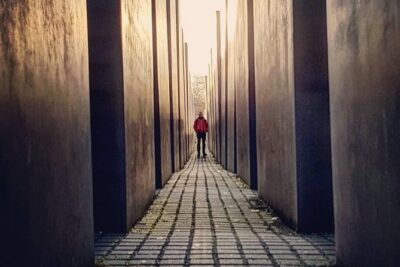
Berlin Private Complete History All Day Walking Tour
Read our review →
Munich Private Tour with a Local – Highlights & Hidden Gems
Read our review →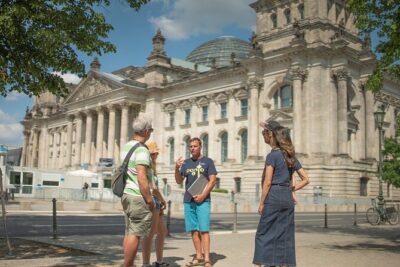
Private Walking Tour Berlin Third Reich Hitler and World War II
Read our review →
Your private 3-hour Hamburg driving tour with a former policeman
Read our review →
Strasbourg: Private City Sightseeing Boat Tour
Read our review →
Private Berlin: Iconic Sights and Hidden Gems Walking Tour
Read our review →