Reviewed · PRIVATE
Private Taxi Tour of Berlin East and West and Neighbourhood approx. 4-6h
Berlin’s East and West story is complicated, but this private 4 to 6 hour taxi loop makes it practical. You get car access, tight routing, and frequent photo and stop moments so the city’s 20th century layers actually make sense.
I especially like how this tour uses the drive to connect landmarks that are hard to line up on your own, from Brandenburg Gate to the wall sites in the city center. I also like that the experience is steered by Gunter Bauer and his team, with a strong focus on explanations plus hands-on details like photo stops.
One drawback to plan for: it is still a “see a lot” format, so if you want lots of interior time, you may need to speak up early about what to skip, what to prioritize, and what can wait.
Key highlights that make this tour worth your time
- Private taxi efficiency across East and West without the transfers and long walks
- Major Berlin landmarks in a single half-day window, with frequent short exits for photos
- Wall and Cold War stops in the city center, including Topography of Terror and Checkpoint Charlie
- A guide-led story, led by Gunter Bauer, with explanations tied to what you see outside
- Comfort perks, like air-conditioned transport and WiFi on board
- Custom fit moments, since the route can be shaped to what you want most
Why Berlin East and West works so well as a taxi tour
Berlin can overwhelm you fast. Neighborhoods feel close on a map, but the reality is time loss, detours, and crowds. With a private taxi format, I like that you can keep momentum and still stop repeatedly. You are not just “passing by,” you are hopping out for key viewpoints, then getting back in before you bleed energy.
This is also a strong way to grasp Berlin’s turning points. You see the reunified capital core, then you move into the government architecture, the Cold War border reality, and finally the West Berlin boulevard and modern city icons. If you are visiting for a short stay, that sequencing helps your brain lock the pieces together.
And because it is private, you can aim the day. Families, history lovers, and people who do not want hours of walking can still get a full-scope Berlin introduction, not just a few highlights.
Weigh these Berlin picks against each other
- Berlin: Reichstag, Dome and Government District Guided Tour
★ 4.7 · 18,288 reviews - Berlin: 1-Hour City Tour by Boat with Guaranteed Seating
★ 4.3 · 16,993 reviews - Berlin: TV Tower Standard Entrance Ticket
★ 4.4 · 15,883 reviews
Price and value: what $179.82 per person buys you
At $179.82 per person for a 4 to 6 hour private experience, you are paying for access, comfort, and time. You are not buying a ticket to one museum, you are buying transportation that does the heavy lifting.
That value shows up in three places:
- You cover East and West in one go. Many itineraries force you to “pick a side,” then return later. Here you stitch it together.
- You get stop-and-go access. Several landmarks are ideal to view from outside, then pair with a short walk for perspective.
- You ride with a story-holder. The guide approach matters because Berlin’s buildings often look similar until you know the why behind them.
Downside on value only matters if your priorities are extremely narrow. If your goal is deep museum time, long indoor tours, or slow wandering, this format may feel like you are moving fast. But for orientation and context, it is usually a smart spend.
Getting picked up in central Berlin, and why that matters
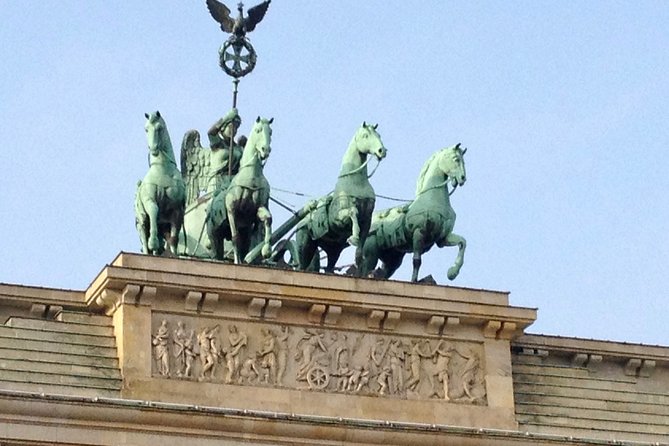
Pickup is included if you are within the S-Bahn ring, roughly 5 km around the center at Brandenburg Gate. That detail matters more than people think. When you start near the action, you use the tour time on sightseeing, not on transit.
The vehicle is air-conditioned and includes WiFi on board. You will also have parking fees handled and private transportation included. That means you can focus on listening, looking, and getting photos without the “where can we park” headache.
If you are coming from BER airport or outside the S-Bahn ring, pickup is only included for an extra charge based on the Berlin taxi tariff. For first-timers, I recommend planning your stay so you can use the included central pickup, even if it means choosing a more central hotel.
Reichstag dome to Brandenburg Gate: the reunified capital in one view
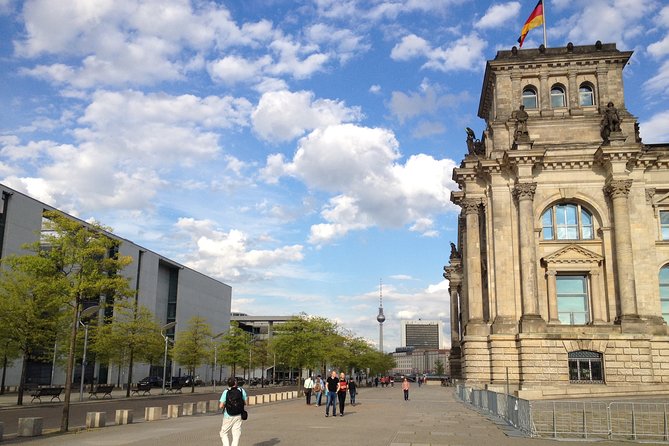
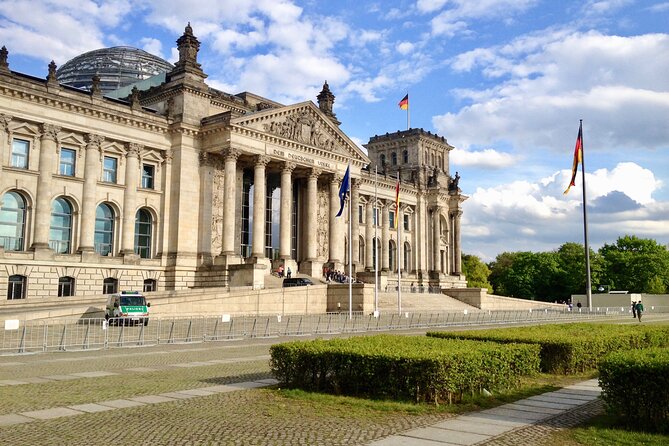
This route starts where Berlin likes to stage its story. The day’s big anchor is the Reichstag building and its transformed identity after reunification. You get the version people travel for now, including the famous dome on top and the idea of a changed purpose after decades of political restrictions.
A detail that I found genuinely useful for understanding the place: the dome itself is tied to architectural debate and later redesign. It is the kind of example that explains why Berlin does not do “simple restoration.” It keeps changing meaning.
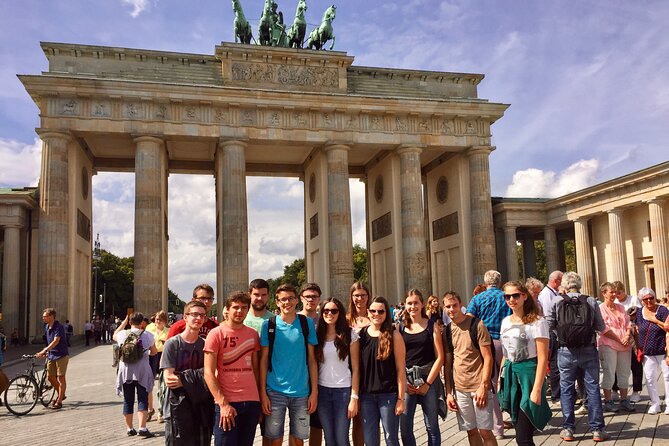
Then you roll into Brandenburg Gate, where the tour reframes the gate as a centerpiece of the city’s “parlor” area. It is not just a monument. You learn why it was isolated for decades, how war damage and later rebuilding shaped the surroundings, and why the rebuilt area looks modern but keeps the old footprint.
This is a good stop to balance photo time with a short walk around Pariser Platz. The gate is free to view, and the scale helps you understand why it became such an emotional symbol after the Wall era.
Another way to spend a Berlin afternoon:
- Berlin: Boat Tour Along the River Spree
★ 4.4 · 11,252 reviews - Discover Berlin Half-Day Walking Tour
★ 5.0 · 9,624 reviews - Berlin: Government District around the Reichstag Guided Tour
★ 4.7 · 8,447 reviews - Berlin: Reichstag, Plenary Chamber, Cupola & Government Tour
★ 4.6 · 8,422 reviews
Government architecture: Leipziger Platz, the glass parliament, and the Chancellor’s offices
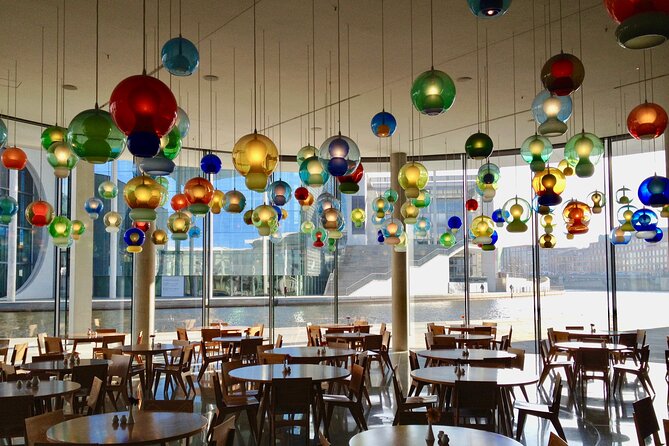
After the gate, you move into Berlin’s political core with several close-to-each-other stops. One of the strongest is the German Bundestag environment, including the idea of where work happens versus where speeches land. You see how Berlin designs transparency and public visibility into government spaces, and how those choices reflect the city’s post-1990 identity.
There is also a key stop at the parliamentary “engine” concept: committees do the heavy work, then the public-facing moment happens elsewhere. Even if you only watch from outside, this helps you interpret the building’s shape and layout instead of treating it like just another grand facade.
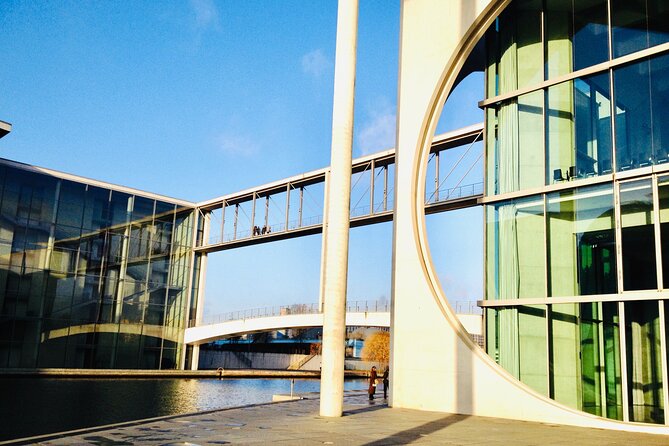
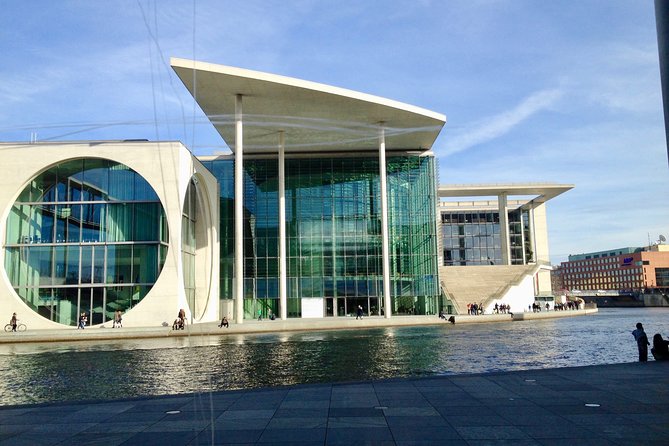
You also get a view of the Chancellor’s office complex, with the reminder that the building footprint is massive. Nearby, the route brings you to other government-related architecture, including a structure where journalists observe proceedings behind a facade that interacts with reflections from the Spree-side area.
If you care about design as politics, this section is worth paying attention to. Berlin’s buildings often function like arguments about power.
Unter den Linden, Soviet ambition, and the long boulevard effect
As you head along the axis of Unter den Linden, the tour’s structure becomes especially clear. This boulevard is more than a pretty street. It is a historical corridor that shows how rulers projected authority, from early planning ideas to the present-day presence of major institutions.
You also hear the story of planting debates and street naming, like the nut tree versus linden tree idea. It sounds niche, but it is the kind of detail that makes Berlin feel specific instead of generic.
Then the route includes the Soviet-linked representation in the USSR embassy area built after the war. The scale was meant to signal who was in charge, especially while other areas were still in ruins. Whether you love or dislike Soviet-era architecture, it gives you a stronger lens for reading the government district as a whole.
Forum Fridericianum and Gendarmenmarkt: Berlin’s Europe-looking side
This part is where Berlin can look almost too classic. Around the Forum Fridericianum, you get the cluster of St. Hedwig Cathedral, the State Opera, and Humboldt University shaping a formal square world. The tour’s explanation adds context, like how the square used to connect to the broader idea of learning and power, and how later political regimes left their marks.
Then you hit Gendarmenmarkt, often called one of Berlin’s most beautiful squares. You learn the difference between what people think is a cathedral and what it really is: meetinghouses with cathedral-like towers linked to Frederick II’s preferences.
This stop is also strong for the “lived in” angle. The French cathedral remains used by a Reformed congregation that holds services in French on Sundays, and there is a small Huguenot museum behind it. If you like places where history still has daily function, you will probably feel that here.
The wall and Cold War stops that change how you see the city
This tour’s emotional weight peaks at the Berlin Wall and Cold War sites. Instead of treating the Wall as one point on a map, you experience it as a system: border crossings, security zones, and the hard geography of control.
One core stop is Topography of Terror, tied to excavations and what was uncovered about Nazi-era terror infrastructure in the area. It is built around the evidence you can actually find on-site, with an information hall and outdoor documentation. Even from a quick visit, it sticks because the explanation focuses on how the machinery worked.
Then you go to Niederkirchnerstraße for a short but striking Wall remnant. The wall here feels less like a looming monument and more like a scar written into the city fabric.
Checkpoint Charlie follows, with the reminder that it was an Allied checkpoint and that the international tensions around the Wall were real enough to bring military hardware close to disaster. Today, what you see is less the original operations and more the Cold War memory. Still, it gives you that sudden “this mattered” moment.
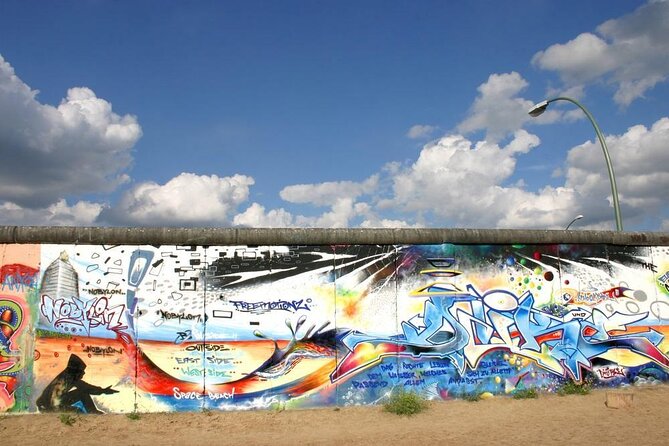
Finally, the day typically reaches the East Side Gallery section of the Wall, including the reality that it is a heavily painted post-1990 transformation of a long surviving stretch. It is often where people realize that Berlin did not just preserve history. It repurposed it.
If you want a smoother emotional arc, this sequence is the right order. It goes from evidence, to the physical scar, to the international flashpoint, to the public artwork that now lives on.
Hackesche Höfe and Nikolaiviertel: getting old Berlin without a full walking day
One practical advantage of this tour is that it mixes big national icons with neighborhoods you can actually enjoy. Die Hackeschen Hoefe is a prime example. You get restored Art Nouveau courtyards with a sense of how daily life once functioned there, mixing workshops and business spaces in a shared courtyard world.
Today, those workspaces are often shops, including areas connected to KPM porcelain and the Ampelmännchen culture. Even if you only have a short window, it feels like Berlin’s creative side, not just Berlin’s grand history.
Then the route heads to Nikolaiviertel and Nikolaikirche for a reconstruction-style neighborhood where you can see older Berlin vibes. The tour framing here is important: this area is a declared reconstruction, so you are not walking through untouched medieval fabric. You are walking through an idea of old Berlin built to recreate scale and atmosphere.
You also get the Knoblauchhaus in Biedermeier style and classic views toward the Spree. This is a nice balance after the heavier Wall stops.
Modern architecture: Sony Center, Mies van der Rohe, and the Culture Forum mood
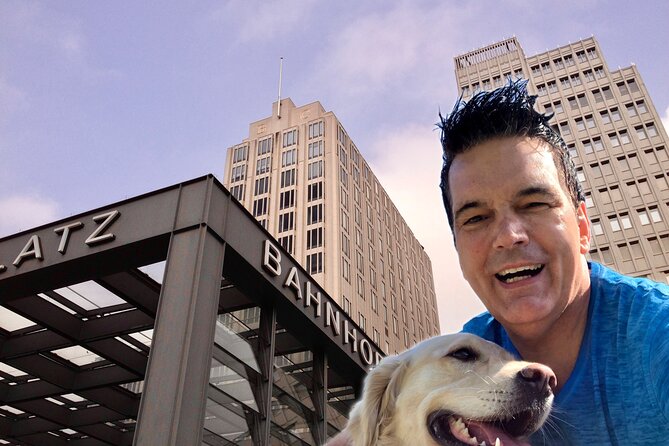
Berlin also loves reinvention through design. Potsdamer Platz and the Sony Center show how a once-depressed area got rebuilt with bold glass and steel shapes. You get a specific detail here that I always remember: the listed Hotel Esplanade wing survived the bombings and was moved 75 meters east, then roofed over with added floors so the ballroom became something you can rent and reuse.
It is a good reminder that Berlin rebuilds with memory, not just replacement.
Later, the route includes iconic modern museum architecture linked to Ludwig Mies van der Rohe. One of the standout points is his design logic: a self-supporting metal roof over a glass structure with no interior pillars, plus a display strategy that does not rely on walls the way you might expect. If you like design that turns into a practical visitor experience rather than just a photo backdrop, this stop is worth your attention.
West Berlin: Kurfürstendamm, KaDeWe, Gedächtniskirche, and the long boulevard rhythm
No East West overview feels real without West Berlin’s visual identity. The tour includes the classic shopping and promenade area around Ku’damm, including how it ties together from streets like Tauentzien and the Kurfürstendamm boulevard. If you want a sense of West Berlin glamour, this is where you see it most clearly, from historic boulevard planning to modern luxury storefronts.
You also get a focused moment at KaDeWe, including the idea of its huge single-department-store footprint and the famous gourmet floor options, down to items like champagne service and seafood. Even if you do not buy, it helps you understand why West Berlin became a magnet for shopping culture.
Then you move to the Kaiser Wilhelm Memorial Church area. The preserved tower and portal after war destruction set up the emotional tone, and the later modern church additions give the site a two-layer look. This is one of those stops where Berlin’s rebuilding becomes part of the message, not just the background.
If you have time for one practical extra here, treat this segment as your “wander and refuel” window. Even with taxi access, the boulevard vibe makes you want to slow down.
Flexible or fixed, and how to avoid the common disappointments
This tour can be incredibly satisfying, especially if your expectations match the format. But a few real-world issues show up in bookings, and you can plan around them.
First, the route is built around a set sequence. If there is a place you truly care about going inside, tell the guide early and do not assume it will happen automatically. If you end up with limited time, you might have to trade off between an interior stop and a longer exterior photo moment.
Second, vehicle size can matter. If you are traveling as four people, ask what vehicle you will have. One booking feedback pointed out that a small vehicle felt tight for four, so it is better to confirm rather than hope.
Third, some observation-type stops have their own schedules. If you care about a rooftop or view deck, confirm the day’s opening hours before you rely on it.
The good news: the tour style can be adjusted. Many bookings describe the guide as adapting the route to what people want most, and even adding small extras like picture-taking at stops.
Should you book this private taxi tour of Berlin East and West?
Book this if you want the fastest route to a full Berlin picture. It is a smart choice for first-timers who want East and West together, for families who need comfort, and for mobility concerns where long walking days do not work.
Also book if you like architecture and political history, but you do not want to spend your entire trip in museums. This tour does the translation work for you, turning street-level sights into a readable story.
Skip it, or at least adjust your expectations, if you are the type who needs deep indoor time for every stop. This is a “see it, understand it, then move” format. You will leave with strong orientation, but you may still want follow-up days for specific museums, neighborhoods, or viewpoints.
If you do book, send your priority list early. One of the best ways to make this tour feel tailor-made is to name your must-sees and your hard limits, then let Gunter Bauer and the driver route around Berlin’s traffic reality.
FAQ
How long is the Berlin East and West private taxi tour?
It runs about 4 to 6 hours.
Is pickup included?
Yes, pickup is included within the S-Bahn ring, roughly 5 km around the center near Brandenburg Gate. Pickup from BER airport or outside the ring is available for an extra charge.
Is this tour private?
Yes. It is a private tour, meaning only your group participates.
What language is the tour offered in?
The tour is offered in English.
What is included, and is lunch covered?
The tour includes pickup (in the included zone), an air-conditioned vehicle, parking fees, private transportation, and WiFi on board. Lunch is not included.
Can I cancel for free?
Yes, you can cancel for a full refund up to 24 hours in advance. Cancellation closer than that is not refunded.
Fresh reviews out of Berlin
- Berlin Uncensored: A History of Sex & Freedom★ 5.0 · 50 reviews
- Berlin Food & Cultural Tour: Must-Try German & Berliner Classics★ 5.0 · 51 reviews
- English Comedy Show with Pizza and Shots in Central Berlin★ 4.5 · 51 reviews
- Rude Bastards Tour of Berlin★ 4.8 · 51 reviews
- Rickshaw Sightseeing City Tours Berlin – Rikscha Tours★ 4.0 · 55 reviews
- Berlin: City Highlights Express & Panorama Roof Terrace★ 4.9 · 55 reviews
- Berlin during Nazism – Tour in Italian★ 5.0 · 56 reviews
- Tours & Sightseeing in English of Berlin, Potsdam and Sachsenhausen★ 5.0 · 56 reviews
Private, compared.
Private Reichstag and Glass Dome Tour
Read our review →
Berlin Private Complete History All Day Walking Tour
Read our review →
Munich Private Tour with a Local – Highlights & Hidden Gems
Read our review →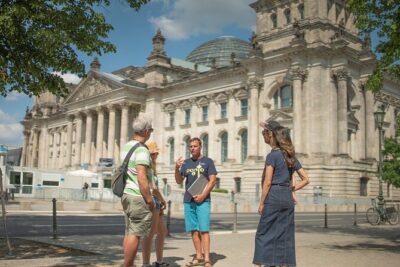
Private Walking Tour Berlin Third Reich Hitler and World War II
Read our review →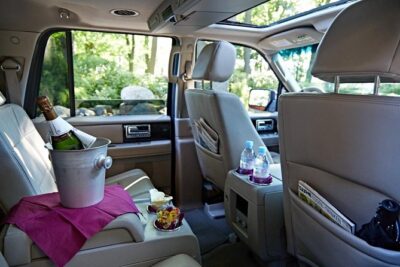
Your private 3-hour Hamburg driving tour with a former policeman
Read our review →
Strasbourg: Private City Sightseeing Boat Tour
Read our review →
Private Berlin: Iconic Sights and Hidden Gems Walking Tour
Read our review →