
Reviewed · NUREMBERG TOURS
Nürnberg: Mörder, Fälscher, Messerstecher
Nuremberg has a talent for turning grim past stories into landmarks you can point at. This tour is interesting because it reads the Old Town like a case file, starting at the Hangman’s House and moving through the places where justice really happened.
I especially like how the guide ties the Franz Schmidt hangman story to real streets you walk today. It makes names feel less like facts from a book and more like people who lived, worked, and were judged.
One consideration: the tour is German-only, and you do not get included entry tickets for the Hangman’s House, the town hall, or the Lochgefängnisse. If you want to go inside every site, plan for extra stops or separate tickets.
Key highlights you should care about
- Franz Schmidt at the Henkerhaus, with the Hangman’s House history as your starting point
- Weinmarkt links everyday life to the darker side of Nuremberg justice
- Old City Hall and how the city handled crime in medieval times
- Lochgefängnisse medieval dungeons, with details on purpose and conditions
- Hauptmarkt and the Christkindlesmarkt connection to punishment and the death penalty
- Fleischbrücke and corporal punishment, plus Peter Henlein in Findelgasse
A 2-hour walk that turns Nuremberg into a timeline of punishment
If you like history you can actually see, this one works. In about two hours you cover a tight loop of Nuremberg’s core sights while the guide explains the city’s “history of crime,” including hanging, imprisonment, corporal punishment, witch hunts, and public justice. The key is that you are not just looking at buildings. You are being asked to connect them.
I like that it is built for focus. The route hits major points in the Old Town one after another, so you keep momentum instead of switching between long museum visits and unrelated detours. And because it is a walking tour with a qualified guide, you get the through-line. The city hall, the prison, the bridges, and the main square all make sense as parts of one system.
The biggest reason it earns such a strong rating is the delivery. The guide brings the story in a way that stays interesting even when it is cold, dark, or rainy, and the questions part matters. You can ask things and get answers, not a rushed lecture.
Weigh these Nuremberg picks against each other
- Nuremberg: City Tour with the Bimmelbahn Train
★ 4.4 · 2,475 reviews - Nuremberg: Old Town Guided Walking Tour
★ 4.6 · 2,416 reviews - Nuremberg: Tunnels and Secret Passages in the City Wall Tour
★ 4.8 · 2,334 reviews
Starting at Henkerhaus: the Hangman’s House and Franz Schmidt
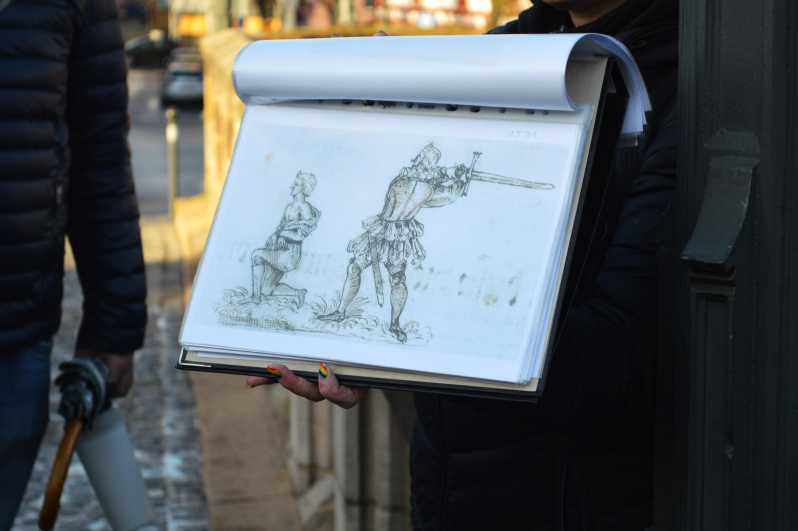
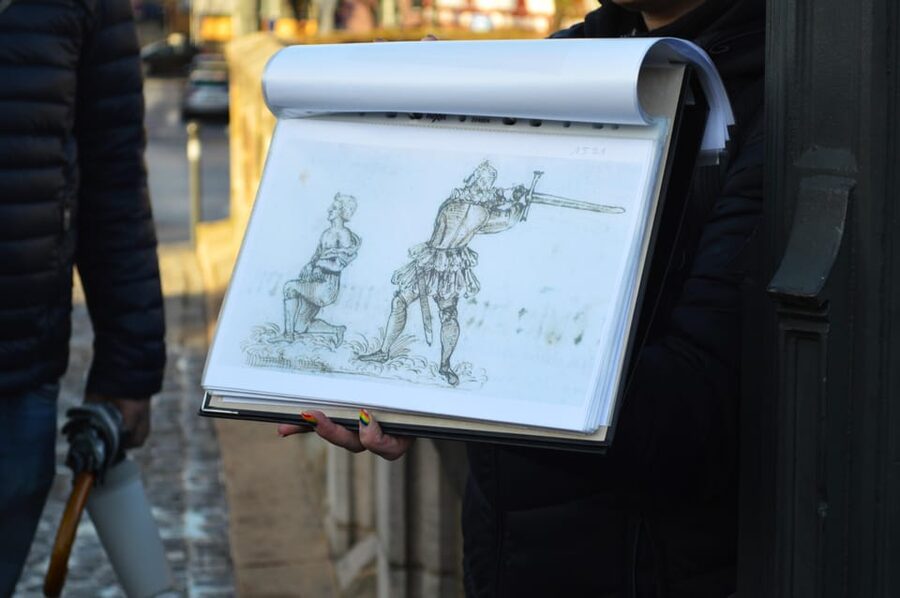
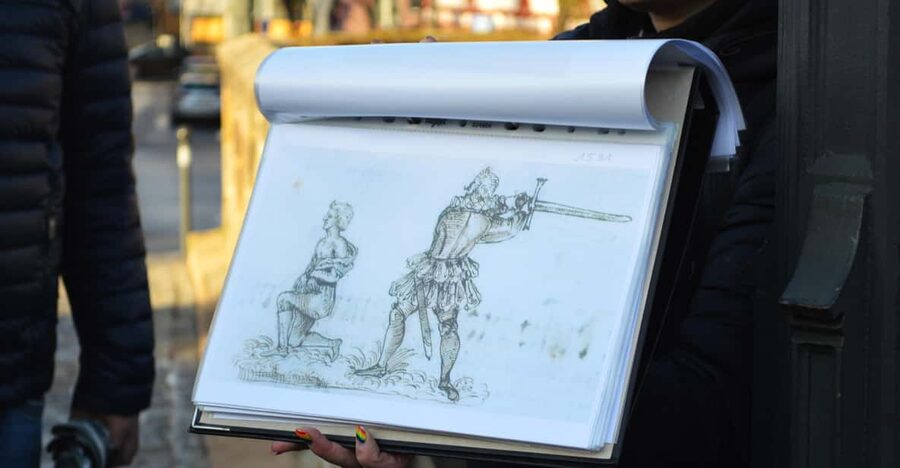
Your tour starts at the Henkerhaus Museum. You will meet the guide in front of the entrance. Look for the person carrying a picture folder and wearing a green name tag that reads Geschichte Für Alle.
This start matters because the Hangman’s House is not just a spooky name. The guide uses it as a baseline for how medieval Nuremberg thought about crime and punishment, and it quickly introduces the most famous hangman tied to the story: Franz Schmidt. You learn about the Hangman’s House history and why a hangman could be a known figure in a city that documented justice carefully.
Even if you do not plan to buy entry to the museum, you will still get the context. That is the smart part of this tour format. It frames what you are looking at before you ever decide to go inside on your own.
Practical note: the tour begins right where you can see the building, so if you are a quick-arrival type, you will get your bearings fast.
Weinmarkt and the witch hunt thread through everyday Nuremberg
After a short walk on foot, you reach the Weinmarkt for a guided stop. This is where the tour shifts from the hangman story into the wider world of accusation and punishment. The guide focuses on the history of witch hunts in Nuremberg and places it into the city’s justice mindset.
Why this step is useful for you: witch hunts can feel like a distant, national-level topic. The guide brings it back to the street level. By the time you walk onward, you are not just thinking about superstition. You are thinking about how local systems, public fears, and authority could turn suspicion into punishment.
You also cross the town’s center as you go. That transition is helpful. It keeps the tour from feeling like a single grim stop. Instead, it becomes a sequence, and you start understanding how different types of punishment connect.
Old City Hall: where justice was planned and enforced
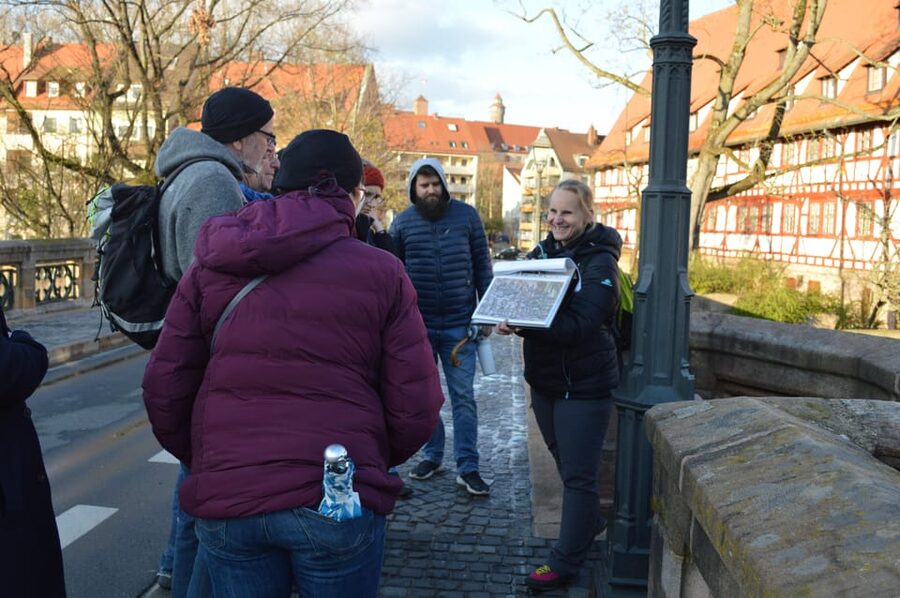
Next up is the Old City Hall of Nuremberg. This is one of those stops that many visitors walk past quickly, but on this tour it becomes a key piece of the story. You learn more about Nuremberg’s medieval justice system, and you get a sense of how authority and public order were handled.
The big value here is not the building itself, it is the explanation. When the guide connects the town hall to the idea of legal process, you stop seeing it as only a pretty landmark. You start seeing it as the administrative heart of decisions that affected real lives.
Another plus: because the tour keeps moving, you will likely feel like you are “getting” the city in a way that lasts after the walk ends. It helps especially if you want a short, meaningful activity without committing to a full day of museum tickets.
Another way to spend a Nuremberg afternoon:
- Nuremberg: Medieval Dungeons Guided Tour
★ 4.8 · 2,214 reviews - Nuremberg: Walking Tour of Former Nazi Party Rally Grounds
★ 4.7 · 1,665 reviews - Medieval Tour in Nuremberg in Spanish
★ 5.0 · 1,374 reviews - Nuremberg: Historischer Kunstbunker WWII Art Bunker Tour
★ 4.8 · 921 reviews
Lochgefängnisse dungeons: medieval prison conditions and purpose
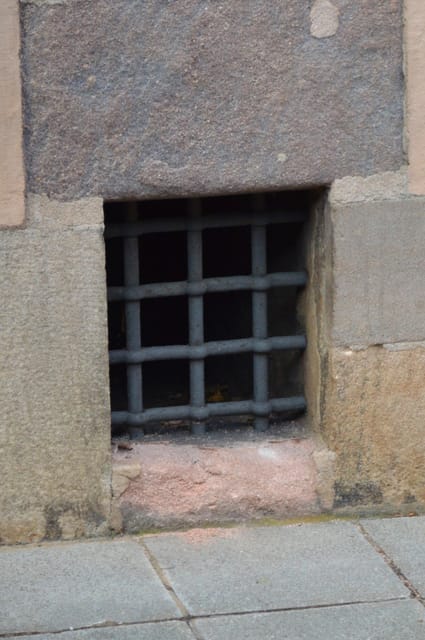
Then you visit the Lochgefängnisse, the medieval prison often described as dungeons. This part of the tour is more direct about what prison meant, including the prison’s purpose and conditions.
For your planning brain, this stop is the emotional center. It is where the punishment stories become concrete. The guide explains how the prison fit into the broader system of medieval justice, so the story does not stay abstract.
One practical thing to know: entry to the dungeons is not included. So you are experiencing the site with guided context, not buying extra tickets as part of the base price. If you are someone who loves to look closely at rooms and exhibits, you might want to add separate entry later. If you prefer guided storytelling that stays efficient, the included tour is likely enough.
Hauptmarkt and Christkindlesmarkt: public space, public punishment
After another short walk, you reach the Hauptmarkt, the main square where the Christkindlesmarkt takes place each December. On this tour, the square does more than host seasonal cheer. You learn about the relation of the Hauptmarkt to everyday crime and the death penalty.
This is a clever teaching approach. You are in one of the most photogenic areas of the city, and the guide uses it to explain how public justice was tied to public life. The main square becomes the bridge between what you see as a visitor and what once unfolded there as part of the legal system.
If you are visiting outside December, you still get the point. The market season is just the hook. The story is about how central spaces concentrate attention, and that is exactly where authorities and communities often made examples.
Fleischbrücke: corporal punishment and how places carried meaning
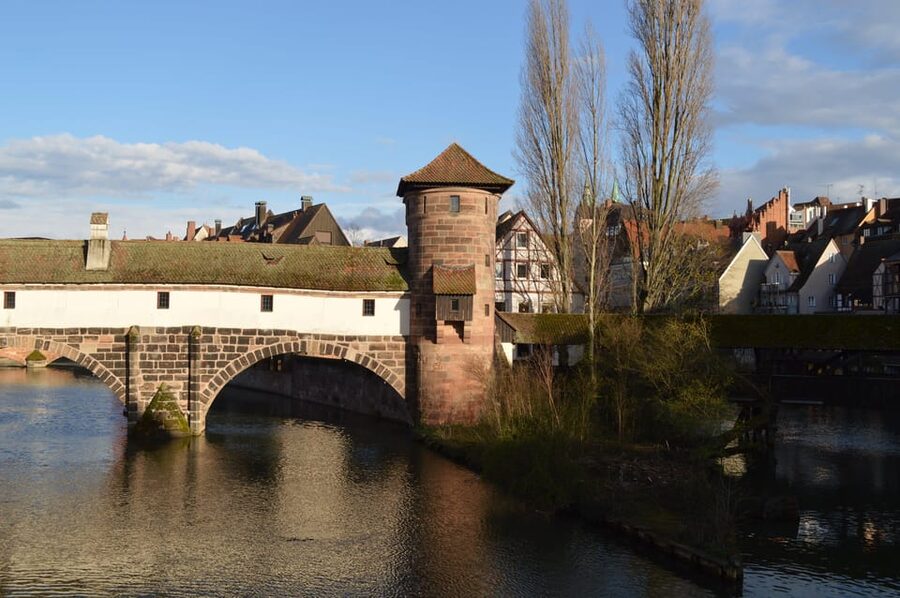
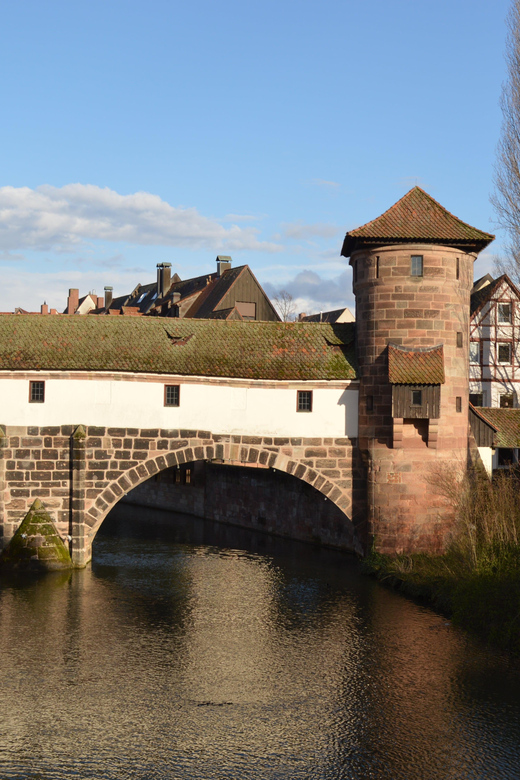
Next comes the Fleischbrücke. This stop connects the justice story to the physical city through the subject of corporal punishment in the Middle Ages.
Why you will probably remember this: bridges and river crossings are easy to treat as scenery, but in this tour they become functional story points. A bridge is where you can move between spaces, and that matters in a city where punishment was often meant to be seen and carried out in a planned context.
The guide’s job here is to make the location matter. If you like historical explanations that connect everyday geography to old events, you’ll appreciate the way this section keeps you oriented while staying on topic.
Findelgasse and Peter Henlein: punishment meets craft and reputation
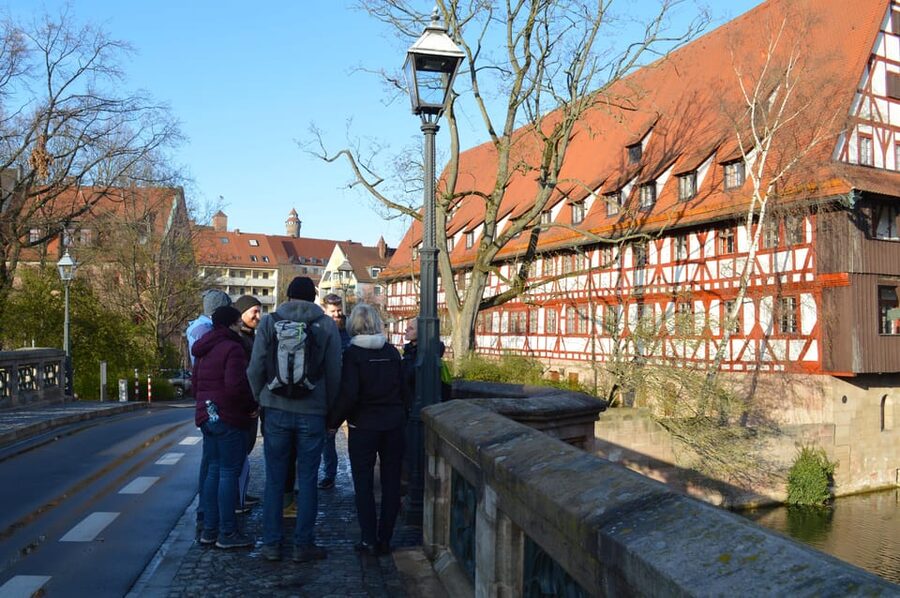
You then walk to Findelgasse and listen to the story of famous watchmaker Peter Henlein. This is a tonal shift, but it is not random.
It helps you avoid the trap of thinking the entire Old Town is only about trials and torture. The guide uses the transition to keep Nuremberg from becoming a one-note grim exhibit. By including Peter Henlein, the tour reminds you that the city’s identity included craft, skill, and famous people, even while it maintained harsh justice practices.
If you enjoy learning about how famous individuals fit into city life, this stop is a nice counterweight. It also keeps the tour from ending too heavy. You are still in the same medieval worldview, but you are seeing more sides of the city.
Schuldturm finale: purpose and inmates in a medieval tower
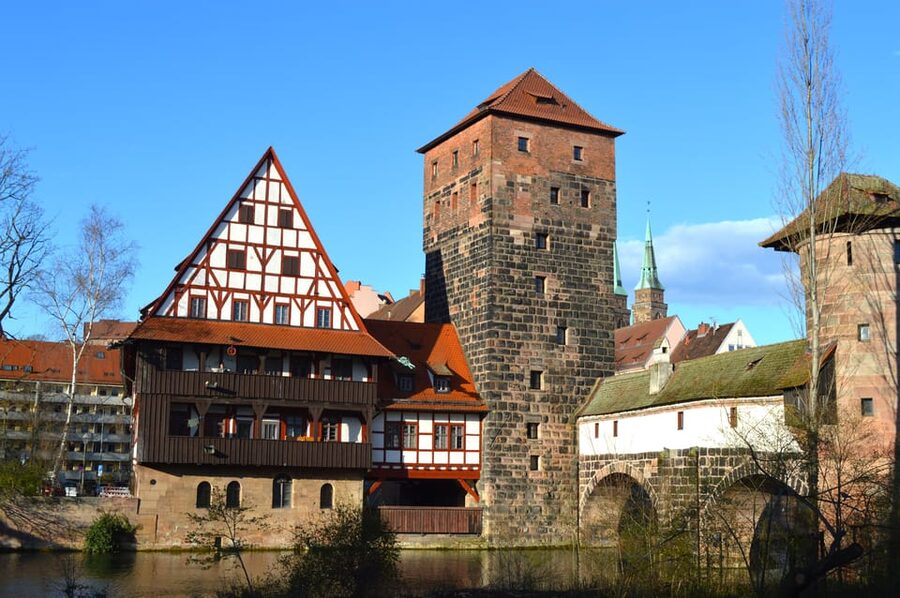
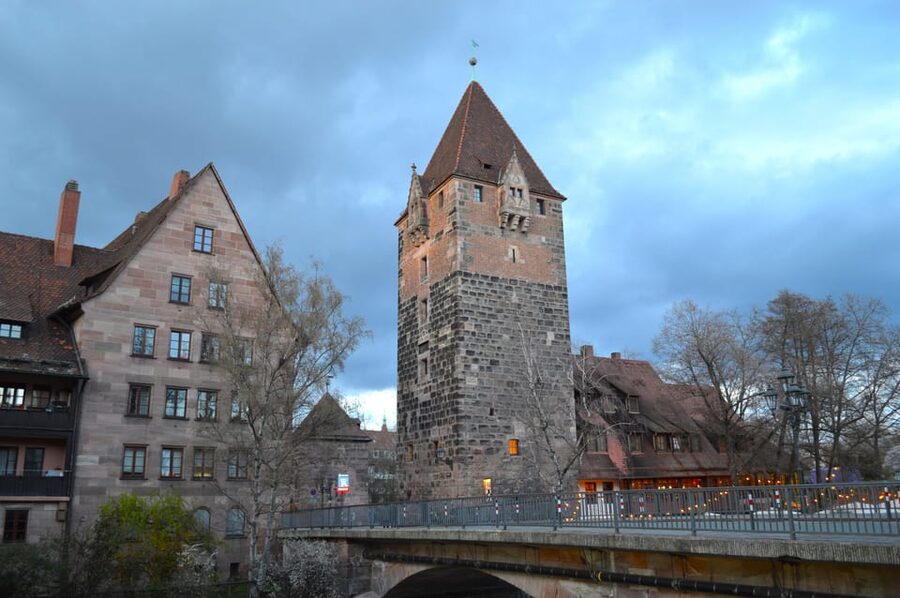
Your final stop is in front of the Schuldturm. The guide explains its purpose and the inmates connected to it, wrapping up the tour’s arc from punishment mechanisms to where people ended up.
This ending works because it gives the story a physical close. After walking through hangman history, witch hunt context, town hall justice, prison conditions, public punishment, and corporal punishment sites, the Schuldturm becomes the final piece of the chain.
You finish at Vordere Insel Schütt, 90403 Nürnberg-Mitte, Germany. It is close enough to keep exploring on your own afterward, but far enough that the tour feels like a complete loop.
What you get for about $15, and why it feels fair
The price is $15 per person for a roughly 2-hour guided walking tour. On its face, that is budget-friendly for a city with plenty of paid attractions. The value comes from what is included: a walking tour plus a qualified guide who knows how to keep a focused narrative across multiple stops.
Important detail for your expectations: entries are not included. That means you are paying for guidance and interpretation, not for museum tickets. In a way, that is why the price stays reasonable. If you were also paying for the Hangman’s House, the town hall, and the medieval dungeons all at once, the total cost would rise quickly.
So here is the way I’d frame it for you:
- If you want the guide-led story and you like doing “walking history,” this is strong value.
- If you want to fully go inside every site during the tour itself, you will likely want extra tickets later.
Given the duration and the number of distinct topics covered, it is a good option for travelers who want a lot of context without losing an entire day to indoor admissions.
Timing, weather, and how to prep so you enjoy it
The tour runs for 2 hours. That time box is part of the appeal. You get a meaningful story arc without committing to half a day.
For a smooth experience, bring comfortable shoes. Old Town walking can add up, even when the route is planned. Also dress for the weather. One reason the guide earns high praise is that the tour can still feel engaging even in rain and low light, as long as you are dressed for it.
Language matters. This is a live tour guide in German. If you speak German comfortably, you will get the full benefit. If your German is basic, you might still track the main plot, but the deeper details will be harder to follow.
Finally, it is not suitable for people with mobility impairments. That is your biggest constraint. It is still worth reading about if you are planning a trip with others and trying to match activities to needs.
Should you book this Nuremberg crime history walking tour?
Yes, if you like history with a point of view and you want to understand Nuremberg beyond its postcard image. The tour is built to connect landmarks into a single story of how medieval justice worked, from Franz Schmidt and the Hangman’s House to Lochgefängnisse, the Hauptmarkt, corporal punishment at the Fleischbrücke, and the Schuldturm.
You should also book if you enjoy good guiding. The consistent feedback is about the guide sharing a lot of knowledge in an interesting way, staying attentive to questions, and making the tour feel easy to follow even when conditions are less than perfect.
Skip it or at least think twice if you want lots of indoor time during the exact tour window, because entries to the Hangman’s House, town hall, and the medieval dungeons are not included. And if German-only tours are a no for you, it is better to look for an option that fits your language needs.
If that all matches you, this is a smart, memorable way to spend two hours in Nuremberg, with your eyes open and your questions ready.
FAQ
How long is the Nuremberg: Mörder, Fälscher, Messerstecher tour?
The tour lasts about 2 hours.
Where do I meet the guide?
Meet the guide in front of the entrance of the Henkerhaus Museum.
What is the tour language?
The tour is guided in German only.
Is entry to the Hangman’s House included?
No. Entry to the Hangman’s House is not included.
Are town hall and the medieval dungeons included?
No. Entry to the town hall and entry to the medieval dungeons are not included.
What landmarks will the tour cover?
You will visit key stops including the Weinmarkt, Old City Hall, Lochgefängnisse, Hauptmarkt, Fleisch Bridge, Findelgasse, and Schuldturm.
Is the tour suitable for mobility impairments?
No, the tour is not suitable for people with mobility impairments.
What should I bring?
Wear comfortable shoes and bring weather-appropriate clothing.
Can I cancel for a refund?
Yes. You can cancel up to 24 hours in advance for a full refund.
Fresh reviews out of Nuremberg
- Tour to Rothenburg ob der Tauber from Nuremberg in Spanish★ 5.0 · 51 reviews
- Nuremberg: World War II Tour with Hotel Pickup★ 4.4 · 51 reviews
- Nuremberg Ghosts and Gallows Evening Walking Tour in English★ 5.0 · 56 reviews
- Nuremberg’s Mystery Morning: Breakfast & Escape Game★ 4.4 · 57 reviews
- Nuremberg: Private Walking Tour with a Local★ 3.8 · 77 reviews
- Nuremberg World War II★ 4.5 · 89 reviews
- Nuremberg Private Walking Tour: Old Town and Nazi Rally Grounds★ 5.0 · 92 reviews
- Nuremberg: WWII Tour, Courtroom 600 and 3rd Reich Sites★ 4.6 · 94 reviews
Nuremberg Tours, compared.

Tunnels and Secret Passages in the City Wall Tour
Read our review →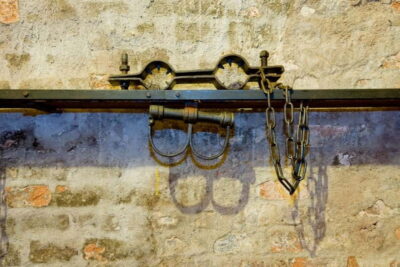
Walking Tour of Former Nazi Party Rally Grounds
Read our review →
Browse the lists this tour appears in