
Reviewed · SACHSENHAUSEN MEMORIAL TOURS
Never Again Sachsenhausen Concentration Camp
Sachsenhausen is one of those places where the details matter, because the horror was built on systems, rules, and control. This 4-hour experience from Berlin gives you a guided starting point so you can understand what you are seeing, not just look at buildings and feel lost. You will get camp layout orientation first, and then time to walk the site on your own with the guide setting the context.
I especially like the way the tour uses a live guide, Siobhán, to connect the camp’s different phases to the present day without turning it into a lecture. The possible drawback is that the tone and framing include a progressive, feminist lens, so if you want a strictly neutral, purely historical approach, you may feel that the message is going somewhere besides the past.
Key Highlights You Should Know Before You Go
- Small-group feel (max 15 travelers), so it stays conversational and questions can land.
- A live English guide named Siobhán, with commentary shaped by a progressive, feminist perspective.
- Orientation through visitor models, which helps you read the camp layout and purpose faster.
- Autonomous time in sensitive areas like barracks and the camp kitchen, so you can process at your own pace.
- Present-day connections, including how modern far-right movements are discussed in relation to what the camp represented.
- A heavy subject handled with care, aiming to educate you without leaving you emotionally wrecked.
Sachsenhausen In 4 Hours, Without Missing The Point
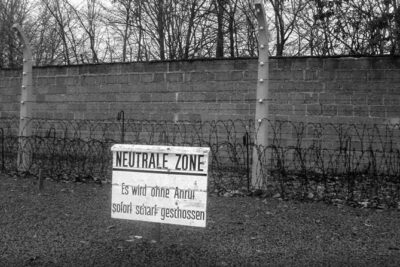
Sachsenhausen is not only a museum. It is a place where the machinery of oppression was planned, trained, and practiced. The camp evolved over time, and this tour treats that evolution as essential context. You do not just get Nazi history. You also get the darker idea that the infrastructure of control did not vanish with the fall of one regime.
One of the reasons I like this format is that it is long enough to make meaning out of the space. You have time to understand why the layout looked the way it did, why certain buildings were positioned where they were, and how the camp functioned like a tool for domination. You also have a chance to slow down later when you reach the more disturbing areas.
Other Sachsenhausen memorial visits:
- Berlin: Sachsenhausen Concentration Camp Tour in English
★ 5.0 · 5,711 reviews - Berlin: Sachsenhausen Concentration Camp Memorial Tour
★ 4.7 · 3,716 reviews - Sachsenhausen Concentration Camp Bus Tour in English from Berlin
★ 5.0 · 1,962 reviews
Meeting At Potsdamer Platz, Then Getting To The Site With Less Fuss
You start at Potsdamer Platz 10, 10785 Berlin, and the tour ends back at the same meeting point. That back-to-base finish matters in Berlin, because it reduces the stress of figuring out transportation after a difficult visit.
This experience is designed for a smooth ride there. It is near public transportation, and you will get a mobile ticket, which helps you avoid hunting for printed papers when your day already feels full. The group is capped at 15 travelers, which also tends to make it easier to manage movement through a site where you need to keep your footing and your focus.
Visitor Center Models: The Fastest Way To Understand What You’re Looking At
Before you wander, you get orientation at the visitors’ center. Expect detailed models that explain the camp’s physical structure, including how the place was designed for control and for promoting a sense of superiority over prisoners.
This matters more than it sounds. Concentration camps are not random clusters of buildings. The layout was functional. When you see the models first, you can later connect what the guide describes to what your eyes find in the real space. It is the difference between walking past walls and understanding why those walls were part of the system.
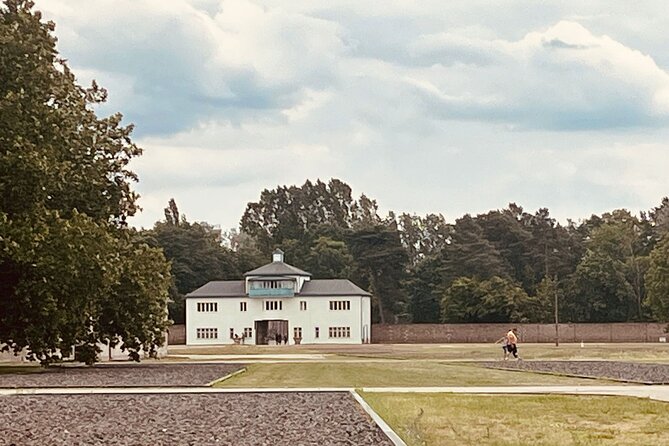
You also learn about the uncomfortable afterlife of the site. The former SS training camp became the Brandenburg police academy, which shows how institutions can reuse space and infrastructure long after the original purpose becomes morally toxic. That connection to the present is not just a footnote. It’s part of the story you will carry into the rest of the visit.
Prisoners’ Barracks And The Camp Kitchen: Time To Process, Not Just Pass Through
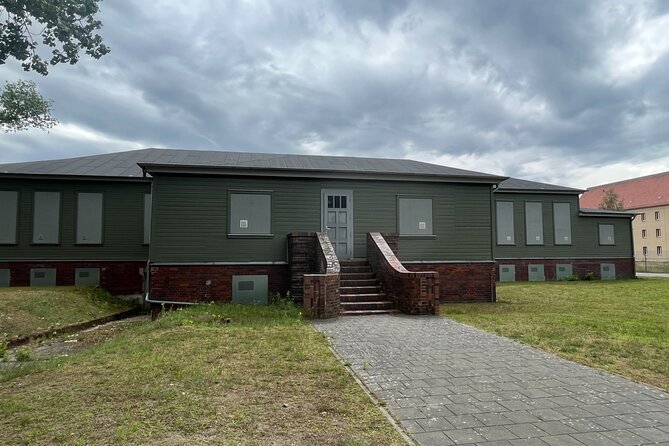
After the orientation, you shift into autonomous exploration in the prisoners’ barracks and the camp kitchen. That self-guided block is valuable. A scripted tour can keep your brain moving even when your emotions want a slower pace. Here, the guide gives the framework, and then you get moments to look carefully and absorb what stands in front of you.
This section is also where the tour makes the link between then and now harder to ignore. You will learn about attacks connected to Holocaust denial and neo-Nazi activity, and you will hear about connections to the rise of the AfD, a far-right party in Germany. It is uncomfortable information, but it is directly relevant. The point is not to scare you. It is to show that denial and far-right ideology do not live only in the past.
One more practical thing: the site can be emotionally intense, so plan to take a breath when you need it. This tour gives you space to do that, and you should use it. If you rush, you will miss the meaning.
Weigh these Berlin picks against each other
- Berlin: Reichstag, Dome and Government District Guided Tour
★ 4.7 · 18,288 reviews - Berlin: 1-Hour City Tour by Boat with Guaranteed Seating
★ 4.3 · 16,993 reviews - Berlin: TV Tower Standard Entrance Ticket
★ 4.4 · 15,883 reviews - Berlin: Boat Tour Along the River Spree
★ 4.4 · 11,252 reviews
Infirmary And Eugenics: When Medicine Became Another Tool Of Control
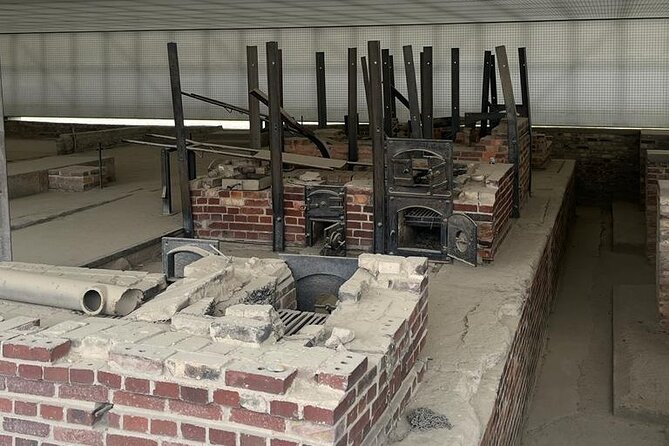
The infirmary segment is among the most difficult parts of the experience. You are guided through the logic of racism, the control over women’s bodies, and the role of eugenics inside Nazi ideology. You will also confront how medical professionals exploited prisoners as instruments for experiments, including the grim idea of prisoners treated as something like lab material for the career advancement of Nazi doctors.
I appreciate that the tour frames this as a system, not as isolated cruelty. The horror here is bureaucratic and professional. It came through people with training and institutional support. That is why this part can feel heavy. It is about how educated people used knowledge and authority to harm.
At the same time, the tour aims to keep the experience respectful and grounded. It does not try to shock you for entertainment. It tries to help you understand what happened and why it matters, including how ideology can turn human beings into objects.
Siobhán’s Approach: Respectful Tone, Real Questions, And Not-Too-Soft Delivery
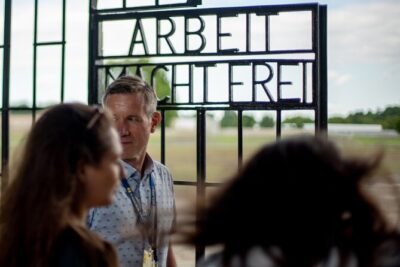
A big reason this tour earns a perfect score is the way the guide handles tone and communication. Siobhán brings a progressive, feminist lens to the commentary. In plain terms, the guide does not treat the past as only a set of dates and buildings. The commentary connects what happened to patterns of control, including how women’s bodies and life choices were targeted.
From the way the tour is described, it is not heavy-handed. You are not being pushed into a script. You are being given context and asked, implicitly, to notice how oppression repeats when societies allow dehumanization to return.
What I also like is that the guide balances seriousness with a little human steadiness. Some points may include a touch of levity, and it can help you keep your footing mentally. That might sound odd for a concentration camp visit, but the goal is not to trivialize suffering. It is to avoid leaving the group shattered. You leave feeling educated, not broken.
The guide is also responsive. When you have questions, you are not left hanging. And if you are visiting with teens and adults, the tour appears to adapt to mixed ages instead of treating the group like a single mold.
Price And Value: What You Pay, What You Avoid Paying
The price is $31.29 per person, for an experience that runs about 4 hours and includes an admission ticket. A donation for the memorial is also included, which matters. You are not just paying for a guide’s time, you are contributing to keeping the memory work alive.
What you should plan for is what is not included. You will want to bring your own snacks and bottled water, and you will need your own public transport ticket for Berlin’s ABC zones (since the tour does not include transit).
That is the main tradeoff for the price: it’s good value for what’s included, but you still need to take care of your basic comfort. A site like this is easier to handle when you are not hungry and not thirsty, especially if you tend to get emotional fast and lose track of time.
Also consider group size. With a maximum of 15 travelers, you can generally expect a better flow than larger bus-style tours. That makes the money feel more like a service and less like a slot in a crowd.
What To Wear, Bring, And Do To Get The Most Out Of The Visit
This experience asks for moderate physical fitness. That doesn’t mean you need to be an athlete, but it does mean you should be ready for walking at a memorial site and staying present while moving between sections.
Here is what I suggest you do for a smoother visit:
- Wear comfortable shoes with decent grip. Stone and paths can be unforgiving.
- Bring water and a snack since nothing like that is included.
- Consider bringing a layer. Berlin weather can flip, and you will want to stay comfortable while you stand and read.
- Give yourself permission to take pauses. The tour includes autonomous time, so you can slow down when your brain needs a reset.
If you are the kind of person who wants everything explained word-for-word, you might find the autonomous parts a little less structured. But if you like reflection as part of the process, that self-guided time can be one of the most useful parts.
Who This Tour Suits Best (And Who Might Prefer Something Different)
This tour is a strong match if you want a guided introduction plus enough freedom to absorb what you see. It’s also a good fit if you appreciate a guide who connects history to the present in a clear, political way, because that connection is part of the design.
You might consider a different option if you are looking for a purely academic, strictly chronological approach. The framing includes modern ideological connections, and the guide’s feminist perspective is part of the tone. That is not a flaw. It is just a preference issue.
This is also a respectful choice if you are visiting with teens and adults. The guide appears to handle mixed groups well, adapting explanations and answering questions.
Should You Book Never Again Sachsenhausen Concentration Camp?
Yes, if you want a small-group, English-led visit that helps you understand what you are seeing, not just move from point A to point B. The visitor center models are a smart starting move, and the combination of guided framing plus autonomous walking makes the emotional pacing more humane.
Before you book, do two quick reality checks. First, be honest about the topic. This is a concentration camp visit with sections on racism, control over women’s bodies, eugenics, and medical abuse. If you are not ready for that level of cruelty, pick another day or another type of tour. Second, plan your comfort. Bring water, snacks, and wear shoes you trust.
If you get those two things right, this is the kind of tour that can leave you with clear understanding and a steady sense of responsibility, not just photos and sadness.
FAQ
How long is the Sachsenhausen tour?
It is approximately 4 hours.
Is admission included in the price?
Yes, an admission ticket is included, and a donation for the memorial is also included.
What language is the tour offered in?
The tour is offered in English.
Where does the tour start and end?
It starts at Potsdamer Platz 10, 10785 Berlin, Germany, and it ends back at the meeting point.
Do I need to buy a public transport ticket?
Yes. A public transport ticket (ABC zone) is not included.
Is there free cancellation?
Yes. You can cancel for a full refund if you cancel up to 24 hours in advance of the experience start time. Confirmation is received at booking.
Fresh reviews out of Berlin
- Gastro Tour with Klaus though the Wrangelkiez, Kreuzberg★ 5.0 · 9 reviews
- Wall Tour Berlin – Fates, Heroes & Love Stories★ 4.0 · 9 reviews
- Berlin City Tour with Hotel pick up and Drop off★ 4.0 · 9 reviews
- Berlin Private Street Art Tour – Off The Grid★ 5.0 · 9 reviews
- Romantic Berlin Rickshaw City and Photo Tour – incl. pick-up★ 4.0 · 9 reviews
- Quatsch Comedy Club Berlin: Quatsch Comedy Hot Shot★ 4.8 · 9 reviews
- Berlin Urbex Adventure and History Tour★ 5.0 · 9 reviews
- Stag Party Berlin: Celebration for Your Bachelor Party★ 3.4 · 9 reviews
Sachsenhausen Memorial Tours, compared.
Sachsenhausen Concentration Camp Tour in English
Read our review →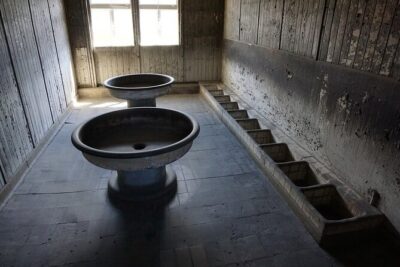
Sachsenhausen Concentration Camp Memorial Tour
Read our review →
Sachsenhausen Concentration Camp Bus Tour in English from Berlin
Read our review →
Sachsenhausen Concentration Camp Memorial Tour (Max. 15 Guests)
Read our review →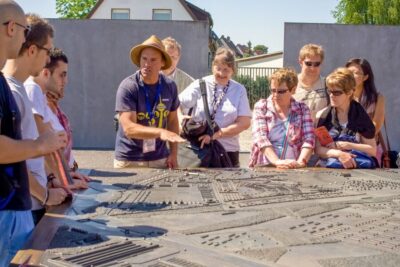
English Bus Tour to Sachsenhausen Concentration Camp
Read our review →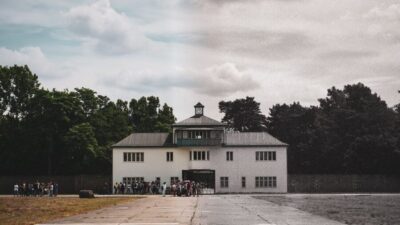
Sachsenhausen Concentration Camp and Potsdam Tour
Read our review →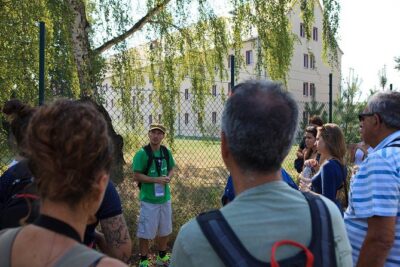
Visita en español al campo de concentración Sachsenhausen
Read our review →Browse the lists this tour appears in