
Reviewed · SACHSENHAUSEN MEMORIAL TOURS
Berlin: English Bus Tour to Sachsenhausen Concentration Camp
Sachsenhausen is one of those places that forces you to look closely at how a system of control worked in real life. A guided walk through the former concentration camp, paired with a structured bus lecture, turns a difficult subject into something you can actually understand.
Two things I really like: the coach commentary that sets context before you arrive, and the way the tour hits the most important sections of the memorial so you do not feel lost. Guides like Paul, Hannah, Jamie G, and Georgia stand out in how they keep the tone respectful while still being clear about what happened.
One consideration: this is a heavy, high-emotion visit, and the site involves a lot of walking. It is also not wheelchair accessible, and the tour’s time limit means you will not read every display in perfect detail.
Key things I’d plan around on this Sachsenhausen tour
- Pre-trip coach history helps you understand how Nazi concentration camps expanded and operated
- Oranienburg area context from the bus ride gives you a sense of how prisoners’ work connected to the region
- Tower A and command spaces help you see the camp’s built-in control system
- Gas chamber, crematoria, and execution trench show the mechanisms of mass murder
- Infirmary barracks and experimentation explain how medical abuse was used during the war
- 2 hours on site is enough to learn a lot, but not enough to absorb everything slowly
From Friedrichstraße to Sachsenhausen, the bus ride that sets the tone
The tour starts at a spot that is easy to find once you know what to look for. Head to the square outside Friedrichstraße train station, on the side between Tränenpalast (Palace of Tears) and the station. The guides wear a blue lanyard, a yellow name tag, and they use yellow umbrellas.
Then you settle in for about 50 minutes on a private, air-conditioned vehicle. This part matters. Without context, Sachsenhausen can feel like a list of grim locations. With context, it becomes a map of how terror was organized, administered, and scaled.
On the way, your guide provides English narration about how Nazism rose to power and how the camp system grew. Many guides are praised for doing this with clarity and care, including Paul, Hannah, Klaus, and Nikolai. I like that the bus portion gives you a framework so your time inside the memorial makes sense right away.
You will also drive through Oranienburg and see areas connected to where prisoners would have been put to work. That regional look is useful. It reminds you the camp was not a sealed bubble, it connected to buildings, labor, and planning beyond the fences.
Practical tip: bring a light snack and some water. The tour runs about 4 hours total, and once you are on site, you will want your energy steady for the walking and the mental load.
Other Sachsenhausen memorial visits:
- Berlin: Sachsenhausen Concentration Camp Tour in English
★ 5.0 · 5,711 reviews - Berlin: Sachsenhausen Concentration Camp Memorial Tour
★ 4.7 · 3,716 reviews - Sachsenhausen Concentration Camp Bus Tour in English from Berlin
★ 5.0 · 1,962 reviews
Your 2-hour guided walk at Sachsenhausen Memorial
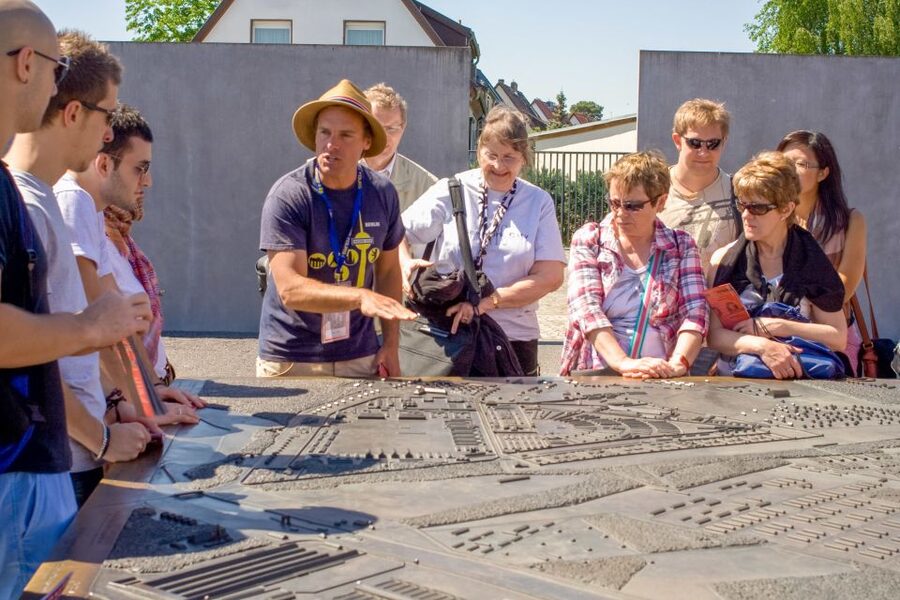
Sachsenhausen Memorial is large, and the tour is designed to cover the highlights with an informed guide. You get roughly two hours on site, led by a professional, licensed guide.
Inside the camp, you will spend time in barracks and circulation areas where daily life for prisoners was brutal. The tour does not just point at buildings. It explains the daily routines and the harsh conditions people faced, and it connects those conditions to the wider administrative ruthlessness that defined the camp.
You will also look at the interior layout, so you understand the difference between areas used for intimidation and punishment, versus places tied to medical abuse or murder. That framing helps you avoid the common problem of standing in one spot and thinking, I understand this one building, but not the bigger plan.
Guides consistently get praise for balancing facts with empathy. For example, Hannah and Georgia are singled out for compassionate handling of a very difficult topic, and Jamie G is praised for using well chosen words while still covering the operational details. That style is not fluff. It helps you ask better questions and absorb what the guide points out.
One time-saving reality: because Sachsenhausen is spread out and the memorial uses space for exhibits and reflection, you will not see every single room or display up close. If you want to read every panel, you might end up feeling like the tour is fast. The good news is you will leave with the structure you need to know what to return for, later.
Commandant spaces and Tower A, where control was built in
A big part of the power of Sachsenhausen is that the design itself reinforces control. On the tour, you pass by key command-related areas, including the commandant’s house. It is chilling because it shows how authority was housed close to the machinery of suffering.
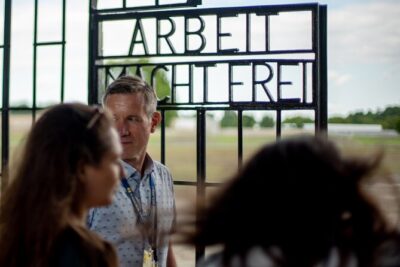
Another stop people remember is Tower A. The words Arbeit Macht Frei still sit above the entrance, and seeing them in place does something to your brain. It is not just a phrase. It is a tool of deception used to force prisoners through a controlled psychological script.
As you move through these spaces, the guide explains how the camp was built with maximum control and expansion in mind. That matters for understanding what you are seeing. Sachsenhausen was not only a place of punishment, it was a planned system meant to grow and operate with efficiency.
If you are a history buff, this section is also where you start recognizing patterns. You begin to see how some elements of camp architecture became templates, influencing the wider camp network. If you are visiting from Berlin for the first time, it is a strong way to connect what you already know with what you are actually walking past.
Gas chamber, crematoria, and the execution trench
This is the part of the tour that you will feel in your stomach. The route includes places associated with mass murder and killings, including the gas chamber, the crematoria, and areas like the execution trench.
The memorial tour approach here is to make the sites specific without turning them into shock theater. The guide explains what happened there and how it fit into the camp’s operation. You also get time to look, absorb, and reflect, rather than being rushed past everything with zero pause.
I appreciated that this tour does not only mention numbers in the abstract. It discusses how the camp system led to large-scale death and suffering, including the fact that 35,000 people were murdered and/or died of disease within the camp. Hearing that while standing in the space where the system functioned is heavy, but it is also the whole point of visiting in person.
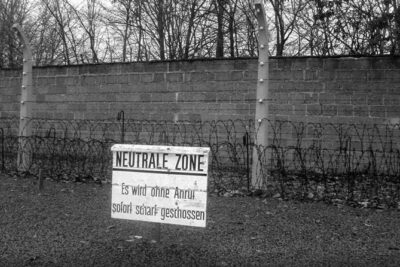
Also included are punishment-related areas such as isolation cells and other structures tied to discipline. These stops help you understand that the camp was built to break people physically and mentally, using routine and punishment alongside murder.
If you are comparing it to other concentration camp memorials you may have studied, this one has its own layout and emphasis. Some parts are more intact than others, and the guide’s explanation helps you interpret what you can see today.
Weigh these Berlin picks against each other
- Berlin: Reichstag, Dome and Government District Guided Tour
★ 4.7 · 18,288 reviews - Berlin: 1-Hour City Tour by Boat with Guaranteed Seating
★ 4.3 · 16,993 reviews - Berlin: TV Tower Standard Entrance Ticket
★ 4.4 · 15,883 reviews - Berlin: Boat Tour Along the River Spree
★ 4.4 · 11,252 reviews
Infirmary barracks and wartime experiments, the medical abuse layer
One of the most important parts of this tour is the attention given to the infirmary barracks. You will see the infirmary area and learn about experimentation that took place during the war.
This matters because it shows you a different kind of horror. It is not only starvation, overwork, and violence. Medical abuse and coerced experimentation were used as part of the Nazi program, and the infirmary becomes one of the places where that happened.
You will hear about how prisoners were treated brutally even in spaces that, on paper, should have offered care. The contrast is part of what makes the site so disturbing. The guide explains the context clearly, and guides such as Klaus, Maria, and Rebecca are praised for handling the subject with rigor and kindness, so you do not end up with cold facts only. You get human context too.
If you want one reason to do this tour specifically, it is that it does not skip the medical layer. The tour hits gas and crematoria sites, but it also shows how the camp system used the language of medicine to harm.
You should expect the visit to feel emotionally draining. Plan for that. If you can, avoid scheduling something high-energy right after. Even if you stay calm and respectful during the visit, your body will process the impact later.
What to bring, how to pace yourself, and how to handle the heavy moments
This tour asks for the practical basics because the day includes walking and time outdoors.
Bring:
- Comfortable shoes (you will be on your feet for multiple stops)
- A camera if you want photos for your own memory, not for sharing for shock value
- Weather-appropriate clothing
- A light snack and drink, since you are encouraged to keep up your energy during the tour
Not allowed:
- Alcohol and drugs
Pacing tip: since you only get about two hours inside the memorial, you will need to choose where you want to pause longest. If you like exhibits, listen for the guide’s cues about where to spend an extra minute. If you want to understand operations, spend more time on the command and punishment sections.
Questions can help a lot, and several guides are praised for being approachable and answering thoughtfully. If something is unclear, ask. It is better to ask once than to silently guess and carry confusion out of a place like this.
There can be practical disruptions on the calendar too. One guide handled the fact that some areas were closed during Christmas Eve timing and still kept the tour moving with sensible logistics. Your best move is mental flexibility: focus on what is open and what the guide explains, not on ticking off every single door.
Price and logistics, is $55 good value for this Sachsenhausen Memorial tour?
At $55 per person for about 4 hours, this tour is priced for what you actually receive: a licensed English guide, transportation, and memorial entry.
What is included:
- Professional licensed guide
- Transportation by private air-conditioned vehicle
- Driver
- Sachsenhausen Memorial entry
- A €3 donation per person to the Sachsenhausen Memorial
- A map of the former concentration camp
What is not included:
- Hotel pickup and drop-off
Here is how I would judge the value. You are paying not only for getting to the site, but for structured interpretation. For Sachsenhausen, that interpretation is the difference between seeing buildings and understanding how the system worked. If you tried to DIY the day from Berlin, you would spend time figuring out routing, context, and timing, and you would lose much of the guide-led structure.
The map helps too. It is a simple thing, but it lets you reconnect the tour points after you leave, especially when your brain is still processing everything you saw.
The one cost you should plan for is your own time and stamina. You will not have a long, slow visit. You will have a guided route that is meant to be efficient and meaningful in just a half-day window.
Who should book this English bus tour, and who should reconsider
This tour fits best if:
- You want an English guide to explain how Sachsenhausen worked as a planned concentration camp system
- You want an organized 4-hour experience without the stress of transport planning
- You like clear structure, including coach lectures, so the memorial visit makes sense
It can also work well if you are visiting with older teens. There are mentions of a father-son visit where the 2-hour on-site time felt manageable.
You might want to reconsider if:
- You need wheelchair access or have limited mobility. The tour is explicitly not wheelchair accessible and not recommended for people with walking impairments.
- You need long exhibit time. With only two hours on site, you will be moving, listening, and reflecting, not slowly reading every panel.
If you get assigned a guide like Hannah, Georgia, or Jamie G, the tour experience tends to be very well paced and handled with sensitivity. If you are especially concerned about clarity, look for a guide who is praised for communication and careful explanations, like several of the named guides.
Should you book the Berlin to Sachsenhausen English bus tour?
Yes, I think you should book it if you want a structured, respectful, English-guided way to understand Sachsenhausen Memorial without turning your day into logistical stress. The value is strong because entry, transport, the guide, and even the memorial donation are bundled, and the coach history makes the on-site visit easier to interpret.
I would not book this as a casual side trip. This is serious. Bring the right shoes, plan for an emotionally heavy few hours, and accept that you are there to understand the system, not to fully absorb every exhibit in perfect depth.
If you want one clear takeaway: the tour is built to help you connect what you see at Sachsenhausen to the real-world mechanics of terror, and that is exactly what makes it worth doing.
FAQ
How long is the Berlin to Sachsenhausen tour?
The total duration is 4 hours.
How much does the tour cost?
It is priced at $55 per person.
Where do I meet the guide in Berlin?
Meet the guide outside Friedrichstraße train station, on the square between Tränenpalast (Palace of Tears) and the station. The meeting point is at Reichstagufer 17, 10117 Berlin.
What language is the tour?
The guided tour is in English.
What is included in the price?
The tour includes a professional licensed guide, transportation by private air-conditioned vehicle, Sachsenhausen Memorial entry, a €3 donation per person to the memorial, and a map of the former concentration camp.
Is hotel pickup and drop-off included?
No, hotel pickup and drop-off are not included.
What should I bring?
Bring comfortable shoes and a camera. You are also encouraged to bring a light snack and a drink, and dress for the weather.
What items are not allowed?
Alcohol and drugs are not allowed.
Is the tour wheelchair accessible?
No. The tour is not wheelchair accessible and is not recommended for people with limited mobility or walking impairments.
What are the cancellation and payment options?
Free cancellation is available up to 24 hours in advance for a full refund, and you can reserve now and pay later.
Fresh reviews out of Berlin
- Berlin Uncensored: A History of Sex & Freedom★ 5.0 · 50 reviews
- Berlin Food & Cultural Tour: Must-Try German & Berliner Classics★ 5.0 · 51 reviews
- English Comedy Show with Pizza and Shots in Central Berlin★ 4.5 · 51 reviews
- Rude Bastards Tour of Berlin★ 4.8 · 51 reviews
- Private Taxi Tour of Berlin East and West and Neighbourhood approx. 4-6h★ 5.0 · 55 reviews
- Rickshaw Sightseeing City Tours Berlin – Rikscha Tours★ 4.0 · 55 reviews
- Berlin: City Highlights Express & Panorama Roof Terrace★ 4.9 · 55 reviews
- Berlin during Nazism – Tour in Italian★ 5.0 · 56 reviews
Sachsenhausen Memorial Tours, compared.
Sachsenhausen Concentration Camp Tour in English
Read our review →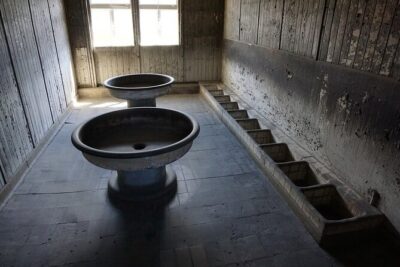
Sachsenhausen Concentration Camp Memorial Tour
Read our review →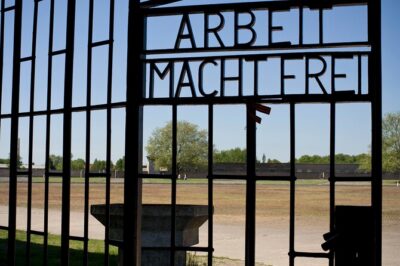
Sachsenhausen Concentration Camp Bus Tour in English from Berlin
Read our review →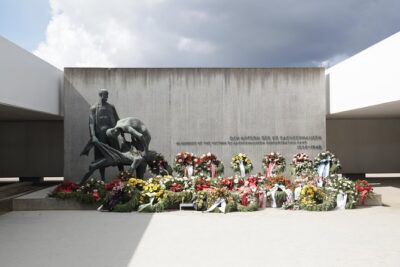
Sachsenhausen Concentration Camp Memorial Tour (Max. 15 Guests)
Read our review →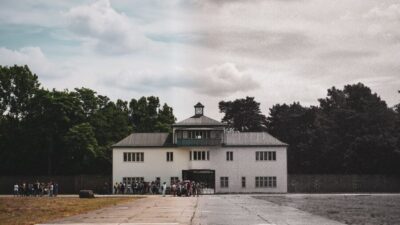
Sachsenhausen Concentration Camp and Potsdam Tour
Read our review →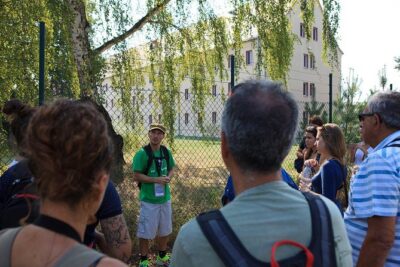
Visita en español al campo de concentración Sachsenhausen
Read our review →
Browse the lists this tour appears in