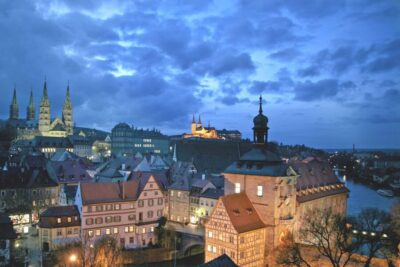
What makes this tour really interesting is the way it treats Berlin Palace like a timeline you can read with your feet. You get the story from wartime damage to Cold War demolition, then to today’s reconstructed baroque façades and the Humboldt Forum setting. It’s not just a look at pretty walls, it’s political history and architectural decisions, explained in plain language.
I especially like the architect plus politics approach, since you see how design choices connect to power. I also like that the guide brings insider behind-the-scenes stories, including how the reconstruction played out from planning through completion. You come away with a much clearer picture of why things look the way they do today.
One possible drawback: this is a walk-and-talk experience, and it does not include the exhibitions inside the Humboldt Forum or the other museums on the Museumsinsel. If your main goal is spending lots of time inside galleries, you’ll want a different add-on plan.
Key highlights you will feel on the ground
- Insider access and real project perspective from someone who worked on the reconstruction process
- Architectural explanations tied directly to politics and the building’s changing purpose
- Clear timeline of the palace site, from WWII impact to 1951 demolition and the GDR-era replacement
- GDR Palace of the Republic context, including the 1975 build and the 1990 closure linked to asbestos contamination
- Reconstructed baroque façades focus and an orientation to the Humboldt Forum interior, 2013 to 2020
- Small group size capped at 10, so questions actually get time
Why this Berlin Palace tour feels different from the usual stop-and-go
Berlin Palace has always been more than one building. It is a symbol that multiple governments tried to use, reshape, and sometimes erase. That is why a guided explanation matters here: the site keeps switching meaning, and you can’t always guess the shifts just by looking at the façades.
On this tour, you move around the palace area on Museumsinsel with a guide who describes it through architecture and political intent. The guide is working as an insider, and the background shows in how the story is told. You’ll hear how the original palace was bombed but not totally destroyed in the Second World War, then later torn down in 1951 to create a huge demonstration zone.
If you love history, this works because it stays concrete. If you care about design, it works because you learn what to look for and why.
Weigh these Berlin picks against each other
- Berlin: Reichstag, Dome and Government District Guided Tour
★ 4.7 · 18,288 reviews - Berlin: 1-Hour City Tour by Boat with Guaranteed Seating
★ 4.3 · 16,993 reviews - Berlin: TV Tower Standard Entrance Ticket
★ 4.4 · 15,883 reviews
Meeting at Schlossplatz, finding the guide, and getting oriented fast
You meet at Berlin Schlossplatz, at the U-Bahn station Museumsinsel, using the exit for Museumsinsel. Plan to arrive a few minutes early so you start the tour without that awkward late-start scramble.
The guide brings a Palace Berlin Book. Even if you don’t read it cover to cover during the walk, having something physical helps you remember the phases you just covered. For a site with so many layers, that matters. Your brain will want to group everything into one “palace story,” but the guide keeps it separated into understandable chapters.
For practical comfort, wear comfortable shoes and comfortable clothes. You are walking outdoors around the palace site, so you’ll feel every long stop if your footwear is wrong. Also, keep in mind the tour is wheelchair accessible, and the group stays small, which makes it easier for everyone to follow along.
Walking the palace site: from WWII damage to the 1951 demolition
The core of the experience is the walk around the Berlin Palace site on Museumsinsel. You will spend about an hour and a half on foot, and the pacing is built for story. The guide explains what happened to the original palace after the Second World War bombing, including that it was damaged but not fully destroyed.
From there, the story changes tone quickly. In 1951, the commies tore it down to make a vast demonstration area. You don’t just hear the date, you hear the reason: big spaces were used to communicate power in public. Seeing the setting helps the explanation land, because you can look at the site and understand how a monumental open space can become a stage.
What I like about this part is that it turns an often-told headline into a spatial lesson. When you understand the site’s purpose shifted toward demonstration, you start noticing how rebuilding efforts later needed to answer a new question: what should this place represent now?
The GDR chapter: Palace of the Republic, 1975, and the asbestos closure in 1990
Next, you shift into the East German era. You’ll hear about the former Palace of the GDR Republic, built in 1975. This is where the tour gets especially useful for visitors who know Berlin mainly as a 1989 city.
The guide explains that the building closed by the last GDR-Volkskammer in 1990 due to asbestos contamination. That detail is not just a medical footnote, it changes the story because it shows how even politically charged projects can run into hard limits. The palace site’s meaning keeps changing, but the physical reality keeps forcing outcomes too.
This chapter also helps you understand why Berlin’s reconstruction debates were never purely aesthetic. Once a site has carried different identities for decades, it becomes hard to treat the rebuilding as a simple restoration of one past version. The guide connects architecture to that pressure, so you see the logic behind each new phase rather than treating them as random turns.
Another way to spend a Berlin afternoon:
- Berlin: Boat Tour Along the River Spree
★ 4.4 · 11,252 reviews - Discover Berlin Half-Day Walking Tour
★ 5.0 · 9,624 reviews - Berlin: Government District around the Reichstag Guided Tour
★ 4.7 · 8,447 reviews - Berlin: Reichstag, Plenary Chamber, Cupola & Government Tour
★ 4.6 · 8,422 reviews
Reconstructed baroque façades: 2013 to 2020, and what you’re really looking at
Then the tour brings you into the present. You get a full presentation of the reconstructed baroque façades, and you also learn how the Humboldt Forum became the cultural hub inside. The guide frames the reconstruction as something planned and built during reunified Germany, with a stated timeline from 2013 to 2020.
This is the part where you should slow down and look up. The façades are what people see first, but the guide teaches you to look past the surface. You’ll learn that reconstruction is not the same thing as simple copying. It is interpretation under modern constraints, plus political and cultural goals set by the project owners and public process.
As an outsider, it’s easy to react emotionally to a rebuilt historic look. This tour makes you more analytical. You get a handle on the decision-making pressures that shaped the final appearance, including why later modifications happened and what they were trying to solve.
Humboldt Forum inside: what you get, and what you do not
You also get time at the Humboldt Forum for a guided introduction. Expect orientation and sightseeing elements tied to the reconstruction story and the façades outside. The guide explains the setting and connects it back to the site’s layered past.
One important thing: this experience does not include the exhibitions inside the Humboldt Forum. It also does not include the Ethnological Museum, the Asian Art Museum, or the Berlin Museum. In other words, you are here for context, not a full museum day.
I see this as a smart trade-off, especially if you want the story first. You’ll be able to walk into galleries later and make better sense of what you’re seeing because your brain will already be organized around the palace site’s transformation.
The guide’s role: insider stories, architect framing, and question time
The guide is described as an insider who worked for the project from the beginning. The guide also has an architectural background and studied politics, which is a rare combination for a tour like this. It changes the tone. Instead of only dates and names, you get the why behind form.
In the reviews you can feel what works: people valued the chance to ask questions and get answers with competence and a bit of humor. That question time is not a small extra here. It is part of the value because Berlin Palace has arguments built into its past. If you don’t ask, you might leave with questions that only grow later.
Also, the guide reportedly worked in communications for the public developer, client, and owner, which helps explain why the tour focuses on meaning. You are not being given a dry lecture. You’re being coached to interpret the site.
Language options are German, English, and French, and the tour is a live guided format. That matters if you want a consistent narrative rather than reading signs alone.
Price and value: how $53 for 90 minutes adds up
At $53 per person, you’re paying for more than a walk. You’re paying for a very specific kind of expertise: architecture plus political history plus direct project perspective. Most self-guided Berlin Palace experiences give you a snapshot. This gives you a sequence, with the reconstruction explained as a process rather than a finished product.
The small group size, limited to 10 participants, helps here. You are not just buying information, you’re buying attention. In a tight group, the guide can answer your question instead of trying to cover everything for everyone.
The tour is also wheelchair accessible, and the pacing is built for a walk around the palace site rather than sprinting between distant stops. That is practical value in a city where time can evaporate quickly.
If you are on a tight Berlin schedule, the 90-minute format is a good way to get the big picture without sacrificing an entire day. If you are museum-focused, you’ll still get value because the story gives you a framework for the next places you visit.
Timing, weather, and comfort tips that actually matter
You’ll be outside most of the time, so dress like Berlin can switch moods fast. Bring comfortable layers and make sure your shoes handle uneven or crowded sidewalks around Museumsinsel.
You should also plan your expectations. This tour is not a deep technical construction site walk with hardhats and safety lectures. It is a guided explanation with visual context. Still, your comfort affects everything. If you’re uncomfortable, you’ll tune out even good history.
One more small practical note: the tour is not suitable for people over 95 years. That’s a safety and comfort consideration tied to the walking component.
Who should book this tour, and who might prefer something else
This is a great fit if you want to understand Berlin Palace as a political and architectural story, not just a landmark. It’s also a good match if you like design, because the guide frames the reconstruction and its modifications in a way you can picture.
It’s especially useful for people who have seen Berlin’s major Cold War sites and want the palace story to connect to those bigger themes. The WWII to 1951 to the GDR Palace of the Republic to the asbestos closure to reunified reconstruction is a lot of material, but the tour makes it readable.
You might skip it if your priority is museum time and exhibits inside Humboldt Forum or the neighboring museums. Since those are not included, you would likely end up wanting more hours inside once you finish the context section.
Should you book Bernhards Berlin’s Berlin Palace insider tour?
Yes, if you want a guided narrative that explains why Berlin Palace looks the way it does today. The biggest reason to book is the combination of insider project perspective and a guide who can connect political decisions to architectural outcomes. That’s a rare mix for a walk that still feels relaxed and question-friendly.
If you already know the dates and want only a photo stop, then you might not get enough out of the format. But if you want to leave with a clearer mental map of what the palace site meant in each era, this is an efficient way to do it in 90 minutes.
FAQ
How long is the Berlin Palace guided tour?
The tour duration is 90 minutes.
Where do I meet the guide?
Meet at Berlin Schlossplatz, U-Bahn Station Museumsinsel, exit (Museumsinsel).
Who provides the tour?
The experience provider is Bernhards Berlin.
What languages are available?
The live tour guide offers German, English, and French.
How big is the group?
The group is small, limited to 10 participants.
Is the tour wheelchair accessible?
Yes, the tour is wheelchair accessible.
What is included in the experience?
You get a guided, two-hour style experience focused on the Berlin Palace reconstruction story, including the history and reconstruction context. The tour does not include exhibitions inside Humboldt Forum or the other listed museums.
Are Humboldt Forum exhibitions included?
No. Exhibitions inside the Humboldt Forum are not included, and neither are the Ethnological Museum, Asian Art Museum, or the Berlin Museum.
Is alcohol allowed during the tour?
No. Alcohol and drugs are not allowed.
Is it suitable for very elderly visitors?
It is not suitable for people over 95 years.
Fresh reviews out of Berlin
- Gastro Tour with Klaus though the Wrangelkiez, Kreuzberg★ 5.0 · 9 reviews
- Wall Tour Berlin – Fates, Heroes & Love Stories★ 4.0 · 9 reviews
- Berlin City Tour with Hotel pick up and Drop off★ 4.0 · 9 reviews
- Berlin Private Street Art Tour – Off The Grid★ 5.0 · 9 reviews
- Romantic Berlin Rickshaw City and Photo Tour – incl. pick-up★ 4.0 · 9 reviews
- Quatsch Comedy Club Berlin: Quatsch Comedy Hot Shot★ 4.8 · 9 reviews
- Berlin Urbex Adventure and History Tour★ 5.0 · 9 reviews
- Stag Party Berlin: Celebration for Your Bachelor Party★ 3.4 · 9 reviews
Guided, compared.
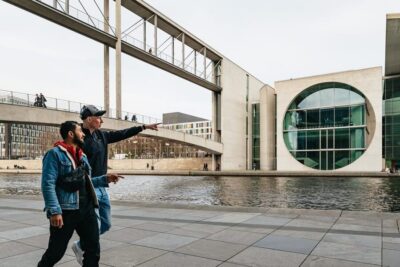
Reichstag, Dome and Government District Guided Tour
Read our review →
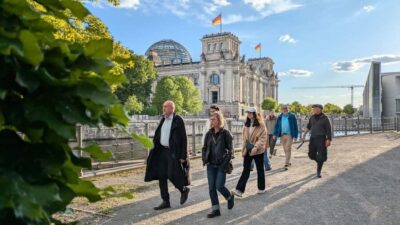
Government District around the Reichstag Guided Tour
Read our review →
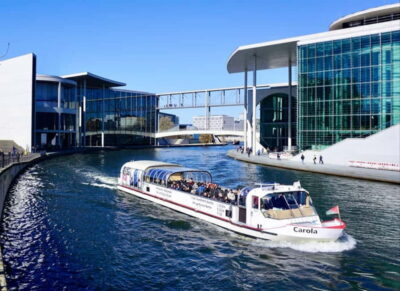
1-Hour Boat Tour with Bilingual Guide (Ger/Eng)
Read our review →