Reviewed · GUIDED
BERLIN FULL in 3.5h (Guide + Headphones)
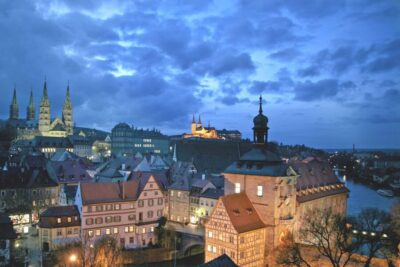
Berlin is the kind of city where 800 years can feel like it sits on the same sidewalk. This 3.5-hour guided route strings medieval streets to modern government sights, with a headphones system so you can hear every bit without stopping to stare at a guide.
Two things I really like. First, the delivery is clear and interactive, and the guide keeps it lively by pulling you in with questions and quick context. Second, you hit major landmarks while still getting the personal, human side of the story, including heavy stops like the Holocaust Memorial and the Berlin Wall area.
One thing to consider: the pace is brisk. You move site to site with short time windows, and with memorials in the mix, you may want extra time on your own afterward to sit with what you just learned.
Key tour highlights worth caring about
- Headphones included, so you can walk naturally while still hearing the story
- A tight loop through central Berlin, from Museum Island to Brandenburg Gate in one go
- Cold War to Holocaust memorials, handled with context and a serious tone
- “Old Berlin” streets, especially the medieval feel around Nikolaiviertel
- Architecture lessons along the way, from Humboldt Forum to the Reichstag dome talk
Meeting at Azem Bistro, then letting Berlin talk
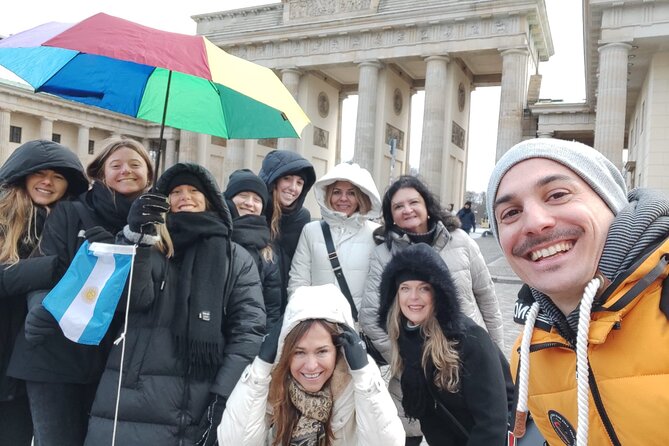
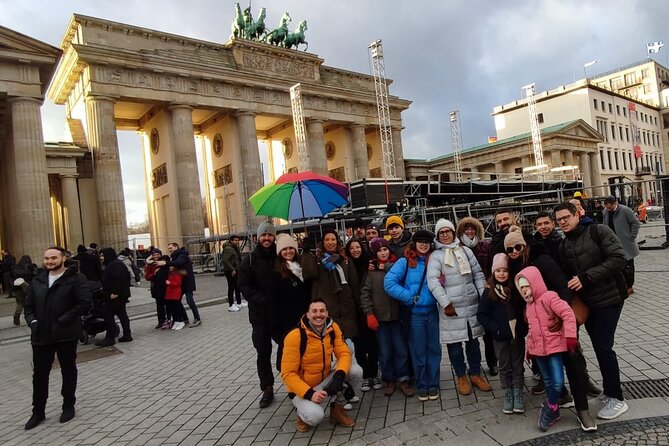
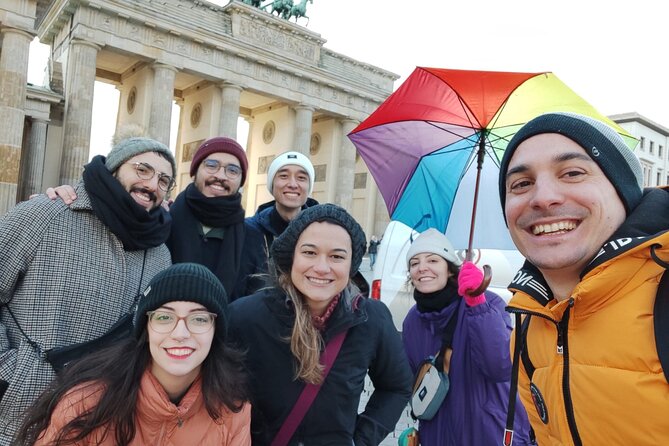
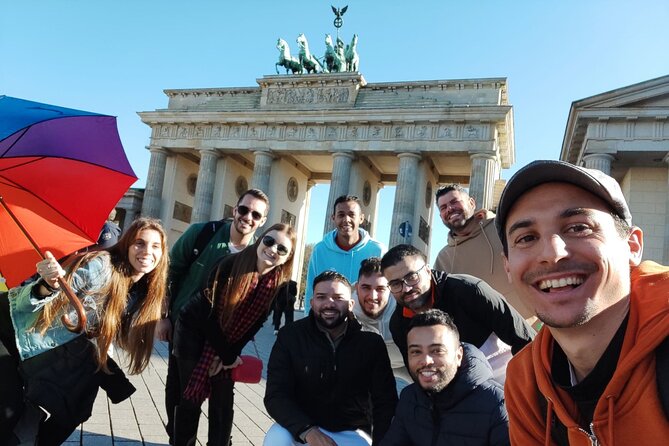
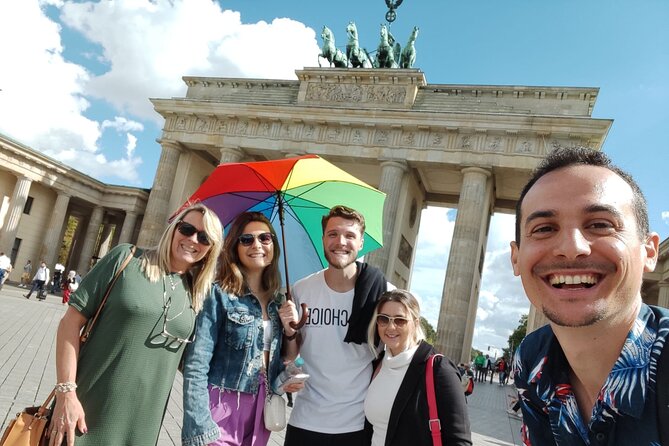
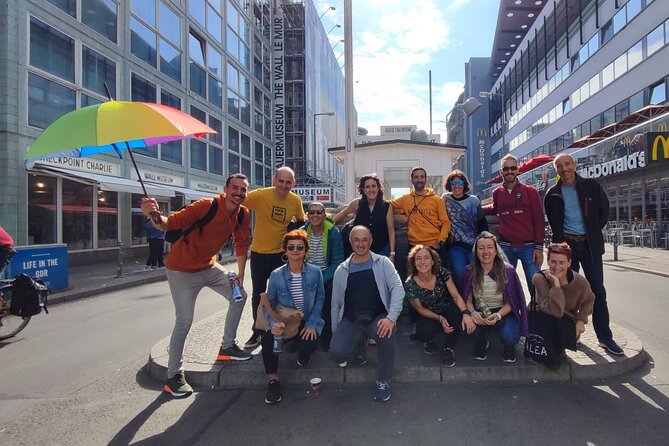
The tour starts at AZEM BISTRO on Rathausstraße 17, near public transport. You’re told you’ll spot the guide by looking for a multicolored umbrella, which is helpful in a city where meeting points can get messy fast.
Start time is 10:00 am, and the whole experience runs about 3 hours 15 minutes. That timing matters because it signals what kind of trip this is: a focused overview on foot, not a slow wander where you can linger at every corner.
There’s a cap of up to 50 people, which is large enough to feel social but small enough that you’re not basically watching history from 20 meters away. You’ll also use a mobile ticket, so you do not need paper tickets.
Weigh these Berlin picks against each other
- Berlin: Reichstag, Dome and Government District Guided Tour
★ 4.7 · 18,288 reviews - Berlin: 1-Hour City Tour by Boat with Guaranteed Seating
★ 4.3 · 16,993 reviews - Berlin: TV Tower Standard Entrance Ticket
★ 4.4 · 15,883 reviews
Humboldt Forum and the center of Berlin’s rebuild story
Your first major stop is the Humboldt Forum. You start with the idea that the building is not just a building, but a map of Berlin’s changing eras, with an architectural mix that reflects how the city keeps reworking itself. You’ll also get to visit the interior, so it’s not just a photo stop.
Why this first stop works: Humboldt Forum sets the tone. Berlin has lots of monuments, but it also has layers. When you begin with a place that carries both design and history, the rest of the walk makes more sense.
You should also notice a practical thing here. Since the tour moves through central areas, expect the usual walking conditions: sidewalks, occasional crowds near big landmarks, and short pauses where the guide directs your attention.
Alexanderplatz to Museum Island: Spree River context in one walk
Next comes Alexanderplatz, the classic Berlin reference point. This square feels like a hub because it’s surrounded by historic buildings and monuments, and it’s tied visually to the Spree River. Even if you’ve never been here, the area is easy to orient to once you’ve got a quick explanation of why it matters.
From there, you walk toward Museum Island, the cluster that makes history feel physical. The guide frames it as a place where history comes alive, set beside the Berliner Dom and framed by the river. This is where the tour’s “big picture” approach shows up, because Museum Island is a concentration of culture in a compact area.
A good way to use these minutes: look for the relationships between sites. Museum Island is not just one attraction, it’s a whole geography of museums next to a cathedral zone and waterways. In a short tour window, you want your eyes trained for patterns, not details you can’t absorb anyway.
Unter den Linden and Neue Wache: the royal promenade and the cost of power
Now you shift to Unter den Linden, Berlin’s oldest promenade. The guide highlights its stretch from the Brandenburg Gate area toward the Schlossbrücke and the Berlin Cathedral. The street name sounds simple, but the explanation helps you see how it functions as a spine through central Berlin.
Then comes Neue Wache, the monument to the victims of war and dictatorship. The tone here changes. You get a guided explanation of the work and the history of its Prussian artist, and it’s the kind of stop that tends to land emotionally.
Practical note: memorials like this are still public spaces. You may see people walking through, taking photos, or quietly lingering. If you’re the type who needs a moment, plan to pause your own pace for a minute or two, even if the overall tour timing is tight.
Another way to spend a Berlin afternoon:
- Berlin: Boat Tour Along the River Spree
★ 4.4 · 11,252 reviews - Discover Berlin Half-Day Walking Tour
★ 5.0 · 9,624 reviews - Berlin: Government District around the Reichstag Guided Tour
★ 4.7 · 8,447 reviews - Berlin: Reichstag, Plenary Chamber, Cupola & Government Tour
★ 4.6 · 8,422 reviews
Nikolaiviertel and Bebelplatz: medieval lanes and a warning about books
One of the most charming stops is Nikolaiviertel, described as Berlin’s oldest area with a medieval essence. This is where the tour gives you a change of texture: narrow streets, alleys, and businesses that preserve the German heritage feel you don’t always get in the modern center.
If you like walking where the street design helps tell the story, Nikolaiviertel is a great mid-tour reset. It also gives your feet a different kind of scenery, not just major-city squares and government buildings.
After that, you hit Bebelplatz. This square is framed by Humboldt University, an old library, and the Berlin State Opera, which makes the setting feel intellectual and formal. But the past connected to the place is dark: it’s known for book burning.
This stop is valuable because it doesn’t treat culture like decoration. It connects institutions and public space to what happens when ideas are targeted. In a short tour, it’s one of the most direct “how societies behave” explanations you’ll get.
From Checkpoint Charlie to Gendarmenmarkt: Cold War edges, then pretty symmetry
You then reach Checkpoint Charlie, the most famous border crossing associated with the Wall. The guide doesn’t just point at the site, it explains who Charlie was and what happened there, including details that you might miss if you only rely on surface cues.
Checkpoint Charlie is one of those places where the photos can make it look like a movie set. The guided framing helps you understand it as a real moment in everyday tension, not a simple symbol.
Next is Gendarmenmarkt, often called the Plaza de los Gendarmes. Here, the mood flips toward elegance. You’ll see the Konzerthaus concert hall lined up with two twin church domes: the Französischer Dom and Deutscher Dom.
This contrast matters. Berlin can be brutally historical in one block and classic in the next. Gendarmenmarkt gives you a breather where the architecture is part of the story, not just a background.
Berlin Wall Memorial and the Nazi-era stops: where the facts matter
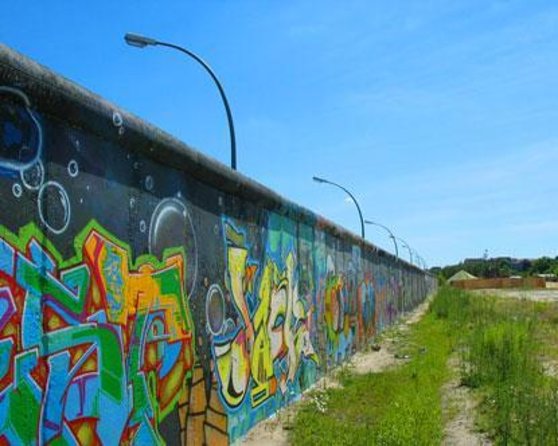
A major part of this tour is the sequence around the Memorial of the Berlin Wall. This is described as a must-see, and the framing includes both the painful reality of division and the stories of triumph and joy linked to 1989. You’re not just looking at stones or markers, you’re being guided through what the Wall represented in people’s lives.
The guide also connects this theme to wider context, including the history tied to Hitler’s armed forces and an underground bunker. In other words, you’re shown how one era’s machinery fed another, and how the story can feel confusing unless someone gives you the timeline.
Then you move to the Bundesministerium der Finanzen building, described as a Nazi-era structure that remains intact despite the war. The guide explains that it has a reason for still being there, which is important. You learn to see buildings as evidence, not just scenery.
After that comes the Fuhrerbunker topic, where you hear about the place where Hitler theoretically died. The guide also talks about why it’s theoretically and what theories exist, including which one is most prevalent. This stop is heavy and also a good example of how Berlin handles uncertainty: not by ignoring it, but by naming what’s known and what’s debated.
The Holocaust Memorial and Reichstag glass dome talk
One of the most emotional stops is the Holocaust Memorial, the Memorial to the Murdered Jews of Europe. You get a moment that you experience more through your own response than through facts alone. The guide frames it as something each visitor absorbs differently depending on beliefs and understanding.
I’ll be practical here. If you want to take this in properly, try not to treat it like a quick photo pause. Even with a time-limited tour, you can lower your pace for a minute. That small choice can change how the whole stop lands.
Afterward, you end with Reichstag context. You’ll hear about the seat of German Parliament, including the famous glass dome designed by Norman Foster. The way this is handled matters because it’s not just aesthetics. You learn how a modern democratic icon sits in a place that carries the weight of earlier regimes.
Brandenburg Gate: a final icon and an exit strategy for your afternoon
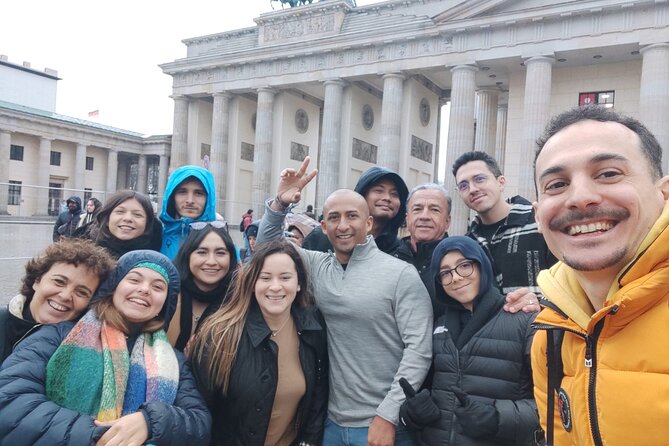
Finally, you reach Brandenburg Gate. It’s presented as the former gateway to Berlin and now the city’s icon, a backdrop for social and political demonstrations and even sporting or public events. The guide also ties it to Berlin’s rebuilding story, framing the gate as a symbol of how the city rose again from ashes.
The tour ends at Pariser Platz 1A, right in the Brandenburg Gate orbit. That is a smart ending, because you can keep walking without needing a map app to find your next move.
Price, value, and who this tour is best for
The price is listed at $23.76 per person, and that can be a good value when you compare it to the cost of piecing together your own self-guided plan in central Berlin. The big value boosters are the headphones and the guided storytelling that links sites into a single narrative.
You’re also getting a lot of high-demand locations in a short window, which is useful when your time in Berlin is limited. If you’re visiting for a weekend, or you want a first-day orientation to central Berlin, this tour gives you a workable mental map fast.
Who it suits best:
- First-time visitors who want maximum landmarks with context
- People who like hearing history connected to real places, not just dates
- Travelers who don’t want to stop and read constantly, thanks to headphones
Who might want something else:
- If you hate walking briskly, this is not the slowest option.
- If you want extended time inside major museums, you’ll need a separate visit after this.
Should you book it?
I think this is worth booking if you want a clear, emotionally aware overview of Berlin’s main themes, with headphones that keep you moving. The heavy stops are part of the package, and they’re treated with context, not gimmicks.
Book it if you like learning while walking, and if you can handle a short visit to each site. Skip it if you prefer a long, quiet museum style day, or if you want to spend an hour in every memorial area. In most cases, though, this is a smart way to get oriented and informed, then branch out on your own once you have direction.
FAQ
How long is the Berlin Full in 3.5h tour?
It runs for about 3 hours 15 minutes.
What does the tour include?
You get a guided experience with headphones, plus a mobile ticket.
Where does the tour start, and what time does it begin?
The tour starts at AZEM BISTRO, Rathausstraße 17, 10178 Berlin, at 10:00 am.
Where does the tour end?
It ends at Pariser Platz 1A, 10117 Berlin, near Brandenburg Gate.
Do you need extra money for entrances?
The tour information lists admission tickets as free at the included stops.
What if the weather is bad or I need to cancel?
The tour requires good weather. If it’s canceled due to poor weather, you’ll be offered a different date or a full refund. You can cancel up to 24 hours in advance for a full refund.
Fresh reviews out of Berlin
- Gastro Tour with Klaus though the Wrangelkiez, Kreuzberg★ 5.0 · 9 reviews
- Wall Tour Berlin – Fates, Heroes & Love Stories★ 4.0 · 9 reviews
- Berlin City Tour with Hotel pick up and Drop off★ 4.0 · 9 reviews
- Berlin Private Street Art Tour – Off The Grid★ 5.0 · 9 reviews
- Romantic Berlin Rickshaw City and Photo Tour – incl. pick-up★ 4.0 · 9 reviews
- Quatsch Comedy Club Berlin: Quatsch Comedy Hot Shot★ 4.8 · 9 reviews
- Berlin Urbex Adventure and History Tour★ 5.0 · 9 reviews
- Stag Party Berlin: Celebration for Your Bachelor Party★ 3.4 · 9 reviews
Guided, compared.
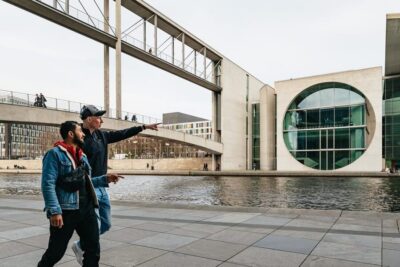
Reichstag, Dome and Government District Guided Tour
Read our review →
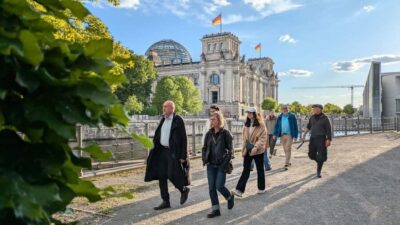
Government District around the Reichstag Guided Tour
Read our review →

1-Hour Boat Tour with Bilingual Guide (Ger/Eng)
Read our review →