Reviewed · GUIDED
Berlin: Decolonial Berlin Castle/ Humboldt Forum Guided Tour
A normal museum tour asks you to look. This one asks you to question the story behind what you’re looking at. With a decolonial lens, the Humboldt Forum is treated as more than a building, it is part of how colonial knowledge traveled and got preserved.
I especially like the Afrocentric perspective and the way the guide ties the Berlin palace setting to colonialism, missionaries, and the symbolic meaning of the roof cross. I also like that you get hands on time with the ethnological collection via a critical audio walk, so you practice seeing how narratives are shaped, not just hearing them.
One possible drawback is the tone. This tour has a strong point of view, so if you want a softer, purely descriptive museum experience, it may feel too intense or too confrontational.
Key takeaways before you go

- Afrocentric storytelling, focused on new narratives around colonial collecting
- Critical analysis of the ethnological collection, using a guided framework
- Berlin palace context, including why the roof cross has symbolic weight
- Humboldt brothers as scientists, tied to German history and colonial era legacies
- Outside discussion first, about an hour seated before you enter
- Audio walk inside the collection, so you can connect ideas to objects
Why the Humboldt Forum needs a decolonial guided lens

The Humboldt Forum sits in a place that already carries weight. You are not just stepping into an exhibition hall, you’re stepping into the Berlin palace story, with roughly 500 years of layered history behind it. And because this setting is so symbolic, a guide who frames it through colonialism helps you read the space differently.
This tour is built for that exact moment when you stop thinking, I am just here to see artifacts, and start thinking, Who decided that these objects belong here, and why? The guide’s goal is to help you understand how ethnological collections were formed alongside colonial structures, and how those old power dynamics still echo in how we interpret culture today.
If you care about the “how do we tell history” question, this tour hits it. You’ll hear colonialism connected to the palace, the Humboldt Forum, missionary roles, and the legacy of the Humboldt brothers. It is not presented as distant history. It is presented as something with consequences that show up in cultural heritage and museum collections today.
Weigh these Berlin picks against each other
- Berlin: Reichstag, Dome and Government District Guided Tour
★ 4.7 · 18,288 reviews - Berlin: 1-Hour City Tour by Boat with Guaranteed Seating
★ 4.3 · 16,993 reviews - Berlin: TV Tower Standard Entrance Ticket
★ 4.4 · 15,883 reviews
Meeting at the reconstructed Sanchi Gate, then setting context outside
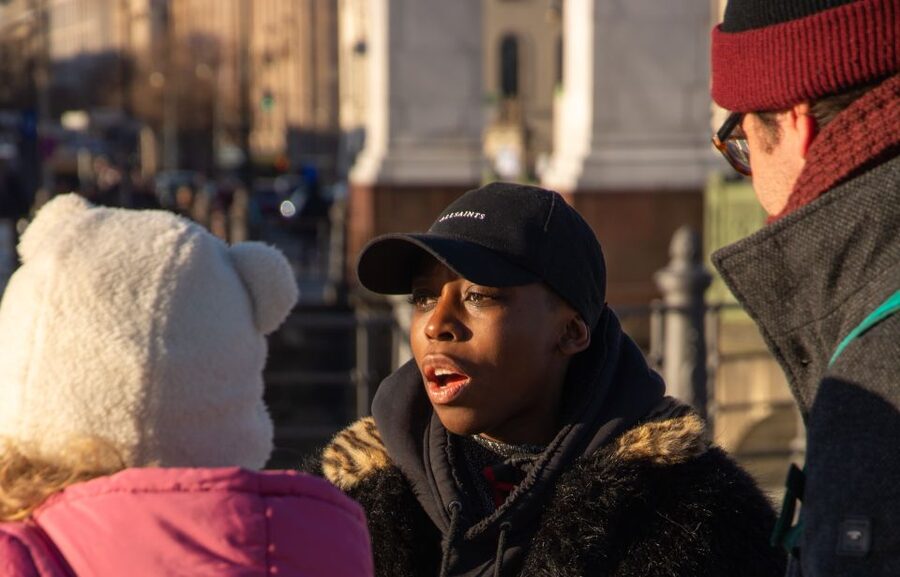
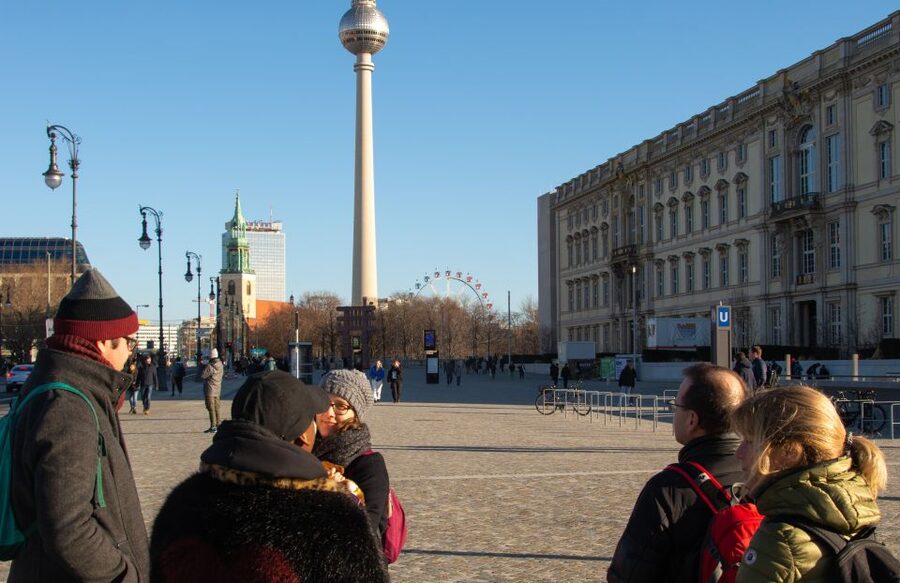
Your tour starts outside near the reconstructed Sanchi-Tores, at the Humboldt Forum area. You meet close to the gate and you can take a seat on the white chairs. That matters more than it sounds. Since the tour seats you for about an hour before you head into the museum, you begin in a slow, grounded way, instead of rushing straight to exhibits.
This outside portion is where the guide builds the frame. You’ll get key facts about colonialism and how it connects to the Berlin castle and palace setting. You’ll also learn about the Humboldt brothers and why they are treated as important German historical figures as scientists. The emphasis here is not only on what they did, but on how their work and reputations fit into a broader era of European knowledge making, including colonial networks.
You’ll also hear about the role missionaries played when colonial structures formed. That is a big deal on a tour like this because missionaries were not just religious actors. They helped power travel routes, language study, and cultural interpretation, all of which shaped what later became “ethnological” material in European museums.
And yes, you’ll talk about the cross on the roof. The tour treats it as symbolic, tied to the story Germany tells about itself through architecture and heritage. If you have ever looked at a museum building and wondered what messages are embedded in the design, this is the kind of tour where those details start to click.
Practical note: wear comfortable shoes and weather-ready clothing. You are sitting outside for about an hour first, and Berlin weather loves to change fast.
Humboldt brothers, palace symbolism, and the colonial knowledge connection
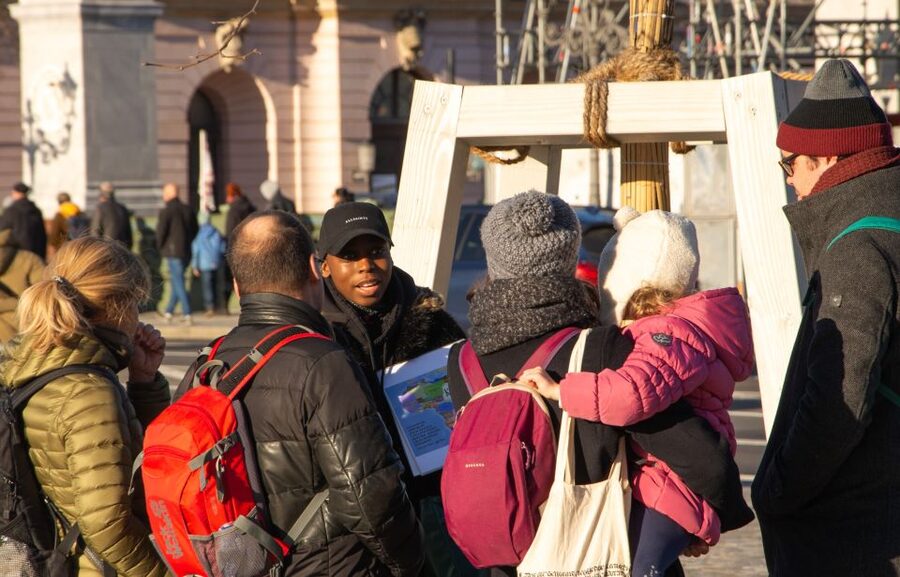
One theme you keep returning to is the Humboldt brothers. The tour presents them as significant figures in German history because they were scientists. But it does not stop at celebrating science as a neutral force. It connects their legacy to the larger system that made collecting and classifying other peoples and cultures possible for European institutions.
This is one of the most valuable parts for you if you like clear connections. The guide doesn’t ask you to accept the museum story at face value. Instead, you get a framework for thinking about scientific prestige, exploration, and how colonial structures enabled knowledge to travel outward and then return to Europe in the form of collections.
At the same time, the tour uses the Berlin palace setting to show how heritage can be both physical and ideological. The palace is not treated like a neutral backdrop. It is treated like a statement, and the decolonial perspective asks you to question what that statement hides.
The cross on the roof is a good example. The tour specifically points to its symbolic meaning, instead of treating it as decoration or tradition. Once you start noticing these symbolic signals, you can apply the same lens anywhere you see heritage buildings used to frame national identity.
Inside the Humboldt Forum: ethnology, narratives, and why the critique matters

After the outside context, you head into the museum for the ethnological collection. The tour includes entry to the ethnological collection, so you are not just walking past galleries.
The key here is the guided critical perspective. Rather than telling you a single version of museum history, the tour helps you analyze the collection and its presentation. That might sound heavy, but it is practical. You are learning how to read display choices, labeling styles, and the bigger story museums tell through object selection.
For you, the value is that the tour doesn’t only point at colonialism as a past wrong. It connects colonial history to modern cultural heritage. That means the tour asks, what do we do with these objects now, and how should they be interpreted in today’s world?
You’ll also hear about colonialism’s role in building the structures that produced these collections in the first place. The goal is not guilt. It is clarity. Once you can see the process, you can better judge the museum narrative you are encountering.
Another way to spend a Berlin afternoon:
- Berlin: Boat Tour Along the River Spree
★ 4.4 · 11,252 reviews - Discover Berlin Half-Day Walking Tour
★ 5.0 · 9,624 reviews - Berlin: Government District around the Reichstag Guided Tour
★ 4.7 · 8,447 reviews - Berlin: Reichstag, Plenary Chamber, Cupola & Government Tour
★ 4.6 · 8,422 reviews
The audio walk in the ethnological collection: how you practice critical looking
A standout feature is the audio walk. You browse through parts of the ethnological collection using the audio, and you analyze what you see from a critical perspective.
This is one of those tours where the method matters. If all you did was listen to a guide speak, it would stay abstract. But with the audio walk, you connect the ideas directly to objects and the ways they are framed. You can pause, re-read the labels or the exhibit framing in your mind, and compare what you assumed to what the critical lens is prompting you to notice.
If you like learning by doing, you’ll appreciate it. The critical thinking is not only delivered to you, it is prompted as you move.
Also, because you are guided, the audio walk is not random. You’re still getting orientation about how to interpret. That prevents the worst kind of “critical tourism,” where you just swap one slogan for another. Here, the tour supports you to make sense of how museum storytelling can shape public understanding of culture.
Pacing and what the two hours feels like on the ground
This is a two-hour tour in total. That short time can be either a strength or a compromise, depending on your expectations.
The tour includes around an hour seated outside, which means a big chunk of your time is spent in discussion and framing before you enter. Once inside, the ethnological part happens after that. If you are hoping for lots of slow wandering and extra time in each exhibition room, the pace may feel tight.
A practical way to think about it: this tour is designed to change how you read the museum quickly, not to provide a full independent museum day. If you want more time on individual exhibits after the tour, plan to return on your own for deeper looking.
If you’re short on time in Berlin and want a guided entry point into the Humboldt Forum from a decolonial and Afrocentric perspective, the time structure fits well. You leave with a lens, not just notes.
English guide, who it suits, and what you should expect from the tone
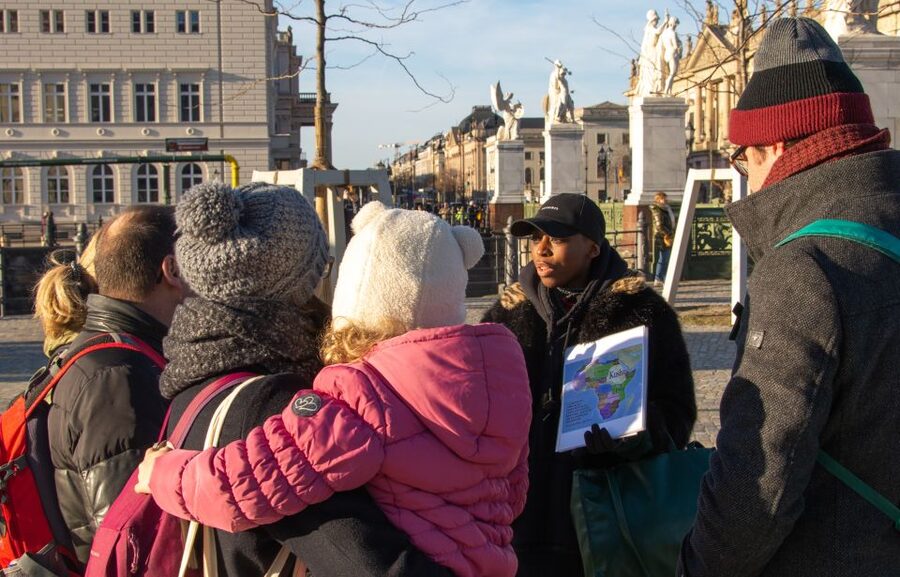
The tour runs in English with a live guide. It is also wheelchair accessible, which is useful if you need it for comfortable movement. If you have mobility concerns, it helps to know that you begin seated and then proceed into the museum, rather than starting with a long stretch of standing and walking immediately.
As for who it suits: I think it works best for you if you:
- want a museum experience tied directly to colonialism and its cultural legacy
- like discussion and explanation, not only visuals
- enjoy learning how narratives are built, including through architecture and symbolism
- want an Afrocentric perspective focused on new storytelling
The tone is part of the product. This is not a neutral “facts only” museum walk. It is a decolonial interpretation of the palace and the ethnological collection. Some people will love that clarity. Others may find it too blunt.
A good strategy is to ask yourself before you book: do I want a guided reading of colonial history, or do I want a descriptive tour that avoids critique? This tour is for the first category.
Price and value: is $41 worth it?
At $41 per person for a two-hour guided experience, the value comes from three things you get together.
First, you get a live English guide plus guided context outside, including discussion of colonialism, missionaries, the Humboldt brothers, and the palace setting with roof symbolism. That framing is what many visitors miss when they go in on their own.
Second, entry to the ethnological collection is included. That means you are paying for access plus interpretation, not just a meeting point and then a separate ticket situation.
Third, you get the audio walk component. You are not only listening in a classroom way. You’re also actively looking at the collection using the critical perspective the tour provides. That increases the payoff if you prefer learning by connecting ideas to what you see.
If you want a quick, guided way to understand the Humboldt Forum through colonial history and how the museum story is constructed, $41 for two hours can feel fair. If you want deep time in exhibitions, you might feel you need extra hours after the tour.
Logistics that matter: what to bring and how to show up ready
Keep your expectations simple and your packing light. The tour does not allow food and drinks, and you should avoid bringing luggage or large bags.
Bring:
- comfortable shoes
- weather-appropriate clothing
That outside seated period makes clothing important. Berlin can be sunny and then abruptly not. If you’re comfortable outside for an hour, you’ll enjoy the tour more.
For smooth check-in, meet near the reconstructed Sanchi Gate and look for the white chairs. Double-check the provider name, deSta- Dekoloniale Stadtführung, so you join the right tour and do not waste time hunting for the correct group.
Should you book the Decolonial Berlin Humboldt Forum tour?
Book it if you want your Humboldt Forum visit to come with a point of view and an explanation of how colonialism shaped museum collections and cultural heritage. You get a guided structure, Afrocentric framing, and an audio walk that helps you practice critical looking inside the ethnological collection. For many people, that is the difference between a quick visit and a meaningful one.
Skip it if you want a purely descriptive museum tour with minimal critique. The decolonial approach is direct, and the tour spends real time connecting architecture, symbolism, and the Humboldt brothers to colonial legacies. Decide based on your comfort with that kind of interpretation.
If you are open to learning a new way to read what museums show, you’ll likely feel the tour gave you more than facts. You’ll feel equipped with a lens you can reuse elsewhere in Berlin.
FAQ
How long is the Humboldt Forum guided tour?
The tour lasts 2 hours.
Is the tour offered in English?
Yes, the live tour guide is English.
Where do I meet the guide?
Meet your guide near the reconstructed Sanchi Gate, and you can sit on the white chairs.
What is included in the ticket price?
Included are a tour guide, entry to the ethnological collection, and time seated outside for approximately 1 hour before going into the museum.
Is the tour wheelchair accessible?
Yes, the tour is wheelchair accessible.
Are food, drinks, or large bags allowed?
No. Food and drinks are not allowed, and luggage or large bags are not allowed.
Fresh reviews out of Berlin
- Berlin Uncensored: A History of Sex & Freedom★ 5.0 · 50 reviews
- Berlin Food & Cultural Tour: Must-Try German & Berliner Classics★ 5.0 · 51 reviews
- English Comedy Show with Pizza and Shots in Central Berlin★ 4.5 · 51 reviews
- Rude Bastards Tour of Berlin★ 4.8 · 51 reviews
- Private Taxi Tour of Berlin East and West and Neighbourhood approx. 4-6h★ 5.0 · 55 reviews
- Rickshaw Sightseeing City Tours Berlin – Rikscha Tours★ 4.0 · 55 reviews
- Berlin: City Highlights Express & Panorama Roof Terrace★ 4.9 · 55 reviews
- Berlin during Nazism – Tour in Italian★ 5.0 · 56 reviews
Guided, compared.
Reichstag, Dome and Government District Guided Tour
Read our review →
Government District around the Reichstag Guided Tour
Read our review →

1-Hour Boat Tour with Bilingual Guide (Ger/Eng)
Read our review →