
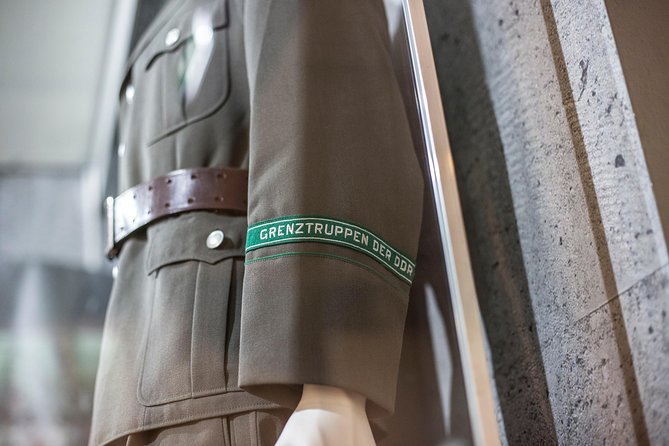
Reviewed · MUSEUMS
Your ticket to The Wall Museum Berlin
The Berlin Wall still shapes how you read a city, and this ticket gives you a focused way to understand it inside The Wall Museum at the East Side Gallery. What I like most is that you get a multimedia exhibition approach instead of just reading panels, and it’s built to tell the Wall’s story across the full timeline from 1945 to 1990. It’s also priced so you can fit it into a tight itinerary without feeling like you must “do more” to justify the cost.
The possible drawback: it’s self-guided, so you need a bit of patience and personal interest to make it meaningful. And if you’re unlucky with the tech, you might run into monitors that are slow or not working, which can make some sections feel less clear.
Key highlights worth your attention
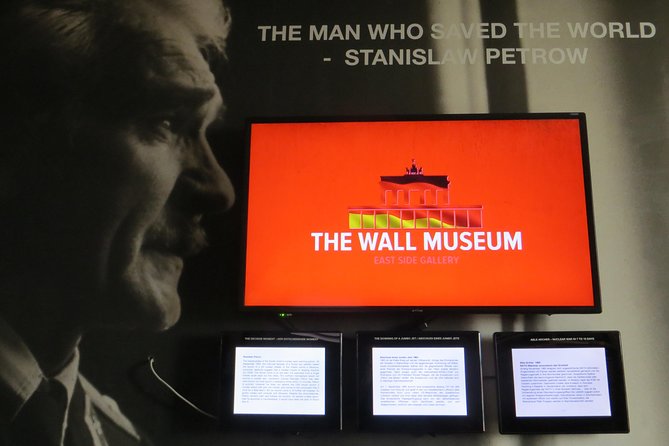
- Full Wall timeline (1945 to 1990) in one visit, so you are not left guessing the “before and after.”
- Multimedia format that mixes story, visuals, and emotion more than a standard photo wall.
- Self-guided pace for about 45 minutes to 1 hour, ideal when you want control over timing.
- Complete-history goal for a Wall-focused museum (it aims to cover the entire story).
- Mobile ticket in English, with admission included, for an easy, low-friction visit.
Why The Wall Museum Berlin is a smart stop
If you care about Berlin beyond the big photo moments, this is a practical add-on. The Wall Museum is designed for one job: explain the Berlin Wall in a way that actually follows the timeline. Opening in 2016, it focuses on the history of the Wall from 1945 through 1990, using multimedia to keep you moving instead of stuck staring at one static display.
The best part is that the visit has built-in boundaries. You are looking at roughly 45 minutes to 1 hour, which is long enough to get the core story, but not so long that it drains your energy for the rest of Berlin. At $12.02 per person, it also lands in that sweet spot where it feels like a real value stop, not a “maybe I should have skipped it” purchase.
One more plus: you are not stuck waiting for a specific guide or group moment. You can go in, start, and keep your own pace. That matters because Berlin is a city where you might want to pair this with nearby walking or other landmarks.
More Museums in Berlin
- Berlin: Jewish Museum Berlin Entrance Ticket
★ 4.5 · 8,393 reviews - Berlin: DDR Museum Tickets
★ 4.3 · 3,443 reviews - Berlin: Natural History Museum Entrance Ticket
★ 4.6 · 3,382 reviews
What you’ll do inside: a self-guided multimedia route
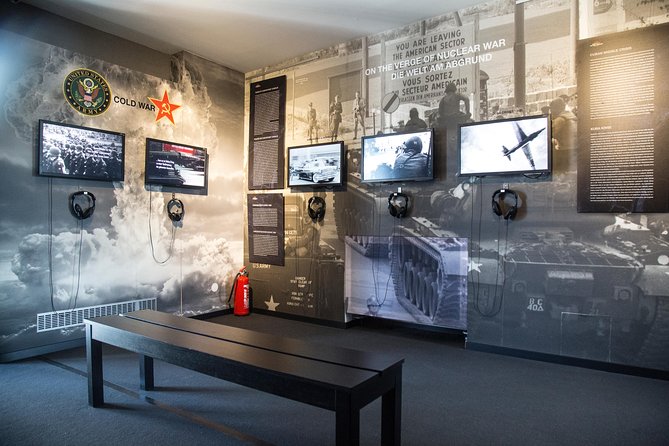
Your ticket covers admission to the museum, and the experience is self-guided. That means you decide what to focus on and how long to spend with each part of the exhibit. For some people, that’s ideal. You can pause, rewind your attention, or skim what you already know, without feeling rushed.
Here’s what the setup suggests you should expect. The museum is positioned as a multimedia exhibition on the Wall’s history. In practice, that usually means you’ll be moving between different kinds of presentation, such as screens, audio-visual elements, or timed story segments. The point is not just to show pictures, but to connect causes, events, and consequences over time.
The exhibit claims to be the first and only wall museum that tells the complete history of the Wall. Even if you take that claim as “this is built to be thorough,” it still tells you what you’re walking into: you should come away with a clear sense of what changed, when it changed, and how the Wall’s story connects to the eventual fall.
How to get more out of it (without extra effort)
Because it is self-guided, you’ll get better results if you treat it like a short study session. Try this approach:
- Pick one theme as you enter, like control and separation, daily life behind the Wall, or the political pressure that built toward 1989.
- As you move through the timeline, ask yourself what changed at each stage, not just what happened.
This keeps you from passively watching things. And it also helps if a monitor is acting up. When one section goes fuzzy, your own “theme lens” makes it easier to keep the story moving.
The core stop: The Wall Museum and the Wall story from 1945 to 1990
Your entire visit centers on The Wall Museum. The museum’s main draw is the timeline. You’re not just viewing one era. You’re being guided, multimedia style, through the evolution of the Wall over the decades that shaped Berlin.
Another way to spend a Berlin afternoon:
- Berlin: Reichstag, Dome and Government District Guided Tour
★ 4.7 · 18,288 reviews - Berlin: 1-Hour City Tour by Boat with Guaranteed Seating
★ 4.3 · 16,993 reviews - Berlin: TV Tower Standard Entrance Ticket
★ 4.4 · 15,883 reviews - Berlin: Boat Tour Along the River Spree
★ 4.4 · 11,252 reviews
1945 to the long middle years
Starting at 1945 matters because it gives context you might otherwise miss when you arrive in Berlin with mostly 1961 and 1989 in your head. You’ll likely spend time on the postwar setting and the forces that built toward division. If you only know the Wall as a symbol, this time window helps you understand it as a process.
This is also where multimedia format earns its keep. A purely written timeline can feel like a list. Multimedia tends to make cause and effect easier to feel, even if you only spend a short time on each segment.
The Wall era, when the city lived with the barrier
Once the story shifts into the Wall years, the museum focus is on what the Wall meant in day-to-day reality and the political reality around it. Expect emotional content. That’s part of why this museum is worth your attention even if you have limited time.
If you are the type who likes “systems thinking,” this section can click. The Wall isn’t just stone and fencing, it is also policy, movement rules, and pressure over time. The museum’s claim of a complete history works best if you pay attention to how the story evolves rather than treating each screen like a separate fact.
1989 and the fall, tied back to what came before
A good Wall museum should not make the fall feel like a sudden movie moment. This one is built to reach 1990, so you are set up to connect the momentum of 1989 to the wider outcome.
I like how this helps your brain build a full picture. When you later walk around Berlin, you are more likely to spot historical meaning in places you might otherwise treat as just “old streets and buildings.”
Tech, screens, and that self-guided reality check
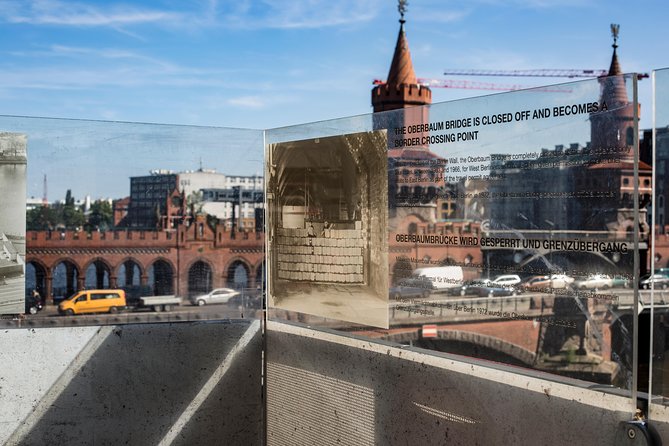
One of the more practical considerations from the experience is that some of the monitors may not work or might be unreliable. That’s not the end of the world, but it changes how you should prepare.
If you depend on screens for the main narrative, you might be frustrated. If you treat the museum as a general guided storyline and allow yourself to skip a broken screen, you can still leave with a solid understanding.
Here’s my advice for handling it smoothly:
- If something is not working, move on rather than waiting. You are in a short time window.
- Don’t assume every section will deliver the same level of clarity. Some parts may be more legible than others depending on the multimedia setup.
- If you’re a “read the context first” person, you might want to slow down at the start to orient yourself.
The museum is still a good value, but you will enjoy it more if you come with realistic expectations about the tech.
How much time you should plan (and why it matters)
The visit window is about 45 minutes to 1 hour. That is a tight range, but it works in your favor. You can treat this as a structured stop, not a wandering afternoon.
Plan for:
- Enough time to watch or listen to at least the key segments across the timeline.
- A little buffer in case a screen is down.
- Time to orient yourself at the start since it’s self-guided.
If you arrive hungry, tired, or late, the museum can feel longer than it needs to be. If you arrive with a short attention span and zero curiosity, it may feel like “more screens.” But if you come in curious about how Berlin changed, you’ll likely find the hour passes faster than you expect.
Language and who it suits best
The ticket is offered in English, which is a major practical point for international visitors. That means you can follow the multimedia content without needing to piece together translations.
Also, the experience notes that most travelers can participate. Service animals are allowed, and the site is near public transportation, which helps if you want to avoid a complicated commute.
Who I think will be happiest here:
- You want a focused, Wall-centered museum that fits into a day of sightseeing.
- You like multimedia presentations, even if you are picky about audio-visual quality.
- You want the story in one place rather than stitching together information across multiple sites.
Who might hesitate:
- You really want a guided explanation with live narration. This is self-guided.
- You need flawless working screens to enjoy a museum. If you are tech-sensitive, be prepared for occasional friction.
The price: what $12.02 buys you in Berlin
At $12.02 per person, this is one of the easier Berlin history stops to justify. The value comes from a few things that line up:
- Admission is included in your ticket.
- The visit is short, about 45 minutes to 1 hour.
- The museum focuses on the Wall’s full timeline, rather than one small slice.
In other words, you are paying for a complete narrative framework that you can consume in about an hour. That’s a good trade if you are balancing multiple sites in one day.
If you are doing a budget Berlin itinerary, this is the kind of stop that helps you “earn” your sightseeing time. It gives context that can make your walks around the city feel more meaningful.
Where it fits in your Berlin day
Because it’s near public transportation and located around the East Side Gallery area, it pairs well with other sights in that neighborhood. You can plan it as either:
- A morning history anchor, so you start the day understanding the Wall, or
- An afternoon stop after you’ve already seen some street-level Berlin, so the museum gives you deeper context.
One smart tip: don’t schedule it right on the edge of another timed commitment. Since it is self-guided and may include monitor glitches, you want a bit of slack in your day.
Should you book The Wall Museum Berlin?
Yes, I’d book it if you want a short, affordable, Wall-focused museum visit in English that covers the story from 1945 to 1990. The multimedia approach is a real advantage, and the timeline framing helps you connect Berlin’s division to what eventually changed.
I’d think twice if you hate self-guided experiences or if you get annoyed by tech that may not be perfectly reliable. In that case, consider whether you would rather spend your time elsewhere with a more stable format.
FAQ
How long does The Wall Museum Berlin take?
It’s approximately 45 minutes to 1 hour.
What language is the experience offered in?
The experience is offered in English.
Is this ticket mobile?
Yes, you get a mobile ticket.
Is admission to The Wall Museum included?
Yes, the admission ticket is included with your experience.
Is the museum visit self-guided?
The visit is self-guided, so you explore on your own.
Can I cancel for a full refund?
Yes. You can cancel up to 24 hours in advance for a full refund.
What’s the cancellation cutoff?
You must cancel at least 24 hours before the experience’s start time for a full refund, based on local time.
Are service animals allowed?
Yes, service animals are allowed.
Fresh reviews out of Berlin
- Berlin Uncensored: A History of Sex & Freedom★ 5.0 · 50 reviews
- Berlin Food & Cultural Tour: Must-Try German & Berliner Classics★ 5.0 · 51 reviews
- English Comedy Show with Pizza and Shots in Central Berlin★ 4.5 · 51 reviews
- Rude Bastards Tour of Berlin★ 4.8 · 51 reviews
- Private Taxi Tour of Berlin East and West and Neighbourhood approx. 4-6h★ 5.0 · 55 reviews
- Rickshaw Sightseeing City Tours Berlin – Rikscha Tours★ 4.0 · 55 reviews
- Berlin: City Highlights Express & Panorama Roof Terrace★ 4.9 · 55 reviews
- Berlin during Nazism – Tour in Italian★ 5.0 · 56 reviews
Museums, compared.


Skip-the-Line: Berlin Wall Museum at Checkpoint Charlie
Read our review →Browse the lists this tour appears in