
Reviewed · MUSEUMS
Ticket for the Emigration Museum BallinStadt Hamburg
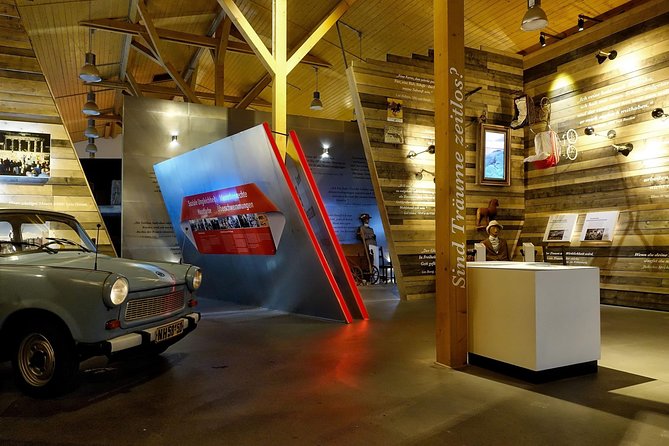
BallinStadt in Hamburg is interesting because you do not just read about emigration. You walk through three houses and experience the stories of migration across four distinct eras, with an audio guide guiding you from room to room.
I especially like the hands-on, interactive games and the way the museum makes it feel personal through family research tools. It is also designed to work well for kids, including a museum rat character for younger visitors.
One possible drawback: if you are coming mainly for emigration via Hamburg before 1934, know the museum now frames migration more broadly overall. The pre-1934 focus is still there, but the bigger idea is migration as a whole.
Key highlights at a glance
- Three houses on about 2,500 sqm, so the visit feels like a real journey, not one long hallway
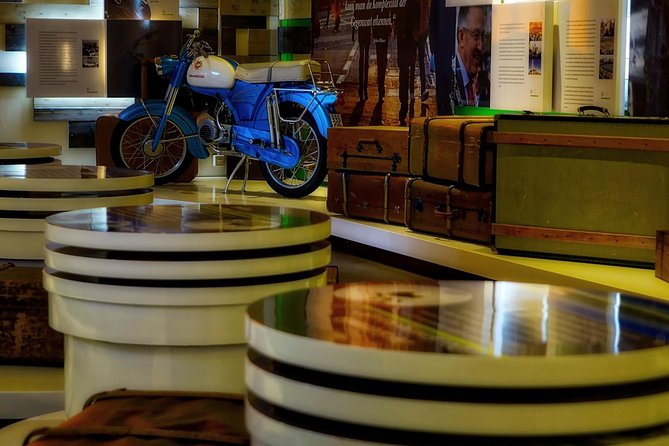
- Four eras covered with an audio guide, helping you connect people, causes, and outcomes over time
- Interactive games and activities, including searching your own genealogy
- Museum rat Jette for little ones, making the experience easier for younger children
- Albert Ballin connects the dots, from Hamburg’s emigration halls to later migration patterns
Entering BallinStadt: more than an emigration museum
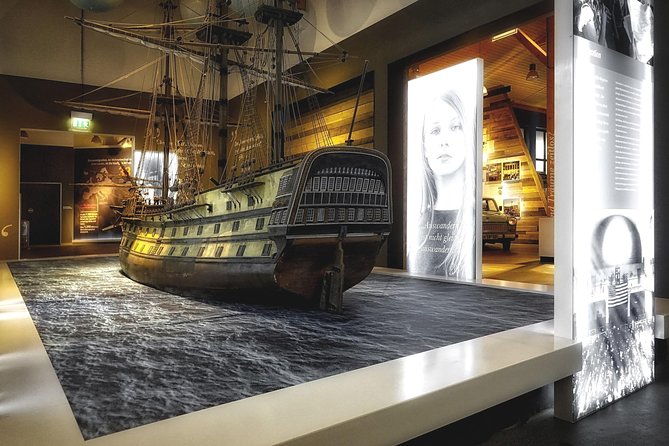
BallinStadt Emigration Museum Hamburg is built around a simple idea: migration is driven by human hopes and fears, and those motives keep repeating across centuries. You see that instantly once you start moving through the spaces. The museum does not treat emigration like a dusty historical topic. It links escape, hunger, persecution, and the dream of a new life into a story you can actually follow.
You will be in a museum complex split across three houses, spread over roughly 2,500 sqm. That layout matters. In a typical museum, you stand back and read. Here, you keep switching environments, which helps if you are visiting with kids, or if you do not want to spend 90 minutes only looking at information panels.
The place also has a strong Hamburg anchor. You learn about Albert Ballin, the founder behind the historic emigration halls in Hamburg. That matters because it gives context for why Hamburg became such a key starting point for so many people leaving Europe.
More Museums in Hamburg
- Hamburg: International Maritime Museum Entrance Ticket
★ 4.7 · 547 reviews - Hamburg: Entrance to the Museum Ship Cap San Diego
★ 4.7 · 467 reviews - Hamburg: Museum of Illusions Ticket
★ 4.3 · 366 reviews
Four eras, one audio guide, and a clear storyline
The visit is designed as a guided experience without forcing you into a rigid group tour. You explore emigration and migration through four distinct eras using an English audio guide. That is a good setup if you want to go at your own pace, stop to try activities, and still feel like you understand the big picture.
The four-epoch approach does real work for you. It helps you compare how motivations can stay the same even when the specific situation changes. In one era, you might see migration linked to war or persecution. In another, it can be connected to hunger or desperation. And sometimes the story is about curiosity and adventure, plus the very practical hope of finding work and stability.
Also, the audio format is useful because it keeps you moving. You do not have to guess which part of the exhibition is most important. The audio guide gives you a pathway through the museum’s material, which is handy in a place that covers a lot of ground.
House 1 and House 2: where Hamburg emigration before 1934 still matters

One thing to know upfront: the museum’s overall focus is migration, not only one narrow time period. Still, emigration via Hamburg from 1850 to 1934 is a core theme.
In practice, that means you should pay attention early on, because the most direct Hamburg emigration storyline is concentrated in House 1, with additional related content in parts of House 2. If you are hoping for a museum that is laser-focused purely on pre-1934 emigration, you may feel the shift in emphasis as you go. The museum is not pretending that earlier history is unimportant. It just widens the lens so you can understand how Hamburg fit into a larger long-term pattern.
I think this approach is fair for most visitors because it answers the question that naturally comes up while you are there: if people kept leaving for decades, what changed, what stayed similar, and why did Hamburg matter at the time?
House-by-house: what you will actually do as you move
Another way to spend a Hamburg afternoon:
- Hamburg: Sex and Crime in St. Pauli Tour for Ages 18 +
★ 4.7 · 17,793 reviews - Hamburg: 1.5-Hour Harbor and Speicherstadt Day Cruise
★ 4.6 · 14,200 reviews - Hamburg: 90-Minute Evening Lights Harbor Cruise
★ 4.5 · 7,728 reviews - Hamburg: 2-Hour XXL Port of Hamburg Cruise Tour
★ 4.7 · 6,979 reviews
Stop inside the museum: the core emigration journey
As you start, you are introduced to the idea that people traveled with more than luggage. They carried wishes and dreams, plus fears they could not control. The museum frames this with a consistent emotional thread: longing, fate, and stories.
That structure is more effective than it sounds. It prevents the exhibition from becoming a list of historical dates. You start connecting individuals to the bigger historical events shaping their choices.
The family research center experience
A major part of the visit is built around discovery. You will have access to a family research center where you can follow in the footsteps of ancestors. If you already know family names or where your family came from, this is the part where the museum can suddenly feel alive.
Even if you do not have family history details, this section is still useful. It helps you understand how genealogy research works in real life, not just as a concept. You will see the logic of tracing paths rather than treating history like it is one sealed story that never connects to you.
Interactive activities and games
One of the most praised aspects you will notice right away is how hands-on the experience feels. The museum includes interactive games and other activities that encourage you to do something, not just watch.
This is where the museum’s child-friendly side really comes through. The experience includes a museum rat character, Jette, aimed at younger visitors. The point is not to turn history into a cartoon. It is to make the museum easier to follow and less overwhelming for little ones.
You also get opportunities to search your own genealogy during the visit. That blend of play and personal research is a rare combination. It keeps the 90 minutes from dragging, and it gives adults a reason to stay curious.
Why the audio guide and “four eras” format works for real people
Some museum audio guides feel like you are stuck with headphones while you wander. This one is different because the audio is tied to the exhibition’s structure. You are not just listening to trivia. You are listening to a sequence, with the museum spaces acting like chapters.
You also benefit if you are traveling with mixed interests. If one person wants the deeper historical context, the four-eras structure gives it. If another person is more focused on interactive moments, the activities are sprinkled in a way that keeps the group moving and engaged.
And because the tour is about 1 hour 30 minutes, you get a solid hit of the story without the fatigue that can come from longer museum visits. It is a good match for days where you also want to see other Hamburg sights.
Price and logistics for a 90-minute museum visit
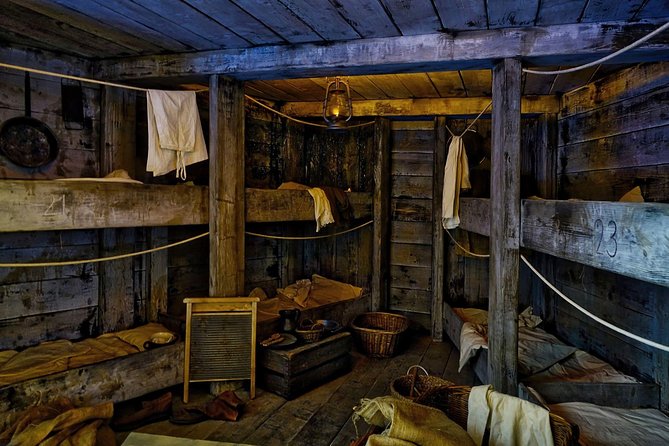
The ticket price is $15.62 per person, and that is one of the reasons I think it is good value for what you get. You are paying for more than access to rooms. You are getting a guided-style experience via an English audio guide, plus multiple houses of content and interactive tools.
The museum also includes an admission ticket with the experience, so you are not dealing with extra entry fees on arrival. That keeps your budgeting straightforward.
Timing matters too. The museum is open Tuesday to Sunday, 10:00 AM to 6:00 PM. It is closed on Monday. If you are planning a tight itinerary, you will want to slot BallinStadt into a non-Monday day so you do not risk missing it.
One more practical point: the museum is near public transportation, which helps if you do not want to waste time on complicated transit planning.
If you are the type who likes to adjust plans last minute, the cancellation terms are strict: the experience is non-refundable and cannot be changed for any reason. So I suggest locking in your visit only when your day plan is pretty solid.
What to expect from the overall experience (and a few smart tips)
This is a museum that mixes history with participation. You should expect moments where you stop, play, search, and think, then move on to the next house. Because the format is active, you will enjoy it more if you let yourself take breaks inside the exhibits rather than trying to rush to the end.
Here are a few practical tips that make the visit smoother:
- If you care about pre-1934 Hamburg emigration, focus your attention early, especially in House 1 and the parts of House 2 that expand on it.
- If you plan to do genealogy searching, leave a little breathing room in the schedule so you are not sprinting through the activities.
- Bring a curious mindset. The museum’s main message is that migration has repeating drivers, not just a one-time historical event.
Who this museum suits best
This experience is a strong fit if you want an emotional, story-driven museum that still gives you concrete context. The four eras structure is great for first-time visitors who want clarity. The interactive games and genealogy search are perfect if you do not want history to be only visual.
It is also a good choice for families. The presence of museum rat Jette for little ones, plus the interactive design, means kids are not just sitting through long stretches of text.
It may be less satisfying for visitors who specifically want a narrow, detailed focus only on Hamburg emigration before 1934. The museum still covers that period, but it is not the only lens. If that narrow focus is your main goal, you should mentally prepare for a broader migration conversation as well.
Should you book BallinStadt Hamburg?
Book it if you want a short, high-impact museum visit with real participation. The 90-minute length, the English audio guide, and the interactive tools make it good value at $15.62, especially if you are traveling with kids or you like museums where you do things, not just look.
Consider a different choice if your top priority is a strict, pre-1934 emigration-only exhibition. BallinStadt still includes that content, but it frames it within a wider migration story.
If you like practical history, personal connections, and activities that keep your attention, BallinStadt is an easy yes.
FAQ
How long is the BallinStadt Emigration Museum Hamburg visit?
The duration is about 1 hour 30 minutes.
Is the experience offered in English?
Yes, it is offered in English.
Does the ticket include admission to the museum?
Yes, the admission ticket is included.
Can I search my genealogy during the visit?
Yes, there are options to search your own genealogy as part of the experience.
What days and hours is the museum open?
It is open Tuesday to Sunday from 10:00 AM to 6:00 PM.
Is the museum accessible by public transportation?
Yes, it is near public transportation.
Are service animals allowed?
Yes, service animals are allowed.
Is it suitable for most visitors?
The information provided says most travelers can participate.
Is there any cancellation flexibility?
No. The experience is non-refundable and cannot be changed for any reason.
Fresh reviews out of Hamburg
- Hamburg: Neighborhood tour with a former dominatrix★ 4.7 · 51 reviews
- Hamburg: Ice-Cream Workshop★ 4.7 · 52 reviews
- Hamburg: Reeperbahn tour with Daniel Schmidt from the Elbschlosskeller★ 4.7 · 52 reviews
- Hamburg: Grand Harbor Tour by Traditional Barge★ 4.3 · 55 reviews
- Hamburg Private Walking Tour with a Local: Icons & Hidden Gems★ 5.0 · 55 reviews
- Hamburg: 3-Hour Limousine Tour with Driver-Guide★ 4.5 · 56 reviews
- Dialogue in the Dark (German Tour)★ 4.8 · 56 reviews
- “Highlights of Hamburg” Biketour★ 5.0 · 58 reviews
Museums, compared.


Skip-the-Line: Berlin Wall Museum at Checkpoint Charlie
Read our review →Browse the lists this tour appears in