
Reviewed · HISTORICAL TOURS
Private Taxi Tour City East & West History and Architecture 3-4h
This private taxi tour is interesting because it packs Berlin’s East and West into one ride, so you are not spending your best energy on buses and train changes. It is a smart way to compare how the city looks now versus how it looked after the wars, with big “wow” landmarks you can actually see from the curb.
I especially like the on-the-road storytelling style, where each stop is tied to a reason, a conflict, or a design choice. The one drawback is simple: with 3 to 4 hours and lots of scheduled viewpoints, the route is busy, so you need to be okay with brief exterior stops and short interiors.
Key Highlights Worth Planning Around
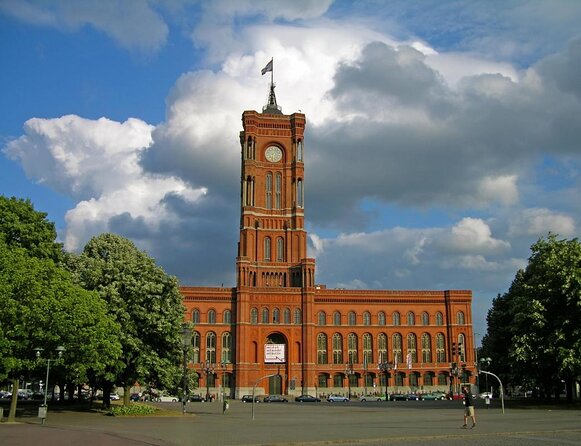
- Gunter as a driver-guide who mixes clear facts with personal anecdotes and keeps the ride flowing
- Memorial Church details like the preserved portal, the later modern hall, and the blue glass-stone lighting
- Ku’damm and KaDeWe contrast from grand boulevards to the oversized luxury department-store floor
- Cold War and Nazi history on a timeline at places like Topography of Terror and Checkpoint Charlie
- Rebuilt Berlin landmarks including Humboldt Forum, where architecture and museums share the same space
A Heated Taxi That Makes Berlin’s East and West Actually Feel Connected
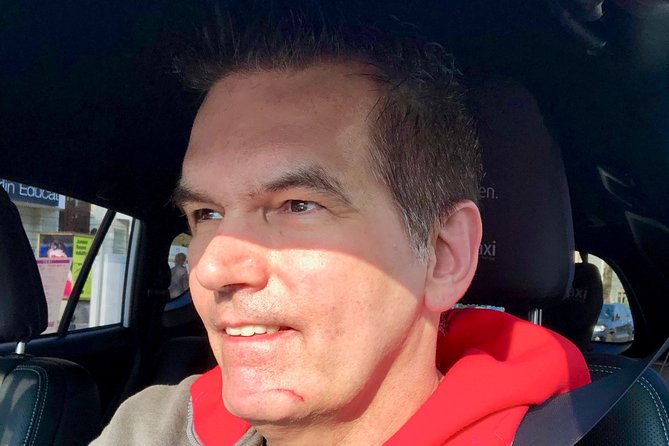
The real value here is how the transportation does part of the work for you. Berlin is big, and between neighborhoods, time evaporates fast. In a taxi, you keep seeing the city rhythm as it changes, from grand avenues to quieter memorial streets, without the grind.
I like that the stops are spaced so you can break the driving with short walks and quick looks inside when it makes sense. It is also a practical move if your trip dates include cold or rainy weather, since the car is your buffer.
More City Tours in Berlin
- Berlin: 1-Hour City Tour by Boat with Guaranteed Seating
★ 4.3 · 16,993 reviews - Berlin: City Sightseeing Hop-On Hop-Off Bus Tour
★ 4.1 · 4,233 reviews - Berlin: 1-Hour City Sightseeing Cruise
★ 4.4 · 2,210 reviews
Meet Gunter Bauer GAT-Productions, and Why His Style Fits a Short Tour
This is a private experience, and the driver-guide matters. The route is dense enough that you want someone who can explain what you are seeing without turning it into a lecture. Gunter’s approach is talkative in the good way: he answers questions, points out details you might miss, and keeps the pace realistic.
In multiple situations, the service level shows up in the small stuff. People note that he is responsive, adjusts if plans change, and even helps beyond the official tour when time allows, like practical guidance for the next day.
If you bring your own interests, you are not stuck with a rigid script either. That flexibility is a big reason this tour earns repeat recommendations.
Kaiser Wilhelm Memorial Church, Berlin Zoo, and Theater des Westens: The West Gets Specific
The tour opens by walking you into Kaiser Wilhelm Memorial Church, and not just as a generic landmark. You get the story behind the preserved tower and west portal, and why the original plan to clear the war damage met resistance. It is one of those places where symbols look decorative, until you connect them to the politics of memory.
A key detail I think you will enjoy is how the preserved entrance portal faces resemble Prussian kings and emperors. Then the modern additions come into play, based on Egon Eiermann’s design. Berliners even earned it nicknames like lipstick and powder compact, which tells you how people processed the new shape in real life.
After that, the ride swings toward Berlin Zoo, one of Germany’s oldest. What makes it worth seeing on a short city tour is scale and theming: roughly 16,000 animals across about 1,600 species. The buildings were designed in styles connected to where the animals come from, which still reads well even after war damage.
And then the Theater des Westens adds a different flavor. It was built in what was then the new west of Berlin, when the wealthy were moving out of the crowded center toward villas and gardens. Today it runs as a musical theater, and you can still spot that old sense of grand staging, including an imperial box.
Ku’damm to the European Center: Boulevards, Shopping, and That Moment Berlin Feels Like Paris
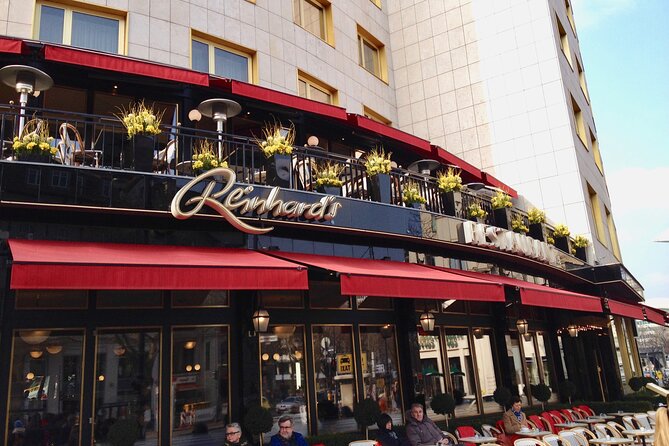
Kurfürstendamm, and especially the part locals shorten to Ku’damm, is where Berlin does the boulevard thing. The big practical takeaway is length. The street is not a quick photo. It is nearly 5 kilometers to Halensee, built with an influence tied to the Champs Élysées in Paris, including candelabras that echo a Bismarck-era fascination with French victory.
You will notice a shift as the decades passed. What used to be villas and older nightlife energy is now more boutique and flagship retail. The result is that it can feel more “stage-set for shopping” than a lived-in nightlife strip after dark, so plan your timing if that matters to you.
The European Center and the second view of the Memorial Church bring a different kind of Berlin contrast: sacred architecture beside a major commercial hub. The newer Memorial Church building is lit in a mysterious blue tone from thousands of glass stones made in France. It is also surprisingly quiet inside due to a double wall with about 2 meters of soundproofing air between.
One caution I would flag: the concrete structure can be fragile and is exposed to heavy traffic emissions, so scaffolding is often part of the scenery. If you hate that look, bring patience, or just treat it as proof you are seeing a living building, not a museum set.
More Historical Tours in Berlin
- Berlin: Natural History Museum Entrance Ticket
★ 4.6 · 3,382 reviews - Berlin: 3-Hour World Heritage Cruise to Potsdam
★ 4.5 · 1,569 reviews - Berlin: History of the Third Reich Guided Walking Tour
★ 4.7 · 791 reviews - Berlin Historical Highlights Walking Tour
★ 4.9 · 657 reviews
KaDeWe, the “Food Floor,” and Why This Stop Is About More Than Shopping
KaDeWe is the kind of stop that turns even non-shoppers into casual explorers. The department store sits at the Tauentzien end of the Ku’damm story, and it is enormous, about 60,000 square meters, which matters because it changes how you move through the space.
A big reason it is worth a short visit is the gourmet floor experience. People describe everything from champagne to oysters, plus a whole range of chocolate, bread, and cheese choices that go way beyond a quick snack stop. Even if you do not want to buy anything, walking the aisles gives you a sense of how post-war West Berlin positioned itself: modern, consumer-focused, and confident.
You might also hear some people say KaDeWe is just a Fressetage, a joking way to talk about eating and indulging. Whether you love that vibe or find it silly, it is still a real piece of Berlin identity.
Underground Berlin and Science, Seen Through Transit: Nollendorfplatz and Urania
Some tours skip transit architecture, but this one uses it. The stop around the subway station area is a reminder that Berlin metro lines are old, and the city’s politics shaped the tracks. The wealthy city of Charlottenburg did not want the older workers’ railway snorting past its villas, so you get a sense of class and planning in the way the underground is routed.
Then Urania brings you into late 19th-century public science. Urania started as an association meant to explain science to a large audience, and the legacy shows in slide presentations and panel discussions. In front of it is an unusual arch that aims upward, tied to a France gift for Berlin’s 750th anniversary, designed around the concept of pi, the circle degree.
Tiergarten to Bellevue to the Victory Column: Power Lands, Garden Design, and War Memory
Moving toward Tiergarten, the guide connects royal hunting to public access. The area began as a royal hunting ground, but over time barriers fell. Friedrich the Great later encouraged Berliners to enter, and the landscaping shifted from baroque gardening to later “English landscape” style under Peter Lenné.
The key design point here is sight lines. Lenné expanded the Schafgraben into the Landwehr Canal, draining swampy parts and shaping landscapes with lakes and lines of sight that you still experience as you move through the park.
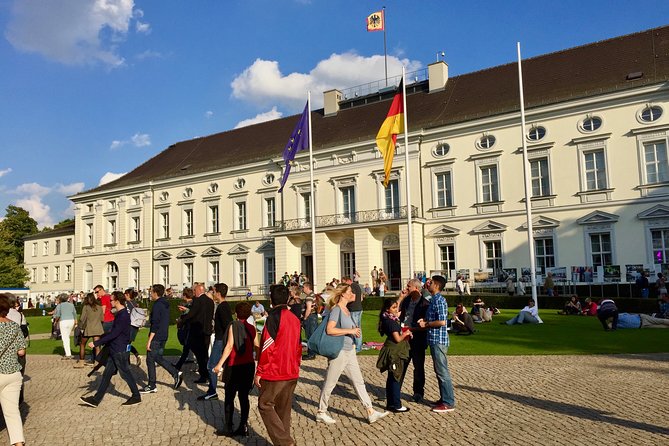
Bellevue Palace then brings you back into government space, but in a calmer, historic package. It served as the seat of the Federal President, built for the youngest brother of Friedrich II, August Ferdinand. After the war, it was badly damaged and prepared for temporary West German presidents, which stirred East Berlin protests because they viewed West Berlin as a neutral bloc.
The Victory Column adds a sharp edge. You hear how it started as a shorter structure with three drums and gilded captured cannons from Denmark, Austria, and France. After World War II, the French wanted it blown up, but the British refused and the surrounding forest was replanted. It is a perfect example of how monuments survive, change meaning, and keep being argued over.
Bundestag and the Chancellery Buildings: How Modern Germany Looks When You Can See It
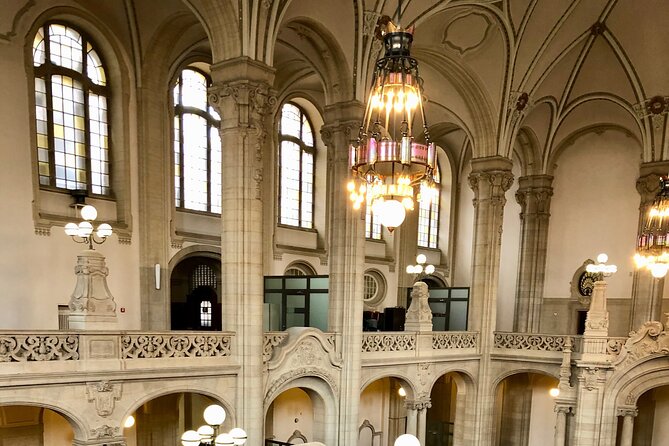
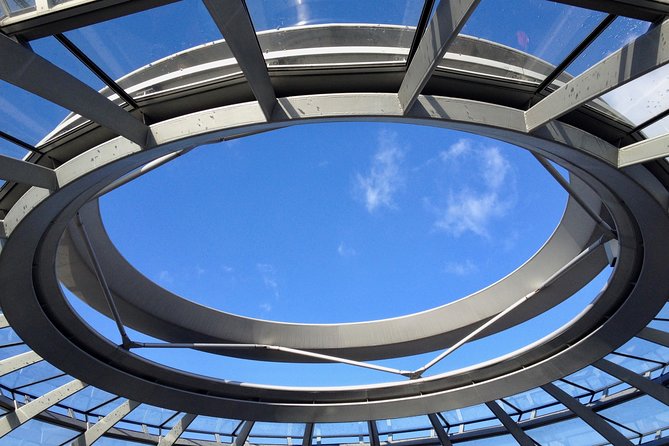
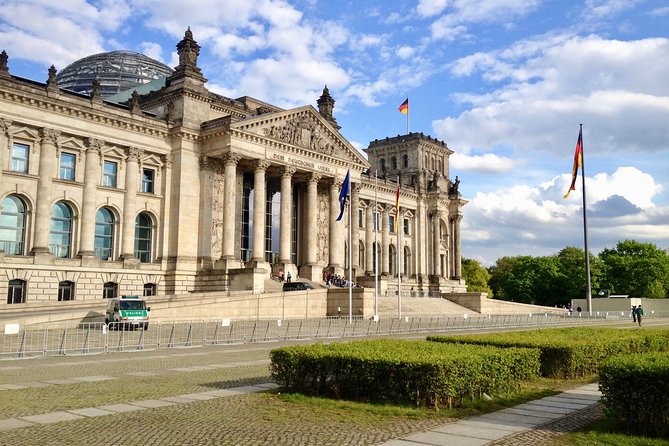
This part of the tour focuses on what modern Germany actually does, not only how it looks. The Reichstag stop explains how the dome and glass design connect parliament to public visibility. It was also linked to the idea of reunified Berlin, and Christo’s wrapping is part of the building’s modern story.
You then get the “engine of parliament,” the Bundestag building where committee work happens. The glass concept matters because you can see the structure from outside, and the interior layout supports the political system’s real workflow. From the street, it is easy to think you are looking at a building. Inside view cues that you are looking at a machine.
The Chancellor-focused stop is the big office block with about 36 meters height, ten floors, and around 500 office rooms for roughly 300 employees. It is not small-town government. Above all, it communicates how Berlin operates at national scale.
Finally, there is a modern press-surveillance building with a giant window. Accredited journalists sit facing a blue wall, and it reflects in the facade. It is a small design detail, but it helps you understand how transparency and controlled visibility coexist in how governments communicate.
Hackeschen Höfe and Friedrichstraße: East Berlin Street Life, Restored Courtyards, and Practical Edges
Hackeschen Höfe is where the tour becomes more human-scale. The courtyards, built in 1908, were designed as a mix of work and living, with printing houses and workshops alongside atria that were green enough for daily life. After the fall of the Wall, it was one of the first areas restored, which is why you still get that older Art Nouveau charm.
Today, workshops are replaced with shops, including KPM porcelain and local products like Ampelmännchen. If you like wandering without a rigid plan, this stop gives you that feeling without forcing a long walk.
Then the ride shifts to Friedrichstraße, one of Berlin’s most famous streets. It runs south in a straight line toward Kreuzberg and ends around Mehringplatz. The northern end can feel more worn, while the Tacheles area is actively transforming the landscape of a former shopping gallery.
Friedrichstraße station adds another layer: it is tied to East to West movement during the Wall. It was the only station offering onward travel from East to West at that time, including the Paris Moscow Express example. It was also used for escape attempts, with Stasi observation corridors and customs checkpoints. If you want to understand the Wall as daily friction, this is the kind of place that makes it feel real.
Neue Synagoge and Friedrichstadt-Palast: Religion, Security, and West Berlin Theater Taste
The Neue Synagoge is a major stop for architecture and modern reality. You get Moorish style elements and a golden dome. The church was destroyed in the war, and while the interior space for up to 3,000 believers is no longer what it once was, the entrance portal started rebuilding in Eastern times and now houses an exhibition on Jewish life in Berlin.
Be aware of security. Entrance measures are similar to what you see at an airport, and that changes the tone of the visit. If you are traveling with time pressure, factor that in.
Then Friedrichstadt-Palast gives you a classic Berlin entertainment stop. West Berliners joked about it as Revueplatte, and the theater is known for sold-out productions and large in-house staging. The technical details are part of the appeal, including a retractable swimming pool or a rotating ice surface, depending on programming.
Even if you do not plan to attend a performance, seeing the stage concept helps explain why this theater became a symbol of West Berlin showmanship.
Brandenburg Gate to Gendarmenmarkt: Classic Berlin Geometry Without Exhausting Your Legs
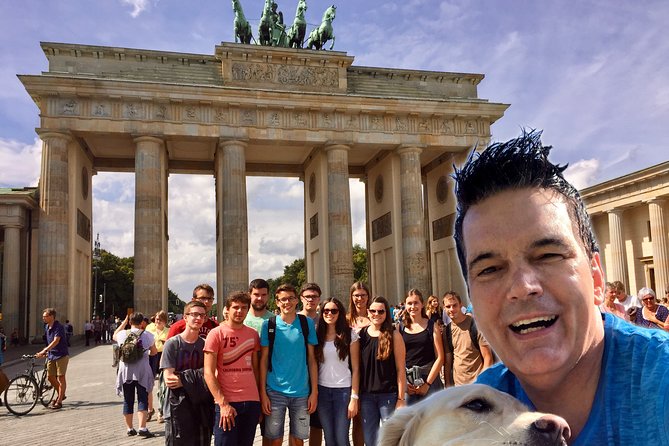
The Brandenburg Gate reads like Berlin’s living postcard, but the tour context makes it sharper. You hear why this area became like a parlor, with surrounding buildings destroyed by war and later demolition. The gate itself was oddly isolated, separated by a thick wall from the west and a fence from the east.
After the Wall fell, rebuilding decisions modernized the surrounding area while keeping the cubature similar to the old plan. Key institutions return here too, like the Liebermannhaus, the Academy of the Arts, and the French and American embassies.
Gendarmenmarkt is the other “postcard” square, and it is more than pretty symmetry. The German and French cathedrals are meetinghouses with cathedral-like towers, topped off as if Frederick II had blended civic and sacred design. The German cathedral now houses a museum focused on parliamentary history. The French cathedral is still used by a Reformed congregation with services in French, and there is a small Huguenot museum behind it connected to refugees who were allowed to build here.
If you like walking through Europe and getting the vibe of a city square, this is one of Berlin’s best answers.
Unter den Linden, the Neue Wache Memorial, and the Crown Prince Palaces
Unter den Linden is one of those streets where the trees and the buildings both tell the story. The guide connects the planting debate, where linden trees won over nut trees, so you get the boulevard name. It also helps to link it to the palaces and major institutions like the State Library, Humboldt University, and the State Opera.
The Neue Wache memorial is a quieter, heavier stop. The changing guard story explains the old spectacle and goose-step imagery from East Berlin. Today it is a place of mourning, shaped by a large Käthe Kollwitz Pieta sculpture, originally tied to her son and his death after only a few weeks in World War I. It is where wreaths get placed for war and tyranny victims, especially around national memorial day in November.
Then the tour goes to crown-prince palace territory, often overlooked when everyone crowds toward only the biggest names on Unter den Linden. These palaces handled royal births and upbringing, and they connect via a corridor. One side was used as an opera cafe due to proximity to the State Opera, and it is now used as an exhibition space. The other still supports administration tied to reconstructing the City Palace and the Humboldt Forum project.
German Historical Museum and Humboldt Forum: Museums That Explain Berlin’s Breaks and Repairs
The German Historical Museum is set in the former armory, which suits its focus on weapons and the idea of war preparations. It is known for war implement collections, including captured items, and it developed into a military history museum during the GDR era. After reunification, the decision shifted toward telling a central story of German history.
A detail you might find unsettling is the frescoes showing replicas of death masks of dying warriors, created as part of the building’s baroque design language tied to Andreas Schlüter. Even in a short visit, that visual choice stays with you.
The Humboldt Forum stop is different because the architecture itself has been a political argument. The area held a parking lot for decades after World War II, then the old Berlin Palace sat as a silhouette even when burned out. East Berlin authorities demolished it for months. Later, the externals were reconstructed with detailed documentation, and the Schlüter inner courtyard was rebuilt to a high degree.
If you care about how museums handle global collections, you are in the right place. The plan includes non-European art collections and Humboldt University collections added into the modern concrete setting.
East Berlin Squares and Canal Logic: Alexanderplatz, Nikolaiviertel, and the Spree Crossings
Alexanderplatz is introduced with the earlier Ochsenplatz name and the idea that GDR planners wanted a grand socialist redesign. You hear about how they envisioned space for marching with tanks and weapons, and the surrounding “modern socialism” buildings like the House of Tourism and the television tower, which remains Germany’s tallest.
Rotes Rathaus comes next as a neo-Gothic landmark. It functions like Berlin’s government center for the governing mayor, and you can visit free rooms, including ones with plaster casts of well-known statues.
Then Nikolaiviertel gives you a walk into old Berlin with reconstructed cues. The area was reconstructed in the 1980s with a setting that looks like baroque older city forms, even though only a few buildings truly existed and many elements were rebuilt. Nikolaikirche is part of it and is now a city museum site. Nearby, Knoblauchhaus offers Biedermeier-style furnishings and shows family life for a cloth maker family.
The tour also explains the oldest crossing logic in Berlin. The Spree was once crossed at a ford where settlement grew on both sides, Cölln on the C side and Saint Nicholas and Sankt Petri on the respective banks. Later a small lock took over, and then in the 1930s the system shifted toward a more functional double-chamber lock.
If you like city history that is not only about buildings, this stretch helps you understand how water shaped Berlin.
Checkpoint Charlie and Topography of Terror: When the Cold War Feels Like a Physical Place
Checkpoint Charlie is a photo stop, and the tour makes that clear. Much of what people photograph is replica, tied to an earlier US checkpoint style, and the original features have shifted over time. The point is the memory and the narrative.
Topography of Terror then gives you the deeper timeline. The site stacks layers: Imperial and Prussian era buildings like the former Prussian Landtag, a Nazi era presence including the Reichsluftwaffen Amt von Göring, excavated torture cells uncovered in the 1980s, and a Berlin Wall segment tied to divided city days. The documentation center on Nazi terror continues the story in the current era as well.
If you want history that feels organized, not chaotic, these two stops work well as contrast: one is public legend and image, the other is grounded documentation.
Bonus-Type Berlin Stops: Tank-Loud History and DomAquarée’s Underwater Walk
Not every stop is heavy. DomAquarée is a fun palate cleanser if you want something that breaks the history streak. You walk through an aquarium with sandstone-colored plates featuring reptiles, then under aquatic animals until the South Sea section, and the hotel lift is inside the aquarium lobby space.
It is a quick stop, but it gives you a different sensory Berlin moment.
Should You Book This Private City East and West Tour?
Book it if you want fast city orientation plus serious history without running on fumes. It is a good choice for first-time visitors, older travelers, and anyone who values a warm ride, short walking breaks, and an English-speaking driver-guide who actually answers questions. The private format also makes it easier if you have a specific interest like architecture, Cold War memory, or how West Berlin shaped itself.
Skip it if you want long independent museum time or deep study sessions. This tour trades depth per site for smart coverage across both halves of Berlin, so you will get impressions and key facts, not hours inside every building.
If your main goal is to see the big architecture hits, understand the city’s political layers, and get a plan you can trust in 3 to 4 hours, this one is a very practical bet.
FAQ
How long is the tour?
The tour runs about 3 to 4 hours.
Is this a private tour?
Yes. Only your group participates.
What language is offered?
The tour is offered in English.
Is pickup included?
Pickup within the S-Bahn ring is included. Pickup outside the S-Bahn ring or from BER airport is available for an extra charge.
Do you get WiFi and an air-conditioned vehicle?
Yes. The vehicle includes WiFi on board and is air-conditioned.
Are any tickets included for stops like KaDeWe or Humboldt Forum?
Admission is listed as free for KaDeWe and admission ticket included for Humboldt Forum, with other stops noted as free entry time windows.
Are child seats available?
Yes. A child seat for toddlers from six months to three years is available, plus a booster seat for older children. A baby seat can be brought on request (MaxiCosy).
Can the tour accommodate service animals?
Service animals are allowed.
How does cancellation work?
Free cancellation is available up to 24 hours in advance for a full refund.
Fresh reviews out of Berlin
- Gastro Tour with Klaus though the Wrangelkiez, Kreuzberg★ 5.0 · 9 reviews
- Wall Tour Berlin – Fates, Heroes & Love Stories★ 4.0 · 9 reviews
- Berlin City Tour with Hotel pick up and Drop off★ 4.0 · 9 reviews
- Berlin Private Street Art Tour – Off The Grid★ 5.0 · 9 reviews
- Romantic Berlin Rickshaw City and Photo Tour – incl. pick-up★ 4.0 · 9 reviews
- Quatsch Comedy Club Berlin: Quatsch Comedy Hot Shot★ 4.8 · 9 reviews
- Berlin Urbex Adventure and History Tour★ 5.0 · 9 reviews
- Stag Party Berlin: Celebration for Your Bachelor Party★ 3.4 · 9 reviews
Historical Tours, compared.
City History Canal Sightseeing Tour on a Motorboat
Read our review →
Night Watchman Historic Adventure Tour
Read our review →
Browse the lists this tour appears in