
Reviewed · TRAIN EXPERIENCES
Nuremberg: Nuclear Bunker in Main Railway Station
This is one of those Nuremberg experiences that hits you with a mix of practical engineering and real fear. You’re not just reading about the Cold War, you’re walking through a nuclear bunker built under the main railway station, with displays that ask a blunt question: how do you protect people when the threat is unimaginable?
What I like most is that the tour connects the big picture to everyday human feelings. You learn about WWII’s atomic shock, then how the Cold War pushed governments to plan for civilian protection against nuclear, biological, and chemical attacks, and you do it with a guide who keeps the mood grounded with humor and common sense. Second, you get a hands-on way to picture confinement, including time to lie down on a pallet or sit like you’re sharing limited space with several hundred people.
The main drawback is also the point: it’s a bunker setting, and it’s not comfortable for everyone. If you have claustrophobia, mobility limits, or you use a wheelchair, this tour is not suitable.
Key highlights worth making time for
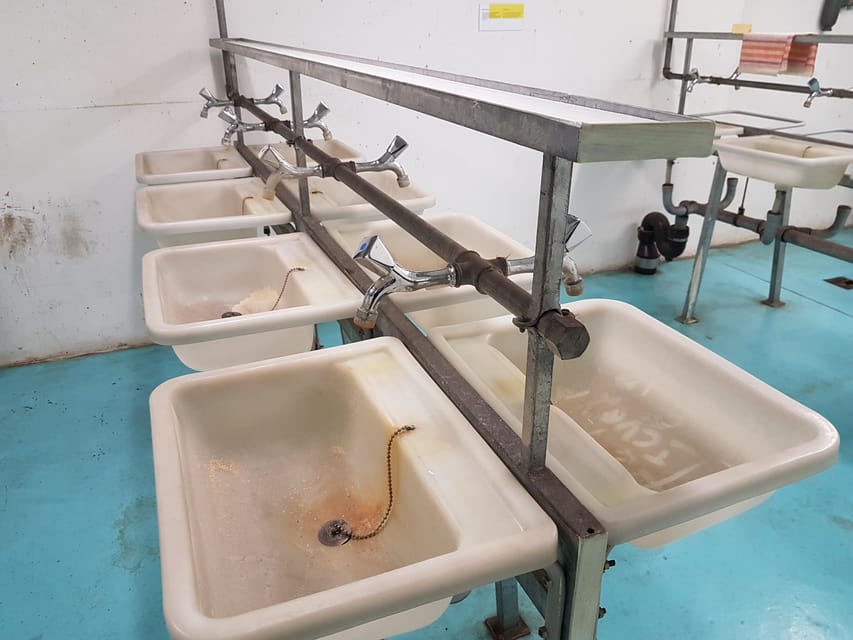
- Bunker location under Nuremberg Hauptbahnhof: This is civilian protection planning in the middle of normal city life.
- Cold War planning explained simply: You’ll connect post-1945 nuclear reality to concrete shelter ideas.
- Nuclear weapons reality check: A computer simulation helps you compare early atomic bombs with modern warheads.
- More than nuclear: The protection concept also covers biological and chemical attacks.
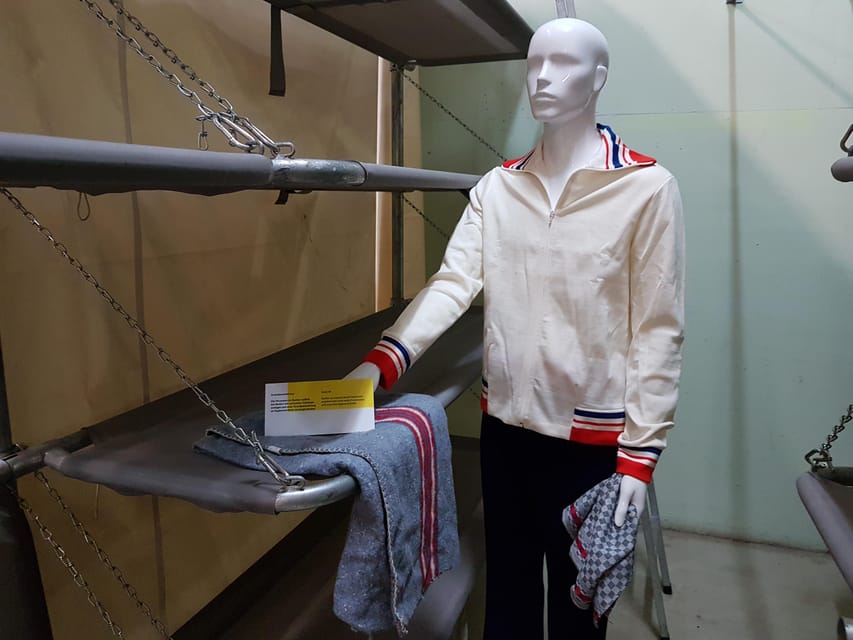
- A guided “life in the bunker” moment: You can lie down on a pallet or sit to feel the cramped conditions.
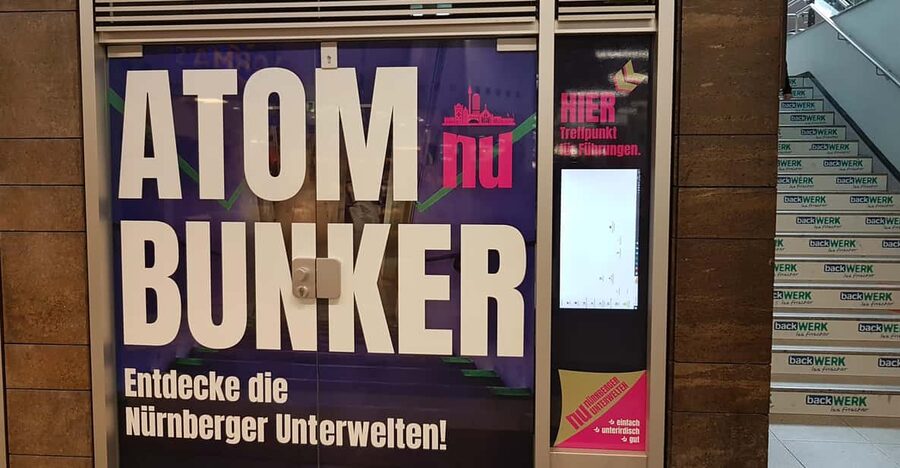
- Entrance can be easy to miss: The meeting point is near Yorma’s restaurant, and you should look around before your start time.
Walking into Cold War planning, right under the station
Nuremberg’s nuclear bunker is set up as a civilian shelter concept, not a bunker for soldiers on the front line. The idea was to protect some inhabitants, but especially to cover people caught in a crisis while traveling. That turns the whole experience into a strange kind of time machine. Instead of imagining a remote facility, you’re standing in the same building where people commute today, then descending into a space designed for acute danger.
The tour’s tone matters. The exhibits are serious, but the guide approach I’d aim for is smart, not melodramatic. One recent guide balanced the bunker atmosphere with humor and plain common sense, which is exactly what you want here. This is heavy material. You still need a guide who can keep you oriented and sane.
Also, this is not a long museum marathon. You’ll be in the bunker environment for about 75 minutes, which makes it realistic even if your Nuremberg schedule is tight.
Weigh these Nuremberg picks against each other
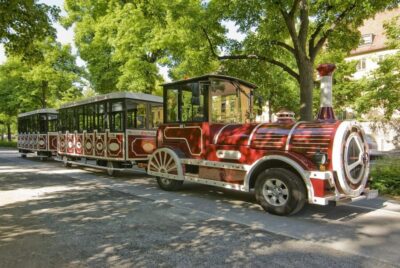
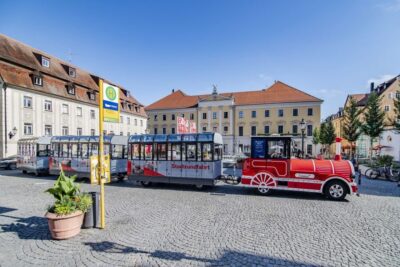
- Nuremberg: City Tour with the Bimmelbahn Train
★ 4.4 · 2,475 reviews - Dachau Concentration Camp Memorial Site Tour from Munich by Train
★ 4.5 · 5,637 reviews - Würzburg: City Tour with the Bimmelbahn Train
★ 4.4 · 1,322 reviews
Finding the bunker entrance inside Nuremberg Hauptbahnhof
This is the part that can trip you up, especially if you do not spend much time in Nuremberg.
You enter the station through the main portal and head into the main hall. From there, you have a choice of ways down to the basement levels:
- Take the long escalator down to the shopping arcade area called Königstorpassage, or
- Take the short escalator and then a step staircase.
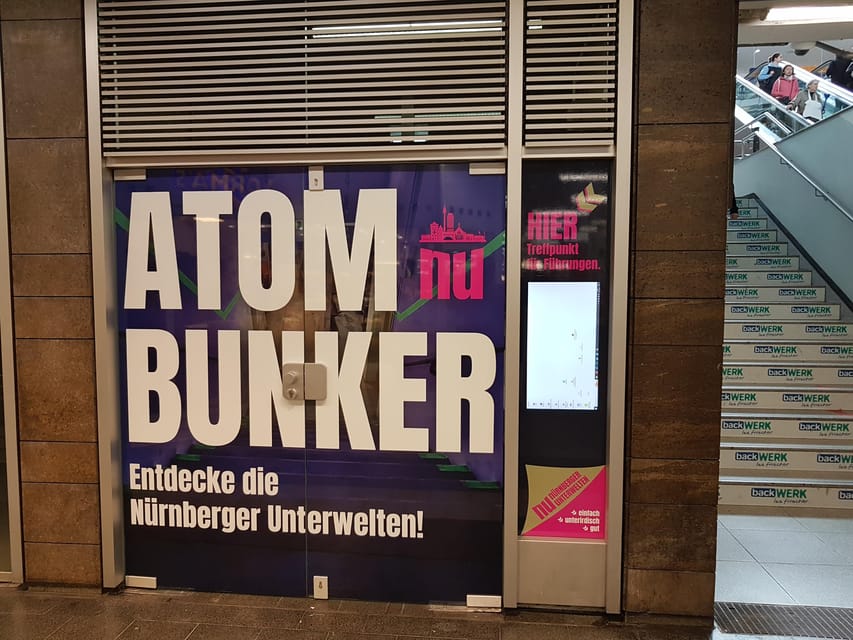
Right at the bottom, you turn sharply to the right. That’s where you’ll see the bunker entrance on the right wall.
Now the practical tip that saves time: meet directly at Yorma’s restaurant. That gives you a fixed landmark when the entrance feels tucked away. If you’re not a local, do a quick look around before your start time. One easy mistake is arriving at the station and assuming you’ll spot the entrance instantly. You often won’t, unless you take a minute to get your bearings.
What the bunker tour teaches you about nuclear risk
The tour is built around a clear storyline, moving from 1945 onward into Cold War thinking. After the end of WWII and the atomic bombs dropped on Japan, nuclear weapons became a defining part of global tension. The question then became: how do you protect people if this threat escalates?
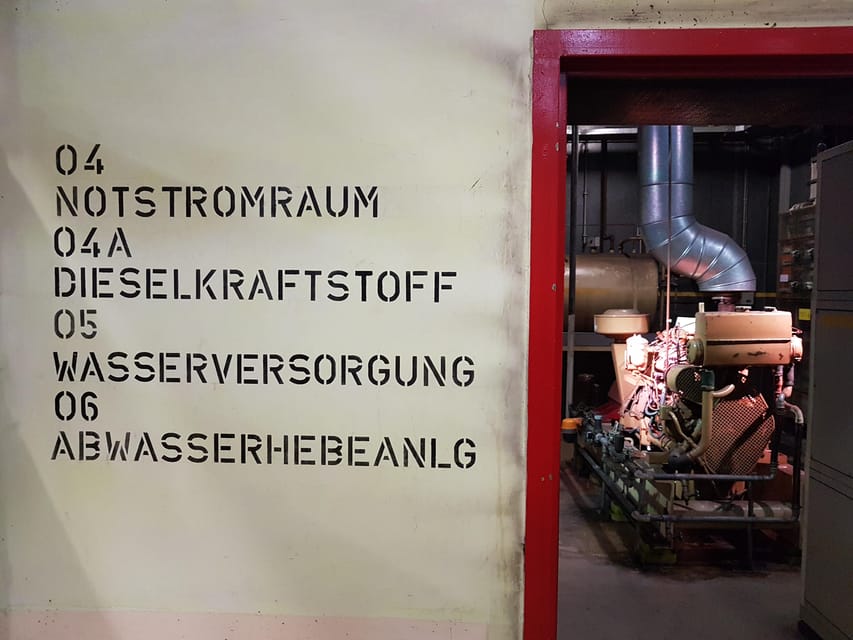
In the bunker, you’ll see how the shelter concept evolved around civilian protection. You’ll also learn that the bunker was designed not only for nuclear threats, but also for shielding against biological and chemical attacks. That matters, because it shows how planning moved beyond a single scenario. Instead of a one-off response, shelters were meant to handle multiple types of mass hazard.
Expect exhibits that challenge your assumptions. You’ll be asked to imagine the destructive force of nuclear weapons and understand how influential the first atomic bombs were compared to modern nuclear warheads. A computer simulation is part of that experience, giving you a visual sense of how the arsenal and threat changed over time.
If you like history that connects to systems, this tour has that. It’s not just names and dates. It’s the logic of protection planning, and what people thought they could realistically do for civilians.
The “life inside” part: pallets, sitting, and shared space
The most memorable moment is not a single panel or photo. It’s the chance to experience the bunker’s constraints.
You can lie down on a pallet or sit as you imagine what it would have felt like cooped up with several hundred people. Even if you intellectually understand “shelter space,” your body understands cramped space faster than your brain does. That small, controlled action is what makes this tour stick.
It’s also where the tour becomes more than facts. It turns the threat into something human scale. You start thinking about how protection plans would feel day after day, or hour after hour, while you’re confined and waiting.
One more thing to keep in mind: you are going through a bunker environment, so conditions can feel tight and enclosed. That is exactly why the tour is listed as not suitable for people with claustrophobia, and why it’s not a good fit for wheelchair users or those with mobility impairments.
Another way to spend a Nuremberg afternoon:
- Nuremberg: Old Town Guided Walking Tour
★ 4.6 · 2,416 reviews - Nuremberg: Tunnels and Secret Passages in the City Wall Tour
★ 4.8 · 2,334 reviews - Nuremberg: Medieval Dungeons Guided Tour
★ 4.8 · 2,214 reviews - Nuremberg: Walking Tour of Former Nazi Party Rally Grounds
★ 4.7 · 1,665 reviews
How the bunker planned to protect travelers and inhabitants
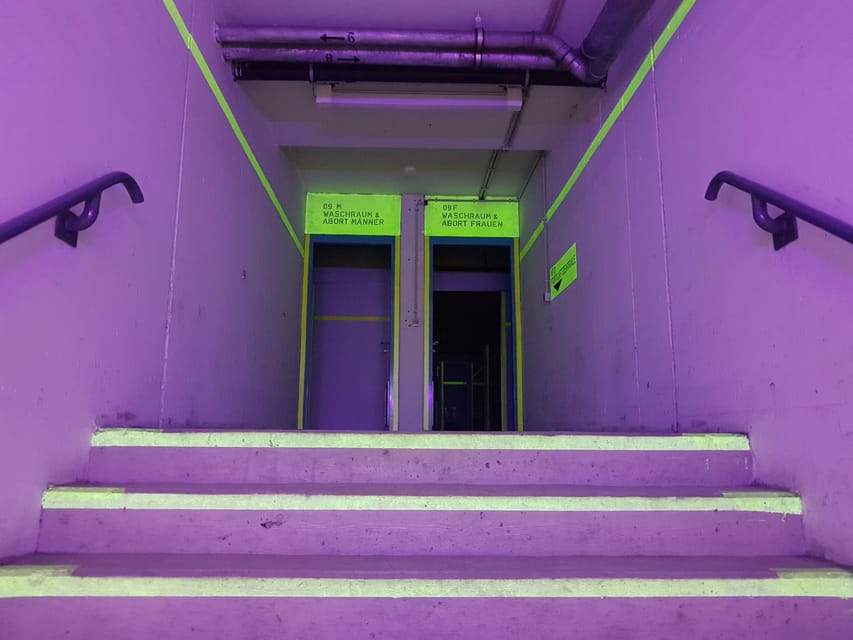
The nuclear bunker under the central station wasn’t designed as a general-purpose shelter for everyone in the city. It was meant for a targeted group, mainly some city inhabitants and, importantly, people primarily traveling. That “travelers first” angle makes the planning feel more realistic to everyday life. When you commute, you’re exposed to different risks than someone who’s always at home.
The tour frames this as acute threat protection, meaning fast access and functional shelter mattered more than comfort. The bunker was also intended to shield against biological and chemical attacks, which tells you shelters were designed around containment and shielding concepts, not just fallout in a single dimension.
That combination, nuclear plus other mass threats, helps you see the Cold War mindset: assume worst-case scenarios, plan for multiple hazard types, and protect civilians using engineered spaces.
Duration, pacing, and what a 75-minute format feels like

You should plan on 75 minutes. That’s long enough to give context, explain the bunker’s purpose, and walk through the main exhibits and experiences, but short enough that you are not trapped in endless rooms.
The pacing is guided, and you’re not meant to stroll freely. You’ll follow the guide through the bunker space, stop at key information points, and do the life-in-bunker moment. Then you’re done.
That format has a big advantage: you can fit it into a typical day in Nuremberg without needing a full half day. It also means you don’t have to manage lots of planning once you arrive underground. Your best move is simply to arrive on time and be ready to move when the tour begins.
Price and value: $15 for a guided entry into nuclear protection history
At about $15 per person, this tour is good value if you care about how people responded to nuclear threats in the real world. It’s not just a lecture. You get:
- Entry to the bunker
- A live guide during the tour
What you do not get is transportation and food or drinks, so budget those separately if you need them. But inside the station area, food is easy enough to plan around before or after. The key value here is access and interpretation. Getting a guided look at a specialized facility like this costs more than a standard museum ticket, but the duration and focused format help keep it from feeling expensive.
If you are deciding between doing this or a bigger museum day, think about what you want more. A bunker tour gives you a direct, place-based perspective on civilian protection planning. A museum tends to broaden the scope. This is narrower, but it’s intensely specific.
Who should book (and who should skip)
This experience is a strong match if you:
- Like WWII and Cold War history, especially the practical side
- Want to understand civilian protection thinking, not just battlefield events
- Prefer tours with a guided narrative and an interactive moment like the pallet or sitting
It’s a poor match if you:
- Have claustrophobia
- Use a wheelchair, or have mobility impairments (the tour is not suitable for wheelchair users)
- Are traveling with kids under 8 (not suitable for children under 8 years)
Also, the tour language is German. That means you should feel comfortable with some German, or at least be okay with limited understanding. If you do not speak German at all, plan for a reduced experience.
Simple rules inside the bunker that affect your day
Because it’s a protected facility space, there are clear limits. You’re not allowed to:
- Smoke
- Eat or drink
- Bring luggage or large bags
- Bring pets (assistance dogs are allowed)
- Use selfie sticks
- Touch the exhibits
You’ll also want to pay attention to timing. There can be no entry after the tour starting time. This is not a drop-in exhibit. Arrive early enough to find Yorma’s, confirm you’re in the right place, and get to the entrance before the group moves.
Finally, the tour takes place rain or shine, so you don’t get the excuse of weather. Since you’re underground, rain doesn’t ruin the core experience, but it can still complicate getting to the station on time.
Should you book the Nuremberg nuclear bunker tour under the station?
Book it if you want a compact, guided, place-based look at Cold War civilian protection, with a computer simulation that helps you grasp how early atomic reality differs from later warheads. The pallet or sitting moment is the kind of small, physical experience that turns facts into memory, and a good guide keeps the tone human, even when the subject is terrifying.
Skip it if you’re uncomfortable with confined spaces or you need wheelchair access. Also skip if you need an English-language tour, because this one is German only.
If your priority is value, this ticket price is hard to beat for a guided entry into a specialized bunker setting, located under one of the city’s busiest transit spaces. For many visitors, that mix of “historical weight” and “practical, findable location” makes it a standout add-on to a Nuremberg day.
FAQ
Where do I meet for the Nuremberg nuclear bunker tour?
Enter the station through the main portal, go to the main hall, take the escalators down to the basement floors, and then turn right at the bottom to find the bunker entrance. Wait for the tour to begin directly at Yorma’s restaurant.
How long is the tour?
The duration is 75 minutes.
What does the ticket price include?
The entry fee for the nuclear bunker and a guide are included.
Is transportation or food included?
No. Transportation and food or drinks are not included.
Does the tour run in bad weather?
Yes, it takes place rain or shine.
What items are not allowed during the tour?
Smoking is not allowed, and you also cannot eat or drink. Luggage or large bags are not allowed, pets are not allowed (assistance dogs are allowed), selfie sticks are not allowed, and you cannot touch the exhibits.
Is the tour suitable for children or people with mobility issues?
The tour is not suitable for children under 8 years. It is also not suitable for people with mobility impairments, claustrophobia, or wheelchair users.
Fresh reviews out of Nuremberg
- Tour to Rothenburg ob der Tauber from Nuremberg in Spanish★ 5.0 · 51 reviews
- Nuremberg: World War II Tour with Hotel Pickup★ 4.4 · 51 reviews
- Nürnberg: Mörder, Fälscher, Messerstecher★ 4.8 · 53 reviews
- Nuremberg Ghosts and Gallows Evening Walking Tour in English★ 5.0 · 56 reviews
- Nuremberg’s Mystery Morning: Breakfast & Escape Game★ 4.4 · 57 reviews
- Nuremberg: Private Walking Tour with a Local★ 3.8 · 77 reviews
- Nuremberg World War II★ 4.5 · 89 reviews
- Nuremberg Private Walking Tour: Old Town and Nazi Rally Grounds★ 5.0 · 92 reviews
Train Experiences, compared.
Dachau Concentration Camp Memorial Site Tour from Munich by Train
Read our review →
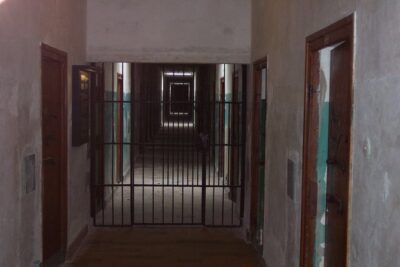
Dachau Concentration Camp Memorial Tour with Train from Munich
Read our review →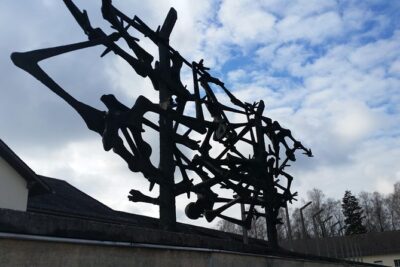
Guided Dachau Concentration Camp Memorial Site Tour with Train from Munich
Read our review →
Dachau Small-Group Half-Day Tour from Munich By Train
Read our review →
Browse the lists this tour appears in