
Reviewed · HISTORICAL TOURS
Lübeck: Hanseatic League History Walking Tour
This tour is interesting because Lübeck is one of the places where the Hanseatic League still feels real. You walk a tight loop of brick, gates, markets, and guild power, and you learn what that network meant for trade across Northern Europe.
I love how the guide turns landmarks like the Holsten Gate and St. Mary’s Church into a clear story about merchant life, not just postcard facts. I also love the pace of a 90-minute private group, where you actually get time for questions and small detours.
One drawback to consider: you’re on foot for the full session, so you’ll want comfortable shoes and a willingness to walk through narrow old-town streets at an efficient pace.
Key highlights to look for
- Holsten Gate start, with the fortified city context that makes everything else click
- Trave Harbour and salt storehouses, where trade logistics become easy to picture
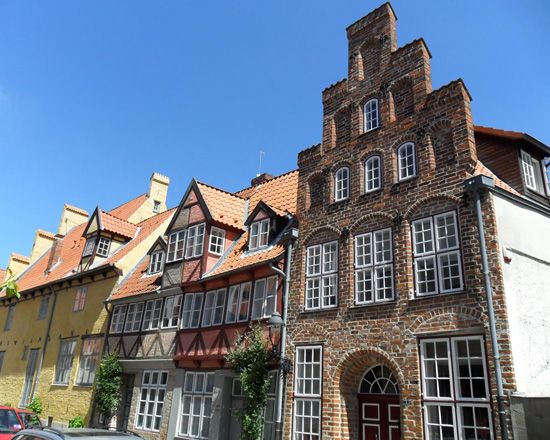
- Große Petersgrube, one of Lübeck’s oldest streets with classic brick and stepped-gable buildings
- St. Mary’s Church, explained as a model for many Baltic churches in Hanseatic cities
- Schiffergesellschaft guild hall, a direct link to sailors and merchant guild meetings
- Hospital of the Holy Spirit, ending with a peek into one or two backyards
Walking from the Holsten Gate into Hanseatic Lübeck
Meeting at the Holsten Gate is a smart move because it frames the whole tour. This was one of Lübeck’s city fortification passages, so before you even get into the streets, you understand that trade needed protection. The guide builds from that idea: why a port city cared so much about walls, access, and control.
From there, you’re not just sightseeing. You’re following the working logic of a merchant city. The Hanseatic League grew from connections among merchant guilds into a confederation of cities, and the guide keeps the scale understandable. In its heyday, it involved about 300 maritime and inland cities across Northern Europe, from Riga to Bruges. Hearing that range while standing in Lübeck makes the story feel concrete.
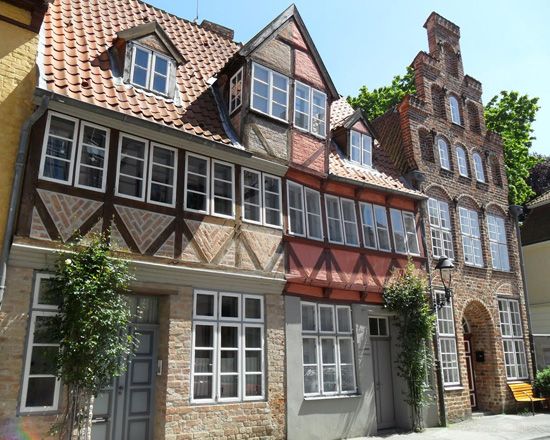
And Lübeck’s old town helps. Expect narrow alleys and traditional architecture, including those distinctive stepped gables. The buildings are doing part of the teaching for you, because you can see how long the city has kept its form.
More Walking Tours in Lübeck:
- Discover Berlin Half-Day Walking Tour
★ 5.0 · 9,624 reviews - Berlin: Third Reich and Cold War 2 Hour Walking Tour
★ 4.9 · 6,830 reviews - Munich: Third Reich & WWII Walking Tour
★ 4.6 · 6,181 reviews
Fortifications, salt storehouses, and the Trave Harbour story
Next comes the trade landscape: you stroll past salt storehouses and reach the Trave Harbour area. This is where the Hanseatic League stops being an abstract name and becomes a system. The guide explains how North German merchants organized sea connections and trade, and why ports were the heartbeat.
If you’ve ever wondered why medieval and early modern trade cities obsess over supply chains, this is your answer. Salt was not just a seasoning. It mattered for preservation and food supply, which meant it mattered for shipping and the economy behind shipping.
At the harbour, you can connect the dots. The guide’s job is to help you see what you’re looking at, and it usually lands fast: walls protecting access, storehouses holding what ships needed, and the harbour functioning as the link to the wider network. When Chris guided a group, the takeaway was clear learning value, and that’s exactly what these segments are designed to do.
Practical note: harbour-area walking can feel a bit windier or more open than the tight alleys. If it’s cool out, you’ll feel it more here than near church walls.
Große Petersgrube and the stepped-gable feel of old Lübeck
One of the best moments of the tour is walking through Große Petersgrube, described as one of Lübeck’s oldest streets. The big win here is that you get architectural context without turning it into a lecture. You’ll see old brickwork and stepped-gable buildings up close, and the guide uses those details to make the city’s merchant-era design choices easier to understand.
This is also a great stretch for photos, but more importantly, it’s a great stretch for pace. The street is narrow, so the scenery stays close and readable. You’re not scanning from far away. You’re moving through the city as it was built to be lived in.
The guide also tends to bring in the daily texture of Hanseatic life, not just the headline events. That matters because the Hanseatic League was an economic machine powered by people, and Lübeck’s back-and-forth streets show the human scale behind the big numbers like Riga to Bruges.
St. Mary’s Church: why a single church mattered across the Baltic
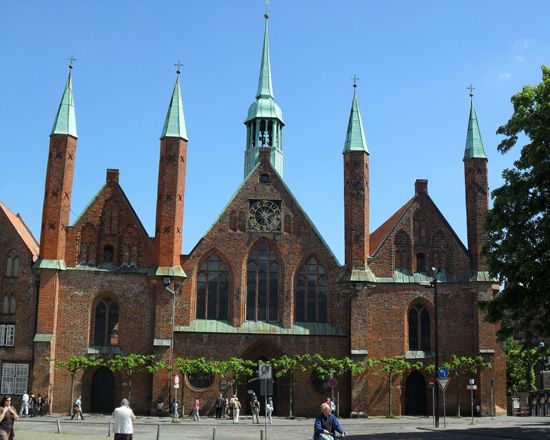
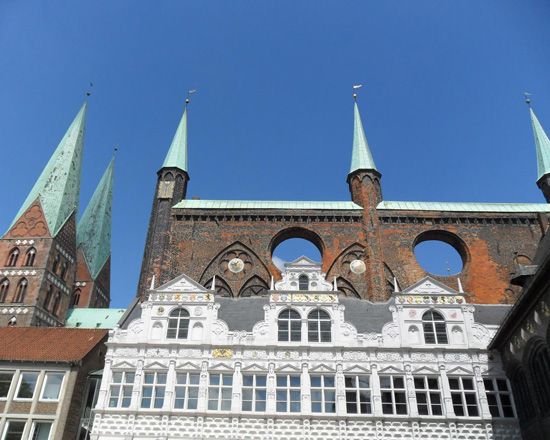
Then you reach St. Mary’s Church, and this stop has real historical weight. The guide points out that it served as a model for numerous churches in the Hanseatic cities of the Baltic region.
That means you’re not just looking at one building. You’re looking at exportable style and shared identity. Merchant networks weren’t only about ships and contracts. They also carried tastes, funding patterns, and builders’ know-how. If the churches look related in the Baltic, that connection starts making sense here.
St. Mary’s Church is also a good anchor for your mental map. After the streets and harbour, the church gives you a vertical reference and a sense of what the city invested in beyond shipping. It’s a reminder that a trade confederation still needed institutions for community, worship, and social order.
If you like your history guided through physical places, this is one of the strongest segments of the Lübeck: Hanseatic League History Walking Tour.
More Historical Tours in Lübeck:
- Leipzig: City History Canal Sightseeing Tour on a Motorboat
★ 4.7 · 7,671 reviews - Berlin: Natural History Museum Entrance Ticket
★ 4.6 · 3,382 reviews
Rathausmarkt and the Buddenbrook House connection
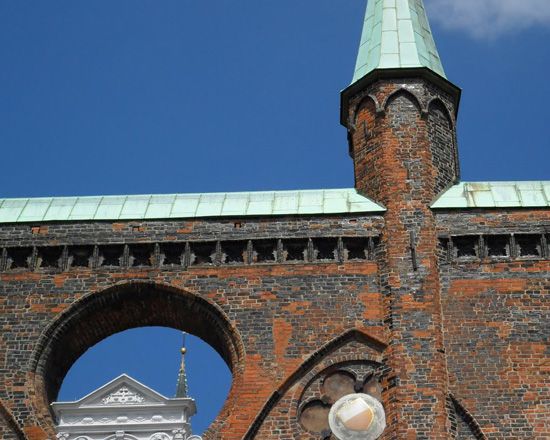
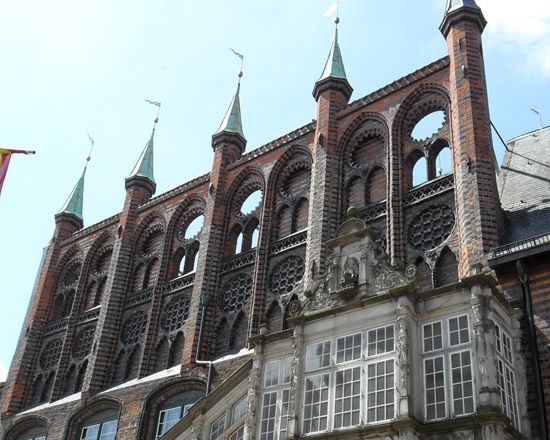
You’ll also pass key civic and landmark spaces like the Rathausmarkt area and the City Hall. This part matters because it shows another side of merchant power. Lübeck was not only merchants with ships. It was a city with governance, courts of influence, and public spaces where decisions shaped trade.
From there you’ll come across the Buddenbrook House connected to the Mann family. This is a place where the city’s story can shift from medieval trade structure to later cultural memory. Even if you only know the Buddenbrook name from elsewhere, it gives you a way to connect Lübeck’s merchant legacy to how people later remembered it.
If you care about how historic cities keep their identity, this stop is useful. The guide helps you see the Buddenbrook House not as an isolated attraction, but as part of how Lübeck’s merchant heritage keeps echoing in its buildings and famous addresses.
Schiffergesellschaft guild hall and the sailor’s side of the Hanseatic League
One of the tour highlights is reaching the Schiffergesellschaft guild hall. The guide frames it as the kind of meeting place where sailors of the Hanseatic League used to stop by. That detail is important. It shifts the story from merchants in offices to people on ships and in ports.
Guild halls are where the social layer becomes visible. Trade relied on trust, shared rules, and group identity. A guild hall is basically the physical headquarters for that network feeling. In practical terms, it was a space for interaction, coordination, and support for those tied to shipping.
This stop often lands well because it gives you a clear Hanseatic “who did what” picture: sailors and merchants were part of the same ecosystem, just with different roles. When your guide is as engaging as Bernd or Karin in the feedback, you’ll feel how the explanation stays focused on meaning rather than random facts.
Also, the walk is still short enough that this feels like a natural build, not a final stop you drag yourself through.
The Hospital of the Holy Spirit and Lübeck backyards
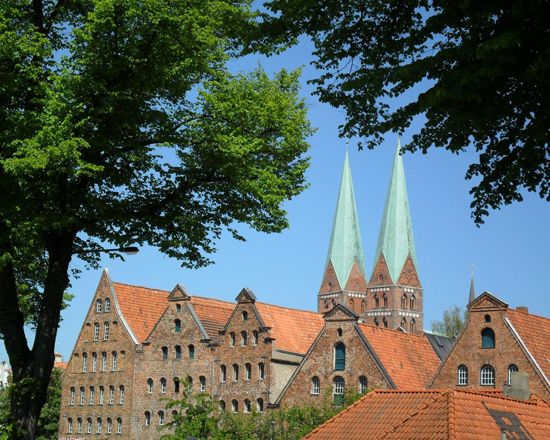
The tour ends at the Hospital of the Holy Spirit, one of Lübeck’s oldest social institutions. This ending point is quietly brilliant because it prevents the Hanseatic story from turning into pure commerce only.
Instead, you get a look at social infrastructure, the kind that helps a city function beyond trade. Hospitals in medieval and early modern Europe were often intertwined with charitable giving and community support, and the guide uses that context to round out your understanding.
You’ll also be able to take a look into one or two romantic backyards. That’s not random filler. These backyards are where you can see how architecture and everyday life connect. They also make the tour feel more intimate and Lübeck-specific than just a checklist of monuments.
If you’re the type who loves small spaces and human scale, you’ll probably remember this ending longer than you expect.
What makes the guides matter so much
The biggest reason this tour feels consistently high quality is the guide skill. In feedback from recent groups, guides like Bernd, Karin, and Chris are described as energetic, highly informed, and able to explain a lot without making it boring.
A few patterns show up in the experiences people report:
- The guide acted like a walking encyclopedia, but still kept it fun.
- The group stayed engaged because the explanations matched what you could see in front of you.
- Guides adjusted to preferences, including time spent on courtyards or other specific areas of interest.
- The tour didn’t end when it ended. In at least one case, the guide offered helpful suggestions for what to do on your own afterward.
That last point matters for value. A good walking tour doesn’t just inform. It sets you up to explore the rest of Lübeck with better instincts.
And because the tour is a private group, you’re not stuck with a crowd that forces the guide to generalize. The guide can slow down when questions come up, and you can shape the focus a bit as long as it fits the time.
Price and logistics: is $259 per group worth it?
This tour costs $259 per group up to 6, and it’s 90 minutes with a professional city guide. On the surface, that sounds like a fixed price regardless of how many people are in your party. In practice, it can be excellent value if you travel as a small group or family.
Here’s the simple math logic you should use. If you have fewer than 6 people, you’re paying slightly more per person than a full group, but you get privacy. If you can fill closer to 6, the per-person cost drops and the tour becomes much easier to justify, especially because you get a guide fluent in English and German.
Also, the tour concentrates its time well. Instead of spreading across distant neighborhoods, it strings together high-signal stops: gate, harbour trade context, oldest street atmosphere, major church meaning, civic spaces, guild hall, then the Hospital of the Holy Spirit. That tight loop is part of why 90 minutes works.
What’s not included is also clear: there are no transfers and no food or drinks. That’s fine, because Lübeck is usually easy to navigate on foot for this kind of route, but you should plan your day accordingly so you’re not caught hungry at the end.
Who this Hanseatic League walk suits best
This works best if you want history you can see and understand, fast. If you’re the type who likes architectural storytelling, stepped gables, and city layouts, you’ll enjoy how Lübeck’s built environment supports the guide’s explanation.
It’s also a good choice if:
- you want a focused overview of the Hanseatic League’s role in trade and sea connections
- you prefer a small group format over joining a large tour
- you like getting practical, on-the-ground suggestions after the formal part of the walk
If you dislike walking, this is probably not your best match, since the tour is designed as a compact old-town stroll.
And if you’re visiting Lübeck with limited time, 90 minutes is an efficient way to get your bearings before you explore on your own.
Should you book this Lübeck Hanseatic League History Walking Tour?
Book it if you want a short, high-impact walk that explains the Hanseatic League through real Lübeck places: Holsten Gate, the harbour trade context, Große Petersgrube, St. Mary’s Church, guild life at Schiffergesellschaft, and the humane side of the city at the Hospital of the Holy Spirit.
Skip it if you want a long, sit-down museum-style experience, or if you’re not up for a walking route through narrow historic streets.
Given the strong guide reputation from recent groups, and the way the route connects fortified trade, merchant governance, church influence, and social institutions, I think this is a smart bet for visitors who want understanding, not just stops.
FAQ
Where does the tour start?
Please meet your tour guide at the Holsten Gate.
How long is the Lübeck Hanseatic League History Walking Tour?
The duration is 90 minutes.
Is this a private tour?
Yes, it’s a private group experience.
What languages are the guides available in?
The live tour guide speaks German and English.
What is included in the price?
A professional city guide is included.
What is not included?
Transfers and food and drinks are not included.
What is the tour route like?
It’s a walking tour through Lübeck’s historic city centre, starting at Holsten Gate and ending at the Hospital of the Holy Spirit, with stops at landmarks such as the Rathausmarkt area, St. Mary’s Church, the Buddenbrook House, and the Schiffergesellschaft guild hall.
What does the tour cover about the Hanseatic League?
You’ll learn how the Hanseatic League grew from connections of merchant guilds into a confederation of cities, and how it helped secure sea connections and trade across Northern Europe.
How much does it cost?
The price is $259 per group up to 6.
What’s the cancellation policy?
There is free cancellation, with a full refund if you cancel up to 24 hours in advance.
Fresh reviews out of Lübeck
- Lübeck: Classic Tour of the Hanseatic City★ 4.8 · 64 reviews
- Lübeck: 1-Hour Splash Bus City Tour★ 4.0 · 2,626 reviews
- Lübeck: entertaining guided tour to old town highlights★ 4.7 · 594 reviews
- Lübeck: Electric Boat Rental – without driving licence★ 4.8 · 174 reviews
- Lübeck: Entertaining Tour Through Hidden Courtyards★ 4.8 · 483 reviews
Historical Tours, compared.
City History Canal Sightseeing Tour on a Motorboat
Read our review →
Night Watchman Historic Adventure Tour
Read our review →
Browse the lists this tour appears in