
Reviewed · HISTORICAL TOURS
Historic Dresden Small-Group Walking Tour in English
This is the kind of Dresden walk that helps you see the city as a story, not a checklist. You start with big landmark squares and end with the Frauenkirche, where the past feels personal and not just historical.
I especially love the small group format, which means you can actually ask questions and hear the guide’s follow up. I also like the way the route ties architecture to people and power, from Augustus the Strong to the royals who shaped what you see today.
One drawback to consider: there are no headsets, so if you end up toward the larger end of the group size, it may be harder to hear at busy moments or over background noise.
Key takeaways before you go
- Small group, 2 hours: a practical highlights loop that fits tight schedules.
- Landmark-to-landmark storytelling: you connect Semper Opera House, the Zwinger, and the palace complex to one big narrative.
- Sgraffito and court spaces: you get close to details you might miss on your own, without paying for a full museum detour.
- 100-meter porcelain mural: the Fürstenzug route gives you a clear way to look at those 24,000 tiles.
- Great finish for self-guided time: Neumarkt and the Frauenkirche reconstruction make a meaningful end point you can extend on your own.
Why this Dresden walking tour makes sense in 2 hours
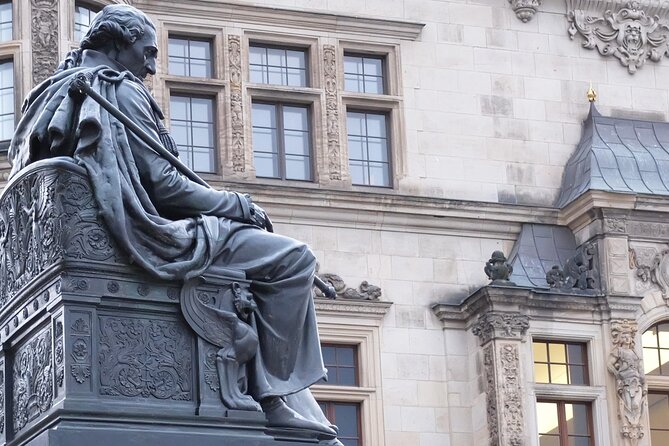
Dresden can feel like a lot all at once: stately facades, rebuilt churches, and courtyards with royal rules you can almost hear in your head. This tour is built for focus. It keeps things moving at a good walking pace, but still gives you time to stop, look closely, and ask questions.
The payoff is that you leave with a mental map. Not just where things are, but why they exist and why they were rebuilt. That matters in Dresden, because so much of what you see today is tied to destruction and recovery, not a single continuous timeline.
At about 2 hours for a small group (maximum 15 travelers), it is also a solid way to get your bearings fast if it is your first day in town. If you like learning through real places, not just dates and facts, this is a good fit.
Start at Schloßplatz, then build your bearings step by step
The tour begins at Schloßpl., 01067 Dresden-Altstadt, and it ends back near the same meeting point. That “start and return” pattern is useful. It keeps your day simple and reduces the stress of figuring out last-mile logistics after walking.
Another practical win: the meeting area is near public transportation, so you are not trapped in taxi mode. You also get a mobile ticket, which is the kind of detail that quietly saves time, especially if you are bouncing between sights during the same day.
The first stretch matters because it sets the tone. Your guide helps you orient around Dresden’s core landmarks, so when you later spot Semper Opera House or the dome of the Frauenkirche from a distance, you actually know what you are looking at.
More Walking Tours in Dresden
- Dresden: City & Semperoper Guided Walking Tour
★ 4.8 · 2,307 reviews - Dresden: Guided City Walk
★ 4.6 · 2,075 reviews - Dresden: Complete Walking Tour with Frauenkirche Visit
★ 4.8 · 700 reviews
Theaterplatz: Semperoper views, royal power, and the city’s cultural core
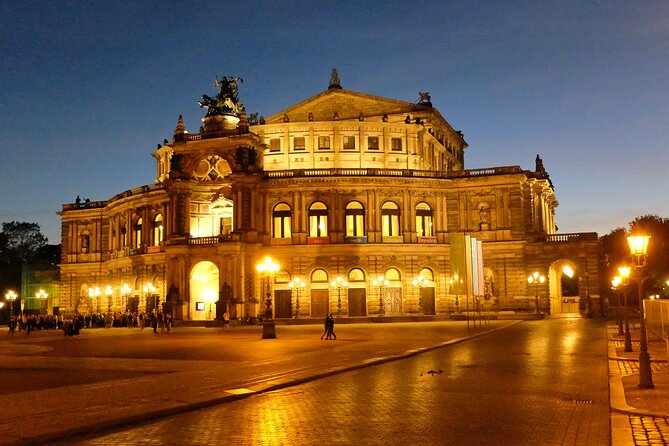
Your first major stop is Theaterplatz, a square that feels like Dresden showing off. The standout is the Semper Opera House, known for its 19th-century architectural elegance and its role in the city’s musical identity. It is the kind of building you can see from multiple angles, and your guide helps you connect what you see to the broader story of Dresden.
From here you also look toward key neighbors. You will get views connected to the Zwinger, the Residenzschloss (the old royal residence), and the Dresden Cathedral, which adds a quieter kind of grandeur to the scene.
If you want a small homework trick, ask your guide to point out the Old Masters Gallery from this area. It is one of those “I would not have noticed that” details that can pay off later when you decide what to visit inside.
This stop is short, about 15 minutes, and since admission is listed as free, it is a low-risk way to kick off with structure. If you are the type who likes to start with big visuals and then get the backstory, this opening will work for you.
The Dresden Zwinger: why it was built, and what it was supposed to be
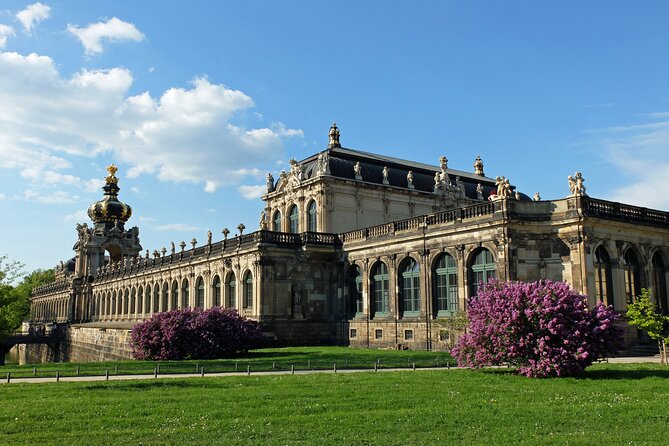
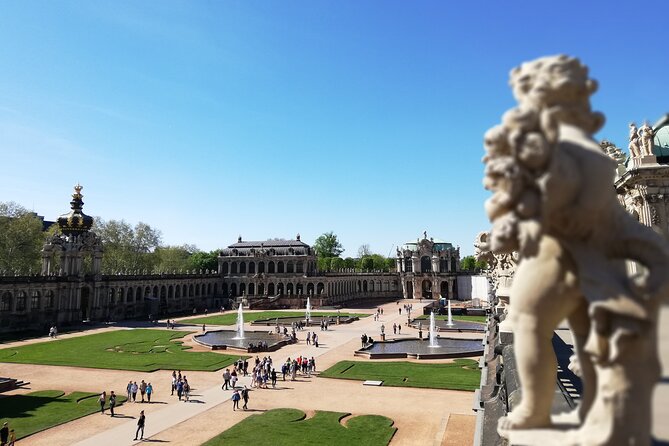
Next comes the Dresden Zwinger, a place that looks like one sculptural fantasy. The key idea your guide brings is that it was designed as a kind of grand entrance to a royal palace that never ended up being built.
That makes the Zwinger easier to understand. You are not just looking at beautiful architecture. You are looking at ambition that did not fully land on the original plan, plus the taste for ornate celebration that shaped what happened around it.
This stop also has a practical “check the box, then go deeper if you want” rhythm. Admission is listed as free, so you spend time here without getting stuck in ticket logistics.
If timing and access align, your guide may be able to show you an open-air grotto that is hidden from general view. That kind of moment is exactly why a guide adds value, because you can stand in the same courtyard and still miss features that are not obvious at walking speed.
Royal Palace courtyards and sgraffito: the detail most people skip

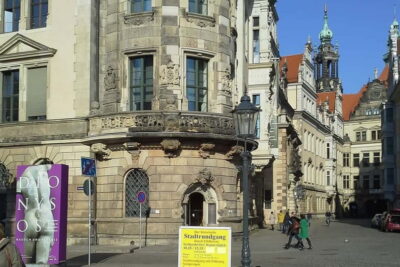
After the Zwinger, you shift into the Royal Palace complex. The story here is built on cycles: built, burned down, rebuilt, repaired, and extended. Your guide frames the palace as a guardian of Saxony’s ruling family history, plus a container for treasures.
You walk through a courtyard where you can see sgraffito, a Renaissance technique that creates images by scratching through layers of plaster. It is the kind of artistry that feels magical at close range, but it is also the kind of thing that gets overlooked if you only glance while passing.
Important practical note: you do not go inside the museum itself on this tour. Instead, your guide helps you decide what might be worth your separate ticket later. Ask questions. If you are deciding between museums and church time, this tour gives you enough context to choose intelligently rather than randomly.
This is one of those “short stop, big learning” segments. It is also where you feel the benefits of a guide with art or architecture skills, because they point out what your eyes would otherwise skip.
Another way to spend a Dresden afternoon:
- Dresden: Semperoper Tickets and Guided Tour
★ 4.7 · 12,102 reviews - Dresden: The Original Night Watchman Tour in Lantern Light
★ 4.6 · 6,653 reviews - Dresden: Semperoper and Old Town Tour
★ 4.8 · 5,735 reviews - Dresden: River Sightseeing Boat Cruise
★ 4.3 · 5,323 reviews
Stallhof: a quieter court scene behind the main sights

Then you get a breather at Stallhof, a courtyard tucked behind the Residenzschloss. This area feels less like a stage and more like a pause. The setting is enclosed and Renaissance in style, with arcaded galleries and sandstone columns that help the space feel both grand and personal.
Your guide connects it to the courtly life that happened here, including tournaments and royal festivities. Even if you are not a history buff, the atmosphere helps you picture how these spaces were used, not just how they look.
This is a short stop, around 5 minutes, but it is a smart one. It breaks up the heavier concentration of major landmarks and keeps the walk feeling varied instead of repetitive.
The Fürstenzug mural: reading 24,000 porcelain tiles in plain sight
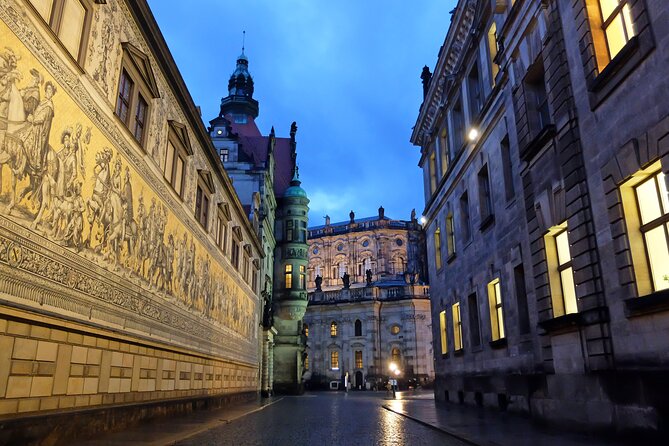
One of the most memorable parts of the route is the 100 meters long porcelain artwork, made up of 24,000 tiles. It is the longest outdoor porcelain artwork in the world, and it is designed to be read like a story.
This is where your guide’s job really matters. From a distance it can look like a long decorative wall. Up close, you start spotting the smaller details and learning what those choices mean. The mural is packed with secrets and stories, and the tour gives you a reason to look carefully instead of just snapping a photo and moving on.
Practical tip: when you stop for this, slow down your brain. Walk left to right, then back again. Try to identify a section the guide highlights, then compare it to the rest. It turns a long wall into something you can actually follow.
Dresden Cathedral from the outside: a secret build in Protestant Saxony
You also see the Royal Cathedral of Dresden from the outside. Your guide explains the unusual context: it was built in secret by a Catholic ruler in Protestant Saxony.
That contrast makes the building easier to appreciate. You are looking at more than architecture. You are seeing a political and religious balancing act expressed through stone. The cathedral also matters as a burial site connected to the Royal family.
You do not need a museum ticket to get the main idea. This stop is about story and interpretation, so it works well even if you are tired from earlier walking.
Brühl’s Terrace, the Elbe, and planning your next day beyond the old center
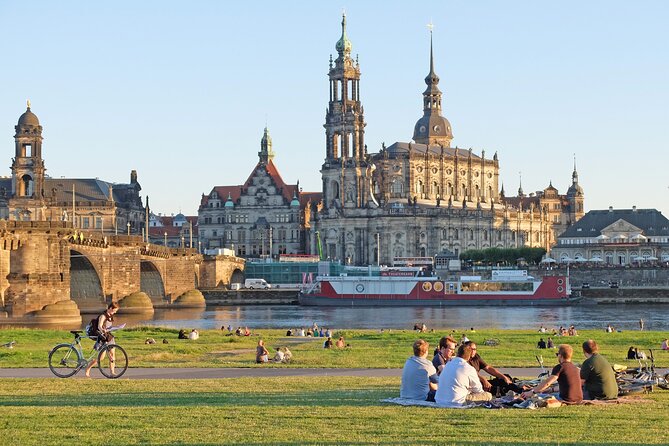
Next comes Brühl’s Terrasse, often called the Balcony of Europe. The setting is straightforward and rewarding: sweeping views over the Elbe River and across Dresden.
This promenade was reserved for nobility in the past, and that history adds a layer to the experience. Now it is a favorite for visitors and locals, which makes it an easy place to feel how Dresden moves on a normal day, not only during sightseeing hours.
Your guide may take you up to the top of the stairs to point out landmarks, including:
- the Elbe River
- Dresden’s White Fleet of historic steam boats
- buildings along the river
- steeples of churches
- distant wine slopes
Why this matters: it gives you a sense of what lies beyond the center. When you later plan another walk or a boat ride day, you already know what to aim for.
This stop is about 10 minutes, and admission is listed as free, so it is a low-cost, high-value viewpoint.
Neumarkt and the Frauenkirche: the reconstruction story that lands
The tour typically ends in Neumarkt, anchored by the Frauenkirche. Neumarkt was reduced to rubble and later restored back to its 18th-century charm. Today, it feels lively and baroque-framed, with lots of places to pause, people-watch, and choose food for the rest of your evening.
But the real emotional center is the Frauenkirche, the Church of Our Lady. Your guide explains the dramatic arc: destruction in World War II, then decades of reconstruction, supported by a global effort. The result is a baroque masterpiece that symbolizes reconciliation as much as architecture.
You are shown how to appreciate what you are seeing even if you only view it from the square. The dome, rebuilt from ruins, becomes the focal point for the whole tour’s theme of resilience.
There is also an excellent self-guided option after the walk. Your guide encourages you to go inside later to sit quietly and take in the pastel setting. You can also go down to the crypt, which has a small exhibition about the rebuilding process.
Because the tour ends here, you can turn the final minutes into a flexible plan. Want dessert and a slow stroll? Perfect. Want to enter right away? Also fine.
Pacing, hearing your guide, and what to expect on your feet
This is a walking tour, so wear shoes you trust. The route includes courtyards and squares, and you will likely face some stairs, since the viewing points include steps at places like Brühl’s Terrace.
One helpful detail from real-world experience: even with seniors in mind, the walking is not described as overly demanding, but it is still real walking with stops. If you need to minimize steps, plan to take slower breaks and ask your guide where the flattest route is.
Now, the hearing issue is the one practical snag to keep in mind. Headsets are not provided, so in larger groups it can get hard to hear, especially where there is background noise. The tour’s maximum is 15 travelers, but if your group feels crowded, positioning matters. Stand closer to the guide when you can, and you will likely have a better experience.
Is it worth about $30.25? The value math in plain terms
At $30.25 per person for about 2 hours, the big question is whether you are paying for facts you could read online.
The answer is that you are paying for interpretation in real space. The stops you visit mostly have free admission listed for key viewpoints and outdoor areas, and you do not get stuck inside every building. Instead, your guide helps you understand what you are looking at, why it was built that way, why it was rebuilt, and what is worth your time later.
You also get something that takes practice to do well: story pacing. If you have ever done a quick self-guided loop, you know it is easy to miss the “why.” Here, the guide threads it together so you do not just collect photos, you build understanding.
Tips are not included, so plan for that if you follow local custom. But even without factoring tips, the structure makes sense for a short visit.
Who should book, and who might want a different style
This tour is ideal if you:
- want a first-time Dresden orientation that does not eat your whole day
- like architecture and city history explained in a way you can remember
- prefer a small group so your questions do not get lost
- enjoy finishing with a major sight where you can stay on your own after the guide leaves
It may not be your best match if you:
- need headsets or very quiet audio conditions to learn comfortably
- want a lot of time inside multiple museums
- plan to rush through every stop, because this route rewards pausing and looking closely
If you are the kind of traveler who likes to return to one or two places in the evening, this tour pairs well with a follow-up visit to the Frauenkirche interior and crypt.
Should you book this Dresden small-group walk?
If you are visiting Dresden for the first time and you want to understand what you see, I think it is a strong booking. It is built for efficient time use, includes the city’s headline sights, and ends in a place that is worth lingering at.
The main reason to hesitate is hearing comfort. If you know you struggle without headsets in louder outdoor areas, stand closer to the guide and plan your expectations. Also, come prepared for some stairs and real walking.
Do it well and you will leave with a cleaner mental picture of Dresden, and that makes the rest of your trip smoother.
FAQ
How long is the Historic Dresden Small-Group Walking Tour in English?
It lasts about 2 hours.
Where do I meet for the tour, and where does it end?
You meet at Schloßpl., 01067 Dresden-Altstadt, Germany, and the tour ends back at the meeting point.
Is the tour offered in English?
Yes, the tour is offered in English.
What is the group size?
The tour has a maximum of 15 travelers.
Are admissions included for the sights you stop at?
The tour information lists admission as free for the stops described in the route. The Royal Palace museum itself is not entered on the tour, but you can visit later on your own.
Does the tour provide headsets?
Headsets are not provided based on reported experience, so it helps to stand close to the guide if the group feels loud.
More Historical Tours in Dresden
- Elbfloren: Historical city tour
★ 4.8 · 854 reviews - Dresden: Guided Beer Tour of the Historic Old City
★ 4.8 · 95 reviews - Leipzig: City History Canal Sightseeing Tour on a Motorboat
★ 4.7 · 7,671 reviews - Berlin: Natural History Museum Entrance Ticket
★ 4.6 · 3,382 reviews
Fresh reviews out of Dresden
- Dresden: 2 day ticket for museums of the Dresden State Art Collections★ 4.7 · 54 reviews
- Big Sightseeing Tour in Dresden with Liveguide★ 4.5 · 55 reviews
- Dresden Sightseeing Treasure Hunt★ 5.0 · 57 reviews
- Public guided tour of the old town including a tour of the Frauenkirche★ 5.0 · 59 reviews
- Dresden: Walking Tour with Virtual Reality elements★ 4.5 · 63 reviews
- Dresden: Bootstour im Schlauchboot durch die Altstadt★ 4.9 · 64 reviews
- From Dresden: Bohemian & Saxon Switzerland Day Trip★ 4.8 · 64 reviews
- 1.5 hours Segway Elbe Mini Tour★ 5.0 · 66 reviews
Historical Tours, compared.
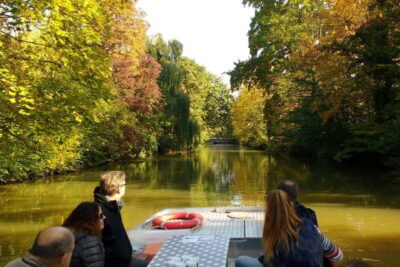
City History Canal Sightseeing Tour on a Motorboat
Read our review →
Night Watchman Historic Adventure Tour
Read our review →
Browse the lists this tour appears in