
Reviewed · MUSEUMS
Hamburg: Ticket for the Paradox Museum
Paradox Museum Hamburg is interesting because it turns optical illusions into something physical you can actually try, then photograph right away. You move through 14 colorful rooms across 1,300 sqm, and the whole place is built to make your brain question what your eyes think they see (optical illusions).
I love the mix of physical and mathematical phenomena you learn by doing, not by reading. I also like the fact that staff help you find great photo spots while you wander. The only drawback I can see is that some illusion rooms can feel visually intense if you prefer calm, low-stimulation attractions.
Key things to know before you go

- 50+ interactive exhibits spread across 14 colorful rooms for a steady flow of new surprises
- Optical illusion focus with mirror-style rooms that can genuinely throw off your sense of direction
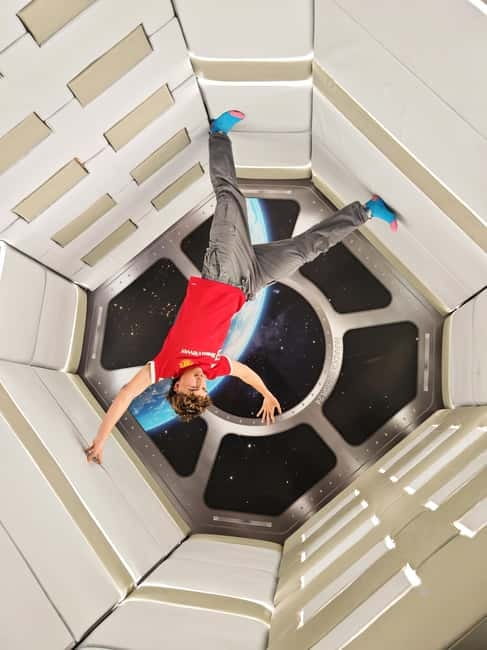
- Zero Gravity Room that lets you experience weightlessness as part of the show
- Photo-friendly design with staff guidance so you can capture the effects quickly
- Art plus science elements featuring works by Hamburg artists who blend creativity and experiments
- Built for mixed ages, including families and multi-generational groups
First stop: Ticket validation at Alter Wall
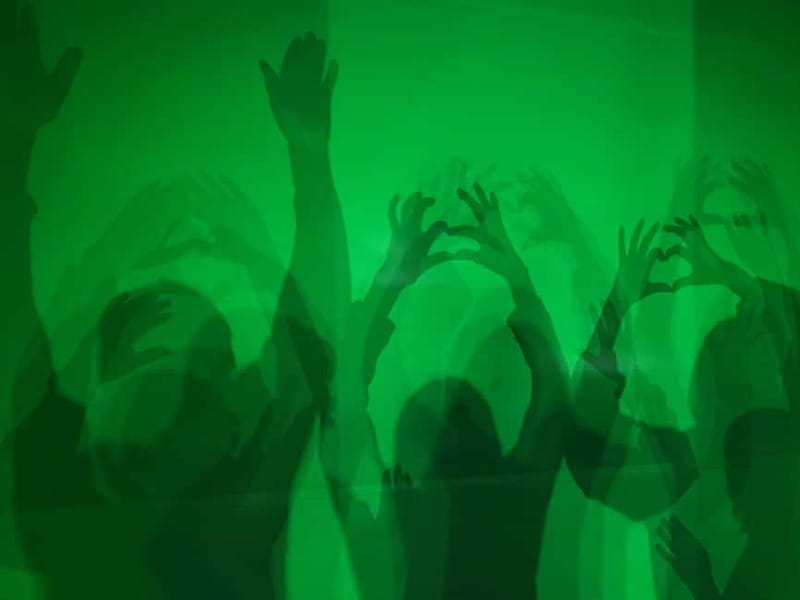
Plan on starting at reception to validate your ticket. That sounds small, but it matters, because the experience is timed by your entry slot, and you want to hit the first rooms with momentum rather than waiting around.
The museum sits in the heart of Hamburg on Alter Wall, so it also fits nicely into a wider day in the city. If you’re doing Hamburg sightseeing anyway, this is one of those stops that works even when your schedule is a bit tight, because the visit itself runs about 60 to 90 minutes.
One practical thing to keep in mind: the museum only takes card payments on site. So bring a credit card (or debit card), not cash, just to avoid friction later if you want souvenirs.
More Museums in Hamburg
- Hamburg: International Maritime Museum Entrance Ticket
★ 4.7 · 547 reviews - Hamburg: Entrance to the Museum Ship Cap San Diego
★ 4.7 · 467 reviews - Hamburg: Museum of Illusions Ticket
★ 4.3 · 366 reviews
Your 60-90 minute route through 14 rooms of illusions
This isn’t a sit-and-watch show. It’s more like a guided wandering route through 14 rooms, with 50+ interactive exhibits. You’ll spend roughly 60 to 90 minutes moving from room to room at your own pace, which is great if you like to slow down for photos or if you want to repeat an effect that you didn’t quite get the first time.
Here’s the vibe I’d expect: you’ll be testing. You’ll be making mistakes. Then you’ll realize the trick is real, and it’s happening because of a specific physics or math idea. That’s why the museum feels fun instead of confusing. The hands-on approach turns a classroom concept into an experience you remember.
You should also know what this place is good at. It’s designed to be photographed. Many of the exhibits look best in motion, from a particular angle, or with your body positioned in a certain way. The museum even places staff in the hallways to help you find the best photo spots, which is a big help if you’re traveling with kids, or if you just don’t want to waste time guessing where the magic angle is.
The Zero Gravity Room and the joy of doing science with your body

One room you should specifically look out for is the Zero Gravity Room. The idea is simple but effective: you experience weightlessness, so your brain has to recalibrate how it thinks objects and movement should behave.
What I like about this kind of exhibit is that it teaches without preaching. Instead of telling you about perceived weight or visual cues, the room lets you feel how your body responds. You end up learning because your own senses are involved.
Also, this is a great room for family groups. If you’re traveling with kids, they usually get the point fast, because it feels like a moment of real physical magic. And if you’re with adults, it still lands, because the trick depends on real scientific principles even if the effect is playful.
Timing tip: don’t rush through it. If you’re trying to get photos, give yourself a little extra time to set up and try again. Weightlessness effects often look better when you manage your position and timing.
Mirror rooms that mess with your sense of straight ahead
Another highlight is the mirror rooms, which confuse your senses enough that walking straight ahead becomes a challenge. This is the kind of exhibit that feels silly at first, then becomes surprisingly convincing as you notice how your body reacts.
I find these rooms more than just a photo op, because they make you aware of how much your brain relies on visual feedback to guide movement. When mirrors disrupt that feedback, your sense of direction and balance can lag behind what your eyes are seeing.
If you’re motion-sensitive or you get uncomfortable with visual distortions, take it slowly. Try one effect at a time, step back between attempts, and let yourself adjust. It’s usually the rushed approach that leads to the most frustration.
Photo tip: these rooms can look chaotic from the outside, but they often have a single clear angle that makes the illusion pop. That’s exactly where hallway staff can help.
Another way to spend a Hamburg afternoon:
- Hamburg: Sex and Crime in St. Pauli Tour for Ages 18 +
★ 4.7 · 17,793 reviews - Hamburg: 1.5-Hour Harbor and Speicherstadt Day Cruise
★ 4.6 · 14,200 reviews - Hamburg: 90-Minute Evening Lights Harbor Cruise
★ 4.5 · 7,728 reviews - Hamburg: 2-Hour XXL Port of Hamburg Cruise Tour
★ 4.7 · 6,979 reviews
Giant-and-float illusions: the best way to understand scale tricks
The museum also leans into scale. One example mentioned in the experience description is that you can become a giant or float effortlessly through space.
Scale illusions are smart here because they’re not random. They’re using simple perception rules: relative size, perspective, and how your body fits into the designed space. When it works, it doesn’t just look cool, it teaches you why camera angles and human positioning can completely change what you think is happening.
If you’re traveling with friends or family, these are often the most fun exhibits to do together. Everyone can trade roles, try different poses, and see how the illusion changes based on small movements. And since the whole museum is designed for smartphone sharing, these rooms usually give you plenty of strong “send this now” photos.
How the museum connects optical effects to art by Hamburg artists
What I appreciate about Paradox Museum Hamburg is that it isn’t only science experiments. It includes works by Hamburg artists that combine art and science.
That matters because it changes how you remember the experience. If it were only math and physics, it would still be fun, but the art component gives the rooms a different emotional tone. The illusions feel like creative expression, not just a gimmick.
You’ll likely notice that the museum uses color and room design to guide your attention. That’s not just decoration. It helps your eyes lock onto the right visual cues for the effect to make sense. It also makes the whole place feel like a destination, not a lab.
Staff help and smartphone-ready experiences
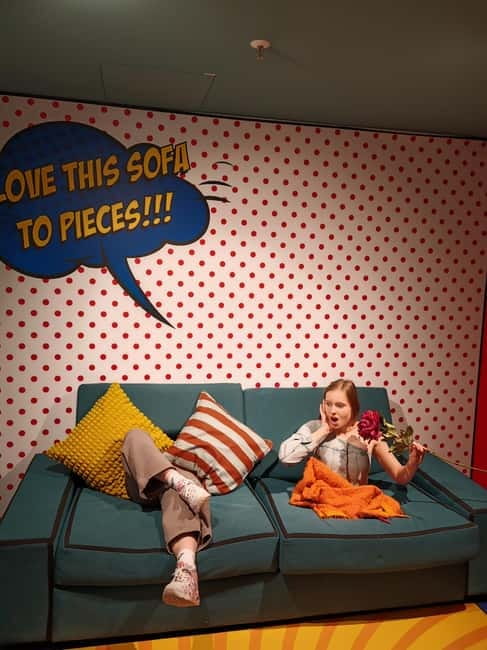
One of the most practical perks is that staff in the hallways help you find the best photo spots. That turns the museum into an experience where you can keep moving without feeling like you missed something important.
You should also come prepared to capture the moment, because smartphone sharing is part of the design. The info you’re given is clear: bring a camera, bring a charged smartphone, and have your credit card ready for any on-site purchases.
A good strategy: after each room, take a quick set of photos, then revisit the exhibit only if you want a second attempt. It keeps your visit smooth, especially if you’re traveling with kids who can get bored if you get stuck at one station too long.
After the exhibits: the boutique for books, games, and souvenirs
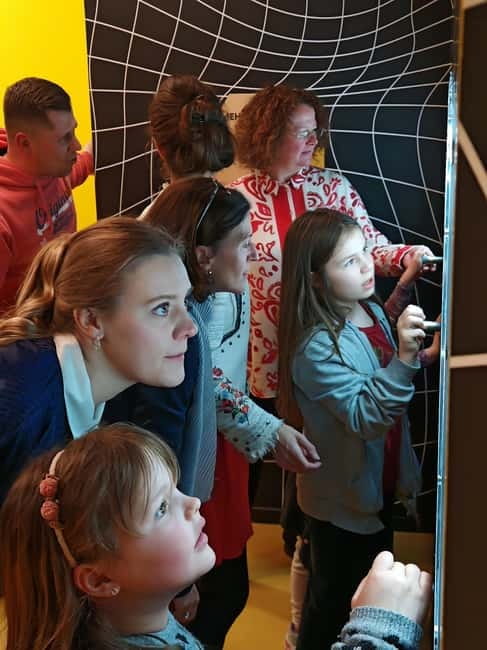
When you finish your 60 to 90 minutes, you can browse the boutique. It’s set up for you to keep the experience going after you leave the rooms, with gifts, books, games, T-shirts, umbrellas, and other souvenirs.
This is a nice final step if you’re traveling with families. Kids often like taking something home that fits what they just tried, and parents can treat it as a small “science memory” purchase rather than a random tourist trinket.
If you do plan to buy something, remember the key practical point: the museum accepts card payments only on site.
Is it worth $27 per person? Value that makes sense
At about $27 per person, Paradox Museum Hamburg sits in a mid-range attraction price zone for a city like Hamburg. What makes the value feel solid is the amount of content you get for that price: 14 rooms, over 50 interactive exhibits, and a full range of effects rather than a single highlight.
It’s also good value because it’s time-efficient. You get a complete experience in around 60 to 90 minutes, which means you can add it to a day of museum-hopping or sightseeing without sacrificing an entire half-day.
If you’re the type of traveler who likes hands-on learning, this is more cost-effective than a purely passive museum ticket, because you’ll get multiple “turn the corner, try something new” moments. If you’re mainly chasing quiet, contemplative atmosphere, then the same interactive intensity might feel like too much. But for most visitors who enjoy playful learning, it’s a strong deal.
Who should book Paradox Museum Hamburg
I’d put this high on your list if you:
- Like interactive exhibits where you learn by testing your own senses
- Want a family-friendly activity that works across ages
- Enjoy optical illusions and want smartphone photo chances built into the design
- Travel with kids or teens who get bored in traditional galleries
The experience also seems to work well for multi-generational groups. The reviews include examples of visitors enjoying it together across a wide age range, which tells me the museum doesn’t depend on heavy reading or long explanations.
On the flip side, if you have very low tolerance for visual trickery, or you get overwhelmed by intense sensory effects, you should go slowly and choose your moments carefully.
Should you book Paradox Museum Hamburg?
Yes, if you want a ticket that turns brain tricks into real fun, without requiring you to be an expert in math or science. I think it’s a particularly good choice when you want something memorable that fits comfortably into 60 to 90 minutes.
Book it especially if you care about photos and like experiences where staff can help you find the right angles. And if you’re traveling with family, the interactive layout makes it easier to keep everyone engaged.
FAQ
FAQ
How long does the Paradox Museum Hamburg experience take?
The visit is designed for about 60 to 90 minutes.
Where do I check in for my ticket?
You should go to reception to have your ticket validated.
What is the price for the ticket?
The ticket price is listed as $27 per person.
Is the museum wheelchair accessible?
Yes, the museum is wheelchair accessible.
What should I bring?
Bring a camera, a credit card, and a charged smartphone.
Can I pay with cash at the museum?
No. Only card payments are accepted on site.
Is the museum suitable for families and kids?
Yes. It is described as perfect for explorers of all ages, including families.
Fresh reviews out of Hamburg
- Hamburg: Neighborhood tour with a former dominatrix★ 4.7 · 51 reviews
- Hamburg: Ice-Cream Workshop★ 4.7 · 52 reviews
- Hamburg: Reeperbahn tour with Daniel Schmidt from the Elbschlosskeller★ 4.7 · 52 reviews
- Hamburg: Grand Harbor Tour by Traditional Barge★ 4.3 · 55 reviews
- Hamburg Private Walking Tour with a Local: Icons & Hidden Gems★ 5.0 · 55 reviews
- Hamburg: 3-Hour Limousine Tour with Driver-Guide★ 4.5 · 56 reviews
- Dialogue in the Dark (German Tour)★ 4.8 · 56 reviews
- Ticket for the Emigration Museum BallinStadt Hamburg★ 4.0 · 57 reviews
Museums, compared.



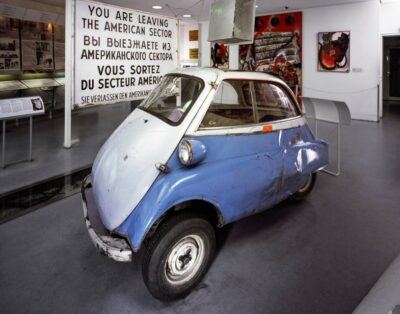
Skip-the-Line: Berlin Wall Museum at Checkpoint Charlie
Read our review →Browse the lists this tour appears in