
Reviewed · MUSEUMS
Berlin: Admission Ticket to the Samurai Museum Berlin
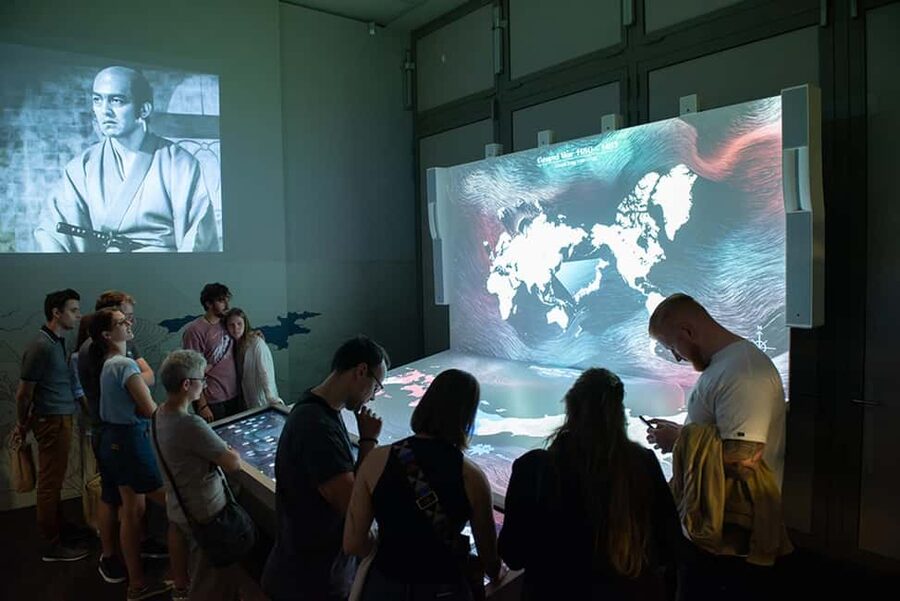
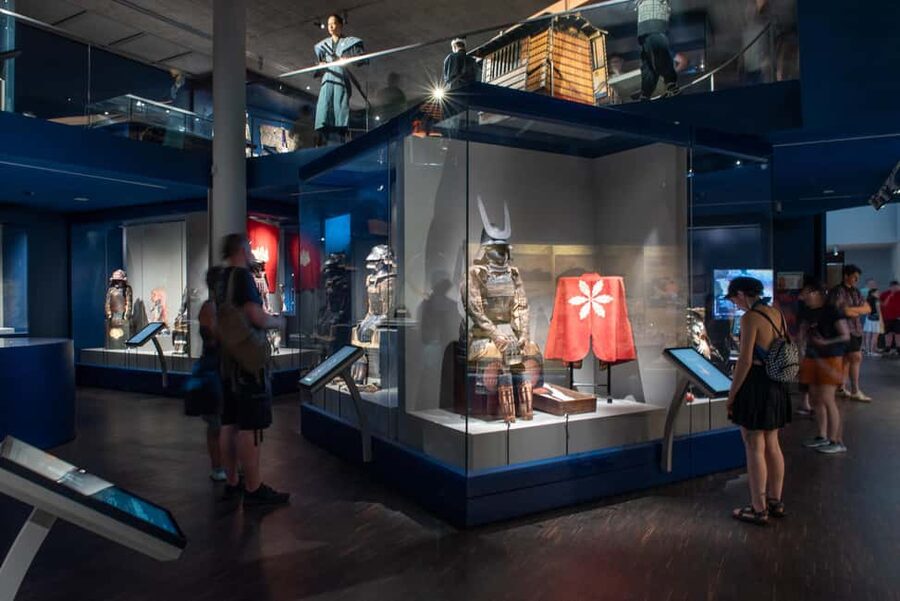
This is one of those rare museums where you don’t just look, you touch the story. The Samurai Museum Berlin brings Europe’s only samurai museum to Berlin-Mitte, with close-up exhibits and interactive stations that make the themes feel immediate.
I especially like the way you can see legendary samurai armor, weapons, and masks up close, then compare it to related worlds like ninjas and Yōkai. I also love the built-in cultural experiences, like the tea ceremony area and the holographic taiko drum performance. One drawback to consider: this is an entry ticket, so you get the museum experience, but not a live guide included.
Key highlights that make this visit worth your time
- Europe’s only Samurai Museum in Berlin-Mitte, so it fits easily with classic sightseeing days
- 900 historical exhibits, from armor and swords to ninja and tea-ceremony culture
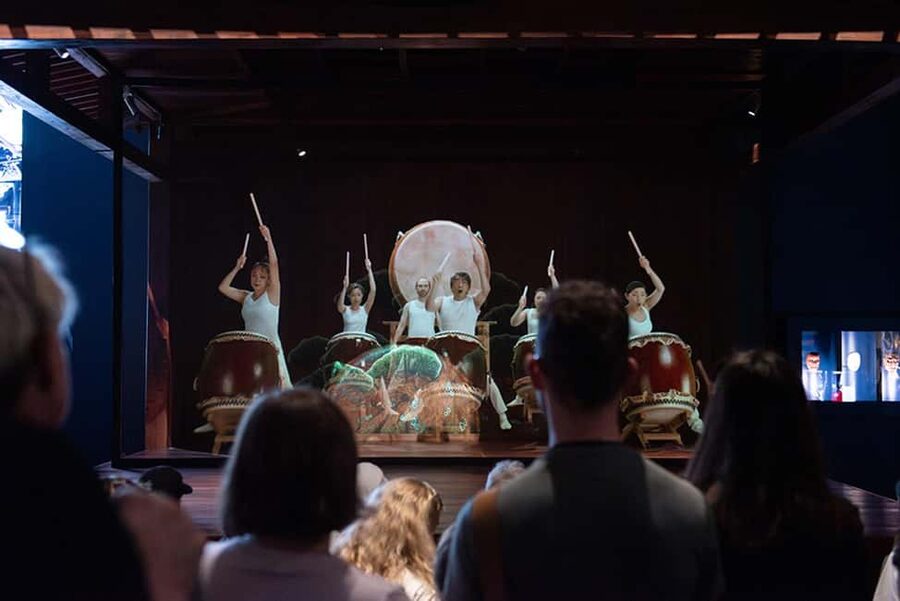
- Taiko drum hologram and tea ceremony, designed as show-and-learn moments
- Kitsune riddle challenges and Yōkai games, so you stay active, not passive
- Nō theatre and tea house structures built using traditional methods in Japan, then erected in Berlin
- Peter Janssen Collection, started from a flea market find and grown into 4,000+ objects
Why the Samurai Museum belongs on your Berlin list
Berlin has plenty of museums, but this one has a specific angle that feels different the moment you walk in. You’re not just learning names. You’re seeing material culture, how craft shows status and power, and how Japanese legends seep into modern pop culture.
The setting helps too. The museum sits on Auguststraße in Berlin-Mitte, close to the usual big sights like Museum Island, Brandenburg Gate, and Alexanderplatz. That means you can do it as a main event or as a smart add-on between other plans.
If you like museums that respect your attention span, this one works. The mix of armor and weapons plus interactive projections and touchscreens keeps the pace moving, especially when you want variety rather than one long gallery.
More Museums in Berlin
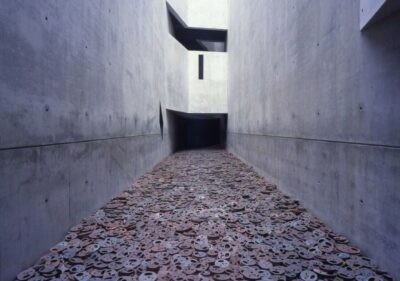
- Berlin: Jewish Museum Berlin Entrance Ticket
★ 4.5 · 8,393 reviews - Berlin: DDR Museum Tickets
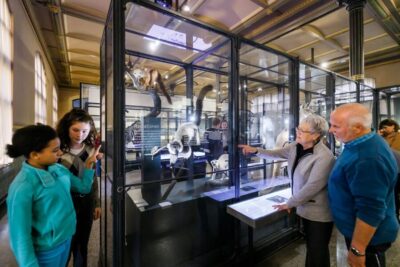
★ 4.3 · 3,443 reviews - Berlin: Natural History Museum Entrance Ticket
★ 4.6 · 3,382 reviews
Ticket value and how the flexible validity changes your day
Price is listed at $15 per person, and the value comes from scale and format, not just “a room of artifacts.” The museum claims 900 historical exhibits, and the experience is built around interactive installations, plus set-piece cultural experiences like the taiko drum and tea ceremony.
You also get a 1 to 14 day validity window. Instead of stressing about one exact time, you can pick a day and starting time based on availability, then show up with your smartphone ticket. That flexibility is practical in Berlin, where plans shift with weather, train delays, and your energy level.
One more practical win: skip-the-line entry is included. Even if lines are short, it saves friction when you’re trying to move from one neighborhood stop to another.
Getting oriented: what you will do inside the museum
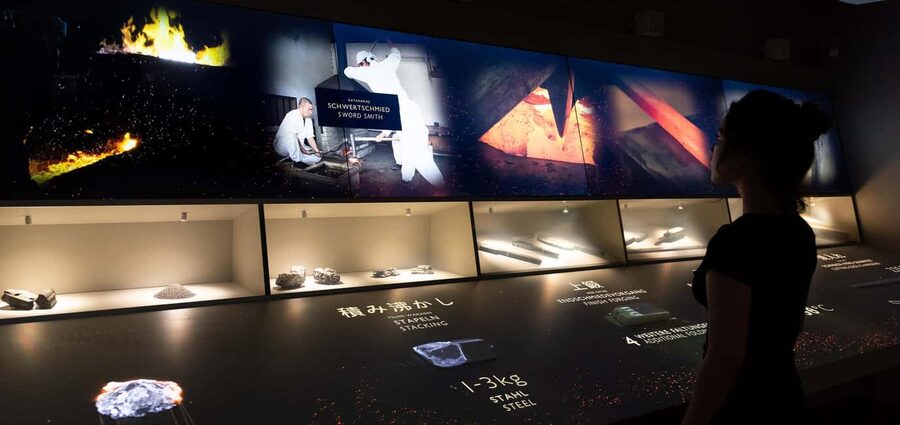
This museum is built around “close-up and interactive.” The exhibits are not only displayed behind glass. Many areas use projections and touchscreens to guide you through what you’re seeing, and some zones are clearly meant to be experienced rather than just read.
Here’s what that means in real-life terms for your visit:
- You’ll spend time moving between display areas and interactive stations.
- You’ll likely pause more often, because the museum builds in “do something” moments.
- You’ll be able to choose your focus, whether that’s swords, armor, ninja methods, or Japanese theatrical and ceremonial culture.
If you prefer a structured route, you might need to slow down and follow the museum’s own guidance on screens and signage. Since your ticket is entry-only, you’re relying on the installations and exhibit explanations to connect the dots.
The taiko drum hologram and tea ceremony, two experiences you should prioritize
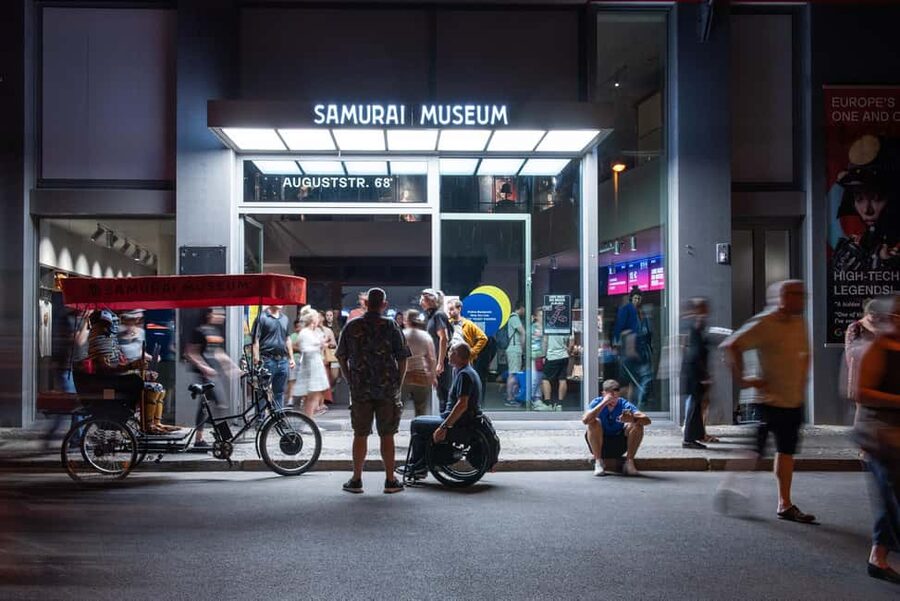
If you’re only going to pick a few things, pick the holographic drum performance and the tea ceremony areas. They’re highlighted as part of the experience, and they’re the kind of museum moments that make the difference between reading about culture and feeling what it’s like.
The holographic drum performance connects to the larger theme of performance and atmosphere. It’s not just a static artifact display. You get a “watch and react” moment that fits the museum’s interactive tone.
The tea ceremony segment is even more hands-on in spirit. The museum includes a tea house area where you can learn about processes tied to centuries-old tea ceremony traditions. Even if you know nothing beforehand, the staged format helps you understand what matters, and why the ritual gets so much respect in Japanese culture.
If you like cultural experiences that don’t require a reservation or a class signup, these are your safest bets inside the museum.
Another way to spend a Berlin afternoon:
- Berlin: Reichstag, Dome and Government District Guided Tour
★ 4.7 · 18,288 reviews - Berlin: 1-Hour City Tour by Boat with Guaranteed Seating
★ 4.3 · 16,993 reviews - Berlin: TV Tower Standard Entrance Ticket
★ 4.4 · 15,883 reviews - Berlin: Boat Tour Along the River Spree
★ 4.4 · 11,252 reviews
Ninja, sword craft, and the fun of figuring things out
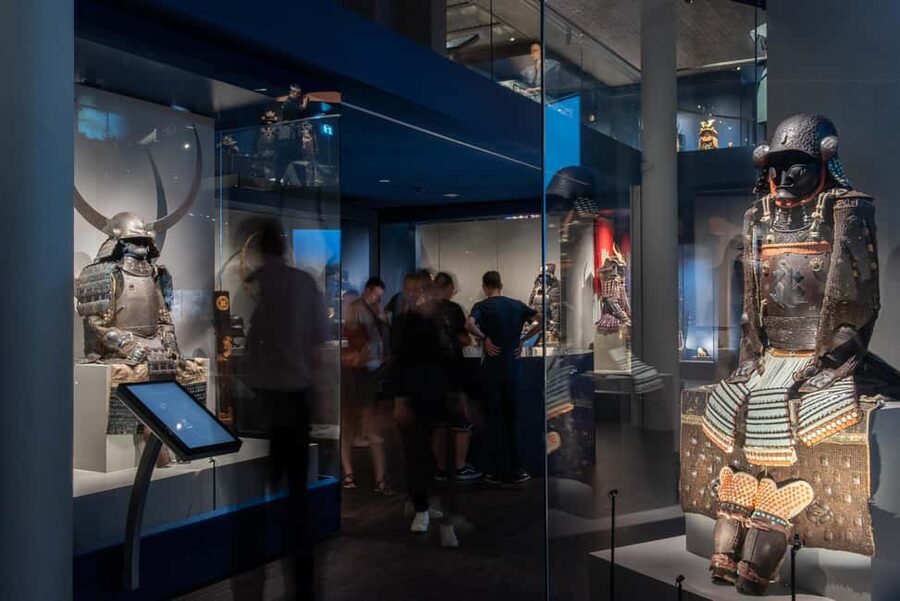
This museum isn’t only for people who love samurai. It also taps into the shadowy neighbor stories, like ninja techniques and mysterious Yōkai.
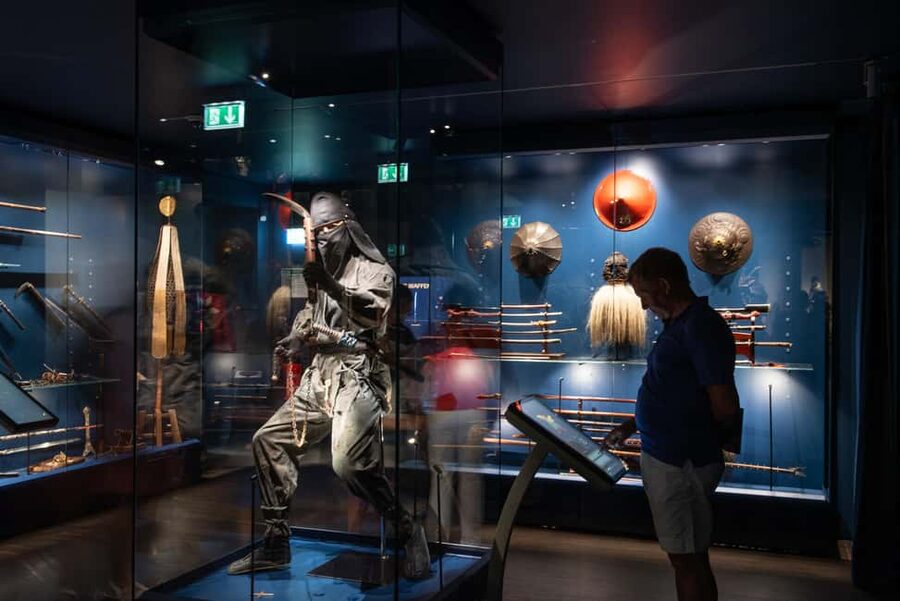
One interactive highlight is the chance to learn techniques connected to ninja culture. Another is an area focused on the production of legendary sword blades. That’s a big deal, because swordmaking is where myth turns into craft. When a museum shows technique, material, and process, you come away with a clearer mental picture of how these objects were made to last and to function.
You’ll also find a playful “figure-it-out” element:
- There are riddles of the fox Kitsune, presented as part of the experience.
- There is a challenge about who is the fastest at Yokaigame, also framed as an interactive activity.
These elements matter for value because they keep you engaged without requiring you to be a Japan expert. You can enjoy the objects and still have something to do with your brain.
Armor, swords, masks, and why the details are the point

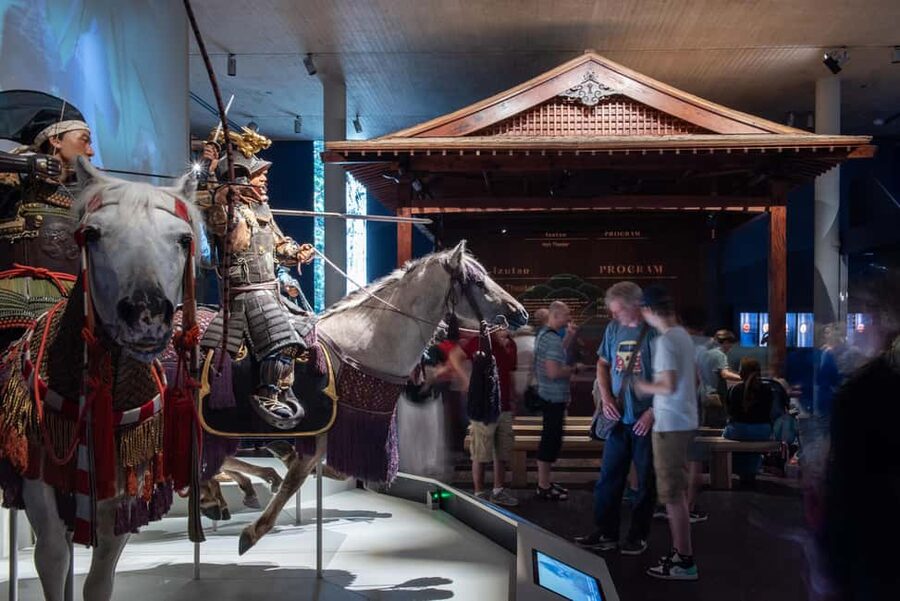
The museum’s core strength is its focus on real artifacts and high-quality representation of samurai culture. You’ll see the typical “wow” items, like legendary swords, incredible armor, and mysterious masks, but the deeper value is how close-up viewing changes what you notice.
Up close, armor stops being just “cool metal.” You start thinking about design choices, protection, and presentation. Masks and other ceremonial or battle-related items can shift how you interpret the role of image and identity.
This is also where the museum’s scale helps. With 900 exhibits, you’re not stuck staring at one style. You can compare across examples and get a broader feel for how variation shows up in actual objects.
The Peter Janssen Collection, from flea market find to 4,000+ pieces
One of the biggest reasons this museum feels serious is the Peter Janssen Collection. The story is part of the appeal: it started with a find at a flea market in Berlin, then grew into a private collection of more than 4,000 objects. The museum also notes that the collection is unique worldwide in quality, variety, and scope.
The time range helps you place what you’re seeing. The pieces date from the late Kofun to the early Meiji period, covering roughly the 6th to 19th century. That wide span matters because it lets you see how craftsmanship and culture evolve rather than treating samurai as one single snapshot.
Key highlights listed include:
- An 18th-century palanquin
- A 17th-century armor linked to the Matsudaira clan
- Tea utensils from the time of Sen no Rikyū (1522 to 1591)
If you like museum experiences that leave you with specific names and periods, this is the area that will reward your attention.
Nō theatre and the tea house in Berlin, built with Japanese methods
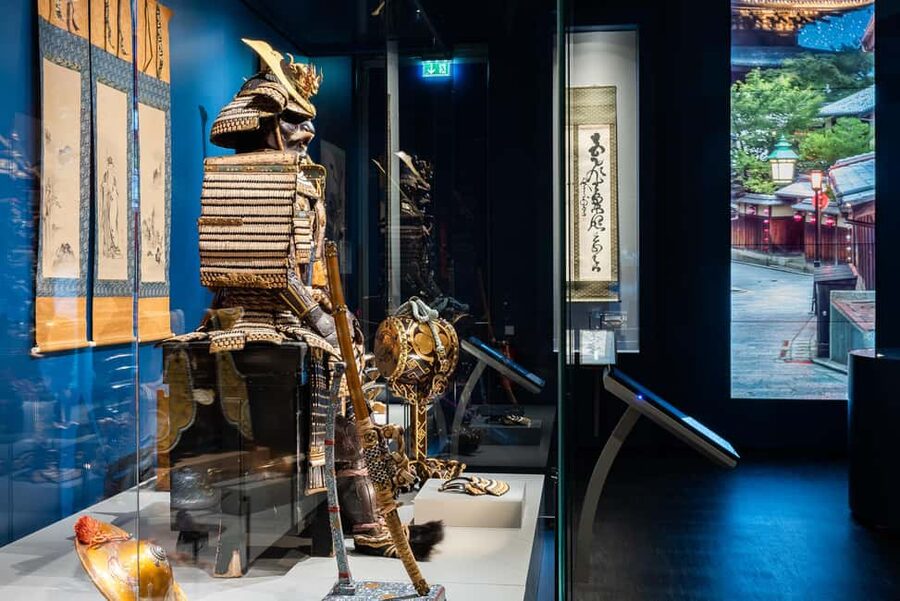
One of the most distinctive details is architectural. The museum includes a Nō theatre and tea house that were built in Japan using traditional materials and techniques, and then later erected in Berlin.
That detail changes how the museum feels. Instead of an exhibit being “inside a room,” it’s inside structures designed for the performance and ritual they represent. The museum uses realistic projections to connect these spaces to Japanese traditions influenced by the samurai era.
If you’re the type who likes atmosphere, this is a smart stop. It’s also a good pacing tool. After you’ve stared at armor and weapons for a while, the theatre and tea house areas reset your brain with a different kind of learning.
How to pair this with your Berlin day in Mitte
The museum location on Auguststraße is handy for planning because it’s near major central landmarks. You can combine it with a walk around Berlin-Mitte and keep moving without complicated transfers.
A practical approach:
- Start with the museum when you’re alert, so the interactive stations and projected experiences feel fun, not exhausting.
- Then head toward nearby sights around Museum Island and Alexanderplatz for a change of scenery.
This is also an easy place to grab food nearby, since the area is full of cafés and restaurants. The museum ticket doesn’t include food, and you’re not allowed to bring your own, so planning a meal after your visit keeps everything smooth.
Practical rules that affect your visit
Before you go, know the museum’s basic restrictions so you don’t get stuck at the door. These are explicitly listed:
- Pets are not allowed
- Food and drinks are not allowed
- Luggage or large bags are not allowed
- The museum is wheelchair accessible
If you’re coming from another museum or from a day of walking, travel light. Keep essentials small. If you have a larger bag, it’s best to manage it before you arrive.
Also check age suitability. The museum is not suitable for children under 10, so if you’re traveling with younger kids, you’ll want to plan alternatives.
Should you book? My straight answer
Book this ticket if you want a Berlin activity that mixes museum artifacts with interactive learning, plus actual cultural experiences like the tea ceremony and the taiko drum performance. The scale (900 exhibits), the focus on real samurai culture through the Peter Janssen Collection, and the fun elements like Kitsune riddles and the Yokaigame challenge add up to good value for the $15 price.
Skip it, or at least consider your expectations, if you specifically want a guided lecture with deep historical interpretation, because the product here is entry only. Also skip for younger children under 10, since it is not suitable for that age group.
If you like museums you can move through at your own pace, and you want something genuinely different from the usual Berlin lineup, this is a strong choice.
FAQ
Where is the Samurai Museum Berlin located?
It is located on Auguststraße in Berlin-Mitte.
How do I get there by public transport?
You can use U-Bahn lines U6 (Oranienburger Tor) or U8 (Rosenthaler Platz). You can also use S-Bahn lines S1, S2, S25, S26 (Oranienburger Straße), tram lines M1 and M5 (Oranienburger Straße) or M8 (Rosenthaler Platz), and bus lines 142 (Tucholskystraße) or M41 (Abgeordnetenhaus).
How much is the admission ticket?
The price is listed at $15 per person.
What’s included in the ticket?
The ticket includes entry.
Is the ticket flexible for dates and starting times?
Yes. It is valid for 1 to 14 days, and you choose a day and starting time based on availability.
Does this ticket help you avoid waiting in line?
Yes, skip the ticket line is included.
Is the museum wheelchair accessible?
Yes, it is listed as wheelchair accessible.
Are pets allowed inside?
No, pets are not allowed.
Can I bring food and drinks?
No, food and drinks are not allowed.
Is it suitable for children?
It is not suitable for children under 10.
Fresh reviews out of Berlin
- Berlin Uncensored: A History of Sex & Freedom★ 5.0 · 50 reviews
- Berlin Food & Cultural Tour: Must-Try German & Berliner Classics★ 5.0 · 51 reviews
- English Comedy Show with Pizza and Shots in Central Berlin★ 4.5 · 51 reviews
- Rude Bastards Tour of Berlin★ 4.8 · 51 reviews
- Private Taxi Tour of Berlin East and West and Neighbourhood approx. 4-6h★ 5.0 · 55 reviews
- Rickshaw Sightseeing City Tours Berlin – Rikscha Tours★ 4.0 · 55 reviews
- Berlin: City Highlights Express & Panorama Roof Terrace★ 4.9 · 55 reviews
- Berlin during Nazism – Tour in Italian★ 5.0 · 56 reviews
Museums, compared.


Skip-the-Line: Berlin Wall Museum at Checkpoint Charlie
Read our review →Browse the lists this tour appears in