
Reviewed · HISTORICAL TOURS
Augsburg: Historical Highlights Private Walking Tour
Augsburg has a rare trick up its sleeve: you can walk through 2,000 years of history without feeling like you are stuck in a museum. This private walking tour ties together Roman beginnings, Swabian power, and the people who shaped music and writing, all in a compact old-city route.
I particularly like how you get the big story in human terms, not just dates. Two standouts for me are the Town Hall with six floors and the way the Fugger legacy shows up through the Fuggerei, a social settlement that still feels real today. One drawback to consider is price: at $362 per group (up to 15), it can feel pricey if you are a couple or solo traveler and do not split the cost.
Key points to know before you go
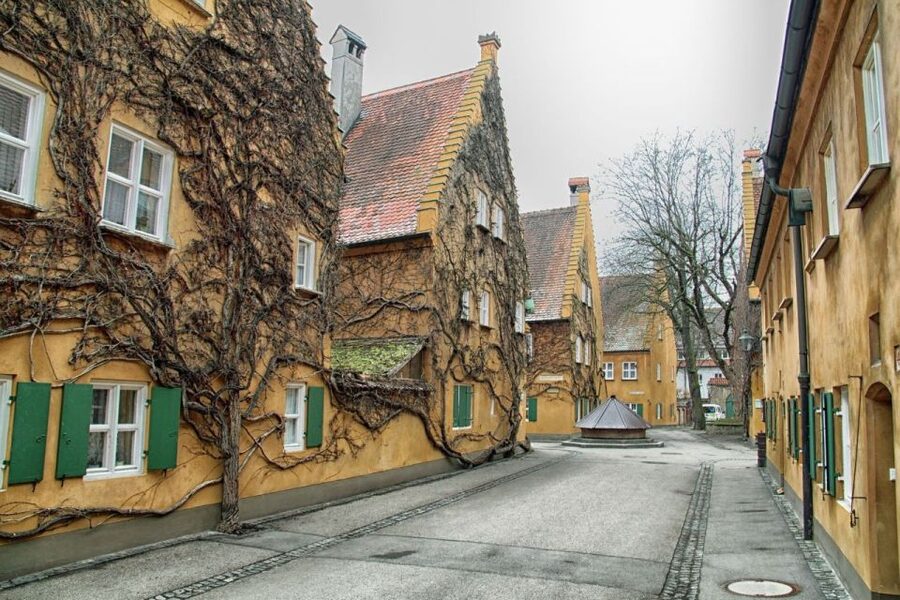
- Start at the Fuggerei, then walk through Augsburg’s turning points in about two hours.
- Town Hall highlights, including the claim of being the first world building with six floors.
- Roman Augsburg, starting in 15 B.C., explained as a provincial capital story, not trivia.
- Mozart family connection, with the birthplace of Wolfgang Amadeus Mozart’s father included.
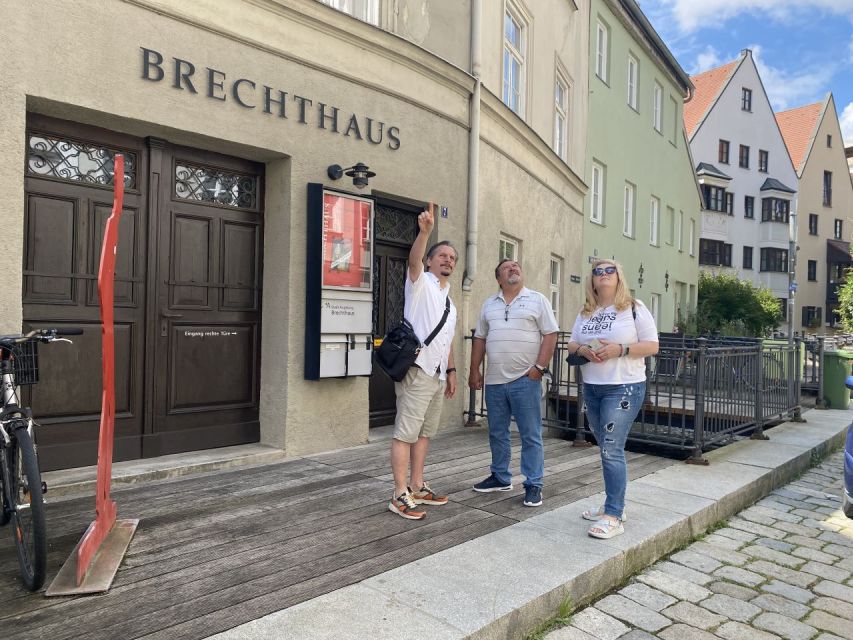
- Bertold Brecht birthplace stop, for a strong arts and literature moment.
- Finish at the SchaezlerPalais, known for surviving World War II without a scratch.
Augsburg’s “greatest hits” in 2 hours, starting at the Fuggerei
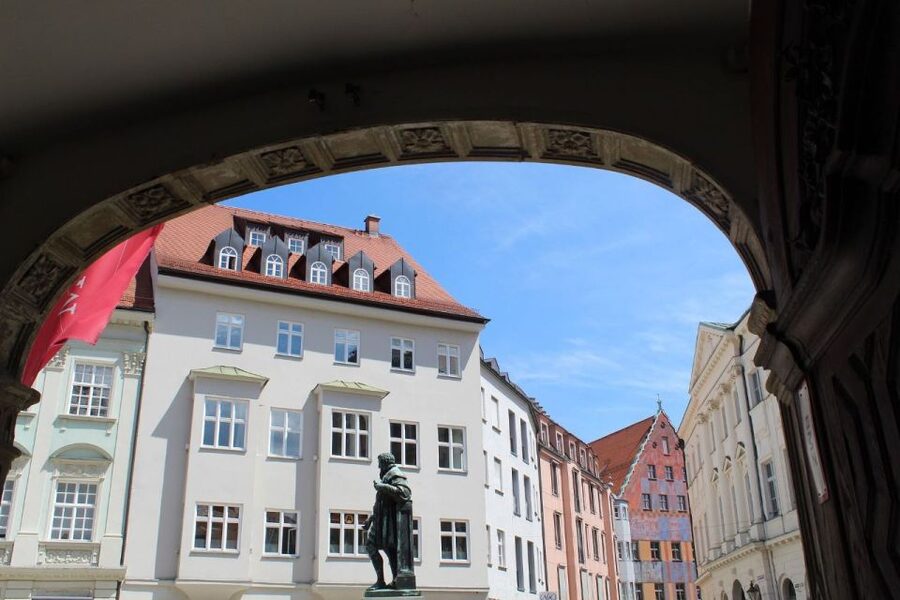
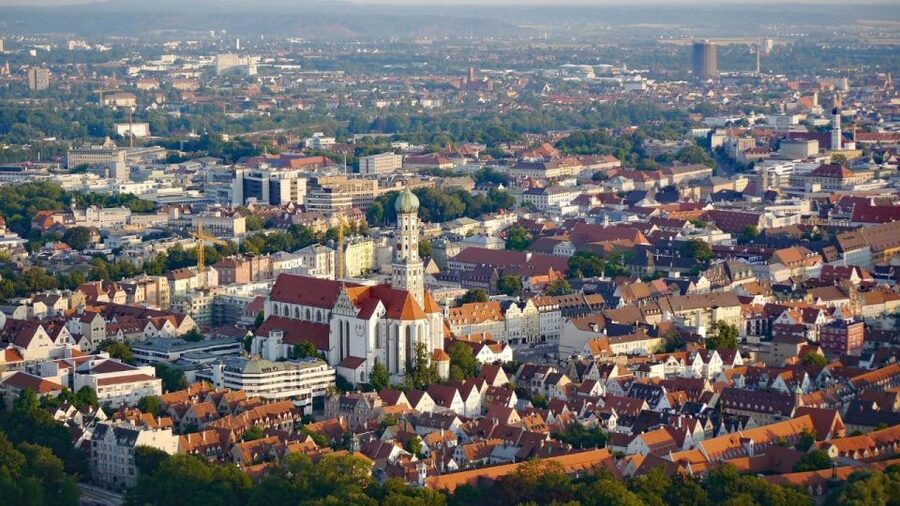
If you like history that connects dots, this tour makes sense fast. Augsburg is one of Germany’s oldest cities, and you can feel that age in the old streets and key buildings. The goal here is to give you a time-ordered picture: Roman roots, imperial rise, and the cultural names that still sit in the modern city.
What I liked most is the shape of the experience. It is not a long slog where you end with a brain full of facts and sore feet. It is a tight two-hour walking loop where each stop has a reason to exist. And because it is private, your guide can keep steering the story toward what you care about, including customizing highlights on the spot.
The other big plus is that you get both “why Augsburg mattered” and “who Augsburg produced.” Roman provincial administration and later civic power sit side-by-side with music history and German literature. That mix helps the city feel like a living place, not a folder of monuments.
More Walking Tours in Augsburg:
- Augsburg’s Water Management System – City Walking Tour
★ 4.5 · 168 reviews - Augsburg: Illuminated Guided Evening Walking Tour
★ 4.6 · 67 reviews - Historical Walking Tour of Augsburg / Historische Führung
★ 4.7 · 41 reviews
How much is $362 per group, and when it feels like a smart deal
This is a private tour priced at $362 per group up to 15 people, for a 2-hour guided walk. That pricing can work in your favor if you are traveling with family, friends, or another small group that wants the same thing. It is also a practical choice when you want a guide to slow down or adjust the route rather than joining a fixed-size group.
For couples or solo travelers, the value depends on your priorities. If you want a history overview that hits major landmarks, plus music and writing connections, then the cost buys convenience and personal attention. If you only want one or two sights and you are comfortable self-guiding, then you may feel the price more than you would on a cheaper public option.
The key way I would decide is simple: ask yourself whether you want a guide to connect the Roman founding from 15 B.C. to the later civic and cultural stories. If yes, this tour is likely a good match.
The guide experience: why private works better in Augsburg
A lot of walking tours fail for one reason: the route is rigid, and the story does not fit your interests. Here, you can steer it. You can customize the highlights on the spot with your guide, and that matters when a city has multiple “best parts.”
The guide also sets the tone for pacing and clarity. The strongest feedback style you will hear about this tour is that the guide makes the walk feel informative and not overwhelming. In other words, you get a sense of structure, and the guide stays in control of the time, which is exactly what you want for a two-hour plan.
One practical note: the tour languages are German and English. If you prefer English, plan around that availability in your booking window.
Stop by stop: what you will actually see and why it matters
Meet at the Fuggerei, Augsburg’s unusual social settlement
You start at the Fuggerei, which is not just a historic site, it is a window into how the Fugger family shaped social life. The Fugger story is included directly, including the fact that they founded the oldest social settlement in world history.
That detail is the hook. The tour does not treat the Fuggerei as only a photo stop. It connects it to the wider idea that Augsburg’s power was not only political, it was also economic and social. You also get help understanding what the settlement represents in the context of a city that grew into an important Roman provincial center and later a regional capital.
Because you begin there, you also get an anchor point for the rest of the walk. After the Fuggerei, the tour’s Roman and civic topics land more clearly. You are not jumping around randomly, you are building a mental map.
Roman Augsburg from 15 B.C. to an imperial provincial capital
Next, the story jumps back to when Augsburg was founded as a Roman colony in 15 B.C. The emphasis here is not just the date, it is what it took for the settlement to grow into a capital of a province in the Roman Empire.
This is where you start to appreciate why Augsburg is not just “old.” It is old with a reason. Being a provincial capital means administration, movement of people, and the kind of steady investment that changes a town’s layout and identity over centuries. On this tour, that explanation is threaded into what you see around you, so the Roman layer feels like something that shaped the city you walk through today.
If you like origin stories, this part gives you a clean spine to remember. If you are less into Roman history, you can still follow along because the guide’s focus is on how the city grew into importance, then later reappeared as a key German city.
The Augsburg Town Hall, famous for having six floors
Then you hit one of Augsburg’s most talked-about civic landmarks: the Town Hall, described as the first building in the world to have six floors.
Even if you are not a building nerd, this stop does useful work. Six floors in its era signals ambition, wealth, and a city that needed space for its identity. You get a sense of Augsburg’s self-confidence, and it also helps explain why Augsburg could become a regional center in later centuries.
This is the kind of sight where a guide matters. Without context, you might just register the height and façade. With context, you get the “why this structure happened here” story, and it clicks with the earlier theme of growth from Roman importance to later civic prominence.
Augsburg as the capital of Swabia in Bavaria, and Germany’s third oldest city
A good tour keeps tying the past back to today, and this one does. You learn that Augsburg is now the capital of the region of Swabia in Bavaria, and that it is Germany’s third oldest city.
Why I like this moment: it helps you stop thinking of Augsburg as only a stop on a route. It reminds you the city continued to matter, and that it did not disappear after the Romans. When you understand Augsburg’s modern role, the historical landmarks stop feeling like isolated monuments and start feeling like anchors of a place that still functions.
Fugger power, social impact, and why the Fuggerei connects to civic life
The tour’s Fugger content is more than “rich family, impressive buildings.” You get the Fugger family framed through what they created, including the settlement at the Fuggerei.
That framing changes how you see the city. If you come in thinking the Fugger name is just famous, you leave with a clearer idea of what that fame funded and protected. It also makes the social side of history feel grounded, not abstract.
This is also where private pacing pays off. If your group wants more about the social settlement angle, you can focus there. If you want more about the civic architecture, the guide can shift emphasis.
Mozart’s father birthplace, a music history stop with real names
Next comes one of the tour’s easiest “wow” moments: music history. You will see the birthplace of Wolfgang Amadeus Mozart’s father.
The tour uses Mozart’s family connection as a bridge. You go from Roman and civic power to the kind of cultural life that made Augsburg part of the larger German story. Even if your main interest is music, this stop works because it is not treated like random trivia. It is presented as part of why Augsburg mattered as a place people lived, worked, and created.
This stop is also useful if you travel with mixed tastes. Someone who might otherwise tune out Roman history gets a tangible human connection.
Berthold Brecht birthplace, German literature comes into focus
Another standout included stop is the birthplace of Berthold Brecht, the acclaimed German artist and writer.
This is the “brains” moment in the tour, but it still feels practical because the guide connects it to the overall city story. You are not asked to memorize background. You are given a sense of Augsburg as a generator of ideas and influence, not just a stage for old empires.
I like how this pairs with the Mozart stop. Music and writing, two different cultural forces, both show up in the same two-hour walk. It gives Augsburg personality.
Finish at the SchaezlerPalais, a WWII survival story in one place
The tour concludes at the SchaezlerPalais, highlighted for surviving World War II without a scratch.
A ending like this does something important. It reminds you that history does not only run from 15 B.C. to the medieval era. Augsburg faced modern events too, and this building becomes a physical marker of survival. It adds a human scale to your walk, like closing a chapter with a real, intact page.
If you like tours that end with a strong image, this one does that. You finish with a place you can visually remember, not just a list of facts.
Practicalities that affect your day
This is a walking tour in Augsburg’s old city, and it is not suitable for wheelchair users. Plan for steady walking and time your footwear accordingly.
The guide is live and speaks German and English. Entrance fees are not included, so if any stop requires a ticket on the day you go, you will pay separately.
Group size is private, and the tour is designed for a group up to 15 people. If you want a more intimate feel, you should still confirm how your group size compares to that cap.
Who should book this tour
I think this is a strong fit if you:
- Have limited time in Augsburg and want the main historical anchors in one go
- Like Roman history but also want arts and culture moments, including Mozart’s father and Berthold Brecht
- Prefer a guide who can adjust the route to your interests instead of sticking to a fixed script
- Want a tour that is mostly about understanding, not just taking photos
If you already know Augsburg deeply and you only need one specific sight, you might not get as much value from a two-hour overview.
Should you book the Augsburg Historical Highlights Private Walking Tour?
I recommend booking if you want a well-paced introduction to Augsburg that connects Roman founding from 15 B.C. to civic power, social history through the Fuggerei, and culture via Mozart’s father and Berthold Brecht. The best reason to do it is simple: a private guide helps the city’s big themes click together.
I would hesitate only if you are very price-sensitive and you are traveling as a couple or solo. In that case, it can still be worth it for the quality and convenience, but split the cost if you can.
If you want a two-hour plan that gives you a real sense of Augsburg’s identity, this tour is a very practical way to do it.
More Historical Tours in Augsburg
- Leipzig: City History Canal Sightseeing Tour on a Motorboat
★ 4.7 · 7,671 reviews - Berlin: Natural History Museum Entrance Ticket
★ 4.6 · 3,382 reviews - Leipzig: 1.5-Hour Historical Walking Tour in German
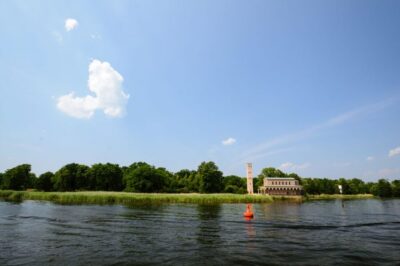
★ 4.7 · 2,217 reviews - Berlin: 3-Hour World Heritage Cruise to Potsdam
★ 4.5 · 1,569 reviews
Fresh reviews out of Augsburg
- Historical Walking Tour of Augsburg / Historische Führung★ 4.7 · 41 reviews
- Augsburg: Illuminated Guided Evening Walking Tour★ 4.6 · 67 reviews
- Augsburg’s Water Management System – City Walking Tour★ 4.5 · 168 reviews
Historical Tours, compared.
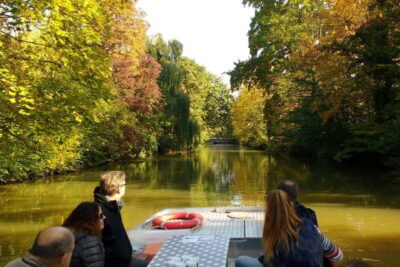
City History Canal Sightseeing Tour on a Motorboat
Read our review →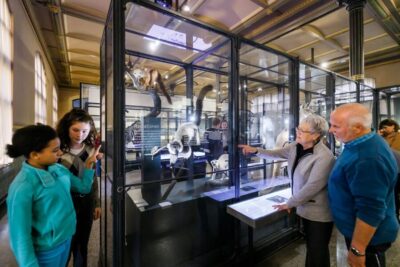
Night Watchman Historic Adventure Tour
Read our review →
Browse the lists this tour appears in