
Reviewed · CITY TOURS
Augsburg’s Water Management System – City Walking Tour
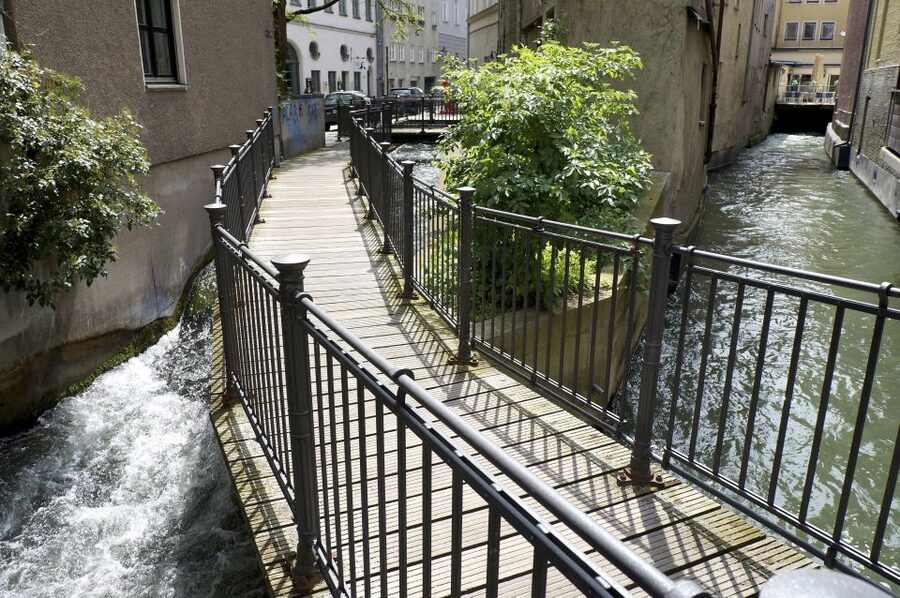
Augsburg’s Water Management System tour is interesting because you’re not just seeing pretty streets, you’re tracking how water shaped a city for centuries. You’ll walk through the Old Town cobblestones, then keep following the logic of the system into the Lech quarter, where small historic canals still matter.
What I love is how visual it is, you can practically feel the city’s water network underfoot, and how much you learn about the UNESCO listing without it turning into a lecture. I also appreciate the payoff at the Rotes Tor, where you get to see what’s described as the oldest existing waterworks in central Europe.
One possible drawback: the tour leans on historical facts and dates more than personal anecdotes, so if you want lots of stories for entertainment value, you may find it a bit dry on rainy days.
Key highlights at a glance
- Lech canals in the Lech quarter, plus charming streets with cobblestones and red-roofed houses
- UNESCO World Heritage Site context that helps the 22 elements make sense
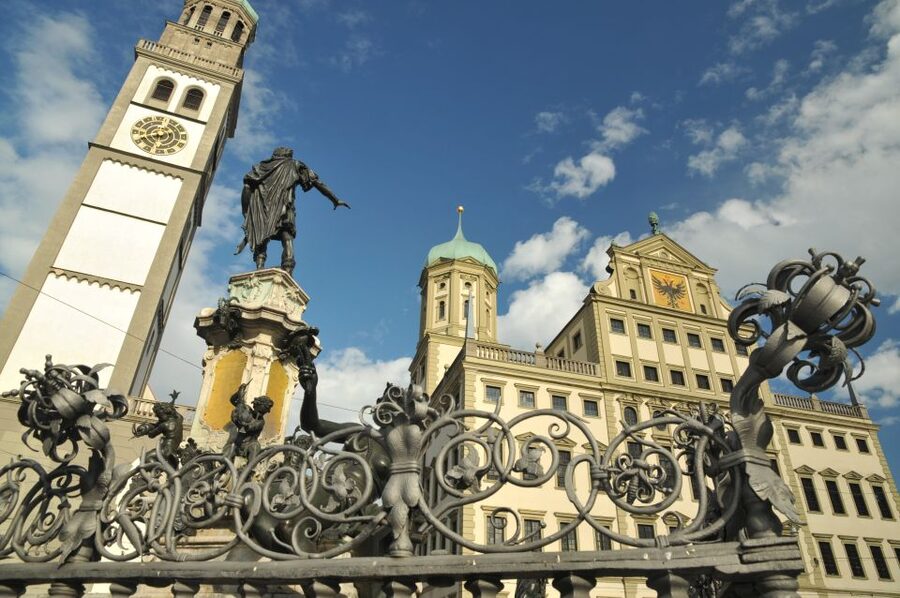
- Augsburg fountains on your route, including the Augustus, Merkur, and Herkules fountains
- Rotes Tor waterworks, described as the oldest existing waterworks in central Europe
- Small group potential, which can mean a more direct conversation with your guide
Why Augsburg’s Water Management System Feels Like City-Sized Storytelling
Augsburg’s water system is the kind of place where the city’s design becomes the lesson. Water management isn’t tucked away in a museum here, it’s spread across the walking route in ways you can notice in the streetscape: canal lines, bridges, fountains, and older infrastructure points that show you where water was routed and why.
This is also UNESCO World Heritage Site material, so you’re not just learning local trivia. You’re seeing an engineered system that has been valued long enough to be protected. The tour frames it as a set of connected parts, specifically 22 elements. Once you understand that, the city stops feeling random. It starts feeling engineered.
And yes, it’s “water,” but it’s also civic planning, public works, and daily life. Even if you’re not an engineering fan, the tour gives you a practical way to read the city.
More Walking Tours in Augsburg:
- Augsburg: Illuminated Guided Evening Walking Tour
★ 4.6 · 67 reviews - Historical Walking Tour of Augsburg / Historische Führung
★ 4.7 · 41 reviews - Augsburg: Historical Highlights Private Walking Tour
★ 4.9 · 9 reviews
Meeting in Augsburg’s Old Town, Then Walking the Logic of Water
You’ll meet your guide in front of the Tourist Information Center, right where most visitors start orienting themselves. From there, the tour moves through Augsburg’s historic core with enough walking to feel like a real city stroll, not a quick photo stop loop.
A key part of the experience is that the guide doesn’t just list sites. You’re meant to connect them. The route starts in the heart of the city, then you head toward the Lech quarter and the waterworks at Rotes Tor, so the walk has direction: from water features in daily view to the infrastructure that supports them.
Comfort matters. Wear comfortable shoes because you’ll be on cobblestones and old-town surfaces for a full 2 hours. If it’s wet, those cobbles can be slippery, so dress for weather and move carefully.
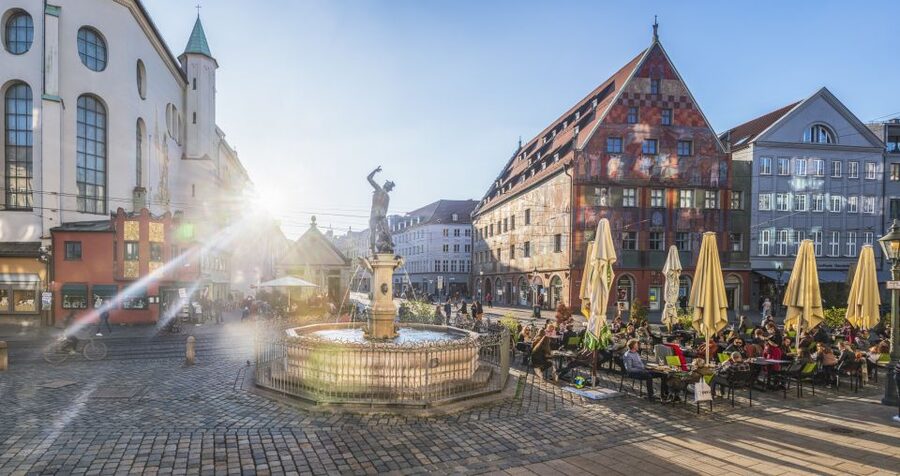
Cobblestones and Fountains: Augustus, Merkur, and Herkules
One of the easiest ways to understand a water system is to start with what you can see: fountains. Augsburg’s tour highlights several major ones, including the Augustus fountain, the Merkur fountain, and the Herkules fountain.
These aren’t just decorative stops. A fountain is public water made visible. When your guide points out how each one fits into the broader water story, you stop thinking of fountains as isolated monuments. Instead, they become nodes in a network.
Also, fountains give you visual variety. Even if the waterworks content is technical, fountains are the places you naturally pause, look up, and take a breath. They’re good “memory anchors,” so later, when you hear about water distribution and infrastructure, your brain already has a mental map.
If your guide is Brigitte Plonner, that seems especially effective for making the whole thing click. Her style, as described by one booking, is clear and enthusiastic, with the kind of explanation that makes a short walking tour feel like you absorbed a lot.
The Lech Quarter: Historic Canals and Streets You Can Actually Walk
After the fountains, you head to the Lech quarter, where the water story becomes quieter and more intimate. You’ll stroll along the historic Lech canals, plus the charming street setting around them.
What you get here is contrast. Fountains are big statements. The Lech canals are the working lines. The streets along the canals have that old-city texture: cobblestone streets and red-roofed houses, with a small-scale canal feel that makes the whole system easier to picture.
This is also where I’d expect most people to slow down and notice details, because the canal edges and water channels create natural viewpoints. You’re not just moving past sights, you’re moving along the water’s path.
Practical note: if the weather is rainy, the canal section can still be rewarding, but you’ll want to keep your footing and focus on what the guide is pointing out instead of chasing perfect photos.
Rotes Tor and the Oldest Existing Waterworks in Central Europe
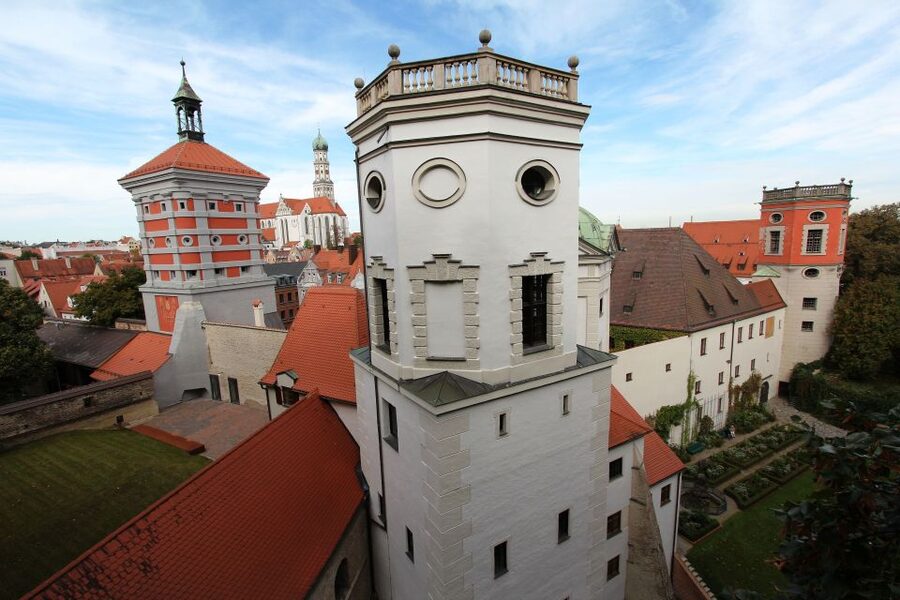
The tour’s biggest “stop-me-in-my-tracks” moment is the visit to Rotes Tor, where you discover waterworks described as the oldest existing waterworks in central Europe.
This is the part where the tour earns its UNESCO relevance. Walking around a living historic city is one thing, but standing in front of older water infrastructure is where you understand what UNESCO is actually protecting. It’s not just aesthetics. It’s continuity of a working public technology across generations.
Also, waterworks sites tend to make explanations feel more grounded. When your guide connects what you saw in fountains and canal lines to what you’re standing near now, the system stops being a concept and becomes a physical reality.
Don’t worry if parts of it sound complex. The tour is designed for visitors with no technical background, with a simple approach: show the elements, explain their role, connect the dots.
How the 22 Elements Fit Together (Without Turning It Into Math)
The most satisfying tours explain not only what you’re seeing, but how it all relates. Here, the tour covers several of the 22 elements of Augsburg’s water management system, so your brain ends up with a framework.
Here’s how to think about it while you walk:
- Treat fountains as public-facing water moments.
- Treat the Lech canals as the movement lines.
- Treat Rotes Tor waterworks as the supporting infrastructure proof.
That pattern makes the UNESCO system feel less like a list of monuments and more like a functioning plan. Even in a short 2-hour walk, you’re given a way to interpret what you notice later on your own.
This is also why the guide’s tone matters. Some guides focus heavily on historical data and facts with fewer personal anecdotes, and that can actually be a strength if you like clear explanations. You leave with a stronger factual base, even if the tour doesn’t feel like a storyteller’s performance.
Guide Style: Clear Facts Can Be a Strength, Not a Problem
Your guide will speak German and English, and you’ll get a live guided experience. That matters, because water management systems are the kind of topic that benefits from real-time clarifications.
One thing to know ahead of time: the tour tends to emphasize historical information and facts over lots of rambling stories. If you enjoy structured explanations, this is a plus. If you’re craving anecdotes, you might find it a bit dry, especially when weather adds a damp mood.
A helpful way to handle that is to come with one simple goal: ask questions. Even if the guide’s main approach is factual, questions can personalize the answers. Small group dynamics can also make it easier to interact, since the tour can sometimes run with very few participants.
And if you’re lucky enough to have an enthusiastic explainer like Brigitte Plonner, you’ll likely get the kind of high-energy clarity that makes a dense topic feel manageable.
Price and Value: 14,00€ Plus a 3,00€ Admin Fee for 2 Hours
The price you’re likely to see is 14,00€ plus an administration fee of 3,00€ for 2 hours, which puts it in the “worth it if you like context” category.
For me, the value comes from two things:
- You’re paying for a guide to connect the UNESCO storyline across multiple sites, not just for access to sights.
- You get an organized walk that hits the key anchors: Old Town feel, fountains, the Lech quarter canals, and Rotes Tor.
Also, the tour includes an optional add-on: elysium® sound amplification, free to use. If your hearing is picky or the group is spread out, that tool can make a difference. The catch is you must bring a smartphone with internet and headphones if you want to use it.
One note on tickets: entry tickets are not included. The tour is marked as including skip-the-ticket-line, but since tickets themselves aren’t part of the package, I’d treat that as a convenience if any attraction on the route requires a ticket.
Practical Tips That Make This Walk Smoother

Augsburg old streets are real walking, so plan for comfort.
- Bring comfortable shoes.
- Dress for weather-appropriate clothing, since you’re outside for the full 2-hour duration.
- Expect cobblestones at least in parts of the Old Town.
If you plan to use the optional amplification, have your setup ready:
- Download or use the elysium® system on your smartphone (with internet).
- Bring headphones so you can hear the guide clearly.
And for food, remember that food and drinks are not included. I’d time this so you can grab a snack before or after. Two hours passes quickly when you’re focused, but you’ll still appreciate a plan for hunger.
Who Should Book This Tour (and Who Might Skip It)
This tour is a good fit if you:
- Love cities where the street layout tells a story.
- Want a short, guided way to understand an UNESCO site without reading a textbook.
- Like walking through real neighborhoods like the Lech quarter, not just hopping between landmarks.
You might not love it as much if you:
- Want a purely entertainment-driven tour with lots of anecdotes.
- Prefer stops that are mostly hands-on or inside buildings with ticketed exhibits, since entry tickets aren’t included.
It’s also a solid choice for couples and individuals because the route connects multiple sights logically. And since it’s marked wheelchair accessible, it can be a more inclusive way to experience the city than steep climbs or purely museum-based options.
Should You Book Augsburg’s Water Management System Walking Tour?
I’d book it if you want to understand Augsburg in a deeper way, without spending a full day on research. The combination of fountains, the Lech canals, and the Rotes Tor waterworks gives you a complete arc: visible water, routed water, and engineered water.
If you’re the type who likes facts and clean explanations, you’ll feel rewarded. If you need nonstop stories to stay engaged, just know the tour’s tone can lean technical and historical.
Either way, this is one of those walks where, after 2 hours, your eyes start reading the city differently. You notice waterlines, you understand why certain features exist, and Augsburg starts to feel like it was planned, not just built.
FAQ
Where do I meet the guide for the Augsburg water management tour?
Meet your guide in front of the Tourist Information Center.
How long is the walking tour?
The tour lasts about 2 hours.
How much does the tour cost?
The listed price is 14,00€ plus an administration fee of 3,00€ per person.
What languages are available?
The tour is available in German and English.
Is the tour wheelchair accessible?
Yes, the tour is marked wheelchair accessible.
What should I bring with me?
Bring comfortable shoes and weather-appropriate clothing.
Is the sound amplification system included?
The use of the optional elysium® sound amplification system is included. If you want to use it, bring your smartphone with internet connection and headphones.
Are entry tickets included?
No. Entry tickets to attractions are not included.
Is the tour free to cancel, and what is the deadline?
You can cancel up to 24 hours in advance for a full refund.
Is payment required immediately?
No. You can reserve now and pay later, so you can book without paying today.
Fresh reviews out of Augsburg
- Historical Walking Tour of Augsburg / Historische Führung★ 4.7 · 41 reviews
- Augsburg: Illuminated Guided Evening Walking Tour★ 4.6 · 67 reviews
- Augsburg: Historical Highlights Private Walking Tour★ 4.9 · 9 reviews
City Tours, compared.

1-Hour City Tour by Boat with Guaranteed Seating
Read our review →
City History Canal Sightseeing Tour on a Motorboat
Read our review →

Browse the lists this tour appears in