
Reviewed · CITY TOURS
East Berlin: City of Shadows Walking Tour
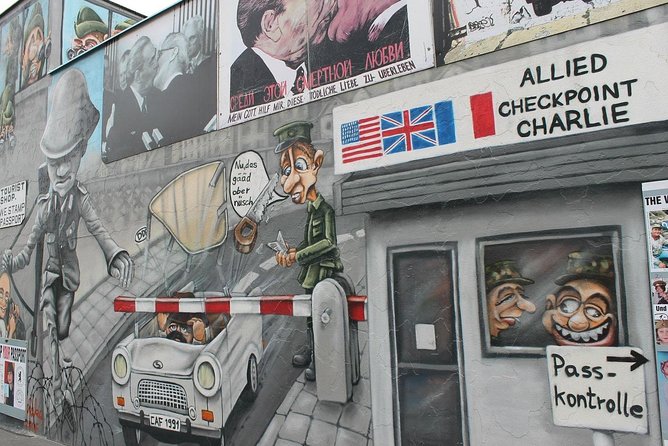
This is interesting because it connects famous landmarks to the everyday machinery of control that shaped East Berlin. You’ll move through places tied to the DDR, then the Cold War story clicks into focus in a way that feels practical, not academic. I like the guided orientation you get right away, so the city makes more sense after you finish.
I also like how the tour uses real sites tied to real people, including the Stasi network and the human cost of escape attempts. One drawback to plan for: most stops are brief, so if you want deep museum time, you’ll likely need to come back later on your own.
Key things to know before you go
- Small group size (max 8) helps you ask questions and keeps the pace human.
- A local historian ties landmarks to political decisions, not just dates.
- Stop-by-stop coverage of DDR control, from migration separations to the Death Strip.
- Stasi headquarters context (including Eric Mielke) explains how surveillance became normal.
- Public transport is part of the route, so a day transit pass can save you hassle.
- Brief time at each site means it is best as an overview, not a full museum day.
What East Berlin City of Shadows Is Really About
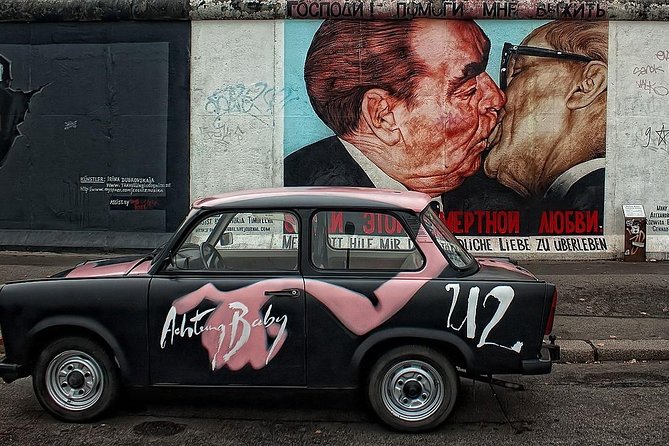
East Berlin can feel like it is all monuments and memorials until you learn what those places were doing. This walking tour is built to fix that. In about three hours, you get a guided chain of cause and effect: how Allied division hardened into Communist control, how the state managed movement and information, and how people still pushed back.
What I appreciate is that it is not only about big events. It also highlights the smaller, crueler systems that affected daily life, like family separations and a surveillance culture that made neighbors suspicious. If you are visiting Berlin for the first time, this type of structure helps you stop seeing the DDR as a single dark chapter and start seeing it as a set of choices, laws, and enforcement.
The pacing is also readable. You are not asked to sprint between far-flung sights. Still, it is not an all-stroll tour either. You will cover several stops, and you will use public transport a few times because some key locations are too spread out to walk comfortably in three hours.
More City Tours in Berlin
- Berlin: 1-Hour City Tour by Boat with Guaranteed Seating
★ 4.3 · 16,993 reviews - Berlin: City Sightseeing Hop-On Hop-Off Bus Tour
★ 4.1 · 4,233 reviews - Berlin: 1-Hour City Sightseeing Cruise
★ 4.4 · 2,210 reviews
Price and value: is $156.53 a smart use of time?
At $156.53 per person for roughly three hours, the ticket is not cheap. But the value hinges on what you are buying: a local historian-led story plus access to key DDR sites without paying for admissions at those specific stops.
You also get a mobile ticket, and the tour notes that pickup is offered from any hotel or accommodation in Berlin. That can be worth real money in a city where navigating the transit system efficiently takes practice.
What you should factor in is what is not included. Food and drinks are on you. Also, you will pay for public transport between stops. The tour suggests a Berlin day metro pass if you do not already have one. The listed options are:
- Day ticket (1 person): 7 Euro (senior discount 4.70 Euro)
- One way AB ticket: 2.80 Euro (senior discount 1.70 Euro)
If you are already planning to use transit, the added cost may feel small. If you are trying to build a DDR day using only your own route, the guided narrative may still save you time, because you would otherwise be piecing together the Cold War logic site by site.
Meeting at Unter den Linden 42, and how the route stays manageable
You meet at Unter den Linden 42, 10117 Berlin. The tour ends in Berlin, so plan to have your energy and transit figured out for the last leg of the day.
The practical tip here is mindset. You are walking, but you are also riding. The tour is transparent about this: distances between some stops are too much for a pure walking route, so public transport fills the gaps.
If you can, bring yourself the day pass idea early. If you cannot buy it in advance, the guide will help you purchase it at the first metro station on the tour. That is a big deal if you dislike last-minute ticket machines or you just want to start moving with no friction.
Also, this is listed for moderate physical fitness. With a three-hour schedule and multiple short stops, you are mostly on your feet, not hiking. Still, wear shoes that can handle uneven sidewalks and quick crossings.
Brandenburg Gate: the Cold War frame-setter you need first
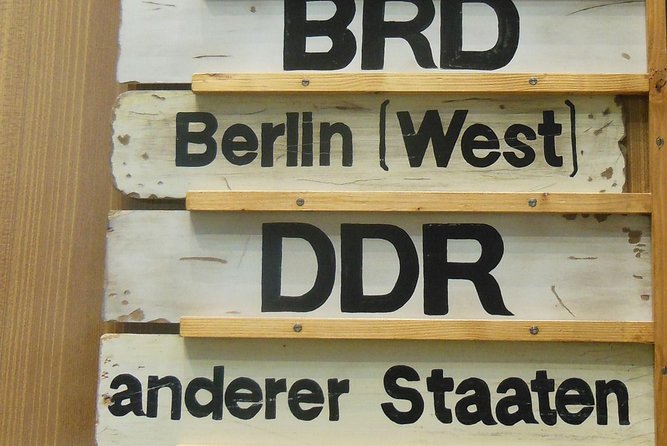
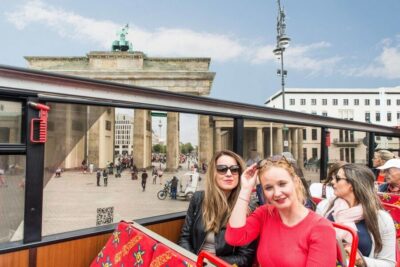
The tour begins at the Brandenburg Gate, and I like that choice because it is instantly recognizable. More importantly, it forces you to look at the built environment like it is a message. The historian sets up the core theme: modern Berlin’s streets, embassies, and monuments are not neutral. They carry the shadows of Communist-era decisions and repression.
A key moment in this stop is the Reagan call in June 1987 to Gorbachev, urging him to tear down this wall. You get the sense that Berlin was becoming a stage where global leaders debated the future, while people on the ground lived with the consequences.
Nearby is the former Soviet Embassy, described as a grandiose monument built in 1945 amid World War II rubble, intended as a bold declaration of Stalin’s ambition to control all of Berlin. That detail matters because it shows how power was made visible. The Cold War was not only politics. It was architecture, symbolism, and who got to decide what the city meant.
If you want one quick self-check before continuing, it is this: at the Brandenburg Gate, you are learning the rules of the game. You will understand the later stops much faster once you see that.
More Walking Tours in Berlin
- Discover Berlin Half-Day Walking Tour
★ 5.0 · 9,624 reviews - Berlin: Third Reich and Cold War 2 Hour Walking Tour
★ 4.9 · 6,830 reviews - Berlin: Discover Berlin Walking Tour
★ 4.9 · 5,998 reviews - Berlin’s Best: 2 Hour Walking Tour Third Reich and the Cold War
★ 5.0 · 5,486 reviews
Friedrichstraße and the Palace of Tears: where migration became heartbreak
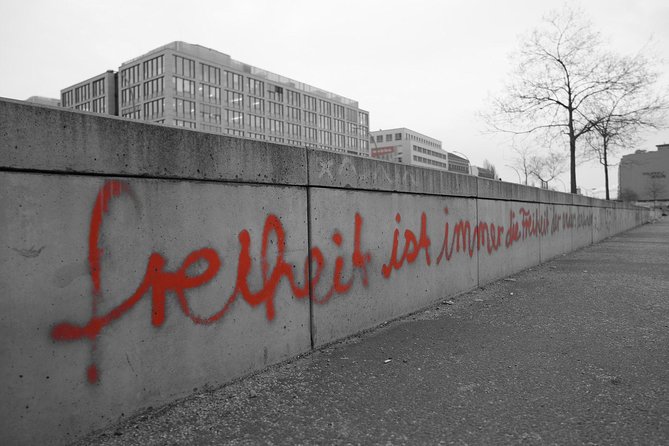
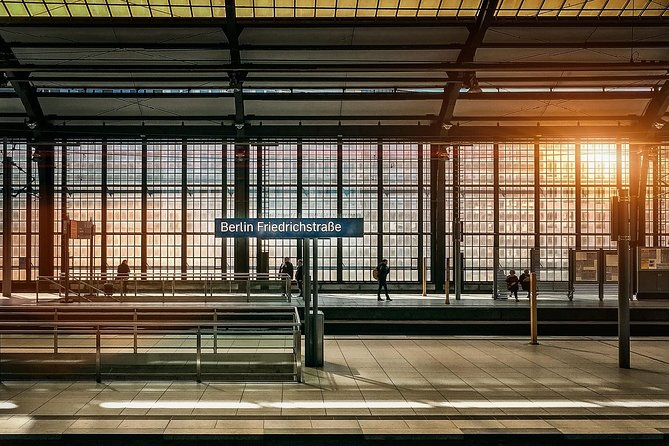
Next up is Friedrichstraße station, a crossing point between East and West Berlin. This is where the story turns more human.
The tour highlights the office known as the Palace of Tears, where families torn apart by East Germany’s immigration rules said goodbye. The phrase Palace of Tears is not about melodrama. It signals the emotional reality built into the system: borders were enforced not only with guards and barriers, but with bureaucracy.
This is one of those stops where the value of a historian is hard to replace. If you read about Berlin division later, you might collect dates. On this stop, you get a clearer sense of how the state controlled movement and how that control looked in real encounters.
Time here is shorter, about 15 minutes, so you are not getting a long emotional processing session. Still, it is a powerful anchor point before you move into the more structural sites.
Park am Nordbahnhof and ghost stations: the city’s forbidden leftovers
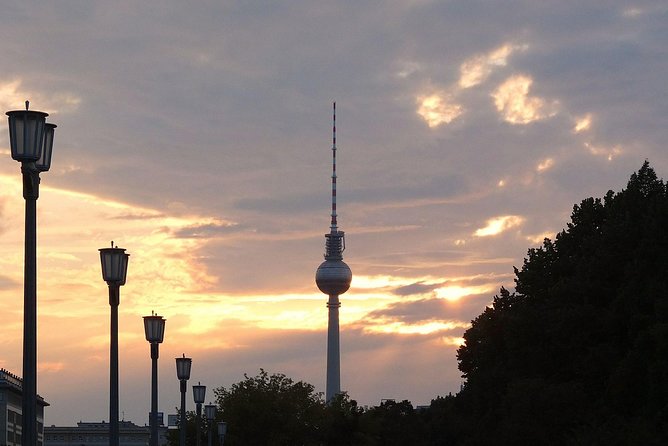
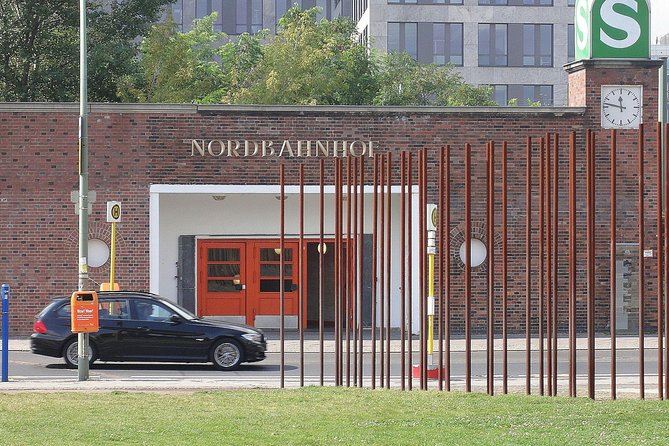
At Park am Nordbahnhof, you learn how Berlin division created ghost stations. These were unused but heavily guarded stops on West Berlin’s subway lines that lay in East German territory.
I love this kind of detail because it shows division as something you can literally find in the infrastructure. A ghost station is not only a location. It’s evidence of a border that shaped how trains moved and how people were allowed to travel.
This stop is brief, around 10 minutes, but it gives you a mental picture of restriction. The city is not one continuous grid. It is a patchwork of controlled edges.
If you are the type who enjoys urban oddities, this will feel like extra credit. If you are expecting only famous monuments, this may be the most surprising stop.
Karl-Marx-Allee: socialist dreams, built at full scale
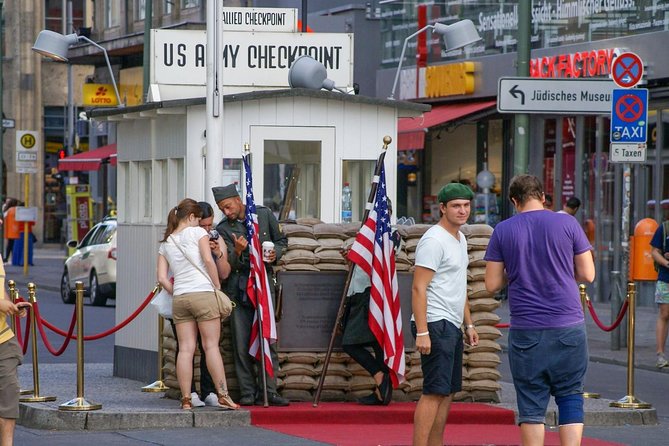
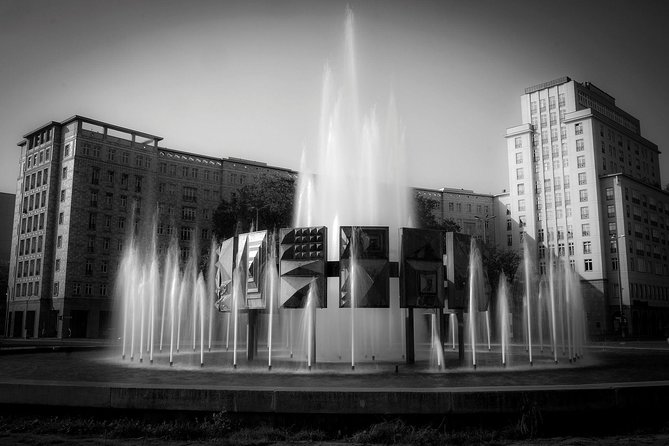
You then visit Karl-Marx-Allee, including the grandiose mile-long housing complex. The tour frames it as the contrast between East Germans’ dreams for a Socialist paradise and what that system produced in real life: deprivation, suppression, and paranoia.
This is a stop where you can read the architecture with new eyes. Even if you have seen these buildings from a distance, a guided explanation helps you notice how grand scale can be political messaging. The tour pushes you to think about what it means when housing becomes propaganda and daily life becomes tightly managed.
This stop is also about 10 minutes, so you won’t linger. But it connects well to what comes next: the idea that repression did not just exist in police files, it shaped neighborhoods and routines.
Berlin Wall Memorial: the Death Strip and the cost of trying
At the Memorial of the Berlin Wall, you get a direct experience of the tragic reality behind escape attempts. The tour specifically calls out the Death Strip, the deadly zone people tried to cross, and it shares stories of East Berliners whose attempts led to their deaths.
This is heavy material. The practical value is that it gives you context before you wander the rest of the wall sites on your own. When you see the physical space later, you will remember what the tour explained about why that strip mattered so much.
Time here is about 15 minutes, so it is not a long memorial visit. That’s a good thing and a hard thing. Good, because you keep the historical flow. Hard, because this is not the kind of place you should rush if you want to sit with it.
If you are sensitive to memorials and violence, pace yourself. Take a breath, look around, then move with the group when you are ready.
Stasi Museum stop: surveillance as a neighbor-level system
The tour includes a stop at the Stasimuseum, focusing on East Germany’s secret police. The emphasis is on how the Stasi coerced neighbors and even family members to spy on each other.
You also learn about the feared leader Eric Mielke and how he recruited a massive network of spies. The tour describes surveillance techniques as innovative, which is chilling in a modern way. The takeaway is that control was not only a top-down plan. It worked because it spread into everyday trust and daily conversations.
Time is about 10 minutes. And this is where I think you need to calibrate expectations. If you want a deeper museum experience, plan a separate visit. A quick guided stop can make you understand why the museum matters, but it cannot replace time inside reading exhibits at your own speed.
Alexanderplatz: East German pride, then 1989 in one place
The final stop is Alexanderplatz, described as the center of public life in East Berlin. The area was rebuilt in the 1960s, with monuments including the futuristic parliament building and the iconic TV Tower.
This stop is about symbols. The tour frames Alexanderplatz as a showcase of East German pride, then it shifts to 1989, when massive demonstrations erupted here and helped drive the regime’s downfall. The tour points out that this marked the end of about 40 years of Communist rule.
What makes Alexanderplatz work at the end is that you see how a state tries to look permanent. Then you see how it broke, in public. If you end your tour there, it is a strong way to close the loop: from walls and checkpoints to streets where people gathered.
Time is about 10 minutes, but it is enough to give you a mental map for wandering afterward.
Pacing, group size, and who this tour fits best
With a maximum of 8 travelers, the tour feels like it can breathe. That matters for a topic like this. You want a guide who can answer a question and keep the group from turning into a silent line through sites.
The overall schedule is also built from short segments, usually around 10 to 20 minutes per stop. That format is ideal if you want:
- a clear overview of East Berlin in one half-day
- a historian to connect political decisions to place-based stories
- a tour that helps you decide what to see next
It may be less ideal if your priority is museum depth. The Stasimuseum stop, for example, is short. If you want full exhibits and more time at memorials, you will do better using this tour as your orientation day, then adding independent time on subsequent days.
One more practical point: food and drinks are not included. If you do this early, you’ll probably want to plan a snack or meal afterward. Berlin is very walkable, but a history-heavy day can make you forget to eat until you feel it.
How to plan your day so this tour hits harder
If you want this experience to land, think about what you will do right after. My favorite approach is to treat the tour as your lens, then go back to the places with new focus.
For example:
- After the Death Strip discussion, you’ll notice details more sharply when you return to wall memorial areas.
- After the Stasi explanation, you’ll read exhibits with clearer expectations about how surveillance worked.
- After Friedrichstraße and the Palace of Tears, you’ll understand why movement control and bureaucracy were part of the same system.
Also, since you will use public transport a few times, try not to schedule anything tight right before or immediately after. Three hours goes fast when the story is moving, but getting on and off trains takes a bit of time too.
Should you book this East Berlin City of Shadows tour?
I think you should book if you want a smart first look at East Berlin that connects Cold War politics to real places. It is especially good value as an overview because it keeps the story organized, uses a local historian, and gets you to the right stops without complicating admissions.
I would not make this your only history plan if you love museums and want long time inside the Stasi materials or memorial spaces. In that case, book this as your orientation, then plan extra independent time the same week.
If you like tight storytelling, small groups, and learning how a city’s politics still shows up on your street level, this tour is a strong bet.
FAQ
How long is the East Berlin: City of Shadows Walking Tour?
The tour lasts about 3 hours.
What is the price per person?
The price is $156.53 per person.
Is the tour offered in English?
Yes, the tour is offered in English.
Does the tour include hotel pickup?
Pickup is offered from any hotel or accommodation in Berlin.
Where do I meet the tour?
The meeting point is Unter den Linden 42, 10117 Berlin, Germany.
Is food and drinks included?
No, food and drinks are not included.
Will I need public transport during the tour?
Yes. You will use public transport a few times because some key sites would be too far to walk.
Do I need to buy tickets for the stops?
The tour notes admission ticket free at the listed stops.
What fitness level do I need?
A moderate physical fitness level is recommended.
What happens if I cancel?
Free cancellation is available, and you can cancel up to 24 hours in advance for a full refund.
Fresh reviews out of Berlin
- Gastro Tour with Klaus though the Wrangelkiez, Kreuzberg★ 5.0 · 9 reviews
- Wall Tour Berlin – Fates, Heroes & Love Stories★ 4.0 · 9 reviews
- Berlin City Tour with Hotel pick up and Drop off★ 4.0 · 9 reviews
- Berlin Private Street Art Tour – Off The Grid★ 5.0 · 9 reviews
- Romantic Berlin Rickshaw City and Photo Tour – incl. pick-up★ 4.0 · 9 reviews
- Quatsch Comedy Club Berlin: Quatsch Comedy Hot Shot★ 4.8 · 9 reviews
- Berlin Urbex Adventure and History Tour★ 5.0 · 9 reviews
- Stag Party Berlin: Celebration for Your Bachelor Party★ 3.4 · 9 reviews
City Tours, compared.
1-Hour City Tour by Boat with Guaranteed Seating
Read our review →
City History Canal Sightseeing Tour on a Motorboat
Read our review →
Browse the lists this tour appears in