
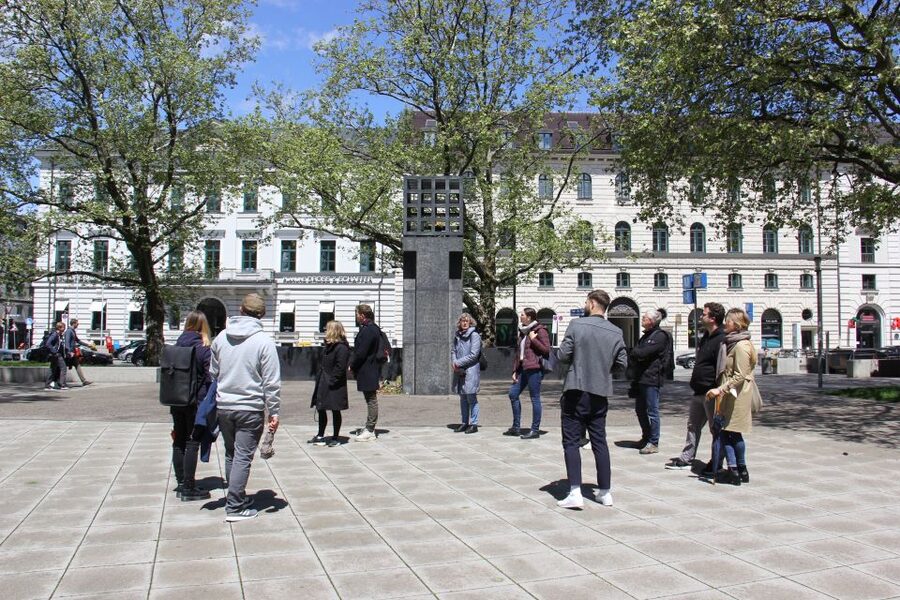
Reviewed · HISTORICAL TOURS
Munich: Historical Walking Tour on the Rise of Hitler
Munich is known for beer halls, art, and open streets, so it is startling to learn how it also became a launchpad for National Socialism. What I love most is the way Alex ties the city to the events, and the fact that the tour stays chronological and easy to follow. I also like how it focuses on real places you can still see today. One possible drawback: the topic is serious and you will have to be comfortable walking through difficult history in public spaces.
Alex, a Munich local, makes it approachable without turning it into a lecture. The tone is respectful, but not stiff, and yes, there is room for a laugh when it fits, which keeps the walk from feeling heavy the whole time. If you want a tour that names every single building in detail, you may want to pair this with a little reading so the names land fast.
Key highlights you will notice on the ground
- Meet at Marienplatz, at the Marian Column, so you start in the city’s best-known center and get oriented immediately
- Alex is 32, born and raised in Munich, with a long personal involvement in this subject
- A chronological walk that helps you track cause and effect instead of random facts
- Propaganda buildings and major squares still shape Munich’s look, acting as silent witnesses of the era
- Serious content with human pacing, including short breaks so you can reset
- Not just history facts, but context on why Munich mattered so much for the movement
Why This Dark Munich Story Works On Foot
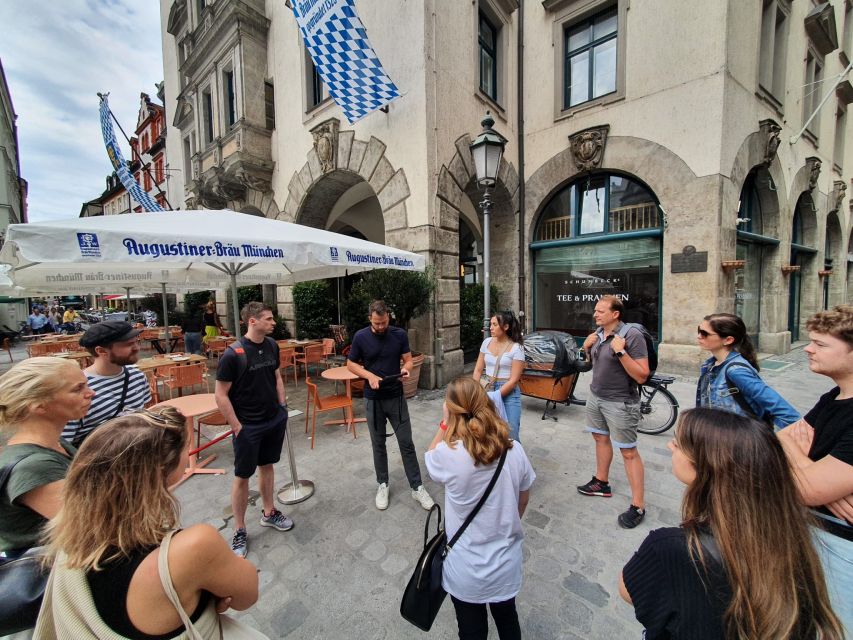
This tour works because it does not stay theoretical. You start in Munich’s famous core and you move through the kinds of spaces where politics becomes public life: squares, landmarks, and buildings that still sit in the cityscape. The whole point is to answer one question as you walk, how a peaceful, open-minded city became the birthplace of National Socialism.
The tour also helps you connect the dots in a way that feels practical. Munich played a decisive role in the rise of the Nazis, and it is here that an unknown Austrian became the dictator of the Third Reich. Hitler later gave Munich the dubious honorary title capital of the movement, and after that you get a building boom of propaganda structures. Even after the war, many of those buildings survived, so you are not looking at a museum piece. You are looking at the city as it is, with history embedded in the street view.
The best part is how the tour treats your attention. It keeps moving, but it does not rush. You will come away with a clearer sense of how events, public performance, and architecture fed each other. And since the tour runs in time order, your brain does not have to juggle dates at the same time it is trying to understand what you are seeing.
More Historical Tours in Munich
- Munich: Guided Tour of the historic Town Hall on Marienplatz
★ 4.8 · 63 reviews - Munich Craft Beer & Cultural Tour With Snack
★ 5.0 · 46 reviews - Munich History Tour: Private & Personalized with a Local Guide
★ 4.5 · 33 reviews
Meet Alex at Marienplatz and Learn How the Tour Keeps It Human
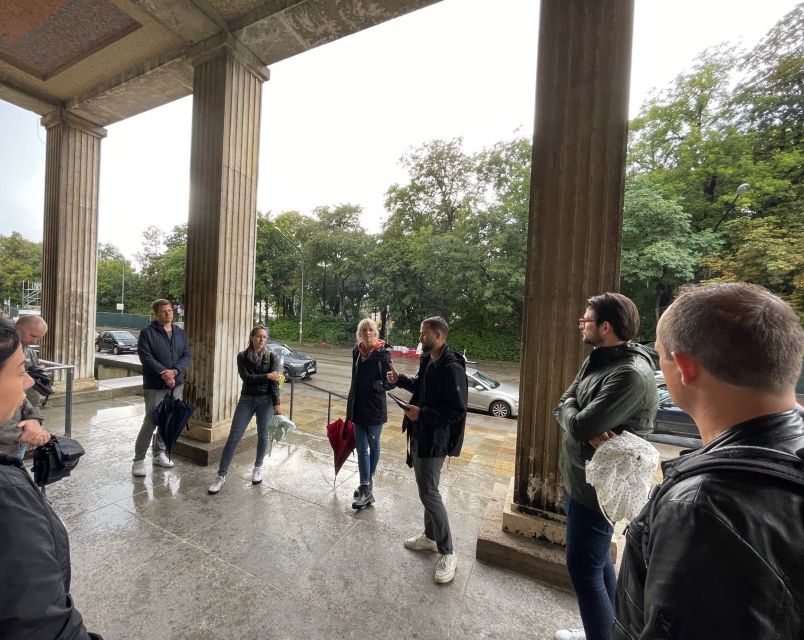
You meet your guide at Marienplatz, right at the Marian Column, the tall column in the square with a small golden statue in the middle. It is a smart meeting spot because you can find it easily, and you get your bearings fast. From there, Alex guides you through the story with a local lens.
Alex is 32, born and raised in Munich, and he has deep historical knowledge. He has been involved with this topic since his youth, and his reason for guiding is very clear. He wants you to understand how the rise of National Socialism was possible, and how an inhuman dictatorship could destroy Europe within just a few years. That is the guiding mission, and you feel it in the way he explains cause and effect.
At the same time, he makes it clear that you do not need to be a history professional. The tour invites anyone, young or old. The approach is friendly enough that you can ask questions, and there are short pauses along the way. One thing that comes through strongly is Alex’s sense of pacing. He does not just recite facts, he watches the group and builds in small moments to reset so the tour feels manageable even with heavy material.
And yes, you can laugh a little. Alex’s view is that a guided tour should still be fun. That does not mean the subject is played for laughs. It means the delivery has balance, so you can stay attentive instead of shutting down.
Walking the Timeline, From Munich to the Capital of the Movement
The tour is set up chronologically, so it moves like a timeline you can physically feel under your feet. That matters, because the rise of the Nazis is not a single event you can point to like a souvenir. It is a chain of developments that gathered speed, and Alex’s format helps you see how one step led to the next.
You start with the idea that Munich is not just a place that happened to be in the story. The city played a decisive role in the rise of the Nazis. Then you connect that to why the movement found power through public visibility. Munich later earned the title capital of the movement, and that honorary recognition had consequences you can still spot today.
As the tour progresses, you also learn how the movement used Munich’s public life. Hitler held speeches in the city that shaped the movement’s reputation and reach. The Nazis celebrated parades, turning political messaging into performance. And Munich, despite being seen as a major cultural center, endured the bombing war.
What I like about this chronological approach is that it gives you structure. You are not trying to memorize isolated tidbits. You are tracking an argument. Why Munich mattered. How it became tied to National Socialism. And why that created momentum that was hard to stop.
The Propaganda Buildings You Can Still See in the City Today
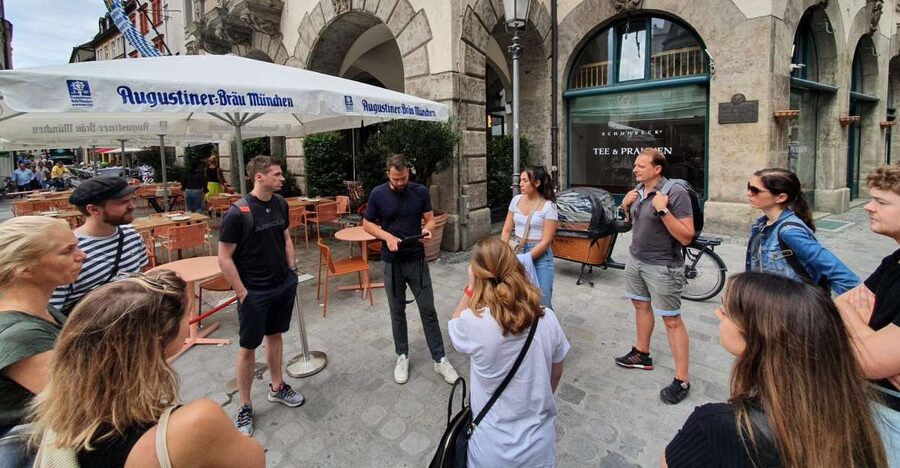
One of the biggest takeaways is that the building boom was not abstract. It produced propaganda buildings, and many of them survived the war. That is a key part of the tour design, because it gives you an experience that works on two levels.
First, you learn what those structures represented for the movement. They were built for visibility and messaging, and they helped make ideology feel permanent. Second, you see how that legacy still shapes Munich’s look now. The tour treats those buildings as quiet witnesses, which is exactly how it feels when you are standing near them and thinking about what they were meant to do.
You will visit the most important buildings associated with Hitler and National Socialism, along with the squares where key public moments took place. The tour does not try to shock you with theatrics. Instead, it nudges your attention to the practical details. You start noticing how architecture and space can be used to amplify power.
There is value in that because it changes how you read a city. After this walk, you are less likely to treat buildings as neutral backdrops. You start asking what they were for, who they served, and how political movements used the built environment as communication.
More Walking Tours in Munich
- Munich: Third Reich & WWII Walking Tour
★ 4.6 · 6,181 reviews - Third Reich Walking Tour Munich
★ 4.5 · 4,291 reviews - Munich: Old Town & Viktualienmarkt City Walk in German
★ 4.7 · 2,304 reviews - Munich: Night Watchman Walking Tour
★ 4.7 · 2,092 reviews
When Worship Spaces and Public Squares Were Misused
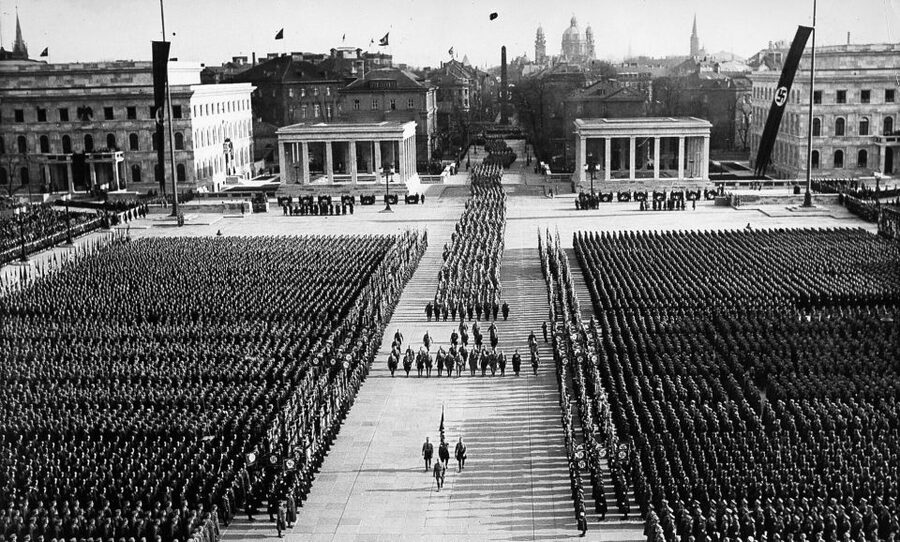
The tour does not limit itself to political halls. It also includes sites tied to religion and public ritual, including squares and places of worship that were misused by the National Socialists.
That piece matters because it shows how ideology can wrap itself around everyday meaning. If you only focus on speeches and parades, you miss how movements try to control the moral and cultural tone of life. Here, you are guided to think about how certain spaces were used beyond their intended purpose.
You also spend time connecting worship sites and public squares to the broader rhythm of the era. When you view these spaces in relation to parades, speeches, and the citywide building boom, the story stops being a single chapter and becomes a system. This is where Alex’s focus on context really helps. He does not just point and move on. He explains why the location mattered to the movement.
And because the tour is time-ordered, you can see how misuse became normalized. Public ritual, architecture, and political messaging braided together. That is the uncomfortable but valuable lesson you should walk away with.
Pacing, Timing, and What to Bring for 2.5 Hours
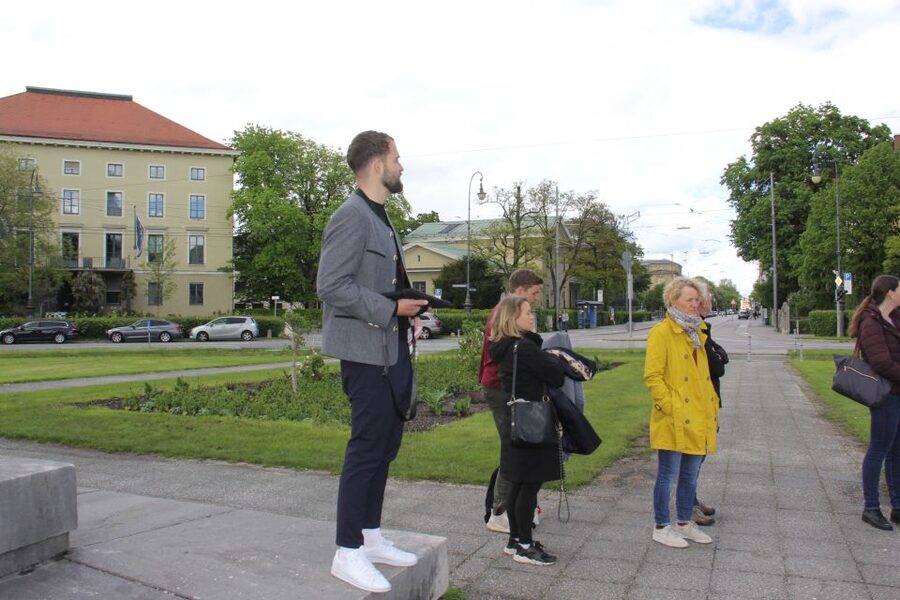
This is a 2.5-hour walking tour, with the expectation that it runs rain or shine. That means comfortable shoes are not optional. The tour is practical in the way it is set up, but you will still be on your feet and you will be outside.
One more detail that matters for comfort is how the guide handles the rhythm. Alex includes short breaks, and the walk is paced so that you can keep up even if you are not a history buff. That is especially important because the content is serious. If the delivery is too fast, you would lose the meaning under the weight of new information.
Also note the tour language. The guide speaks German. If you are not comfortable in German, this could be a dealbreaker. If you are in a group where translation or comprehension is possible, you might still manage, but the tour data clearly lists German as the language.
If you need accessibility support, the tour is wheelchair accessible. That can be a deciding factor for many people, and it is good to see it stated plainly.
Price and Value for $30 in Munich
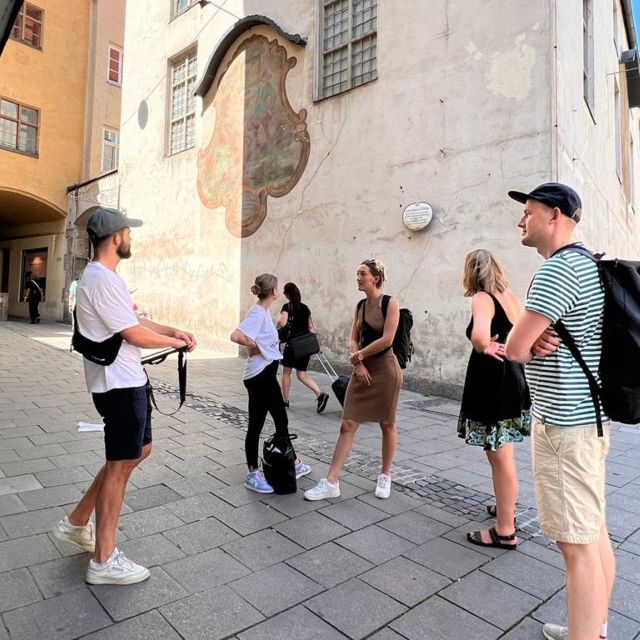
At $30 per person for a fully guided 2.5-hour walk, the value comes from what you get packed into the time. You are not paying only for movement around the city. You are paying for a local guide who connects events to the exact places where they happened and that you can still see.
You also get more than the walk itself. The inclusion list mentions personal recommendations to explore Munich like a local. That sounds small, but it matters. A tour that leaves you with a few good ideas helps you turn the history experience into a fuller trip.
Is it worth it? For me, yes, because the tour is specifically about the rise of Hitler in Munich and the Nazi movement, not just general city sights. The guide’s personal investment also adds real value. Alex is not presenting it like a checklist. His motivation is to help you understand the mechanisms behind the rise and the speed of the dictatorship’s destruction of Europe.
The main value watch-out is the topic. If you are sensitive to dark history, plan for emotional weight. The tour is respectful and structured, but it is still about National Socialism and what happened in Munich.
Who Should Book This Tour (and Who Might Want Another Option)
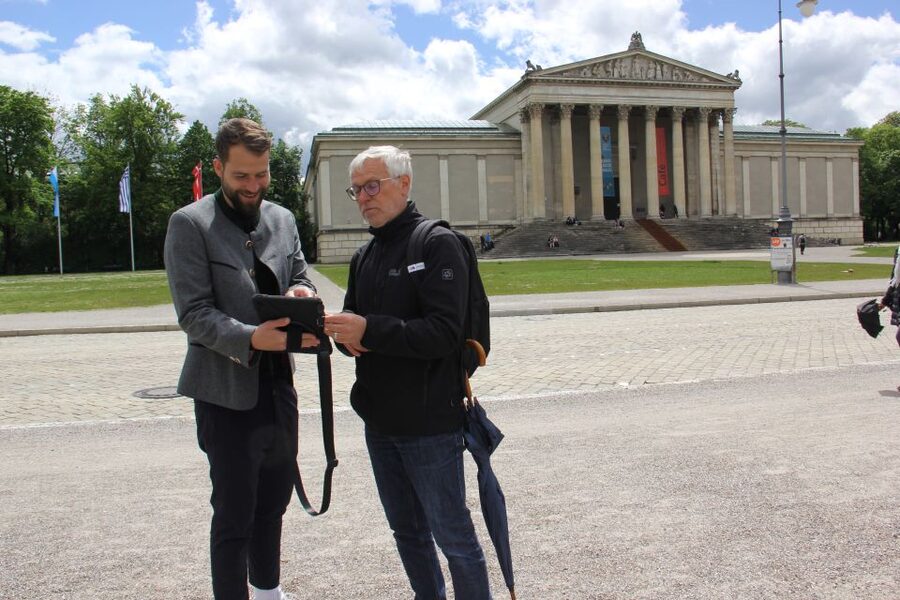
This tour is best for you if you want to understand how a major European city became tied to National Socialism through public events, propaganda building projects, and the way ideology spread. It is also a good fit if you like learning from a local. Alex’s Munich upbringing and his long involvement with the topic make the guidance feel grounded rather than generic.
It is also a smart choice if you are curious but not technical. The tour explicitly welcomes people who are not history professionals. If you want the story in order, with context and a guide who can answer questions, this format is built for that.
You might want to consider another style of tour if you:
- only want light sightseeing and a break from heavy topics
- do not speak German and cannot follow a German-led discussion
- prefer very detailed named stop lists rather than contextual place-based interpretation
Still, if you are open to learning, this walk has a very practical payoff. You will see Munich with different eyes, and you will understand more about how political power can reshape a city, block by block, square by square.
Should You Book This Tour?
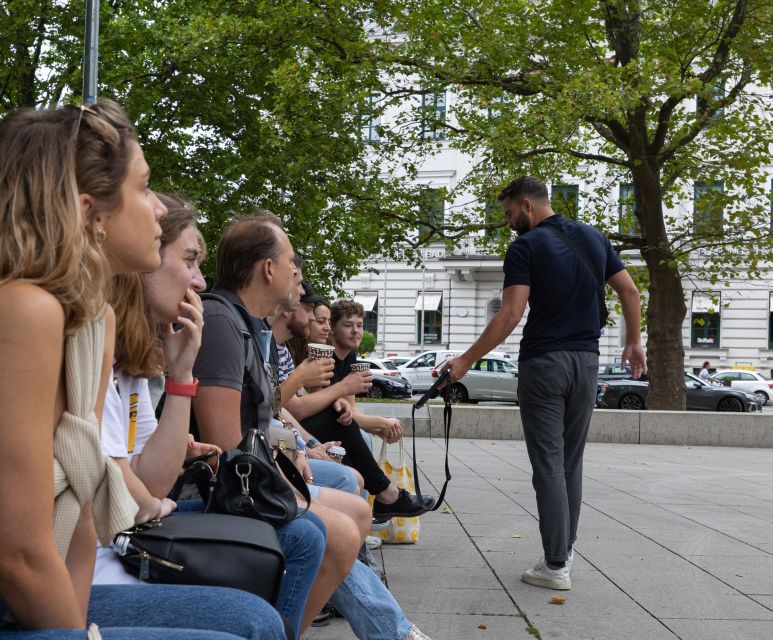
If you are staying in Munich long enough to walk and you want context, I think you should book. Meeting at Marienplatz is easy, the duration is a realistic half morning style, and the price is approachable for what is essentially an expert-led historical route.
What seals the deal for me is the combination of structure and personality. Alex is local, engaged, and tuned to keeping the walk understandable. The tour stays chronological, includes short breaks, and keeps the tone serious without becoming joyless. You learn how Munich moved from being a cultural hub to becoming tied to the movement, and you do it by standing in the spaces where those moments played out.
If you show up with comfortable shoes and the willingness to face difficult history in a calm, guided way, you will get much more than a simple sightseeing walk. You will leave with a clearer mental map of Munich’s role in a dark chapter of Europe.
FAQ
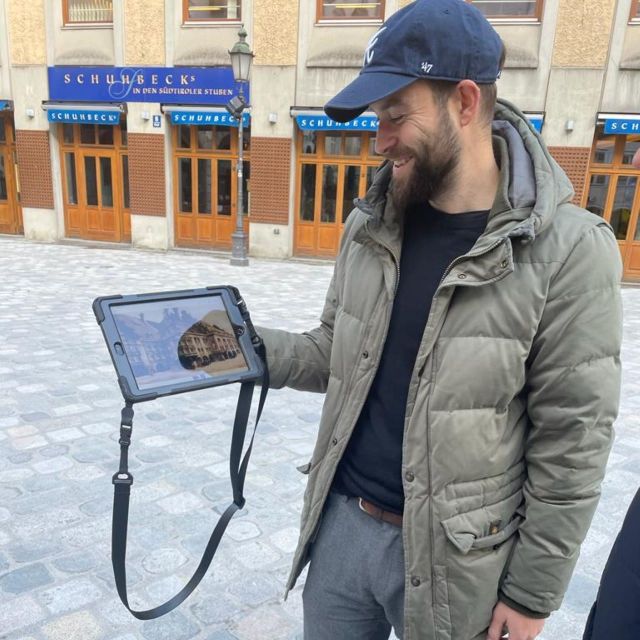
Where is the meeting point for the tour?
You meet your guide in central Munich at Marienplatz, at the Marian Column, the large column with a small golden statue in the middle of the square.
How long is the walking tour?
The tour lasts about 2.5 hours.
How much does it cost?
The price is listed as $30 per person.
What language is the tour guide speaking?
The live tour guide speaks German.
Will the tour run in bad weather?
Yes. The tour takes place rain or shine.
What should I bring?
Wear comfortable shoes since it is a walking tour.
Is there an option to cancel or pay later?
The tour listing offers free cancellation up to 24 hours in advance for a full refund, and it also offers a reserve now and pay later option.
Fresh reviews out of Munich
- Munich: Bulli Tour★ 5.0 · 9 reviews
- Neuschwanstein Castle Small-Group Guided Day Trip from Munich★ 5.0 · 9 reviews
- Private Day Trip from Munich to Eagle’s Nest and Hallstatt★ 4.5 · 9 reviews
- Munich: Highlights Walking Tour with a Guide★ 4.4 · 9 reviews
- From Munich: Private Guided Tour to Rothenburg ob der Tauber★ 5.0 · 9 reviews
- Private and full rickshaw tour in the English Garden★ 4.5 · 10 reviews
- Exploring Munich by Pedicab: Premium Two Hour Tour★ 5.0 · 10 reviews
- Segway Tour Munich Old Town 3 hours★ 4.5 · 10 reviews
Historical Tours, compared.
City History Canal Sightseeing Tour on a Motorboat
Read our review →
Night Watchman Historic Adventure Tour
Read our review →
Browse the lists this tour appears in