
Reviewed · MUSEUMS
Stuttgart: Mercedes-Benz Museum Entry Ticket
The Mercedes-Benz Museum in Stuttgart is interesting because it takes the car story, not just as metal and engines, but as technology plus day-to-day life plus social history. It does this inside a building designed for walking a timeline, not for random wandering.
I really like that you get a free audioguide in 8 languages, so you can follow what you are seeing at your own pace. Second, I love the sheer scale of the collection, with more than 160 vehicles spread across over 16,500 square metres.
One possible drawback is simple: the museum is big. If you only have a short window, you may miss cars and details, and last admission is 5pm.
Key things I’d focus on before you go
- Free audioguide in 8 languages so you can match the museum to your time and your interests
- Legend and Collection routes that shape how you experience the history
- 16,500+ square metres and 160+ vehicles spanning early cars, racing legends, and futuristic concepts
- A multi-room, multi-floor layout that keeps the timeline moving
- Strong for kids and non-car fans with family touches like colouring and puzzles, plus videos on floors
- Wheelchair accessible with step-free access through the main entrance
Ticket Value for $18: What You Really Get

For around $18 per person, this is one of those museum tickets where the price makes sense once you see the size of the place. You are not just paying for a handful of famous cars. You are paying for a whole exhibition built around a long, readable story, with more than 16,500 square metres of space and 160+ vehicles that cover everything from very early automobiles to racing icons and research prototypes.
The other value driver is the included audioguide. Audio matters here because the museum is packed with context: how cars changed technology, how they showed up in everyday life, and how they landed in broader culture. With eight languages available, you spend less time trying to translate on the fly and more time actually understanding why a vehicle matters.
Also, the ticket is designed for flexibility. You can book for a 1-day visit, and the museum is open Tuesday to Sunday, 9am to 6pm (last admission 5pm). If you have plans that might shift, there is free cancellation up to 24 hours in advance. That gives you some breathing room.
More Museums in Stuttgart:
- Stuttgart: Stuttgart Wine Museum Wine Tasting
★ 4.7 · 55 reviews - Berlin: Jewish Museum Berlin Entrance Ticket
★ 4.5 · 8,393 reviews - Berlin: DDR Museum Tickets
★ 4.3 · 3,443 reviews
Entering the Mercedes-Benz Museum: The main entrance and first flow
Your meeting point is straightforward: enter the Mercedes-Benz Museum directly through the main entrance. That matters because the building is structured for guided movement, so you want to start on the right side of the story from the beginning.
The museum also aims to reduce friction. Your ticket includes skip-the-ticket-line style entry, so you do not lose half your arrival energy to paperwork. Once inside, the most practical move is to grab your audioguide right away and get it running before you start climbing or moving between levels. A small thing, but it pays off.
One heads-up from real visits: the audioguide experience is mostly smooth, but there can be moments where headsets do not activate or audio volume feels hard to hear in a louder gallery. So, if you notice a problem, tell staff quickly and try to swap early, not halfway through your favorite section.
Legend vs Collection: Two ways to walk the same museum
This museum is built around two narrative paths: Legend and Collection. Even if you care mostly about cars, choosing a route changes your pacing and what you notice.
- Legend is the story route, built to connect vehicles to the bigger arc of automotive history and why innovations caught on.
- Collection leans into the vehicles as protagonists, helping you see a broad range of types and eras more like a curated gallery journey.
Here is how I’d use this choice in real life: if you want structure and context, pick Legend. If you mainly want to see as many impressive vehicles as possible in the most direct way, Collection can feel like the faster hit.
Either way, the museum’s permanent exhibition runs through twelve rooms across multiple levels. Think of it as a timeline you walk, not a set of disconnected displays.
How the 12 rooms and multiple floors keep the timeline readable
The Mercedes-Benz Museum is famous for layout, and it is not just good design for designers. It helps your brain. Instead of jumping around, you move through a chronological journey.
Many visits clock several hours because you are not just looking at cars. Each stop has explanation that connects engineering, design, and society. In practice, that means you can pause without feeling like you are wasting time. If you read just a few key signs and listen to relevant audioguide segments, the timeline starts to click.
Some helpful patterns to look for as you go:
- Expect sections that group eras and themes, so you can predict what comes next.
- You’ll likely find videos on each floor, which break up the silence and add context without you having to read every label.
- The building’s multi-story structure creates natural momentum. You see a level, then you’re pulled onward to the next.
One practical note: if you are short on time, you will want to commit early to either Legend or Collection. Otherwise, it is easy to start one route and slowly drift into the other, and then you end up sprinting near closing.
Weigh these Stuttgart picks against each other
- Stuttgart 24-Hour Hop-On Hop-Off Sightseeing Bus Tour
★ 4.4 · 1,647 reviews - Stuttgart: Guided Ghost Walking Tour
★ 4.5 · 867 reviews - Tickets SWR Fernsehturm Stuttgart
★ 4.5 · 674 reviews - Stuttgart: Vineyard Tour by Covered Wagon
★ 4.1 · 217 reviews
The vehicles: From first motors to racing machines and tomorrow
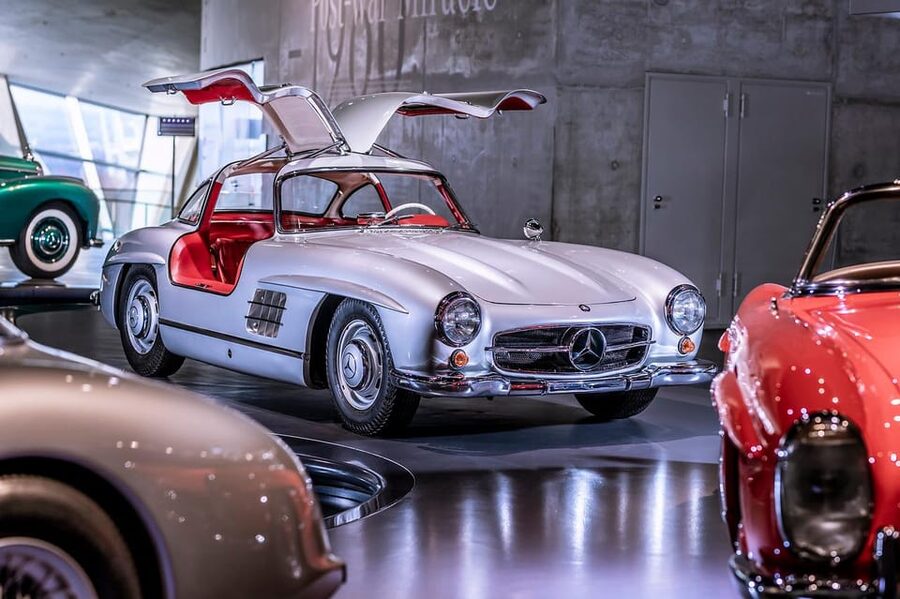
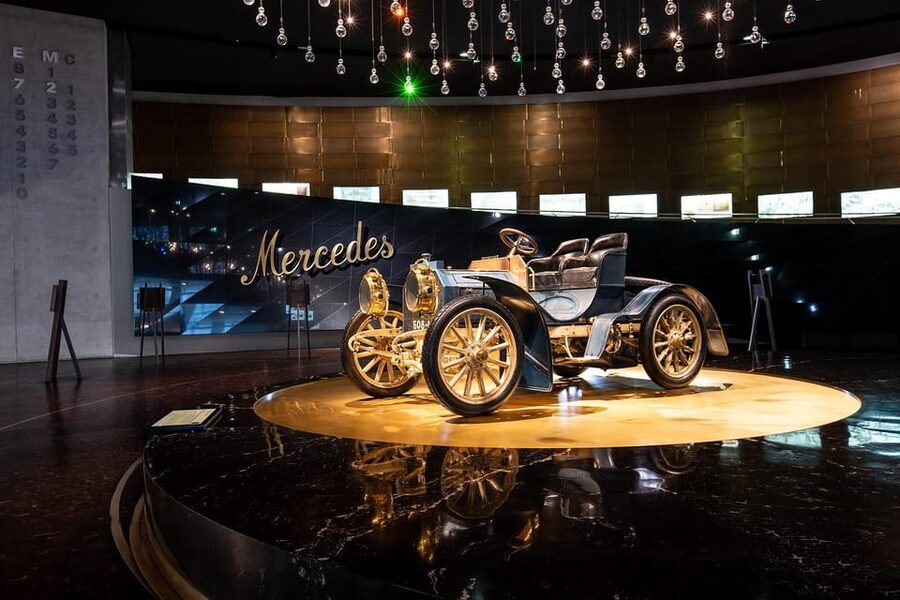
The headline is the vehicle count, but the magic is how wide the range feels. The main protagonists are more than 160 vehicles, including some of the oldest automobiles ever built as well as legendary racing cars and futuristic research vehicles.
This is where car lovers feel instantly rewarded. You can watch engineering evolve in front of you, and the museum does a good job making the vehicles part of a larger story. In plain terms: it shows not just what Mercedes made, but how the broader idea of the automobile developed.
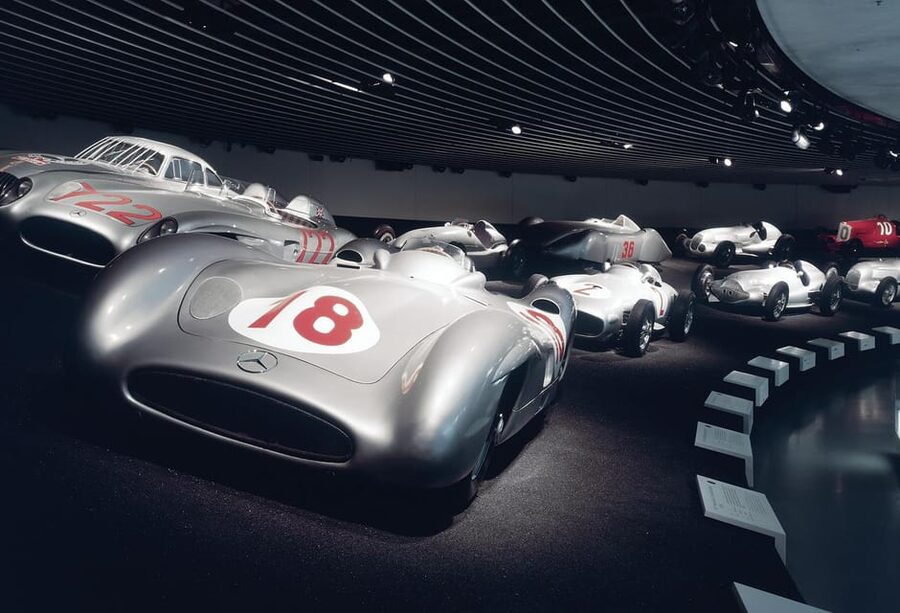
If racing is your thing, plan your route so you do not leave those sections until the end. Several visits note racing cars as a top finish, and that is exactly when time pressure tends to hit. If you want to savor Formula-style icons and performance cars, go earlier in the day when you still have patience to read and listen.
If futuristic concepts pull you in, save energy for the research and concept vehicles. Those are usually where the museum’s message feels clearest: the car is not only a product, it is a lab for new tech.
Beyond cars: Engine history and transport beyond the showroom
One reason this museum works even when you are not a die-hard car person is that it does not treat vehicles as isolated objects. The exhibition connects cars to technology and to everyday systems.
From the way the story is presented, you should expect coverage of engine history and how automotive progress affected more than one kind of transport. Some visitors highlight that the museum also touches on applications beyond standard road cars, including connections you might find in areas like aircraft and trams. Even if you skim those parts, they add a useful layer: cars did not evolve alone.
This also helps families and mixed-interest groups. If one person wants vehicles and another wants stories, the museum is set up so both get something. You do not need everyone to speak fluent horsepower to enjoy it.
Audioguide in 8 languages: How to use it without wasting time
The audioguide is included, and you can choose from German, English, Italian, Spanish, French, Chinese, Japanese, and Russian. That is a lot of language support, and it keeps the visit fair across groups.
To make audio work for you, use a simple rhythm:
- Pick a short segment you care about.
- Listen to the audioguide while you stand near the main display.
- Then walk two stops forward and do the same again.
Do not try to listen to everything start to finish. The museum is large, and your time is limited by closing. The best audio moments are when it explains why a vehicle matters right where you are standing.
If you run into headset problems, act quickly. Some experiences note headsets not functioning and staff support being inconsistent. So if yours fails, do not wait. Ask early and swap.
Timing it right: How many hours you actually need
A typical first visit is not a quick 90-minute squeeze. Even short visits can feel cramped because the museum is broad and the signage plus audio take time.
More realistic time estimates you’ll feel in your bones:
- If you only have about 3 hours, you may not see everything, but you can still have an excellent highlight-focused visit.
- If you have 4 to 5 hours, you can slow down and actually enjoy the structure.
- If you are aiming for a full history walk plus racing plus future concepts, give yourself the longer end.
The museum is open 9am to 6pm, with last admission at 5pm. If you buy a late start ticket, you might be forced into a fast route, especially if you also want breaks and shop time.
A smart strategy: choose your non-negotiables first. Decide what you want most, then build the rest around it. Otherwise, you’ll keep getting pulled into side displays that are genuinely interesting.
Comfort and pacing tips: Rest points, sound, and headset volume
Because the museum is indoors and multi-level, comfort matters. Some visitors wanted more resting points, so treat breaks like part of the plan, not something you do only when you are tired.
Sound can also affect your audioguide experience. One practical complaint is that museum audio can be hard to hear when gallery noise is high, and headset volume can feel too low. Bring earbuds you trust if you prefer personal control, but the official audioguide is already included, so check settings or try a different headset if needed.
If your plan is to take a lot of audio, plan to walk slower. This is one of those museums where speed reduces enjoyment. You end up skipping the story and only catching the visuals.
Family extras and the gift shop payoff
This museum does not ignore kids. You can find special activities for younger children, including colouring, and there are mentions of kids audio options plus puzzles for children. These touches help if you are traveling with a mixed-age group, because the museum has enough structure to keep kids moving between stops rather than melting down at every long sign.
The gift shop also gets a nod. If you like bringing home a tangible memory, this is a good place to do it after the main visit, when you are not too tired to browse.
Price check and best-fit visitors: Who should book
This ticket is a good value if you want:
- A car-focused day with serious context.
- A museum you can do at your own pace with an audioguide.
- A well-organized layout where the history has a clear flow.
It is also a decent pick if you are not a car person, because the exhibition connects cars to broader themes like technology, day-to-day life, and social history. One of the strengths here is that it does not require prior knowledge to enjoy the story.
Where it might not fit: if you only have a short stop in Stuttgart and you hate time pressure, you may find the museum too big for the window. In that case, commit to one route and aim for highlights.
Should you book the Mercedes-Benz Museum entry ticket?
I’d book this if you are in Stuttgart and you can spare at least half a day, ideally 4 to 5 hours. The combination of free audioguide in 8 languages and the sheer exhibition size means you get real value, not just a quick walk past cars.
Skip it only if your time is tight and you prefer very small museums where you can see everything without choosing. If you go in knowing you will pick a route and focus on your must-sees, this ticket can easily turn into one of your most satisfying museum stops in Germany.
FAQ
What is the price of the Mercedes-Benz Museum ticket?
The price is listed as $18 per person.
How long is the experience?
The experience is listed as 1 day.
What is included with the entry ticket?
The ticket includes admission to the Mercedes-Benz Museum exhibition and a free audioguide.
What languages are available for the audioguide?
The audioguide is available in German, English, Italian, Spanish, French, Chinese, Japanese, and Russian.
When is the museum open?
The museum is open Tuesday to Sunday from 9am to 6pm.
What time is last admission?
Last admission is 5pm.
Where do I enter the museum?
You should enter the Mercedes-Benz Museum directly through the main entrance.
Is the museum wheelchair accessible?
Yes, the museum is wheelchair accessible.
Are there any flexible booking options?
Yes. The booking includes free cancellation up to 24 hours in advance for a full refund, and a reserve now & pay later option is available.
Fresh reviews out of Stuttgart
- Stuttgart: entertaining guided tour to old town highlights★ 4.5 · 52 reviews
- Stuttgart: Stuttgart Wine Museum Wine Tasting★ 4.7 · 55 reviews
- Stuttgart: Stand Up Paddling Rental★ 4.6 · 55 reviews
- Stuttgart: Raclette Evening★ 4.5 · 75 reviews
- Stuttgart: Guided Tour of the Stuttgart Market Hall★ 4.6 · 78 reviews
- Stuttgart: Culinary Excursion through Bad Cannstatt★ 4.7 · 82 reviews
- StuttCard – One card, all attractions★ 4.4 · 84 reviews
- Stuttgart: Canadian Canoe Rental★ 4.3 · 107 reviews
Museums, compared.



Skip-the-Line: Berlin Wall Museum at Checkpoint Charlie
Read our review →Browse the lists this tour appears in