Reviewed · BERLIN TOURS
Rickshaw Tours Berlin – Groups of up to 16 people with several rickshaws
Berlin by rickshaw is interesting because it mixes big-city landmarks with street-level views. You move through central Berlin at a slower pace than a bus, so you actually absorb what you are passing, not just snap photos and rush on. I love the private group format up to 16 people, split across several rickshaws, so the tour stays coordinated without feeling like a school assembly.
I also like the extra “make it feel like an occasion” touches. A photographer is included, and guides can add music on request, which can be a fun way to keep the ride light while you are cruising between serious historical places. One possible drawback to plan for is reliability: there are some past reports of no-show or poor communication around pickup times, so if your schedule is tight, confirm the morning of and build in a little buffer.
Key things that make this rickshaw tour work in Berlin
- Private groups up to 16 people move in multiple rickshaws, which helps you cover more ground without big-group chaos
- Photographer included, so you do not have to trade your own phone for awkward selfies
- WiFi on board is handy for maps, messaging, and checking next-stop info while you roll
- Music on request gives you control over the vibe, not a one-size-fits-all soundtrack
- You hit both eras fast, from Brandenburg Gate and the Reichstag story to Cold War checkpoints and Wall memorials
- Sights are mostly “look and learn” stops, so you are saving time for street views, not long museum visits
The rickshaw format: faster than walking, calmer than a bus
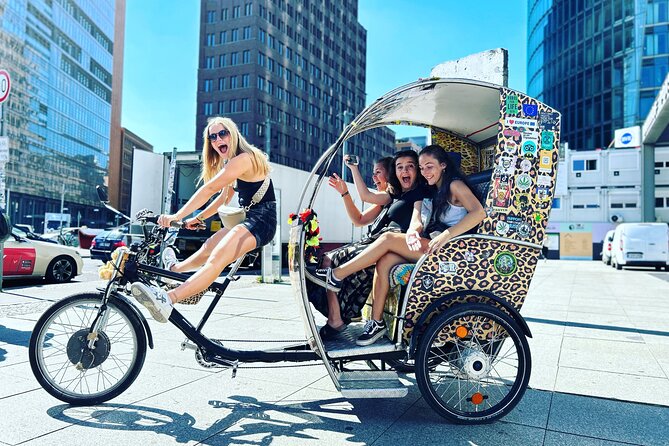
This tour is built around transportation, not line-cutting. The big win is that rickshaws let you glide past major sights with frequent stops for photos and quick context. With groups up to 16, the operator typically assigns several rickshaws, which means fewer people per vehicle and easier movement through tight streets.
You also get private transportation for your group, plus WiFi on board. That sounds small, but in Berlin it helps. You can check directions on the fly, look up the next stop quickly, or share where you are with your travel partner without losing the flow of the ride.
If you want to keep things easy, the tour can be a good match. It is designed for people who want a strong orientation day, without burning out your legs. Just remember, this is still time-limited, so you will not linger for long inside every building.
Weigh these Berlin picks against each other
- Berlin: Reichstag, Dome and Government District Guided Tour
★ 4.7 · 18,288 reviews - Berlin: 1-Hour City Tour by Boat with Guaranteed Seating
★ 4.3 · 16,993 reviews - Berlin: TV Tower Standard Entrance Ticket
★ 4.4 · 15,883 reviews
Pickup near Brandenburg Gate, and why location matters
The meeting point is at Brandenburger Tor, 10117 Berlin. Pickup is included within 2 km from Brandenburg Gate, and beyond that there is an added 10€ per km charge.
That location is smart. Brandenburg Gate is a central anchor, and it also means you start close to several of the most famous “first-day” sights. Practically, you reduce the stress of getting to a far-away starting point, especially if you are already using public transit around Mitte.
Service animals are allowed, and the tour notes that most people can participate. If you are planning around weather, keep an eye on forecasts. The experience requires good weather, and cold or poor conditions can affect whether the tour can run.
Brandenburg Gate: sandstone classicism, and the start of the story
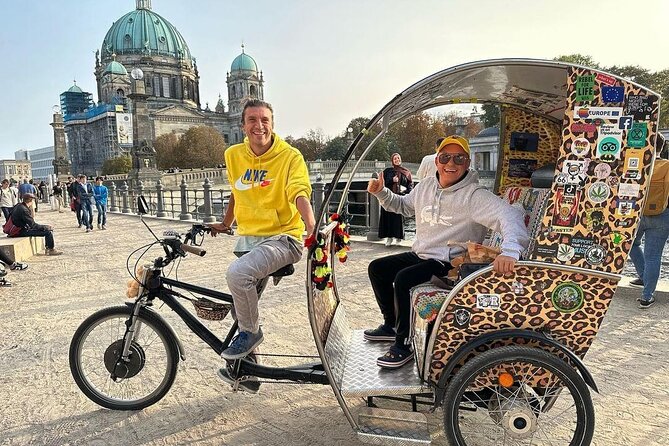
Your tour starts at Brandenburg Gate, the sandstone landmark built from 1788 to 1791. The design is tied to Carl Gotthard Langhans the Elder, who took inspiration from the propylaea at the Athenian Acropolis. This is classicism with a German twist, commissioned by King Friedrich Wilhelm II as a grand architectural finish for the boulevard Unter den Linden.
Why I think this is the right opener: Brandenburg Gate is not just pretty. It is a visual reminder that Berlin’s modern identity was built in layers, with power, ceremony, and politics baked into the stone. Even if you have seen it in photos, seeing it from the street helps you understand scale.
You also get an easy mental reset here. Before the tour turns into tighter Cold War and 20th-century history, you get a calm landmark, wide space, and good photo angles.
Reichstag and Bundestag area: three turning points packed into one building
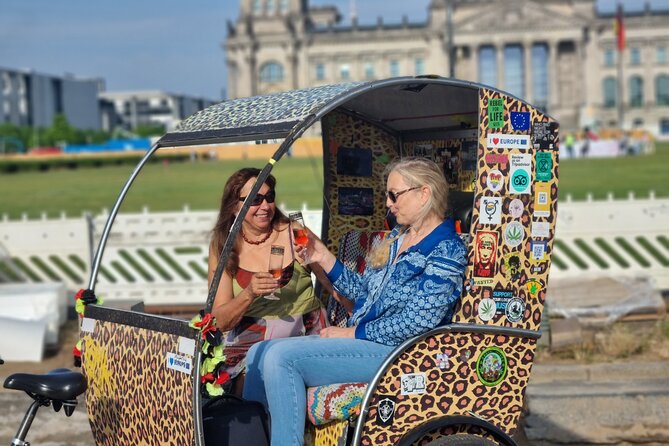
Next up is the Reichstag/Bundestag area, the stage for some of the hardest turning points in German history. The story the tour frames is blunt and fast:
- On November 9, 1918, SPD politician Philipp Scheidemann made a call for the Republic from the west portal balcony.
- On February 27, 1933, the Reichstag fire led to catastrophic consequences and major political shifts.
- On April 30, 1945, a Soviet Union red flag was raised, symbolizing victory over the Third Reich.
If you are the type who likes your history chronological, this stop helps you connect events across decades instead of treating Berlin’s past as a pile of separate plaques.
One practical note: the stop duration is short, and an admission ticket is not included. So even if you want to go inside or access a dome viewpoint, you will need to plan that separately based on what is open when you visit.
Another way to spend a Berlin afternoon:
- Berlin: Boat Tour Along the River Spree
★ 4.4 · 11,252 reviews - Discover Berlin Half-Day Walking Tour
★ 5.0 · 9,624 reviews - Berlin: Government District around the Reichstag Guided Tour
★ 4.7 · 8,447 reviews - Berlin: Reichstag, Plenary Chamber, Cupola & Government Tour
★ 4.6 · 8,422 reviews
The German Chancellery: modern government, built to look transparent
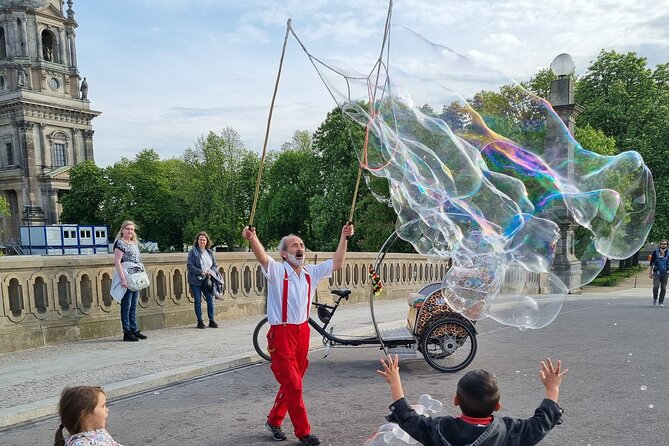
Then you reach the German Chancellery, a 36-meter high administration building rising between and above two five-story wings. What makes it visually interesting is that it is designed for transparency and lightness, with large glass surfaces and cut-out arches breaking up the concrete.
The tour’s quick highlight is the contrast: the north and south walls, plus the east toward the main entrance, include open, glass-heavy elements, while the overall structure still feels solid and authoritative. It is the kind of architecture where you can tell the designers wanted to project openness without losing control.
Again, this is not a long visit. The time here is brief, and admission tickets are not included, so you are mostly getting exterior viewing and context. Still, it is a valuable stop because it shifts you from the memorial-heavy history sites into today’s political Germany.
Tiergarten and the Soviet War Memorial with T-34 tanks

From there you head into the Tiergarten area and stop at the Soviet War Memorial. This one is hard to miss: two T-34 tanks flank a bronze statue of a Red Army soldier carrying his rifle on his shoulder. Behind, there are texts with the names of fallen Soviet soldiers, and farther back are graves of around 2,500 soldiers.
This is the emotional counterweight to all the sightseeing squares. It reminds you that Berlin’s story is not just ideological conflict, it is also casualties, grief, and memory built into public space.
The tour also frames the broader Tiergarten area, including how the park setting evolved over time and how Peter Joseph Lenné helped reshape it in the 1800s into an English-style public park. Even if you are not stopping to walk around, that context helps you understand why this city is full of green patches right next to power centers.
Plan for quiet moments here. If your group is chatty, politely ask your guide to keep the tone down for a minute. It makes the visit land better.
Potsdamer Platz: modern Berlin rebuilt as a district, not just a square
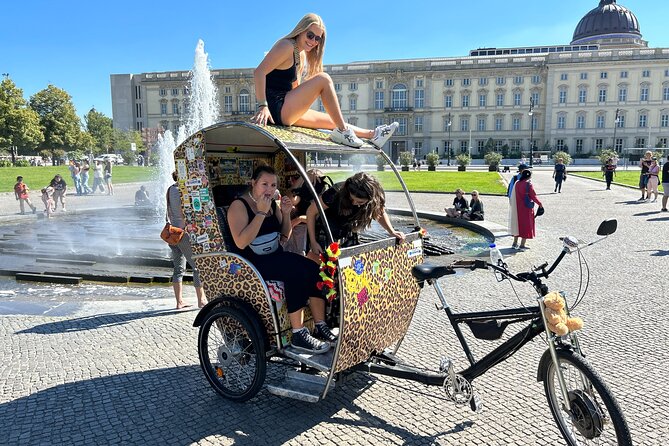
Next is Potsdamer Platz, a spot where Berlin looks like it is constantly in “after” mode. It was planned as an entire district by architects, not just a random intersection, and it got a boost from the mix of cafes, cinemas, and shopping.
The tour notes the urban planning footprint, between Potsdamer Platz and Reichpietschufer. The cafes and arcade spaces are the kind of places where Berliners actually show up, which matters more than the look of a landmark.
This is a good breather stop. After the memorial heaviness, you get a lively city layout. Also, it is a free stop (no admission ticket needed), so you can treat it as a photo pause and get your bearings for the next history cluster.
Topography of Terror and Gropius Bau: Nazi planning and the art-world contrast

Then you get the stop at Topography of Terror. This area is known since 1987 and is described as a central location for planning and control of Nazi crimes. Between 1933 and 1945, key institutions of the Nazi terror apparatus of the SS and police were housed there, including the Secret State Police Office, the Reichsführung SS, and the Reich Security Main Office.
Even with a short stop, it is one of those places that makes the rest of the day hit harder. It is also free to view in the sense that admission is not listed as required here.
Right after that, the tour goes to Gropius Bau. This building is dedicated to cultural history, contemporary art, and photography. Here is your reset, a shift from terror history to the way Berlin keeps processing itself through art.
The catch: admission tickets are not included. If you want to see an exhibit, that becomes a separate ticket plan. If you do not, you still get the architectural “Berlin mix” effect.
Berliner Wall memorial at Bernauer Straße: the escape stories that stick
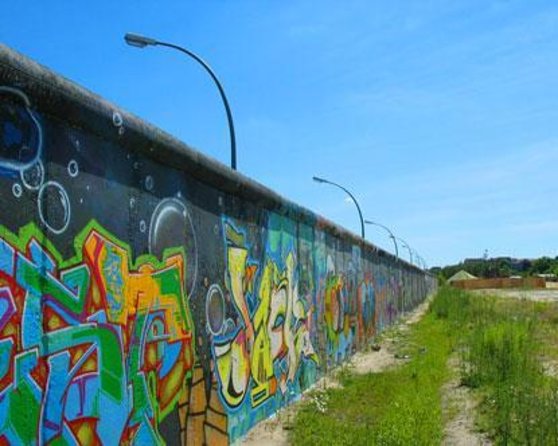
One of the most powerful stops is the Gedenkstätte Berliner Mauer at Bernauer Straße, the official memorial marking the time of the Wall. This is where the boundary separated Wedding (West) and Mitte (East), and it is tied to tragic escape stories. The tour frames it as people in locked-down East Berlin throwing themselves out of windows to reach freedom in the West.
The memorial itself opened on August 13, 1998, at the corner of Ackerstraße. That date matters. It is when Berlin chose to formalize the memory in the public landscape instead of letting it fade into buildings and street patterns.
The stop is short, and admission tickets are not included for this part, so you are mostly getting exterior context and a guided explanation. Still, it is the kind of stop where your group usually goes quiet. That is a feature, not a bug.
Checkpoint Charlie and Friedrichstraße: border drama, then shopping life
Next comes Checkpoint Charlie, described as the most famous border crossing of the three border points controlled by the Americans next to the Glienicke Bridge. The tour also points out the other American-controlled crossing points, including Checkpoint Alpha (Helmstedt-Marienborn) and Checkpoint Bravo (Dreilinden-Drewitz).
And it clarifies something important: the transition was limited mainly to foreigners and certain officials, including employees of the Permanent Representation of the FRG in the GDR and GDR officials.
This stop is free, so you can think of it as a photo and orientation moment, not an expensive museum detour. The emotional impact depends on your guide’s pacing, but even if you only take a few photos, it helps you connect the Cold War map in your head.
Then you roll to Friedrichstraße, noted as a north-south axis and a shopping mile that developed between Checkpoint Charlie and Friedrichstraße station after the fall of the Wall. This is how Berlin transformed border infrastructure into everyday city life. It is a reminder that history is not frozen in place. The street keeps moving.
Gendarmenmarkt, Deutscher Dom, and Konzerthaus: French roots and Schinkel-era drama
As you move into the cultural heart of Mitte, you hit Gendarmenmarkt. The square dates to the late 1600s, planned by Johann Arnold Nering. The tour ties the neighborhood history to French immigrants, especially French Protestants known as Huguenots. It also explains the evolving names of the square over time before it was renamed Gendarmenmarkt in 1799, linked to guard and stable buildings for the Gens d’armes ward regiment.
Gendarmenmarkt is free, and the architecture gives you instant visual variety. It is the kind of stop where you can take photos from different angles without even moving much.
Then the tour includes two big architecture and culture draws nearby:
- Deutscher Dom: a permanent exhibition called Ways, wrong trails, detours, focused on the historical development of liberal parliamentary democracy in Germany across five floors. Admission tickets are not included.
- Konzerthaus am Gendarmenmarkt: a classicist landmark attributed to Karl Friedrich Schinkel. The tour mentions how it began as a comedy house in 1776 and later became the Royal National Theater in 1787. Admission tickets are not included.
If you are short on time, you can still enjoy these stops as exterior and exterior-feel moments. But if you want the exhibits or interior experiences, set aside extra time and separate tickets.
Bebelplatz book burnings and Museum Island: where Berlin remembers with style
Next is Bebelplatz, positioned in the museum center of Berlin. This square shows how brutal ideology can leave a permanent mark even after the buildings and streets change.
On May 10, 1933, Nazis burned over 20,000 books here. The tour names authors connected to what was targeted, including Erich Kästner, the Mann family, Magnus Hirschfeld, Lion Feuchtwanger, Karl Marx, Else Lasker-Schüler, and many others. It also references Heinrich Heine in connection with the quote about people appearing wherever books are burned.
This stop is free, and it is one of the best “pause and think” moments of the day. The trick is to slow your group down for a minute, let the guide finish, then move on when everyone is ready.
Right after, you pass by or stop near Museum Island, the UNESCO-famous cluster between the Spree and the Kupfergraben. The tour frames the ensemble by pointing to the Old Museum, completed in 1830 based on designs by Schinkel.
This is a “you can see it even without tickets” area, but admission tickets are not included. If you want to do museum interiors, plan a separate block later.
Berliner Dom, Lustgarten, and Alexanderplatz: big views at the end
The tour finishes the core sightseeing loop with Berliner Dom, the large cathedral with a striking dome. The tour emphasizes that climbing the dome is a highlight for city views over the Spree, Lustgarten, and Museum Island. Admission tickets are not included, so you will need to buy separately if that climb is on your list.
Then you move into Lustgarten, the pleasure garden between Karl-Liebknecht-Straße, Kupfergraben, the Altes Museum, and Berlin Cathedral. The tour describes double rows with linden trees and a huge red granite bowl, plus a fountain in the middle in summer. Lustgarten is free, and it is also an easy place to sit, reset, and watch the city flow.
Finally, you end at Alexanderplatz, one of Berlin’s liveliest squares historically and today. The tour notes it as the center in the east, and mentions landmarks like the television tower, the world clock, and the fountain of friendship between peoples. Alexanderplatz is free, and it works well as a last stop because there are services around it if you want food, transit, or a quick final viewpoint.
The price question: is $53.10 per person worth it?
At $53.10 per person for a 1 to 4 hour experience, value depends on what you want from Berlin. If your goal is to see a concentrated loop of landmarks quickly, reduce walking, and get story context without arranging multiple guides, this format can feel fair.
You also get real inclusions that justify part of the cost: WiFi on board, private transportation, a tour guide, music on request, and a photographer. Those items are not just “nice to have.” The photographer means fewer tradeoffs, and the transport reduces friction between neighborhoods.
But you need to know where the money does not go. Admission tickets are not included for several major stops, including high-profile options like Reichstag/Bundestag, German Chancellery, Gropius Bau, Deutscher Dom, Konzerthaus, Museum Island components, and Berliner Dom. So do not treat this as a one-price museum ticket. It is mostly an orientation and street-view experience.
My practical rule: if you are museum-heavy, book a separate museum time block after. If you are first-timing or time-crunched, this tour can be your fast primer.
Who this rickshaw tour is best for
This experience fits well if you:
- want a fast Berlin sampler that still includes real context, from Brandenburg Gate to Wall and border-era landmarks
- prefer sitting during a sightseeing day, not constantly walking and regrouping
- value group coordination with multiple rickshaws instead of being stuck in one vehicle
It can also be a good choice for families and teens because the pace stays lively and stops are frequent enough to keep kids interested. In prior experiences, some guides like Leo or Hugo have been singled out for making the tour fun and adjusting to the group.
A fair warning: guides and pickups can be hit or miss
This part is important. Some past bookings reported no-shows, long waits, or trouble reaching the operator. That is the biggest risk with any tour that depends on street pickup timing.
There were also mentions of guide communication styles. One group felt the audio was too loud when music played behind them, and another felt the guide did not provide enough history during the stops. On a rickshaw, that matters, because you only get a few minutes at each location.
So here is how you protect your day:
- arrive early and treat the start time seriously
- ask at the beginning what each person wants to prioritize, then confirm you are aligned on the big stops
- if music is not your thing, request lower volume or no music immediately
Also note that weather can be a factor. The experience requires good weather, and at least some cancellations in cold conditions have been linked to battery problems on powered vehicles.
Should you book this Berlin rickshaw tour?
I think you should book it if you want a guided, street-level loop through Berlin’s major landmarks without exhausting yourself walking. The combination of private group transport, a photographer, and stops that cover both political history and central-city architecture is a strong match for a first visit or a tight schedule.
I would only hesitate if your trip is razor-thin on timing, because there are enough reports of no-shows and pickup problems that I would build a backup plan. If you are flexible, confirm the morning of, and keep admission plans separate, this is a fun, efficient way to see Berlin in motion.
FAQ
FAQ
How long is the rickshaw tour?
The duration is listed as 1 to 4 hours, approximately.
Is the tour offered in English?
Yes, the tour is offered in English.
What is included in the experience?
Included items are WiFi on board, private transportation, music on request, a photographer, and a tour guide.
Do I need tickets for the stops?
Admission tickets are not included for several stops, while some stops are free. For example, the Reichstag/Bundestag and German Chancellery are noted as not including admission, while stops like Topography of Terror and Checkpoint Charlie are noted as free.
Do you offer hotel pickup?
Pickup is included within a 2 km radius from Brandenburg Gate. Pickup beyond that costs 10€ per km.
Is this a private tour?
Yes. It is a private tour/activity, with only your group participating. Groups can be up to 16 people with several rickshaws.
Is the tour suitable in bad weather?
The experience requires good weather. If it is canceled due to poor weather, you will be offered a different date or a full refund.
What is the cancellation window for a full refund?
You can cancel up to 24 hours in advance for a full refund. Cut-off times are based on the experience’s local time.
Fresh reviews out of Berlin
- Berlin Uncensored: A History of Sex & Freedom★ 5.0 · 50 reviews
- Berlin Food & Cultural Tour: Must-Try German & Berliner Classics★ 5.0 · 51 reviews
- English Comedy Show with Pizza and Shots in Central Berlin★ 4.5 · 51 reviews
- Rude Bastards Tour of Berlin★ 4.8 · 51 reviews
- Private Taxi Tour of Berlin East and West and Neighbourhood approx. 4-6h★ 5.0 · 55 reviews
- Rickshaw Sightseeing City Tours Berlin – Rikscha Tours★ 4.0 · 55 reviews
- Berlin: City Highlights Express & Panorama Roof Terrace★ 4.9 · 55 reviews
- Berlin during Nazism – Tour in Italian★ 5.0 · 56 reviews
Berlin Tours, compared.
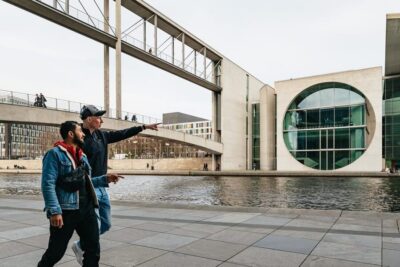
Reichstag, Dome and Government District Guided Tour
Read our review →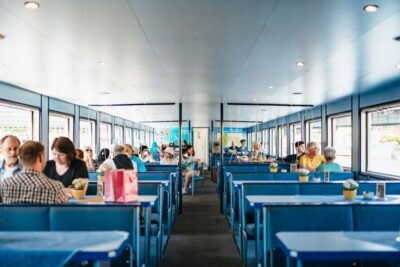
1-Hour City Tour by Boat with Guaranteed Seating
Read our review →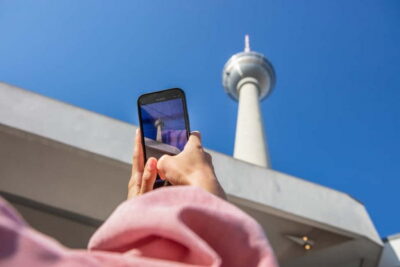
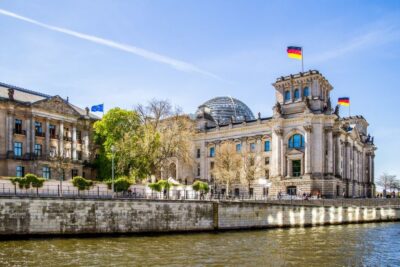
Government District around the Reichstag Guided Tour
Read our review →
Reichstag, Plenary Chamber, Cupola & Government Tour
Read our review →