Reviewed · BERLIN TOURS
Queer Berlin Tour: Birthplace of LGBTQ+ Movements
Berlin’s LGBTQ+ story is not stuck in a museum. It lives in streets, stairways, memorials, and nightlife corners that changed with every regime. This tour is interesting because it connects the big names and turning points you know with the exact places they happened.
I particularly love the focus on Schöneberg as a lived neighborhood, not just a buzzword. I also love how the walk foregrounds Magnus Hirschfeld and the Institute for Sexual Science, including how the Nazis shut it down and burned the library. One possible drawback: this is a real walking tour in the city, so you’ll want comfortable shoes and enough stamina for an urban route.
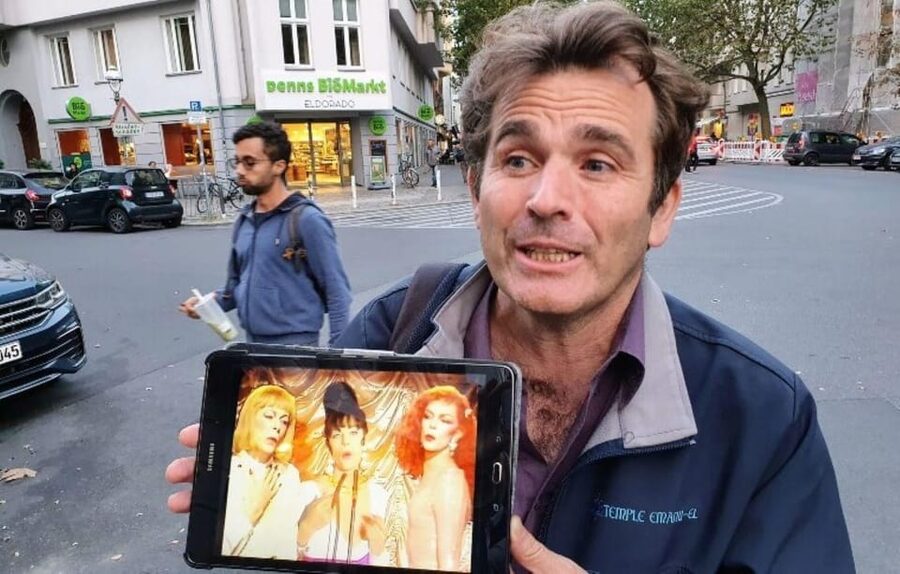
The guides matter here. I’ve seen how Justin and Dan, with different backgrounds and storytelling styles, keep the group engaged with vivid narrative, and in some cases visual aids and music. Small-group format makes it easier to ask questions and hear details without feeling lost in a crowd.
Key stops you will actually remember
- Schöneberg, the world’s first gay ghetto, shown through its street-level landmarks and nightlife legacy
- Magnus Hirschfeld’s Institute for Sexual Science site, including the ideas behind transsexualism and the Institute’s closure in 1933
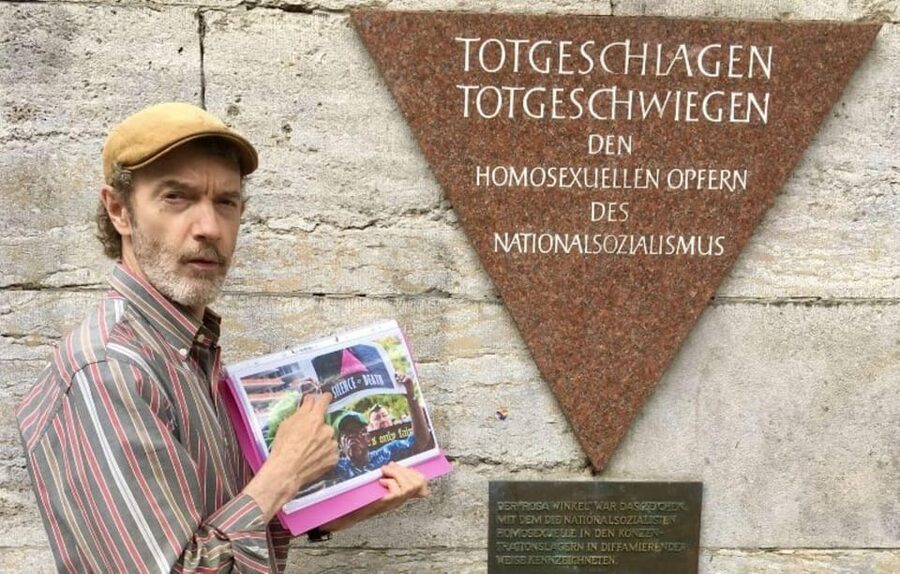
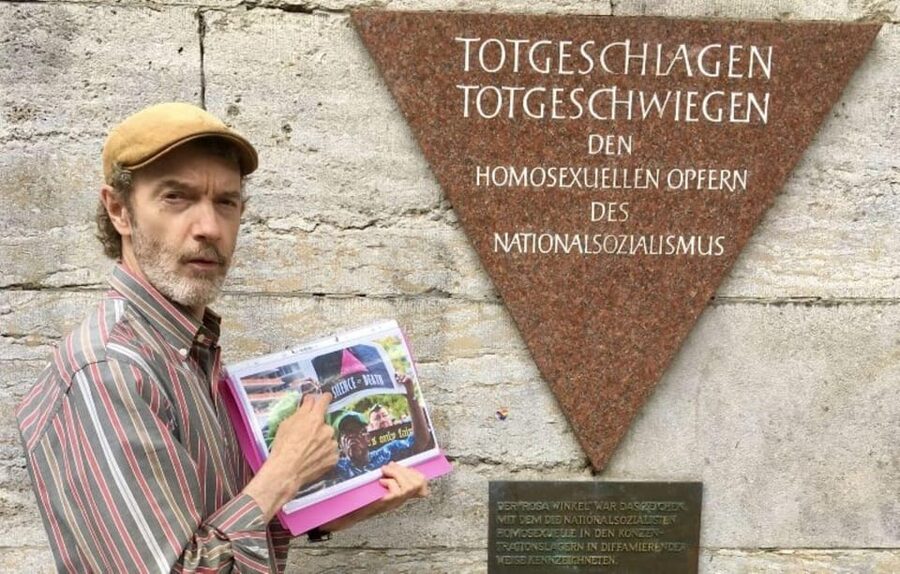
- The Memorial to the Homosexuals Persecuted Under Nazism, grounding the tour in the real cost of persecution
- Tiergarten’s Gay Emancipation Movement monument, a public reminder of activism and recognition
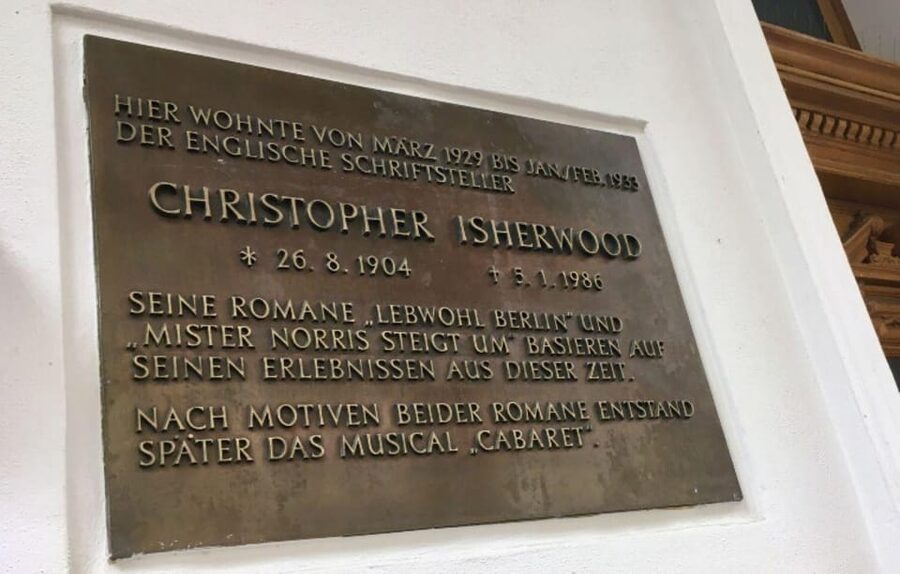
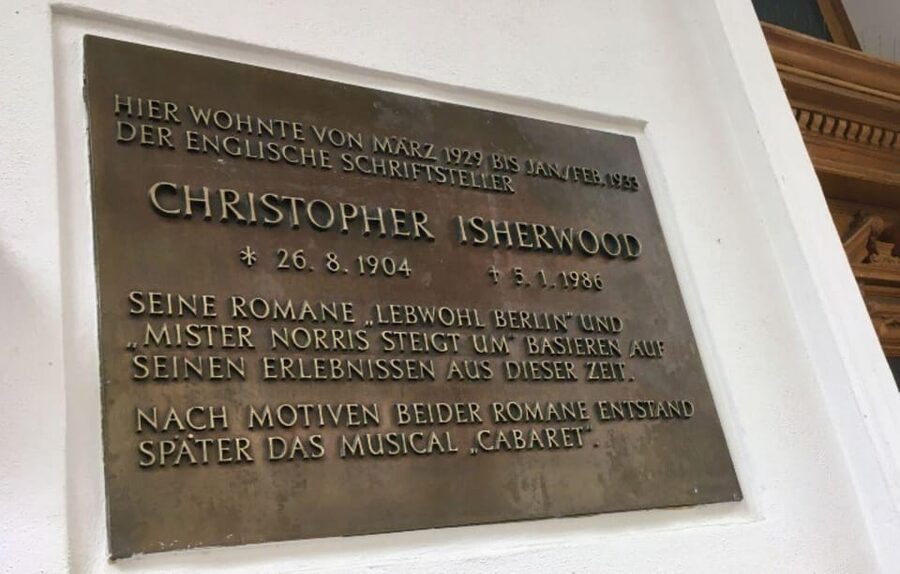
- Christopher Isherwood’s former flat, and how his Weimar-era life fed into the world of Cabaret
- Alexanderplatz in Cold War East Berlin, where the story shifts to life behind the Iron Curtain
Where this tour fits in Berlin, and why the route works
This is a 3-hour walking tour built like a guided timeline you can physically follow. You start in the Schöneberg area, then move through key districts where queer Berlin’s identity kept re-forming in response to politics, violence, and culture. That matters, because Berlin is famous for reinvention, but for LGBTQ+ people, reinvention often came with risk.
The value here is not just that you learn names and dates. You learn how ideas traveled, how communities built spaces for themselves, and how public memory tries to hold onto what was targeted. You also get the contrast between Weimar-era creativity, Nazi-era genocide, post-war rebuilding, and Cold War repression.
If you like walking tours that feel like storytelling with a map in your head, you’ll enjoy this. If you want only casual stops for photos and cafés, it may feel heavier than you expect, because the tour includes persecution and genocide as part of the core narrative.
Weigh these Berlin picks against each other
- Berlin: Reichstag, Dome and Government District Guided Tour
★ 4.7 · 18,288 reviews - Berlin: 1-Hour City Tour by Boat with Guaranteed Seating
★ 4.3 · 16,993 reviews - Berlin: TV Tower Standard Entrance Ticket
★ 4.4 · 15,883 reviews
Nollendorfplatz and the memorial that brings Nazi persecution into focus
The walk begins around Nollendorfplatz, an area closely tied to Berlin’s queer map. From there, you visit the Memorial to the Homosexuals Persecuted Under Nazism. This stop is important for the way it resets the tone. Berlin can be fun, stylish, and night-forward, but the story here refuses to treat persecution as footnote.
You’re not just looking at a monument. You’re being guided to understand what persecution meant in daily life and why memorializing is still necessary. That context pays off later, because you’ll see how the city rebuilt spaces and culture afterward with sharper awareness.
Practical note: memorials and outdoor stops mean the walk can feel emotionally intense. I’d plan this for a day when you can take a moment to slow down, not right before a late evening where you need to bounce to a club scene immediately.
Schöneberg, the “gay ghetto” story, and why neighborhood matters
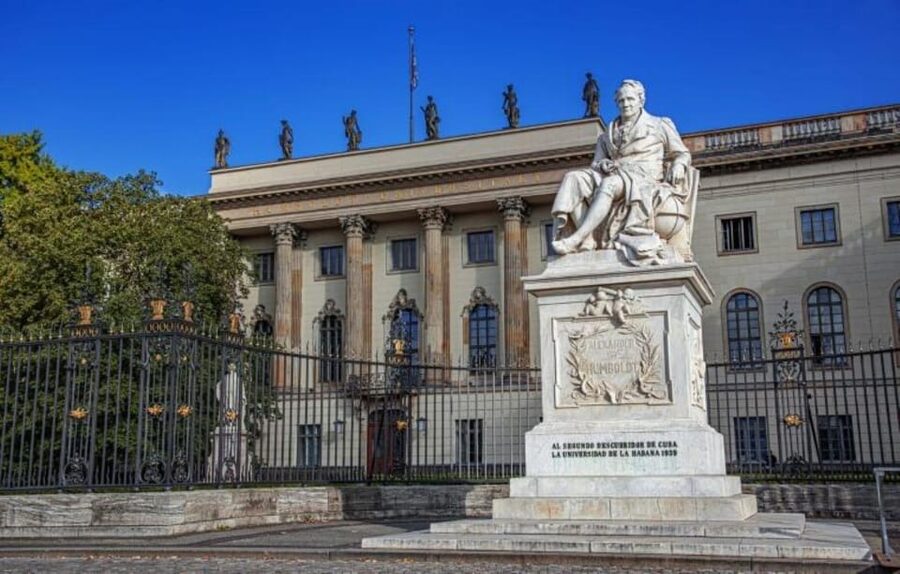
Next comes the heart of the tour: Schöneberg. The tour frames Schöneberg as the world’s first gay ghetto, with a special emphasis on how the neighborhood functioned as community space. That’s a key point. It’s easy to treat “gay ghetto” language as history trivia. Here, the idea is you understand how zoning, visibility, and nightlife interacted, and how lesbian bars and social venues shaped belonging.
The tour also keeps pulling you from general history into specific texture. You pass by places connected to Weimar-era queer culture and later queer nightlife patterns. Even when the sites are modest, the guide links them to larger stories about who gathered where, and why.
One thoughtful element is that the tour doesn’t only praise the past. It shows the cost of visibility, and it explains why certain neighborhoods became safer, then dangerous again, then safer again. That cycle helps you read Berlin’s geography differently.
Hirschfeld’s Institute for Sexual Science and the ideas that triggered backlash
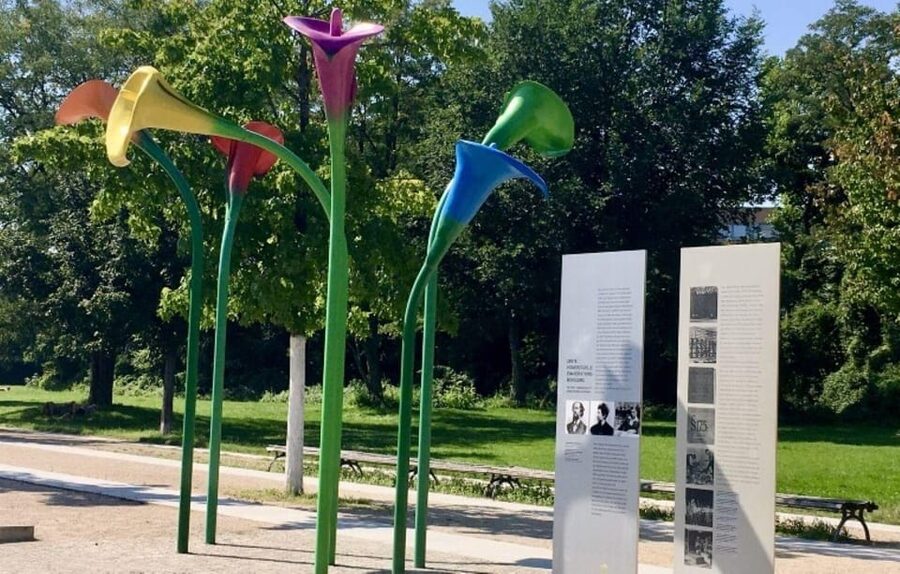
A standout moment in the walk is the site of the Institute for Sexual Science, founded by Magnus Hirschfeld. This is where the tour earns its reputation for depth. Hirschfeld didn’t just advocate for gay rights in broad terms. The tour connects him to scientific and public discourse, including his role in coining the term transsexualism and pushing forward early pro-LGBTQ+ activism.
You’ll also hear about Anders als die Andern (Different from the Others), described as the first pro-gay film in the world in 1919, co-authored by Hirschfeld. Then the story turns sharply: the Nazis closed the Institute in 1933 and burned its library. That detail matters, because it shows how violence targeted not only people, but knowledge itself.
If you’re the kind of person who likes to understand how activism, science, and media shaped each other, this stop will feel like a central chapter, not a side note. And if you’re unsure what “early LGBTQ history in Germany” even means, this is a clear doorway into it.
Tip: this is the kind of stop where good guides pace their explanation. When you arrive, give the guide a second to set the context so you can keep up with the cause-and-effect thread.
Another way to spend a Berlin afternoon:
- Berlin: Boat Tour Along the River Spree
★ 4.4 · 11,252 reviews - Discover Berlin Half-Day Walking Tour
★ 5.0 · 9,624 reviews - Berlin: Government District around the Reichstag Guided Tour
★ 4.7 · 8,447 reviews - Berlin: Reichstag, Plenary Chamber, Cupola & Government Tour
★ 4.6 · 8,422 reviews
The Tiergarten monument for gay emancipation, and what public memory signals
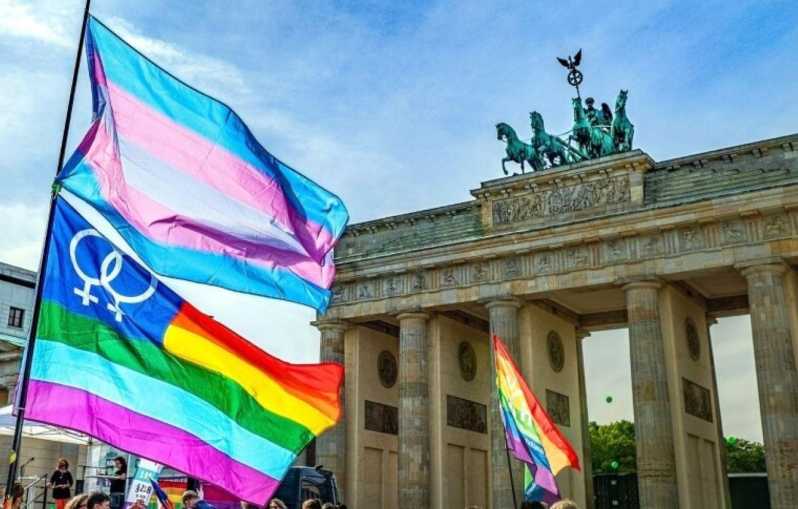
In Tiergarten, the tour includes a colorful monument to the Gay Emancipation Movement. Monuments can feel like background in a city like Berlin, but this one is treated as a living statement. You learn what the movement stood for and how activism translated into public recognition.
This stop also reinforces the tour’s bigger theme: queer Berlin wasn’t just a collection of underground scenes. It left markers in public space, even when those markers could later be contested or erased.
You may also pass by major central sights during the walk, including points people often associate with Berlin’s broader historical narrative, such as the Siegessäule area and a book burning square. The key is how the guide ties those into the queer story, rather than letting them become disconnected sightseeing.
Cabaret connections: Christopher Isherwood, El Dorado, and Ernst Röhm
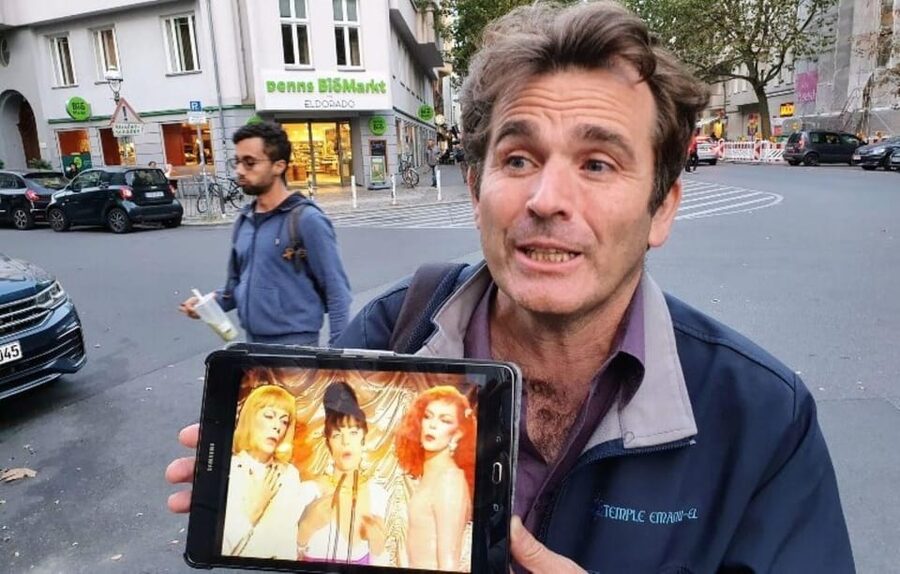
If you’ve ever watched Cabaret and wondered where the inspiration came from, this tour gives you a real sense of place. You visit Christopher Isherwood’s former flat, and you learn how his Weimar-era adventures fed into the artistic world that later became Cabaret. Even if you already know the cultural references, it helps to see them linked to the streets where that era’s characters actually moved.
Then the walk brings you to the former El Dorado Cabaret, connected to performances by Marlene Dietrich. This is a fascinating hinge point because it shows how mainstream culture, queer subculture, and political danger overlapped.
A particularly gripping thread involves Ernst Röhm, described here as the openly gay head of the Sturmabteilung (the Nazi Brown Shirts). The tour explains how he was later executed in the moral purge of 1934, also known as the Night of the Long Knives (Nacht der langen Messer). That part is not thrown in for shock value. It’s used to show the cruel irony of who was allowed proximity to power, and how quickly that could become lethal.
If you want Berlin to make sense as a story of patterns, this segment delivers. It connects music, theatre, celebrity life, and then flips the page into state violence.
Post-WWII Schöneberg and the “rebirth” that came with scars
The tour doesn’t stop at Weimar tragedy. It moves into the post-WWII rebuilding of Schöneberg as a gay-heart of the city. You get the sense that communities returned to form again, using nightlife and gathering spaces as lifelines.
You’ll hear about passing nightclubs people frequented and a rent-boy dive that remains gay-run to this day. The point isn’t the specific label alone. It’s the continuity of queer labor and community management, the practical side of keeping spaces alive over decades.
This is also where you get more of the “today in Berlin” feeling. The guide uses the historical timeline to help you understand why certain areas still have a queer identity, even after major political breakpoints.
Chez Romy Haag, David Bowie, and the story behind Heroes
One of the most memorable pop-culture moments is Chez Romy Haag, iconic in the 70s. You learn about Romy Haag, described as a transgendered actress, singer, and dancer, and about her affair with David Bowie. The tour connects that relationship to Bowie’s song Heroes, tying a personal story to music that reached global audiences.
This stop works on two levels. First, it puts a transgender performer at the center of the narrative, not as a footnote. Second, it shows how Berlin’s queer scene influenced creative output worldwide. If you’re a Bowie fan or you like hearing the less sterile version of inspiration, you’ll feel rewarded here.
Unter den Linden and how early gay Berliners disguised themselves
On the boulevard Unter den Linden, the tour shifts from nightlife landmarks to a different kind of visibility. You meet early gay Berliners in the story, including Frederick the Great and explorer Alexander von Humboldt, and you learn how people disguised their sexuality.
This section matters because it complicates the usual Berlin narrative. It’s not just bars and clubs. It’s court life, exploration, empire, and how secrecy shaped social survival. Even without detailed names or personal letters, the point is clear: sexuality did not exist in a bubble, and social risk shaped behavior.
If you’ve ever felt like LGBTQ history can turn into a set of “locations you should see,” this stop helps correct that. It asks you to think about how people operated under pressure.
Alexanderplatz and Cold War East Berlin’s painful reality
The tour ends at Alexanderplatz, described as the heart of Cold War East Berlin. This is where the emotional weight changes again. You hear about the suffering endured by gays and lesbians behind the Iron Curtain, and the way political systems controlled identity and community.
Alexanderplatz is also a place that feels very Berlin in the present day, which makes the contrast hit harder. You’ll walk away with a more complete mental map, not just of where people partied, but of where people feared the consequences of being seen.
The tour concludes at two drop-off options, one of them at Impala Coffeeshop, which is a handy reference point if you want to grab a drink or snack after you’re done walking.
Price and logistics, and whether it’s worth $153 for 3 hours
At $153 per person for a 3-hour guided walking tour, the price may sound steep if you compare it to a generic free walking loop. But this tour is not generic. You’re paying for an expert-led route that links multiple high-impact sites into one coherent story, including:
- multiple memorial and historical sites, including the Institute for Sexual Science connection
- cultural touchpoints tied to Isherwood, Dietrich, and major Weimar-era themes
- post-war and Cold War chapters that explain why Schöneberg became a queer heart and what it cost to exist
Metro fare is not included, so budget for transit if you’re coming from farther away. Also remember that 3 hours on foot is not just a stroll. If you’re used to moving slowly, plan for that, because the tour’s strength is in the continuity of stops rather than in long breaks.
In terms of group size, the experience can be private or small groups. Reviews strongly suggest that smaller groups make the tour feel more intimate and less rushed. That alone can justify the price if you hate big-group sightseeing.
How to pick the right guide and get more out of the walk
Your guide can shape how much you absorb. Reviews include Justin and Dan, and both styles seem effective, just different.
- Justin is described as loving Berlin and bringing in-depth queer history, with helpful comparisons to familiar history.
- Dan is described as having lived in Berlin before the wall came down, and as using story-specific soundtracks, plus images and music.
If you’re booking, it’s worth checking guide details for language. The tour runs in German and English, and you should expect a live guide with a real narrative voice.
One smart way to get more value is to come with one question in mind. For example: are you more interested in early science and activism, or in nightlife and culture, or in the Cold War story? Ask it at the start so the guide can steer the emphasis naturally as you walk.
Who this tour is best for
This is a great fit if you:
- enjoy history that includes real hardship, not just bright highlights
- like walking tours where each stop has a clear story reason
- want LGBTQ+ Berlin explained through major figures like Hirschfeld, Isherwood, Romy Haag, and connections like Bowie’s Heroes
- prefer small-group discussion over a large-lecture style tour
It’s less ideal if:
- you need a very light, purely scenic tour
- you have mobility limitations that make a walking route hard, since this is explicitly a walking tour
Should you book this Queer Berlin Tour?
Book it if you want more than “checklist Berlin.” You’ll get a route that connects queerness to public memory, science, culture, and political violence, with stops that help you understand why Schöneberg mattered, why Hirschfeld was targeted, and why Alexanderplatz carries a different emotional tone.
I’d especially book it if you care about the links between real places and creative culture, like Cabaret, or the way Berlin’s queer scene shaped music beyond Germany through stories like Bowie and Romy Haag.
If you’re worried about the heaviness, you can still enjoy it, just plan for it. Wear comfortable shoes, bring water, and give the memorial stops the attention they deserve. Then you’ll finish the 3 hours with a Berlin map that feels more honest, and more personal.
FAQ
How long is the tour?
The tour lasts 3 hours.
What does the tour cost?
The price listed is $153 per person.
What languages are offered?
The live tour guide works in German and English.
Is this a walking tour?
Yes, it is a walking tour, so you’ll want comfortable shoes and the ability to walk the full route.
Where does the tour start and end?
The starting or pickup location depends on the option you select. The tour ends with two drop-off locations, including Berlin, Impala Coffeeshop.
Is metro fare included?
No, metro fare is not included.
Can I cancel for a refund?
Yes. You can cancel up to 24 hours in advance for a full refund.
Fresh reviews out of Berlin
- Berlin Uncensored: A History of Sex & Freedom★ 5.0 · 50 reviews
- Berlin Food & Cultural Tour: Must-Try German & Berliner Classics★ 5.0 · 51 reviews
- English Comedy Show with Pizza and Shots in Central Berlin★ 4.5 · 51 reviews
- Rude Bastards Tour of Berlin★ 4.8 · 51 reviews
- Private Taxi Tour of Berlin East and West and Neighbourhood approx. 4-6h★ 5.0 · 55 reviews
- Rickshaw Sightseeing City Tours Berlin – Rikscha Tours★ 4.0 · 55 reviews
- Berlin: City Highlights Express & Panorama Roof Terrace★ 4.9 · 55 reviews
- Berlin during Nazism – Tour in Italian★ 5.0 · 56 reviews
Berlin Tours, compared.
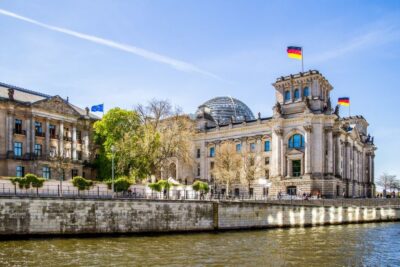
Reichstag, Dome and Government District Guided Tour
Read our review →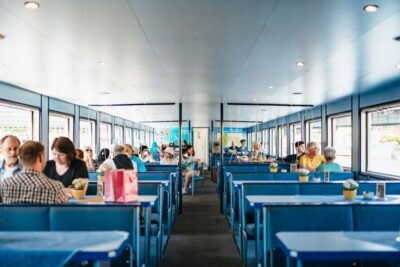
1-Hour City Tour by Boat with Guaranteed Seating
Read our review →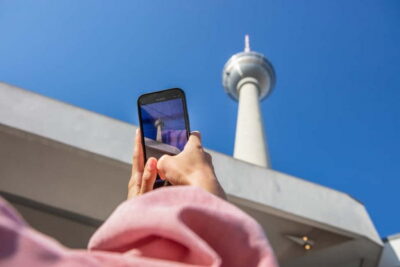
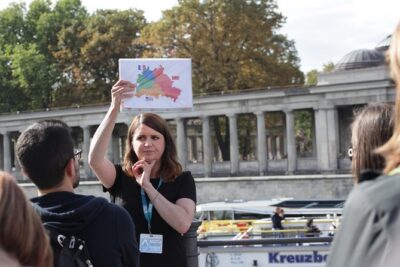
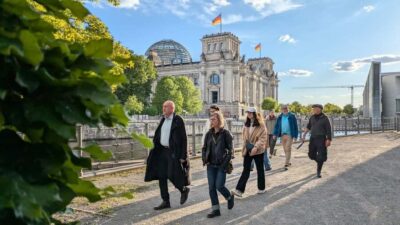
Government District around the Reichstag Guided Tour
Read our review →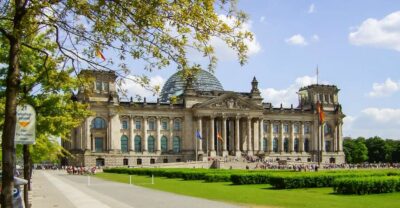
Reichstag, Plenary Chamber, Cupola & Government Tour
Read our review →