Reviewed · BERLIN TOURS
Karl-Marx-Allee Tour: Life and Architecture in East Berlin
Karl-Marx-Allee is one of those places where East Berlin architecture feels political, not decorative. This walking tour is interesting because it turns a long, grand boulevard into a clear story about how ideology shaped buildings, and how people lived inside that plan. I love how the route connects specific landmarks to the big decisions behind them, and I like the two-hour pace that works when you have limited time. One drawback to consider: this is a street and façade walk, so if you want lots of indoor time or deep museum study, you may feel a bit rushed.
What makes it better is the human touch. Martina (a frequent guide for this theme) is known for mixing careful detail with a sense of humor, and the group size stays small, up to 15 people, so you can ask questions without shouting. You’ll get it in English with a mobile ticket, and most people can join, but come ready for walking outdoors since the experience depends on good weather.
Key highlights to look for
- Frankfurter Tor’s symmetry explained, including how the socialist-street plan took shape in the early 1950s
- Hans Scharoun’s postwar ideas at Laubenganghäuser, plus why utopian concepts got shut down by the new regime
- The “prototype” high-rise at Hochhaus an der Weberwiese, and how it turned into propaganda and a Western-architect magnet
- June 17, 1953 at the uprising memorial, with context for why it nearly toppled East Germany
- Café Sibylle’s Stalin connection, including the nearby statue’s history until 1961
- Karl-Marx-bustendenkmal and everyday-life ideology, ending near Strausberger Platz
Why Karl-Marx-Allee Feels Like a Political Blueprint
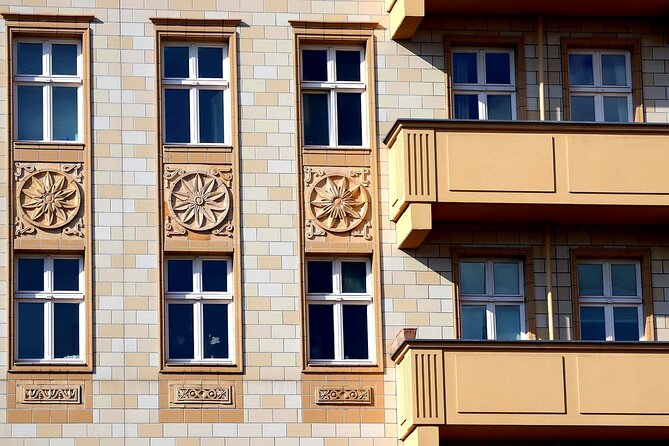
Karl-Marx-Allee looks like a set of cinematic backdrops from a distance. Up close, it’s something more useful: a way to read East Berlin like a document. The buildings here were not just designed for housing. They were designed to send signals, to prove competence, to make a system look permanent. That’s why I think this tour works so well for first-time East Berliners.
You also get a guide who treats the architecture like evidence. That means you’re not just identifying styles. You’re learning what these projects were meant to do, who pushed them, who resisted them, and how the story changed after the Berlin Wall fell. It’s especially strong if your Berlin plan is tight and you want a focused route with a clear beginning and finish.
A practical note: the tour is about two hours and the stops are relatively short. You will cover a lot of ground, but it’s still walking, so wear comfortable shoes and expect to stand and look up often. Also, because it’s outdoors, poor weather can affect whether you go on that day.
Weigh these Berlin picks against each other
- Berlin: Reichstag, Dome and Government District Guided Tour
★ 4.7 · 18,288 reviews - Berlin: 1-Hour City Tour by Boat with Guaranteed Seating
★ 4.3 · 16,993 reviews - Berlin: TV Tower Standard Entrance Ticket
★ 4.4 · 15,883 reviews
Starting at Frankfurter Tor, the Blueprint of Socialist Street Planning
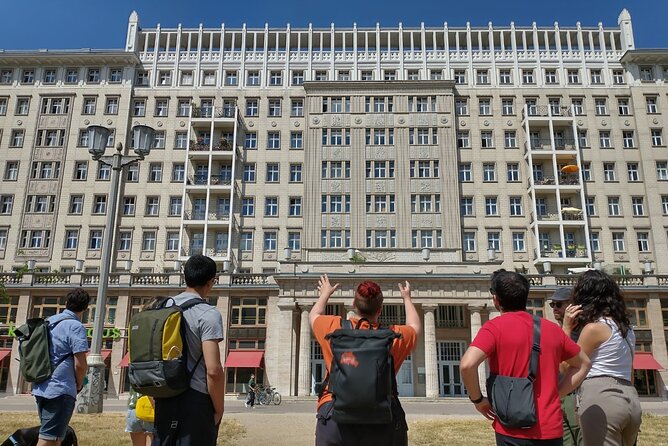
Your walk starts at U Frankfurter Tor, where the first big lesson is symmetry. The Frankfurter Tor towers, built by Herman Henselmann, are a great opener because they immediately show how East Berlin wanted order and power to be visible. The guide will point out how the design is not just pretty geometry. It’s a statement.
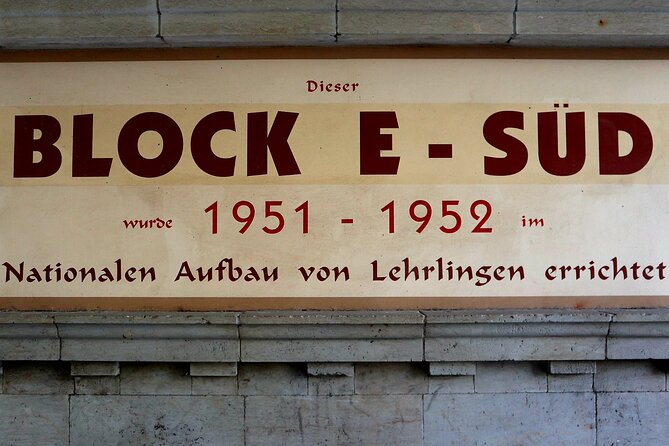
From there, you connect the towers to the plan for what was described as the first socialist street in Germany, shaped in the early 1950s. This is where the tour becomes more than “look at buildings.” You get background on the national rebuilding program that mobilized thousands of volunteers. That detail matters because it helps you understand the human scale behind the stone. This wasn’t only an architect’s idea. It was a social push.
If you’re the type who loves architectural storytelling, Frankfurter Tor is a win. If you prefer quieter stops, you might find this opening a little dense, because the guide front-loads context. Still, it’s a good trade. You start with the framework, so the rest of the route makes more sense.
Expect about 20 minutes at this first stop. Admission to the viewing areas around the landmark is listed as free, so you don’t feel like you’re paying extra to look.
Laubenganghäuser and Hans Scharoun, When Utopia Met Politics
Next comes Laubenganghäuser, a stop that always feels like a curveball in the best way. Instead of pure monumental messaging, you see modernist architecture from the immediate post-WWII years, credited to Hans Scharoun. This is where the tour shows you the tension that defined the era: the desire to rebuild creatively versus the need to control the message.
Scharoun’s ideas are described as utopian urbanist concepts born out of destroyed Berlin. That’s the key phrase to keep in mind. This wasn’t a designer working in a fantasy lab. He was responding to real rubble and real urgency, trying to imagine better living. Then the new East German regime rejected those ideas soon after.
This stop is short, around 15 minutes, and it’s likely the most “architectural theory” moment on the walk. If you want the political story without too much design talk, you might want to pay extra attention here, because the contrast is what makes the rest click.
My advice: stand where the guide points, look for the way people would move through these spaces, and listen for how the story frames modernism as something that was allowed briefly, then curtailed. It’s one of the best stops for seeing how ideology can steer the aesthetics of daily life.
Hochhaus an der Weberwiese, the Prototype That Became Propaganda
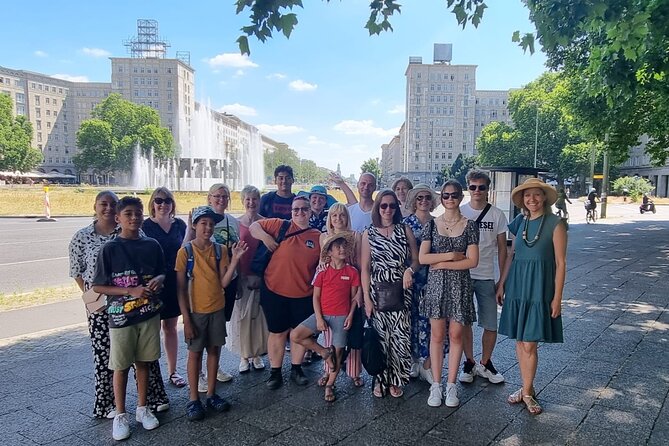
At Hochhaus an der Weberwiese, you get the “prototype” moment. The guide will show you the building that served as a model for the rest of Karl-Marx-Allee. That alone is a strong hook because it means you’re not just watching history. You’re seeing how one project set the tone for many.
You’ll also learn about the building’s early reputation for offering first tenants unprecedented luxury. That detail is important. It undercuts the simplistic view of the period. If the system wanted loyalty, it needed to deliver comfort and prestige, not just slogans.
Then the narrative shifts again. The project becomes a propaganda tool, and it turns into a magnet for Western architects. That part can be surprising if your mental picture of the Cold War is mostly about barriers. Here, the walls of ideology seem to pull in attention from the outside world, at least architecturally.
This stop is about 20 minutes. It’s a great time to look closely at massing and proportions, and to think about how “luxury” is communicated in architecture. The guide’s job is to translate that language for you, so you’re not guessing.
Admission around the stop is listed as free, so you’re paying for the interpretation, not entry fees.
Another way to spend a Berlin afternoon:
- Berlin: Boat Tour Along the River Spree
★ 4.4 · 11,252 reviews - Discover Berlin Half-Day Walking Tour
★ 5.0 · 9,624 reviews - Berlin: Government District around the Reichstag Guided Tour
★ 4.7 · 8,447 reviews - Berlin: Reichstag, Plenary Chamber, Cupola & Government Tour
★ 4.6 · 8,422 reviews
June 17, 1953 at the Arbeiteraufstand Memorial, When Dissent Hit the System
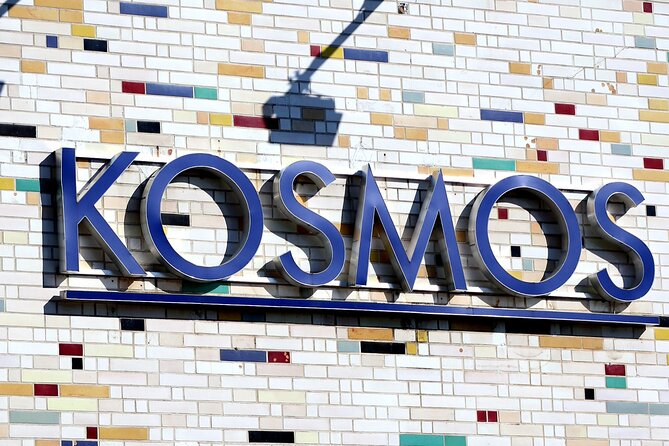
The tour doesn’t avoid the tough chapter. At the Gedenkstätte Arbeiteraufstand 17 Juni 1953, you visit the place tied to the mass uprising that started with disgruntled workers in June 1953. The guide explains how the unrest nearly toppled the socialist government in East Germany.
This is heavy subject matter, and the value of a guide here is pacing and clarity. It’s easy to stand at a monument and feel like you’re looking at symbols without understanding what the symbol is answering. The tour helps you connect the uprising to why the regime feared it and how quickly “everyday dissatisfaction” can become political crisis.
You’ll spend about 20 minutes at this stop. The listed monument here is controversial, and that word is worth respecting. The tour doesn’t ask you to swallow one simple interpretation. It helps you see why a memorial can still be contested long after the events are over.
If you feel emotionally affected, that’s normal. The best way to use this stop is to take a moment before listening to think about how governments use both celebration and warning in public space.
Café Sibylle and Stalin-Era Clues, How Symbols Shifted in Plain Sight
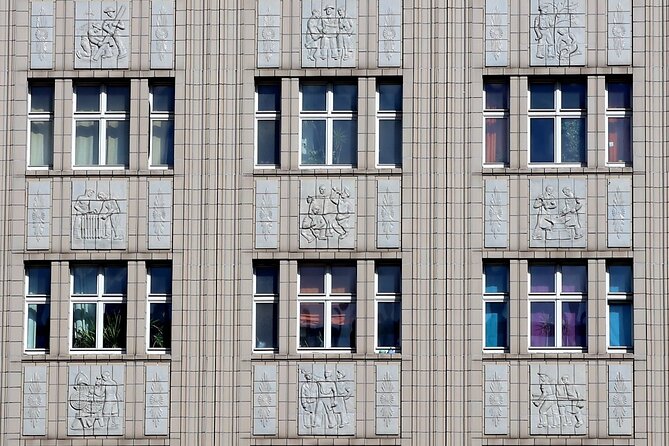
Then the tour gets clever in a different way: it uses a café to talk about power. At Café Sibylle, you learn how one of the most exclusive cafés on Karl-Marx-Allee days is connected to the statue of Joseph Stalin, the Soviet dictator.
The statue stood nearby until 1961. That detail matters because it shows how quickly public symbolism can change once politics shifts. A café is not a monument, but it still lives in the same world of status and messaging. If you’re trying to understand East Berlin as lived experience, this kind of stop helps.
This segment is short, around 15 minutes. It might be the most “human scale” moment on the walk, because cafés are places where people gather. Even though the guide is talking about political symbolism, you end up thinking about who would have felt welcome, who would have watched from the margins, and how daily routines were shaped by what the city put on display.
No admission fees are listed for this stop, and you’ll likely appreciate that the tour brings history into a place you can imagine using today. Even if you do not stop for a drink, the stop gives you a fresh lens for reading the boulevard.
Karl-Marx Bust and Strausberger Platz, Ideology Meets After the Wall
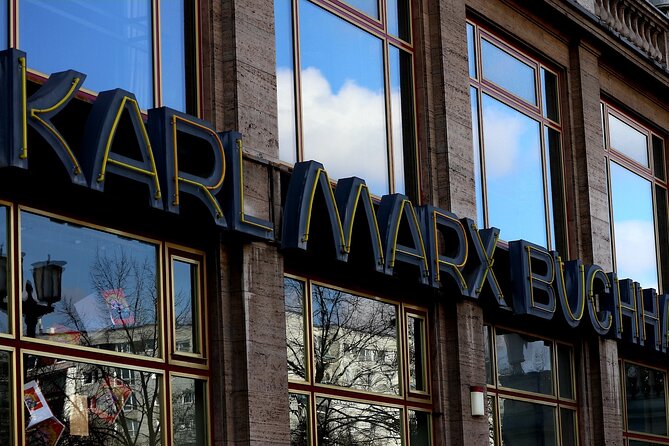
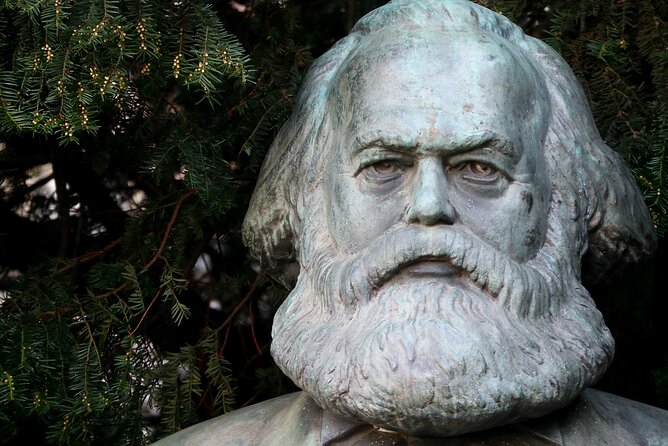
Next is Karl-marx-bustendenkmal, where the tour connects socialist ideology to everyday life. The guide talks about the author of the Communist Manifesto and how that ideology shaped the way East Berliners experienced their world.
This is another quick stop at about 15 minutes, but it’s designed to remind you that ideology wasn’t only expressed through big buildings. It was expressed through what people were told to believe about work, society, and the future. The guide’s explanations help you connect personal life to public messaging without turning it into a lecture.
Finally, you finish at Strausberger Platz. You’ll see another splendid example of Hermann Henselmann’s style, and you’ll hear stories about Karl-Marx-Allee after the fall of the Berlin Wall and what the area is like today. The closing here is useful because it keeps you from ending on a dead past. You leave with a sense of continuity, how the boulevard survived political change, and how its identity evolved.
The tour ends at Strausberger Pl, on the eastern side of the Strausberger Platz roundabout, about a 10-minute walk from Alexanderplatz. That location makes it easy to keep going with the rest of your Berlin day.
Value, Timing, and How to Get the Most Out of Your 2 Hours
This tour costs $30.01 per person for around two hours with a local expert guide. When you think about what you’re buying, it’s not the “right to walk.” It’s the ability to interpret a very specific kind of architecture that can look like generic big-city planning until someone explains the political system behind it.
The small group size, maximum 15 travelers, is part of why it feels personal. With fewer people, you can hear the guide clearly and actually follow the logic from stop to stop. The tour is offered in English, uses a mobile ticket, and provides confirmation at booking time. Service animals are allowed, and it’s near public transportation, which makes it easier to fit into a multi-day plan.
One more practical point: each listed stop shows admission ticket free, so the cost stays focused on the guide and your time. That’s good value if you’re already spending your sightseeing budget on bigger museums elsewhere.
My best advice for enjoying the walk:
- Look up often. The messages in this style of architecture live in height, lines, and spacing.
- Bring your curiosity about politics, but let the guide do the heavy lifting of names and dates.
- If your Berlin itinerary includes museums on the same day, schedule this before you get museum-fatigued. It gives your day a human pace and a street-level perspective.
If weather is bad, be ready to reschedule. This experience requires good weather, and if it gets canceled for that reason, you should be offered a different date or a full refund.
Should You Book This Karl-Marx-Allee Walking Tour?
Book it if you want a fast, focused way to understand East Berlin architecture as a political story, not just a photo stop. I especially recommend it if your interests include Cold War history, how ideology shapes cities, and how one boulevard like Karl-Marx-Allee can tell multiple chapters at once, from early 1950s rebuilding to the June 17, 1953 uprising and the shifting symbolism around Stalin.
Skip it or consider pairing it with something longer if you crave long indoor visits or you dislike walking and standing for short bursts. Also, if you already know every detail about Stalinallee and the key buildings, you might still enjoy the guide’s storytelling, but the short timing may limit how much new information you can absorb.
For most people planning a first trip to Berlin, this is a strong use of time. You end with a much sharper read of what you’re seeing, and you’ll be able to look at Karl-Marx-Allee with your own eyes, not just in the background of your day.
FAQ
How long is the Karl-Marx-Allee tour?
The tour lasts about 2 hours.
What is the price per person?
The price is $30.01 per person.
Is the tour offered in English?
Yes, it is offered in English.
Where do I meet the guide, and where does the tour end?
Start: U Frankfurter Tor, 10243 Berlin.
End: Strausberger Pl, 10243 Berlin, on the eastern side of the Strausberger Platz roundabout, about a 10-minute walk from Alexanderplatz.
Is a mobile ticket provided?
Yes, the tour includes a mobile ticket.
How many people are in the group?
The tour has a maximum of 15 travelers.
Do I need admission tickets for the stops?
All listed stops show admission ticket free.
What happens if the weather is poor?
This experience requires good weather. If it is canceled due to poor weather, you will be offered a different date or a full refund.
Can I cancel for a full refund?
Yes. You can cancel up to 24 hours in advance for a full refund. If you cancel less than 24 hours before the start time, the amount paid is not refunded.
Fresh reviews out of Berlin
- Gastro Tour with Klaus though the Wrangelkiez, Kreuzberg★ 5.0 · 9 reviews
- Wall Tour Berlin – Fates, Heroes & Love Stories★ 4.0 · 9 reviews
- Berlin City Tour with Hotel pick up and Drop off★ 4.0 · 9 reviews
- Berlin Private Street Art Tour – Off The Grid★ 5.0 · 9 reviews
- Romantic Berlin Rickshaw City and Photo Tour – incl. pick-up★ 4.0 · 9 reviews
- Quatsch Comedy Club Berlin: Quatsch Comedy Hot Shot★ 4.8 · 9 reviews
- Berlin Urbex Adventure and History Tour★ 5.0 · 9 reviews
- Stag Party Berlin: Celebration for Your Bachelor Party★ 3.4 · 9 reviews
Berlin Tours, compared.
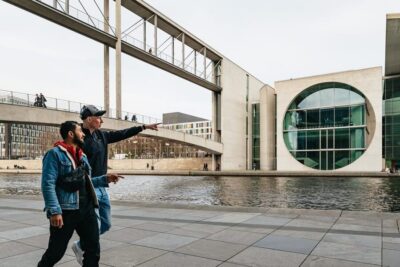
Reichstag, Dome and Government District Guided Tour
Read our review →
1-Hour City Tour by Boat with Guaranteed Seating
Read our review →
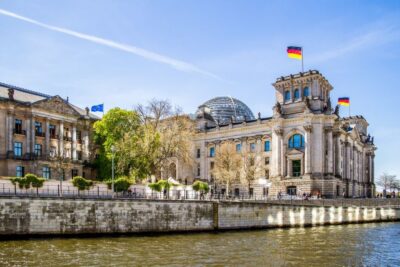
Government District around the Reichstag Guided Tour
Read our review →
Reichstag, Plenary Chamber, Cupola & Government Tour
Read our review →