Reviewed · BERLIN TOURS
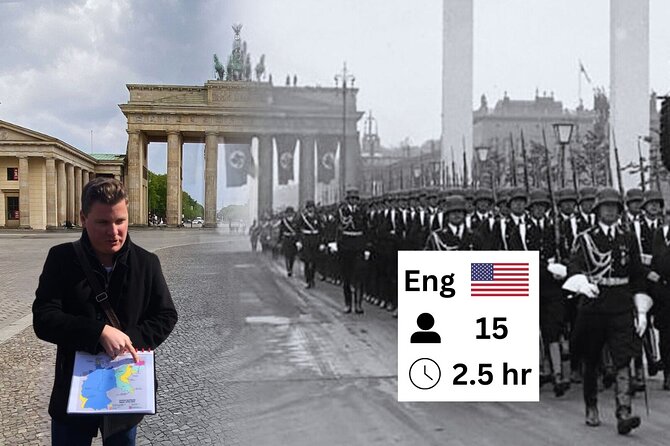
Hitler’s Berlin – the rise and fall (Small Group)
Berlin can handle hard history, and this small-group walking tour is built for it. You move through the city on foot and see how propaganda, politics, and violence linked up in real places, not just in textbooks. The best part is how the route forces you to slow down at the sites that demand reflection.
I love the mix of memorials plus power centers, so you learn the full arc from ideology to catastrophe. I also like the way guides such as Scott, Johan, Jochen, and Roshana keep the pace human, with Q&A and built-in moments to think, not just march along. The main drawback to consider is that it is a lot of detail in a short time, so you’ll want comfy shoes and patience for a heavy subject.
Key things to know before you go
- Small group, personal pace with time for questions instead of a fast herd
- Memorial-first sequencing that includes Sinti and Roma, Jews, and LGBTQ+ victims
- Power and collapse in one walk from the Reichstag to the area of the Führerbunker
- Then and Now photos and historic maps that help you see what changed
- A built-in reset stop at Topography of Terror for tea or coffee and restrooms
- All-weather operation means you should plan for cold, rain, and wind
Hitler’s Berlin walking tour: why this route works
This is not a tour that tries to shock you for its own sake. It is a steady, sensible route through Berlin’s Nazi-era sites, stitched together by explanations that connect cause and effect. You get the rise, you get the mechanism, and you see how the system collapses.
You’ll also notice something quietly powerful about the setup: Berlin does not hide these places. The tour starts right at Brandenburg Gate, then walks toward sites that show how quickly normal political life can be twisted by extremist ideology. For a first-time visitor, that is a fast way to get context before you bounce to museums and viewpoints.
The small-group size matters. With a cap of 15 people, the guide can answer the questions that pop up when you see something specific and unsettling. It also helps the pace, because multiple stops are only 5 to 15 minutes, and that is just enough time to understand what you are seeing without dragging.
Weigh these Berlin picks against each other
- Berlin: Reichstag, Dome and Government District Guided Tour
★ 4.7 · 18,288 reviews - Berlin: 1-Hour City Tour by Boat with Guaranteed Seating
★ 4.3 · 16,993 reviews - Berlin: TV Tower Standard Entrance Ticket
★ 4.4 · 15,883 reviews
Meeting at Brandenburg Gate, then walking into the Nazi rise and fall
You meet at Brandenburg Gate, Pariser Platz. That location is a useful starting point because it sets you in the middle of Berlin’s political and symbolic geography from the start. From there, the tour moves from national politics to the places where persecution and state terror left a physical mark.
The total time is about 2 hours 30 minutes, and the tour runs in all weather. That matters because you will not get a long break to warm up or sit down. In one of the more common cautions, people point out that there’s a lot of information packed in, and you might wish for more listening time. The good news is that the route stays compact, and many stops are short walk-ins rather than long hikes.
Also, since this is offered in English, you can count on the guide narration to carry the story line clearly. You’ll get a mobile ticket, which is simple on the day, especially in cold or rainy weather.
Stop 1: Memorial to the Sinti and Roma victims, and why the tour starts there
The tour begins at the Memorial to the Sinti and Roma Victims of National Socialism. Starting here is a big deal, because it reminds you early that the Holocaust was not limited to one group, and that Nazi racial ideology had multiple targets.
You’ll learn about the Roma and Sinti victims of the Third Reich and the brutal social philosophies that later fed into the Holocaust. This stop sets a tone for the whole walk: the guide doesn’t treat these sites as isolated tragedies. Instead, they’re explained as part of a worldview that justified cruelty and violence as policy.
Time is about 10 minutes. That sounds short, but it works because you’re not trying to read every inscription like a museum exhibit. The guide’s role is key here, turning what could be overwhelming text into a clear, human explanation you can carry to the next sites.
Stop 2: Reichstag building, how the Nazi Party climbed to power
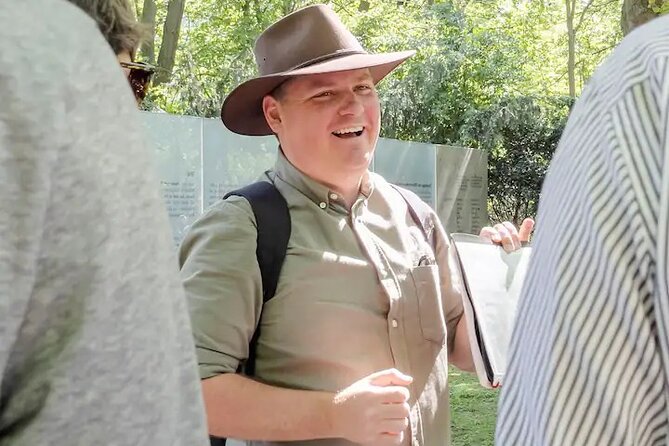
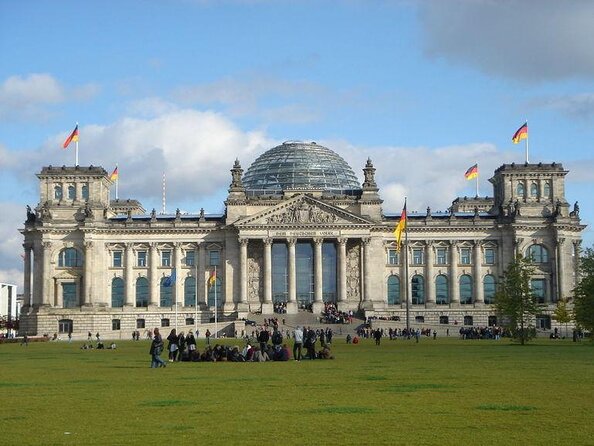
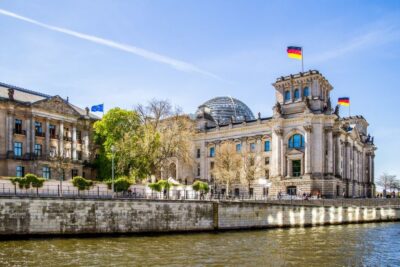
Next comes the Reichstag Building, home of Germany’s parliament. This stop changes the mood in a necessary way. Instead of focusing only on what happened in the shadows, you look at the public face of politics.
You’ll learn how the Nazi Party were elected to power and how Hitler became Führer of Germany. That’s the kind of historical link that’s easy to miss if you only think of Nazi rule as something sudden. Here, the guide connects political steps to the larger takeover, which helps you understand how democracies can be distorted.
You spend about 15 minutes at this stop, so you’ll get enough time to understand the storyline without getting stuck. Admission is listed as free for the experience, so you’re not paying extra just to stand near the building and hear the context.
Another way to spend a Berlin afternoon:
- Berlin: Boat Tour Along the River Spree
★ 4.4 · 11,252 reviews - Discover Berlin Half-Day Walking Tour
★ 5.0 · 9,624 reviews - Berlin: Government District around the Reichstag Guided Tour
★ 4.7 · 8,447 reviews - Berlin: Reichstag, Plenary Chamber, Cupola & Government Tour
★ 4.6 · 8,422 reviews
Stop 3: Soviet Memorial Tiergarten and the reality after the fighting
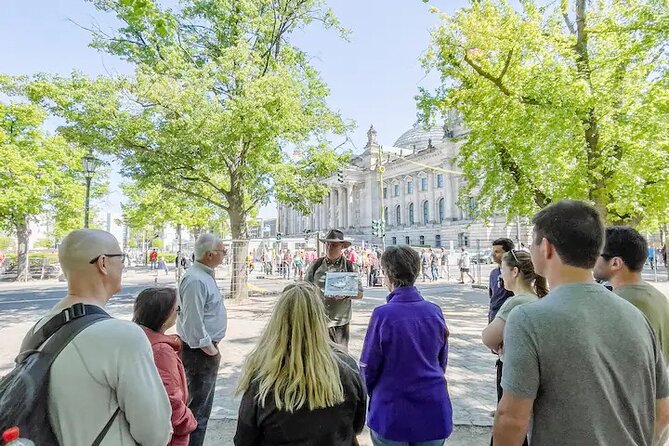
From there, the walk moves to the Soviet Memorial in Tiergarten. This is where World War II stops being about ideology and starts being about the physical cost.
The guide discusses the Battle of Berlin as one of the war’s bloodiest operations and explains how post-war remembrance took shape. You’ll be standing in a place tied to the aftermath, not just the headlines.
This stop is about 15 minutes. One practical point: it can feel like a mood swing, shifting from Nazi-era persecution to the brutal fighting that followed. But that shift is important, because it frames the end of the Nazi regime inside the larger collapse of the city and the war.
If you’re trying to “pattern-match” Berlin sites to a mental map, this is a useful anchor point for where the story goes next.
Stop 4: The Holocaust Memorial, the pause that hits hardest
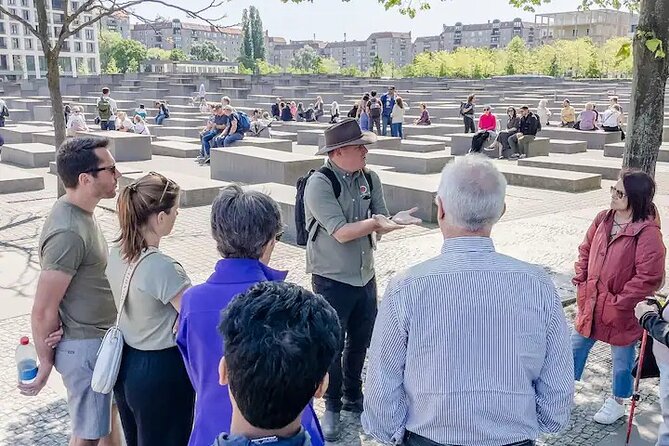
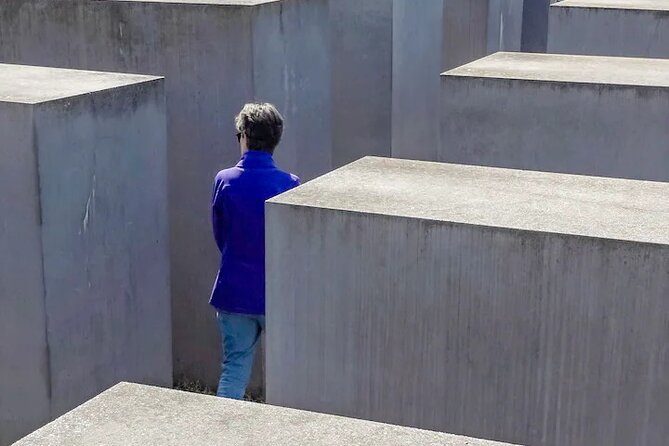
The Memorial to the Murdered Jews of Europe is the emotional center of this tour route. The guide explains that Jews were the largest ethnic group targeted by the Nazis, and you’re given a chance to discuss what the memorial means.
Time is about 15 minutes, which is just enough to feel the weight without turning it into a long, solitary reading session. The guide’s presence is helpful because the memorial can feel confusing at first glance, and you need context for what you’re meant to reflect on.
This is also a place where the tour’s reflection format matters. You’re not rushed through. You get the chance to ask questions, and that can help you process what you’re seeing instead of just feeling sad and moving on.
Stop 5: Monument to Homosexuals Persecuted Under the National Socialist Regime
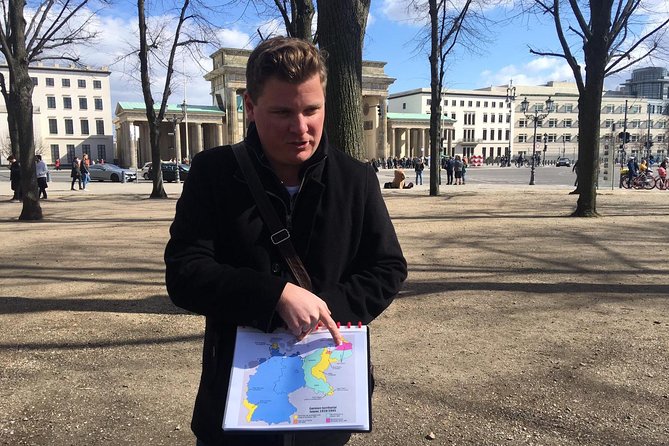
Next you visit the Monument to Homosexuals persecuted under the National Socialist regime. This stop matters because it widens the lens. Nazi persecution wasn’t only racial and religious. LGBTQ+ people were targeted too, and their suffering is often less present in standard history tours.
Time here is short, about 5 minutes. That can feel fast, but it matches how compact this walking route is. The guide’s job is to give you the key facts and connect this monument to the broader pattern of enforced ideology.
If you prefer tours that treat history as a single thread from beginning to end, this stop keeps that thread from becoming too narrow. It also gives you a more complete picture of what “the regime” meant in daily life for people who did not fit the Nazi version of society.
Stop 6: Führerbunker, where Hitler spent his final days
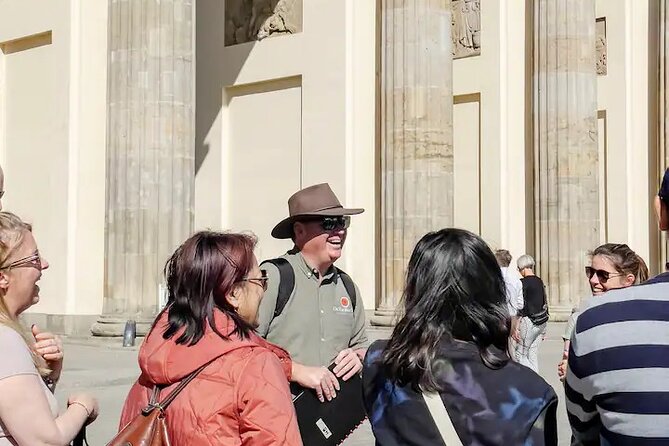
Now the tour turns toward the last stage of the story. You visit the area associated with the Führerbunker, where Hitler spent his final days of the Second World War.
This stop is about 15 minutes. It’s not long, but it’s heavy, and the guide frames it within the larger collapse instead of turning it into a morbid sightseeing stop.
Because this topic is emotionally charged, you’ll appreciate how the guides handle the material. People specifically praise guides for sensitivity on a difficult subject, plus a tone that respects the topic. That balance is crucial here. The goal is understanding, not sensationalism.
Stop 7: Johann Georg Elser memorial, resistance beyond the obvious
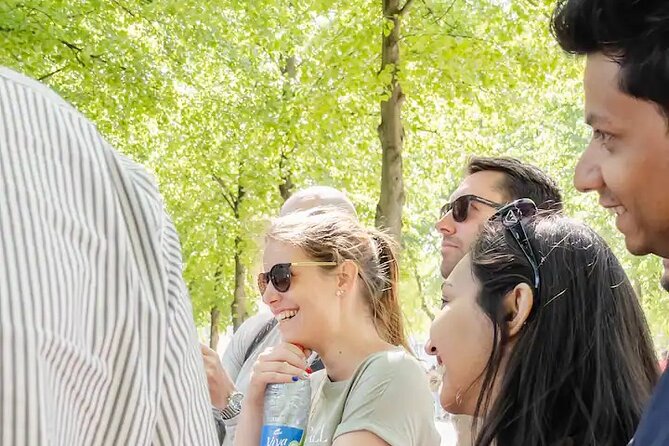
After the bunker area, you stop at the Johann Georg Elser Memorial. This is where the tour adds a different kind of perspective: the story of people who tried to oppose the Nazi regime and who worked toward the assassination of Adolf Hitler.
Time is about 15 minutes. Elser’s inclusion is smart for a few reasons. It keeps the tour from feeling like a one-note tragedy march, and it gives you a concrete example of resistance.
For me, this is one of those stops that helps you leave Berlin with something usable. History can paralyze you, or it can give you a clearer sense of how opposition can look in real life.
Stop 8: Aviation Ministry of Berlin, bureaucracy on a massive scale
Next is the Aviation Ministry of Berlin, built in 1936. The guide explains that it was the largest office building in Europe at the time and that it was constructed to house the German Ministry of Aviation, run under Hermann Göring.
Time here is only about 5 minutes, so it’s a quick but important bridge. You get reminded that the Nazi regime was not only violent mobs and propaganda speeches. It was also paperwork, departments, budgets, and offices that helped war machinery run.
For readers who like practical cause-and-effect history, this stop offers it in a small chunk. You see a building that once represented centralized power, and you connect that to the larger war effort.
Stop 9: Topography of Terror, Gestapo headquarters site, with a reset break
The final stop is Topography of Terror, at Niederkirchnerstraße 8. This is where the tour gives you a break and a fuller historical context at the end.
You visit the location where the Gestapo headquarters once stood, and you get a chance to take a tea or coffee break and use the restrooms. The time here is about 20 minutes, which is a gift on a cold day or after a few hours of standing and walking.
This ending also makes sense emotionally. Earlier stops set up the victims and the rise of power. Here, you see the machinery of terror as a place in the city. Ending at Topography helps you connect the human story to the systems that carried it out.
Guides, pacing, and what you should expect from the small group
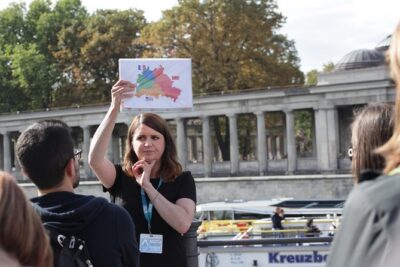
The tour includes an expert local guide with an academic background in WWII history. That matters because you are dealing with a subject where details are easy to get wrong, and where tone is just as important as facts.
From the guide names tied to this experience, Scott, Johan, Jochen, and Roshana show up repeatedly. The common theme in their delivery is strong structure, room for questions, and an approach that is both clear and emotionally careful. People also note that the tour does not feel rushed between sites, which is exactly what you want on a walking format with multiple short stops.
One possible snag: when groups get loud or the weather whips up noise, it can be harder to hear at some points. If you’re sensitive to sound, I’d bring attention to this and try to stay near the guide’s voice.
Also note a practical rhythm: the tour is designed to cover a lot in a short time. One caution is that it may feel longer than expected due to how many questions come up. If you like a structured history lecture, that’s a plus. If you wanted a more leisurely sightseeing stroll, it might feel dense.
Price and value: is $54.44 worth it?
At about $54.44 per person, this tour is a solid value for a Berlin walking experience focused on Nazi history. The price is supported by a few concrete factors you can feel on the day:
- You’re getting a local guide with academic background in WWII history.
- It stays small, max 15 people, which improves Q&A.
- You get tools like Then and Now photographs and historic maps, which help you understand what you’re looking at and how the city changed.
- Multiple stops list admission tickets as free, so you are not stacking extra costs for site entries during the walk.
The main thing not covered is food and drinks. You get that tea or coffee break at the end, but you should still budget for your own snacks and water if you need them before the route finishes.
If you are comparing options, the best way to judge value is simple: do you want someone to connect the dots for you in a tight radius of key sites? If yes, the price feels fair.
Where this tour shines, and where you should adjust your expectations
This tour shines if you want a focused, on-foot story from the Nazi rise to the regime’s fall, without bouncing between far-flung museums. The route includes a rare set of memorials that cover Sinti and Roma, Jews, and homosexuals persecuted by the Nazis. That makes the history feel complete, not one-dimensional.
It also shines for people who like discussion. The tour builds in opportunities for reflection and Q&A. That is useful, because you’ll have questions when you see a site like the Holocaust Memorial or the Gestapo headquarters location.
Adjust your expectations if you want something light or entertainment-style. This is a difficult subject. It is also detail-heavy in about 2.5 hours, so it’s not ideal if you are exhausted from long travel days.
And if you struggle with hearing in crowds, consider that some outdoor noise can interfere with sound, depending on conditions.
Who should book this Hitler’s Berlin small-group tour
I’d recommend this tour if you fit one of these profiles:
- You’re a history-minded traveler who wants real context tied to real locations
- You want a compact route that links politics, persecution, and aftermath
- You appreciate guides who handle sensitive topics with care and invite questions
- You want to use Berlin’s memorials as teaching stops, not just photo backdrops
It might not be the best fit if you want a purely visual tour with minimal talking. Also, while the physical fitness level is listed as moderate, it is still a walking day in varied surfaces, in all weather, with limited sitting time.
Should you book? My call
Book it if you want a clear, guided understanding of Hitler’s Berlin in one compact half-day walk, with memorials that cover multiple victim groups and a strong ending at Topography of Terror. The $54.44 price is reasonable when you factor in the guide, the small group size, and the included history tools.
Skip it only if you want something light, or if a high-density history walk on cold streets is not your thing. If you’re comfortable with a serious topic and you want the city’s Nazi-era story connected for you, this is one of the best ways to spend a few hours in Berlin.
FAQ
What is the duration of the Hitler’s Berlin small-group tour?
The tour lasts about 2 hours 30 minutes.
Where does the tour start and where does it end?
It starts at Brandenburg Gate, Pariser Platz, 10117 Berlin, Germany. It ends at Topography of Terror, Niederkirchnerstraße 8, 10963 Berlin, Germany.
Is food and drink included?
No. Food and drinks are not included.
How many people are in the small group?
The tour has a maximum of 15 travelers.
Is the tour offered in English?
Yes, the tour is offered in English.
What is included in the tour price?
Included are an expert local guide with an academic background in WWII history, guided visits to key Nazi-era sites and memorials, use of Then and Now photographs and historic maps, and opportunities for reflection and Q&A.
Are tickets or admission costs included at the stops?
The itinerary lists admission tickets as free for each stop.
What is the cancellation policy?
You can cancel for a full refund up to 24 hours in advance. If the tour is canceled due to poor weather, you’ll be offered a different date or a full refund.
Fresh reviews out of Berlin
- Berlin Uncensored: A History of Sex & Freedom★ 5.0 · 50 reviews
- Berlin Food & Cultural Tour: Must-Try German & Berliner Classics★ 5.0 · 51 reviews
- English Comedy Show with Pizza and Shots in Central Berlin★ 4.5 · 51 reviews
- Rude Bastards Tour of Berlin★ 4.8 · 51 reviews
- Private Taxi Tour of Berlin East and West and Neighbourhood approx. 4-6h★ 5.0 · 55 reviews
- Rickshaw Sightseeing City Tours Berlin – Rikscha Tours★ 4.0 · 55 reviews
- Berlin: City Highlights Express & Panorama Roof Terrace★ 4.9 · 55 reviews
- Berlin during Nazism – Tour in Italian★ 5.0 · 56 reviews
Berlin Tours, compared.
Reichstag, Dome and Government District Guided Tour
Read our review →
1-Hour City Tour by Boat with Guaranteed Seating
Read our review →
Government District around the Reichstag Guided Tour
Read our review →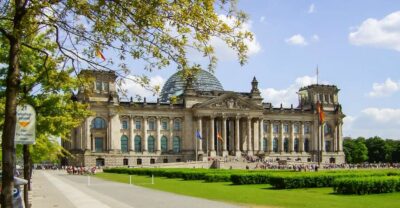
Reichstag, Plenary Chamber, Cupola & Government Tour
Read our review →