Reviewed · BERLIN TOURS
Explore Berlin: See All The Iconic Sights & Some Hidden Gems
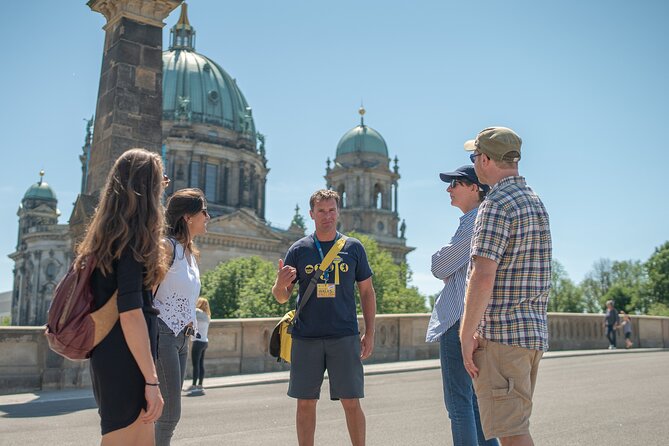
Berlin is fascinating because it tells you how big events can reshape an ordinary city, block by block. This 3-hour walking tour connects the dots between the Third Reich, the Cold War divide, and today’s Berlin by taking you through the exact spots where those stories happened. I really like how the tour moves with purpose, starting near Friedrichstraße and finishing at Brandenburg Gate and Pariser Platz, so you’re not just collecting monuments, you’re building a clear timeline.
Two things I especially like: you get a close look at Berlin Wall history without needing a museum pass, and you also visit major sites that explain what life meant during both World War II and the decades after it. I’m also a fan of the focus on the guide experience, since this tour is often led by guides praised for clear English and the ability to handle questions, like Joseph, Klaus, Hannah, and Tina.
One thing to consider, though: it’s a real walking route in a short time, roughly a few miles total, and some stops are quick. If you need lots of long photo breaks, or you want a super-slow pace, you may feel a little rushed unless you manage expectations and speak up early with your guide.
Key things to know before you go
- Small-group pace (max 25) keeps the walk focused and question-friendly.
- Most stops are free to see, with only a few museum or cathedral entries not included.
- Cold War landmarks are close together, so Checkpoint Charlie, Topography of Terror, and Berlin Wall remnants make sense as one story.
- Nazi and Holocaust sites are included, including Hitler’s bunker area and the Memorial to the Murdered Jews of Europe.
- Brandenburg Gate ends the route, giving you a strong, photogenic finish in the city center.
- You’ll walk past major architecture, from opera and concert halls to Gendarmenmarkt’s twin churches.
Why this 3-hour Berlin walk through the Nazi and Cold War eras works
Berlin can feel overwhelming because the city has layers. This tour helps you read those layers fast, in the right order, without turning your day into a spreadsheet of ticket lines. In a few hours, you’ll go from World War II and Nazi power, to the Cold War’s divided city life, and then into modern Berlin’s symbols of unity.
What makes it work is the way the route is structured. You begin at central rail territory, then slide into memorials and institutions tied to ideology and war. After that, you pivot to Cold War crossings and wall remnants, and finally land at Brandenburg Gate where the story visibly changes from division to a more shared national identity.
Weigh these Berlin picks against each other
- Berlin: Reichstag, Dome and Government District Guided Tour
★ 4.7 · 18,288 reviews - Berlin: 1-Hour City Tour by Boat with Guaranteed Seating
★ 4.3 · 16,993 reviews - Berlin: TV Tower Standard Entrance Ticket
★ 4.4 · 15,883 reviews
Meeting point, group size, and pacing (bring comfy shoes)
The tour meets at Reichstagufer 17, 10117 Berlin. You also have a first stop shortly after the start at Berlin Friedrichstraße station, which sets you up in the heart of the action. I strongly suggest arriving about 15 minutes early, because this is the kind of walk where the group needs to stay together to keep the timing smooth.
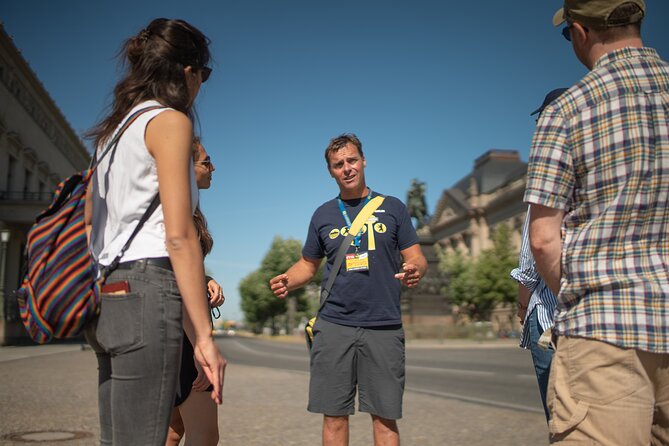
Group size is capped at 25, which is large enough to be lively but small enough that a guide can still manage questions. The good news is that English is supported throughout, and you’ll have an expert local guide leading the commentary.
Here’s the practical reality: in three hours you cover a lot of ground. I’d plan for roughly a few miles of walking, not a stroll. If you’re sensitive to cold weather, one of the best things about this style of tour is that it builds in short stops along the way, so you can warm up and reset.
Stop 1: Friedrichstraße station and the story starts with movement
Berlin Friedrichstraße station is a smart starting point because it’s tied to how people moved through the city during different eras. The guide’s job here is to frame what you’re about to see: how power, borders, and everyday life collided.
This is also where you’ll get your footing. If you’re the type who likes context before photos, you’ll appreciate starting in an area that immediately feels like a hub rather than an isolated monument.
Stop 2: Palace of Tears, or Traenenpalast, the Cold War crossing made human
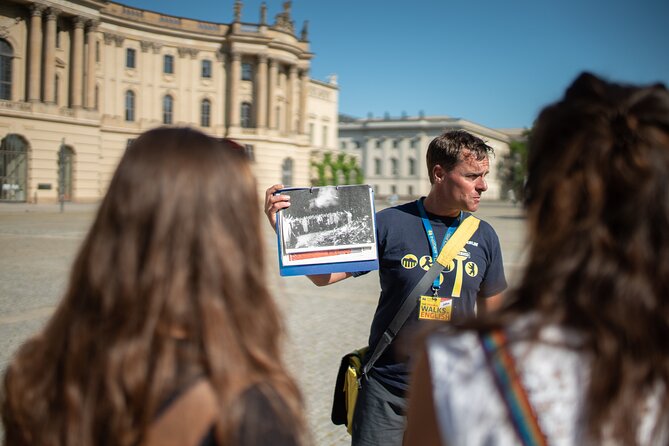
One of the most striking early stops is the Palace of Tears, also known as Traenenpalast. Even if you’re only seeing it briefly, the point is clear: this wasn’t just a border, it was a place where family life and separation played out under pressure.
It’s a valuable stop because it connects politics to emotion. You’ll hear how West and East Berlin life diverged, and why a crossing point became a symbol of what people lost and hoped for.
Another way to spend a Berlin afternoon:
- Berlin: Boat Tour Along the River Spree
★ 4.4 · 11,252 reviews - Discover Berlin Half-Day Walking Tour
★ 5.0 · 9,624 reviews - Berlin: Government District around the Reichstag Guided Tour
★ 4.7 · 8,447 reviews - Berlin: Reichstag, Plenary Chamber, Cupola & Government Tour
★ 4.6 · 8,422 reviews
Stop 3: Neue Wache, a memorial for war and tyranny
Next comes Neue Wache, a national memorial site reflecting on war and tyranny. This stop is less about learning facts and more about learning tone. It’s where the tour shifts from historical description to moral weight.
If you want to understand Berlin as more than architecture, this is one of the places that helps. It reminds you that this city’s history isn’t just dates and names, it’s consequences.
Stop 4: Humboldt University and the surprising link between thinkers
At Humboldt University, the tour points out where Marx, Engels, and Einstein studied and taught. That might sound like a quick mention on a fast walk, but it matters because Berlin didn’t only produce ideologies through dictators. It also produced major scientific and political thought through universities and institutions.
For me, this stop is a useful reminder: Berlin’s story includes ideas as well as violence. If your brain likes cause and effect, you’ll enjoy the way the guide ties intellectual life into what came later.
Stops around the Museum Island area: domes, palaces, and world-famous collections
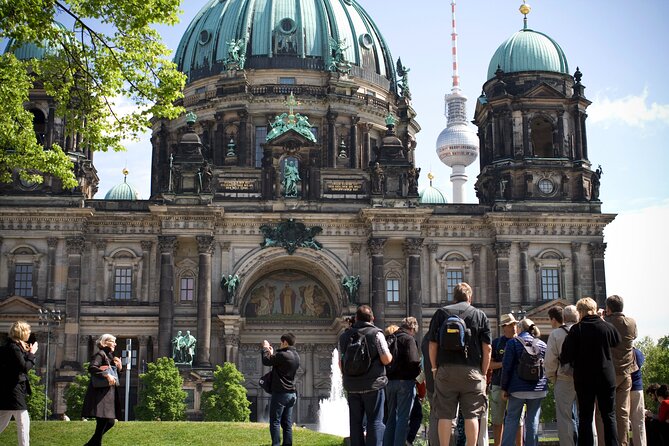
After Humboldt University, the route passes through a cluster of big-city landmark territory. You’ll have brief looks at several major institutions, including Berliner Dom, Lustgarten, the City Palace area, and the Humboldt Forum area.
Berliner Dom exterior and Lustgarten
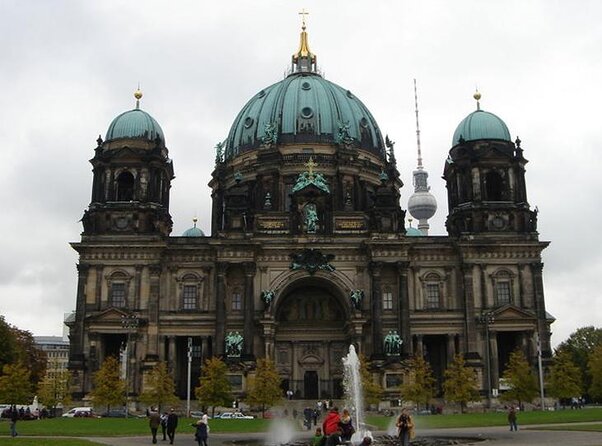
Berliner Dom is described as the biggest church in Berlin, and it sits in an area packed with important buildings and public space. The tour notes that admission tickets for Berliner Dom are not included, so you’re likely focusing on views and quick context rather than a long inside visit.
Stadtschloss Berlin and the Humboldt Forum
You’ll also stop at Stadtschloss Berlin, tied to the reconstructed Hohenzollern family palace and the Humboldt Forum. This is one of those moments where Berlin’s rebuilding becomes part of the history you’re learning. The guide’s commentary helps you see reconstruction as a statement about identity.
Museum quick stops: Pergamonmuseum, Neues Museum, and Altes Museum
The tour includes Museum Island stops focused on what these museums are known for:
- Pergamonmuseum, including Islamic art and items like the Ishtar Gate and the Market Gate of Miletus
- Neues Museum, including the Ancient Egyptian collection on a UNESCO World Heritage site
- Altes Museum, the first museum built in Berlin, tied to architect Karl Schinkel
Here’s the key practical note: admission tickets for these museums are not included. You’ll likely get a fast orientation, not full gallery time. If you’re the type who wants deep time inside, I’d treat this tour like the map, then plan a museum visit on your own after.
Bebelplatz and the Book Burning Memorial: where ideology becomes spectacle
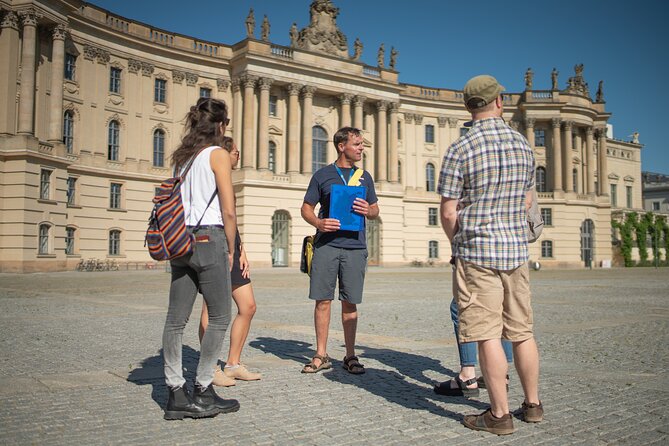
Bebelplatz is another stop that hits hard without being complicated. You’ll see the 18th-century square beauty, then reach the Book Burning Memorial at Bebelplatz, the place where Nazi book burnings took place in 1933.
This is a powerful contrast: a beautiful old square used for censorship. I like stops like this because they make it harder to “move on” mentally. You’re reminded how culture can be targeted.
Opera and concert architecture: Staatsoper, Konzerthaus, and Gendarmenmarkt
The tour continues through a section of Berlin known for major cultural buildings.
- Staatsoper, the opera house built under Friedrich the Great in 1743
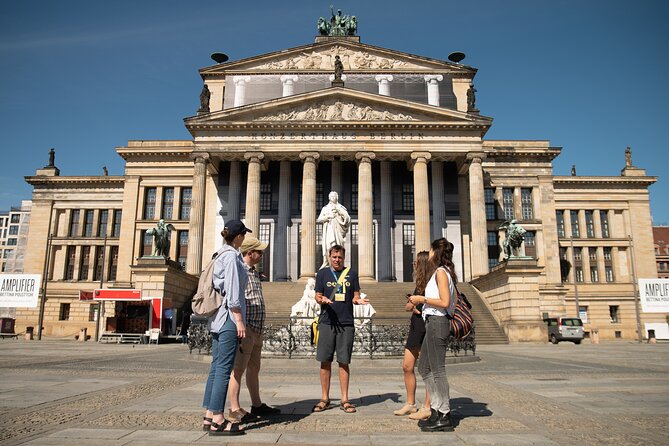
- Konzerthaus, the Schinkel concert hall completed in 1821
- Gendarmenmarkt, with the Calvinist French Cathedral and the Lutheran German Cathedral
These stops give your eyes a break from memorial intensity. They also help you understand that power and propaganda lived alongside culture. Berlin didn’t become this place by ignoring art and public life.
If you enjoy architectural details, you’ll appreciate how the guide connects the buildings to their era rather than treating them like pretty backgrounds.
Checkpoint Charlie: the Cold War line you can actually point at
Checkpoint Charlie is one of the tour’s signature moments. You’ll learn about this civilian and military crossing point, including the 1961 tank stand-off between Soviet and American armed forces.
This stop is valuable because it’s specific. It’s easy to hear about the Cold War as an idea, and harder to feel it as a physical barrier. Checkpoint Charlie makes the Cold War feel like something people stared at every day.
Topography of Terror and the Berlin Wall remains
Next is Topography of Terror, where you can see a piece of the Berlin Wall, described as about 200 meters long. This is one of the ways the tour avoids making you rely entirely on indoor exhibits. You’ll get the sense of the wall as infrastructure, not just history from a textbook.
This stop is emotionally heavy in its own way, so pacing matters. If you’re affected by intense historical topics, give yourself a moment before moving on to the next segment.
The Aviation Ministry and the evolving purpose of power buildings
At the Aviation Ministry of Berlin, the tour connects the site to Hermann Göring’s air force ministry, then to an East German house of ministers, and later to the German Finance Ministry.
This is a strong lesson in how regimes reuse space. The same building can host different kinds of authority over time. It’s a reminder that history isn’t only about what happened once, it’s also about how power changes hands.
Fuhrerbunker site and the Memorial to the Murdered Jews of Europe
You’ll stand above the location of the Fuhrerbunker, where Hitler spent his last days of World War II. This is not a comfortable stop, and the guide’s tone matters here. I’d go into this moment with a respectful mindset, because the site is tied to mass cruelty.
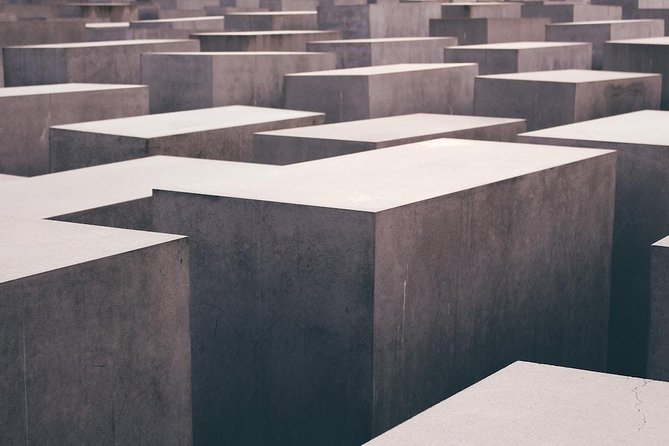
Then you reach the Holocaust Memorial, the Memorial to the Murdered Jews of Europe. The tour includes walking through the memorial, which turns the concept of remembrance into a lived experience through space.
I think this part of the tour is where the title Explore Berlin becomes more than marketing. It’s about seeing what a city chooses to remember, and how it shapes visitors into witnesses rather than casual spectators.
Brandenburg Gate and Pariser Platz: the symbolic finish
The route ends at Brandenburg Gate, after passing important nearby points like the American Embassy, French Embassy, Hotel Adlon, and the Academy of Fine Arts area. The guide frames Brandenburg Gate as a national symbol that moved from division during the Cold War to peace and unity.
From a travel perspective, it’s a smart ending. You finish in a place where it’s easy to keep exploring on your own, grab a meal, or take public transport without the stress of heading deep into the outskirts.
Pariser Platz rounds out the final views with the American and French embassies and Hotel Adlon visible from the square.
Price and value: what $24.07 gets you in practical terms
At about $24.07 per person for an approximately three-hour walk, you’re paying for three things:
- an expert local guide in English
- a tight route that connects major sites into one storyline
- the convenience of moving between neighborhoods without having to plan every turn
Most stops along the way are ticket-free from the outside or as memorial sites. The trade-off is that certain major museums and cathedral entries are not included. Berliner Dom and the big Museum Island stops like Pergamonmuseum, Neues Museum, and Altes Museum are listed as admission not included, so you’re using the tour for orientation and context, not full museum time.
If you’re trying to see “the big Berlin” fast, this is a good value model. If you want a full-day museum experience, you can pair this tour with one or two follow-up entries.
Tips I’d use before you book this walk
- If you care about photos, ask the guide early how they handle photo pauses and stay ready to move when it’s time.
- Wear shoes for steady walking, because the route is busy and quick in spots.
- Keep your expectations realistic for indoor time. This tour is built for outside stops and short context breaks.
- Bring a warm layer. One guide pacing style includes short stops that help you reset, which matters in colder months.
- If you’re unsure about where you’re meeting, arrive early and double-check the exact address at Reichstagufer 17.
Who should take this tour (and who might want a different pace)
This is ideal if you want a first-time Berlin foundation, especially if you’re interested in how the city moved from Nazi rule to Cold War division. It’s also a strong pick if you like guides who can explain ideology and architecture as connected parts of one story.
You might want a different option if you:
- need a very slow pace with lots of downtime
- struggle with longer standing and walking segments
- prefer a museum-heavy itinerary rather than memorial and exterior orientation
Should you book Explore Berlin: Iconic Sights and Hidden Gems?
I’d book it if you want an efficient, emotionally serious, and very Berlin-specific introduction in just a few hours. The route covers major anchors like Checkpoint Charlie, Topography of Terror, the Holocaust Memorial, and Brandenburg Gate, while also weaving in architecture and cultural landmarks that many first-time visitors miss.
If you’re the kind of traveler who likes to understand what you’re seeing before you start wandering on your own, this tour is a smart starter. Just go in with the mindset that it’s a guided walk, not a museum marathon, and you’ll get a lot out of it quickly.
FAQ
How long is the tour?
The tour lasts about 3 hours.
Where do I meet, and where does the tour end?
You meet at Reichstagufer 17, 10117 Berlin, Germany, and the tour ends at Brandenburg Gate, Pariser Platz, 10117 Berlin, Germany.
Is the tour offered in English?
Yes, it is offered in English.
Are admission tickets included for everything?
Many stops are listed as admission free, but some places have admission tickets not included, including Berliner Dom and the museum stops such as Pergamonmuseum, Neues Museum, and Altes Museum.
What kind of ticket do I get?
You get a mobile ticket.
Can I cancel and get a full refund?
Yes, you can cancel for a full refund if you cancel at least 24 hours before the experience start time.
Fresh reviews out of Berlin
- Berlin Uncensored: A History of Sex & Freedom★ 5.0 · 50 reviews
- Berlin Food & Cultural Tour: Must-Try German & Berliner Classics★ 5.0 · 51 reviews
- English Comedy Show with Pizza and Shots in Central Berlin★ 4.5 · 51 reviews
- Rude Bastards Tour of Berlin★ 4.8 · 51 reviews
- Private Taxi Tour of Berlin East and West and Neighbourhood approx. 4-6h★ 5.0 · 55 reviews
- Rickshaw Sightseeing City Tours Berlin – Rikscha Tours★ 4.0 · 55 reviews
- Berlin: City Highlights Express & Panorama Roof Terrace★ 4.9 · 55 reviews
- Berlin during Nazism – Tour in Italian★ 5.0 · 56 reviews
Berlin Tours, compared.
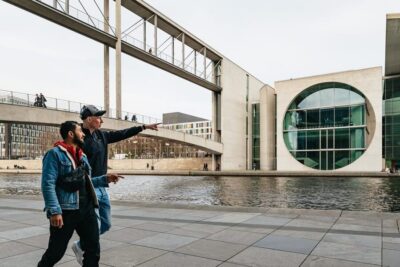
Reichstag, Dome and Government District Guided Tour
Read our review →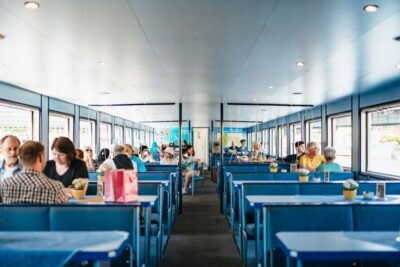
1-Hour City Tour by Boat with Guaranteed Seating
Read our review →
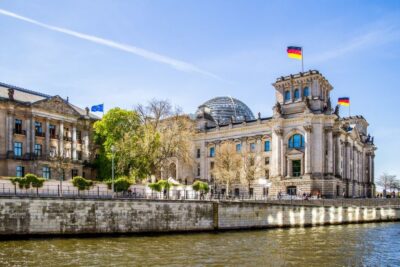
Government District around the Reichstag Guided Tour
Read our review →
Reichstag, Plenary Chamber, Cupola & Government Tour
Read our review →