Reviewed · BERLIN TOURS
Berlin: GDR witness tour in small group
A GDR witness tour is interesting because it takes the big, official story about East Germany and puts it back into one human life. In a small group, you listen to Karl-Heinz Richter talk about what it meant to grow up in East Berlin, try to flee, and get swallowed by the Stasi system.
I especially like two things. I love the way his escape story stays grounded in real places, starting with Friedrichstrasse. And I love that the tour is not only about dramatic events, it also covers the everyday reality of East German life under surveillance and pressure.
One thing to consider: this is a testimony, not a scripted museum lecture. If you need a perfectly linear, airtight timeline at all times, plan to stay open, and also treat the stated duration as a guide rather than a guarantee.
Key things to know before you go
- Friedrichstrasse station, where the escape attempt failed
- Stasi pre-trial detention in Berlin-Pankow, tied to his arrest
- Everyday GDR life under Stasi influence, not just politics and dates
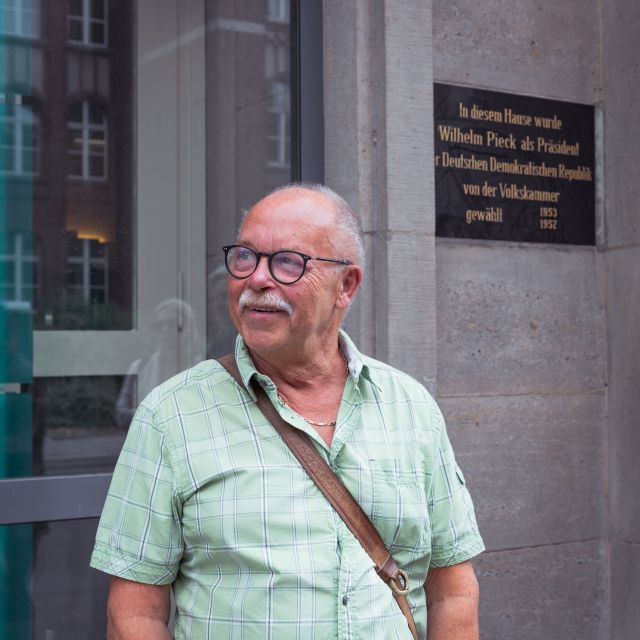
- A witness tour led by Karl-Heinz Richter, known as Kalle
- Live narration in German, with a small-group pace
Turning Berlin streets into evidence of the GDR
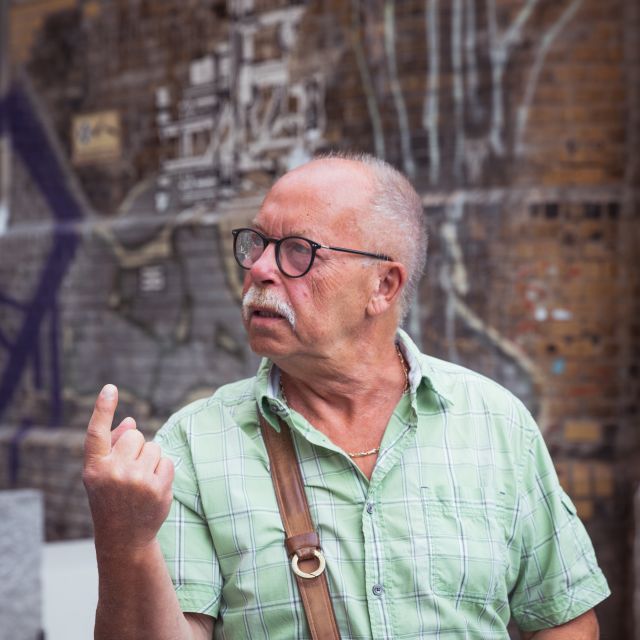
This tour works because you do not just hear history. You walk in Berlin while the history gets explained by someone who lived inside it. Even if you know the Wall, the Stasi, and the broad timeline, the real value here is how the story lands on the ground, in the neighborhoods and sites where control felt normal.
I like witness tours like this because they force you to slow down. You start noticing how fear changes behavior, how people second-guess themselves, and how systems can feel personal. You also get something rare in travel, a kind of emotional map. It shows where hope rose, where it crashed, and how long it took to move on.
Weigh these Berlin picks against each other
- Berlin: Reichstag, Dome and Government District Guided Tour
★ 4.7 · 18,288 reviews - Berlin: 1-Hour City Tour by Boat with Guaranteed Seating
★ 4.3 · 16,993 reviews - Berlin: TV Tower Standard Entrance Ticket
★ 4.4 · 15,883 reviews
Who Karl-Heinz Richter is, and why his voice matters
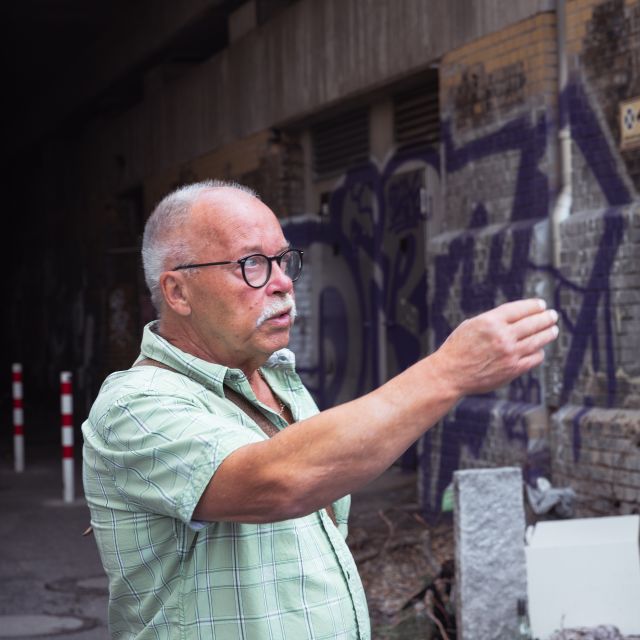
The tour centers on Karl-Heinz Richter, born in Schwarzheide in Brandenburg in 1946. He grew up in East Berlin with his family, and years later he became a political prisoner after an escape attempt. You are not hearing someone recite a polished script. You are hearing a witness who lived through the Stasi era and is trying to keep the memory clear.
He planned to flee to the West about three years after the Wall was built. That detail matters because it puts his choices into context. This was not some distant, abstract problem that only existed at the beginning of the regime. For him, the GDR was a lived environment that kept shaping daily life, until one day the risk of escape felt necessary.
You may hear him referred to as Kalle, which feels more like a person than a biography. That tone is part of why the tour can hit hard. The topic is heavy, but it is delivered as lived experience, including what he tried to do and what happened after.
Friedrichstrasse station: the moment an escape failed
One of the most vivid parts is his attempt to escape by trying to jump onto a moving train at Friedrichstrasse station. The key word here is attempt. He was not just thinking about leaving. He acted, at a specific place, with a real plan.
As you listen, you get a practical sense of how hard it was to move freely in East Germany. A train sounds like motion and freedom, but in the GDR, even motion could become a trap. You start to understand that escape was not only about courage. It was about timing, access to information, and the ability to anticipate how security systems would react.
This segment also tends to make the Stasi feel less like an organization and more like a force in the background of everyday decisions. When you hear how he tried to leave and what followed, the message becomes clear: the regime did not rely only on laws. It relied on constant scrutiny, and that scrutiny could reach into ordinary routines.
Months in pre-trial detention in Berlin-Pankow
After the escape failed, Kalle Richter spent several months in pre-trial detention in the Stasi prison in Berlin-Pankow. This is where the story turns from “trying to get away” into “being processed by the system.”
This part matters because pre-trial detention is about control before any outcome. You are not just dealing with punishment. You are dealing with uncertainty, isolation, and the power imbalance of being held while the state decides what it will do with you. In a tour like this, hearing it firsthand changes the way you think about those terms. They stop being textbook words.
You also hear about the Stasi’s methods of interrogation. Even without getting lost in procedural details, the effect is clear. Interrogation was not only meant to collect information. It was designed to break resistance, to pressure people into compliance, and to make fear part of everyday mental life.
If you are the type who likes to understand how systems work, this section gives you a direct window into the mechanics. If you are sensitive to heavy subject matter, brace yourself. This is not a light ride through Berlin history. It is a personal account of what it felt like to be caught.
Another way to spend a Berlin afternoon:
- Berlin: Boat Tour Along the River Spree
★ 4.4 · 11,252 reviews - Discover Berlin Half-Day Walking Tour
★ 5.0 · 9,624 reviews - Berlin: Government District around the Reichstag Guided Tour
★ 4.7 · 8,447 reviews - Berlin: Reichstag, Plenary Chamber, Cupola & Government Tour
★ 4.6 · 8,422 reviews
How Stasi influence shaped everyday GDR life
The tour does not stop at the arrest and detention. It keeps coming back to daily life in the GDR, and how the Stasi influence reached beyond prisons and interrogation rooms.
That broader focus is one of the biggest reasons this tour earns strong praise. People who book it are often surprised by how much of the story is not only about big political events. Instead, you get explanations for how surveillance and control shape relationships, habits, and opportunities.
You learn to think differently about what you see in Berlin. Places are not neutral. During the GDR era, the city’s power structure affected what people did, where they went, and how openly they could speak. When you hear his planned escape and then his months of detention, you start to understand the everyday logic behind those events.
Also, it helps you see the Stasi as more than a villain in a story. It becomes a network and a mindset. The point is not only that people suffered. It is that society adapted around the fear, which made the system durable.
The small-group format and what it means for your experience
This tour is designed as a small-group experience. That matters because it keeps the tone human. When you are in a smaller group, the witness can hold the room, and you can listen more carefully to details like timing, location, and what was happening emotionally in each stage of his story.
The narration is live and in German. If you speak German, you’ll follow the nuances better, and you’ll likely feel the emotion with less mental translation. If your German is limited, you might still understand the overall arc, but some of the sharp, personal specifics may pass you by.
There is also a practical reality here: witness tours depend on the speaker and the group’s attention. You might find the pacing emotionally driven rather than tightly scheduled. That is often a good thing, but it can be a drawback if you want strict clockwork.
Your 2.5 hour game plan, timing, weather, and route flow
The tour is listed as 2.5 hours, rain or shine. Since it is outdoors, I recommend dressing for Berlin weather first, story second. You do not want to spend half the tour thinking about cold hands or soaked shoes.
Hotel pickup is not included, so you will want to arrive ready to meet the group at the start point. Also, the tour is wheelchair accessible, which is a major plus if you need that kind of access.
With only a few named anchor locations in the information you have, the best way to picture the route is this: you start in central Berlin around Friedrichstrasse, then you shift to the area tied to Berlin-Pankow and the Stasi prison story. In between, you get context on how the Stasi presence showed up in everyday life across the city.
Price and value: does $27 make sense for what you get?
At about $27 per person for a roughly 2.5 hour witness-led tour, the value depends on what you want from Berlin. If you came for a polished, entertainment-style history talk, you might feel it is expensive for the time. If you came for a first-hand testimony that focuses on the Stasi, an attempted escape, and detention, it can feel like a fair price.
Here is how I would judge the value before you book. This is not a generic overview tour. The power is in the personal account, the specific details like Friedrichstrasse and Berlin-Pankow, and the way everyday life under the Stasi gets explained through one person’s decisions and consequences.
You should also mentally prepare for the fact that a testimony tour is not like a scripted tour where everything is guaranteed to land in exactly the same way. One negative note you’ll want to keep in mind is that the experience has sometimes run shorter than the stated duration. That means you should plan your day with a small buffer, so you are not stressed if the timing is a bit different.
Should you book this GDR witness tour with Karl-Heinz Richter?
I think you should book if you want more than facts and photos. You want to understand how the GDR felt from the inside, how the Stasi shaped daily life, and what an escape attempt meant when the system was watching you. This tour is especially strong for people who like history that has a human voice, and who are ready for serious content.
Skip it only if you need a purely chronological, perfectly consistent lecture style and you get frustrated when stories feel lived-in rather than edited. Also consider your German comfort level, since the tour is live in German.
FAQ
FAQ
How long is the GDR witness tour in Berlin?
The tour lasts 2.5 hours.
Who leads the tour?
The experience is guided by Karl-Heinz Richter, a former political prisoner and Stasi victim, with a live tour guide.
What language is the tour in?
The tour is in German.
What locations are connected to his story?
Key moments include Friedrichstrasse station for his escape attempt and the Stasi prison in Berlin-Pankow for his pre-trial detention.
Is hotel pickup included?
No, hotel pickup and drop-off are not included.
Does the tour run in bad weather?
Yes, it runs rain or shine.
Is the tour wheelchair accessible?
Yes, it is wheelchair accessible.
Fresh reviews out of Berlin
- Berlin Uncensored: A History of Sex & Freedom★ 5.0 · 50 reviews
- Berlin Food & Cultural Tour: Must-Try German & Berliner Classics★ 5.0 · 51 reviews
- English Comedy Show with Pizza and Shots in Central Berlin★ 4.5 · 51 reviews
- Rude Bastards Tour of Berlin★ 4.8 · 51 reviews
- Private Taxi Tour of Berlin East and West and Neighbourhood approx. 4-6h★ 5.0 · 55 reviews
- Rickshaw Sightseeing City Tours Berlin – Rikscha Tours★ 4.0 · 55 reviews
- Berlin: City Highlights Express & Panorama Roof Terrace★ 4.9 · 55 reviews
- Berlin during Nazism – Tour in Italian★ 5.0 · 56 reviews
Berlin Tours, compared.
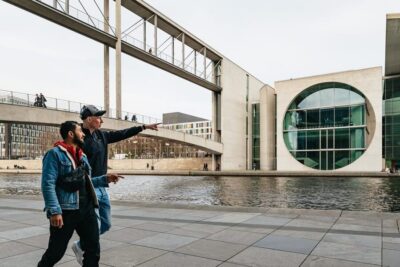
Reichstag, Dome and Government District Guided Tour
Read our review →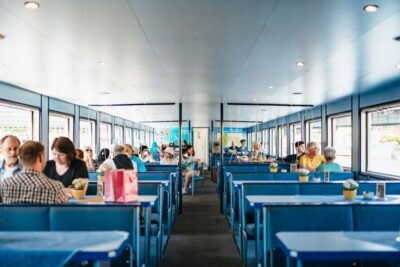
1-Hour City Tour by Boat with Guaranteed Seating
Read our review →
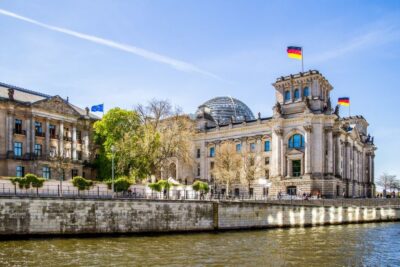
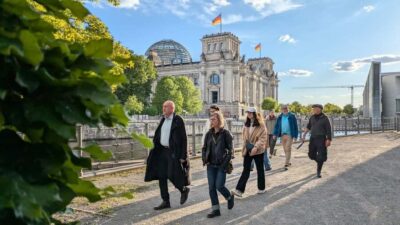
Government District around the Reichstag Guided Tour
Read our review →
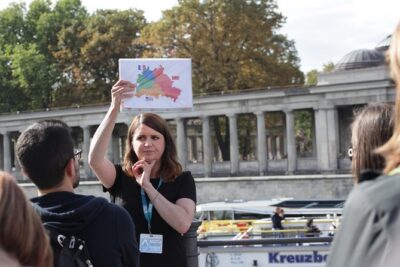
Reichstag, Plenary Chamber, Cupola & Government Tour
Read our review →