Reviewed · GUIDED
Adventure Darkness – Guided tour in the dark
Adventure Darkness is interesting because it flips your usual senses on their head, turning a Ruhr Area activity into a hands-on lesson in perception and inclusion. You move through completely dark adventure rooms guided by blind or severely visually impaired staff using a long cane, and you quickly realize how much you normally rely on sight. I love how much this experience leans into sound and touch, and I love that you’re led by real guides who live with low or no vision.
One consideration: this is not a light, casual stroll. It is genuinely dark the whole way, so if you feel uneasy in low-light spaces or you strongly prefer visual instruction, this one might take more courage than you expect.
Key highlights you should know before you go
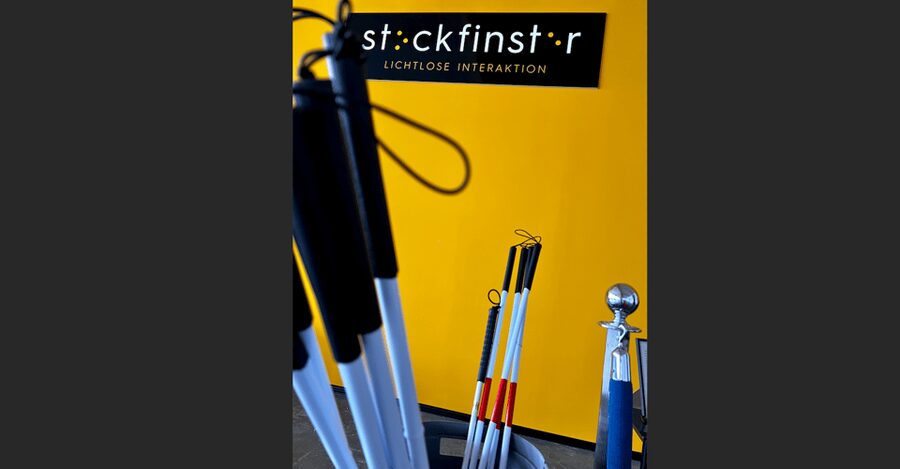
- A guided “world in the dark” with blind or severely visually impaired guides using a long cane
- Your senses take over through targeted stimuli aimed at touch, hearing, smell, and taste
- Everyday life recreated, from a sporting challenge to crossing a road
- You end at a dark bar to talk with your guide over drinks like Fritz-Kola, coffee, or beer
- Small group size (8 max) so you are not lost in a crowd
Entering Adventure Darkness: what the “dark world” is really like
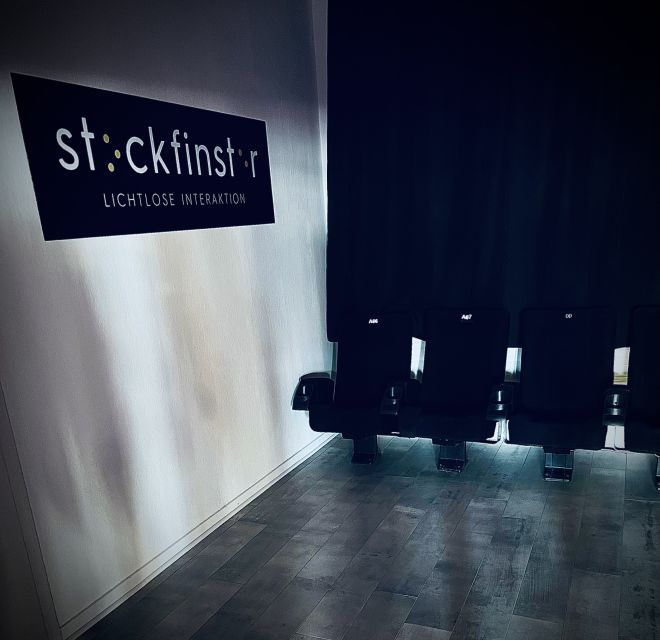
Adventure Darkness is a guided tour built around one simple idea: remove sight, then watch how your brain scrambles to cope, and how it quickly starts to make sense of the world through other channels. The setting is set up as a sequence of dark adventure rooms, each one designed to trigger specific experiences.
You should go in expecting more than “cool dark photos.” Cameras are not allowed, and you will not be seeing anything while you move. That’s the point. Instead, you’ll rely on how the guides steer you, how sounds are placed, and how objects and surfaces are arranged around you.
This tour has a strong inclusion focus. You are not learning about disability in a classroom way. You’re learning in a practical, moment-to-moment way, because your only job is to navigate and understand what is happening using the senses you still have.
The dark rooms: walking by the cane and learning by feel
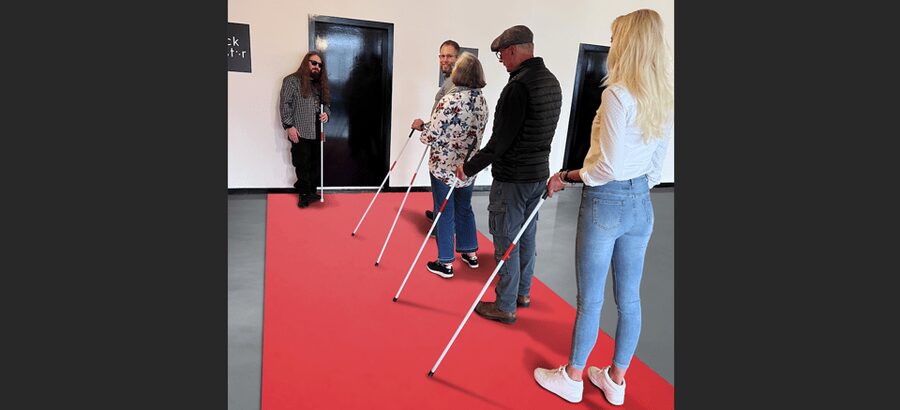
Right after you arrive for your session, you step into the experience equipped with a long cane and led through a string of rooms that are completely dark. Your guides are blind or severely visually impaired, and they lead you the way they would guide someone in real life, with calm direction and careful pacing.
The experience is designed to recreate both everyday situations and special challenges. You’ll be asked to do things that, outside this setting, would depend heavily on vision. In the dark, those same tasks become puzzles solved by hand position, spacing, and listening.
I like the fact that the tour doesn’t treat your senses as a “fun gimmick.” The whole setup pushes you to use touch, hearing, and even smell and taste. One review detail that really matters is how strongly the brain reacts when visual perception is gone and the targeted stimuli come in. That emotional jolt is part of the learning, not an accident.
Everyday moments inside the darkness: sport and crossing a road
The best part of the dark-room design is that it stays connected to real life. You’re not stuck in sci-fi fantasy. The tour recreates situations like a sporting challenge and crossing a road.
For a road scenario, you can expect the experience to be guided by sound cues and directional guidance, because without sight you need a way to understand when movement starts, where you are in space, and what “safe” feels like. The goal isn’t to mimic traffic exactly. It’s to recreate the uncertainty and the decision-making you’d normally handle visually.
For the sporting challenge, you’ll rely more on tactile positioning and audio direction. You’ll understand quickly that your body learns faster than your brain does. At first you think you’re failing, then you realize you’re adapting.
A practical consideration here: the success of sound-based room effects depends on the room setup. If a soundscape used for a scenario like the road does not land as intended, the scenario can feel less clear. That does not ruin the overall concept, but it can make one moment less “locked in” than you hoped.
The dark bar after about 60 minutes: turning experience into understanding
After roughly 60 minutes in the dark rooms, you reach the dark bar. This is a smart design choice. You get out of the sensory stress zone and into a space built for conversation and reflection.
In the bar, you can chat with your guide while you have a drink. Options include Fritz-Kola, coffee, or a cold beer. That matters because it shifts the tone from task-focused to human-focused. You’re no longer trying to solve the dark room puzzle. You’re talking about what you felt, what worked, and what didn’t.
This is where the inclusion angle becomes real. Instead of imagining what it is like to be visually impaired, you’re hearing explanations from the person who guided you through the experience. Even if you don’t get a long lecture, you do get the chance to connect your own confusion and adaptation to the guide’s lived reality.
Meet the guides: why their leadership changes everything
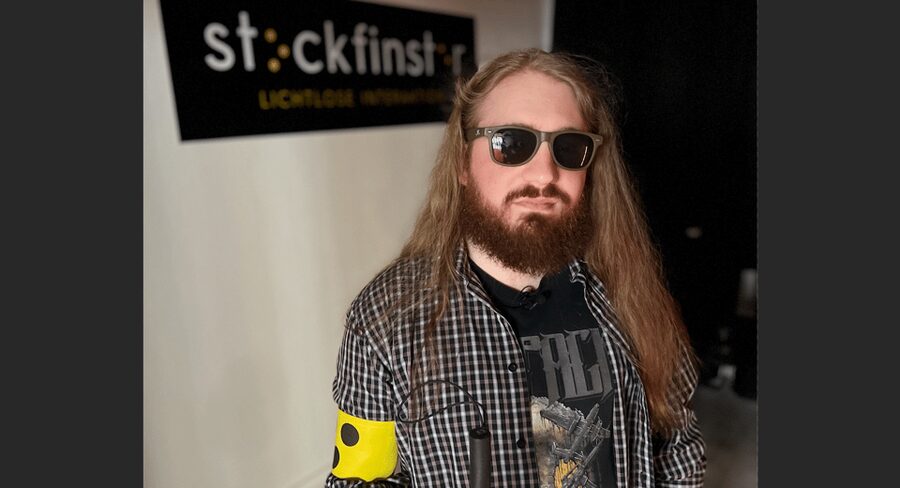
A key part of Adventure Darkness is that the guides are actually blind or severely visually impaired. They’re not performing disability for a theme night. They are leading a structured experience, with the right mix of direction and trust.
In particular, guides such as Florian have come up as standout examples of how the tour experience feels when it is guided well. The leadership style makes a difference. If the guide reads the group and adjusts their pace, you feel safer and the tasks make more sense. When you feel safe, you learn more.
Guiding in the dark is also different from guiding with sight. A person using low vision or no vision must communicate through other signals and a consistent routine. That’s one reason the experience can feel surprisingly educational. You’re watching an alternative way of building orientation and clarity.
Why the inclusion lesson hits: your brain learns fast when sight is gone
This tour uses a simple trick that is hard to forget: without sight, your brain has to renegotiate the world in real time. The design directs your attention to haptics and audio first, then you get support from smell and taste.
I think that’s why it sticks. You don’t just “understand inclusion” as a slogan. You experience what it feels like when a primary sense is removed and your brain scrambles to compensate. That creates empathy, not in a sentimental way, but in a practical way.
It also makes you pay attention to the small cues that sight usually handles for you. Distance. Direction. Change. Timing. Without eyes, you notice how much daily life depends on invisible guidance.
Price and value in the Ruhr Area: what $21 gets you for 1.5 hours
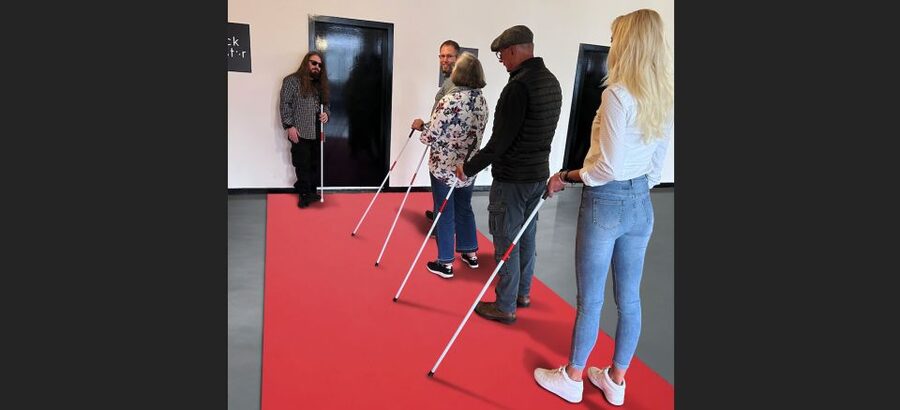
Adventure Darkness costs $21 per person for about 1.5 hours. That’s a bargain price for a guided activity that gives you a full sensory experience plus a conversation time at the end.
Here’s why the value is real and not just marketing:
- You get a guide-led experience designed for the entire time window.
- The group size is limited to 8 participants, so you’re not treated like a number.
- The tour includes the dark rooms and the dark bar portion, not just a quick “walk and done.”
For roughly an hour and a half, you get more than entertainment. You get a structured, guided reset of how you perceive everyday situations. If you like activities with a clear purpose and thoughtful design, this is the kind of value that adds up quickly.
What to do before you arrive: the rules that keep the experience fair
Adventure Darkness has clear rules, and they’re not arbitrary. They protect the “no sight” concept and keep the experience safe and focused.
You are not allowed to bring:
- Cameras
- Jewelry
- Flashlight
- Cellphones
You should also be ready for a voucher check on arrival. The voucher has to be shown in the app or printed out. If you cancel close to your time slot, a replacement date is not guaranteed. Plan to arrive on time so the schedule and dark-room flow stays intact.
The most important practical takeaway: leave your distractions behind. No phone. No photos. No jewelry. You will get more out of it if your mind can settle into the experience.
Language and group size: German guidance and a small number of people
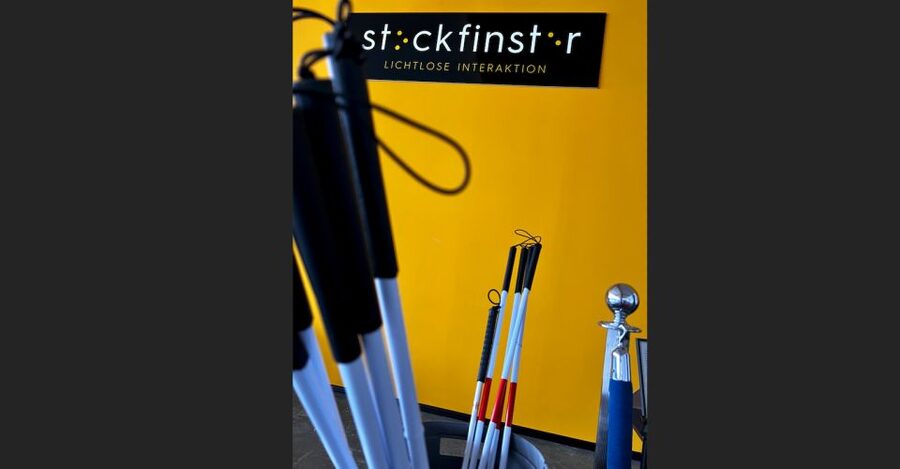
The tour guide speaks German, and the group is kept small, limited to 8 participants. That small group format matters because the experience is interactive and sensory. With fewer people, the guide can manage pacing and help you orient without crowding you.
If your German is basic, you can still enjoy the tour because a lot of direction is communicated through the guide’s leadership in the dark. Still, if you want to get more out of the chat time in the dark bar, some German understanding will help.
Who should book this guided tour in the dark
This works best for you if you want an activity that is:
- Hands-on and sensory, not a sightseeing checklist
- Focused on inclusion and real-world understanding
- Short enough to fit easily into a day in the Ruhr Area
It is not suitable for children under 5 years. Also, there is a confusing note around wheelchairs: the activity is described as wheelchair accessible, yet it is also listed as not suitable for wheelchair users. Because of that mismatch, I strongly recommend you confirm fit with the provider before booking if mobility is a concern.
Overall, I’d say book it if you like meaningful, slightly unusual experiences and you’re comfortable giving up visual control for 90 minutes.
Should you book Adventure Darkness, guided tour in the dark?
Yes, I think you should book Adventure Darkness if you want something different from a typical German evening out. The combination of completely dark guided rooms plus a dark bar conversation gives you both the sensory challenge and the explanation you need to turn it into understanding.
Skip it only if you know you struggle with genuinely dark environments or you need visual cues and structure to feel safe. Also, double-check the wheelchair suitability issue if that applies to you, because the rules give mixed signals.
If you’re in the Ruhr Area and you want a thoughtful, interactive activity that teaches inclusion through experience instead of slides, Adventure Darkness is one of the most memorable options around that price point.
FAQ
How long is the Adventure Darkness tour?
The tour lasts about 1.5 hours, with 90 minutes in the dark.
Is there a small group size limit?
Yes. The group is limited to 8 participants.
What language are the tours in?
The live tour guide speaks German.
What is included in the price?
The price includes the 90-minute guided tour in the dark.
Are cameras, flashlights, or cellphones allowed?
No. Cameras, jewelry, flashlights, and cellphones are not allowed.
Is it suitable for young children?
No. It is not suitable for children under 5 years.
Is it wheelchair accessible?
The activity is listed as wheelchair accessible, but it is also stated that it is not suitable for wheelchair users. Check with the provider to confirm fit.
How do vouchers work and what about cancellations?
You must show the voucher on arrival in the app or as a printed copy. You can cancel up to 24 hours in advance for a full refund. If the appointment is not complied with or canceled too late, a replacement date is not guaranteed.
Guided, compared.
Reichstag, Dome and Government District Guided Tour
Read our review →
Government District around the Reichstag Guided Tour
Read our review →
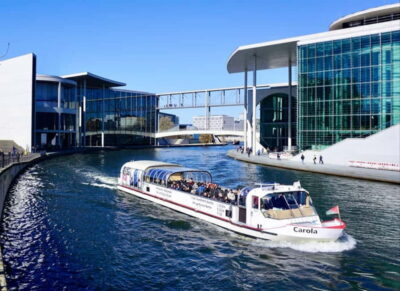
1-Hour Boat Tour with Bilingual Guide (Ger/Eng)
Read our review →