

Reviewed · JAPAN
Weimar: Die Highlights auf eigene Faust entdecken
Weimar becomes a lot more fun when you explore it like a puzzle instead of a checklist. This scavenger-hunt walking game starts at the Bauhaus Museum and sends you past major sights while you solve riddles at your own pace, with flexibility built in and interactive sightseeing that keeps you paying attention.
I especially like that the route is guided by numbered card clues, not a rigid script, so you can spend longer where you care and move on when you do not. One thing to consider is that a highlight like the Anna Amalia Library can depend on ticket availability, so you need a little planning if you want to go inside.
Key points to know before you play
- 11 sealed numbered riddle cards guide you sight to sight in a changing order
- Self-paced breaks let you pause for photos, snacks, or simply to read at your speed
- Core Weimar icons show up in the walk, including Goethe and Schiller sites, plus Ilm river and the castle area
- No guide required on the ground, just a game box with directions and info
- Best for small groups and families where everyone can take turns running the next clue
A self-guided riddle walk through Weimar’s most famous names
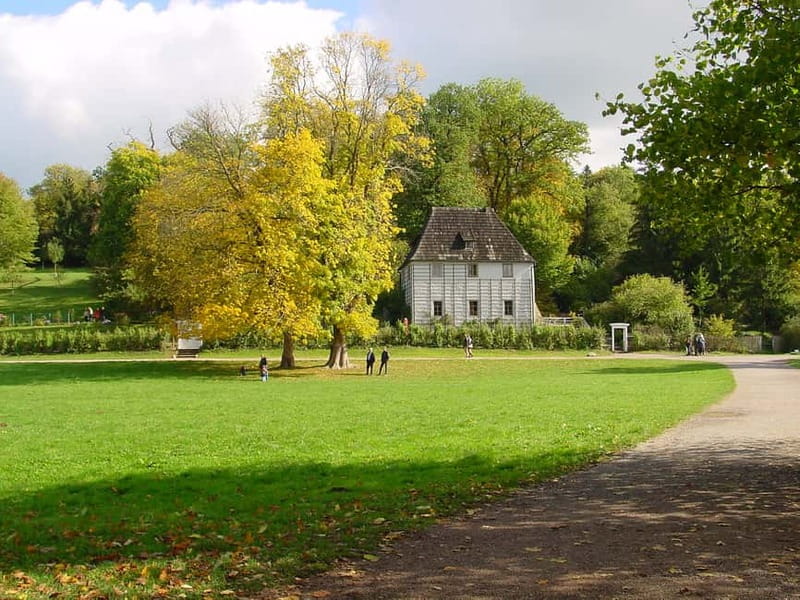
This is a city game you play by walking. Your main job is to solve riddles, follow clear directions, and then open the next numbered card when the game tells you which envelope to crack. It feels less like a lecture and more like you are getting your bearings, one clue at a time.
The sights on your path are the reason Weimar is worth your time. You start at the Bauhaus Museum, then the route takes you through key cultural landmarks such as the national theater and the former residences of Goethe and Schiller. You also pass the Anna Amalia Library and end up in the castle and Ilm river park area.
The game is designed for independence. If you want to linger near a doorway, a garden view, or a façade detail, you can. If you are not feeling a specific stop, you can move through with less friction than a traditional guided walk.
Your game box: 11 sealed cards, numbers that change the order, and an emergency card

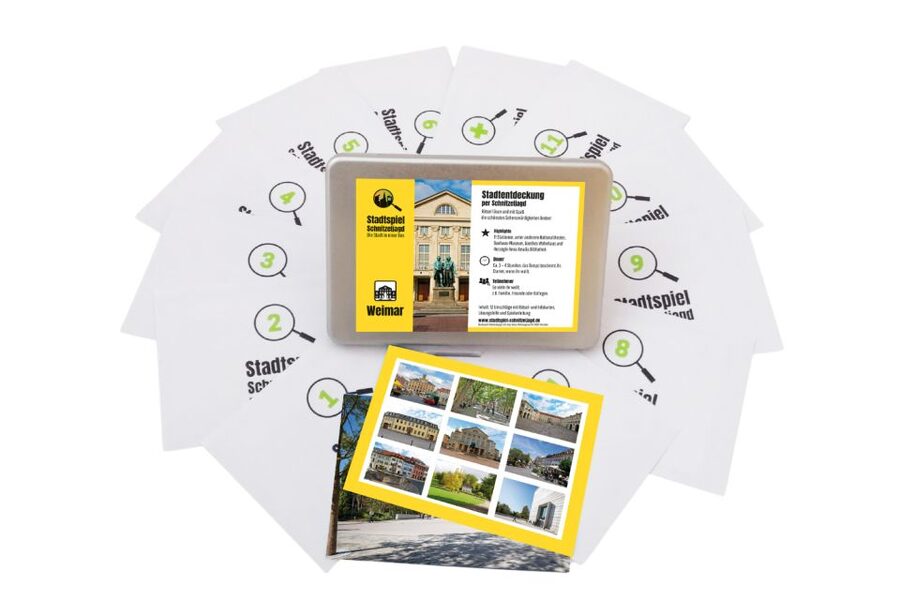
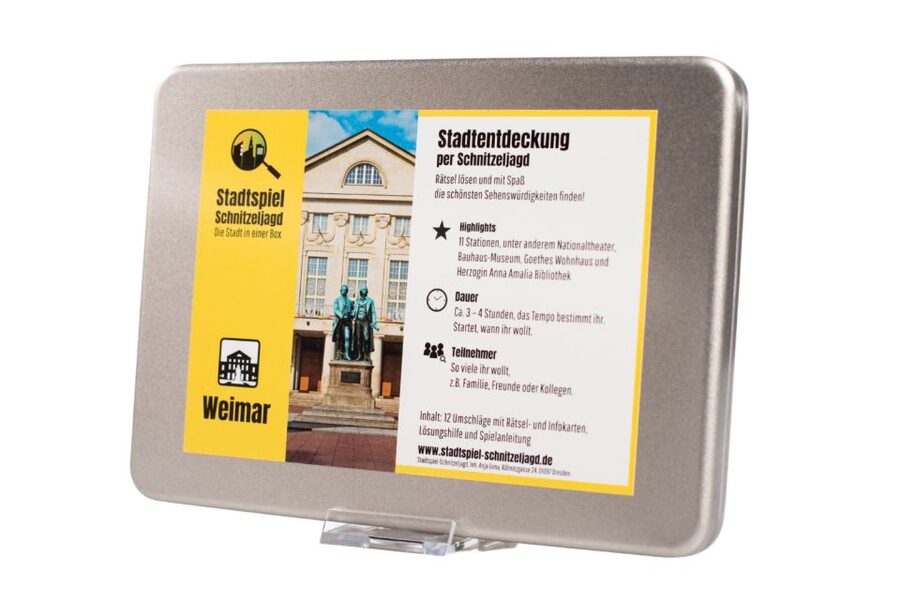
What makes this work is the structure of the game box. You get 11 sealed and numbered cards, each with riddles, directions, and information. There is also an emergency card that contains solutions if you get stuck.
You will not know in advance the exact order you open the cards. Each time you solve a riddle, the answer gives you a number that points to the next card to open. That means the experience stays fresh even if you think you already know Weimar well.
Each stop comes with background details too. After you solve the clue and arrive at a sight, you get information about what you are seeing, including its historical background and current use. It is a smart setup because you learn something real without having to follow a group that only pauses for one photo.
The duration is listed as 150 minutes. In practice, the game format invites you to go slower when something grabs you. If you love reading and looking closely, you can easily stretch it.
Weigh these Weimar picks against each other
- Weimar: Old Town Guided Walking Tour
★ 4.7 · 1,080 reviews - Weimar: DunkelWeimar, true crime citytour and game
★ 4.0 · 64 reviews - Weimar: Old Town Tour Classical Weimar
★ 4.5 · 33 reviews
Starting at the Bauhaus Museum: the perfect opener for a puzzle-driven town
The walk begins at the Bauhaus Museum, described as newly opened. That is a great starting point for two reasons. First, it grounds the whole experience in Weimar’s design and art DNA. Second, it gives you a clear “anchor” for your first puzzle moment.
From there, the route typically moves into the historic center where Weimar’s cultural names are everywhere. You pass the national theater along the way, then continue toward the Goethe and Schiller sites.
If you enjoy architecture and street-level storytelling, this opener is ideal. You start with a modern lens, then you transition toward the classic cultural core of the city.
Goethe and Schiller stops: turning famous names into real places you can locate
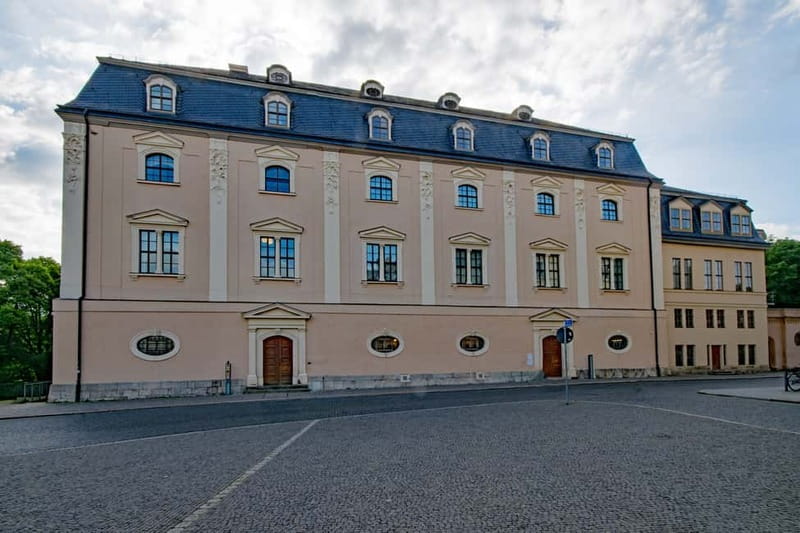
Weimar is Goethe and Schiller country, but it is easy to forget that these are not just names in books. In this game, those residences become points you reach on foot, with directions you follow and clues you solve.
You will pass the former residences of Goethe and Schiller. The game also feeds you context about each stop, including what the buildings were and what they are used for now. That “past to present” connection is exactly what makes self-guided exploring feel meaningful, not random.
A bonus here is pacing. You do not have to sprint through the classics. If you want to build in a longer visit at a specific place, you can. One of the practical joys of the format is that it lets you steer your own itinerary without breaking the game.
Anna Amalia Library: the must-plan stop if you want to enter
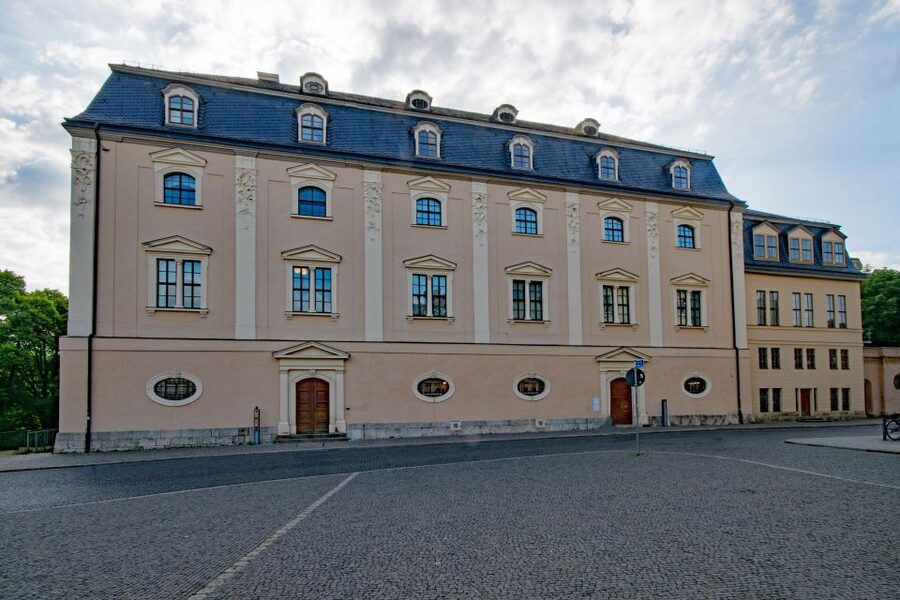
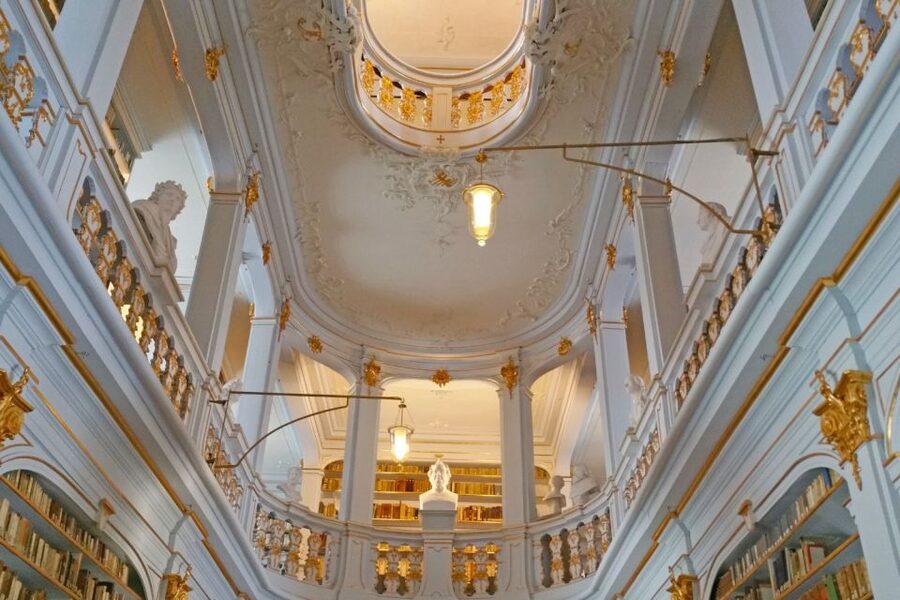
The Anna Amalia Library is one of the big attractions on the route. The game takes you by it, and that alone is valuable if you want the sight and the story.
But if your goal is to go inside, plan ahead. A solid tip from real play advice is to buy tickets the day before or early in the morning on the same day. Later in the afternoon, tickets can run out, and that can spoil the highlight for your specific visit.
So here is the move: if the library interior matters to you, set an early-day priority. If it does not, you can still enjoy the area and keep the game moving.
Also remember that entrance fees are not included in the game. That means your enjoyment depends on what you choose to pay for and when.
The national theater and the small streets that make the city feel human
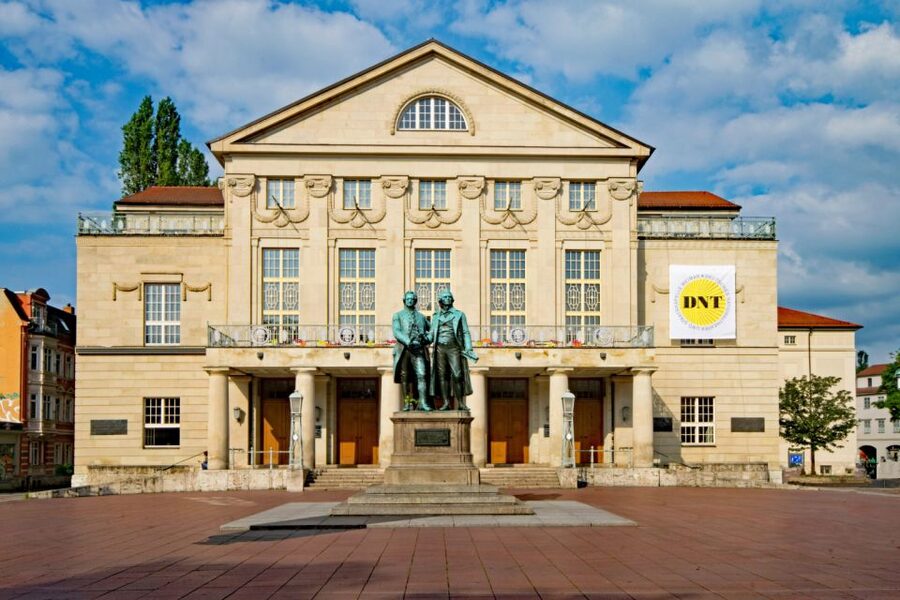
Along the route, you pass the national theater. Even if you are not catching a performance, seeing a major cultural building from the outside helps you understand the scale of Weimar’s arts scene.
The bigger value of these stops is how they connect. This is not just a sequence of icons. It is a walk that strings together places you can actually reach on foot, with directions that keep you moving through the historic center logically.
You also get the payoff of reading the streets around the buildings. By the time you are halfway through, you are less likely to miss the “in-between” details such as courtyards, viewpoints, and the way streets funnel you toward the next clue.
Ilm river park and the castle area: where your brain can slow down
Later in the game, you come by the castle and the park area around the river Ilm. This part changes the mood. It is a chance to step away from the tight blocks and enjoy a more open setting.
You still get the game structure, but the experience becomes more about atmosphere. The Ilm river park area gives you places to pause, take a photo, and reset. It also helps break up the day so you do not feel like you are doing pure museum mode.
If you are the kind of person who likes a view at the end of an activity, this ending zone is practical. You can finish the game and still enjoy the surroundings, without needing another reservation or ticket.
How long it really takes, and how to pace it with your energy
The duration is listed as 150 minutes. That is the time window for most people to complete the walk and solve enough clues to get through the main stops.
But the best thing about a card-based scavenger hunt is control. You can pause at any time for photos or a break, then continue whenever you feel ready. If your group includes kids, teens, or anyone who gets bored easily, this flexibility is a real advantage.
One smart approach is to decide in advance what you care most about. If the Goethe or Schiller sites need more time, allot extra minutes there. If the Anna Amalia Library is your top priority, build your schedule around early tickets so the day does not hinge on luck.
If you finish early, you can continue exploring nearby streets on foot. Weimar is compact, and the game puts you in the middle of the action.
Price and value: a group deal that works better than you think
The price is listed as $41 per group up to 10, and the game box includes shipping. That means the cost does not balloon as you add people, which is great for families and small friend groups.
You are also getting more than a route. The box includes 11 numbered cards with riddles, directions, information, and interesting facts, plus the emergency card with solutions. You are effectively buying a self-guided storyteller that you can control moment to moment.
Keep one practical point in mind: you still need to pay for entrances if you want to go into specific sights. The game handles the walking and the context, not ticketed access.
Also, there is no tour-guide included. That is part of why it is affordable, and it is part of why it works so well when you want independence.
Logistics without stress: mailing the box or picking up in Weimar
You will receive the scavenger hunt box via mail, with shipping included. Shipping takes about 4 working days within Germany, and it is shipped earliest 2 weeks before your selected date. That means you should not plan this as a last-minute grab unless you live in Germany already.
If you would rather avoid mail timing, you can pick up the box in Weimar at the Tourist Information Weimar, Markt 4. The opening hours are Monday to Saturday 9:30 AM to 6:00 PM, Sunday 9:00 AM to 2:00 PM for May to December, and January to April includes Monday to Saturday 9:30 AM to 5:00 PM with the same Sunday hours.
Meeting point details can vary depending on the option booked. The practical takeaway is simple: confirm your start point and retrieval method so you do not lose time on day one.
Once you have the box, you can play after you receive it, regardless of the selected date and time. That flexibility is useful if your train is delayed or you wake up with less energy than planned.
What to bring: shoes, the box, and a realistic plan for entrances
Bring comfortable shoes. This is a walking game through the historic center and it works best when your feet feel good.
Bring the game box and be ready to do a little thinking. The cards are sealed, numbered, and self-contained, so the experience depends on you taking the riddle step seriously, even if you are traveling with people who usually say they hate city tours.
One more thing: plan for entrances if that is part of your day. Entrance fees are not included, and the most time-sensitive one based on practical advice is the Anna Amalia Library.
If you are traveling with more than one person, assign turns. That keeps everyone invested, including the people who roll their eyes at the idea of sightseeing.
Who this scavenger hunt suits best in Weimar
This is ideal for people who want structure without a strict schedule. If you like wandering, but you also want help staying oriented and learning as you go, the game format clicks.
It is also a strong choice for families with older kids and teens. The turn-taking and the playful puzzle approach can make a city trip feel less like homework and more like a shared activity.
Small groups benefit too, because the price is per group up to 10. If you are traveling with friends and you want one affordable plan that covers everyone, this is a practical fit.
If you prefer a guided lecture, this may feel too self-directed. There is no tour-guide included, so you will not get spontaneous live explanations beyond what is printed in the cards.
Should you book this Weimar game?
Book it if you want a flexible, low-pressure way to see Weimar’s core sights, especially if you are traveling with a group that needs variety. The standout strengths are the self-paced format, the interactive riddle cards, and the way the game naturally leads you to major landmarks like Bauhaus, Goethe and Schiller sites, the Anna Amalia Library, and the Ilm river and castle area.
Skip or reconsider if your main priority is timed indoor access without any planning. The library interior, in particular, can require early ticket timing. If you know you want specific entrances late in the day, you might end up frustrated.
If you can do one small bit of planning, like arranging early tickets for the Anna Amalia Library, this becomes one of the more satisfying ways to explore Weimar in a single day.
FAQ
How long does the Weimar scavenger hunt game take?
The duration is listed as 150 minutes. You can pause the game at any time and decide how long you want to stay at each location, so your day may run longer depending on your pace.
Where does the scavenger hunt start?
The game starts at the Bauhaus Museum. After that, the card riddles and numbers guide you from stop to stop through the historic city center.
Do I get a tour guide with this activity?
No. A tour-guide is not included. You are essentially playing the self-guided game with the instructions and information provided in the box.
How do I get the game box?
You can receive the box by mail with shipping included, or you can pick it up in Weimar at the Tourist Information Weimar, Markt 4. Shipping can take up to 4 working days within Germany, and the box is shipped earliest 2 weeks before your selected date.
Are entrance fees included?
Entrance fees are not included. The game includes sightseeing and information, but any ticketed entry to sights is on you.
Can I cancel?
Yes, free cancellation is available up to 24 hours in advance for a full refund. You can also reserve now and pay later to keep your plans flexible.
Fresh reviews out of Weimar
- Weimar: DunkelWeimar, true crime citytour and game★ 4.0 · 64 reviews
- Weimar: Old Town Guided Walking Tour★ 4.7 · 1,080 reviews
- Weimar: Old Town Tour Classical Weimar★ 4.5 · 33 reviews