Reviewed · BERLIN TOURS
Small Group Tour: “Wild Kreuzberg”
Berlin’s Kreuzberg is where everyday life rubs elbows with alternative nightlife. On this small-group walk, you start at Kottbusser Tor and follow the neighborhood’s energy into side streets that still carry the “squatter scene” story. I particularly love the feel of Oranienstraße and the fact you get to see it in motion, not just from a photo.
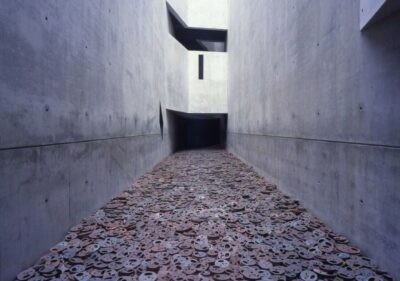
Two stops anchor the tour for me. I love how the Museum of Objects treats everyday manufacturing and stuff you walk past every day, and I love ending up around Bethanien, an art-squat in a former hospital where the city’s counterculture history is literally built into the place.
One drawback to think about before you book: this is a German-language guided tour. If you want a lot of English explanation, you may not get full value from the stories even if you enjoy the streets and sights.
People like the pace because the group is small, usually 3 to 12. And one name that pops up in feedback is Ferenz, praised for a very individual, highly interesting approach, with lots of cool, wild details about Kreuzberg.
Key highlights to look forward to
- Kottbusser Tor as your launchpad, where street life meets night culture and the U1 overground rails slice the square right through
- Oranienstraße and Oranienhöfe, including a coffee break and a feel for the old SO36 postal district vibe
- Museum of Objects and the neighborhood’s take on mass production, viewed while you’re actually walking through Berlin’s everyday scenes
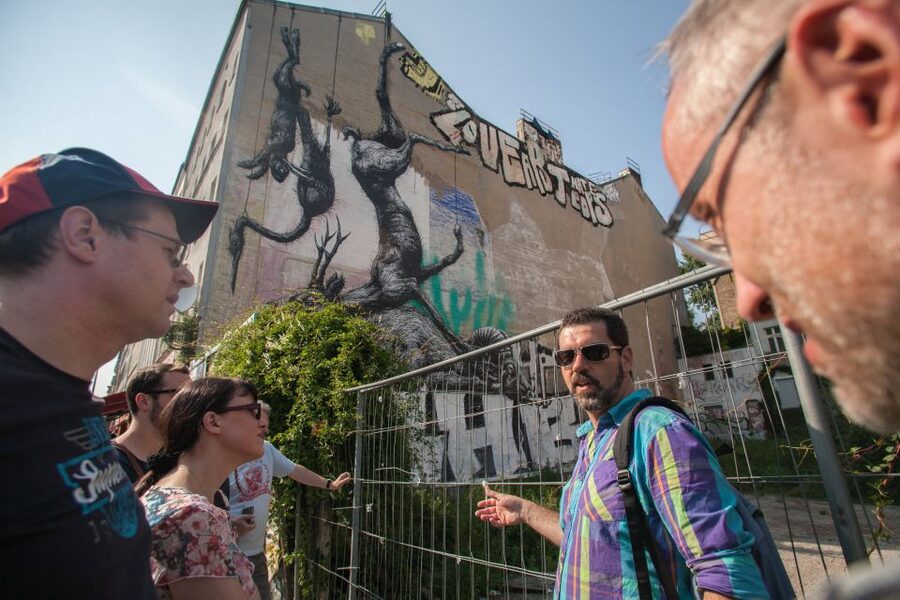
- Bethanien and Rauchhaus, art-squat spaces tied to the former hospital and other traces of the squatters’ life
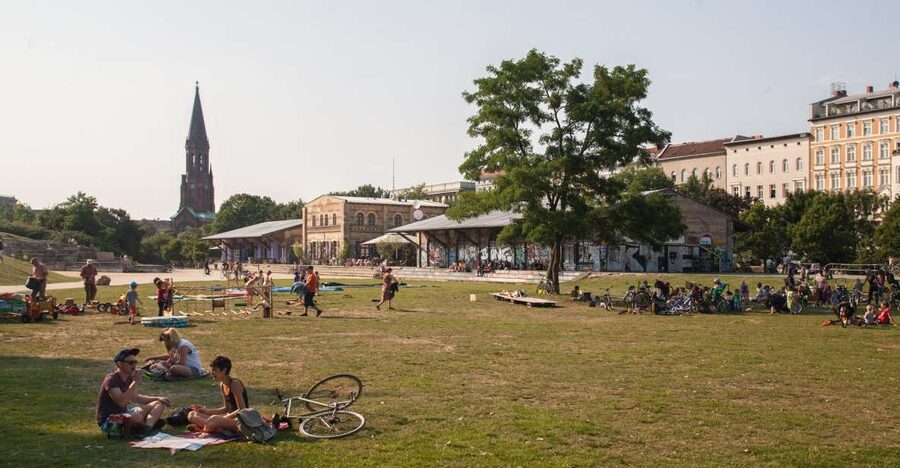
- Fontane-Apotheke and Görlitzer Park, mixing a famous pharmacy stop with a park that used to be a station
Entering Kreuzberg at Kottbusser Tor, where the U1 rails split the street scene
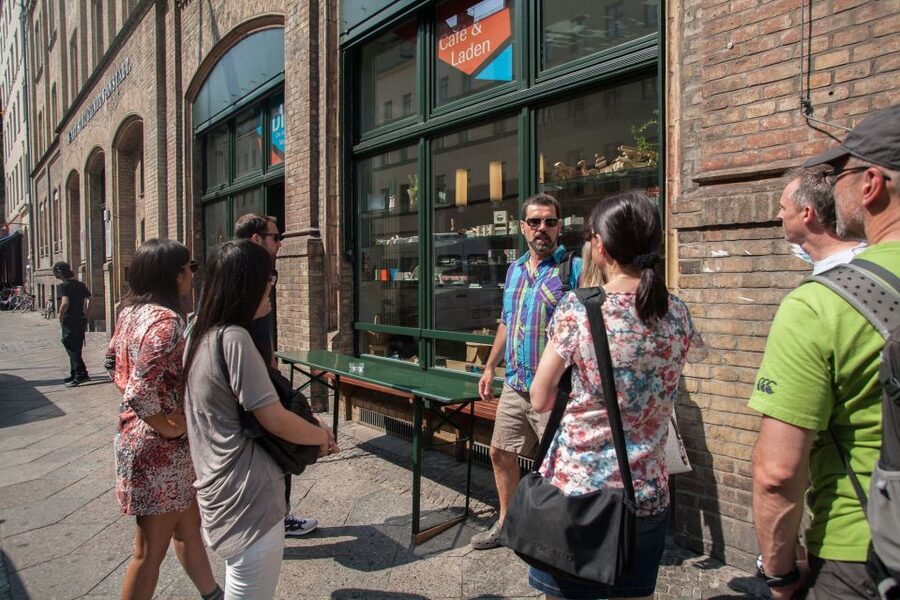
Your tour starts at 137 Skalitzer Straße, in front of Gold Exchange next to REWE. The nearest U-Bahn is Kottbusser Tor (lines U1 and U8), from the Skalitzer Straße exit. It’s a good start because you immediately see the exact kind of Kreuzberg contrast this tour is built around, day-to-night energy in the same block.
At Kottbusser Tor, you’ll be right in the thick of it. There’s the Turkish market atmosphere, Arabic restaurants and bistros, and the mix of chic cafes with alternative clubs and bars. What makes the scene extra memorable is how the famous U1 overground rails run through the square, literally dividing the space into two halves while everything keeps moving.
This is one of the reasons I like this tour layout. You don’t begin with a “history lecture.” You begin with noise, people, food smells, and the real geometry of the neighborhood. It helps you get your bearings fast before you start caring about any backstory.
Tip: Wear shoes you can walk in for three hours without thinking about it. This is a walking tour first, sightseeing second.
Weigh these Berlin picks against each other
- Berlin: Reichstag, Dome and Government District Guided Tour
★ 4.7 · 18,288 reviews - Berlin: 1-Hour City Tour by Boat with Guaranteed Seating
★ 4.3 · 16,993 reviews - Berlin: TV Tower Standard Entrance Ticket
★ 4.4 · 15,883 reviews
From Adalbertstraße skyscrapers to the Kreuzberg Museum, seeing change without losing the plot
After you settle in at Kottbusser Tor, the route turns toward bigger visual landmarks and then into culture spaces. The tour includes stops where you can check out the Adalbertstraße skyscrapers and the Kreuzberg Museum.
Why those matter: skyscrapers and museums can feel like they belong to different Berlin eras, but Kreuzberg is full of that “layers” feeling. You see newer structures rising among older street patterns, and you get a chance to read the neighborhood as an evolving place rather than a frozen theme park.
The Kreuzberg Museum stop is also a practical break from pure street watching. Even if you only skim what’s on offer, it gives your walk a frame: Kreuzberg isn’t just a place to party or shop. It’s a district shaped by migration, politics, and street-level culture.
If you’re the type who likes “why is this street like this,” these are the stops that start answering that question.
Oranienstraße and Oranienhöfe, the punk district vibe you can actually feel
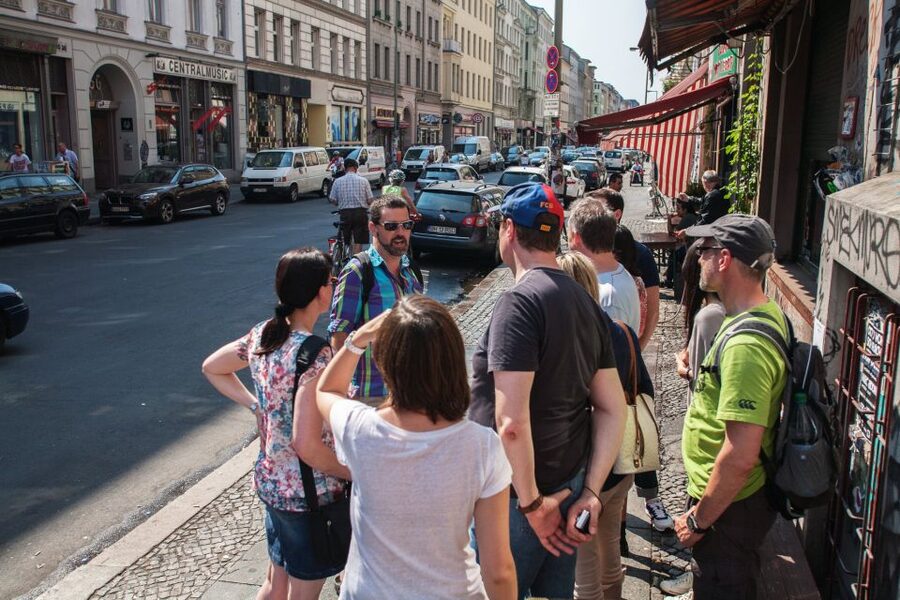
Next comes Oranienstraße, described as the heart of the former SO36 postal district, still known for its punk-district character. This is where the tour really leans into the neighborhood’s identity through everyday scenes: restaurants, bars, shops, and that mix of street-style normal with counterculture edge.
You’ll also hit Heinrich-Platz on the way through, then continue onward toward Mariannenplatz later. But I’d treat Oranienstraße as the emotional center of the walk, because it’s the stretch where everything feels closest to what you might imagine when you hear Kreuzberg is different.
A highlight stop here is the Home for the Blind. You’ll also get time to relax with coffee in Oranienhöfe. That coffee break is worth paying attention to, because it turns the tour from “constant walking” into “walking with moments to reset.” It also gives you a calmer way to observe the area without missing the guide’s stories.
Value angle: Since food and drink are not included, the coffee break is a chance to budget a small extra cost while still getting that structured pause. You’re not forced into a meal plan, but you still get a guided moment to slow down.
Museum of Objects to Bethanien: mass production, then the art squat era in a former hospital
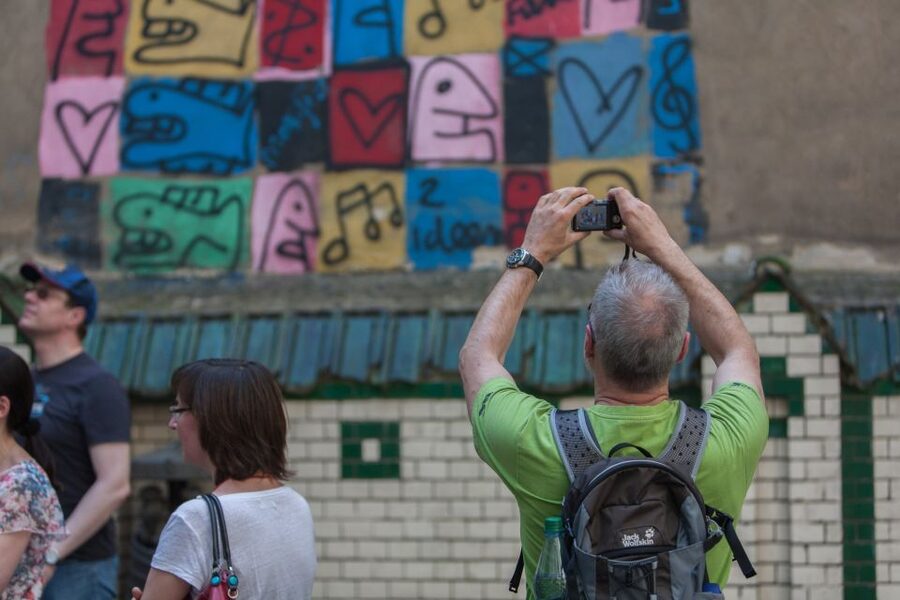
The walk includes the Museum of Objects, which is focused on the history of mass production. This is a great pairing with Kreuzberg itself, because the district has always been full of practical street life, repairing, reusing, and making do, even when the city is changing around you.
What I like about this stop is how it reframes “stuff.” You stop thinking of objects as background. You start noticing how manufacturing and consumer habits shape what you see everywhere, from storefronts to apartment buildings to the objects people carry daily.
Then you move toward Mariannenplatz, and that’s where the tour shifts into squatter-era territory. You’ll see Bethanien, an art-squat in a former hospital. Nearby is the Rauchhaus, with more traces of the squatters’ life from days gone by.
Even if you know nothing about Berlin’s squatter history, this part works because the setting does most of the storytelling. You’re walking through places where the building’s past still affects how it’s used now. That’s the difference between reading about history and seeing it anchored in streets.
Practical note: This section may feel a bit more “interpretive,” meaning the guide’s explanation matters. If you understand German only loosely, you might still enjoy the places, but the meaning will land better if you catch the key phrases.
Another way to spend a Berlin afternoon:
- Berlin: Boat Tour Along the River Spree
★ 4.4 · 11,252 reviews - Discover Berlin Half-Day Walking Tour
★ 5.0 · 9,624 reviews - Berlin: Government District around the Reichstag Guided Tour
★ 4.7 · 8,447 reviews - Berlin: Reichstag, Plenary Chamber, Cupola & Government Tour
★ 4.6 · 8,422 reviews
Fontane-Apotheke and the everyday Berlin stops that feel like real life
Some tours only chase the dramatic sights. This one also includes Fontane-Apotheke, described as a well-known pharmacy. It’s the kind of stop that’s easy to skip on a self-guided walk because it doesn’t look like a monument at first glance.
That’s exactly why it’s valuable on a guided route. A pharmacy is everyday infrastructure. When a guide points out why a place is famous, it turns a simple stop into something you can place inside Kreuzberg’s story of community and long-term presence.
You also pass through neighborhoods full of small shops and different dining options. The point isn’t shopping. The point is context: Kreuzberg is a district where normal services sit right beside alternative culture, and you experience that mix by walking it.
Görlitzer Park, once a train station, and the symbolic link at Oberbaumbrücke
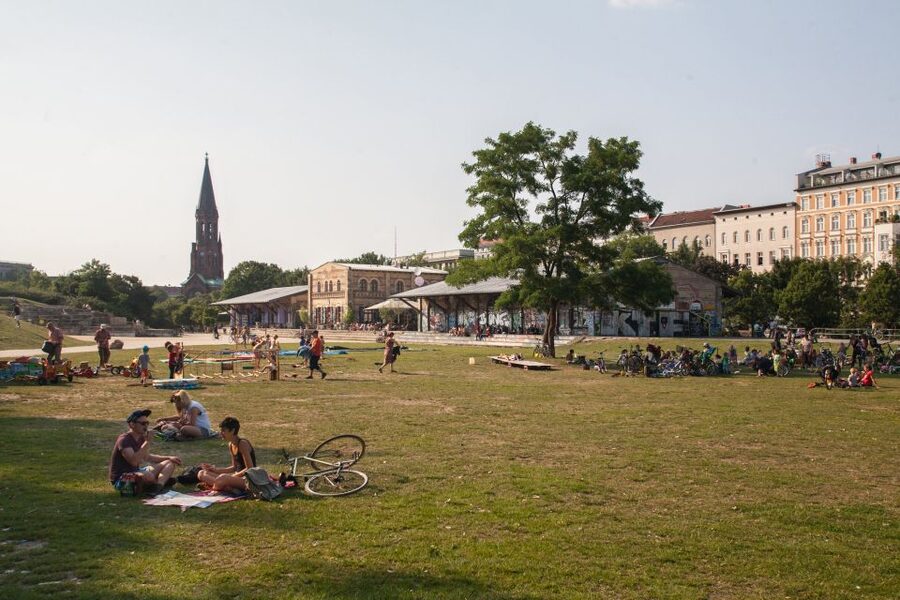
Later, you’ll stroll through Görlitzer Park, which was previously a train station. That detail matters because it’s a reminder that Berlin keeps reusing spaces. What used to move people through the city now holds them in a park setting.
Then you walk toward Oberbaumbrücke, described as symbolically linking East and West Berlin. Even if you’re not focused on big historical speeches, this is a satisfying way to end the cultural thread of the day: from local street life, to squatter-era buildings, to a bridge that represents Berlin’s divided past and shared present.
There’s a reason this structure works for most people. You don’t finish at a random corner. You finish with a viewpoint on how Berlin’s geography and politics overlap, right where the district mood has been building for hours.
Price and small-group value for $24, plus what to watch for
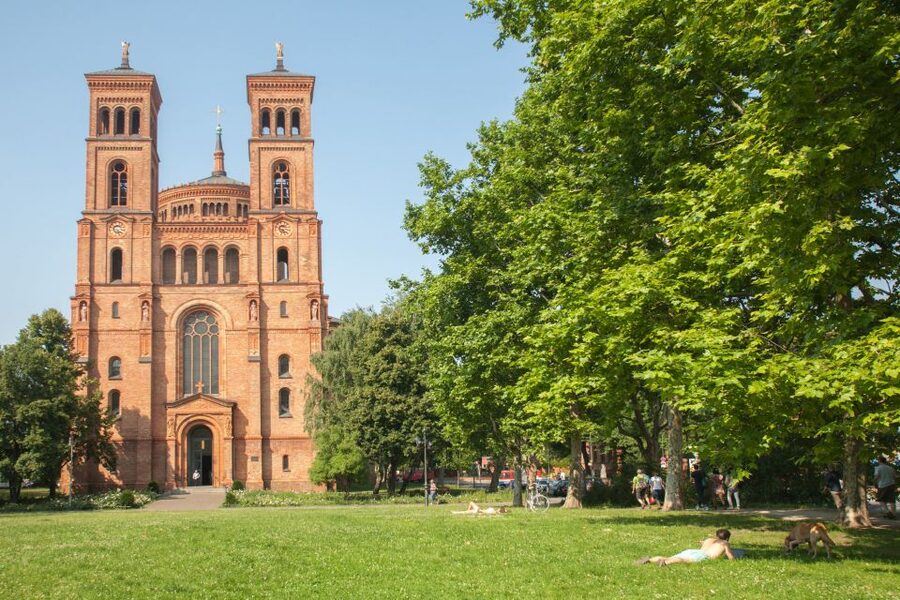
The price is $24 per person for about 3 hours, and the group size is min. 3 pax, max. 12 pax. For many visitors, the value is in three places:
- You get a guided route through places you might not connect on your own.
- You get multiple “types” of stops, from museums to art squat sites to everyday landmarks like a pharmacy.
- You get a structured coffee break and a clear sense of progression from square to streets to parks.
What you should watch for is that the tour is live guided in German. That affects value more than people think. If your German is strong enough to follow stories, you’ll likely feel like the tour clicks into place. If not, you’ll still enjoy the places, but you may treat it more like a visual walk than a full interpretation of the district.
Also, it’s in all weathers, and you can get a rain poncho if necessary. That means your “photo time” might be inside shop fronts or under cover, but the tour keeps moving.
Finally, there’s a real-world caution from one canceled-activity experience tied to language expectations and participation. The operator can cancel if the minimum number of participants isn’t reached. So if your schedule is tight, it’s smart to double-check your plans close to departure.
Who should book this Kreuzberg walking tour, and who should skip it
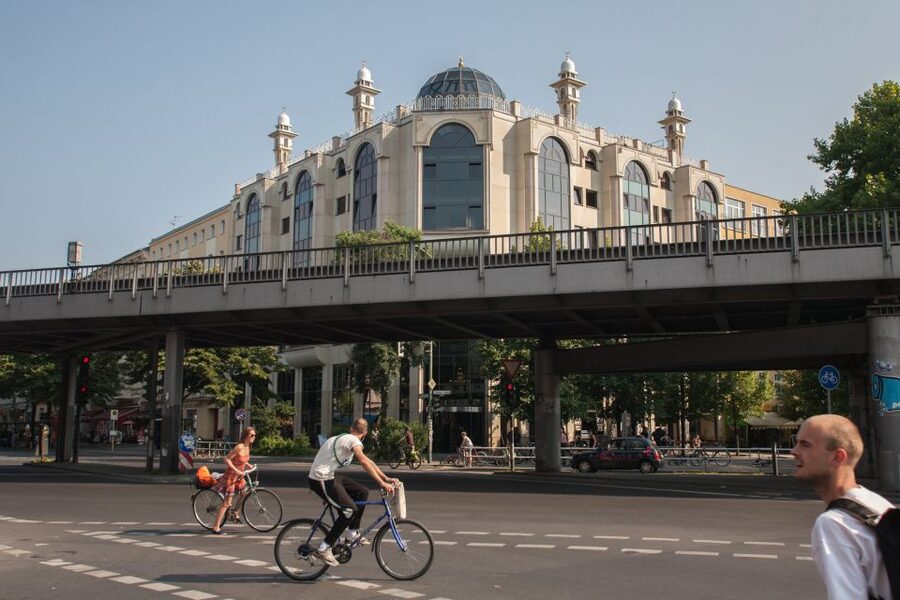
This tour fits best if you:
- Like your Berlin with street life, not just famous postcards
- Want a guided walk through Kreuzberg’s markets, cafes, and alternative culture
- Care about how buildings can carry counterculture history, especially around Bethanien and Rauchhaus
- Enjoy mixing museums with neighborhoods, like Museum of Objects plus real street scenes
You might want to skip (or at least go in with lower expectations) if:
- You need an English-led experience, because the guide speaks German
- You prefer short stops and minimal walking, since this is still a 3-hour walk
- You don’t like the idea that the tour can depend on minimum participation
If you’re on the fence, remember this: the tour is built around relationships between places. If you understand the guide’s language, the district starts making sense fast. If you don’t, you may still enjoy the streets, but the “why” will be harder to catch.
Should you book Wild Kreuzberg?
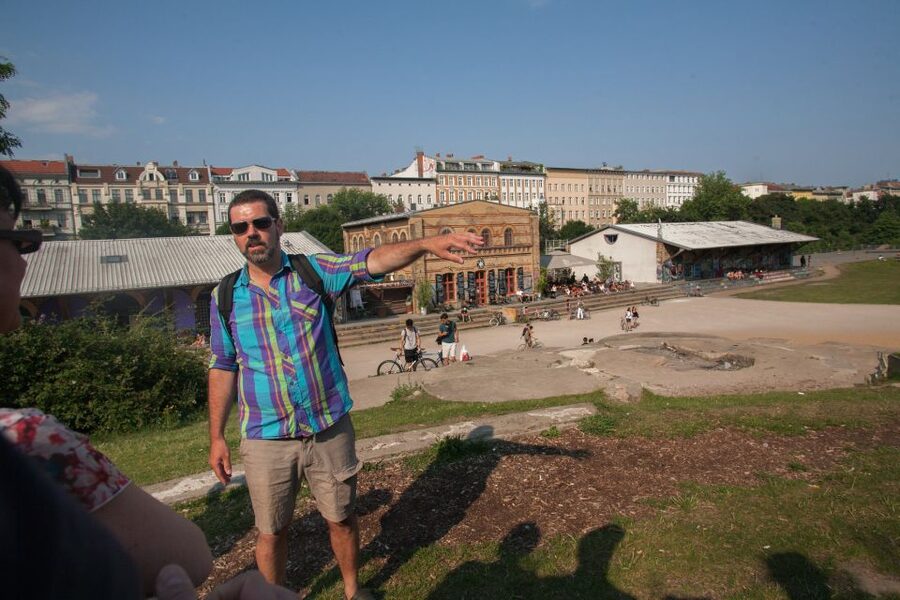
I’d book it if you want Kreuzberg with a guide who can connect Kottbusser Tor, Oranienstraße, and the squatter-era sites around Bethanien into one coherent walk. The $24 price is hard to beat for a 3-hour, small-group format that includes museum time and multiple meaningful stops.
I would not book it blindly if you’re relying on English narration. The German-only format is the biggest deal-breaker. If you can handle German comfortably, this tour is the kind of experience that makes a neighborhood feel personal, not just visited.
If you’re okay with that tradeoff, lace up your shoes, plan for rain as needed, and get ready to walk through Kreuzberg’s real contrasts, markets by day, alternative energy by night, and history you can still see in the buildings.
FAQ
How long is the Wild Kreuzberg walking tour?
The tour lasts 3 hours.
What is the group size for this tour?
It runs with a minimum of 3 people and a maximum of 12.
Where does the tour start, and what’s the nearest U-Bahn station?
Meet at 137 Skalitzer Straße, in front of Gold Exchange and next to REWE. The nearest U-Bahn station is Kottbusser Tor (lines U1 and U8), using the Skalitzer Straße exit.
Is food and drink included?
No. Food and drink are not included.
Is the tour guided in German, and does it run in rain?
Yes, there is a live tour guide and it is in German. The tour takes place in all weathers, and a rain poncho is distributed if necessary.
What is the cancellation policy?
You can cancel up to 24 hours in advance for a full refund. The operator may also cancel at short notice if the minimum number of participants is not reached. For groups of 3 or more, the cancellation deadline is 3 days before the scheduled tour.
Fresh reviews out of Berlin
- Berlin Uncensored: A History of Sex & Freedom★ 5.0 · 50 reviews
- Berlin Food & Cultural Tour: Must-Try German & Berliner Classics★ 5.0 · 51 reviews
- English Comedy Show with Pizza and Shots in Central Berlin★ 4.5 · 51 reviews
- Rude Bastards Tour of Berlin★ 4.8 · 51 reviews
- Private Taxi Tour of Berlin East and West and Neighbourhood approx. 4-6h★ 5.0 · 55 reviews
- Rickshaw Sightseeing City Tours Berlin – Rikscha Tours★ 4.0 · 55 reviews
- Berlin: City Highlights Express & Panorama Roof Terrace★ 4.9 · 55 reviews
- Berlin during Nazism – Tour in Italian★ 5.0 · 56 reviews
Berlin Tours, compared.
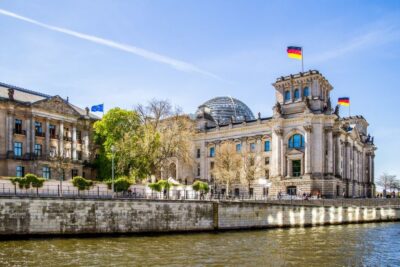
Reichstag, Dome and Government District Guided Tour
Read our review →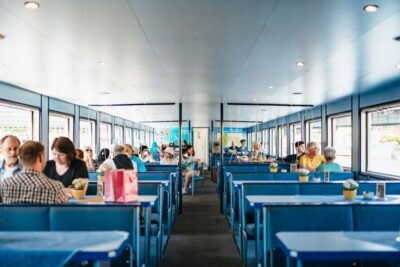
1-Hour City Tour by Boat with Guaranteed Seating
Read our review →
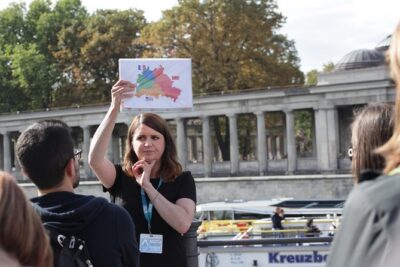
Government District around the Reichstag Guided Tour
Read our review →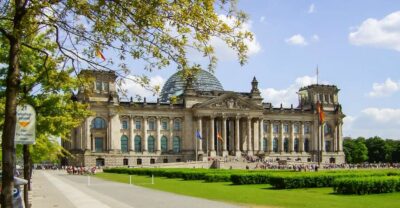
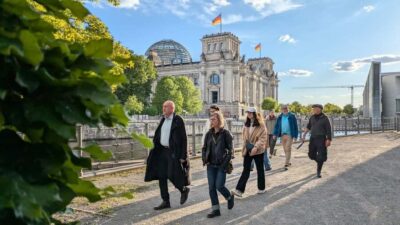
Reichstag, Plenary Chamber, Cupola & Government Tour
Read our review →