
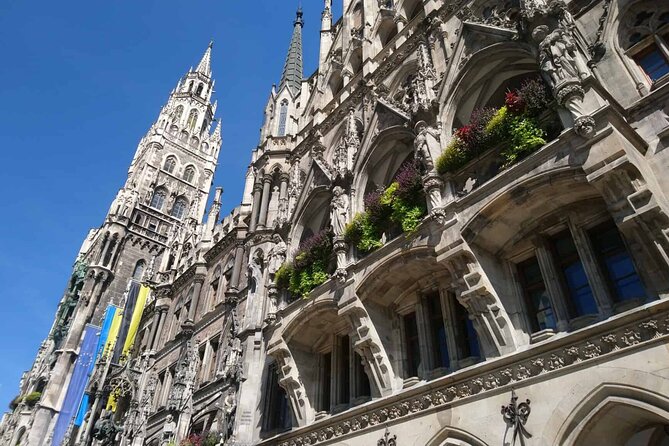
Reviewed · CYCLING TOURS
Best of Munich Electric Bike Tour
Munich on an e-bike is a smart way to get the feel of the city without paying the price in sore legs. This 4-hour tour is built around classic landmarks and quick stories, so you’re not stuck staring at a map or doing long distances on foot. You also get to cover more ground while still stopping often enough to actually notice what you’re seeing.
I like the mix of big-name architecture and the everyday places that make Munich feel like Munich. I also like that the tour includes an electric bike and helmet, which makes the ride comfortable even if the day is a bit chilly or you are not feeling athletic. The main thing to consider is that this is a group tour with up to 20 people, so you should expect a lively pace and keep your head up for traffic and other riders.
Key points to know before you go
- E-bike comfort makes the ride easier, especially when the weather is not great.
- Frequent stops mean short photo breaks and real context, not just speed through the city.
- Big historical range, from royal Munich to 20th-century buildings, handled as part of the city story.
- Garden time plus a real beer moment, including a famous beer garden stop.
- Excellent overview value for first-timers who want a clean path for later exploring.
- Guides matter, and several names like Rob, Cannan, Susanna, Karl, Mark, and Dan show up often in people’s experiences.
Munich by e-bike: why this tour works
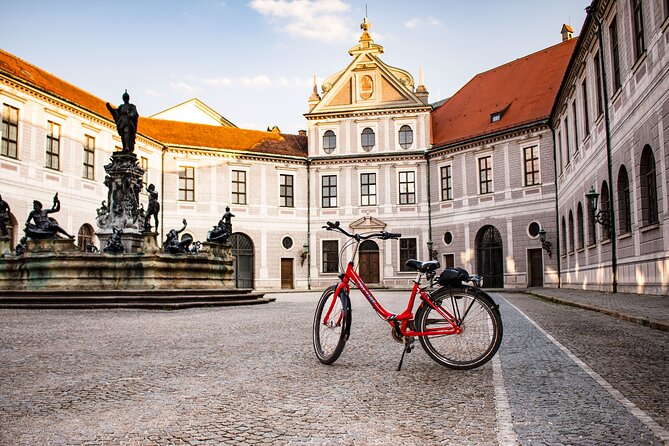
Munich is not a city where you have to choose between history and fun. This tour threads both together by pairing famous squares and palaces with places that are part of daily life, like beer gardens and food markets. The result feels like someone is showing you the city’s main chapters, in order, with enough time at each stop to understand what you are looking at.
The e-bike part is not just a gimmick. With electric assist, you can keep a steady, relaxed pace through parks and across busy areas, which means you arrive at each stop with energy instead of starting to fade halfway through. Several guides have impressed people for staying on top of the group and traffic awareness, which matters when you are riding in a city center.
One more reason this tour works: it gives you a mental map fast. After you see these key points in a single route, you’ll know where to return later, whether that is a museum, a garden, or a neighborhood you want to wander.
More Bike Tours in Munich
- Munich 3-Hour Guided Bike Tour
★ 4.5 · 1,731 reviews - Classic Mike’s Bike Tour daily @ 11.30 incl Beer Garden & Surfers
★ 5.0 · 1,246 reviews - Neuschwanstein Castle by Bus Incl. Bike Ride or Hohenschwangau
★ 5.0 · 607 reviews
Meeting at Karlsplatz 4, and what the group setup means
The tour meets at Karlsplatz 4, 80335 München, and it ends back at the same spot. It’s offered in English, uses a mobile ticket, and typically runs for about 4 hours.
Group size is capped at 20 travelers, and the group may be mixed with non-e-bikes. That combination can be totally fine, but it does mean you should be ready for small adjustments in speed and spacing. If you prefer a quieter, more spaced-out ride, this is the one factor I’d think about ahead of time.
Also, while the itinerary includes many stops, most are brief. Think in terms of quick orientation and photo opportunities, not long museum visits. If you want to spend hours inside one major site, you’ll use this tour as your shortlist for later.
Stop 0: Wittelsbacherbrunnen and the neo-classic start
Your first landmark is the Wittelsbacherbrunnen, a monumental fountain at the northwestern edge of Munich’s city center. It was constructed between 1893 and 1895, designed by sculptor Adolf von Hildebrand, and it uses a neo-classic style to represent the primal forces of water.
Even if fountains sound like a small start, this one is a strong setup. It signals the tour’s theme right away: Munich’s history is written in stone and street layouts. You get an early sense of how the city blends art, symbolism, and public space.
This is also one of those stops where your guide can help you see details you might miss on your own, like the sculptural intent and why the fountain belongs exactly here in the city grid.
Karolinenplatz and Königsplatz: Bavaria-France symbolism and the museum quarter
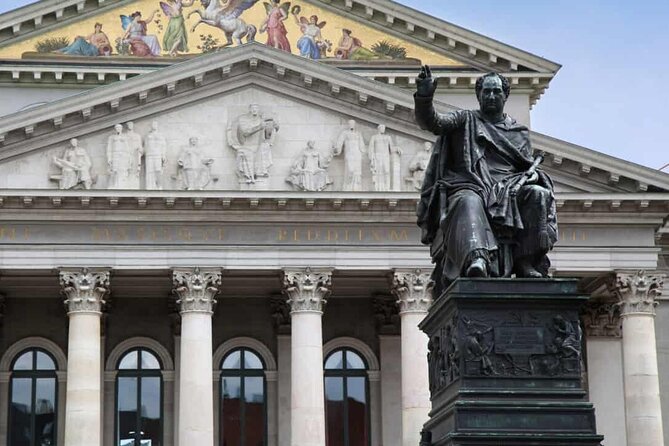
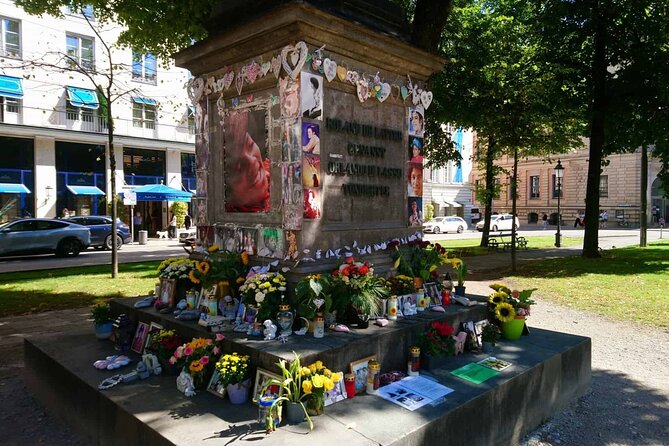
Next comes Karolinenplatz, in the Maxvorstadt district. The square is tied to the Strahlenplatz motif, and it symbolizes the development of the special relationship between Bavaria and France in the early 19th century. It is named after Queen Caroline of Bavaria.
The value of this stop is simple: it teaches you how Munich uses public squares to tell political and cultural stories. When you understand that, the city starts reading back to you as you ride.
Then you hit Königsplatz (King’s Square), a major Neoclassical area with the Propyläen Gate and two major facing institutions: the Glyptothek and the Staatliche Antikensammlungen. This surrounding area is also part of the Kunstareal, Munich’s museum and gallery quarter.
These stops are quick, but they set up a key advantage of the tour: you see where Munich’s art world lives, then you can decide later if you want to go deep at one specific museum.
Another way to spend a Munich afternoon:
- From Munich: Neuschwanstein & Linderhof Castle Full-Day Trip
★ 4.6 · 14,646 reviews - Neuschwanstein & Linderhof Castle-Fairytale Day Tour from Munich
★ 4.5 · 7,275 reviews - Munich: Third Reich & WWII Walking Tour
★ 4.6 · 6,181 reviews - Dachau Concentration Camp Memorial Site Tour from Munich by Train
★ 4.5 · 5,637 reviews
From the Führerbau to Alte Pinakothek: one city story, two very different moods
One of the most striking stops is the Führerbau, also called the Führer’s building. It was built between 1933 and 1937 during the Nazi period and used extensively by Adolf Hitler. Unlike many Nazi-associated structures that no longer exist, this one still stands today, and it currently houses the University of Music and Performing Arts Munich.
I’m glad the tour includes this because it prevents the “Munich as only pretty” version of travel. You get a chance to look at a real building that carried real power, then see how the site’s meaning has shifted over time.
After that emotional pivot, the route moves into art at the Alte Pinakothek (Old Pinakothek). It’s one of the oldest galleries in the world and is known for a strong collection of Old Master paintings.
If you are an art fan, this is a helpful checkpoint. You don’t need to choose right away between Old Masters, modern art, and design. The tour gives you enough reference points to make those decisions later without guessing.
Pinakothek der Moderne and Siegestor: design, memory, and a peace reminder
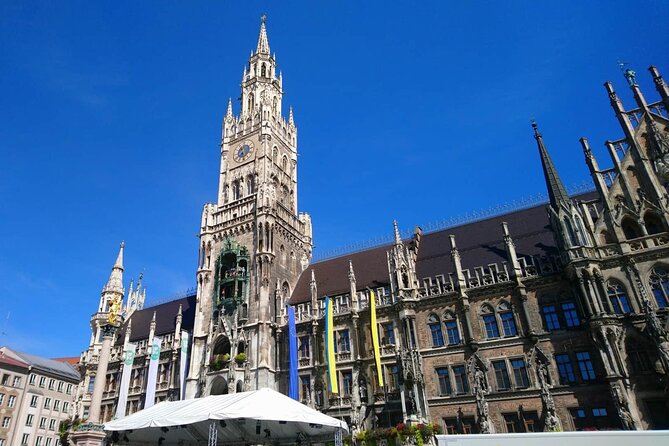
The next stop is Pinakothek der Moderne, a major modern art building that brings together several collections: modern and contemporary art, works on paper, design and applied arts, and even architecture museum content.
Even if you do not plan to enter that museum today, seeing the building matters. Modern Munich is not separate from older Munich. It is layered on top, in different styles and different eras.
Then you ride to Siegestor (Victory Gate), a three-arched memorial arch crowned with a statue of Bavaria and a lion-quadriga. Originally, it was dedicated to the glory of the Bavarian army. After World War II restoration, its message shifted into a reminder of peace.
This is the kind of stop where the city’s symbolism is practical, not just academic. Once you notice how meaning changed here, you’ll start spotting other examples in your later Munich walks.
Odeonsplatz and the Residenz complex: royal power in city-center form
At Odeonsplatz, you are in a large central square shaped in the early 19th century and developed alongside Ludwigstraße. It also ties to the Beer Hall Putsch of 1923, when a fatal gun battle ended the march on the Feldherrnhalle.
A square like this can feel like a photo opportunity, but it is also a lesson in how public space becomes part of political events. It’s worth paying attention to the layout so the story makes sense.
From there, the tour points you toward the Residenz München, the former royal palace of the Wittelsbach monarchs. It’s the largest city palace in Germany and is open for visitors focused on architecture, room decoration, and royal collections.
Quick stop or not, I think the Residenz is one of the best “orientation” experiences in Munich. You see the scale, you understand it’s not just a single building, and you leave knowing you can spend a future day there if you want.
Hofgarten, English Garden, and the beer garden break at the Chinese Tower
After the palace, you get a calmer moment in Hofgarten, the Court Garden between the Residenz and the Englischer Garten. It was built between 1613 and 1617 in an Italian Renaissance garden style, and the center includes a pavilion dedicated to the goddess Diana built in 1615.
Then the itinerary expands to Englischer Garten, one of the world’s largest urban public parks. The park is listed at 3.7 km² (370 hectares, 910 acres), and it follows an English garden style.
This is where the e-bike shines again. You can enjoy the scale without having to commit to a full day of walking. You’ll get the sense of space, then the tour moves you on before the rest of your energy runs out.
Next is the beer break at Biergarten am Chinesischen Turm. A beer garden in Bavaria is a shared-table culture, shaded by trees, with beer and food. The specific stop notes that an operator has run it since 1974, and it has 7,000 seating places, making it the second largest beer garden in Munich after Hirschgarten. It sells Hofbräu beer, and this spot is one of the most famous tourist-friendly beer gardens for good reason.
The practical note: the tour does not include food or drinks. So this is your cue to plan how you want to spend your money. If you want a snack and a cold beer, budget for it. If you prefer to keep it light, enjoy the atmosphere and save full meals for later.
Eisbachwelle and the Angel of Peace: river oddities and a classic viewpoint
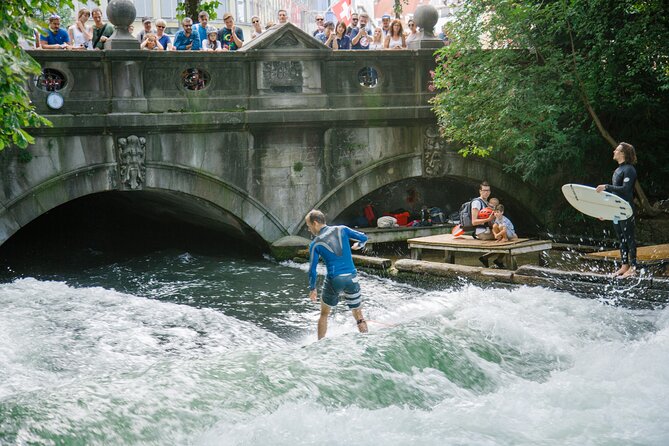
After beer garden vibes, the route heads toward the Eisbachwelle. This is a standing wave in the river near the Haus der Kunst area, and it’s famous as a surfing spot. The notes are detailed: the water is cold, shallow, sometimes around 40 cm deep, and it is only suitable for experienced surfers.
Even if you never plan to surf, it’s fun to watch. The city looks different when you see how people use natural features in unexpected ways.
Then you visit Friedensengel (Angel of Peace) in Maximilian Park. There’s a viewpoint and observation deck, with a 38-meter column in Corinthian style topped by a six-meter statue of the Angel of Peace. It is described as a replica of the Nike of Paeonius.
This stop gives you a clean end to the park-and-river mood and sets up the next phase of the tour, which becomes more institutional and city-building again.
Maximilianeum, Deutsches Museum, and Viktualienmarkt: modern institutions and real food
At Maximilianeum, you’re at a palatial building that began as a home for a gifted students’ foundation, and since 1949 it houses the Bavarian State Parliament.
Next is the Deutsches Museum, described as the world’s largest museum of science and technology. It has about 125,000 exhibited objects across 50 fields, and it receives around 1.5 million visitors per year. Even though this tour stop is brief, it helps you grasp the scale. If you love hands-on science or want to understand why this museum is such a big deal, you’ll know you are standing at the start of a major day-trip level experience.
Then comes Viktualienmarkt, a market grown from an original farmers’ market into a food-focused destination with around 140 stalls and shops. You can find flowers, exotic fruit, game, poultry, spices, cheese, fish, juices, and more.
This is a great “Munich tastes like something” moment. It’s also perfect timing because after all those monuments, you finally get a sensory payoff.
Ohel Jakob Synagogue: a modern chapter in Munich’s faith and memory
The last major landmark on the route is the Ohel Jakob Synagogue. It is the new main synagogue for Munich’s Jewish community and was built between 2004 and 2006. It was inaugurated on 9 November 2006, which is noted as the 68th anniversary of Kristallnacht.
If you want Munich as a whole city, not just a postcard city, this stop matters. It expands the story beyond royalty and beer, showing how the city continues to build new civic and religious landmarks in the modern era.
You’ll likely appreciate having this placed later in the tour, after you have already built context about Munich’s public spaces and symbolism.
How much does it cost, and what you actually get for $71.90
At $71.90 per person, this tour is priced like an efficient introduction to the core of Munich. You get a live guide, plus an electric bike and helmet. The biggest value is not just transportation. It is that the route is structured so you do not spend your limited time figuring out what matters and what can wait.
Not included: food and drinks. That’s normal for walking and riding tours, and it also means you stay flexible. You can do the beer garden meal on your schedule, or you can keep it minimal and treat it as a scenic stop.
Also keep in mind that there is an extra-cost traditional German beer sampling option mentioned in the tour highlights, offered at a famous beer hall. If that is your goal, plan to add a bit to your budget. If not, you can still enjoy the beer garden stop as atmosphere, with food and beer as optional purchases.
In my view, this price makes sense if you want a guided route, easy riding, and a strong shortlist of what to explore later.
The tour pace and who it suits best
This is designed as an overview tour. Most stops are around 5 to 10 minutes, so you’ll get the main points fast and then move on. That keeps the ride from dragging, and it also helps you get your bearings quickly.
From what people describe, the ride is also practical for many fitness levels because Munich’s center is relatively flat and the e-bike does the heavy lifting. In colder or rainy conditions, it still tends to feel manageable because the electric assist helps you avoid feeling worn out mid-route.
Who it suits:
- First-timers who want a structured route through the key sights
- History lovers who want context at major squares and buildings
- People who want to see a museum quarter, royal buildings, gardens, and markets without booking multiple separate activities
Who might hesitate:
- If you want long inside-the-building time, this tour’s stop length will feel short
- If you hate group logistics, remember the cap of up to 20 people and the possibility of mixed bikes
Should you book the Best of Munich Electric Bike Tour?
Yes, I would book it if you want an efficient, guided, and comfortable way to get oriented in Munich. The combination of major squares, art and museum areas, gardens, and a beer garden moment gives you a full city picture in half a day. The e-bike inclusion is a clear value add, especially if you travel in shoulder seasons or you just do not want to arrive tired at each stop.
I’d skip or choose carefully if your priority is deep museum time or you prefer very small groups. With up to 20 people and short stops, this tour is about seeing and learning the highlights, then using that knowledge to go back later.
FAQ
How long is the e-bike tour in Munich?
It runs for about 4 hours.
What is the meeting point for the tour?
The tour meets at Karlsplatz 4, 80335 München, Germany.
Is the tour offered in English?
Yes, it is offered in English.
What’s included in the price?
The price includes a live guide, an electric bike, and a helmet. Food and drinks are not included.
Is there a beer stop, and is beer included?
There is a beer garden stop, but food and drinks are not included in the tour price. The tour highlights also mention an extra-cost beer sampling option at a famous beer hall.
How big is the group?
The group has a maximum of 20 travelers and may include a mix of riders on e-bikes and non-e-bikes.
What is the cancellation option if plans change?
You can cancel for a full refund up to 24 hours before the experience starts, with cut-off times based on local time.
More E-Bikes in Munich
- Best of Munich Electric Bike Tour
★ 4.7 · 23 reviews - Best of Berlin E-Bike Tour
★ 5.0 · 77 reviews - Berlin: E-Bike Tour of the Berlin Wall and Mitte Highlights
★ 4.7 · 60 reviews - Best of Berlin E-Bike Tour
★ 5.0 · 37 reviews
Fresh reviews out of Munich
- Munich: Bulli Tour★ 5.0 · 9 reviews
- Private Day Trip from Munich to Eagle’s Nest and Hallstatt★ 4.5 · 9 reviews
- Neuschwanstein Castle Small-Group Guided Day Trip from Munich★ 5.0 · 9 reviews
- Munich: Highlights Walking Tour with a Guide★ 4.4 · 9 reviews
- From Munich: Private Guided Tour to Rothenburg ob der Tauber★ 5.0 · 9 reviews
- Private and full rickshaw tour in the English Garden★ 4.5 · 10 reviews
- Exploring Munich by Pedicab: Premium Two Hour Tour★ 5.0 · 10 reviews
- Segway Tour Munich Old Town 3 hours★ 4.5 · 10 reviews
Cycling Tours, compared.
Sights and Highlights Bike Tour with a Local Guide
Read our review →
Classic Mike’s Bike Tour daily @ 11.30 incl Beer Garden & Surfers
Read our review →

Berlin Highlights Sightseeing Bike Tour in Small Groups
Read our review →Browse the lists this tour appears in