Reviewed · BERLIN TOURS
Berlin: Modernist Architecture Tour in the Hansaviertel
Berlin’s Hansaviertel is interesting because you can watch the city change in real time, from tidy prewar villas to West Berlin’s Cold War architecture experiments. I love how the tour connects architecture to everyday life, not just pretty buildings. I also love the balance of style and seriousness, with a stop tied to Jewish life destroyed during the Nazi era. One consideration: it is a walking tour that asks you to stand and walk for about 2 hours, so comfy shoes matter.
You start near the Tiergarten, then move through leafy streets between the Spree and the Tiergarten, where designs by Walter Gropius, Oscar Niemeyer, and Alvar Aalto still feel like arguments about how a city should work. If you are hoping for a photo-only sightseeing loop, you might find the historical context slows things down a bit. Still, that context is exactly what makes the neighborhood click.
Key Highlights You Will Actually Feel During This Walk
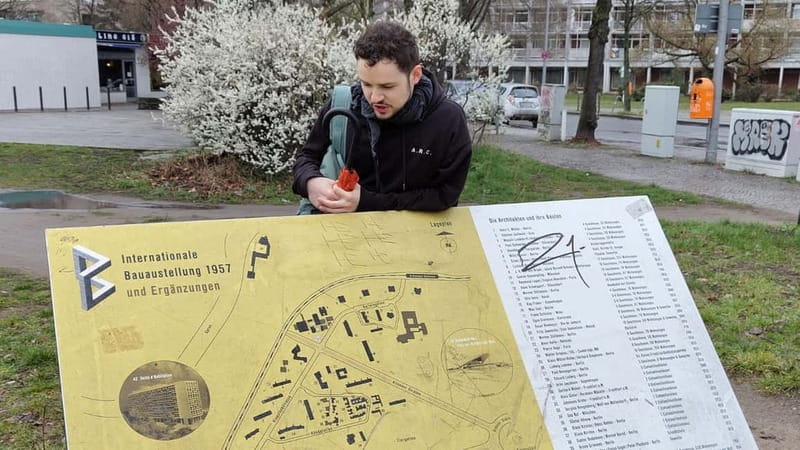
- A model district rebuilt after WWII: Interbau 1957 turns rubble into a Cold War showcase of modern living.
- Hansaviertel’s two personalities: 19th-century elegance first, then bold modernist forms after the war.
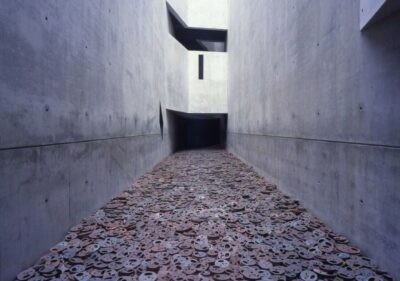
- A memorial stop with weight: you visit a site connected to a major Jewish community erased by Nazi persecution.
- Architects you can point to in real space: Gropius, Niemeyer, Aalto, and others are discussed where you can see their ideas at work.
- Guide storytelling that stays lively: the pacing and explanations are built to keep you moving and thinking.
- Easy-to-follow route: a focused neighborhood walk between the Spree and the Tiergarten.
Why the Hansaviertel Feels Like Two Cities at Once
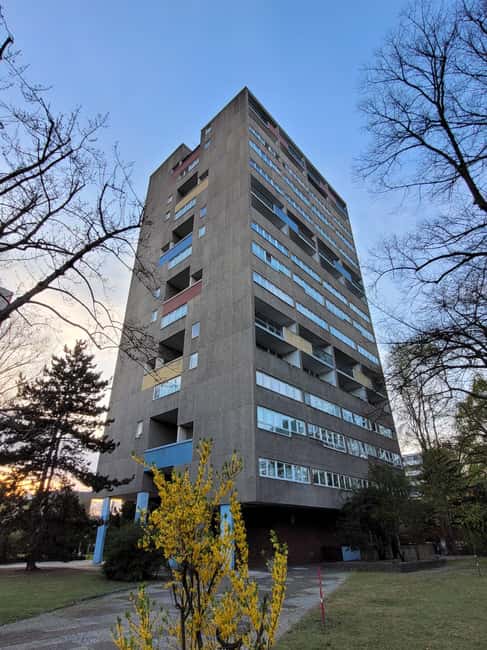
Hansaviertel is one of Berlin’s best “slow down and look” areas. Instead of only chasing landmarks, you walk through a neighborhood that was reshaped by major historical moments. That means your brain is doing two jobs at once: admiring design, then asking what that design was meant to fix.
I like that the tour doesn’t treat modernism like a trend. It frames it as a real project, tied to rebuilding after WWII and to West Berlin’s desire to define a modern identity. When you see apartment blocks and public spaces planned with so much intention, it is hard not to think about daily life, not just style.
The leafy setting helps too. You get quiet pockets between trees and waterways, even while the story being told is intense. That contrast is a big part of why this walk sticks with you.
Weigh these Berlin picks against each other
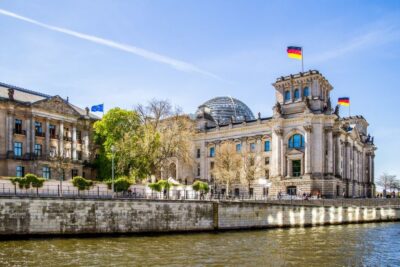
- Berlin: Reichstag, Dome and Government District Guided Tour
★ 4.7 · 18,288 reviews - Berlin: 1-Hour City Tour by Boat with Guaranteed Seating
★ 4.3 · 16,993 reviews - Berlin: TV Tower Standard Entrance Ticket
★ 4.4 · 15,883 reviews
Meeting Point at Berlin-Tiergarten S-Bahn: Start by Biergartenquelle
You meet at Biergarten der Tiergartenquelle. Look for the guide with an orange umbrella, in front of the Berlin-Tiergarten S-Bahn station. The specific exit is Siegmunds Hof / Bachstraße.
This is a practical setup because the area is easy to reach and you’re starting in a place that feels like the city’s green edge. Before you head out, take a minute to check your footing and drink some water. You will be on your feet soon enough.
Bring comfortable shoes. A good chunk of your enjoyment will come from being able to pause, look up, and still feel steady when the group moves on.
Hansaviertel’s Late 1800s Layer: Villas, Gardens, and Famous Berliners
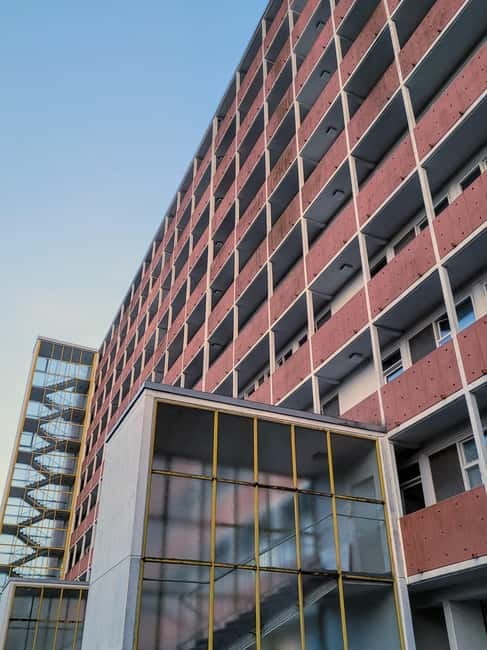
Your walk begins in the late 19th century, when Berlin was growing fast and new neighborhoods were taking shape. Hansaviertel developed as a middle- and upper-class enclave, so early on you’ll see the neighborhood as something more orderly and elegant than what people often imagine when they hear Berlin and postwar modernism.
This first phase matters because it sets the baseline. You are not just learning about modernist buildings in isolation. You are learning what existed before the war, and what kinds of life and social status those earlier streets supported.
You also hear about famous residents tied to that world. The tour includes names like Rosa Luxemburg, Nelly Sachs, and Käthe Kollwitz. Even if you know some of them already, it helps to place them in a concrete neighborhood setting, not only in a book or a museum exhibit.
What to watch for here
Look for the feeling of “finished” architecture: gardens, façades, and the sense of a carefully planned enclave. It is a useful contrast to what comes later, when the goal becomes experimentation and a new urban identity.
Another way to spend a Berlin afternoon:
- Berlin: Boat Tour Along the River Spree
★ 4.4 · 11,252 reviews - Discover Berlin Half-Day Walking Tour
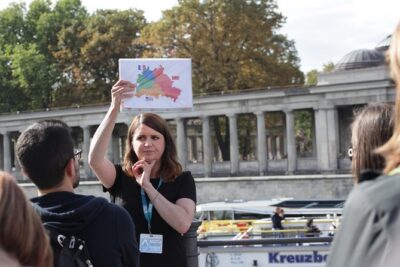
★ 5.0 · 9,624 reviews - Berlin: Government District around the Reichstag Guided Tour
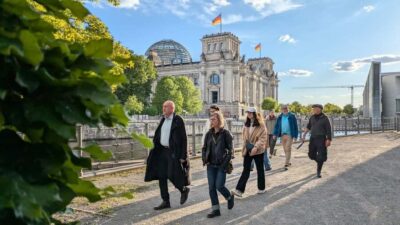
★ 4.7 · 8,447 reviews - Berlin: Reichstag, Plenary Chamber, Cupola & Government Tour
★ 4.6 · 8,422 reviews
A Quiet Memorial Stop That Changes How You See Everything Else
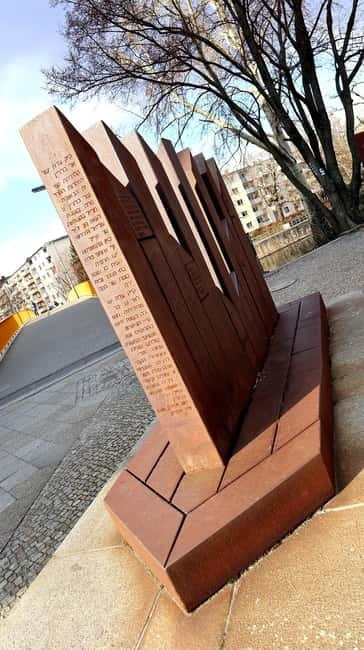
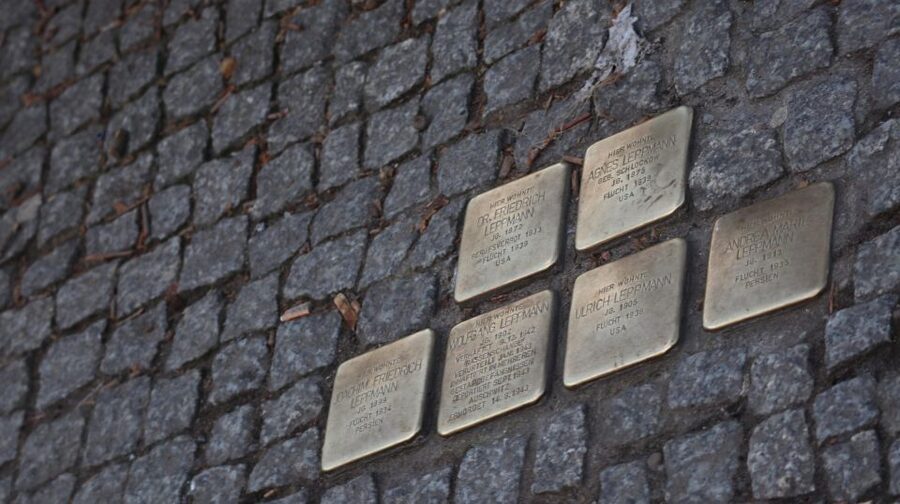
Sometime after you get into the neighborhood rhythm, the tour makes a powerful turn. You visit a site tied to one of Berlin’s significant Jewish communities. This community was destroyed both socially and physically through Nazi persecution and then later through Allied bombing raids.
This is not a quick add-on. The point is to shift the mood and remind you that buildings and streets are not neutral. They carry lives, routines, and communities, and when those are erased, the meaning of space changes.
If you tend to rush past memorials during sightseeing, this is the part where you should slow down on purpose. Let it affect how you interpret what you will see next, especially the Cold War era rebuilding.
Practical note
Bring your attention here, not just your camera. A memorial stop like this works best when you stay present and ask yourself what it means for a neighborhood to be rebuilt with such confidence after such loss.
Interbau 1957: West Berlin’s Cold War Architecture Experiment in Plain Sight
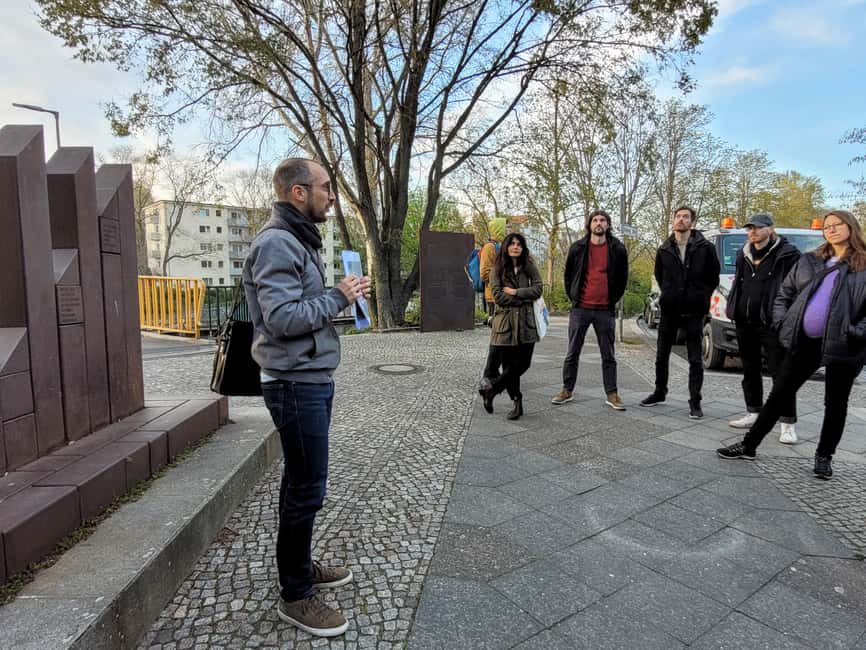
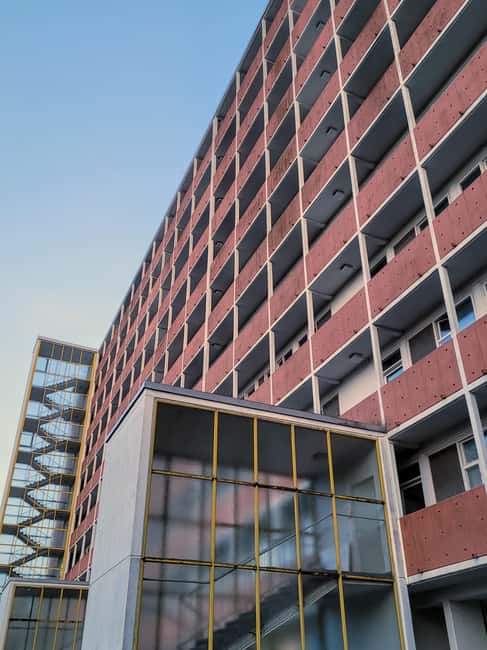
Now you get to the reason people come. In 1957, West Berlin hosted Interbau, an international architecture exhibition meant to reshape how a city could look and function in the postwar world. Hansaviertel became the stage, and the land you walk on had been cleared by WWII destruction.
This is where you see modernism treated as a statement. The neighborhood was redesigned by heavyweight architects of the 20th century, including Walter Gropius, Oscar Niemeyer, and Alvar Aalto. You also hear about other influential modernists tied to the broader Interbau vision.
What I like is how the tour pushes you to connect ideas to physical forms. You start hearing questions that go beyond facts. What did this architecture promise about modern life? What kind of everyday behavior was it trying to encourage? Does it still feel modern to you now, or does it feel like a time capsule of ambition?
Why this stop is valuable for you
Berlin’s postwar story can be too political when you only read about it. On this tour, you get the human-scale version of that story. You stand in front of the result and talk through what architects thought residents needed: light, space, movement, order, or experiment.
What to look for during the modernist portions
You will likely find yourself scanning for:
- Clean, bold geometry and surprising proportions
- Buildings that make space for people rather than treating space as leftover
- Design choices that feel purposeful, sometimes provocative
Even if you are not an architecture nerd, you’ll catch the pattern. Interbau wasn’t just about making objects look modern. It was about redesigning an urban way of living.
The Architecture Lesson You Bring Home: What Modernism Tries to Solve
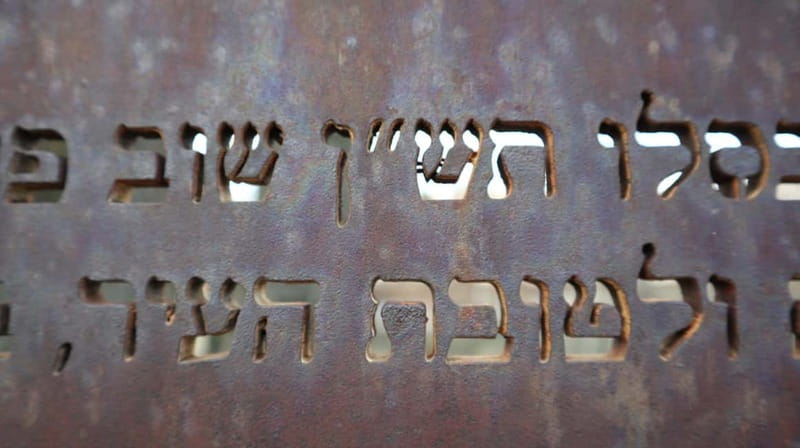
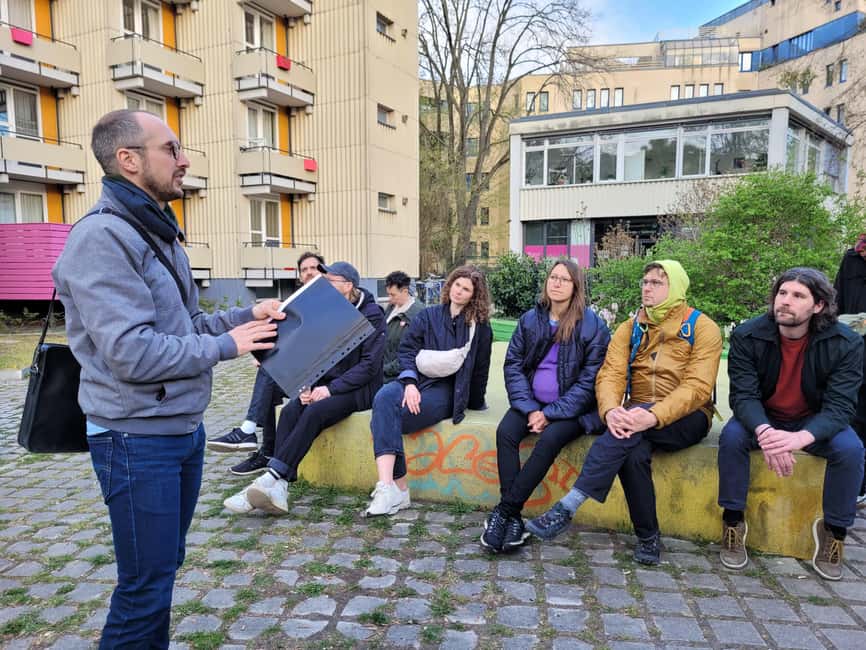
One of the best parts of this tour is that it trains your eyes. Instead of listing features like a brochure, the guide connects each design choice to a philosophy about city life. That helps you judge what you see, instead of only being told what it is.
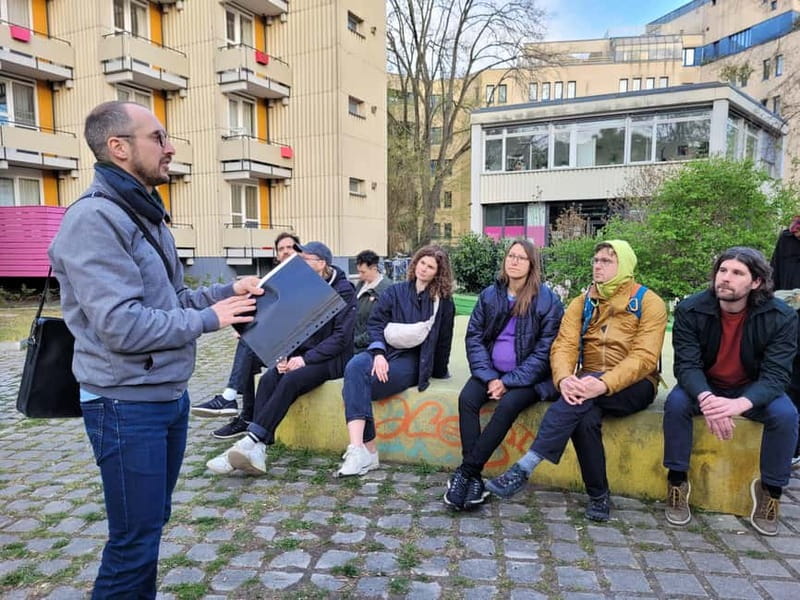
If you get a guide like Morgan, you’ll notice the storytelling style is lively and anchored in detail. Morgan takes you on a journey through time, from the older neighborhood character to the modernist experiment, and can pivot when you ask questions. That matters because architecture is easy to misunderstand when it is presented like trivia.
I also like that the tour keeps checking your reaction. You’re asked to think about whether these buildings still feel contemporary, and what they communicate emotionally. A lot of the modernist work in Hansaviertel can feel calm and confident, but some choices may also feel strange or dated depending on your expectations.
That is a good thing. It means you are thinking, not only consuming.
How to get more out of it
When something grabs your attention, ask one simple question out loud. For example: what problem is this design trying to fix, and who was it meant for? The tour is set up so those questions can actually change the flow.
Two Hours on Foot: Shoes, Pace, and How to Ask Better Questions
The whole experience runs about 2 hours. The guided walking portion is about 1.5 hours, with some time built in for moving between stops and settling at each point.
This is manageable, but it’s not a stroll for people who want to sit down every few minutes. You should be comfortable walking and standing for roughly 2 hours. Ages 14 and up is recommended because the content is historically deep. Minors must be accompanied by an adult.
What to bring is straightforward: comfortable shoes and water. Also, have your phone charged. You will want to take quick photos of details, but don’t do it in a way that blocks the group.
If you like practical travel advice, here is one thing that helps: pause for one full building view before you zoom in on details. Step back, then look up. Modernism often makes more sense once you see the whole composition, not just one window or balcony.
Who Should Book This Tour in Hansaviertel, and Who Might Want Another Plan
This is a great fit if you want:
- A focused neighborhood walk instead of a long bus route
- Real historical context tied directly to what you can see outside
- Big-name modernist architecture discussed in a human way
It is also a smart choice if you feel bored by the usual “top sights” itinerary. Hansaviertel is not a monument you look at from a distance. It is an actual place with streets and buildings, and the tour treats it like one.
You might want to skip it if you:
- Want mostly interior visits (this tour is a guided walking experience and does not promise museum entry)
- Can’t handle standing and walking for about 2 hours
- Prefer stories that are lighter and less historically grounded
Should You Book the Modernist Architecture Tour in Hansaviertel?
If you care about architecture beyond aesthetics, you should book it. You’ll get a rare mix: 19th-century neighborhood character, a meaningful memorial stop, and the Interbau 1957 rebuilding story, all in a compact walk. The value comes from having an expert local guide who connects design to purpose, and a route that keeps you close to what the architects actually built.
Even if you are casual about architecture, the tour gives you a way to look at Berlin differently. You will finish with fresh eyes for how postwar optimism, political rivalry, and human loss all shaped the city.
FAQ
How long is the Berlin Hansaviertel modernist architecture tour?
The duration is about 2 hours.
Where do we meet for the tour?
Meet in front of the Berlin-Tiergarten S-Bahn station (Exit Siegmunds Hof / Bachstraße), next to the beer garden called Biergartenquelle. Look for your guide with the orange umbrella.
Where does the tour end?
It includes a finish at Hansaplatz. The activity description also notes the experience ends back at the meeting point.
What languages are available?
The live guide offers German and English.
Is this tour wheelchair accessible?
Yes, it is wheelchair accessible.
Is the tour suitable for children?
It is recommended for ages 14 and up due to the historical depth of the content. It is not suitable for children under 14, and minors must be accompanied by an adult.
Do I need to bring food or tickets for museums?
Food and drinks are not included. Entry to museums or monuments is not specified in the itinerary, so plan on seeing what you can during the walking stops. You should bring comfortable shoes and water.
Fresh reviews out of Berlin
- Berlin Uncensored: A History of Sex & Freedom★ 5.0 · 50 reviews
- Berlin Food & Cultural Tour: Must-Try German & Berliner Classics★ 5.0 · 51 reviews
- English Comedy Show with Pizza and Shots in Central Berlin★ 4.5 · 51 reviews
- Rude Bastards Tour of Berlin★ 4.8 · 51 reviews
- Private Taxi Tour of Berlin East and West and Neighbourhood approx. 4-6h★ 5.0 · 55 reviews
- Rickshaw Sightseeing City Tours Berlin – Rikscha Tours★ 4.0 · 55 reviews
- Berlin: City Highlights Express & Panorama Roof Terrace★ 4.9 · 55 reviews
- Berlin during Nazism – Tour in Italian★ 5.0 · 56 reviews
Berlin Tours, compared.
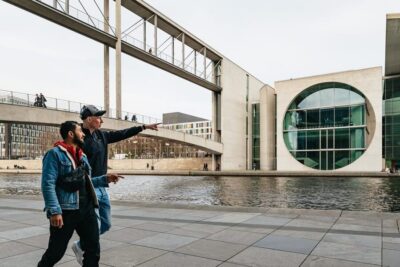
Reichstag, Dome and Government District Guided Tour
Read our review →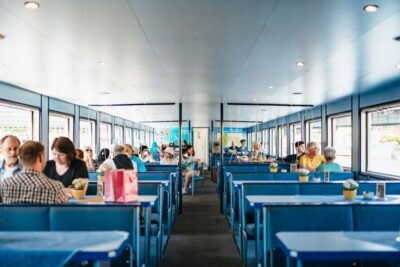
1-Hour City Tour by Boat with Guaranteed Seating
Read our review →
Government District around the Reichstag Guided Tour
Read our review →
Reichstag, Plenary Chamber, Cupola & Government Tour
Read our review →