Reviewed · BERLIN TOURS
Berlin and National Socialism: Berlin under Nazism
This experience is interesting because it does not skim the surface. It focuses on Berlin under Nazism and helps you connect the dots between propaganda, power, war, and the people the regime targeted. I like that you get a Spanish-speaking guide and that the route hits major, real places in a short time window. In past tours with guides such as Julia, Júlia, Helena, and Celia, the explanations were praised as clear and well-prepared, even when the topic is heavy.
The main consideration is that this is not a casual sightseeing loop. You will spend time at sites tied to mass murder and the collapse of the Third Reich, so expect an emotional, serious pace.
Key highlights worth planning for
- Tight 4-hour structure with multiple stops, so you get orientation fast
- Admissions included at key sites like the Topography of Terror museum
- Memorial stops that broaden the story beyond Germany’s main war narrative
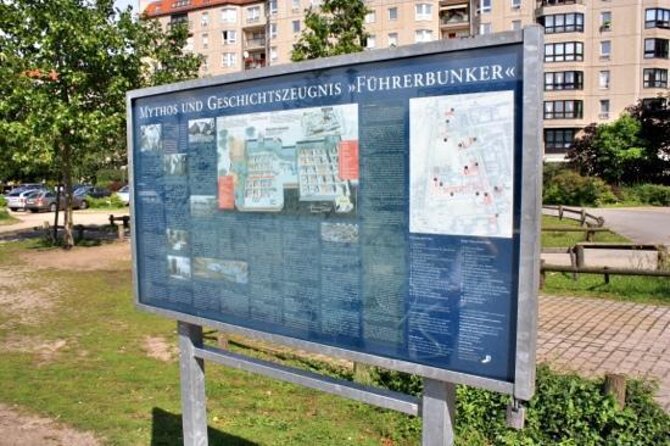
- Real places, not replicas, including the area tied to the Führerbunker
- Small groups up to 25, which makes questions easier
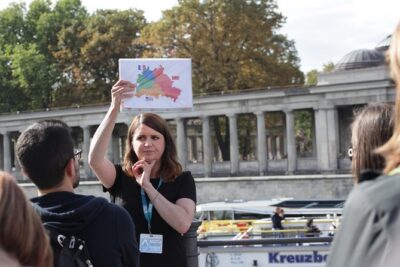
- Guides praised for didactic explanations, often using visuals to clarify context
Why Berlin’s Nazi-era sites work better as a connected route
Berlin has a talent for making history feel both close and confusing. One museum looks away from another street, one memorial sits near a café, and the city scale can make it hard to place events in order. This tour fixes that by giving you a guided thread through the Third Reich era and the end of the war.
You are not just looking at stone and plaques. You are walking through the physical geography of how power operated, how violence was justified, and how the city changed when Germany lost. The visit times are short at each stop, around 5 to 25 minutes, which is perfect for getting oriented without turning the day into a marathon.
One smart practical bonus is that it is designed for learning as you go. If you enjoy asking questions, the small group size helps. If you prefer to absorb slowly, the pacing also gives you time to step back at memorials and landmarks without feeling rushed.
Weigh these Berlin picks against each other
- Berlin: Reichstag, Dome and Government District Guided Tour
★ 4.7 · 18,288 reviews - Berlin: 1-Hour City Tour by Boat with Guaranteed Seating
★ 4.3 · 16,993 reviews - Berlin: TV Tower Standard Entrance Ticket
★ 4.4 · 15,883 reviews
Bundestag stop: from wartime damage to political rebirth
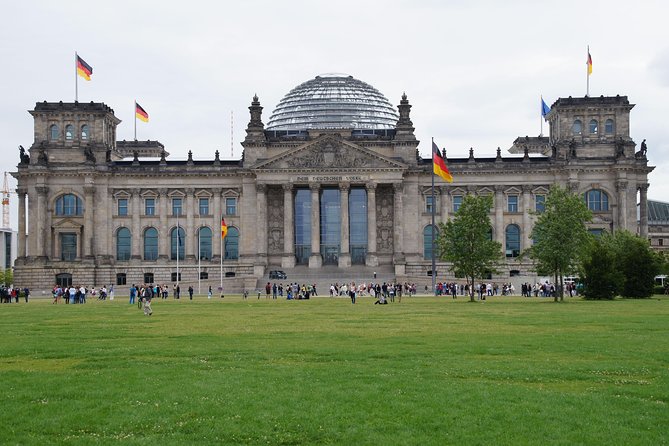
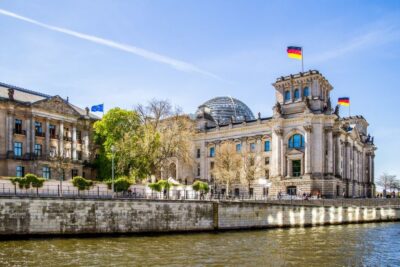
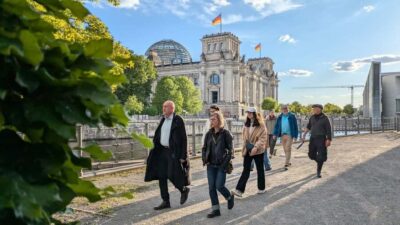
The tour begins near the Berlin TV Tower, at the modern political heart of the city. Your first stop is the Bundestag, the modern German parliament building that sits on a site with deep historical layers.
The key story here is time and rebuilding. The ruined building was protected from the elements and partially renovated in the 1960s. But full restoration did not happen until after German reunification in 1990, when the reconstruction was led by architect Norman Foster. After completion in 1999, the building returned as the place where parliament meets.
This stop matters because it creates a contrast you can feel. You are starting your Nazi-era tour at a place that later became the meeting point for democratic Germany. That contrast is not just symbolic. It helps you understand how the same city spaces can hold very different meanings across decades.
Practical note: this is listed as 20 minutes, and it includes an admission ticket that is free for this stop. Expect a short, focused introduction rather than a long indoor visit.
Memorial to Sinti and Roma victims: remembering Porajmos in the open air
Next comes a memorial that many first-time visitors do not know they need to see. The Memorial to the Sinti and Roma Victims of National Socialism is dedicated to the memory of 220,000 to 500,000 people murdered in Porajmos, within the Nazi genocide of European Sinti and Roma.
Why this stop is valuable is simple. It expands your understanding of Nazi terror beyond the most commonly discussed victims. The genocide of Sinti and Roma is part of the same machinery of racial persecution that powered the regime, and learning it here, in Berlin, makes the topic harder to treat as a footnote.
The visit time is short, about 5 minutes, and the admission is included. That means you will likely get a clear explanation and a chance to orient yourself to what you are seeing, without turning it into a long museum lesson.
If you want to be respectful without getting overwhelmed, come into this stop with one question in mind: what system of ideas and policies made genocide possible? The guide’s context here can help you answer that as the route continues.
Soviet Memorial Tiergarten: the war’s end seen from another side
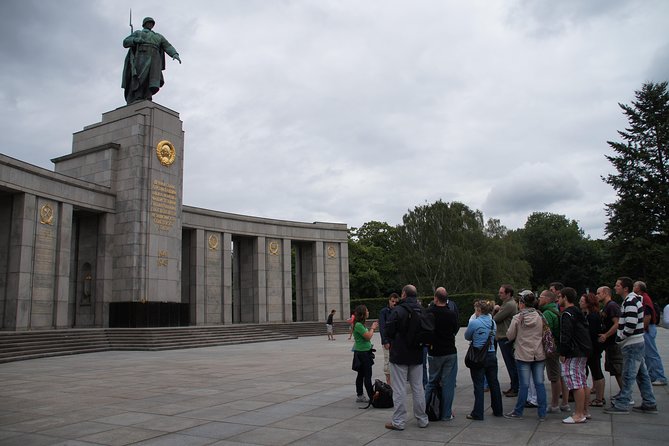
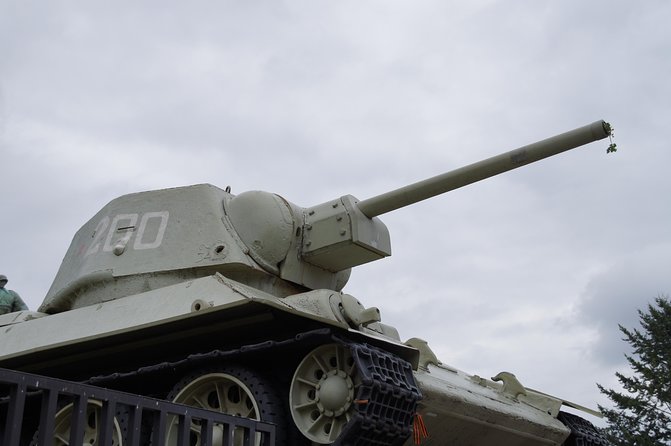
Then you shift into a Berlin perspective that is often less emphasized in mainstream narratives. The Soviet Memorial in Tiergarten commemorates Soviet war dead, especially the 80,000 soldiers of the Soviet Armed Forces who died during the Battle of Berlin in April and May of 1945.
This stop helps you understand the final phase of the Third Reich without treating it as a purely German tragedy. Berlin’s end was shaped by multiple forces, and the city’s memory includes those who fought for victory from the other side.
It is listed for about 15 minutes and is free. That is a good window. Long enough to read and process, short enough to keep the day moving through the story.
A practical tip: if the weather is cold or you have limited time, focus on the memorial’s location and the surrounding layout. Memorials in Tiergarten often feel “integrated” into the city, and that integration is part of the message, the war dead are not tucked away.
Another way to spend a Berlin afternoon:
- Berlin: Boat Tour Along the River Spree
★ 4.4 · 11,252 reviews - Discover Berlin Half-Day Walking Tour
★ 5.0 · 9,624 reviews - Berlin: Government District around the Reichstag Guided Tour
★ 4.7 · 8,447 reviews - Berlin: Reichstag, Plenary Chamber, Cupola & Government Tour
★ 4.6 · 8,422 reviews
Tempelhof Airport: scale, flights, and how the modern world was being built
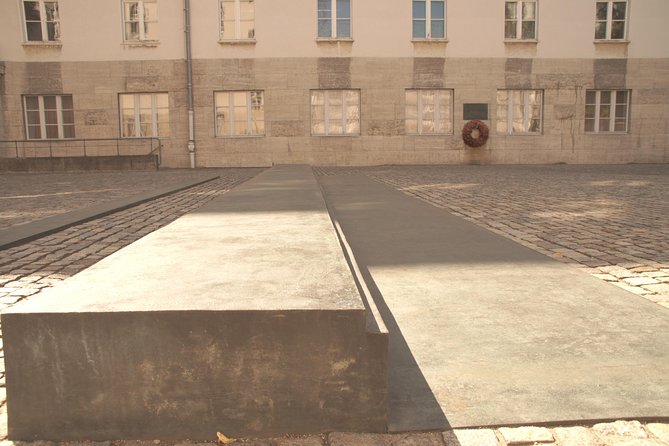
After memorials tied to death and genocide, you get a different kind of Nazi-era lens at Tempelhof. This place was one of the most important airports of the early 20th century. In 1926, it had ten flights daily and was described as the largest airport in Europe.
You might wonder why an airport belongs in a Nazi-focused tour. Here’s the point: infrastructure and power grow together. Airports, transportation hubs, and the movement of people and goods are not neutral. They reflect ambition, planning, and the modern state’s ability to control and project force.
The tour schedule gives you about 25 minutes here, and it is free. That time is long enough to move beyond a quick fact and connect it to the wider story the guide is building.
Bring your imagination a bit. Look at the openness of the space and think about logistics, crowding, and visibility. It is easier to understand how regimes can use public spaces when you can physically feel the scale.
Topography of Terror: the museum stop that makes context stick
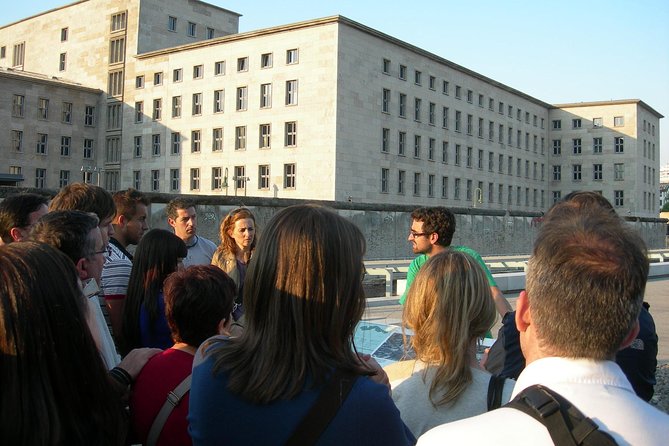
The Topography of Terror is where the route becomes more than a walk past monuments. It is an indoor and outdoor history museum in Berlin, and it’s one of the stops with admission included.
This is an important pivot point because museum context helps you place what you saw outdoors. The “terror” theme links policies to locations. You stop seeing the Third Reich as abstract and start recognizing the machinery: institutions, decisions, and propaganda working together.
Time on site is about 15 minutes, which may sound short, but it is realistic for a tour that is also moving. Expect the guide to point you to key materials and give you an interpretive framework so you do not leave with only a pile of facts.
If you prefer to learn by reading, you may wish you had more time. Still, as part of this 4-hour route, it is a great value. You get a structured overview at the right moments, rather than trying to assemble the timeline alone.
Führerbunker area: walking the last-days geography of power
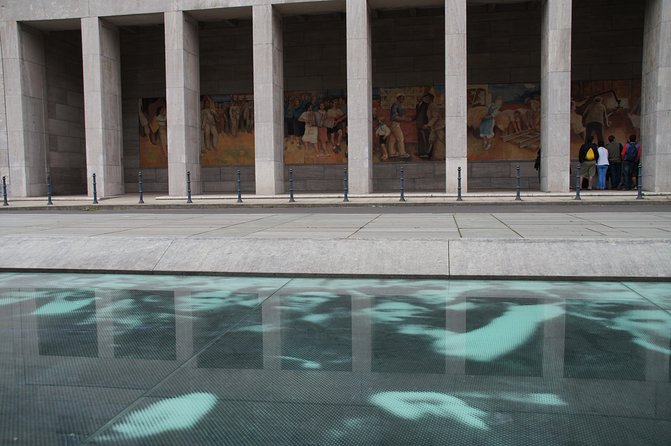
One of the most striking stops is the Fuhrerbunker area, where Hitler had his refuge during his last hours alive.
This part of the tour is about space and collapse. Early in the Third Reich story you see how power projects itself outward. Later you see power turning inward, shrinking into hidden rooms, fear, and final decisions.
It is listed for about 15 minutes and free. That works well because you are not meant to treat it like a theme park attraction. The guide’s explanations are usually what makes it meaningful, helping you understand why this area fits the broader end-of-war story in Berlin.
Practical consideration: this is an emotional subject. If you feel overloaded, it is okay to stand quietly for a moment and let the guide’s main points settle before moving on.
How the route ends at the Memorial to the Murdered Jews of Europe
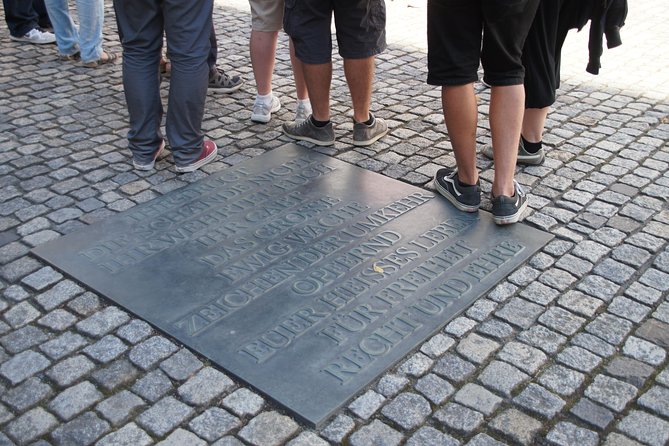
The tour ends at the Memorial to the Murdered Jews of Europe. That ending point is more than an official stop. It nudges you to connect the Nazi-era genocide story across different victim groups and across different stages of persecution and violence.
If you are building your own understanding, the final memorial is a good moment to step out of “tour mode.” Take a bit of time to read quietly and look around before you rush to your next plan.
Also, since this is a guided walk that ends at a different location than it started, you will likely want to plan your next activity nearby or decide how you will return to your hotel afterward.
Price and value: about $25.54 for a focused learning day
At about $25.54 per person for a roughly 4-hour tour, the best value is not the price alone. It is what is bundled in.
Admission tickets are included at multiple key stops, including the Bundestag, the Memorial to Sinti and Roma Victims, and the Topography of Terror. Other stops are free on the list, such as the Soviet Memorial Tiergarten, Tempelhof, and the Führerbunker area. You are also paying for guided interpretation, not just entry.
So the math is simple: even if you already plan to visit one museum and a few major landmarks, the guided sequencing can save time and reduce guesswork. It also keeps you from turning Berlin into a scavenger hunt.
One thing to note: the AB transport ticket is not included. So budget for transit or walk connections based on where you are staying. The tour is marked as near public transportation, which helps.
Who should book this Berlin under Nazism tour
This is a strong fit if you want a structured, Spanish guided introduction to the Third Reich in Berlin. It is especially good for people who like learning through real places, and for anyone who feels Berlin’s history is hard to sort out on their own.
It also suits travelers who want a manageable group size. With a maximum of 25 people, it is easier to hear the guide and ask follow-up questions during stops.
You might consider a different option if you are looking for a light day. This route touches genocide and the collapse of Nazi Germany, and the tone is serious.
Practical tips so you get the most from the day
Wear comfortable shoes and keep layers handy. The route includes both outdoor memorials and an indoor museum stop. Berlin weather can shift fast, and when you are moving between sites, you want to stay comfortable.
Start with your mental goal. Before you meet, decide what you want to understand most: how the regime gained power, how violence escalated, or how Berlin’s end played out in physical spaces. That choice helps you listen better to the guide’s connections.
Finally, use the short stop times well. When you have only 5 to 25 minutes at a site, you get the best results by reading the main messages quickly, then listening for the guide’s “why it matters” explanation.
Should you book this tour of Berlin under Nazism?
If you want an efficient, respectful way to understand the Third Reich in Berlin, I think you should book it. The tour’s value comes from sequencing major sites in about 4 hours, combining memorials with major historical places, and including admission where it counts.
Book it if you like learning with a guide in Spanish and you want a route that makes the city’s Nazi-era history feel connected rather than random. Skip it only if you want a purely casual sightseeing day, because the subject matter is heavy and the tone will reflect that.
FAQ
What language is the guide?
The tour includes a Spanish speaking guide.
How long is the tour?
The duration is approximately 4 hours.
Is the ticket mobile?
Yes, the tour uses a mobile ticket.
What time does the tour start?
The start time is 10:00 am.
Where does the tour start and end?
It starts at the Berlin TV Tower, Panoramastraße 1A, 10178 Berlin, and it ends at the Memorial to the Murdered Jews of Europe, Cora-Berliner-Straße 1, 10117 Berlin.
How many people are in the group?
The maximum group size is 25 travelers.
Are admission tickets included?
Yes. Admission tickets are included for stops such as the Bundestag, the Memorial to the Sinti and Roma Victims of National Socialism, and Topography of Terror.
Is a public transport ticket included?
No. An AB transport ticket is not included.
Is it suitable for most travelers?
The tour notes that most travelers can participate.
What is the cancellation policy?
Free cancellation is available. You can cancel up to 24 hours in advance of the start time for a full refund.
Fresh reviews out of Berlin
- Berlin Uncensored: A History of Sex & Freedom★ 5.0 · 50 reviews
- Berlin Food & Cultural Tour: Must-Try German & Berliner Classics★ 5.0 · 51 reviews
- English Comedy Show with Pizza and Shots in Central Berlin★ 4.5 · 51 reviews
- Rude Bastards Tour of Berlin★ 4.8 · 51 reviews
- Private Taxi Tour of Berlin East and West and Neighbourhood approx. 4-6h★ 5.0 · 55 reviews
- Rickshaw Sightseeing City Tours Berlin – Rikscha Tours★ 4.0 · 55 reviews
- Berlin: City Highlights Express & Panorama Roof Terrace★ 4.9 · 55 reviews
- Berlin during Nazism – Tour in Italian★ 5.0 · 56 reviews
Berlin Tours, compared.
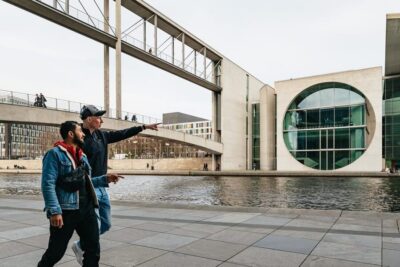
Reichstag, Dome and Government District Guided Tour
Read our review →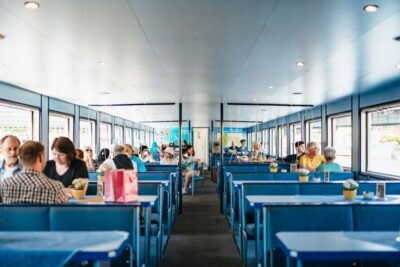
1-Hour City Tour by Boat with Guaranteed Seating
Read our review →
Government District around the Reichstag Guided Tour
Read our review →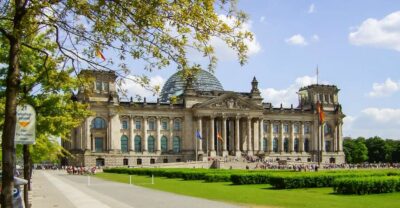
Reichstag, Plenary Chamber, Cupola & Government Tour
Read our review →