Reviewed · BERLIN TOURS
Rude Bastards tour of Berlin (CYHIT)
Berlin can feel heavy, even on a good day. This tour is interesting because it pairs that weight with a no-nonsense, adult, joke-forward guide style while still pausing for the moments that deserve silence. I love the small group (max 10) and the way guides like Kai, Alex, Arthur, Anna, Frey, Nichole, Jason, and Felix can keep the pace moving without turning serious stops into a comedy routine. One possible drawback is the tone: it is built for adults and it is not shy about off-color language, so it is not the right pick if you hate profanity.
The route also hits the big stuff in one walk, from Brandenburg Gate to the Berlin Wall area and Checkpoint Charlie, plus the memorial sites tied to WWII and Nazi Germany. You get about 3 hours and 15 minutes of movement, including a built-in pause at a Berlin mall. Just know you will be on your feet a lot, and the tour is designed to cover ground, not to linger.
Key things that make this tour work
- Adult humor with respectful stops: you get jokes, but the serious locations get the room they deserve.
- Small group format (up to 10): it keeps the tour conversational and easier to ask questions.
- A tight line of landmarks: Brandenburg Gate, Reichstag area, Jewish memorial, Hitler-bunker location, Berlin Wall, Checkpoint Charlie, Gendarmenmarkt, Bebelplatz, and Museum Island.
- A real break: about 20 minutes at a Berlin mall so you can reset.
- Good value for a highlight bundle: some key sights are free to access on the tour, so your ticket budget goes further.
- Pace that fits first-time orientation: enough information to plan the rest of your trip.
How this adult, joke-forward style changes the Berlin walking tour
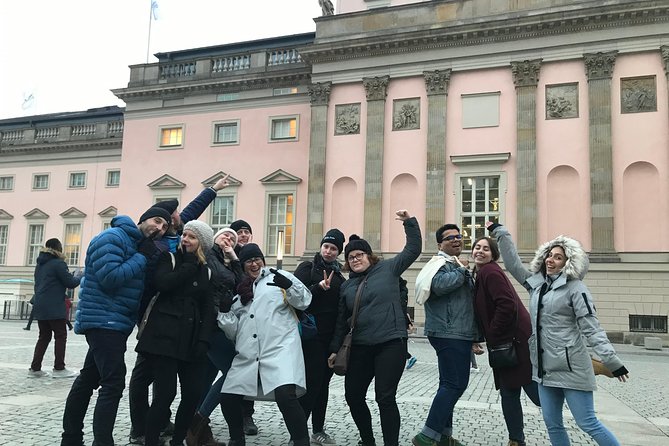
Berlin has a way of swallowing people whole, especially around WWII and the Cold War. This tour chooses a different tactic. Instead of a formal lecture voice, you get a guide who tells the story like a sharp friend walking beside you. The result is that you leave with facts you actually remember, plus a sense of how the city moved from dictatorship to ruins to division and back again.
And yes, there is a lot of banter. Multiple guides mentioned in the tour experience are praised for balancing wit with compassion, and for knowing when to go quiet. That matters because the route is not only sightseeing, it is also memory work: the Holocaust memorial and the Soviet soldier memorial are not props. If you can handle adult language and you want history with personality, this format clicks.
Weigh these Berlin picks against each other
- Berlin: Reichstag, Dome and Government District Guided Tour
★ 4.7 · 18,288 reviews - Berlin: 1-Hour City Tour by Boat with Guaranteed Seating
★ 4.3 · 16,993 reviews - Berlin: TV Tower Standard Entrance Ticket
★ 4.4 · 15,883 reviews
Price that makes you double-take, and why it can still be smart value
The listed price is $3.63 per person, with a 3 hours and 15 minutes walking time. Even if you assume prices vary by date or platform, that number changes how you think about the deal. For most walking tours, you pay for time plus a guide plus route planning. Here, you are also getting a concentrated path through major sites that would cost time and likely transit effort to stitch together on your own.
What makes it practical value is the mix of included and free-access stops. Brandenburg Gate is free (no paid admission needed on that stop), and the Fuhrerbunker location stop is also free. The Memorial to the Murdered Jews of Europe is not included, so you should plan on any memorial-specific access on your own. Still, for a single afternoon walk that covers Brandenburg Gate, Reichstag area, the Berlin Wall area, and Checkpoint Charlie, the economics are hard to beat.
The only “price” downside is the one that comes with any serious-leaning tour done fast: you are trading time for coverage. If you want slow museum pacing and deep reading, you will want follow-up time on your own.
Start at Potsdamer Platz, then get oriented the easy way
The meeting point is Potsdamer Platz 10, 10785 Berlin. That is a solid launch pad because it sits in the thick of central Berlin and it is easy to orient yourself for the rest of your day.
From the start, the tour builds momentum. You are not dropped into one isolated monument and sent away. Instead, you move through a connected chain of places that show how power, war, and political systems shaped Berlin’s layout. The guide keeps a rhythm that helps first-time visitors understand what they are looking at, without drowning you in dates.
Tiergarten and the Soviet memorial: Berlin’s postwar geography in one walk
One of the early highlights is Tiergarten, Berlin’s central park and the third-largest of Germany. Even if you do not think of parks as political, Berlin’s parks often act like living maps. They show where the city chose to rebuild, commemorate, and redirect public space after massive destruction.
Right alongside that green space is the WWII memorial honoring Soviet soldiers, with statues, tanks, and an obelisk. This stop is worth your attention because it is not only about the Soviet role in defeating Nazi Germany. It is also about how different countries used monuments to shape public memory in the decades after the war.
Practical tip: memorials and statue-heavy stops can be slippery or crowded depending on weather. If you want photos, position yourself early and listen first, because the explanation helps you photograph with purpose instead of just taking snapshots.
Another way to spend a Berlin afternoon:
- Berlin: Boat Tour Along the River Spree
★ 4.4 · 11,252 reviews - Discover Berlin Half-Day Walking Tour
★ 5.0 · 9,624 reviews - Berlin: Government District around the Reichstag Guided Tour
★ 4.7 · 8,447 reviews - Berlin: Reichstag, Plenary Chamber, Cupola & Government Tour
★ 4.6 · 8,422 reviews
Potsdamer Platz and Reichstag area: seeing the power symbols from ground level
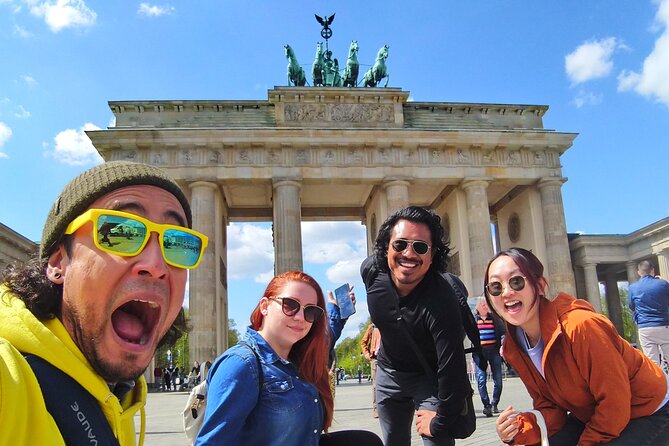
After Tiergarten, the route moves toward the Reichstag area and then on to the Brandenburg Gate corridor. These places can look familiar from movies and postcards, but a walking tour makes you see the angles and scale in real space.
This matters because Berlin’s “big icons” are not just architecture. They are political props that changed hands and meanings over time. The Reichstag area is one of those spots where the story keeps shifting: the building represents German governance, but also what happens when governments collapse, rebuild, or get replaced.
You will not be stuck staring at stone. The guide keeps moving, tying what you see to how Berlin transformed during and after the Nazi era.
Brandenburg Gate plus the Holocaust Memorial: how the tour handles memory
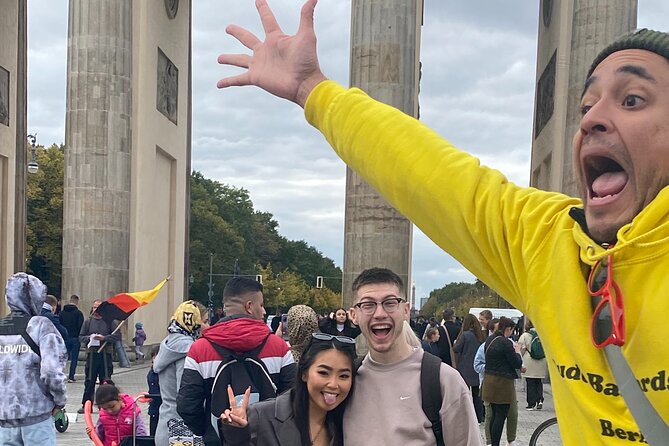
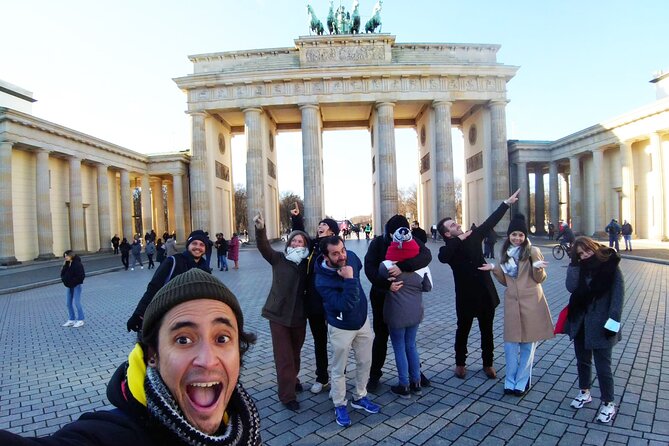
Brandenburg Gate is a main landmark of Germany and was the main entrance to the city. The stop here is about 15 minutes, and admission is free on the tour.
What makes this work is that the guide usually frames the gate in more than just “look at the landmark” terms. It becomes a way to talk about Berlin as a stage for ideology and state control, not just a backdrop for tourism.
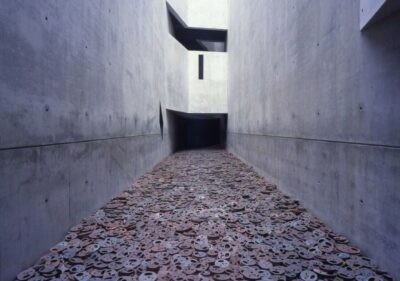
From there, the tour heads to the Memorial to the Murdered Jews of Europe (the Holocaust Memorial). The stop is around 10 minutes, and admission is not included. This is one of the moments where the tone shift matters. Even with jokes elsewhere, this stop needs gravity, and the guide style described in the experience is often praised for knowing when to slow down and hold respect.
If you are visiting with someone who gets uncomfortable at memorials, plan to give yourselves a quiet minute inside the memorial space. A short visit is still meaningful if you focus on what the site is asking you to feel, not if you try to “finish it” like a checklist.
Fuhrerbunker location: what you can learn when you cannot go inside
The Fuhrerbunker stop is the location of Hitler’s bunker, where he spent the final three months of his life. The time on this stop is about 10 minutes, and admission is free.
This part is a reminder that history is not always accessible in the way you imagine. You are standing at a site tied to a specific period, not stepping into the past like a museum set. The value is in context: the guide’s job is to explain why this location mattered, what the space meant for the regime’s final collapse, and how Berlin’s story connects from the street level you are standing on to the global events that shaped it.
Practical note: because you cannot “tour” the bunker itself on this stop, you have to treat the explanation as the main attraction. If you tune out, you will feel like you spent 10 minutes on a normal street corner. If you listen, you leave with a clearer mental map of the last stage of Nazi rule.
Berlin mall break: a small pause that keeps the walk enjoyable
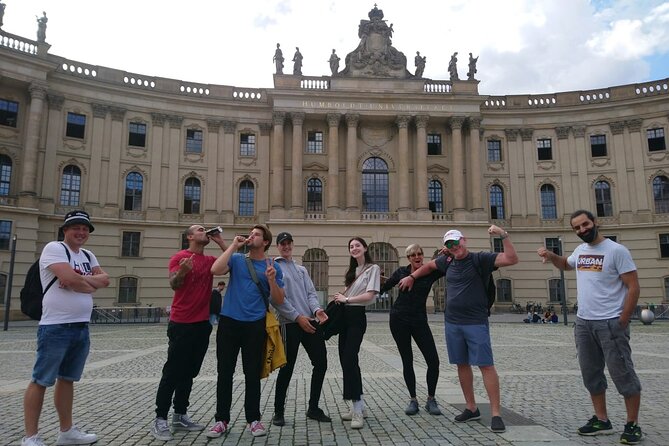
The route includes a 20-minute break at a Berlin mall. That is one of the smarter design choices on any walking tour. When you keep moving without a reset, you start rushing your listening and cutting corners in your photos.
Use this break for water, a snack, or even a quick bathroom stop. If you are walking in cold or rainy weather, this pause also becomes a warmth and dry-off moment.
One winter detail from the experience description: depending on when you go, you might pass Christmas markets on the way. That can be a fun bonus, but do not count on it every trip. Treat it as seasonal luck, not a guarantee.
Luftwaffe HQ area and the Berlin Wall: where politics turns into concrete
As you continue, the tour goes past the Luftwaffe HQ. Even without going deep into building interiors, passing a site like that gives you a visual sense of how the Nazi war machine sat inside everyday Berlin.
Then comes one of the biggest emotional anchors of the tour: the Berlin Wall. The Wall is mentioned as a highlight, and it is the kind of place where the “story” is partly in the details you can see. A guide can help you notice what the Wall meant physically and psychologically, and how it split neighborhoods and daily life.
Here is where the guide’s style really earns its keep. Berlin’s Wall story is tragic, but it is also full of human choices. You are not just learning about a barrier. You are learning about what people did around it, and why it became one of the world’s clearest symbols of division.
Checkpoint Charlie: crossing from Soviet and American sectors
The route includes Checkpoint Charlie. It is described as an old customs checkpoint between the Soviet Communist and American Capitalist sectors.
This stop hits a sweet spot because it is dramatic, easy to understand, and tied to real Cold War tension. You can quickly grasp the idea of “two sides, one contact point,” even if you are not a history buff.
The practical advantage of doing Checkpoint Charlie inside a longer route is that you do not treat it as an isolated photo stop. You get the Wall context and the surrounding city geography, which helps the whole narrative snap into place.
Gendarmenmarkt, Bebelplatz, and Museum Island: finishing with beauty and aftermath
After Checkpoint Charlie, the tour moves toward Gendarmenmarkt. This square tends to surprise people who expect only wartime images in Berlin. It is a reminder that before and after the dark years, Berlin also had grandeur, architecture, and civic life.
Then you end at Bebelplatz, Unter den Linden, 10117 Berlin. The finish is paired with Museum Island in the route notes, which is a classic Berlin area for culture and big-picture sightseeing.
What I like about ending here is pacing. You finish with sights that feel “open” compared to the hard edges of checkpoints and bunker-adjacent history. You also end near the kind of transit and sightseeing options that make it easier to continue your trip on your own.
Who should book this tour, and who should skip it
This tour is best for you if you want a concentrated Berlin orientation and you like your history with personality. It is also a strong first booking if you plan to spend the rest of your time returning to specific spots for longer visits. The small group size and the fast-moving route help you understand what matters so you can choose what to do next.
I would skip it if you:
- do not want adult profanity or off-color jokes
- prefer long quiet stops and museum pacing
- want guaranteed time inside specific memorial sites beyond a short stop window
It also fits well for people who learn better through conversation than through lectures. The experience style described emphasizes staying engaged, keeping things moving, and answering questions.
Tips to get the most out of the walk
- Wear shoes you can walk in for a few hours. This is a walking-heavy format with lots of stops.
- Bring a rain layer if the weather looks iffy. Berlin afternoons can change fast.
- For memorial stops, slow your pace. Let the guide’s framing set your attention.
- If you are sensitive to language, read your own limits honestly before booking, because the tone is part of the brand.
Should you book the Rude Bastards tour of Berlin (CYHIT)?
If you want a fun, adult, stand-and-walk tour that hits Berlin’s biggest WWII and Cold War landmarks in a single afternoon, this is a smart choice. The top strengths are the small group feel, the guides’ ability to keep it entertaining while staying respectful at serious sites, and the practical rhythm that includes a real break.
If your idea of a Berlin tour is quiet, formal, and profanity-free, then this one will likely irritate you. But if you can handle adult banter and you want to leave with a clear mental map of the Wall, Checkpoint Charlie, Brandenburg Gate, and the bunker area, booking it early in your trip is a great move.
Fresh reviews out of Berlin
- Berlin Uncensored: A History of Sex & Freedom★ 5.0 · 50 reviews
- Berlin Food & Cultural Tour: Must-Try German & Berliner Classics★ 5.0 · 51 reviews
- English Comedy Show with Pizza and Shots in Central Berlin★ 4.5 · 51 reviews
- Rude Bastards Tour of Berlin★ 4.8 · 51 reviews
- Private Taxi Tour of Berlin East and West and Neighbourhood approx. 4-6h★ 5.0 · 55 reviews
- Rickshaw Sightseeing City Tours Berlin – Rikscha Tours★ 4.0 · 55 reviews
- Berlin: City Highlights Express & Panorama Roof Terrace★ 4.9 · 55 reviews
- Berlin during Nazism – Tour in Italian★ 5.0 · 56 reviews
Berlin Tours, compared.
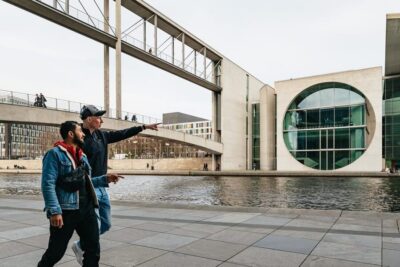
Reichstag, Dome and Government District Guided Tour
Read our review →
1-Hour City Tour by Boat with Guaranteed Seating
Read our review →
Government District around the Reichstag Guided Tour
Read our review →
Reichstag, Plenary Chamber, Cupola & Government Tour
Read our review →