
Reviewed · CITY TOURS
All of Berlin (city panorama)
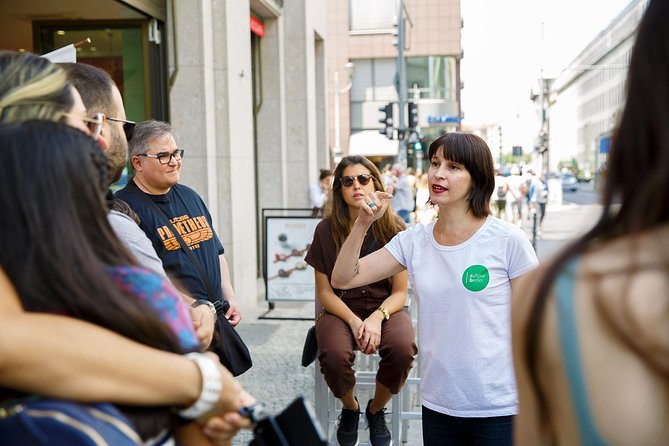
Berlin moves fast, and this tour is a smart way to keep up. You get a tight loop of central sights with a guide who explains the why behind the stone, not just the where.
Two things I like a lot are the high-density lineup of landmarks and the Spanish commentary that connects them to Berlin’s turning points. One thing to consider: you do have to be comfortable walking a fair bit in about four hours, and this isn’t the kind of tour that stops to catch your breath every five minutes.
Also, you’ll want to know the guide is Juan in at least some runs, and his style is what makes the history click. The main drawback is simple, if you cannot walk long distances comfortably, you may feel rushed instead of informed.
Key highlights you will actually feel
- A 4-hour, big-picture route that hits Berlin’s core landmarks without you building a plan from scratch
- Spanish-only guide with history-focused storytelling, including Cold War and culture themes
- Multiple “you see it best from the street” stops, not just photos from a bus window
- Museum Island UNESCO area entrance woven into the center-city walk
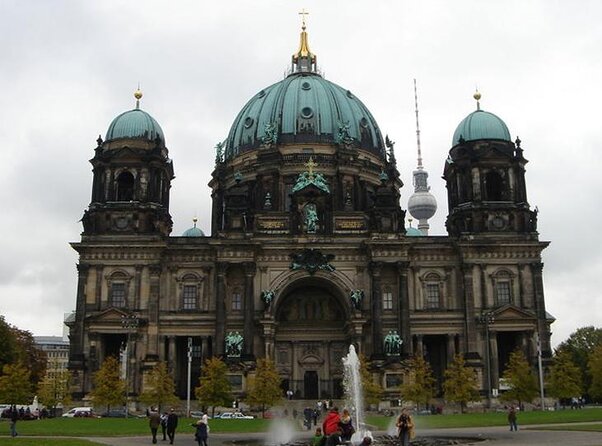
- Neptunbrunnen, Berliner Dom, Brandenburg Gate, Holocaust Memorial all on one day’s flow
- Small group size (maximum 25) means you are not lost in a crowd
Why this Berlin city panorama tour works when time is short
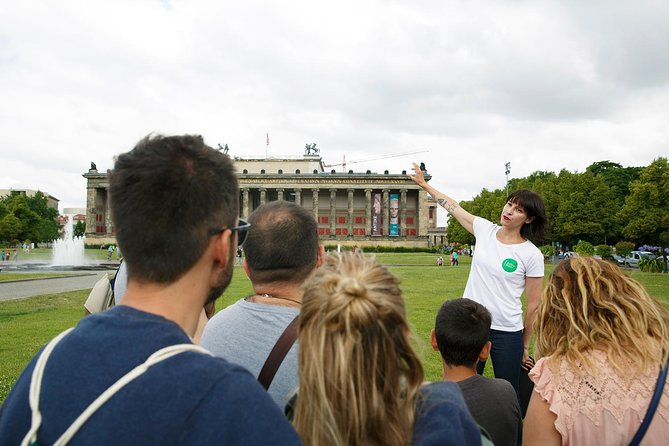
If you only have a day or two in Berlin, you will run into the same problem everyone does. The city is huge, the history is layered, and your best ideas turn into a long list that you never quite execute. This tour helps because it concentrates the essentials into one forward-moving walk.
The route is built for orientation. You start in the east central heartbeat of Berlin at Alexanderplatz, then work your way through the historic core, major squares, and landmark architecture. You end at Brandenburg Gate, with the city parks and nearby squares in view, so you leave with a mental map that you can reuse tomorrow.
Two details make it especially useful. First, you get history and context as you stand in place, which is how Berlin makes sense. Second, the pace is designed so you can enjoy key outdoor stops, where the atmosphere is part of the story.
The consideration is practical. It is a walking-heavy city sightseeing experience, and it is not recommended if you struggle with longer distances. Plan accordingly, wear comfortable shoes, and treat the tour like an active half-day.
More City Tours in Berlin
- Berlin: 1-Hour City Tour by Boat with Guaranteed Seating
★ 4.3 · 16,993 reviews - Berlin: City Sightseeing Hop-On Hop-Off Bus Tour
★ 4.1 · 4,233 reviews - Berlin: 1-Hour City Sightseeing Cruise
★ 4.4 · 2,210 reviews
Meeting at the Berlin TV Tower, then getting your bearings fast
Your tour starts at the Berlin TV Tower area, at Panoramastraße 1A. That is a smart choice because it anchors you right in the central zone, easy to reach and easy to picture on a map later.
Because the meeting point is near public transportation, you will likely be able to connect smoothly from where you are staying. And since the tour ends back at the same starting point, you avoid the headache of figuring out how to get back when your legs are tired.
You also get a small-but-important comfort factor: the group is capped at 25 travelers. For a city-walk tour, that size tends to feel manageable, especially when you are stopping at places with limited space like squares and church entrances.
The ticket format is simple. It is a mobile ticket, so you do not need to hunt for paper.
Alexanderplatz and Neptunbrunnen: the east-central stage set
You begin at Alexanderplatz, right near the TV Tower entrance. Your guide sets the context for why this square matters, both historically and visually. This is one of those Berlin spaces where the buildings can look plain at first, but the stories make it feel like a hub rather than just a junction of streets.
A quick stop at Neptunbrunnen follows. The Neptune Fountain in the middle of Alexanderplatz is more than a photo spot. It is a symbol, and you learn what it represents and why it sits exactly where it does. Even a five-minute stop like this can sharpen your sense of what you are seeing across the city.
A good part here is how the walk teaches you to look. You start noticing the way Berlin uses monuments and public space to signal power, identity, and eras. After this, the rest of the day reads like a timeline.
Rotes Rathaus and Nikolaiviertel: civic power and the oldest vibes
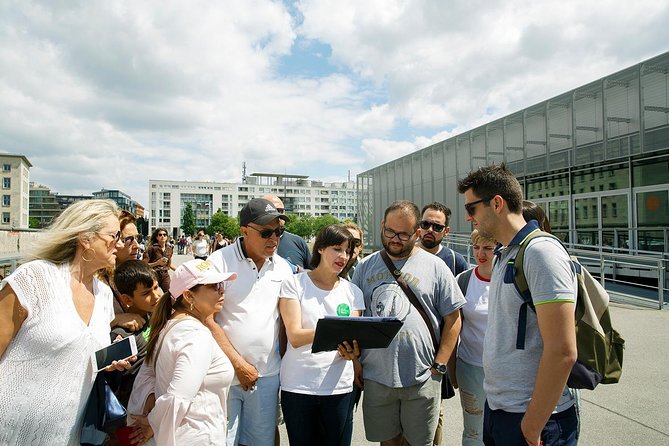
Next comes Rotes Rathaus, the red city hall building you see while moving through the central core. You learn the role of the council of Berlin, which adds meaning to a building you would otherwise just pass.
Then you shift into Nikolaiviertel, described as one of the most original parts of Berlin. This area is tied to the city’s early foundation story, reaching back about 800 years. The stop is short, but you do not just look at buildings. You also connect the name, including what St Georg means in the square.
Nikolaiviertel is a strong contrast with the big-signal modern feel of central squares. If you like walking through places where the city’s layers are visible, this stop helps your brain slow down and absorb the “old Berlin” flavor.
Weigh these Berlin picks against each other
- Berlin: Reichstag, Dome and Government District Guided Tour
★ 4.7 · 18,288 reviews - Berlin: TV Tower Standard Entrance Ticket
★ 4.4 · 15,883 reviews - Berlin: Boat Tour Along the River Spree
★ 4.4 · 11,252 reviews - Discover Berlin Half-Day Walking Tour
★ 5.0 · 9,624 reviews
Berliner Dom and Lustgarten: church grandeur next to civic gardens
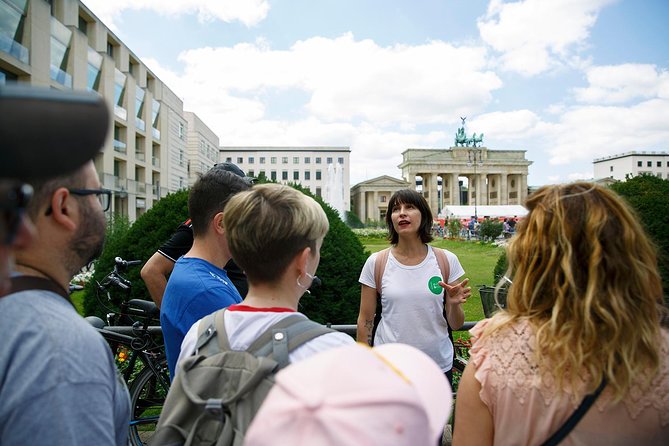
From Nikolaiviertel, the route heads to Berliner Dom, Berlin’s cathedral. Here, the focus is on the building’s beauty, including the dome and decorative elements. The guide also explains the history behind the church and what made it possible to create it.
Even if you do not go inside anywhere on this specific stop, the dome and frontage give you an instant orientation point. You can later spot the cathedral again from streets that feel like they lead into the same central web.
Then you reach Lustgarten. This is a smaller moment of meaning, where you learn what the garden is and why it carries the name it has. It is also framed as a key spot in the city center, which is exactly how it feels when you are standing there, surrounded by major buildings and the sense that the center of Berlin is right under your feet.
Unter den Linden and Staatsoper: the royal way that became a main street
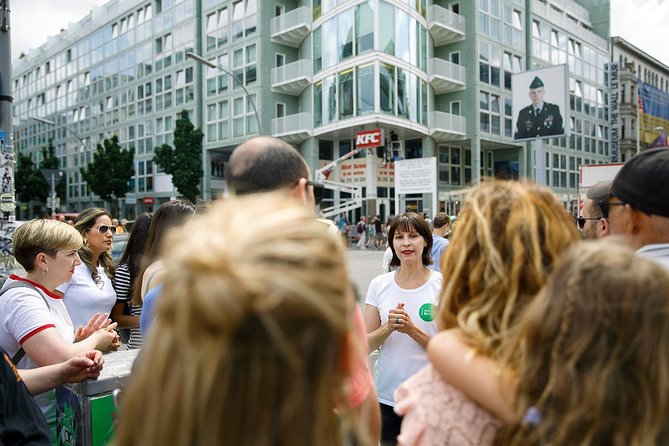
Now you get one of Berlin’s best-known corridors: Unter den Linden. This part of the walk explains why this avenue matters, including the idea that it used to function as a royal way from the palace toward the Tiergarten.
It is a clever transition because it changes how you see the street. You stop thinking of it as just a busy landmark strip, and start recognizing it as a corridor designed for status and movement.
The walk includes Staatsoper Unter Den Linden. You admire the opera house, and you get the sense of why it is such a cultural anchor along the boulevard. Even for people who are not opera people, the architecture and the location explain the role the arts played in Berlin’s public life.
Bebelplatz, Neue Wache, and the art of memory
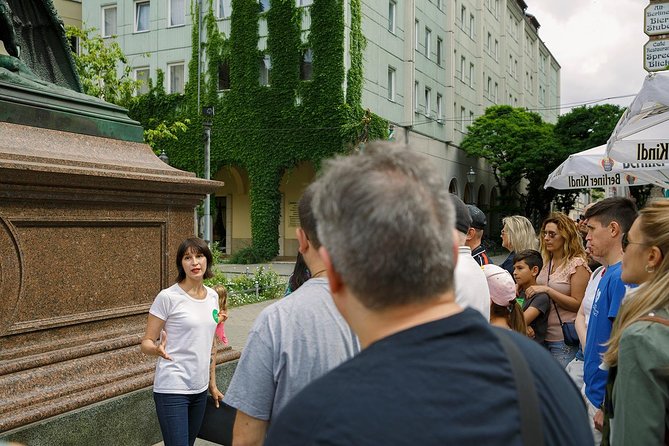
The next stops shift from civic architecture into moral and political history.
At Bebelplatz, you learn why it mattered during the 20th century. You also locate a memorial in the middle of the square and understand why a figure tied to Hitler’s propaganda minister played a role there. This is the kind of stop that can feel heavy, but the guided context helps you keep from getting lost in details.
After that comes Neue Wache, where the focus is on memorial design across time. You see the artwork by Käthe Kollwitz, and you learn how the memorial has been adapted to different historical moments. This stop is a reminder that public memory changes, not in a simple way, but in response to new generations and new understandings.
The tour indicates that Neue Wache has an admission ticket included, which is useful to know. It means you should plan on spending time there as more than a quick street photo.
Gendarmenmarkt: where symmetry tells a story
Then you arrive at Gendarmenmarkt, often described as one of Berlin’s most beautiful public squares. The highlight here is the harmony of the ensemble: the concert house plus two church buildings, each with towers, arranged in a way that looks almost staged.
This stop is a nice balancing act after the heavier history blocks. It gives you something to enjoy visually while still staying in the center of Berlin’s cultural identity.
If you love walking squares where architecture shapes your sense of space, you will probably linger a little here even within the guided time.
Checkpoint Charlie and the Cold War snapshot
You move into Checkpoint Charlie, and the tour uses it as a reminder of the former border crossing, the Cold War, and Berlin’s partition. This is one of Berlin’s most recognizable symbols, and the guided explanation helps you place it in the wider story rather than treating it like a reenactment set.
Checkpoint Charlie can be surrounded by noise and tourist energy at other times, but on a guided route, the context usually cuts through the clutter. You stop seeing it as a single point and start seeing it as a boundary line, a policy, and a lived reality.
The tour also includes a brief “all the area, focused on the historical context” moment around this section, which is exactly what you want at this stage. It keeps you from missing the surrounding streets that also carry the story.
Potsdamer Platz: from what it was to what it is
Next is Potsdamer Platz, a place people either love or overlook because it can feel too modern. That is why the guide’s approach matters. You learn what Potsdamer Platz was from the beginning, and then how it looks today as one of the city’s more modern sections.
This is a good late-afternoon type stop because it helps you reconcile the Berlin you imagined with the Berlin that exists now. Modern buildings do not erase old stories, they sit on top of them, and that is part of Berlin’s constant reinvention.
Holocaust Memorial and Brandenburg Gate: two endings, one hard reality
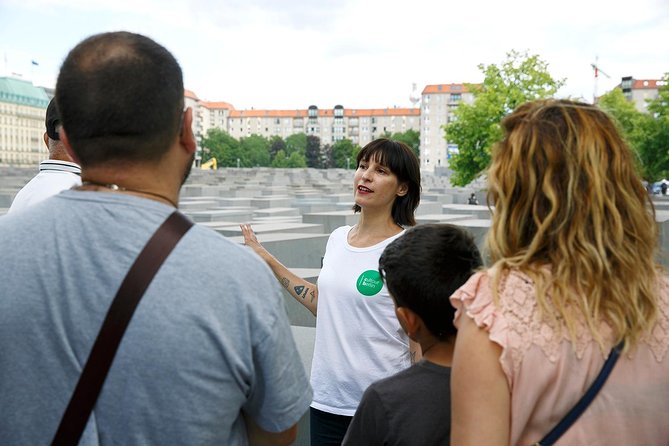
One of the most important stops is the Holocaust Memorial, the Memorial to the Murdered Jews of Europe, located near Brandenburg Gate. The guide helps you try to understand the meaning of the memorial and the author’s intent.
This stop is likely to land differently for different people. For some, it is an immediate emotional impact. For others, it is a mental puzzle that turns into understanding with the guide’s explanation. Either way, it is the kind of stop that changes how you view everything around the area.
Then the tour finishes at Brandenburg Gate. You get a magnificent view toward the Tiergarten, plus nearby sights such as Parisien square and the Adlon Hotel. But the key is that the guide ties in the history behind the gate, so you are not just checking off a famous icon. You are leaving with a story arc that connects Berlin’s political shifts, trauma, and public identity.
The way the tour ends matters. Starting from a central square, walking through civic and cultural landmarks, and finishing at Brandenburg Gate gives your brain a clean thread. You can later build your own day around what you liked most.
What you get for the price, and why it is usually fair value
At $25.58 per person for about four hours, this is priced like a practical city intro. You are paying mostly for two things: time saved and guided context.
If you tried to plan a similar route solo, you would spend a chunk of that four hours just figuring out what to see next and how to connect the sites. The guide reduces that friction and adds interpretation at each stop.
Also, you do not have to add transportation because the tour is designed as a walking experience, and it is explicitly noted that private transportation is not included. That means your money goes toward the guide and the route, not toward vehicle logistics.
One more value point is the language match. The tour is operated by a Spanish guide, meaning you get clarity rather than guessing what you are looking at. If Spanish is your language, that can be a big deal.
Finally, the high satisfaction rating of 4.9 and the strong recommendation rate are a sign this is delivering what it promises, mainly the guide-led history and the selection of major sights.
Who this tour is best for (and who should pass)
This works best for:
- You want a high-coverage Berlin highlights walk in a single half day
- You like history explained while you stand in front of the real place
- You speak Spanish and want a guided experience that stays in one language
- You prefer walking through squares and streets that cars and buses simply cannot replicate
You might want to skip or choose something else if:
- You cannot walk properly for long distances, since the tour is built for foot travel
- You expect lots of time for sitting breaks or slow museum browsing, because the format is a moving route
If you are the type of traveler who likes to return later and see one place in depth, this tour is a strong first step. It gives you priorities for your second day.
Tips to make the walk feel easy
- Wear comfortable shoes. Even with short stop times, this is a walking-focused experience.
- Bring a bottle of water. The tour is fast moving, and outdoor squares can get warm.
- Use your phone for the mobile ticket, and keep it ready at the start near the TV Tower.
- If you are sensitive to history-focused stops, take a breath before Bebelplatz and the Holocaust Memorial sections. The guide’s context is there to help, but the subject matter is intense.
- If you are traveling with someone who needs extra flexibility, plan on that before booking since the route is set.
Should you book All of Berlin (city panorama)?
Book it if you want a Spanish guided fast introduction to central Berlin with a clear route and strong history storytelling. The best reason is the combination of big name landmarks and meaning, so you leave with understanding, not just photos.
Skip it if walking long distances is an issue or if you need a more relaxed, stop-and-stay style day. In that case, the format could feel tight.
If you are deciding how far ahead to plan, note that this experience is typically booked about 29 days in advance on average. Booking earlier tends to reduce the chance of arriving in Berlin and finding limited options.
FAQ
Is the guide provided in Spanish only?
Yes. The tour is operated by a Spanish-speaking local guide, and it is conducted in Spanish only.
How long is the tour?
The tour runs about 4 hours.
Where does the tour start and where do you end?
You start at Berlin TV Tower, Panoramastraße 1A, 10178 Berlin, and the activity ends back at the same meeting point.
What ticket do I need, and is it mobile?
You receive a mobile ticket.
Is private transportation included?
No. Private transportation is not included.
How many people are in the group?
The tour has a maximum of 25 travelers.
Are there admission fees at the stops?
Most stops list admission as free, and Neue Wache includes an admission ticket. Other stops show admission as not included.
Is this tour good for people with mobility limitations?
It is not recommended for people who are not able to walk properly for long distances.
Can I bring a service animal?
Yes. Service animals are allowed.
Can I cancel for a full refund?
Yes. You can cancel for a full refund if you cancel at least 24 hours before the experience start time.
Fresh reviews out of Berlin
- Berlin Uncensored: A History of Sex & Freedom★ 5.0 · 50 reviews
- Berlin Food & Cultural Tour: Must-Try German & Berliner Classics★ 5.0 · 51 reviews
- English Comedy Show with Pizza and Shots in Central Berlin★ 4.5 · 51 reviews
- Rude Bastards Tour of Berlin★ 4.8 · 51 reviews
- Private Taxi Tour of Berlin East and West and Neighbourhood approx. 4-6h★ 5.0 · 55 reviews
- Rickshaw Sightseeing City Tours Berlin – Rikscha Tours★ 4.0 · 55 reviews
- Berlin: City Highlights Express & Panorama Roof Terrace★ 4.9 · 55 reviews
- Berlin during Nazism – Tour in Italian★ 5.0 · 56 reviews
City Tours, compared.
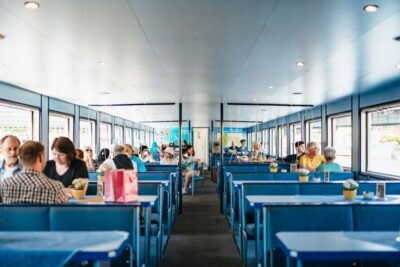
1-Hour City Tour by Boat with Guaranteed Seating
Read our review →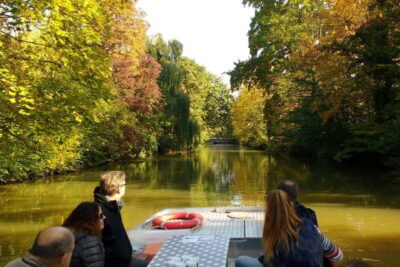
City History Canal Sightseeing Tour on a Motorboat
Read our review →
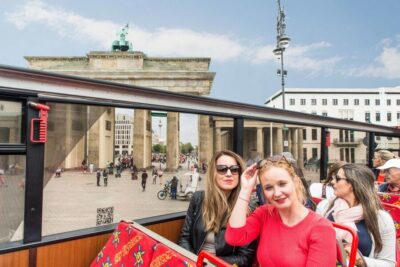
Browse the lists this tour appears in