Reviewed · BERLIN TOURS
Berlín y el Nacionalsocialismo. Group Tour in Spanish
Berlin can be hard to read at street level, unless someone points out the places where power really sat. This Berlín y el Nacionalsocialismo walk helps you connect the big political story to specific corners, ministries, and memorials you can actually stand in front of. Two things I love right away: you get a clear narrative from the Treaty of Versailles through the Weimar years, and you also visit key sites tied to Nazi control, propaganda, and planning for the future.
I also like how the tour doesn’t stay stuck in speeches and theory. You walk along the same streets tied to government and messaging, including a stroll up Wilhelmstrasse, and you finish where Hitler’s last chapter played out, at the site where the Führer Chancellery stood. In recent bookings, guides like Sam, Martín, and Celia stood out for careful explanations, good pacing, and patience.
The only real drawback to think about: the subject matter is heavy, and the route is a walking half-day. If you want something light and breezy, this is not that. If you come prepared to learn and reflect, it lands much better.
Key things to notice on this tour
- Spanish guide with strong communication, including praised patience and clear explanations (Sam, Martín, and Celia have been mentioned in bookings)
- Versailles to Weimar context, so Hitler’s rise makes more sense instead of feeling sudden
- Propaganda focus, including the role of Goebbels’ propaganda programs in shaping public life
- Memorial stop for Sinti and Roma victims, tying Nazi policy to human reality
- Axis in front of embassies in Berlin, Rome, and Tokyo, where diplomacy and ideology overlap
- Wilhelmstrasse government corridor, reaching the Luftwaffe Ministerium and Nazi Propaganda Ministry, then the chancellery site and bunker end
Why Berlin’s Third Reich story works best on foot
A city like Berlin can feel endless, and history can blur if you just hop between major attractions. This tour works because it turns the political timeline into a walking route. You’re not just hearing about power, you’re seeing where it operated, where it tried to project itself, and where it organized cruelty.
You also get two useful layers at once. First, you get the political setup, starting with the Treaty of Versailles and moving through the Weimar Republic. Second, you get the mechanics: how Nazis tried to control minds through propaganda, and how they planned the physical and symbolic future of a new Germany.
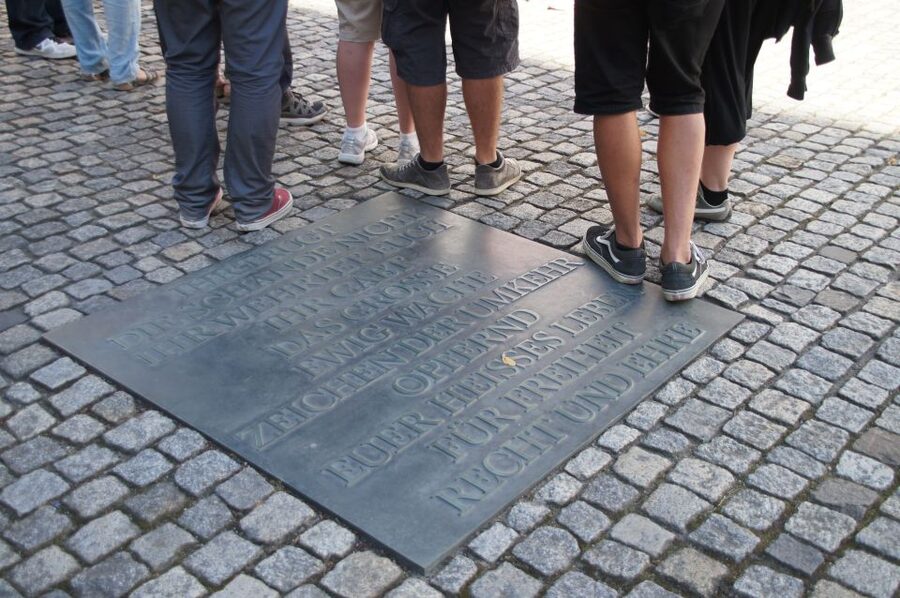
And yes, this is still emotional. The memorial for the Sinti and Roma victims of National Socialism is not a quick photo stop. It’s a moment that changes the tone of the walk, and it makes the rest of the story feel less like abstract history.
Weigh these Berlin picks against each other
- Berlin: Reichstag, Dome and Government District Guided Tour
★ 4.7 · 18,288 reviews - Berlin: 1-Hour City Tour by Boat with Guaranteed Seating
★ 4.3 · 16,993 reviews - Berlin: TV Tower Standard Entrance Ticket
★ 4.4 · 15,883 reviews
Meeting at Alexanderplatz: where to find your green flag
Your meeting point is in Alexanderplatz, right by the Fernsehturm (the TV tower). Specifically, you’ll meet next to the tower entrance, between the Fernsehturm and the Alexanderplatz train station, beside the Espresso House, looking for a green flag that says tours en español.
Why this matters: Alexanderplatz is busy. If you arrive right at start time, you can end up circling instead of starting. Show up a bit early, scan for the green flag, and you will get moving without stress.
What to bring is simple. You need a public transport ticket for the city zones you’ll use, and the tour notes that the required card is AB zones.
Setting the timeline: Versailles and the Weimar Republic
The tour begins with the political and social background that helped extremist ideas take root. You start at the Treaty of Versailles, then move through the Weimar Republic. The point is not to memorize dates. It’s to understand the climate that made radical messaging stick.
This early part matters because it sets up a common misunderstanding. Without context, Hitler’s rise can feel like a sudden twist. With the Versailles and Weimar background, you start seeing pressures that fed resentment, fear, and the search for a strong answer.
You’ll also hear how the guide connects those pressures to the rise to power, including the role of prominent figures around Hitler.
Goebbels, propaganda, and life in the city under National Socialism
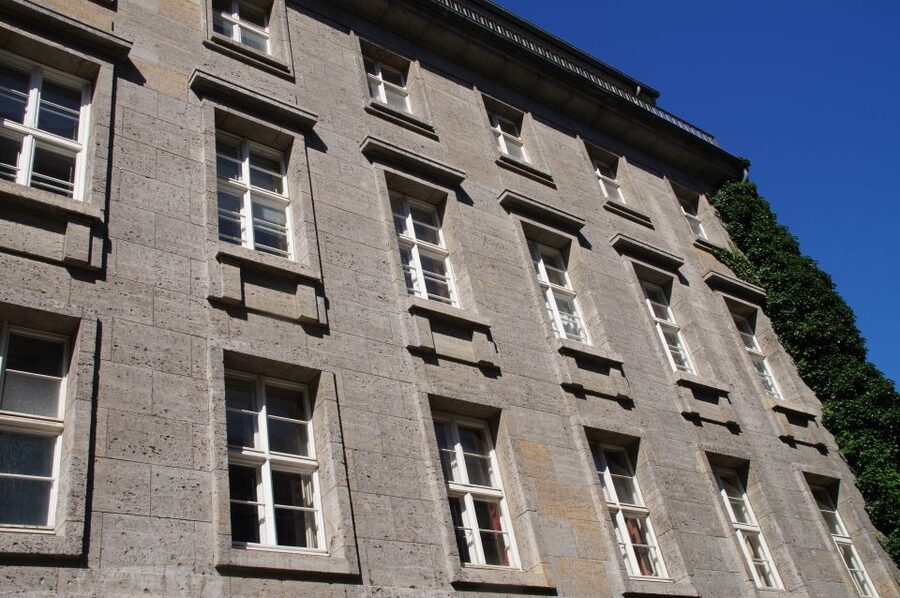
One of the most practical ways to learn about dictatorship is to see how it talks, not just what it builds. This tour includes a focus on the role of Goebbels and his propaganda programs, with explanations that connect messaging to everyday life.
Here’s what I find useful when I learn this way: you start noticing propaganda as a system. It’s not one poster or one speech. It’s a strategy that tries to manage what people think is normal, what they fear, and what they believe is possible.
You’ll also hear about how Nazis imagined the future. The tour includes a stop connected to the plan for Germania, described as a future Germany that would become the capital of the world. Even if you do not love architecture history, this part helps you understand that the regime wasn’t only interested in winning the present. It wanted to redesign the future.
Another way to spend a Berlin afternoon:
- Berlin: Boat Tour Along the River Spree
★ 4.4 · 11,252 reviews - Discover Berlin Half-Day Walking Tour
★ 5.0 · 9,624 reviews - Berlin: Government District around the Reichstag Guided Tour
★ 4.7 · 8,447 reviews - Berlin: Reichstag, Plenary Chamber, Cupola & Government Tour
★ 4.6 · 8,422 reviews
The Memorial to Sinti and Roma victims: where history turns personal
At some point, the walk reaches the Pass Memorial to the Sinti and Roma Victims of National Socialism. This is one of the most important stops on the route because it anchors everything you’ve been hearing to the people harmed by Nazi policy.
I like that the tour includes this memorial in the middle of the timeline. It prevents the learning from becoming too abstract. You are shown the human cost while the political narrative is still fresh in your head, which helps the message land.
A practical tip: if you’re someone who gets overwhelmed, decide beforehand how much time you want at reflective stops. Stand with the group, listen to the guide, and then you can take a minute alone to process if you need it.
The Axis you can see: Berlin, Rome, and Tokyo at the embassies
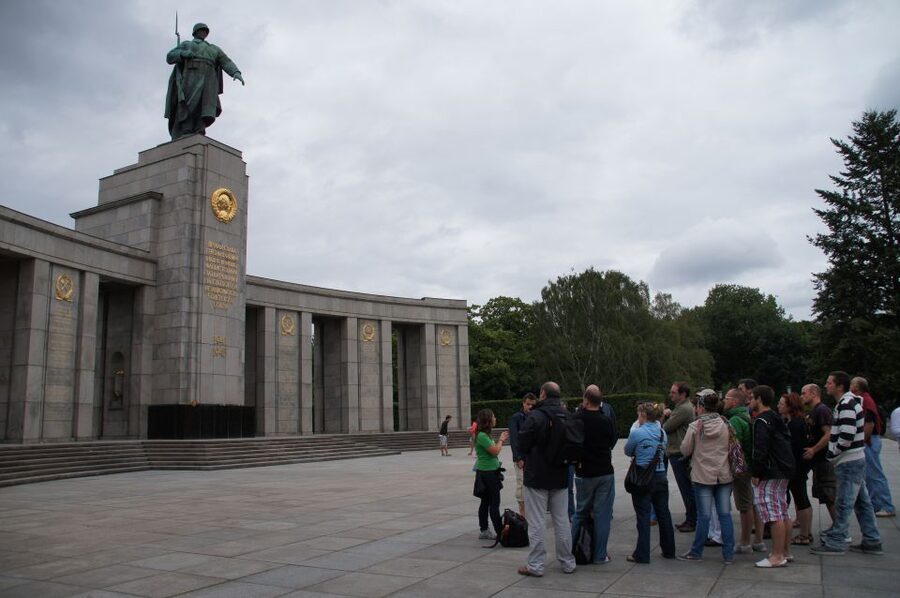
Another standout moment is the section where you learn about the Berlin, Rome, and Tokyo axis in front of the Italian and Japanese embassies. It’s one of those parts that sounds like a fact list until you stand there and realize the geography itself is telling you something.
Diplomacy becomes physical. You see how power ties countries together and how relationships can be marketed through symbols and public space. It also helps you connect the Nazi story to Europe and beyond, instead of keeping everything locked inside Germany.
You do not need a background in international relations to get value here. The guide’s job is to translate the big idea into what you’re seeing, and this stop gives you a clear visual anchor.
Wilhelmstrasse: walking the street of ministries and messaging
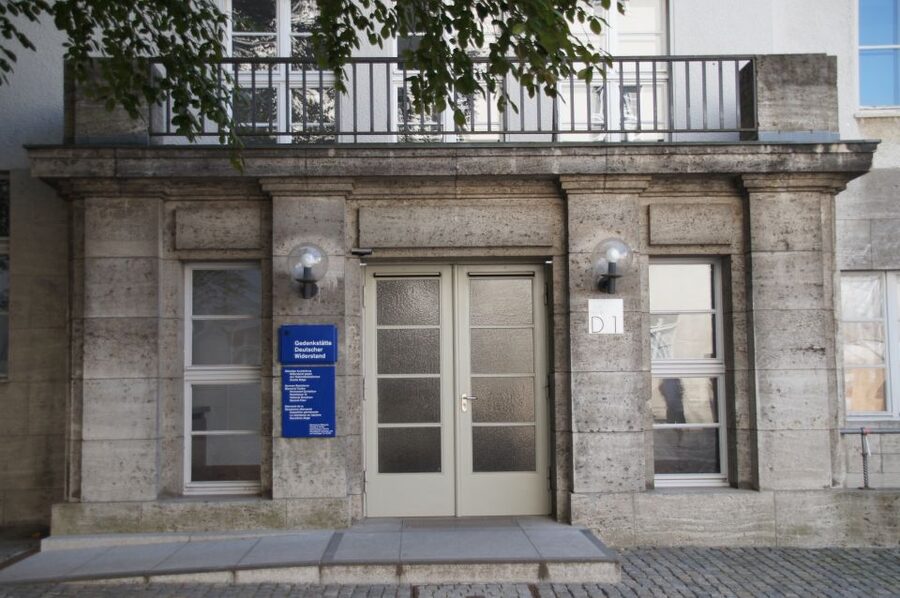
After the embassies, you stroll up Wilhelmstrasse toward major Nazi government and communication sites. This is where Berlin starts to feel like a map with a story attached.
Two stops are called out clearly: the Luftwaffe Ministerium (Air Defense Ministry) and the Nazi Propaganda Ministry. Even if you have visited Berlin before, walking this corridor with an interpreter changes what you notice. The street is no longer just a route between sights. It becomes a reminder that the Nazi state organized itself in departments, corridors, and official communication.
Why this part is valuable: propaganda and defense were not separate worlds. The regime needed both. It needed fear and it needed structure, and it used messaging to sell the story while bureaucracies made it real.
End at the Führer Chancellery site and the bunker story
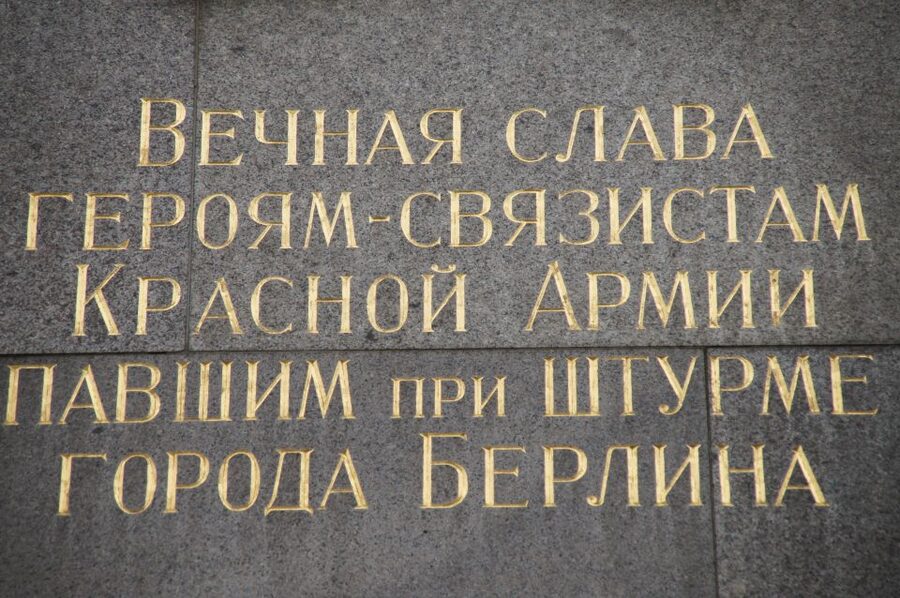
The tour finishes at the exact spot where the Führer Chancellery once stood, and you hear about Hitler’s final days in his famous bunker.
This closing matters for two reasons. First, it brings the timeline to a clear endpoint, instead of leaving you with a lot of scattered locations. Second, it forces a shift from the long build-up of power to the endgame, so the story has a shape.
If you are sensitive to intense historical topics, treat the last segment as a moment to slow down mentally, not just to collect information. It is still learning, but it’s also a reminder of how regimes can collapse with the same certainty that they rose.
Price and value: what $29 buys in 4 hours
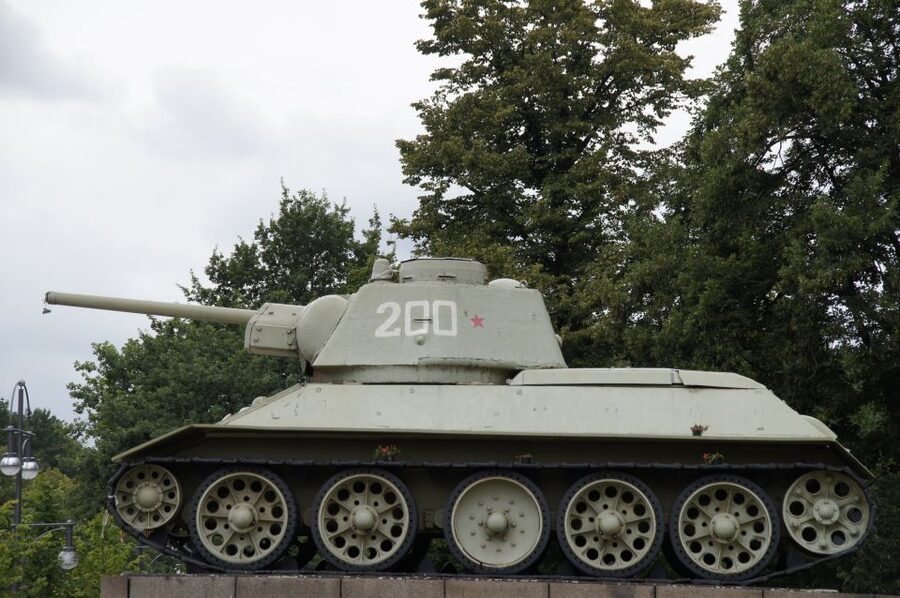
At about $29 per person for a four-hour walking tour, this is priced like an accessible way to learn. You’re not paying for a private car. You’re paying for a structured route, a Spanish speaking guide, and the narration that connects the sites into a story.
The one cost consideration: you need a transport ticket, specifically a Transport Card AB, and it is not included in the price. So your true all-in cost is the tour plus the transit card.
For me, the value comes from the guide-led connections. History at this level is hard to piece together on your own quickly, especially when you want the right context in the right order. This tour gives you that order in a half-day, which is a big deal if your Berlin time is limited.
Who this tour suits best (and who might skip it)
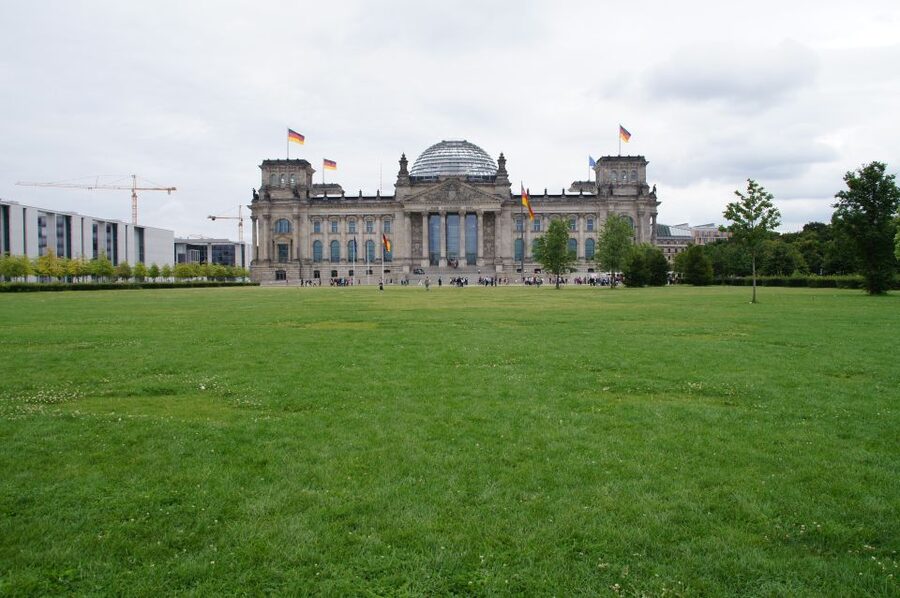
This is a strong fit if you:
- want a structured, Spanish guided walk through key Third Reich-related sites
- like learning with street level context, not only museums
- prefer a chronological thread, from Versailles through Weimar and then the rise to power
- want stops that include both memorial reflection and government and propaganda locations
You might consider skipping or switching to a different style of tour if you:
- want a light sightseeing day
- dislike walking half-days
- are not ready for a tour centered on Nazi plans, persecution, and Hitler’s final chapter
Should you book Berlín y el Nacionalsocialismo? My take
I think you should book this tour if you want your Berlin history to feel connected and specific. The route ties together politics, propaganda, and real places, and that combination makes the story easier to understand and harder to forget.
Also, the guide quality looks consistent in the feedback. Sam, Martín, and Celia have been highlighted for excellent communication, strong information, and patience. That matters, because a topic like this can turn confusing fast if the guide rushes or loses the thread.
Just go in with the right mindset. Wear comfortable shoes, bring your AB transit ticket, and give the memorial stop the time it deserves. If you do that, this four-hour walk gives you real clarity and a sharper sense of where Berlin’s modern face comes from.
FAQ
How long is the tour?
It lasts 4 hours.
What language is the guide?
The tour has a live Spanish speaking guide.
Where do I meet the group in Alexanderplatz?
Meet by the Fernsehturm, next to the only entrance to the tower, between the same tower and Alexanderplatz train station, beside the Espresso House, next to a green flag with tours en español.
What is included in the price?
A Spanish speaking guide and the 4-hour tour.
Do I need a public transport ticket?
Yes. A Transport Card AB is necessary for the tour, and it is not included in the price.
Is the tour wheelchair accessible?
Yes, the tour is wheelchair accessible.
What are the booking and cancellation options?
You can reserve and pay later, and you can cancel up to 24 hours in advance for a full refund.
Fresh reviews out of Berlin
- Gastro Tour with Klaus though the Wrangelkiez, Kreuzberg★ 5.0 · 9 reviews
- Wall Tour Berlin – Fates, Heroes & Love Stories★ 4.0 · 9 reviews
- Berlin City Tour with Hotel pick up and Drop off★ 4.0 · 9 reviews
- Berlin Private Street Art Tour – Off The Grid★ 5.0 · 9 reviews
- Romantic Berlin Rickshaw City and Photo Tour – incl. pick-up★ 4.0 · 9 reviews
- Quatsch Comedy Club Berlin: Quatsch Comedy Hot Shot★ 4.8 · 9 reviews
- Berlin Urbex Adventure and History Tour★ 5.0 · 9 reviews
- Stag Party Berlin: Celebration for Your Bachelor Party★ 3.4 · 9 reviews
Berlin Tours, compared.
Reichstag, Dome and Government District Guided Tour
Read our review →
1-Hour City Tour by Boat with Guaranteed Seating
Read our review →
Government District around the Reichstag Guided Tour
Read our review →
Reichstag, Plenary Chamber, Cupola & Government Tour
Read our review →