Wolfsburg’s AutoMuseum is interesting because it puts Volkswagen’s story in your hands right by the modern factory, so you can connect today’s cars to the ideas that came before. I love how the museum shows the evolution of the brand in a way that feels visual, not textbook. I also like that it mixes series models with rare prototypes, so you can see what made it to production and what stayed experimental.
What you might consider is time and focus. The exhibition is packed, but it is still a museum where you will read labels at your own pace, and some content is shown in the original language. If you want a guided, story-heavy experience with lots of spoken context, you may wish there were more built-in explanations or even more vehicles than the 130 on display.
Quick highlights before you go
- A full Volkswagen timeline, from early milestones through later eras and design shifts
- 130 vehicles across 5,000 square meters, including rare studies and prototypes
- Real contrasts on the same floor, series models beside one-offs so you can compare details
- Fascinating oddities, like Herbie, a wooden Beetle, and the See-Golf floating Golf
- Free multilingual guidebook, helpful when some exhibits are labeled in German
- Close to the VW plant, so the past to future connection feels immediate
Wolfsburg’s AutoMuseum, where the past sits next to the present
The Volkswagen AutoMuseum Volkswagen is located near the Volkswagen production site in Wolfsburg. That matters more than you might think. You are not just walking through automotive nostalgia, you are walking through a brand’s evolution in the same city where current models are being made.
The museum is housed in a former clothing factory, so you get that industrial, slightly gritty, factory-adjacent feel instead of a sterile, white-box gallery. The industrial charm works for cars, because cars were built in spaces like this, and the setting helps you feel the machinery side of the story.
If you are someone who likes grounding a trip in real-world context, this is a good stop. The museum gives you the backstory, while the nearby plant gives you the why: this brand has been continuously testing, refining, and building for decades.
Tickets, price value, and how long 1 day really means
You are paying $14 per person, and admission includes the museum entry plus a free guidebook in various languages. That is solid value if you treat the visit as a focused car walk, not a quick photo stop.
A practical expectation is about 1.5 hours to 2 hours for a satisfying visit. Some people will move faster, especially if they already know the key models. Others will slow down because prototypes and one-offs take time to study, especially when you want to compare shapes, details, and design choices.
You also get a 1-day validity window, so you are not locked into a single tight schedule. That helps if you are mixing the museum with something else in Wolfsburg the same day.
One small thing to plan around: food and drinks are not included. You’ll want water, and if you are staying for a couple of hours, plan a meal or snack nearby before or after.
Entering the museum: a layout built for comparisons
The AutoMuseum Volkswagen is set up around Volkswagen milestones and visible progress over time. The big idea is that you do not just see cars in isolation. You see how the brand changed, and you notice how decisions got turned into series production.
When you arrive, follow the museum flow like a timeline. Early sections help you place the familiar classics in context, and then the exhibition shifts toward more technical and experimental items. The museum’s strength is that it keeps prototypes, test vehicles, and studies in the same conversation as the cars people actually drove.
You can feel the museum’s philosophy in the way exhibits are placed: rare concepts do not feel like distant museum trophies. They feel like stepping stones, sitting close to the models that came out later.
Also, you can skip the ticket line, which is a quiet win if you do not want to waste time waiting at the entrance. The entrance and parking lot are at the corner of Lerchenweg and Dieselstraße, so it is easy to plug into your day.
Classic Volkswagen milestones, Beetles to Bullis, Type 3, Type 4, Karmann Ghia
A major reason I think this museum works for first-timers is that it starts with the cars people recognize, then expands outward. You are looking at more than 30 VW Beetles and a good dozen Bullis, plus vehicles like Type 3 and Type 4, and Karmann Ghia.
This is where the museum does a useful job for your understanding. The Beetle story is not just about one silhouette. It is about how a design becomes a platform for ideas, how production choices evolve, and how the brand kept adapting while sticking to a recognizable identity.
From there, the Bulli lineup adds a different angle. It is the workhorse and everyday-life viewpoint, and it helps you see Volkswagen as a builder of practical vehicles, not only showy icons. Then Type 3 and Type 4 bring in the mid-century thinking about space, performance, and everyday usability, and Karmann Ghia adds style and sportier presence.
In other words, this part gives you variety early, so even if you are not a die-hard VW nerd, you still have something to look forward to.
Prototypes and one-offs: where the fun gets real
The museum gets especially interesting in the areas devoted to prototypes, test vehicles, studies, and one-offs. You see rare studies and concept work placed side by side with series models, which lets you ask the best question as you walk: what actually made it into production, and what was dropped.
This comparison skill is what turns a car display into something more valuable. Instead of collecting random facts, you start noticing patterns. You begin to see which design themes repeated and which ones were tried and abandoned.
The museum includes standout oddities that make you slow down and look again. Examples include Herbie, the wooden Beetle, and the See-Golf, described as a floating Golf with hydraulic pontoons. These are not here just for jokes. They show creativity, experimentation, and the way Volkswagen ideas reached beyond normal road use.
There are also countless prototypes and test vehicles, plus motorsport milestones. If you like engineering vibes, pay attention here. You are not only seeing what the brand sold, you are seeing what the brand tested.
The 1973 turning point and the water-cooled, front-wheel-drive shift
One of the museum’s core storylines is the move into the water-cooled era from 1973 with front-wheel drive. That is a big deal in Volkswagen history, because it marks a change in engineering direction.
In a car museum, these types of transitions can feel abstract unless you connect them to how the car looks and feels. Here, the value is that you are not learning the transition in isolation. You can compare it against the earlier cars nearby, including familiar Beetle-era design choices.
This is the part where I would recommend you slow your pace just a bit. Look at how the shape and layout signal new priorities. You do not need to be a mechanic to notice differences when you have cars in front of you for direct comparison.
And because the museum focuses solely on Volkswagen since its conceptual reorientation in spring 2001, you are not distracted by other brands. The exhibition stays tight to the Volkswagen identity across eras, which makes these engineering turns easier to track.
How the museum became what it is today
A useful bit of context helps you appreciate why the display feels the way it does.
The Volkswagen AutoMuseum was officially founded on April 25, 1985. It opened to the public as a Volkswagen Group technical and historical collection housed in that former clothing factory. On January 1, 1992, it became the Volkswagen AutoMuseum Foundation as a non-profit. Then in spring 2001, it reoriented alongside the opening of the Zeithaus in the Autostadt, shifting to concentrate solely on the Volkswagen brand.
That history explains the mix you will see. There is enough technical and historical grounding to make prototypes feel legitimate, not like filler. At the same time, the focus on a single brand helps keep your walk coherent. You are not bouncing between unrelated timelines.
Using the free multilingual guidebook without getting stuck
The museum provides a guidebook in various languages, and that is the best tool for independent visiting. Since some content is shown in its original language, the guidebook helps you connect what you see to what it means.
Here is how I’d use it so you get more than just a pile of labels.
First, skim the guide before you start, just enough to pick the parts that interest you most, like Beetle milestones, Bullis, or the prototype sections. Then, as you walk, stop only where the guidebook tells you you should compare something. That prevents the common museum mistake, reading every single plaque while missing the big connections between eras.
If you are visiting with kids or non-experts, the guidebook can be your shared rhythm. Pick one “mission” per room, like spotting the rare one-offs, or finding examples from the 1973 shift. It keeps the visit fun instead of drifting into generic wandering.
Timing and practical tips for a smooth visit
For a museum day, you want the visit to feel paced, not rushed.
Plan to arrive with enough time to park and get settled, especially if you want photos and quiet moments with the cars. Because the entrance and parking lot are at the corner of Lerchenweg and Dieselstraße, you can build a simple route into your Wolfsburg day.
The museum is wheelchair accessible, so you can move through at a comfortable pace and not worry about accessibility barriers. Still, because the exhibition contains many different vehicle types and displays, you may want to take it slowly around tighter sections, giving yourself space to read and look without bumping others.
Also, remember that food and drinks are not included. Bring water, and if you need a break, plan a short pause off-site rather than expecting an in-museum stop.
Who will enjoy the AutoMuseum most
This is a strong match for a few types of travelers.
If you are a Volkswagen fan, you will get lots of model variety, including cars many people do not realize exist beyond the famous ones. The museum’s mix of studies, prototypes, test vehicles, and one-offs helps you feel like you discovered something, not just repeated a familiar car list.
If you are traveling with family, it can work well because the exhibition includes both recognizable icons and surprising oddities. A visit of about 1.5 hours to 2 hours is realistic, and the variety makes it easier to hold attention, including for a kid who wants something fun to point at.
If you are the type who loves automotive engineering and change over time, the museum’s emphasis on milestones and comparisons gives you plenty to look at. You can track the evolution from classic eras toward later shifts like 1973 water-cooled designs and front-wheel drive.
The only group I’d hedge for is someone who wants a guided narration, or someone who expects frequent interactive experiences. This is primarily a walk-through exhibition with information on display, supported by the guidebook.
Should you book the Wolfsburg AutoMuseum?
Book it if you want a focused, good-value car museum that stays on one brand and teaches you how Volkswagen evolved. The $14 price includes admission and a free multilingual guidebook, and the proximity to the VW plant gives the whole experience extra meaning.
If you have 1 day in Wolfsburg and like cars at any level, this is worth your time. I’d recommend budgeting about 1.5 to 2 hours, bringing water since food is not included, and using the guidebook to pick your priorities so you do not miss the prototype and one-off sections.
If you only have limited interest in Volkswagen, you might still enjoy the cars on display, but you will get more out of it if you go in curious about how a brand stays itself while still changing.
Tickets, compared.


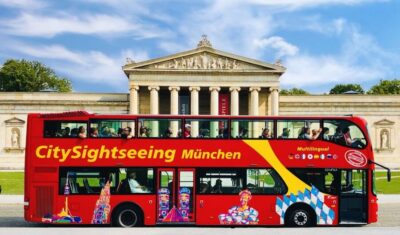
Munich Hop-On Hop-Off Tour: 1-Day or 2-Day Ticket
Read our review →