
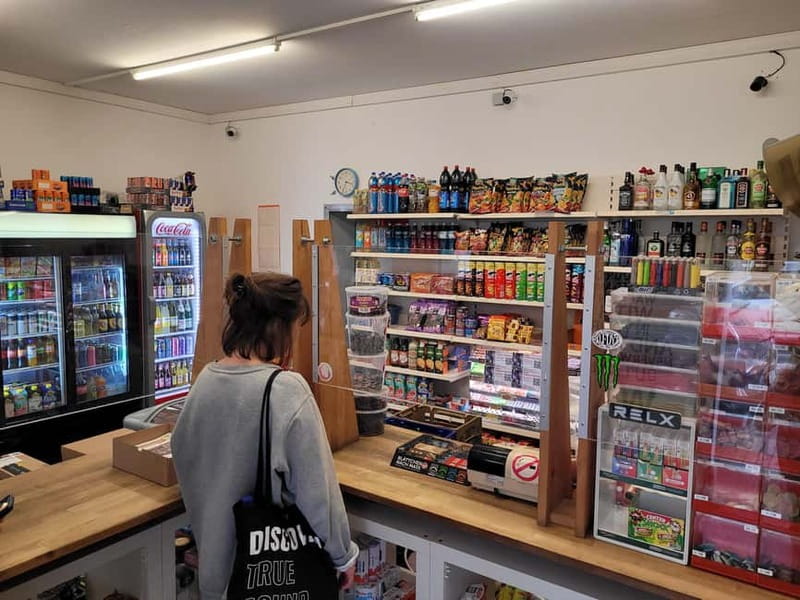
Reviewed · DORTMUND TOURS
Trinkhallen Tour Dortmund
Dortmund’s Trinkhalle culture is one of those simple local ideas that somehow turns into a whole social system, and this tour puts you right in the middle of it. You’ll walk the Unionviertel with a live guide who can connect the everyday kiosks to the Ruhr region’s working life, and guides like Wanja and Marta bring humor plus real context.
I love that you get a taster included, not just stories, and I also like how street art gets woven into the route so the neighborhood feels lived-in, not museum-quiet. One thing to consider: at 1.5 hours, you’ll cover several stops at a comfortable pace, but it is still a tasting tour, not a full meal.
Quick hits if you want the essentials
- Trinkhalle culture explained with plain, practical history of why kiosks appeared in the Ruhr
- Unionviertel walking route with urban charm and everyday street life
- Street art connection that helps you see the neighborhood as more than just snacks
- Tasters included so you taste the vibe, not only hear about it
- Live guide in German or English and a format that stays light and friendly
Trinkhalle Culture in Dortmund’s Unionviertel: Why This Tour Feels Different
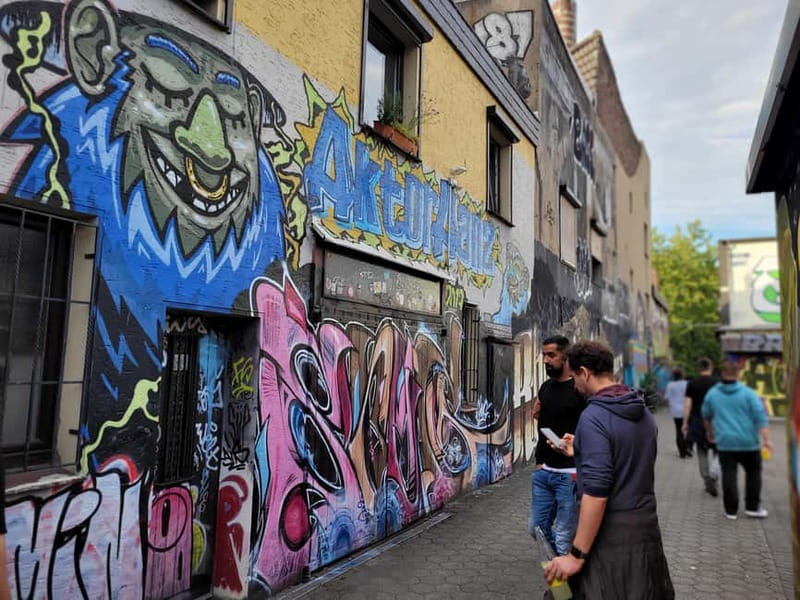
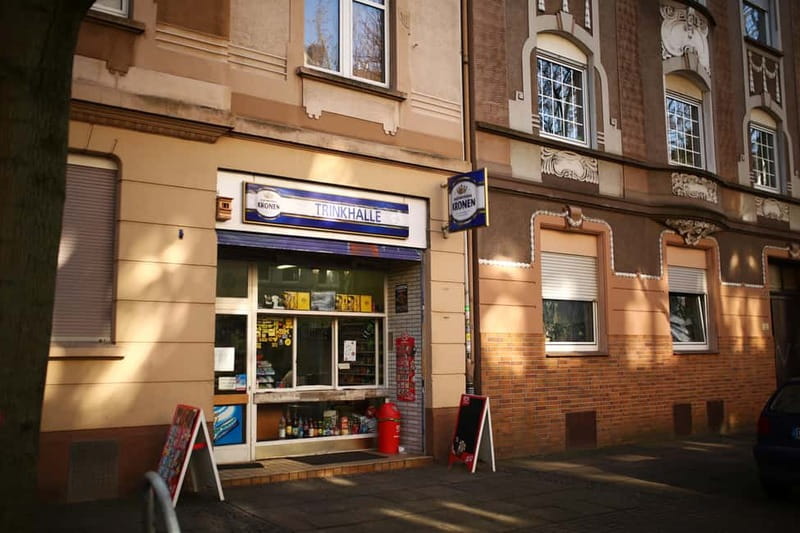
A Trinkhalle is not just a place to buy something fast. In the Ruhr region it became a kind of local utility, part convenience store, part meeting point, part neighborhood habit. That is why this kind of tour works: you are not chasing big sights only, you are learning how ordinary places shape daily life.
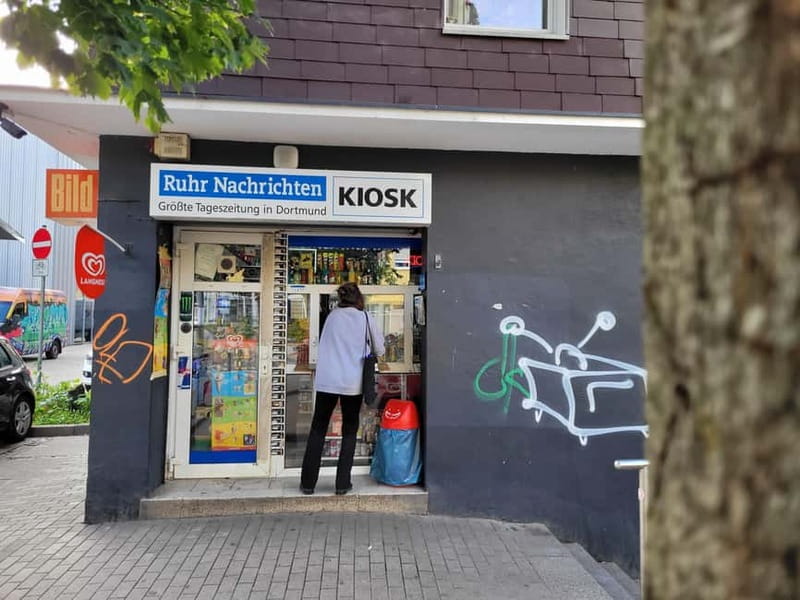
In Dortmund, the focus is the Unionviertel, a district that carries a working-class past but now has more trend and street energy. The tour starts with you at Café Erdmann, in the Hochbunker at Rittershausstraße, which is a great way to begin because it signals the theme right away. Old industry and modern city repurposing sit side by side here.
You’ll then move from kiosk to kiosk through the neighborhood. You are not just collecting facts. You’re watching how people use these places, what they sell, and how the culture survives even as the product mix changes over time.
Weigh these Dortmund picks against each other
- Dortmund: BVB Signal Iduna Park Stadium Walk
★ 4.4 · 2,924 reviews - Dortmund: German Football Museum
★ 4.6 · 484 reviews - Dortmund: Borusseum Borussia Dortmund Museum Entry Ticket
★ 4.6 · 315 reviews
Starting at Café Erdmann and Walking the Unionviertel Route
Meeting at Café Erdmann inside the Hochbunker is a smart launch point. You get a sense of Dortmund’s layered character before you even reach the kiosks. Then the group heads out on foot, through the streets where the Unionviertel’s urban energy shows up in small ways: the shopfront details, the flow of locals, the walls with street art, and the general feeling that this is a neighborhood people actually inhabit.
This is also the moment where you’ll feel the tour’s pacing. It is designed as an easy walking experience with sightseeing built in. You will have guided time, then you’ll get moments to look around and reset your brain before the next stop.
You finish at Westpark, which is useful if you want to extend the outing without planning a separate transfer. Even if you do not stay long, that end point helps you feel like the tour is part of a real day in Dortmund, not a quick ticket you rush in and out of.
The Ruhr Story Behind Drinking Halls: From Factory Gates to Neighborhood Chat
The heart of the experience is the origin story. You learn that the idea for drinking halls grew during the industrialization period, when coal mine and factory owners set them up near the factory gates. The reasoning was very practical, and it is not the kind of backstory you usually hear when you see a kiosk from the sidewalk.
Here’s the key idea the guide builds for you: tap water could be risky because of contamination. At the same time, factory owners and managers were trying to reduce heavy drinking among workers. So the early kiosk concept leaned toward mineral water and non-alcoholic options, including offerings that helped steer people away from beer and schnapps.
That history matters because it explains something you might notice right away. Trinkhalle culture isn’t random. It developed as a response to industrial life, and it was tied to labor, health concerns, and daily routines. The tour makes that connection clearly, so the kiosks start to feel like a social invention, not only a retail space.
You’ll also hear how the kiosks changed once they became part of working-class neighborhoods like the Unionviertel. Over time, they were no longer just about industrial needs. They expanded product ranges so you could grab essentials after shops closed, refill something you forgot at home, or pick up a quick snack when the day goes sideways.
Another worthwhile detail is the idea of preservation. The tour points to the Trinkhallenverein, an association dedicated to preserving kiosk culture. That tells you this is not just nostalgia. People are working to keep the tradition alive even as city life shifts.
What You Taste: A Included Taster That Works for Food-Shy People
The tour includes a taster, and that is a big part of the value. You get to sample what these places offer without committing to a long food crawl. That makes it friendly if you are curious but not trying to turn a neighborhood walk into a full-on meal plan.
Based on what guides often serve, you may encounter typical Ruhr snack and drink items. In one recent case, the tasting included beer along with sweets like YumYum and a mixed bag of treats. You should still treat this as a tasting experience, not a guaranteed menu of exact brands every time.
If you drink alcohol, this is a fun way to try what locals consider normal to grab at a kiosk. If you do not, it is still worth going. The tour is built around kiosk culture, and non-alcoholic options are part of the broader story too. Still, if alcohol matters for you, ask your guide at the start, so you can understand what the tasting will cover today.
Also, tasting is one of those quiet logistical wins. Since the tour lasts 1.5 hours, you do not want to wait around at long food stops. A short taster keeps you moving, keeps the tour lively, and helps you experience more kiosks in the same time.
Another way to spend a Dortmund afternoon:
- Dortmund: 24-Hour Hop-On Hop-Off Sightseeing Bus Ticket
★ 4.1 · 161 reviews - Dortmund: Phoenix des Lumières Entry Ticket
★ 4.0 · 142 reviews - SEA LIFE Oberhausen Admission Ticket
★ 4.0 · 132 reviews - Dortmund: Skywalk
★ 4.5 · 74 reviews
Street Art Plus Kiosks: How the Tour Connects Two Different Dortmund Stories
Street art can feel like a separate topic from everyday shopping. This tour avoids that split by treating street art as part of the same neighborhood identity.
As you walk through the Unionviertel, the guide links what you see on the walls to the broader city story. You get a sense of change and adaptation, how industrial areas and workers’ streets get reinterpreted by newer creative energy while older social rhythms keep going. That is the bridge that makes street art feel relevant instead of random.
This approach also helps if you are new to Dortmund. You’ll learn the city through human-scale details. Kiosks teach you about daily needs and community life, while street art teaches you how people tell stories on surfaces. Together, you understand the neighborhood in layers.
And the guide style matters here. In past tours, guides like Wanja, Wanja’s humor, and Marta’s engaging delivery helped keep the street art discussion from getting dry. You get facts, but you also get a light touch.
Tour Value and Practical Fit: Price, Timing, and What You Get
At $29 per person for about 1.5 hours, this sits in a very reasonable range for what you get: a guided neighborhood walk, multiple Trinkhalle stops, a included tasting, and added context on Ruhr industrial life and local culture. For short tours, you want three things: clear direction, useful storytelling, and a good pace. This format checks all three.
It is especially good if:
- you want an authentic experience that is not just a standard historic center loop
- you like street-level city culture, food-as-culture, and local habits
- you are traveling with someone who prefers mixing “seeing” with “doing”
It might be less ideal if:
- you want a long, deep museum-style explanation
- you are looking for major landmarks rather than neighborhood life
- you dislike walking in an urban setting, even if the pace is comfortable
Also, the guide runs live in German and English, which is useful if you need to switch languages or want every bit of context. And since the tour is marked wheelchair accessible, it is a good option for visitors who use mobility devices, though you should confirm what the walking route feels like on the day you go.
Where the Tour Ends, and How to Turn It Into a Real Day
Finishing at Westpark is practical. Westpark gives you an easy mental landing spot after time on the move. If you want to keep going, you can do it without backtracking.
A smart approach is to use the tour as your Dortmund orientation. You’ll come out understanding why kiosks matter, what the Unionviertel feels like now, and how the neighborhood’s layers connect. Then you can choose what you want next based on your mood: more strolling, a café stop, or simply watching how the neighborhood works once the initial stories are in your head.
Who Should Book This Trinkhallen Tour Dortmund?
I think this is a strong pick if you like local culture where everyday details carry meaning. If you enjoy Ruhr-region identity, street-level neighborhoods, and the kind of snack tasting that feels purposeful, this tour will likely hit the right note.
It is also a great choice for first-timers in Dortmund who want something authentic in a short time. You do not need prior knowledge of Trinkhallen culture. The guide explains the industrial origins, shows how the kiosks evolved, and ties in street art so you get more than one kind of Dortmund perspective.
If you are the kind of traveler who thinks a kiosk is just a kiosk, give this tour one chance. You’ll come away seeing it as community infrastructure, not only a convenience stop.
FAQ
FAQ
How long is the Trinkhallen Tour Dortmund?
The tour is 1.5 hours.
Where does the tour start?
The tour starts at Café Erdmann in Dortmund, at the Hochbunker on Rittershausstraße.
Where does the tour end?
The tour ends at Westpark, 44137 Dortmund-Innenstadt-West.
How much does it cost?
The price is $29 per person.
Is the tour guided?
Yes, it is a live guided tour.
What languages are available?
The tour is offered in German and English.
Is there food or drink included?
Yes, there are tastings included.
Is the tour wheelchair accessible?
Yes, it is marked wheelchair accessible.
What is the focus of the tour besides tastings?
You’ll learn about Trinkhalle culture and also see street art and get neighborhood context in the Unionviertel.
Can I cancel for a refund?
Free cancellation is available up to 24 hours in advance for a full refund.
Fresh reviews out of Dortmund
- Dortmund Soccer Segway Tour★ 5.0 · 10 reviews
- Private audio book city rally around the Rombergpark in Dortmund★ 4.0 · 12 reviews
- Combi Ticket: LEGOLAND Discovery Centre & SEA LIFE Oberhausen★ 3.5 · 19 reviews
- LEGOLAND Discovery Centre in Oberhausen Entrance Ticket★ 3.5 · 70 reviews
- Dortmund German Football Museum Skip-the-Line Admission Ticket★ 4.0 · 72 reviews
- Dortmund: Skywalk★ 4.5 · 74 reviews
- SEA LIFE Oberhausen Admission Ticket★ 4.0 · 132 reviews
- Dortmund: Phoenix des Lumières Entry Ticket★ 4.0 · 142 reviews
Dortmund Tours, compared.
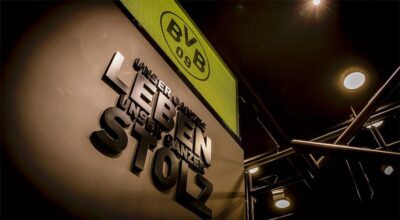

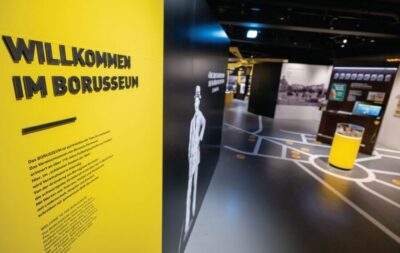
Dortmund: Borusseum Borussia Dortmund Museum Entry Ticket
Read our review →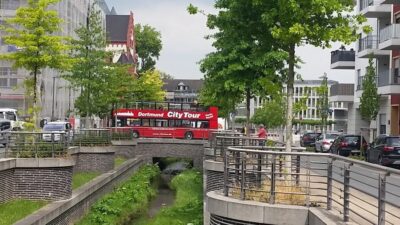
Dortmund: 24-Hour Hop-On Hop-Off Sightseeing Bus Ticket
Read our review →

Dortmund German Football Museum Skip-the-Line Admission Ticket
Read our review →Browse the lists this tour appears in