Reviewed · MUNICH TOURS
Schwabing: Insider Tour! Neighborhood, Revolt, Secrets in Munich’s Cult District
What makes this tour interesting is how it turns Altschwabing into a walkable story, not just something to read. I especially loved Schwabinger Max for his real Schwabing perspective and the way he tells it like a local, and I liked the on-street comparisons using old photos. The main drawback to plan for is the all-weather, on-foot format, so comfy shoes and a rain layer are not optional.
You start at Münchner Freiheit, grab a welcome drink at the Deubl Glas Cube, and then move through the changing moods of Schwabing, from creative bohemia to cabaret to a party mile. The tone is fun, but the guide also keeps it practical, including a friendly warning about romanticizing the bohemian lifestyle too easily.
Key things that make this Schwabing walk worth it
- A native guide who tells Schwabing like it is his home, not a script
- Old historical photos used right on the spots they show, so you can see change clearly
- Real nightlife references tied to context, including Schwabinger 7, Crash, and Drugstore
- A time-travel route through artist-bohemia, village days, cabaret, and party culture
- A welcome drink at Deubl Glas Cube, which keeps the start relaxed
- A practical all-weather format that still works even when Munich is rainy
Altschwabing on foot: why this tour feels different
Schwabing is one of those Munich neighborhoods where you can stand on a street corner and almost feel two eras at once. This walk is interesting because it teaches you how to read the place, not just look at it.
I like that the route is built around layers. You do not only hear about famous nightlife spots, you also get the earlier creative atmosphere, then the cabaret era, and then the more chaotic party momentum that came later. That structure makes the stories click fast, even if Schwabing is new to you.
Weigh these Munich picks against each other
- From Munich: Neuschwanstein & Linderhof Castle Full-Day Trip
★ 4.6 · 14,646 reviews - Neuschwanstein & Linderhof Castle-Fairytale Day Tour from Munich
★ 4.5 · 7,275 reviews - Munich: Third Reich & WWII Walking Tour
★ 4.6 · 6,181 reviews
Finding Max at Münchner Freiheit and your Deubl Glas Cube welcome drink
Meeting is at Münchner Freiheit, in front of the 24h kiosk at the Deubl Glas Cube bus stop. The guide wears a yellow shoulder bag, so you can spot him even if it is gray and rainy.
Before you head out, you get a welcome drink at the Deubl Glas Cube. Options include beer, soft drink, coffee, or tea, which is a small detail, but it sets the tone. You can chat with your guide right away, and it helps you feel settled before the walking starts.
The guide is local to Schwabing, and you feel it in the way he handles questions. Several people liked that he brings old pictures and cards for on-site comparisons and can answer questions without hesitation. That matters, because Schwabing is full of details that are easy to miss on your own.
Time travel in Schwabing: artists, poets, and the bohemian mind games
The walk begins in Altschwabing, framed as the heart of Munich’s most creative district. The guide walks you through the shift from a more grounded community to an “artist-bohemia” magnet, when painters, poets, and free spirits shaped what the neighborhood felt like.
You also get a playful warning embedded in the storytelling: be careful not to get taken in by the delusional side of bohemian life. It is not a lecture, it is more like a reality check that keeps the vibe honest. If you travel with curiosity, you will appreciate how he balances romance with real human behavior.
This part of the tour is also where the historical photos do their best work. You will stop, look at the modern street, then see the older image that matches what you are standing in front of. That direct comparison is how you start understanding the neighborhood’s change, even if you do not memorize dates.
Why this section is valuable for you
You will leave with a mental map, not just a list of anecdotes. The bohemian era matters because it explains why later Schwabing culture had such energy and why the neighborhood attracted people looking for reinvention.
If you are the type who loves culture but hates museum lectures, this is a good compromise. You get story momentum, plus visual anchors from those on-site photos.
Another way to spend a Munich afternoon:
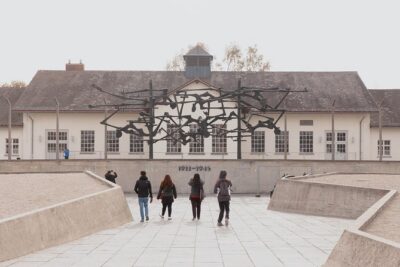
- Dachau Concentration Camp Memorial Site Tour from Munich by Train
★ 4.5 · 5,637 reviews - Neuschwanstein Castle Tour from Munich
★ 4.5 · 5,117 reviews - Third Reich Walking Tour Munich
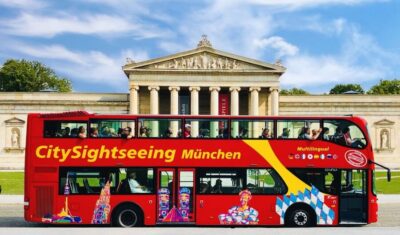
★ 4.5 · 4,291 reviews - Munich Hop-On Hop-Off Tour: 1-Day or 2-Day Ticket
★ 4.3 · 4,161 reviews
From quiet community to cabaret stronghold
After the creative-bohemia phase, the tour shifts toward Schwabing’s village roots and the calmer side of early days. This is useful because it breaks the usual shortcut of thinking Schwabing has always been nightlife and artists.
Then the guide leads you into the era when Schwabing became a stronghold of the cabaret scene. Cabaret is a key ingredient here, because it explains the mix of humor, satire, and performance energy that later shows up in party culture too.
You are not just told that cabaret was important. The tour helps you feel the logic of it: people gathered for performance, for social talk, for quick wit, and for a kind of public attitude. That kind of culture tends to leave traces in street life, even when the venues change.
What to watch for as you walk
Pay attention to how street corners and facades “hold space” for human gathering. Cabaret culture was built on social closeness and quick impressions, so the areas linked to that era tend to feel built for conversation.
And since the tour is all about time travel, you will likely notice how the guide times stops to match the emotional shift in the story. That pacing keeps it from becoming just a sequence of facts.
The party mile story: Schwabinger 7, Crash, and Drugstore
Next comes the fun, louder chapter, where the tour follows the legendary party scene. You hear about well-known names like Schwabinger 7, Crash, and Drugstore, and you get them placed into the broader Schwabing story instead of treated like trivia.
This is the part where the guide’s tone helps most. He does not just point and say, “This is where you go out.” He gives context for how the neighborhood atmosphere supported those scenes and how the energy evolved over time.
I especially liked that the tour does not try to sell you a fantasy. If the bohemian warning earlier made you a bit more skeptical, this section shows you the practical reality: nightlife zones create myths, and the neighborhood itself plays a role in making those myths spread.
A balanced tip for you here
If you have your own ideas about what Schwabing nightlife should feel like, keep them flexible for this walk. The tour is best when you let the guide steer the narrative, because he ties each famous stop back to the broader culture.
This also helps you ask better questions. Instead of asking only what happened, you can ask why people wanted to be there.
Secrets and street-level clues: photos, maps, and on-the-spot comparisons
The tour is built around secrets of the neighborhood, but it does not feel mysterious in a gimmicky way. It feels like learning how to notice.
A big reason is the guide brings historical photos and uses them for direct comparison. One person really praised this aspect and said the images and cards made the differences click immediately. That is exactly what I look for in any “neighborhood secrets” walk: proof you can see, not just claims.
You also get the feeling that Schwabing has a lot of layers of meaning. You might see locations that look ordinary today but make sense once you understand what was happening around them in previous eras.
Why I think this works so well in Schwabing
Schwabing is the kind of place where buildings, streets, and old venue locations can fade from memory fast. Without guidance, it is easy to walk past something important. The on-site photo comparison slows you down in the best way, so you absorb details naturally.
And because the guide is local, he can explain the “how people lived” part, not just the “what existed” part. That is the difference between information and understanding.
Romantic farms near Munich’s most famous mile: a pace change that feels earned
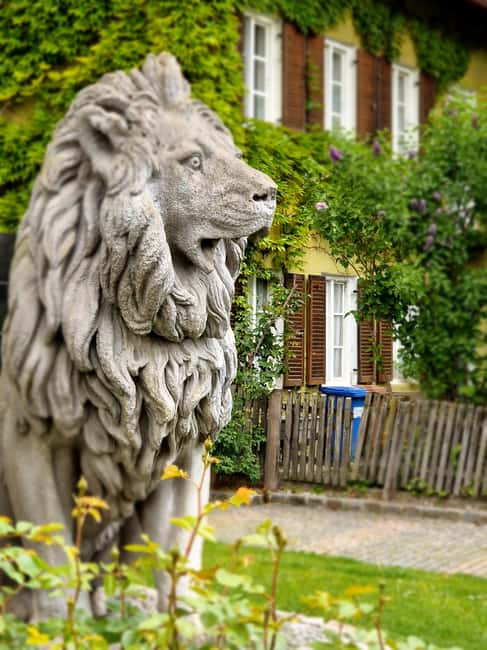
One of the highlights is discovering romantic farms not far from Munich’s most famous mile. The wording might sound like a detour, but in the context of Schwabing it makes sense.
After artist talk and party talk, it is a good reset to move toward a calmer, greener-feeling change of scene. Even if you know Munich is an urban city, you start to appreciate the neighborhood connections that bring quiet spaces within reach.
You end up with a more complete picture of the district. Schwabing’s appeal was never only about nightlife. People were also drawn to nearby spaces for escape, breath, and rhythm changes.
Practical note for your expectations
Do not go into this expecting a long countryside outing. Think of it as a different flavor within the Schwabing story, a chance to see another side of the area before you finish back in the city mood.
Price and value: what your $27 gets you
At $27 per person for a 1.5 to 3 hour walk, this is a strong value when you look at what is included. You get a local guide, neighborhood secrets, a welcome drink, and historical photos for on-site comparison.
The welcome drink is not a tiny add-on. It covers a small cost you would otherwise pay immediately on arrival, and it also makes the start feel friendly instead of rushed.
What is not included is food costs on the go, if you choose to grab something during the walk, and tips for the guide if you want to show extra appreciation. You should plan for that like you would for any guided experience.
My take on value
The best part for me is the photo-based method. Many tours talk about the past, but fewer help you visually connect the past to exactly where you stand. That is where the $27 earns its keep.
Also, the duration range (1.5 – 3 hours) gives you flexibility. If you are squeezed for time, you might fit the shorter window. If you want a longer, slower pace, you can choose a later start when available.
When this walk is the right fit, and when it isn’t
This tour is on foot and happens in all weather. That is a deal-breaker only if you hate walking, or if you arrive with shoes that do not handle rain or uneven sidewalks well. Bring weatherproof clothing and comfortable shoes.
The tour is also not suitable for children under 12. So if you are traveling as a family, you may want to look for something that fits younger ages better.
It is offered in German, and some content may be shown in its original language. If you are comfortable with basic German, you will follow fine. If you speak no German at all, you still can enjoy it, but you should expect that parts of the story will land more fully if you can understand at least some key phrases.
Who I think will love it most
- You want an authentic neighborhood vibe, not a checklist of landmarks
- You enjoy stories about culture, especially bohemian and cabaret energy
- You like guided walking tours that help you see details you would miss on your own
If you want purely “famous sights only,” this might feel too story-driven. But if you want Schwabing as a living place with context, this is built for you.
Should you book Schwabinger Max? My quick recommendation
Book it if you want Schwabing explained in a way that feels human and grounded. I like that it starts with Altschwabing’s creative roots, then makes sense of cabaret, then places the party scenes like Schwabinger 7, Crash, and Drugstore into that larger cultural shift.
Skip it if you need a short, indoor-friendly tour. This is weatherproof only in the sense that it still runs in rain, so you have to dress for it.
One more reason I would choose this: the guide is a Schwabing native, and the tour clearly leans on old photos for real, visible comparisons. That combination makes it more than entertainment. It helps you build a real sense of place fast.
FAQ
Where does the tour start and end?
You meet at Münchner Freiheit, in front of the 24h kiosk at the Deubl Glas Cube bus stop. The meeting point is at the Deubl Glas Cube area, and the tour ends at Münchner Freiheit as well.
How do I find the guide?
The guide will be wearing a yellow shoulder bag.
How long is the tour?
The duration is listed as 1.5 to 3 hours.
What is included in the price?
The tour includes a local guide, secrets of the neighborhood, a welcome drink at the Deubl Glas Cube, and historical photos for on-site comparison.
What is not included?
Food costs on the go are not included, and tipping the tour guide is optional.
What language is the tour in?
The live tour guide speaks German, and some content may be shown in its original language.
Is the tour suitable for families?
It is not suitable for children under 12.
Is the tour indoors?
No. The tour is on foot and takes place in all weather.
What drinks are included at the start?
A welcome drink at Deubl Glas Cube is included, with options such as beer, soft drink, coffee, or tea.
Can I cancel and get a refund?
Yes. You can cancel up to 24 hours in advance for a full refund. The experience also offers reserve now and pay later.
Fresh reviews out of Munich
- Munich: Bulli Tour★ 5.0 · 9 reviews
- Private Day Trip from Munich to Eagle’s Nest and Hallstatt★ 4.5 · 9 reviews
- Neuschwanstein Castle Small-Group Guided Day Trip from Munich★ 5.0 · 9 reviews
- Munich: Highlights Walking Tour with a Guide★ 4.4 · 9 reviews
- From Munich: Private Guided Tour to Rothenburg ob der Tauber★ 5.0 · 9 reviews
- Private and full rickshaw tour in the English Garden★ 4.5 · 10 reviews
- Exploring Munich by Pedicab: Premium Two Hour Tour★ 5.0 · 10 reviews
- Segway Tour Munich Old Town 3 hours★ 4.5 · 10 reviews
Munich Tours, compared.

Neuschwanstein & Linderhof Castle Full-Day Trip
Read our review →
Neuschwanstein & Linderhof Castle-Fairytale Day Tour from Munich
Read our review →
Dachau Concentration Camp Memorial Site Tour from Munich by Train
Read our review →
Munich Hop-On Hop-Off Tour: 1-Day or 2-Day Ticket
Read our review →