
Reviewed · AUDIO TOURS
Roman Cologne: A Self-Guided Audio Tour
Roman Cologne is interesting because you get to walk Cologne like it is a layered archaeological site, with the Roman parts speaking in your ear as you go. Two things I really like are the lifetime access (so you can repeat it later) and the offline audio and maps in the VoiceMap app, which means you are not stuck hunting for signal.
The one drawback to keep in mind is how the route is triggered. The audio follows GPS, so you want to start at the app’s dedicated beginning spot and keep moving forward. Trying to do it backwards or starting far off the line can make the walk feel confusing.
Key highlights you will notice fast
- Offline-ready VoiceMap: download once, then use the tour without constant internet.
- Flexible pacing: pause, take breaks, and start again when you want.
- Roman Cologne at street level: you hear what is underneath and around major landmarks.
- Window-view mosaics: you get a close look at one of the world’s best-preserved Roman mosaics without buying museum tickets.
- Story stops, not checklist stops: you learn about Roman streets, buildings, and even unexpected pop-culture ties like the 1969 moon landing.
Roman Cologne and VoiceMap: the value of paying $11.99 for a walk you control
For $11.99, you are not paying for a bus ride or a group schedule. You are paying for a guided experience that works on your time, with 1 to 1.5 hours of walking and a built-in way to understand what you are seeing. If you like travel where the city teaches you something instead of you just collecting photos, this fits.
This format is also practical for Cologne. You can do it any day the city is open, and you are not locked into a tour time window. The audio is in English, and you get lifetime access, which matters if you come back to Cologne later, or if you want to take a friend on a second run.
The best part is that the story is not only about famous monuments. It is about the idea that modern Cologne sits on Roman Cologne, and that you can still sense the old layout if you know what to look for. A few stops also include small “how did this end up here” moments that turn ordinary street corners into clues.
Weigh these Cologne picks against each other
- Cologne: Panoramic City Cruise
★ 4.3 · 5,698 reviews - Cologne: Brewery Tour with 3 Kölsch Beer Tastings
★ 4.7 · 3,108 reviews - Cologne: Top Sights Rhine River Cruise – Skyline Tour
★ 4.4 · 3,030 reviews
Price and logistics: what is included, what you need, and where you walk
You get the VoiceMap app for Android and iOS, plus offline access to audio, maps, and geodata. That offline feature is the difference between a calm walk and a stressed one. If you are planning to wander beyond central areas, having the route data stored on your phone is a big deal.
What you supply: a smartphone and headphones are not included, so bring your own. You’ll also want to make sure your phone battery is healthy. In a self-guided tour like this, your phone is doing the work, especially when GPS is triggering each stop.
The tour starts at Cologne Cathedral (Domkloster 4, 50667 Köln), and it is set up so you begin near Kreuzblume in that cathedral area. It ends near the Ubii Monument, with the end point listed as Mühlenbach 35, 50676 Köln. The time window listed runs all day, so you can plan around your own energy level.
Tickets are not included. That matters because at least one key moment is designed as a look-through experience, not an admission ticket stop.
Using VoiceMap on foot: how to avoid the common frustration
VoiceMap uses GPS to automatically play audio when you reach each location. That is great when it works as designed, because you can keep your hands free and just walk. Several people liked the idea of having the phone in their pocket once they got going.
But GPS also explains why starting in the wrong spot feels bad. If you begin somewhere else, the app may not line up with the locations you are trying to hear. One simple trick is to arrive at the cathedral-side starting point, open the tour, and then start walking the moment you are at the beginning location.
Download behavior is another make-or-break detail. The tour is designed so the map, audio, and geodata download to your device, so you should be able to walk without constant data. If you ever hit the tour without downloading first, you will feel it. So do the download before you step out.
Finally, if you want to pause for coffee or a photo break, you can. The tour is built for stop-and-start flexibility. You are not penalized for taking your time.
Kreuzblume to Cologne Cathedral: starting strong with the Roman overlay
The walk begins in the cathedral-side area near Kreuzblume, and you get your first sense that this tour is about layers, not only buildings. This opening stretch is important because it sets your mental map. Once you understand the basic “Roman city under modern streets” theme, the rest lands better.
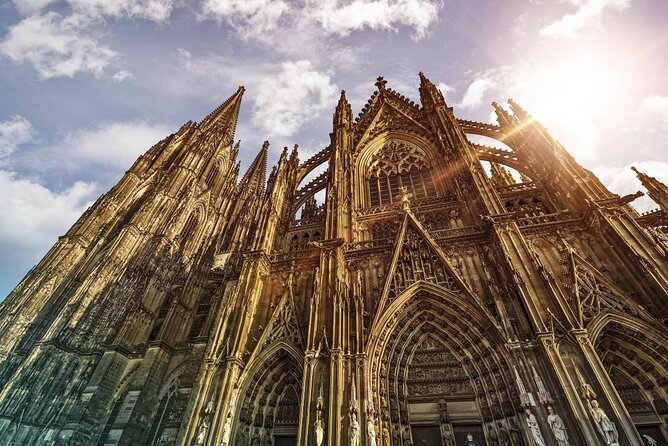
Next comes Cologne Cathedral. Yes, it is a huge, impressive Gothic landmark. The audio here does not just praise the view. It helps you understand what it means that this cathedral area sits on a much older urban story. You will be walking with a clearer reason for why the Roman thread matters here, even if you are not looking at Roman ruins in the strict sense.
One practical tip: give yourself time to orient. The cathedral area has lots of foot traffic, and it is easy to drift a few steps too far. Stay near the route line the app gives you, and the audio triggers should feel smooth.
If you are prone to getting impatient with long explanations, this segment is a good place to test your comfort level with audio tours. If you find it boring, it may be because you need visual reinforcement. When that happens, slow down at each stop and look for the specific details the audio points out. That turns the narrative into something you can see.
Another way to spend a Cologne afternoon:
- Cologne: Chocolate Museum Entrance Ticket
★ 4.4 · 2,790 reviews - Cologne: 24h Hop-On Hop-Off Sightseeing Bus Ticket
★ 4.3 · 2,735 reviews - Cologne: Melaten Cemetery Life, Love and Death Tour
★ 4.9 · 2,728 reviews - Cologne: Virtual Reality Time Travel Experience Ticket
★ 4.5 · 2,264 reviews
Roman Northern Gate and the Roman-Germanic Museum mosaic window
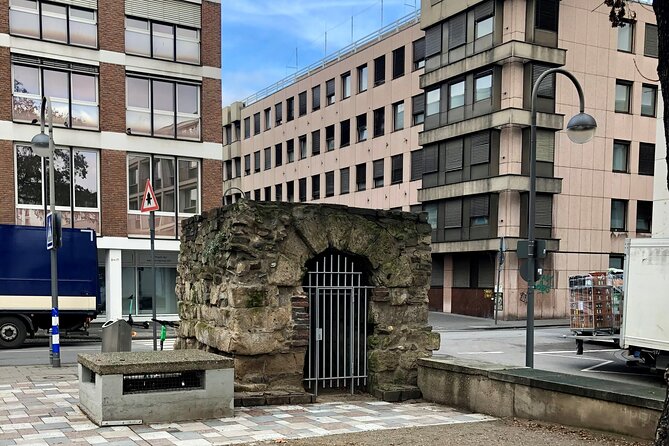
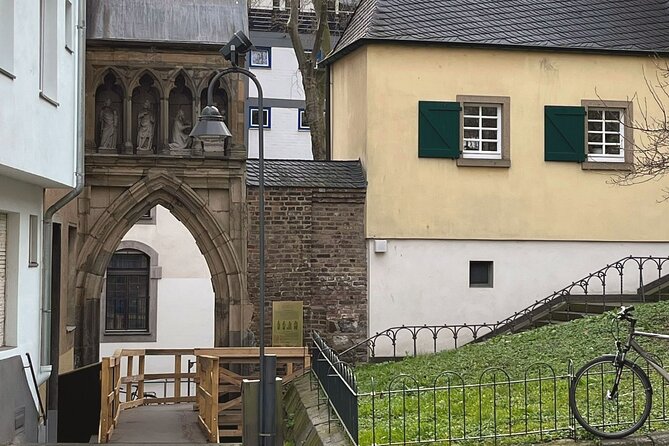
After the cathedral, you move toward a Roman survival point: the Romans’ Northern Gate. Gates are always a smart theme for a walking tour, because they explain how a city controlled movement. Even if only parts are visible, hearing the gate story helps you picture the Roman street logic.
Then you get to one of the tour’s most visually rewarding moments: peering through the window of the Roman-Germanic Museum to see a major Roman mosaic. The appeal here is that you get the wow-factor without an admission ticket as part of the tour. It is a short stop, but it is the kind that makes you stop and stare, which is exactly what you want from a street-level audio tour.
What makes it work is context. A mosaic is not just decoration. It is a sign of taste, wealth, and the Roman habit of turning daily space into art. When you hear what the mosaic represents, the viewing window becomes a mini time machine rather than a quick glance.
If you want the most out of this stop, linger for a minute even if the audio segment ends quickly. Let your eyes adjust. Mosaics reward patience.
Die Römische Hafenstraße and Kurt Hackenberg Platz: seeing Roman street damage and rewrites
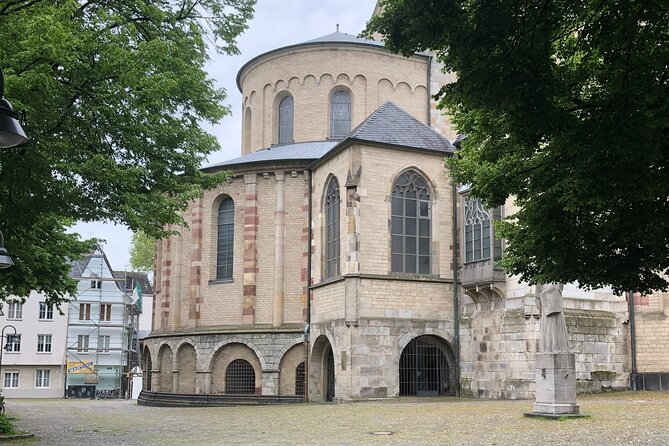
One of the tour’s clever ideas is to focus on street infrastructure, not only big monuments. You will walk down Die Römische Hafenstraße in Köln and hear why the road, once tied to a Roman harbor route, was not perfectly rebuilt around Kurt Hackenberg Platz.
This is a good stop for people who like the “why does the city look like this now?” question. Roads change when cities grow, and Roman paths get interrupted, patched, or repurposed. The audio helps you notice how modern urban decisions overlap older plans.
The drawback is subtle: if you expect dramatic, clearly labeled Roman remains, you might feel underwhelmed. But if your goal is understanding the bones of the city, this stretch does the job. You are learning to read the city like it is a draft with edits.
A practical pacing suggestion: keep your phone out for this segment, because you will be following audio while also scanning for cues in the streetscape. When you get to the plaza area, pause for a few breaths. It helps the story land.
Romisches Praetorium and Alter Markt: power and everyday life in the same walk
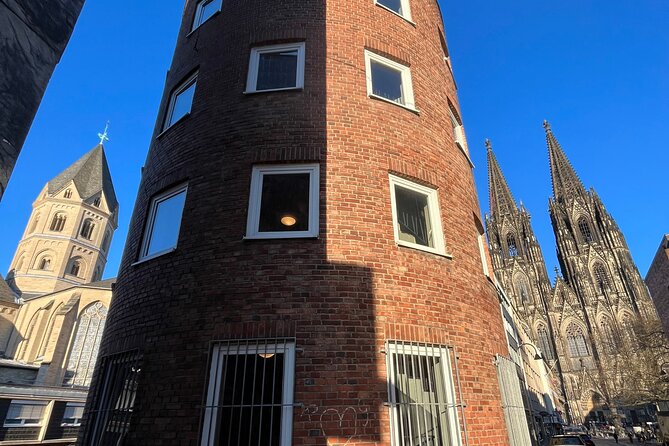
Next up is the Romisches Praetorium, described as the largest Roman palace in the Rhineland. Even if you are not standing beside every intact wall, this stop anchors the tour in Roman political and administrative life. It tells you that Romans were not only building temples and baths. They ran the place.
Right after that, you pass through Alter Markt, the old market. This is where the tour shifts from power structures to daily commerce. Hearing about market life while walking a modern square is one of those travel moments that makes the city feel less like a postcard and more like a working organism.
If you get tired of audio, this is a good place to take a short break. Alter Markt can be busy, and you may want to recharge your legs and keep your attention sharp for the next sacred-building stops.
Great St Martin Church: a medieval church on Roman warehouse foundations
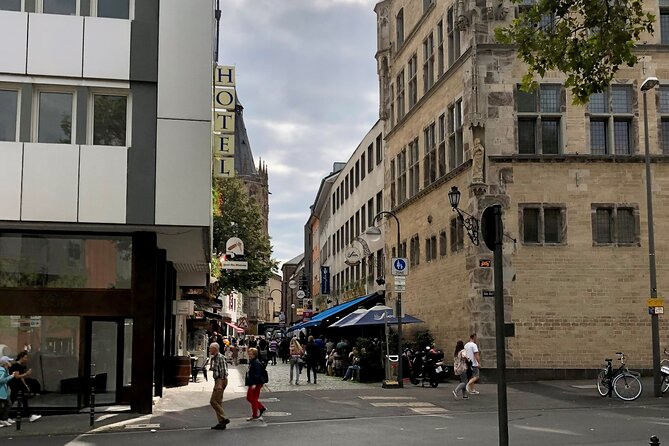
The tour passes by Great St Martin Church, and the key idea is that it was built in the Middle Ages on the foundations of a Roman warehouse. That is a powerful concept for a walking tour because it makes reuse part of the story.
Instead of thinking of history as something frozen in time, you are watching buildings evolve. Romans used space one way, then later Cologne used the footprint again. That is how many European cities survived: not by starting from scratch every century, but by building on what was already there.
What to do here: look for the church’s overall form, then listen to the audio’s building logic. You do not need to spot Roman stones with your naked eye to get the point. The audio helps you connect the footprint idea to the architecture you see today.
Schmitz Säule and the 1969 moon landing: why this Roman tour goes pop
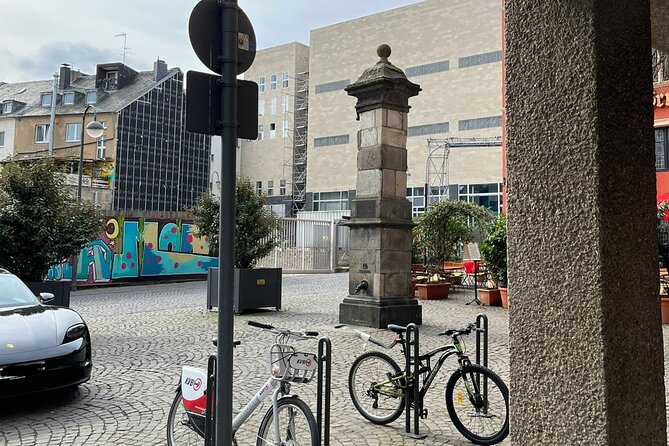
Then comes Schmitz Saule, where you hear how the 1969 moon landing connects to ancient Romans in Cologne. This is the sort of stop that could be silly in the wrong hands, but the value here is that it pushes you beyond pure archaeology. It ties Roman ideas and Roman storytelling into modern references.
Even if you do not fully expect a science-history connection on a Roman city walk, the audio gives you a reason to stop. For me, these “unexpected connections” are often what make a self-guided tour memorable, because they break the pattern and keep your brain awake.
If you prefer strictly Roman-only facts, keep this stop in your expectations as a lighter moment. You are still getting something useful, but it is more cultural than architectural.
Gürzenich’s Gothic facade: finding Marsilius and Agrippa in stone
Another standout stop is Gürzenich Köln, where the audio explains how to spot celebrated Roman soldiers, Marsilius and Agrippa, on the imposing Gothic facade.
This is exactly the kind of detail that turns a famous building into an interactive lesson. Instead of only appreciating the facade as a big shape, you are looking for specific figures, and the tour gives you a way to recognize them.
This also helps with a common audio-tour problem: the speaker can sound distant if you never know what you are looking at. Here, you do know. It gives your walk a scavenger hunt element, and it works.
One practical tip: stand back for a moment, scan the facade from a comfortable angle, then move closer once you spot what the audio describes. Rushing makes you miss details.
St Maria im Kapitol and the former Roman temple district
As the tour continues, you pass through the former Roman temple district and see St Maria im Kapitol. This stop connects the idea of “Roman worship and Roman civic space” to what stands there now.
I like this portion of the route because it reminds you that religious and political spaces often overlap in old cities. Romans shaped social life through temples and public buildings. Later Europe often rebuilt those centers rather than abandoning them.
If you are walking in cold or rain, this is a good place to slow down and get your bearings. Even without a long stop, the audio framing can make the church feel less like a random stop and more like a node in a much larger Roman plan.
Ubii Monument: finishing with a real remaining piece of Roman Cologne
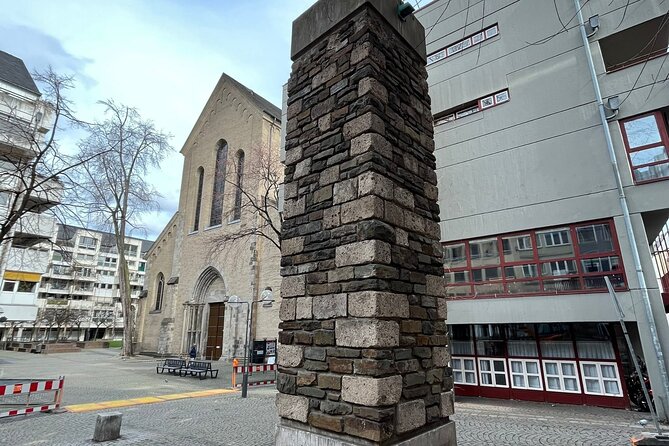
The tour ends near the Ubii Monument, described as the oldest stone tower in Germany. Ending here is smart because it gives you a tangible final anchor. A tower, especially one tied to the idea of age and continuity, feels like a strong “last page” to the Roman story.
This is your time to do one last mental sweep. Walk a few steps around the area and compare what you remember hearing earlier with what you can physically sense now. The tour aims to make you see Cologne as a Roman city that kept evolving, not a Roman city that vanished.
After the last audio plays, you do not have to rush out. If you have time, take 5 minutes to look around like a detective. The point is to turn the audio guidance into your own city-reading skill.
Who should book this and who should skip it
This tour is a great match if you:
- want a budget-friendly activity without museum tickets,
- like self-paced walking with audio triggers,
- enjoy understanding cities as layered places,
- are curious about Roman Cologne beyond the headline sights.
You might not love it if you:
- hate phone-based navigation and prefer a live guide,
- want lots of inside-the-museum time, since tickets are not included,
- expect a strict “ruins tour” with constant visible Roman remains, since part of the experience is learning the city logic around you.
For New Year’s Day style planning, this kind of street-level self-guided tour also makes sense because you are not dependent on museum opening hours.
Should you book Roman Cologne with VoiceMap?
If you like travel where you can stop, listen, and then actually see what the story is about, I think it is worth booking. The offline access and lifetime access are the real reasons, because they make this a do-once or repeat-later resource for Cologne.
Before you go, download the tour while you have connectivity, bring headphones, and start at the app’s cathedral-side beginning so the GPS triggers feel natural. Do that, and you’ll get a walk that turns Cologne into a readable puzzle, with Roman details waiting just around the corner.
FAQ
How long is the Roman Cologne self-guided audio tour?
It takes about 1 hour to 1 hour 30 minutes.
Is the tour available in English?
Yes, it is offered in English.
Do I need internet while walking?
You should be able to use the tour offline. When you download it, the audio, maps, and geodata are stored on your device for offline access.
What time of day can I do the tour?
The listed opening hours run Monday to Sunday from 12:00 AM to 11:59 PM during the date range shown.
Where does the tour start and where does it end?
The tour starts at Cologne Cathedral, Domkloster 4, 50667 Köln, and it ends near the Ubii Monument, with the end point listed as Mühlenbach 35, 50676 Köln.
Do I need tickets for the sights on the route?
No tickets are included. If you want to enter museums or other attractions, tickets are not provided as part of this tour.
What should I bring with me?
Bring your smartphone and headphones. The tour uses the VoiceMap app on your phone.
Is the tour refundable if I cancel?
No. The experience is non-refundable and cannot be changed for any reason.
Fresh reviews out of Cologne
- Private photo tour in Cologne★ 5.0 · 9 reviews
- Büdchentour in der Kölner Südstadt★ 4.6 · 10 reviews
- Winter Champagne Tour by Rickshaw★ 4.3 · 10 reviews
- e-Scavenger hunt Cologne: Explore the city at your own pace★ 4.0 · 10 reviews
- Cologne & Limburg Full-Day Tour★ 4.7 · 10 reviews
- Aachen Private Walking Tour With A Professional Guide★ 5.0 · 11 reviews
- e-Scavenger hunt Aachen: Explore the city at your own pace★ 4.0 · 13 reviews
- The Cologne Kiosk Crawl★ 4.8 · 13 reviews
Audio Tours, compared.
Neuschwanstein Castle Skip-the-Line Ticket with Audio Guide
Read our review →
Solar Powered Sunset Catamaran Cruise & Audio Guide
Read our review →
Neuschwanstein Castle Express Ticket and Audio Guide
Read our review →
Neuschwanstein Castle Ticket With Audio Guided Tour
Read our review →
Spicy’s Gewürzmuseum Entry Ticket and Audio Guide
Read our review →
Französischer Dom Viewing Platform with Audio Guide
Read our review →
Lübeck Scavenger Hunt and Highlights Self Guided Audio Tour
Read our review →
Freiburg Scavenger Hunt and Highlights Self Guided Audio Tour
Read our review →Browse the lists this tour appears in