

Reviewed · SCAVENGER HUNTS
e-Scavenger hunt Cologne: Explore the city at your own pace
Cologne works well for a self-paced game, because the city is dense, walkable, and full of landmarks that make quick sense once you stop and look. This e-Scavenger hunt lets your group wander the sights on your schedule, with a phone game guiding you from Domplatte.
What I like most is that it stays private for your group of up to 6, so it feels more like a shared day out than a big group shuffle. The route also targets major “must-see” Cologne spots without locking you into a timed tour format, and it’s offered in English.
One thing to consider is that the hunt relies on your own smartphone and data. Also, if you are picky about content quality, you may find the prompts a bit basic, and some questions can feel like they connect to specific shops or products rather than pure sightseeing.
Key points to know before you play
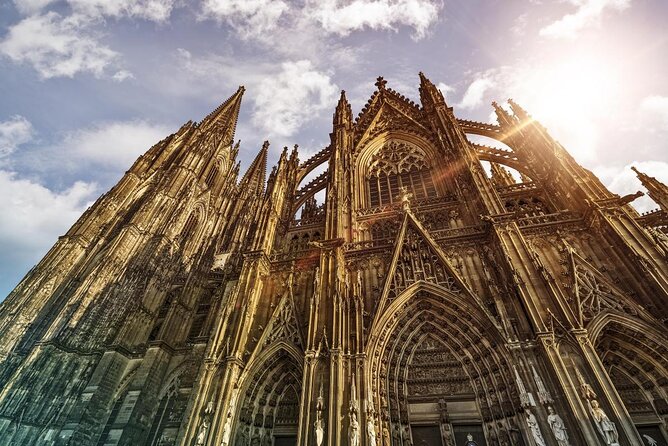
- Private hunt for up to 6 people means less waiting and more control over your pace.
- 2 to 4 hours is a practical window for stacking church, river, and Roman-era stops in one walk.
- Start and finish at Domplatte so you do not need to figure out a complicated end point.
- Phone game format keeps the experience flexible, but you’ll need your own device and connectivity.
- Cologne Cathedral + Romanesque churches anchor the route with big-name landmarks.
- A mix of culture and everyday streets keeps the walk varied, including Old Town lanes and squares.
A citywide game that fits Cologne’s walking rhythm
The best part of this kind of e-hunt is how it turns a normal walk into small “missions.” You are moving between recognizable sights, but you are not stuck watching a lecture or following a strict order. In Cologne, that matters because the city center rewards frequent stops, quick photo breaks, and side streets.
This is also built for groups. When you play as a group, the shared scanning of clues and deciding where to look next can feel like a fun puzzle, not just another activity with headsets. And since it is private, you avoid the awkward moments where one person moves too fast and another drifts behind.
You do give up one thing you get on a classic guided tour: a live human who can answer questions on the spot. Instead, you get prompts and a route. If you like to figure things out as you go, you’ll probably enjoy that trade.
More City Tours in Cologne
- Cologne: Panoramic City Cruise
★ 4.3 · 5,698 reviews - Cologne City Tour Experience cathedral city on the Rhine
★ 5.0 · 852 reviews - Cologne: City Highlights with Local Guide
★ 4.8 · 237 reviews
Price that makes sense for groups of up to 6
The hunt costs $36.67 per group, up to 6 people. That can be a surprisingly good deal if you are traveling with friends or family and you want a self-guided plan that still hits the major highlights.
At this price, you are mainly paying for the structure: the phone game, the timed flow of stops, and the idea that you can “do Cologne” with less decision fatigue. If you are traveling solo, it will still work, but the value is strongest when you split it.
The big question is content depth. The format is fun for many people, but it is not the same as a serious guided tour with deep storytelling at every stop. If you want heavy explanations and a polished script all the time, this may feel light.
Meeting at Domplatte, then walking a loop back to it
You start at Domplatte, 50667 Köln, and the activity ends back at the meeting point. That loop design is handy. It means you do not have to end somewhere new and then hunt for transport or a meeting point with your group.
Timing is flexible. The stated duration is about 2 to 4 hours, so you can speed-run it if you are efficient, or slow down for photos and resting. The activity is listed as open daily from 12:00 AM to 11:59 PM across the date range shown, so you can pick a time that matches your energy and weather.
You’ll also want to plan for device use. The hunt includes a phone-based game, but the smartphone and data are not included, so you are responsible for that. If you do not have good mobile coverage, you might want to have an offline plan for where you are in the route.
And yes, it is easy to find in practice because the meeting point is near public transportation. Service animals are allowed, and it is listed as user-friendly for people who are hard of hearing.
Cologne Cathedral on Domplatte: the UNESCO anchor of the whole hunt
Most cities have one flagship sight. Cologne Cathedral is the one here, and the hunt uses it as the anchor for everything else.
Cologne Cathedral survived both world wars almost unscathed despite heavy bombardments. That detail gives the building extra gravity when you are standing in front of it, because you are not only looking at Gothic architecture, you are looking at a monument that endured.
You also learn the UNESCO angle, since it was added to the UNESCO World Heritage list in 1996. Even if you are not a “UNESCO person,” the Cathedral earns the attention. Gothic craftsmanship is visible even at street level, and the cathedral’s sheer scale makes it easy to reorient yourself when you are walking through the center.
A second Cathedral-related clue is the relics of the Three Kings, described as the alleged remains of the Magi from the East. Since 1164, these relics have been housed in a reliquary in the Cologne Cathedral. That turns one stop into two layers: architecture outside and a story tied to pilgrimage and relic tradition inside.
More Scavenger Hunts in Cologne:
- Cologne: Scavenger Hunt Self-Guided Tour
★ 4.3 · 78 reviews - Aachen Scavenger Hunt and Highlights Self Guided Audio Tour
★ 4.0 · 17 reviews - Aachen Scavenger Hunt and Sights Self-Guided Tour
★ 5.0 · 14 reviews - e-Scavenger hunt Aachen: Explore the city at your own pace
★ 4.0 · 13 reviews
Tip that keeps you moving
When the route brings you back around the Cathedral area, treat it like your navigation hub. If you lose time, returning near Domplatte usually gets you “back on track” fast.
Old Town lanes, Hohenzollern Bridge, and Heumarkt squares
After the Cathedral, the hunt pivots to street-level Cologne charm. The route includes Cologne’s Old Town, known for its narrow alleys and traditional houses that feel rustic rather than staged.
Those lanes matter for the game because they are visually distinctive. When you are scanning clue prompts, it helps that the streets around you actually look like Cologne, not like any other German city. It is the kind of wandering that still feels purposeful.
Then you move to the river. The Hohenzollern Bridge is built from 1907 to 1911, and it originally consisted of three adjacent truss arch bridges. Standing on or near it helps you understand how Cologne grew into a modern city, because the bridge is both an engineering landmark and a connector between districts.
Next up is the Heumarkt, a central square in Cologne. In the hunt, it functions like a “pause point,” where you can look up at the surrounding buildings and orient the group. It is also one of those places where you naturally slow down and notice daily life around you, since squares tend to pull people into casual conversation and quick photos.
A small clue-location check
If your phone prompts mention a statue or landmark tied to central square navigation, make sure you’re looking at the Heumarkt area for that part of the route. That detail can save you time when you are trying to match what you read on-screen to what you see in real life.
Art museums near the Cathedral: Wallraf-Richartz and Museum Ludwig
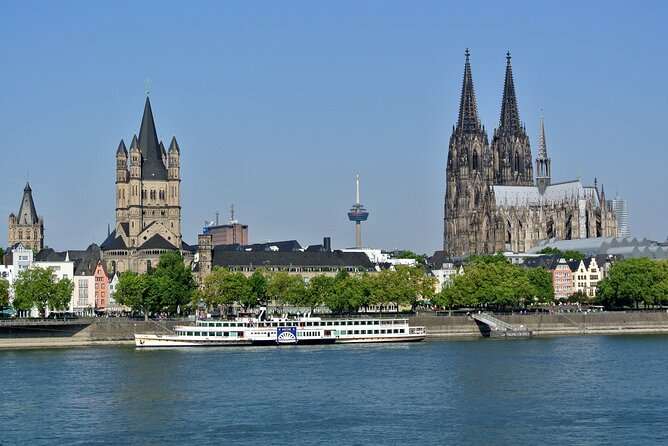
Cologne is not just churches and rivers. This hunt also nudges you into museum territory, right in the Cathedral orbit.
The Wallraf-Richartz-Museum is highlighted as one of Germany’s great art museums. The route also points you toward the Cologne Museum Ludwig, which focuses on 20th-century art, while the Wallraf-Richartz side covers European visual art from the 13th century to the beginning of the 20th century on 3,500 m².
Even if you do not plan to go inside, this stop changes your walk. It tells you Cologne is layered, and that you can shift from religious monuments to galleries without leaving the center. If you do have time or the weather is bad, museums are a smart option because you can keep the day going without relying purely on outdoor walking.
Roman Cologne under your feet: Römisch-Germanisches Museum and the Praetorium
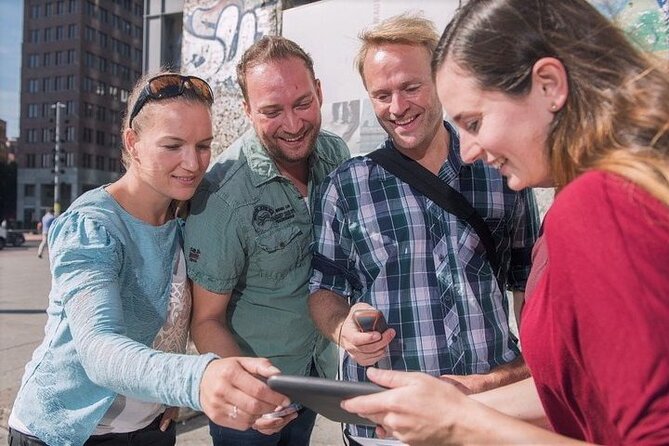
If you like your cities with a time machine feel, the hunt delivers Roman-era stops.
The Römisch-Germanisches Museum opened in 1946 and sits next to Cologne Cathedral, above remains of a Roman city villa from the third century. That is a fascinating setup: you are standing close to a medieval and Gothic icon, while the building’s foundation holds much older traces.
The hunt also includes the Praetorium, the official residence of the Imperial Governor of Cologne, which was the capital of the Roman province of Lower Germania. That clue ties the museum area into a bigger Roman picture, and it helps you see the city as more than one era at a time.
Why this works in a phone game
Roman clues can feel abstract on a normal walking tour because they are often hidden or explained only verbally. Here, the “mission” format encourages you to stop, look, and try to match what the clue wants you to notice with what is physically around you.
Great St Martin, St Gereon, St Ursula, and the Alter Markt pause
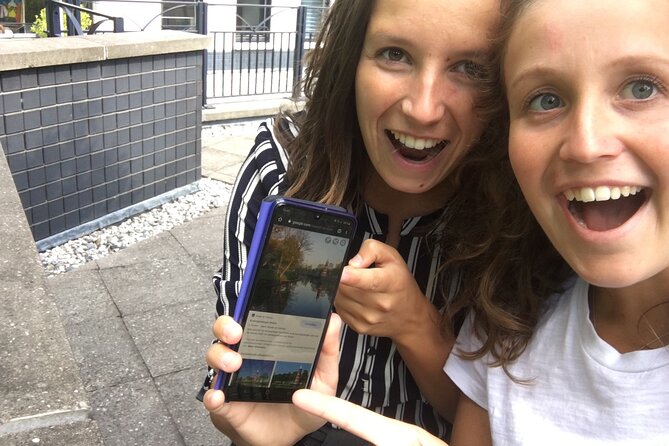
Cologne is famous for Romanesque churches, and this route uses multiple to keep the scenery varied.
Great Saint Martin is included as one of the twelve large Romanesque churches in the center of Cologne. Just knowing that it belongs to a larger set changes how you look at it. You are not seeing an isolated building. You are seeing part of a wider architectural identity.
Then comes Saint Gereon’s Church, described as the oldest church in Cologne and one of the twelve Romanesque churches. It has the status of basilica, and it sits on the site where the tomb of the martyr Gereon of Cologne is said to have been located. That “said to have been” framing matters because these church sites often mix archaeology with tradition. Either way, it gives the building a story beyond its walls.
The route also includes the Basilica church of St. Ursula, built upon ancient ruins of a Roman cemetery. That connection between Roman remains and a later church is one of Cologne’s recurring themes, and it is especially striking when you move from one church clue to another on foot.
Finally, you hit Alter Markt, the former market square now known for cafes and carnival. The hunt treats it like a “social checkpoint.” It is the kind of place where you can regroup, compare answers, and take a break without losing momentum.
4711, a gnome legend fountain, and the restored old harbor
The hunt does not stay in stone landmarks only. It also threads in Cologne’s everyday culture and quirky local storytelling.
One stop focuses on 4711, the famous eau de cologne brand from Mühlens GmbH & Co. in Cologne. That clue works because it reminds you that the city is not just architecture. Cologne’s fragrance identity is part of its modern character.
Then you encounter an ornate 19th-century fountain with sculptures commemorating a local legend of garden gnomes. If you like the slightly strange side of cities, this is the kind of detail that makes a walking game feel personal to Cologne.
The last part of the route points you toward a restored harbor area described as a mix of old buildings with renovated modern shops. You get a sense of how Cologne keeps parts of the past while using the space for current life. It is a good closing mood because it feels like a transition from sightseeing intensity into a relaxed final stroll.
How the hunt feels in real life, and what to watch for
This kind of e-hunt can be a lot of fun, but it helps to know where it can frustrate you.
The biggest practical risk is prompt quality. In this case, the written material may feel bland at times, and you might notice spelling or text errors while playing. When that happens, you can lose a little confidence about whether you are reading the clue correctly.
Another potential annoyance is the “where exactly do I look?” problem. One version of the content can feel like it links a clue to a specific shop or brand, rather than a pure landmark. If you hate product-placement vibes, it can make the experience feel less authentic than the city itself.
That said, the hunt is generally built around real Cologne sights, not random errands. And if you treat it as a fun way to get around and see important places, the mission structure can work well, especially with friends who enjoy solving little questions together.
My practical advice for smoother play
Take breaks before you get tired. Use the Cathedral area as your reset point if you get confused. And if you are traveling with people who just want to sightsee, agree on a simple plan: solve the clue, look around for 5 minutes, then move on.
Who this works best for in Cologne
I think this hunt is especially good for:
- Groups of up to 6 who want a shared activity without splitting up.
- People who like self-paced walking and do not need a live guide.
- Visitors who want to hit a cluster of big sights like Cologne Cathedral, major squares, Roman sites, and Romanesque churches in one session.
- Those who appreciate a phone-based format, since it is listed as user-friendly for people who are hard of hearing.
It may be less ideal if you want a deep historical lecture at every stop. The experience is focused on getting you to look and figure things out, not on long explanations.
And if you are sensitive to prompts that feel connected to shops, keep that in mind. The route tries to include everyday streets and recognizable places, so you might see clues that are not purely architectural.
Should you book the e-Scavenger hunt?
I’d book it if you are planning a half-day in Cologne and you want a fun, low-stress structure to your walk. The price per group is a plus, and starting on Domplatte makes the route easy to manage. If you and your group enjoy puzzles, this style of sightseeing can feel like a game night that happens to include Gothic churches.
I would hesitate if you need polished, detailed content the whole time, or if you get annoyed by prompts that link to specific commercial locations. In that case, you might prefer a traditional walking tour where the storytelling stays consistent.
If you do book, go in with the right mindset. Use your phone like a compass, not like a textbook. Let Cologne do what Cologne does best, big landmarks, small streets, and plenty of places to stop and look again.
FAQ
How long does the e-Scavenger hunt take in Cologne?
The hunt lasts about 2 to 4 hours.
Is this activity private or shared with other groups?
It is private. Only your group participates.
Where do we meet, and where does it end?
You start at Domplatte, 50667 Köln, Germany. The activity ends back at the same meeting point.
What language is the hunt offered in?
It is offered in English.
Does the price include a smartphone and data?
No. The smartphone and data use are not included. You bring and use your own phone.
Can I cancel for a full refund?
Yes, you can cancel for a full refund if you cancel up to 24 hours in advance of the experience start time. Less than 24 hours before start time is not refundable.
Fresh reviews out of Cologne
- Private photo tour in Cologne★ 5.0 · 9 reviews
- Büdchentour in der Kölner Südstadt★ 4.6 · 10 reviews
- Winter Champagne Tour by Rickshaw★ 4.3 · 10 reviews
- Cologne & Limburg Full-Day Tour★ 4.7 · 10 reviews
- Aachen Private Walking Tour With A Professional Guide★ 5.0 · 11 reviews
- e-Scavenger hunt Aachen: Explore the city at your own pace★ 4.0 · 13 reviews
- The Cologne Kiosk Crawl★ 4.8 · 13 reviews
- Cologne Walking Tour with Audioguide: City and Cathedral★ 4.5 · 14 reviews
Scavenger Hunts, compared.
Scavenger Hunt Self-Guided Tour for Children
Read our review →
Old Town Self-Guided Scavenger Hunt Tour
Read our review →
Self-Guided Family and School Class Scavenger Hunt
Read our review →
Escaping and spying on the Berlin Wall Scavenger hunt
Read our review →
Leipzig City Centre: Scavenger Hunt Self-Guided Tour
Read our review →
Scavenger Hunt Self-Guided Tour for Children
Read our review →Browse the lists this tour appears in