
Reviewed · DRESDEN TOURS
Public guided tour of the old town including a tour of the Frauenkirche
Dresden can feel like a city with layers on top of layers, and this guided old-town walk is a smart way to see those layers without getting lost in facts. You start near Neumarkt, move through key squares and viewpoints, and end back in the center, with time at the Frauenkirche from the inside.
I especially like two things: the inside Frauenkirche focus (altar, paintings, and the lower church) and the way the guide strings it all together with clear, story-shaped context from rebuilding after WWII to reunification. One thing to consider is that the public tour is in German, so if you do not read or follow German well, you may want to line up a private English option.
The route is timed for comfort, too, with a small group size and guidance that keeps you moving, even when weather gets annoying. If you prefer total free time to wander, this format might feel slightly structured.
Key things to know before you go
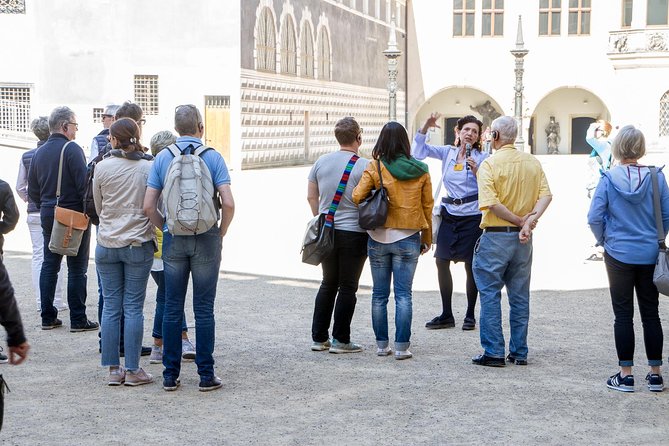
- Small group, max 25 people, so you get more of a real conversation than a big “herd”
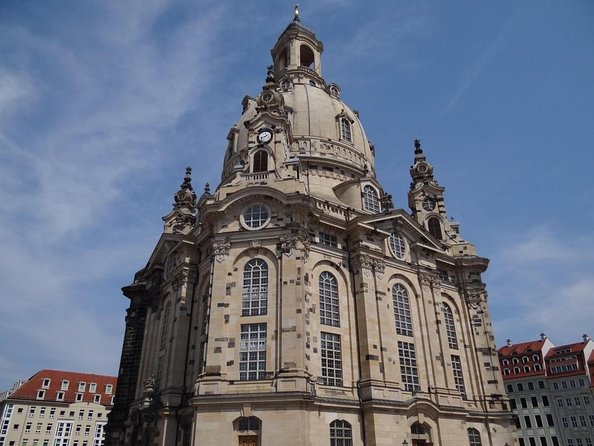
- Frauenkirche inside access, including explanations tied to the altar, paintings, and the lower church
- A classic Dresden loop, hitting Neumarkt, Stallhof, Zwinger, Semperoper area, and Bruehlsche Terrasse
- Story-first guiding style, with live spoken narration and a “visual” approach meant to help you picture how the city evolved
- German public tour, with private tours available in English or other languages if you contact the provider
- 2 hours on foot, starting at 10:30 am, so it is ideal if you want a strong first-day orientation
A 2-hour Dresden orientation tour that actually gives you bearings
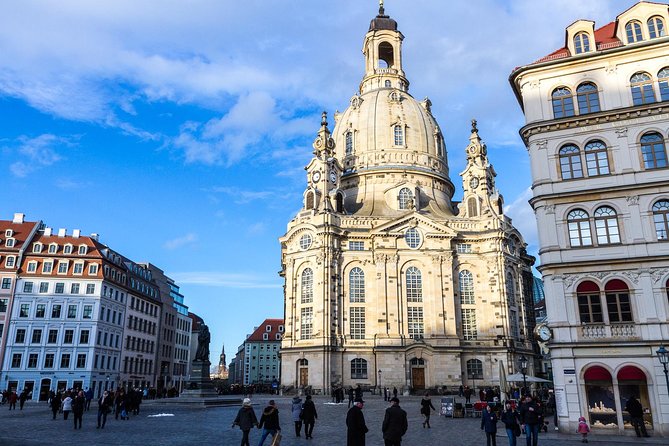
This tour works because it is built like a walking narrative, not a checklist. In about two hours, you pass through the main historic stage set of Dresden, then you get a payoff moment at the Frauenkirche where the story is tied to what you can actually see.
If you are visiting Dresden for the first time, this kind of orientation is gold. You do not just look at landmarks, you learn what each one represents and how the city’s face changed, especially in the post-war period and after reunification. The best part is that the guide keeps it moving, so you come out with a mental map you can use for the rest of your trip.
The other practical win: the group stays small, and the pacing is designed to keep you from missing details. You will have short stops that feel manageable, not long standstills where you wonder why you signed up.
Weigh these Dresden picks against each other
- Dresden: Semperoper Tickets and Guided Tour
★ 4.7 · 12,102 reviews - Dresden: The Original Night Watchman Tour in Lantern Light
★ 4.6 · 6,653 reviews - Dresden: Semperoper and Old Town Tour
★ 4.8 · 5,735 reviews
Neumarkt to Stallhof: where Dresden’s rebuilt center sets the tone
You begin at Neumarkt 2, right by the heart of the historic center. Neumarkt matters because it is a rebuilt focal point, with patrician palaces around it that show how the city wanted to present itself again after major destruction.
From there, you head toward Stallhof, the oldest fairground of Dresden. This is not just a quick photo moment. The guide frames Stallhof as a kind of tournament court, a place connected to knight games and public spectacle. That context helps you read the space instead of just passing through it.
A useful tip here: keep your phone ready, but also listen. This tour is strongest when you connect what the guide says to what you see in front of you. If you are only snapping pictures, you will miss the “why.”
Frauenkirche inside: altar, paintings, and the rebuilt lower church
If you are deciding whether the tour is worth it, this is the reason to show up.
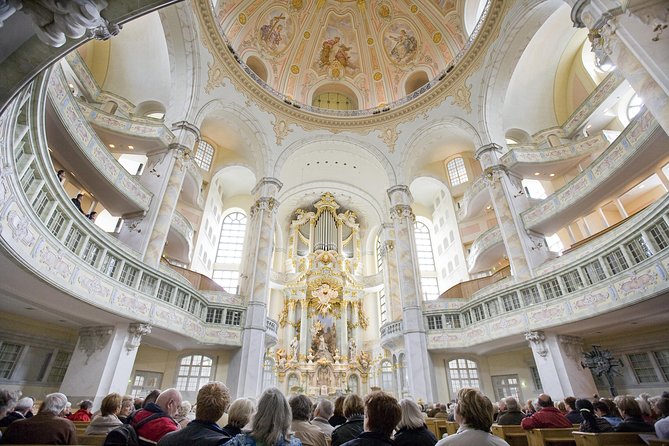
You get exterior explanations, then you move inside for an inspection packed with specific detail. You will hear about the altar, paintings, and the lower church. The big value is that you are not treated like you are just following a route. The guide points out what to notice and connects it to the church’s historical reconstruction.
This stop is also where a lot of the best tour energy shows up. The guiding style here tends to be vivid and story-driven, and it makes the inside feel less like a silent museum and more like a place with meaning.
One more thing to know: church interiors can be cooler than the street, and seating is not the goal. Wear comfortable shoes and expect a standing-and-looking experience while the guide talks.
Procession of Princes: Meissen porcelain that turns politics into decoration
After the Frauenkirche, you move to an eye-catching detail stop: the Procession of Princes. Here, you see an image of the Saxon princely family made with Meissen porcelain tiles.
This is the kind of stop that works on two levels. Visually, it is memorable because porcelain imagery has texture and clarity. But the guide also uses it to explain how rulers and identity were displayed through art and craft.
If you like when design and politics overlap, you will enjoy this segment. If you do not, it still helps you understand what you are looking at when you later spot more royal-era art motifs around the center.
Another way to spend a Dresden afternoon:
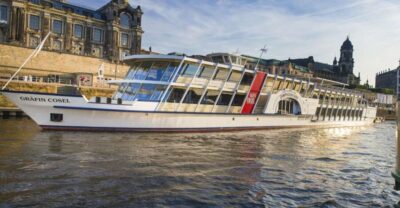
- Dresden: River Sightseeing Boat Cruise
★ 4.3 · 5,323 reviews - Dresden: Tour of VW’s Transparent Factory
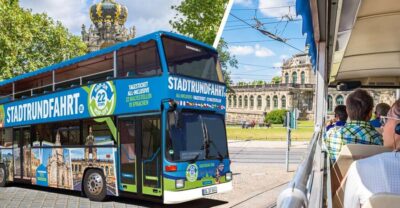
★ 4.5 · 4,058 reviews - Dresden: 1-Day Hop-On-Hop-Off Bus Tour
★ 4.5 · 2,813 reviews - Terrifying Tour of Dresden Led by a Dungeon Master
★ 4.4 · 2,503 reviews
Dresden Castle and the Residenzschloss idea: the Saxon Louvre angle

Next comes Dresden Castle, specifically the reconstruction of the Residenzschloss, described in the same spirit as a Saxon Louvre. The point of bringing this up is simple: Dresden chose to rebuild and present itself with culture and architecture at the center, not just as a functional city.
This stop is short, but it links you to the larger castle story. You also get a practical pointer built into the tour schedule: on certain days (Mon, Wed, Fri, Sat), castle tours in the exhibitions run at 13:30, so if you want to extend your visit, you know when to look.
Reality check: in a two-hour walk, you will not get a full museum experience. Think of the castle stop as setting direction, not finishing the job.
The Zwinger: Dresden’s famous fairground feel, condensed
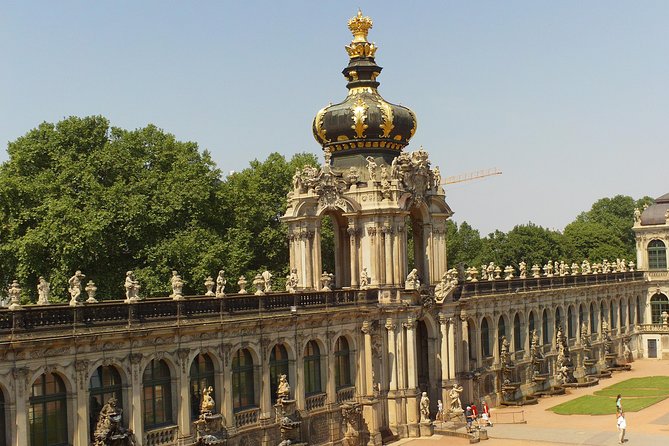
Then you hit the Dresden Zwinger, often called the most famous fairground of Dresden. Even if you have seen palace gardens in other German cities, the Zwinger has its own “public stage” feeling, which is why a fairground metaphor fits.
On this tour, the Zwinger stop is long enough to orient you to why people care about it. The guide frames it as part of the city’s reputation as a place for spectacle, art, and elite visibility, not just a pretty building complex.
If you want more time, plan it for after the tour. This walk gives you a first pass so you can come back with a clearer sense of what you want to see up close.
Semper Opera area: stop included, show optional
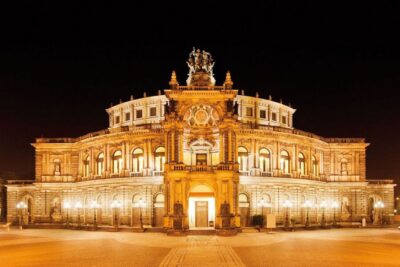
You also pass the Semper Opera House, the Semperoper. The guide positions it as one of the most beautiful opera houses in Germany, and even without a show, it is an easy place to see why Dresden is proud of its cultural identity.
This is more of a viewpoint and appreciation stop than a deep dive. If you are thinking, I want to know more and I also like performing arts, the tour offers a natural add-on: you can combine a Semperoper guided element with the city tour.
In practice, that means this is a good day to match your interests. If you care about architecture and public buildings, you will get a lot out of the exterior stop plus the surrounding historic context.
Bruehlsche Terrasse: the flood plains, the Elbe, and a final big-picture moment
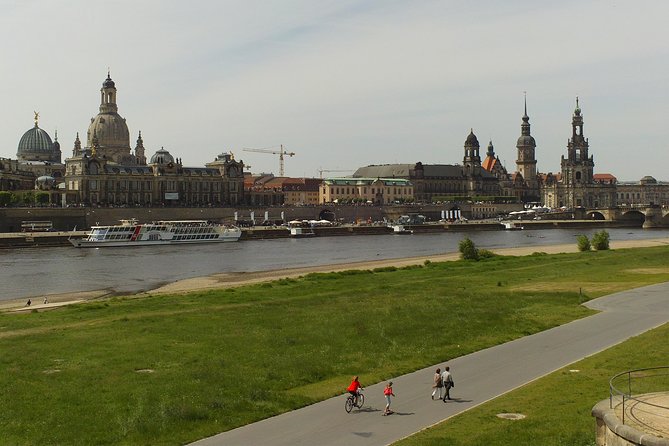
The last “breath” stop is Bruehlsche Terrasse, a former fortress wall turned promenade. This is your chance to shift from buildings to the wider setting, with views over the flood plains, the Elbe, and the new town.
Even if you only get a brief pause here, it helps your brain. After seeing squares, churches, and palaces, you need to understand the city sits beside the river and the landscape matters.
If the weather is clear, this section can be especially pleasant. If it is gray and windy, you will still appreciate the way the guide connects this viewpoint back to the city’s history and rebuilding.
Price and value: what $16.59 buys in real time
At about $16.59 per person for a roughly two-hour guided experience, you are paying for three things: focus, access, and interpretation.
First, focus. You avoid the common problem where you spend a half-day bouncing between landmarks without knowing what you are seeing. Second, access. The tour includes inside inspection at the Frauenkirche, which is usually the deciding factor between a quick sightseeing walk and a real guided visit. Third, interpretation. The guide talks through the meaning of what you see, including the city’s post-war development and path to reunification.
The small group size cap also matters for value. With up to 25 people, it is easier to ask a question or simply hear what the guide is saying without straining.
So this is not expensive for what you get, especially if you are trying to make your first day in Dresden count.
When the tour runs and what that means for your schedule
This guided tour runs from February to December on Mon, Wed, Fri, and Sat. It starts at 10:30 am and you will generally finish in the city center, often around the Residenzschloss area.
For most trips, that timing makes sense. A morning tour helps you understand the layout early, then you can use the afternoon for slower wandering, cafés, or deeper museum time.
If your day is packed, remember the tour is about two hours, and you still need time to settle in for any stop you want to revisit on your own.
German-only guidance, and what to do if you prefer another language
The public tour is spoken live in German. That is not a problem if you can comfortably follow German narration, even if it is not perfect.
If you do not, you have an option: private tours can be arranged in English or another language by contacting the provider directly. That is your best route if language comfort is important to you, especially because the Frauenkirche inside portion depends on understanding the explanations.
Also, one practical note from the tour style: the guide uses a live, pictorial approach, plus a kind of “visual storytelling” method (you might think of it as head cinema for history). Without language, some of that will feel muted, even if you can read signs.
Weather-proof comfort and the walking reality
This is a walk, but it is designed for comfort. The guidance approach includes keeping you engaged while accounting for umbrellas or parasols, plus breaks that stay short so you do not fall behind.
You will cover several key stops in a compact loop, so you should wear supportive walking shoes. The duration is set for an on-foot morning pace.
If you are traveling with kids or want an easy introduction, the tour is described as suitable for most travelers and even notes free participation for up to 16 years. That can make it a cost-effective family start point.
The guide matters, and why you will feel it
The consistent theme here is that the guiding style is energetic and detailed, with a passion that comes through. One named guide, Frau Renger, stands out in the tone of past experiences: she tells the story in a way that feels like it connects past and present, and the emphasis often includes what Dresden went through after WWII and how it moved forward.
In other words, you are not just hearing dates and names. You are getting a guided narrative that helps you understand the city’s transformation.
That is exactly what you want from a tour like this. Dresden can look stunning even when you do not know the backstory. But if you take the chance to learn it while you walk, you get a second layer of meaning.
Possible hiccup: schedule changes can happen
Everything here is planned for the day, but it is worth keeping expectations realistic. One past experience noted a program change and a cancellation without explanation for certain dates. That does not sound like the usual flow, but it is a reminder to check your confirmation close to departure.
The good news is that there is free cancellation if you need to adjust your plans, as long as you cancel far enough in advance.
Should you book this Frauenkirche and old town tour?
Book it if you want an efficient first pass through Dresden’s center, you care about understanding the Frauenkirche beyond the outside views, and you like guided storytelling that explains why the city was rebuilt the way it was. The combination of major landmarks plus inside time at the Frauenkirche is a strong match for most first-timers.
Skip it or switch to a private alternative if you cannot comfortably follow German, because the tour is specifically a German public guide. Also consider your walking tolerance. This is a two-hour stroll with multiple stops, so if you need a slow pace with lots of resting, you might prefer a shorter, more flexible option.
If you are trying to see Dresden in one morning and leave with real context, this tour is an easy yes.
Fresh reviews out of Dresden
- Dresden: 2 day ticket for museums of the Dresden State Art Collections★ 4.7 · 54 reviews
- Big Sightseeing Tour in Dresden with Liveguide★ 4.5 · 55 reviews
- Dresden Sightseeing Treasure Hunt★ 5.0 · 57 reviews
- Dresden: Walking Tour with Virtual Reality elements★ 4.5 · 63 reviews
- Dresden: Bootstour im Schlauchboot durch die Altstadt★ 4.9 · 64 reviews
- From Dresden: Bohemian & Saxon Switzerland Day Trip★ 4.8 · 64 reviews
- 1.5 hours Segway Elbe Mini Tour★ 5.0 · 66 reviews
- Top Full-Day Adventure: Bohemian & Saxon Switzerland from Dresden★ 5.0 · 68 reviews
Dresden Tours, compared.
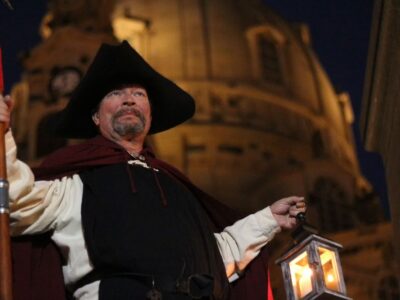
The Original Night Watchman Tour in Lantern Light
Read our review →


Terrifying Tour of Dresden Led by a Dungeon Master
Read our review →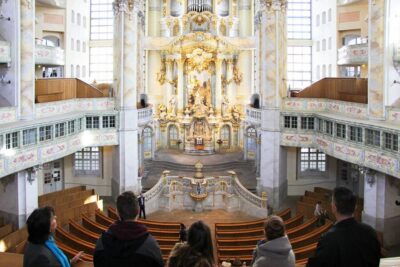
Browse the lists this tour appears in