
Reviewed · CITY TOURS
Paul’s Private Tour in Munich old City
Munich can feel like a maze on day one. This private Old Town tour is interesting because it lines up the big landmarks in a walkable route, then lets your guide steer the pace based on what you care about. I like the private setup, so you are not stuck matching everyone else’s interests. I also like the flexible route, which makes it easier to adjust if you want more church time, more photos, or more “where do I eat” advice.
Here’s the one consideration: it’s about 2 hours, and some of the most famous interiors are optional. Church access can depend on service hours, so you may see some places from the outside or spend less time inside than you would on a longer guided visit.
Key things you’ll like about this tour
- Private, just your group walk through the core Old Town sights, from Frauenkirche toward Odeonsplatz
- Flexible route that can be customized to your interests
- Photo-friendly stops including a planned biergarten break with picture spots
- Lots of landmarks in one go, including Marienplatz and the Rathaus-Glockenspiel area
- Practical local tips for shops, cafes, and where to spend your next hours in Munich
- Guides with personality, with examples like John, Martin, Genny, Sybille, and Freya noted for energy and great English
Entering Munich’s Old Town with a plan that actually works
The best thing about this tour is how it gets you oriented without turning your day into a homework assignment. You cover the compact center in one direction, so you gradually build a mental map instead of bouncing around on buses or guessing which street comes next.
Because it is private, the guide can keep asking what you want. If your group cares more about architecture, they can keep the story focused. If you care more about food and atmosphere, you get more time on the streets and squares where locals actually hang out. That flexible feel is a big value add, especially if you only have a short stay.
You also get a guide who treats the walk like a real conversation, not a recitation. In the guide team examples I’ve seen, John, Martin, Genny, Sybille, and Freya are repeatedly praised for being fun, energetic, and able to answer questions in clear English.
More City Tours in Munich
- Munich: Old Town & Viktualienmarkt City Walk in German
★ 4.7 · 2,304 reviews - Munich: City Bus Tour & FC Bayern Munich Allianz Arena Tour
★ 4.5 · 2,071 reviews - Munich City Hop-on Hop-off Tour
★ 3.5 · 1,233 reviews
Pricing and what “private” costs in Munich terms
At $127.72 per person for about two hours, this sits in the “serious first-day value” category for Munich. It’s not a budget option, but it does buy you three things that add up fast: a focused route, local context as you walk, and built-in time for your questions.
The big question is whether you will actually use the guide’s attention. If you are the type who asks, What am I looking at? or Where should we go next? you will get more than your money’s worth. If you only want a quick checklist of landmarks, you might feel the time is short for a longer deep-dive.
One more practical point: tips for the guide are not included. Also, if your group grows beyond the booked number, each additional person pays 35 € to the guide at the start. That matters if you are traveling with relatives and might add people last-minute.
Meeting point at Karlstor, ending near Odeonsplatz
The tour starts at Karlstor, on Neuhauser Str., in Munich’s central zone. It ends at Odeonsplatz, near Odeonspl., which is a convenient drop-off if you want to continue with more sightseeing, a meal, or a transit connection.
Starting near a landmark like Karlstor is useful because it’s easy to recognize on foot. And ending at Odeonsplatz helps too, because it places you near another cluster of historic buildings and cafes, without forcing you to retrace your steps.
Pickup is offered if you want it, and you can also request private transport for an additional charge. If you prefer to minimize moving parts, you can keep it simple and just meet at Karlstor.
Frauenkirche first: the story, plus optional interior time
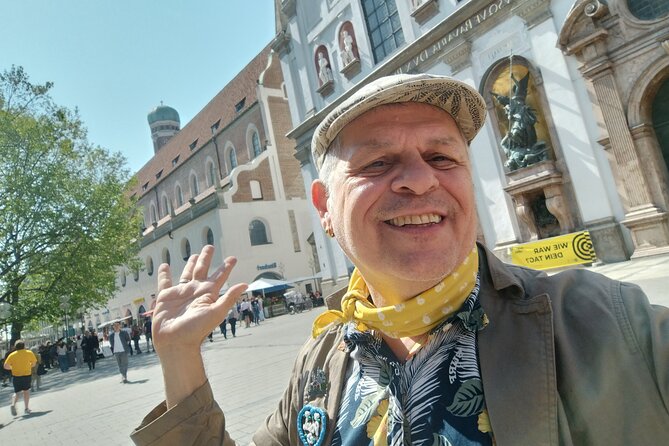
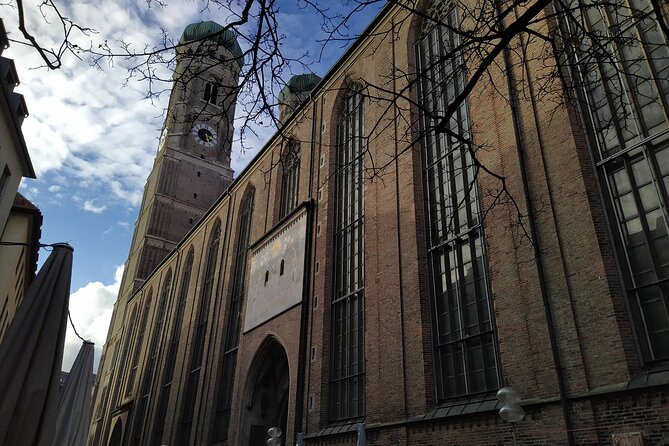
You begin at Frauenkirche, one of Munich’s most recognizable silhouettes. Your guide gives you a clear overview of the monument and what makes it important in the city’s story.
What I like here is that the tour does not just point at the church. You also get the construction details and context that make it easier to notice features as you look. That turns photos from “I was there” to “I know what I’m looking at.”
Inside access depends on when you arrive and service hours. The good news is that your guide can take you in if the timing allows, and even if you can’t, you still get a memorable explanation of what the building represents.
Weigh these Munich picks against each other
- From Munich: Neuschwanstein & Linderhof Castle Full-Day Trip
★ 4.6 · 14,646 reviews - Neuschwanstein & Linderhof Castle-Fairytale Day Tour from Munich
★ 4.5 · 7,275 reviews - Munich: Third Reich & WWII Walking Tour
★ 4.6 · 6,181 reviews - Dachau Concentration Camp Memorial Site Tour from Munich by Train
★ 4.5 · 5,637 reviews
A biergarten pause that’s about photos and mood, not just a break
Right after the church segment, the tour includes a biergarten visit with special spots for memorable pictures. This is more than a casual stop. It’s a chance to slow down, sit in a classic Munich setting, and reset your brain for the next set of landmarks.
The guide’s job here is partly practical: finding good angles, managing timing, and making sure the pause feels like part of the day instead of a detour. If you care about Instagram-worthy shots, this is one of the places where the guide’s local instincts matter.
One consideration: biergarten stops mean you are still in walking-tour mode, just with a seated break. Wear shoes you can stand in and plan on moving again soon.
Viktualienmarkt area: Heilig Geist and the layers of worship
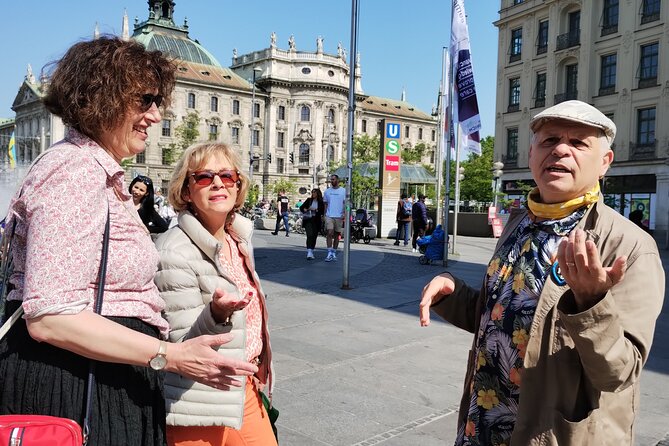
Next comes Heilig Geist, tied closely to the Viktualienmarkt area. Here you learn and hear the history of the place before it was transformed into a church. You also get the option to go inside if it’s possible when you arrive.
This stop works well because it teaches you to see Munich as layered. Buildings are not just static monuments. They evolve, and the story of the city often shows up in changes to religious and civic spaces.
It’s also a smart “bridge” stop. You go from the big iconic church moment into the market zone, then toward the older church roots of the city.
St. Peter’s Church: Munich before Munich, plus baroque details if you can go in
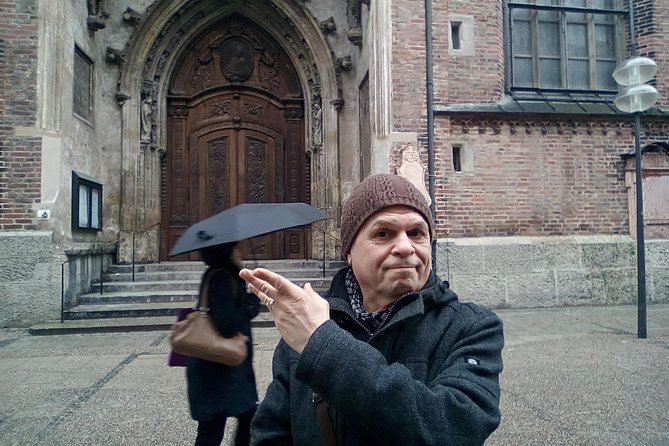
You then reach St. Peter’s Church, often described as the first church in Munich, even before the city fully existed as you know it today. That sounds like trivia, but it’s actually a useful way to frame what you’re seeing: this is a city that built itself over time, and religious sites were early anchors.
If you want, the tour can include inside time for baroque works and reliquaries. Interior access can vary, but even when inside access is limited, your guide’s framing helps you look at the church as an artifact of the city’s earliest identity.
Maximilianstrasse and Munich’s famous shopping energy
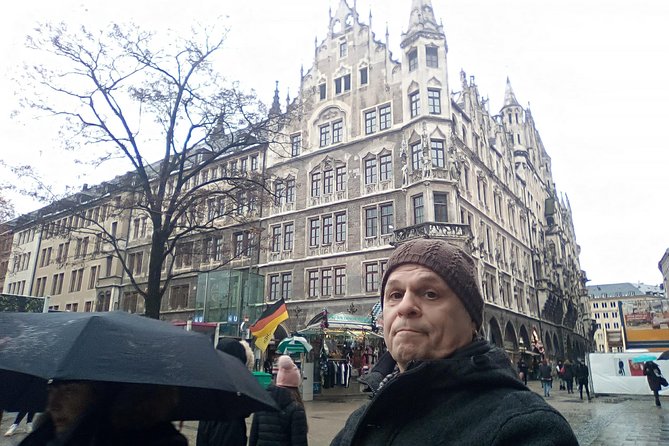
As you move along Maximilianstrasse, you hit the more monumental side of the city, plus the vibe of one of Munich’s wealthier shopping streets. This is one of those “architecture plus lifestyle” segments where you get a break from churches without abandoning the historic narrative.
The guide keeps it focused and short, so you get what matters: why this street looks the way it does and what the city’s power and wealth have meant over time.
If your group is mostly into shopping, this segment sets you up. If you are not, it still helps because it changes the tempo and shows you another side of Munich beyond the square-and-church rhythm.
Marienplatz: how a market becomes a city center
At Marienplatz, the main square energy kicks in. Your guide tells you how Munich grew from an insignificant market into a major town, and why this square is still the heart of the city’s public life.
You spend a few minutes here, which is perfect for first-day orientation. It gives you context for the rest of the Old Town, so later landmarks feel connected instead of random.
If you like street-level watching, this is where you get it, because the square is visually active and full of architecture cues.
Residenz München, outside royal grandeur, with optional inside time
Next is Residenz München, Munich’s royal palace complex. Your tour covers the outside first, focusing on the scale and what it signals about ruling families and state power.
Inside time is optional and depends on what your guide can arrange for that day. Even without the interior, the outside view works because you get the visual “why it matters” story, rather than a quick walk-by.
If your group loves palaces, you will probably want to add the optional inside visit. If you prefer the walk-to-squares pace, you can enjoy the outside and spend your time elsewhere.
Bayerische Staatsoper and the Wagner, Ludwig II connection
At Bayerische Staatsoper, you get a cultural history segment that links King Ludwig II and Richard Wagner to this place. The tour focuses on facts over gossip, including history from the 18th century through the 2nd World War and into more modern times.
This is a good stop if you want Munich to feel like more than beer halls and churches. It adds the arts and royal patronage thread, which is a big part of the city’s identity.
Your guide keeps it in a walking-tour timeframe, so you get the key story beats without being trapped in one spot.
Odeonsplatz and the Bavaria story told through buildings
You then hit Odeonsplatz, which gets you a condensed version of what Bavaria has meant, through architecture, kings, and the consequences of the World War.
Odeonsplatz is also a great “breathing space” because it sits at a different angle in your route. It gives the tour a sense of progression, not just repetition of churches and squares.
Funf Höfe and Promenadeplatz: modern luxury with a local mouthfeel
Two short but useful segments follow.
First is Funf Höfe (Five Courts), a modern luxury mall where the Elyasson Sculpture is part of the city’s contemporary face. This is quick, but it helps you understand that Munich is not stuck in medieval vibes.
Then comes Promenadeplatz, where your guide points you to the finest restaurants, cafes, and options for your stay. This is the stop that turns the tour into a practical tool for the rest of your trip, not only a history lesson.
If you are picky about where you eat and you want suggestions that fit your time and budget, this is where you benefit most.
Platzl and the reconstruction vibe
At Platzl, you pass through a reconstruction from the medieval city. This is a reality check stop: you see how Munich rebuilt parts of its old urban fabric, and what that means for how the city feels today.
Even if you are not a history nerd, you’ll appreciate the visual differences. It helps explain why some parts of the Old Town feel “familiar” but also distinctly shaped by later decisions.
Rathaus-Glockenspiel: the engineering moment people miss
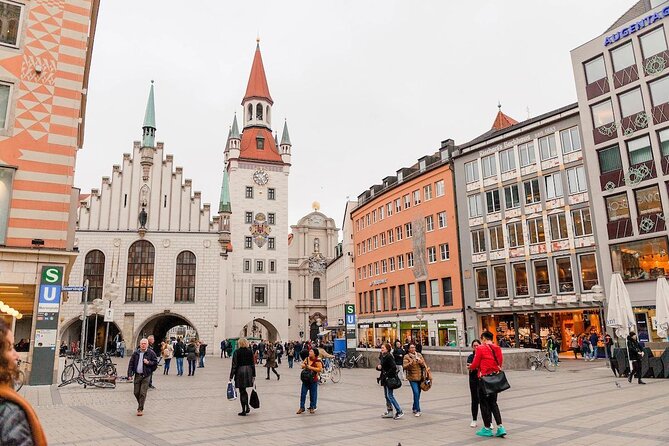
At Rathaus-Glockenspiel, your guide explains it with emphasis on what makes it special, including visiting inside this master of engineering if possible. This is one of the more memorable “wow” stops because it turns something you often only glance at into a story you understand.
The Glockenspiel is tied to the city’s civic pride and public rituals. With a guide, you notice the details instead of just looking for the next performance.
New Town Hall (Neues Rathaus) and the faces on the facade
Then you move to the New Town Hall (Neues Rathaus), where your guide explains the architecture and introduces some of the personalities on the facade. This is one of those stops where the “speed” matters.
In a short time, you learn what to look for. Then you can walk away and still remember what features mean.
Old Town Hall, Marien-Säule, and the heavier parts of Munich’s story
Your route continues to the Old Town Hall, including a specific reference to where Goebbels signed the Reichspogromnacht order. This is where the tour acknowledges the brutal parts of modern German history, not just the pretty parts.
Then you finish with Mariensaule, with the history behind Holy Mary and the 30 Years War. It’s a symbolic end point that connects the religious theme to a longer timeline of conflict and rebuilding.
Finally, you pass through Viscardigasse, covering Hitler’s Putsch, the 2nd World War, and the Nazi terror. If your group prefers a lighter tone, this is the portion to be aware of. It’s not the tour’s job to be funny here. It is doing its job by telling the city’s full story.
What you’ll actually learn on this walk (and why it sticks)
This tour does a smart thing: it teaches you Munich as a set of stories that overlap.
You learn how religious sites anchor early city identity. You see how civic spaces like Marienplatz connect to public life. You connect royal power to visible architecture at Residenz and the Staatsoper setting. Then you get the modern city layers in places like Funf Höfe and the reconstructed medieval feel around Platzl.
The learning style matters too. Because it is private, you can ask follow-up questions without worrying about holding up a big group. The guide can also adapt when you show curiosity. That is one reason people consistently mention the guides being energetic and fun, and also responsive to what the group wants.
Tips for getting the most from your 2-hour window
Here’s how I’d prepare so you feel like you got a real day’s worth of value.
- Bring comfortable shoes. This is an urban walking route with several short stops, so your feet do the heavy lifting.
- Decide in advance if you want optional inside time for churches and palace. If you care most about interiors, tell the guide early so the timing works.
- Have one or two questions ready, like what Munich is known for besides beer, or where you should go after the tour for dinner.
If you’re traveling as a family, the private format helps a lot because the guide can pace the walk to your group’s energy level.
Should you book Paul’s Private Tour in Munich Old City?
Book it if you want an efficient first look at Munich with a guide who talks, not just points. It’s especially worth it if you are short on time, hate staring at maps, or want clear, practical recommendations for where to eat and shop after you finish the walk.
Skip it or consider another option if your top goal is long museum time, because this is built around landmark viewing and short stops. Also consider your comfort with heavier historical topics, since the route includes references to Reichspogromnacht and Nazi terror.
If you do book it, do two things: wear good shoes and speak up early about what you want most, church interiors, photo time, or food and restaurant ideas. That’s when the flexibility becomes more than a line in a description.
FAQ
How long is Paul’s Private Tour in Munich Old City?
The tour is listed as approximately 2 hours.
Is this tour private?
Yes. It is a private tour/activity, with only your group participating.
Where do we meet and where does the tour end?
The start is Karlstor, Neuhauser Str., 80331 München, and the end is Odeonsplatz, Odeonspl., 80333 München.
Is pickup available?
Pickup is offered.
Can we enter churches and landmarks?
Many stops are free to visit, and some include optional inside time. Access can depend on service hours.
What’s included in the tour price?
You get a guided tour with full background from a local professional guide, restaurant and shop suggestions, and the guide’s book Loving Munich.
What’s not included?
Tipping or gratuity for your guide is not included. If more people join than booked, any person over the booked number pays 35 € to the guide at the start.
Is the tour suitable for seniors and people with mobility needs?
Most travelers can participate. Seniors adaptation is possible.
Are there cancellation refunds?
Free cancellation is available up to 24 hours in advance for a full refund.
Fresh reviews out of Munich
- Munich: Christmas Markets Food & Drink Tour★ 4.6 · 50 reviews
- Munich: Walking tour of the old town with all your senses★ 4.5 · 51 reviews
- Munich: Scavenger Hunt Self-Guided Tour★ 4.1 · 51 reviews
- Hidden Architectural Gems of Munich (Max. 16 guests)★ 4.9 · 52 reviews
- Shared Departure Transfer: Munich Central Station to Munich Airport★ 3.5 · 54 reviews
- Hard Rock Cafe Munich with Set Lunch or Dinner★ 3.5 · 54 reviews
- Quatsch Comedy Club München: Die Live Show★ 4.6 · 56 reviews
- From Munich: Royal Fairytale Tour★ 4.9 · 56 reviews
City Tours, compared.
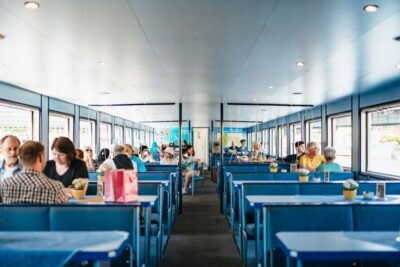
1-Hour City Tour by Boat with Guaranteed Seating
Read our review →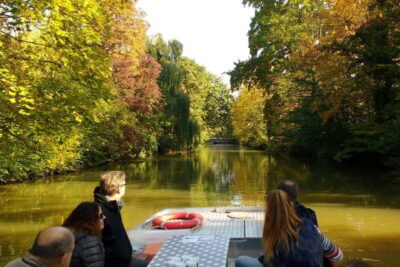
City History Canal Sightseeing Tour on a Motorboat
Read our review →
Browse the lists this tour appears in