
Reviewed · MUNICH TOURS
Munich: Scary Tour with actors in GERMAN
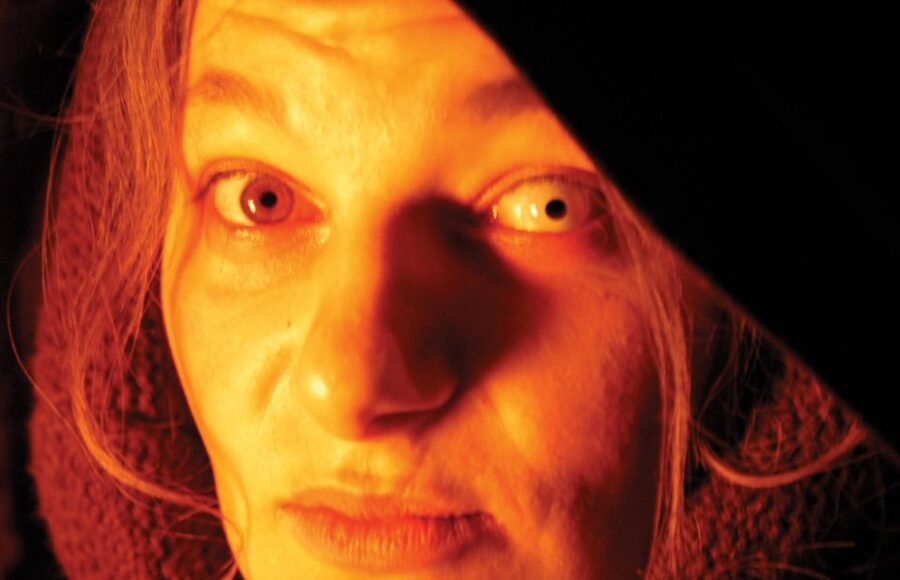
This experience is interesting because Munich turns theatrical after dark. Actors in historic costumes work the dark corners of the old city, using real landmarks as backdrops for stories about witch hunts and the Prince of Darkness.
I love how the show stays tied to specific places, not vague legends. Two things I really like are the acting scenes that break up the walking, and the way the guide connects the creepy plot points to historic explanations you can picture the next day.
One drawback to weigh first: the tour is German only, and the subject matter runs into executions, torture, and prostitution. If you get uncomfortable with heavy topics or want English, you may prefer another option.
Key highlights worth showing up for
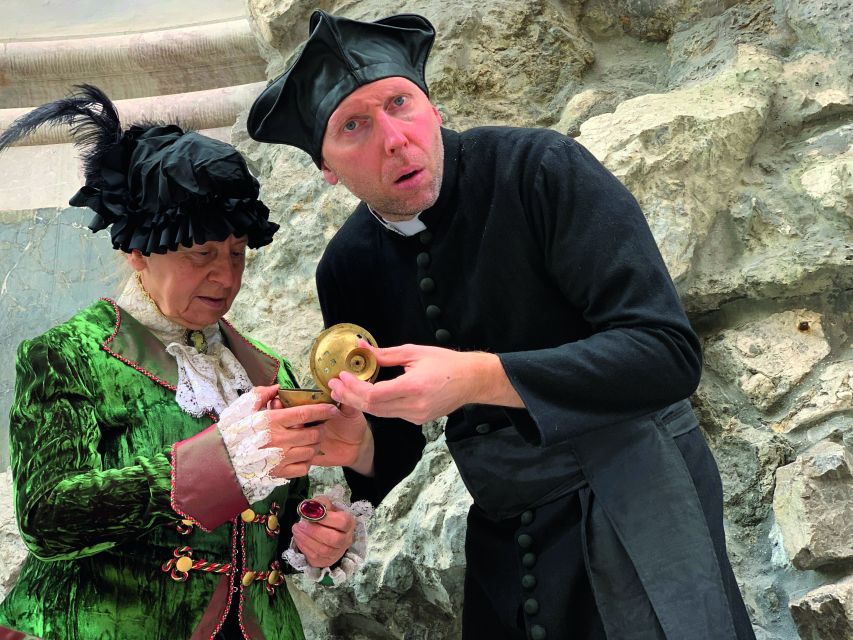
- Actors in historic costumes who reenact dark scenes like witchcraft accusations and devil legends
- A tight 90-minute loop through major old-town landmarks near Karlsplatz and the Town Hall
- Neuhauser Tor to the city edge idea, including why executions happened outside town
- Frauenkirche stop with devil lore, plus the explanation of why the area feels so windy
- Town Hall chemistry and alchemy drama, featuring Marco Bragadino
- St. Peter’s Church and the hangman’s daily reality, including how the job worked and why people avoided it
Munich After Dark With Actors in German, What You Really Get
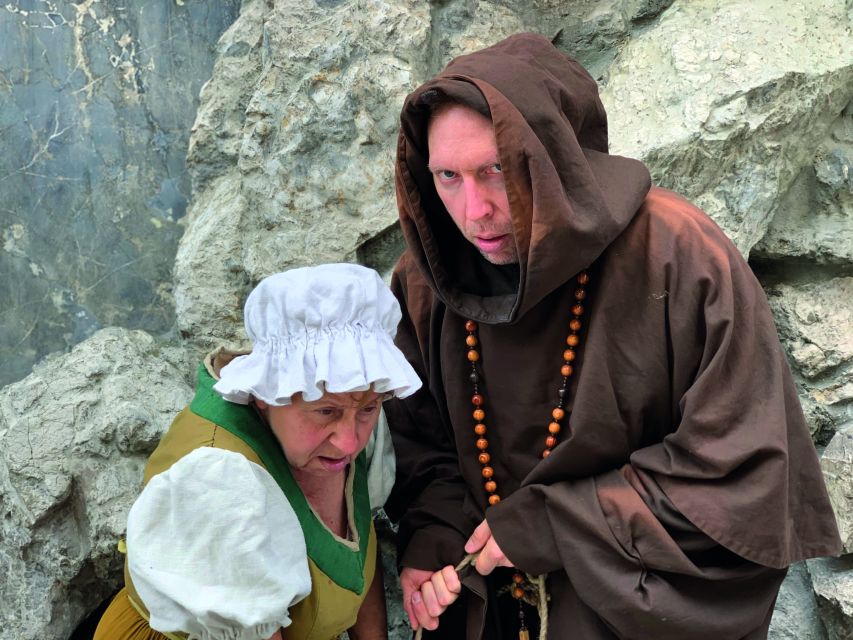
This is a walking performance built for 90 minutes, with a professional guide and a small cast of actors. The pitch is simple: you do not just hear scary stories, you watch them play out in the exact streets and squares where Munich’s older chapters unfolded.
The smart part is that it is not random horror. The tour uses a sequence of recognizable sites, then slots in scenes about people accused of witchcraft, the men and systems around torture, and the city’s long-running reputation for grim punishments. You also get the practical benefit of a guided route, so you are not wandering around trying to make sense of symbols and architecture on your own.
It is also very doable for a first-time Munich visitor, because you cover several big-name stops without needing public transit. Just know the tone is dark, and the humor is the kind that keeps the pace moving, not the kind that makes light of suffering.
Weigh these Munich picks against each other
- From Munich: Neuschwanstein & Linderhof Castle Full-Day Trip
★ 4.6 · 14,646 reviews - Neuschwanstein & Linderhof Castle-Fairytale Day Tour from Munich
★ 4.5 · 7,275 reviews - Munich: Third Reich & WWII Walking Tour
★ 4.6 · 6,181 reviews
Price and Logistics for a 90 Minute Evening Walk
At $46 per person for 90 minutes, this tour sits in the midrange for a theatrical walking experience. You are paying for two things: a live German guide and actors who must be costumed, rehearsed, and ready to perform through the evening.
If you like tours that feel like a show, this price makes sense because the group experience is the product. If you prefer quiet history lectures, you might not feel full value, even though the facts are there.
Timing matters too. Since it runs in the evening hours and you are moving between churches and old civic buildings, wear shoes you trust. Munich weather can change fast, and the tour runs rain or shine, so bring a light rain layer even if the morning looks calm.
Finding the Start at Karlsplatz/Stachus by the Karlstor Arch
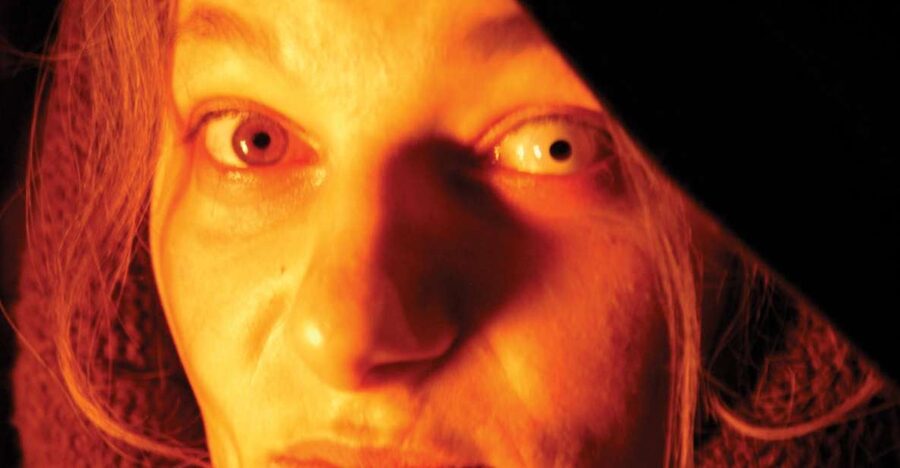
You meet at Karlsplatz/Stachus, under the archway of the Karlstor. The easiest way to spot the team is the guide’s BIG BLUE BAG with white words reading Weis(s)er Stadtvogel.
This matters more than it sounds. These tours are short, and you do not want to waste your first minutes looking for the right group. If you arrive early, you can get your bearings around Stachus and the main streets, then focus on the tour once you find the blue bag.
Since everything happens on foot and the sites are clustered in central Munich, you will spend your time watching and listening, not fighting transit schedules. You just need a calm start so you can settle into the performance right away.
Neuhauser Tor and Salzstraße, Where Stories Begin Outside the City
The tour kicks off at Neuhauser Tor, a place tied to executions. The core idea you learn here is about distance: delinquents were led out toward the execution area, not dealt with quietly in the middle of the city.
That theme sets the tone for the rest of the walk. You see how the tour turns “why” questions into scenes. Why would the city push punishment beyond its own walls? Why did the authorities treat public fear as part of the system?
From Neuhauser Tor, you head into historic Salzstraße and toward a former Jesuit school tied to the era when witch hunts were at their height. The route is doing double duty: it connects you to the city layout and it keeps the narrative moving like a script you are walking through.
Another way to spend a Munich afternoon:
- Dachau Concentration Camp Memorial Site Tour from Munich by Train
★ 4.5 · 5,637 reviews - Neuschwanstein Castle Tour from Munich
★ 4.5 · 5,117 reviews - Third Reich Walking Tour Munich
★ 4.5 · 4,291 reviews - Munich Hop-On Hop-Off Tour: 1-Day or 2-Day Ticket
★ 4.3 · 4,161 reviews
Jesuit School and St. Michaelis Church, Storms, Blame, and 16th Century Drama
As the story shifts toward the witch-hunt era, you reach the former Jesuit school from the period when accusations were turned into prosecutions. This stop is valuable because it gives you context for how institutions, education, and authority could overlap with fear.
Then the tour brings you to St. Michaelis Church and the dramatic backstory around its construction. You hear the reenactment explanation for why a tower collapse was blamed on accursed bad women during a storm. That is exactly the kind of story that makes you realize legends were not just entertainment back then, they were part of how people assigned blame.
A drawback here, if you are sensitive: the language and the topic can feel harsh. The acting is meant to make the story unforgettable, but it does not pull punches about the cruelty of the times.
Schöner Turm to Frauenkirche, Devil Lore and a Windy Explanation
Next comes the Schöner Turm area, where you get a sad story tied to a goldsmith. The point of this stop is not only the tragedy, it is the way craftsmanship and status could tangle with suspicion.
After that, the tour reaches Frauenkirche, and this is one of the most memorable points of the whole route. You meet the Prince of Darkness himself in the story logic, and you learn why the location is linked to devil help for the master builder and why the spot can feel especially windy.
You will also hear additional witch-tale motifs along the way, including potions, rides on brooms, toads’ tongues, and stories that involve children’s hands. Whether you buy the literal truth of these legends is not the question. The tour uses them to show how fear, symbolism, and rumor worked together.
From a practical angle, this is a good time to look up and around. Kirchen domes and towers are easier to track when the performer gives you a reason to notice the building, not just a date to memorize.
Town Hall and Marco Bragadino, Alchemy on a Public Stage
One of the most entertaining moments is when the group arrives at the magnificent Town Hall. Here you get the arrival of Marco Bragadino, an alchemist figure who is supposed to be connected to the goldsmith theme in the tour’s story world.
This stop is fun because it shows how the scary themes are not limited to witch hunts. Alchemy and the idea of turning base materials into gold were real interests in earlier centuries, and the tour plays with how easily those interests could be folded into suspicion and moral panic.
You also get a sense of the city’s civic power. Standing near the Town Hall while the alchemy scene unfolds makes the stakes feel higher. This is not happening in some distant village myth. It is happening in a place where Munich’s public order was displayed and enforced.
If you like stories that link folklore to the actual setting, you will feel satisfied here. If you are hoping for a purely academic tour, keep expectations realistic. This is theater with historically grounded details.
St. Peter’s Church and the Hangman’s Everyday Reality
At St. Peter’s Church, the tour turns from accusations and legends toward the people who carried out punishment. You hear about the hangman’s everyday life, including how he looked, why he was best avoided, and even how someone could obtain a gallows rope.
This stop is one of the clearest value adds for understanding how punishment worked. It is easy to focus on the accused, but the tour insists on the support system behind the scenes.
The performance includes the moment of a beautiful woman escaping sure death. That kind of scene matters because it balances the grimness with a reminder that outcomes were not always the clean tragedy you might expect. It also keeps the pacing from becoming only heavy.
One consideration: the hangman material is blunt. If you are traveling with kids or someone who hates gore-heavy themes, you might want to check your group’s comfort level before booking.
Old Town Hall Torture Chamber, Platzl’s Red Light Past, and Why 1972 Matters
The route ends with stops that sharpen the contrast between Munich’s official face and its darker underbelly. At the old Town Hall, you cross into the area tied to the former torture chamber, while you hear gruesome stories that connect power, punishment, and fear into one system.
Then you reach the Platzl area, explained as the home of Munich’s red light district until the Olympic Games of 1972. The tour even connects it to pop culture by referencing the spirit of Skandal im Sperrbezirk by the Spider Murphy Gang, and it mentions figures like Rosi and her colleagues as part of the narrative bridge between old and modern Munich.
This ending is smart because it brings you out of pure medieval and early modern horror and into a more recent urban change. It answers the question many visitors have quietly: why do you not see the same kind of activity in the historic center anymore? The tour’s story points toward the shift that came by the early 1970s.
From a traveler perspective, it helps to process that shift while you are still close to the old streets. You can look around afterward and notice how the area feels today, then remember what the tour said used to happen here.
What Makes the Acting and Storytelling Work So Well
The most praised aspect here is the combination of acting scenes and clear historic context. The pace stays lively, and the performers do more than recite lines. There is also room for interaction, so you might get pulled into small moments that keep you alert and stop the tour from feeling like a one-way lecture.
That is a big deal for a 90-minute walk. The route includes multiple church and civic stops, and without performance, these would blend into standard sightseeing. With actors, each location gets a narrative job to do.
You also get specific names used inside the scenes, which helps your brain anchor the story. For example, you hear about the duchess Renata and the Jesuit father Ignatius during the St. Michaelis Church storm collapse story. You also get Marco Bragadino at the Town Hall. Those names help the tour feel like a plot, not a random list of scary claims.
Who This Tour Suits Best, and Who Should Think Twice
This is best for you if you like:
- Theater-style history that turns buildings into scenes
- Dark topics explained with historic framing
- A central walking route that covers several major landmarks in one go
It might not be for you if:
- You want English (the tour guide language is German)
- You prefer light, casual sightseeing
- You or your group are easily distressed by torture, execution themes, or prostitution-related history
One more real-life tip: if your German is basic, you will still understand a lot because the acting carries much of the meaning. Still, the guide’s delivery is in German, so you will enjoy it more if you can follow spoken details.
Practical Tips so You Enjoy It Fully
Bring:
- A light rain layer, since the tour runs rain or shine
- Comfortable walking shoes for uneven old streets
- A willingness to look at the city from an angle you might not expect
During the performance, focus on three things:
- The landmark you are standing in front of
- The question the story is answering, like why executions left town
- The name or role being introduced, like Ignatius or Marco Bragadino
That keeps the tour from feeling like jump scares. It becomes a guided lens on how Munich’s past was explained, feared, and enforced.
Should You Book This Scary Munich Tour With Actors in German?
Book it if you want a central Munich evening experience that mixes professional acting with facts you can picture on the map. The $46 price feels fair when you consider you get both a live guide and a costumed performance tied to major landmarks like Frauenkirche, the Town Hall, and the old town sites near the Platzl.
Skip it or choose carefully if German-only limits you, or if the topic matter feels too heavy for your style. The tour leans into witch hunts, torture chambers, and prostitution history, wrapped in dramatic storytelling.
If you read this and think, I like history that is a little scary but still structured, you will likely have a great time. You will walk away with Munich details that do not fade, because the city will feel like a story you already know.
FAQ
How long is the Munich scary tour with actors?
The tour lasts 90 minutes.
What is the price per person?
The price is $46 per person.
Where do I meet for the tour?
Meet at Karlsplatz/Stachus, under the archway of the Karlstor. The guide wears a BIG BLUE BAG with white words reading Weis(s)er Stadtvogel.
What language is the tour offered in?
The live tour guide speaks German.
Does the tour run in bad weather?
Yes, it takes place rain or shine.
Is the tour wheelchair accessible, and can I cancel?
The tour is wheelchair accessible. Free cancellation is offered up to 24 hours in advance for a full refund, and you can also reserve and pay later.
Fresh reviews out of Munich
- Munich: Christmas Markets Food & Drink Tour★ 4.6 · 50 reviews
- Munich: Walking tour of the old town with all your senses★ 4.5 · 51 reviews
- Munich: Scavenger Hunt Self-Guided Tour★ 4.1 · 51 reviews
- Hidden Architectural Gems of Munich (Max. 16 guests)★ 4.9 · 52 reviews
- Shared Departure Transfer: Munich Central Station to Munich Airport★ 3.5 · 54 reviews
- Hard Rock Cafe Munich with Set Lunch or Dinner★ 3.5 · 54 reviews
- Quatsch Comedy Club München: Die Live Show★ 4.6 · 56 reviews
- From Munich: Royal Fairytale Tour★ 4.9 · 56 reviews
Munich Tours, compared.
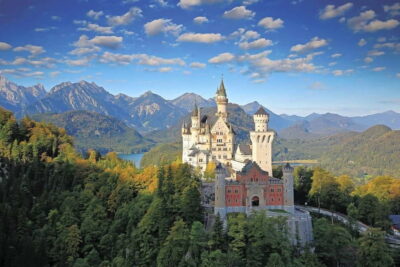
Neuschwanstein & Linderhof Castle Full-Day Trip
Read our review →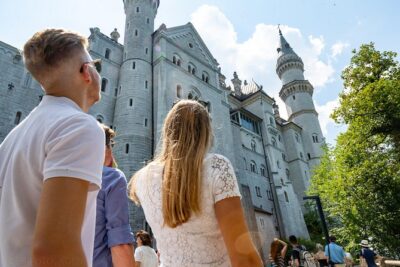
Neuschwanstein & Linderhof Castle-Fairytale Day Tour from Munich
Read our review →
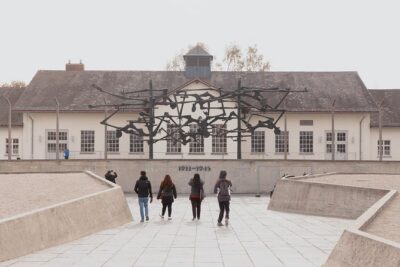
Dachau Concentration Camp Memorial Site Tour from Munich by Train
Read our review →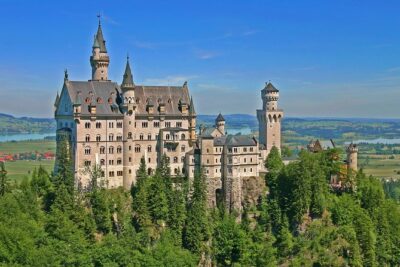
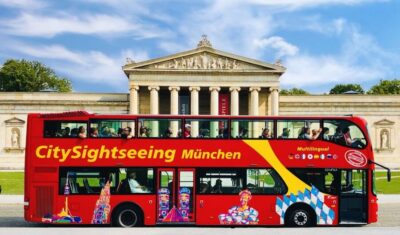
Munich Hop-On Hop-Off Tour: 1-Day or 2-Day Ticket
Read our review →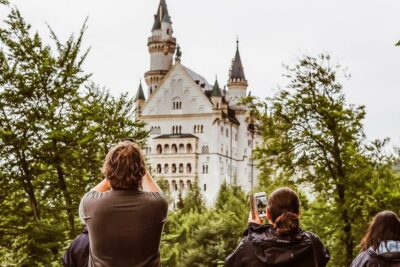
Browse the lists this tour appears in